The World Bank has warned that escalating tensions in the Middle East expose Ghana’s vulnerability to fossil fuel dependence and the urgent need to prioritise renewable energy.
The Bank and private sector leaders urged Ghana to accelerate reforms in the renewable energy regulatory framework to enhance private sector participation.
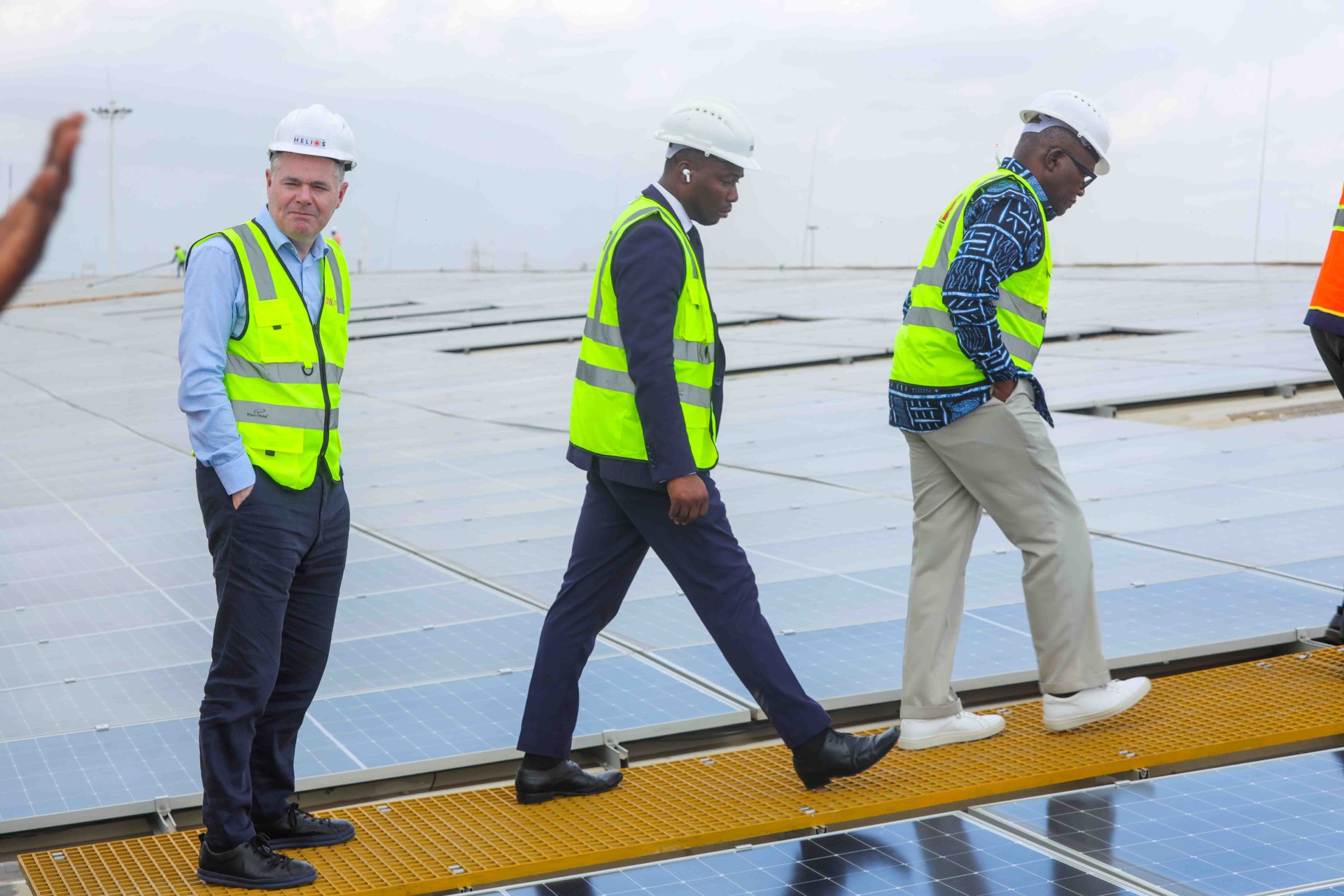
The call was made during a visit to LMI Holdings’ rooftop solar installation by Mr Paschal Donohoe, Managing Director and Chief Knowledge Officer of the World Bank Group.
Mr Donohoe said current global instability should serve as a wake-up call for Ghana, noting that the Middle East conflict had raised concerns about the reliability of global oil supply, with petroleum-dependent countries experiencing market shocks.
“Global tensions especially in the Middle East have reinforced the need for countries like Ghana to prioritise renewable energy as a sustainable and independent power source,” he said.
Mr Donohoe said renewable energy, particularly solar, offered Ghana long-term energy security amid growing geopolitical volatility.
He commended LMI Holdings for developing energy solutions that reduced reliance on imported oil, citing its contribution to job creation and tax revenue, and said this demonstrated the potential of private sector-led initiatives to strengthen resilience.
Mr Donohoe said the future of Ghana’s energy sector depended on effective collaboration between Government and private operators to expand renewable capacity.
Mr Kojo Adu-Hene, Chief Executive Officer of LMI Holdings, said the Middle East crisis underscored the need for Ghana to reduce reliance on oil and expand its solar energy portfolio.
“We’re not getting oil. We don’t need oil to generate electricity. If anything, the Middle East conflict proves why Ghana must invest more in renewables especially solar,” he stated.
Mr Adu-Hene said regulatory restrictions remained a major obstacle to scaling renewable energy.
“We need the regulatory environment to be more accommodating. The public sector currently dominates the space. The private sector must be allowed to grow,” he said.
Mr Adu-Hene said investors would expand renewable projects if the framework guaranteed viable returns, particularly through reliable payments from distribution utilities.
“Some of us believe privatisation should be considered to ensure financial discipline and timely payment,” he said.
Mr Adu-Hene reaffirmed LMI’s ambition to scale solar generation to 1,000 megawatts, comparable to the output of the Akosombo Dam, though limited to daylight hours.
“If we do it, it proves others can do it. This supports Ghana’s broader industrialisation agenda,” he said.