Home Blog Page 1051

Gas Industry Opportunities can revive Mozambique’ s Special Relationship with Germany

0
Verner Ayukegba - Africa Energy Chamber

Gas is fast establishing itself as a key player in the global energy transition dynamics as nations seek to significantly reduce carbon dioxide emissions and other air pollutants.


Mozambique and Germany have a special relationship, that was formalised when the German Democratic Republic established diplomatic relationships with the then newly independent Republic of Mozambique in 1975. Since then, a great many Mozambicans have been educated in Germany. Another 20,000 were employed in Germany as contract workers. Since the 1980’s, Germany has spent more than USD 1 billion in development aid to Mozambique. Whilst this is laudable, this relationship must evolve to change focus away from aid and towards investment, in response to the numerous opportunities in gas development and other sectors.

German companies need to invest in the development of new gas prospects, in the servicing of the existing developments and in the building of a petrochemical sector in Mozambique. Germany has a strong petrochemical industry that can take advantage of the opportunities in Mozambique with Africa’s USD 1.2 Billion population providing a ready market for such an industry. This will ultimately lead to a win-win situation for both countries. It will not only help to generate economic growth, but will also ensure the creation of good paying jobs, skills developing apprenticeships and the transfer of technology to Mozambique.

Gas is fast establishing itself as a key player in the global energy transition dynamics as nations seek to significantly reduce carbon dioxide emissions and other air pollutants. The realisation, that developed economies like Germany and fast-growing economies like China can only realistically meet their emission targets without forgoing economic prosperity by adopting gas as a major source of energy has put countries with large gas resources, like Mozambique in the focus of investors. The share of gas as a primary source of energy has been steadily growing since the 90’s, and this trend is expected to continue. In China, gas now accounts for over 7% of primary energy use from about 1% in 1990. In Germany, gas accounts for 27% of primary energy use from about 15% in 1990.

Read : Africa: The Rise of the Independents, the Energy Transition and Natural Gas Emerge as Key Themes as Industry Unites Once Again

German demand for gas is projected to continue its rapid growth as the country steadfastly continues to implement its in 2010 adopted energy transition strategy known as the Energiewende. According to the plan, greenhouse gas emissions are expected to reduce by at least 80% in 2050 when compared to 1990. Gas is currently Germany’s second most important energy source after oil. It imports nearly all of the gas it consumes, from Russia (40%), Norway and the Netherlands with only 5% sourced domestically. Domestic production is expected to run out within the next decade, setting Germany up for even more imports from outside. There is therefore, a general consensus in Germany that even more gas resources must be secured from abroad to ensure Germany’s economic growth prospects. Plans to source more gas from Russia have however earned the government heavy criticism, including from Germany’s American allies who see this as leading to an over-dependence on Russia and creating potential National security threat to Germany. Diversifying Germany’s sourcing of gas, from new producers like Mozambique therefore presents an attractive proposition for Germany as a nation and German companies in particular.

Mozambique holds 100 trillion cubic feet (Tcf) of proved natural gas reserves. It ranks 15th globally, however the country is still largely underexplored. As the government continues to encourage exploration, it is likely, that the proven reserves will increase in the coming years to rival that of more established gas frontiers. Oil Majors Total, ENI and Exxon are leading development efforts expected to initially cost a combined USD 30 Billion. Committed off-takers, include EDF of France, Tokyo gas of Japan and Centrica from the UK who have all committed to be off takers for the next two decade. Notable however, is the absence of German companies either as operators or major off-takers, despite Germany being one of the world’s largest gas importers.

Read : Equatorial Guinea hold discussions with African Energy Chamber and updates on energy developments during Covid-19

“It is time for German companies to play a greater role in the development of Mozambican gas industry. Germanys needs gas and in exchange, our companies can provide investment capital, technical Know-how, technology and education” said Sebastian Wagner, Executive Chairman of the German African Business Forum.

In November 2019, German Chancellor Angela Merkel announced the creation of a USD 1.1 Billion investment fund during the ‘Compact with Africa’ summit in Berlin. This fund, and other institutions in Germany like the KFW development bank offer various instruments to ease German investments in Mozambique. However, there is an increasing realisation, that such government initiatives to invest in Africa in general and in Mozambique in particular are best implemented by channeling the funds through private sector German and Mozambican companies. In a recent online conference organised by the German African Business Forum, Chancellor Angela Merkel’s personal representative to Africa, H.E Günter Nooke called German companies to take advantage of these opportunities.

Now more than ever, both countries must take the opportunities presented by the development of gas to strengthen their special bond. Mozambican exports to Germany currently stand at USD 270 Million USD yearly and are dominated by aluminium. This amounts to just 3% of total exports. According to Verner Ayukegba, SVP of the African Energy Chamber, there is room for growth and a significant demand for German technology and investments in Mozambique. “Mozambique is one of the most prized investment destinations in Africa at the moment. Mozambican companies are prepared to partner with their German counterparts to service the nascent gas industry.” “We have a golden opportunity here to strengthen both Country’s economies, whilst at the same time making significant strides towards the reduction of greenhouse gasses with the promotion of gas consumption to the detriment of heavier polluters like coal”, Verner concluded.


SOURCE
African Energy Chamber
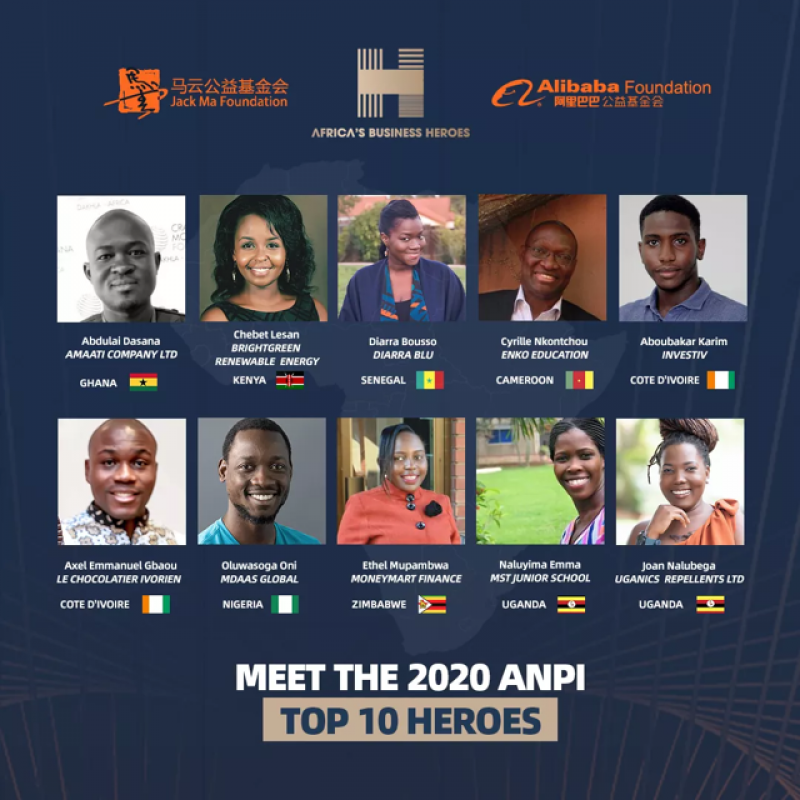
Meet the Africa’s Business Heroes 2020 Top 10 Finalists Online Media Roundtable

0

What: The Jack Ma Foundation (www.JackMaFoundation.org.cn) will host an online media roundtable discussion and Q&A to allow accredited journalists exclusive access to the Top 10 Finalists (https://bit.ly/2GXvbvd) of 2020 Africa’s Business Heroes (ABH) prize, ahead of the grand finale in November.

The 2020 ABH prize competition is a flagship philanthropic program created by the Jack Ma Foundation’s Africa Netpreneur Prize Initiative (ANPI) to support and inspire the next generation of African entrepreneurs regardless of age, gender and sector, who are building a more sustainable and inclusive economy for the future of the continent.

Speakers: The Top 10 finalists, Jack Ma Foundation’s representative and the competition’s semi-finale Judges.

When: Wednesday, 21st October 2020

Time: 12:00pm GMT (See here what time it will be in your country: https://bit.ly/3demvg2)

Duration: 45-60 Minutes

Language: English & French (Simultaneous translation available)

Platform: Via Zoom

All invited journalists should REGISTER here to receive Zoom log in details for their attendance: https://bit.ly/2SPj2Lp

Details:
Meet the ten finalists of the Africa’s Business Heroes prize competition, the flagship programme of the Jack Ma Foundation. This exclusive virtual event is an opportunity to hear directly from the ABH 2020 finalists on their journey in the competition so far, their businesses, and how they are working to solve the most pressing problems in their respective countries. Learn more about the ABH competition and the drive behind Jack Ma Foundation’s passion to inspire, train and support entrepreneurs in Africa.

The 10 entrepreneurs representing 8 African countries (including Cameroon, Cote d’Ivoire, Ghana, Kenya, Nigeria, Senegal, Uganda and Zimbabwe) have been selected from over 22,000 applications across all 54 African nations. Their businesses span key industries across Africa including agriculture, fashion, education, healthcare, renewable energy, financial services, and retail.

On November 13 and 14 at the competition’s finale, they will pitch the finale judges including Jack Ma, Founder of the Jack Ma Foundation and the Alibaba Group; Ibukun Awosika, Chairman of First Bank of Nigeria and Founder/CEO of The Chair Centre Group; Strive Masiyiwa, Founder and Executive Chairman of Econet Group; and Joe Tsai, Executive Vice Chairman of the Alibaba Group, for a chance to win their share of the US$1.5 million prize pool.


SOURCE
The Jack Ma Foundation

Leverage e-commerce for business growth – Entrepreneurs share experiences

0

Some Ghanaian entrepreneurs have underscored the need for micro, small and medium enterprises (MSMES) to leverage e-commerce and innovation to improve their business ventures or operations.

Particularly, they held the view that such a move would help them to flourish even under the most challenging circumstances, recent being the novel coronavirus (COVID-19) pandemic.

Sharing their experiences at the 29th MTN Business World Executive Breakfast meeting held virtually,on Wednesday, October 7, 2020, the entrepreneurs said they were compelled to come out with innovations to sell electronically, a move which they said had paid off.

The meeting was on the theme, “The Changing Face of Retail In Ghana: Scaling successfully with Innovation and E-commerce”.

Sharing experiences

The Chief Executive Officer (CEO) of The Hair Senta, Mrs Gwen Gyimah Addo, said upon introspection during COVID-19, she decided to leverage social media to scale up, saying “I realised that it was either, I am in or I am out so I decided to go all out,” she said.

Mrs Addo said it was important for entrepreneurs to understand and identify their business models – who they are serving.

“Leverage a lot on social media to sustain the interest in your products. Trust is key in assuring customers that electronic payment is safer”.

“The more you deliver on promise, the more customers trust you. Convenience is for the customer so you need to go out of your way and serve them,” she said.

She said it was good to import best practices in e-commerce, but it was important to align them with local knowledge – study the people, the market and how the system functioned.


Read : MTN launches rewards scheme targeting loyal customers

An entrepreneur who deals in coffee value addition, the CEO and Founder of Kawa Moka Coffee, Ms Emi-Beth Quantson, said the limitations on movement during the peak of the pandemic was a challenge to her company’s activities.

“Getting raw materials from the farm to deliver to a customer was difficult and there was quite a drop in sales. A core principle of the company is ensuring that we are providing access to markets for our farmers. So, we thought through to create content that attracts, appeals and demonstrates to the customer the different uses of our products and things picked up,” he said.  

According to Ms Quantson, aggregation was a big factor so businesses should endeavour to join other platforms to sell.

“E-commerce is the future and we should think of how we can leverage that in the African context,” she said.

For his part, the CEO of Hubtel, Mr Alex Bram, said before the pandemic, his company was sending short message service (SMS) traditionally to their customers.

“We saw an uptick in messages just before the lockdown, thats about a 40 per cent rise, but during the lockdown, we saw between 40 and 50 per cent dip in sales in our retail business. Food sales was up to about 400 per cent,” he said.

He said a lot of personal effects from some retailers on their platform were ordered through e-commerce.  

“So, if you are running a business today and you are not considering people paying you online using communication tools available and new tools being built by IT companies’, they are building you are missing out,” he noted.

He said that “customers are now more awake. We are seeing new customers every day and it means something significant is shaping up. People are looking at payment methods as more convenient”.

Mr Bram said e-commerce went with innovation and presented an empty plate for a whole new world.

“A level of boldness is needed to innovate. To measure customer experience, talk to them and learn from them. E-commerce presents a big world of opportunity to deal with customers,” he said.

The CEO of Skin Gourmet Limited, Ms Violet Amoabeng, also said COVID-19 helped her company to step up its social media game.

“COVID-19 is a challenge to overcome. Either you sit up or you are going to sleep. You need a website to explain to the customer why he/she should buy your products. Reach out to them,” she said.

Govt intervention

The Executive Director of the National Board for Small Scale Industries (NBSSI), Mrs Kosi Yankey-Aryeh, said in the past six months, COVID-19 had changed everything worldwide, including the NBSSI as a government institution.

She said as an institution mandated to strengthen and grow MSMES in Ghana, technology was considered important and that had, therefore, incorporated in its work.

“It was a great opportunity to provide for the MSMES through helping them to digitise their operations and forming partnerships to ensure they get the needed resources.

“Access to finance is also an important tool for programming and which the government is providing GH¢750 million to help businesses get back on their feet and innovate,” she said.

She added that innovation was a major change the pandemic had brought resulting in over 800,000 plus applicants seeking to innovate.


Source 

Graphic

Police say kidnapping in Ho a hoax

0
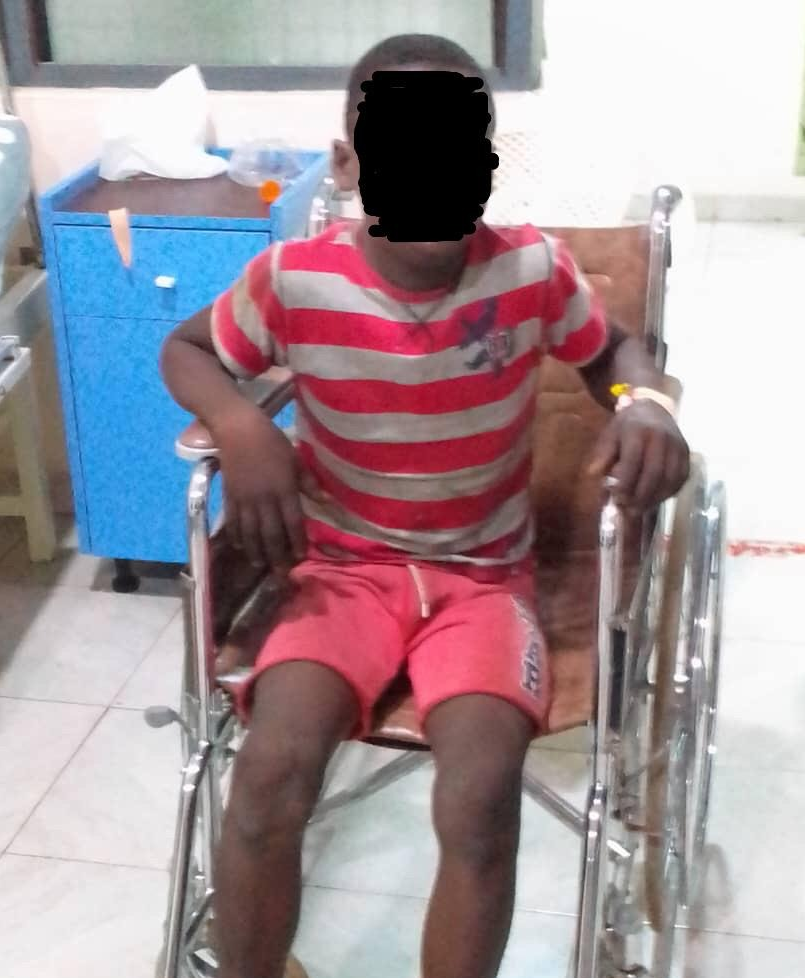
A Ho Municipal Police Directorate investigations have revealed that the alleged kidnapping incident at Area 52, a suburb in the Municipality, is a hoax and a ‘cooked’ story by the victim and his friend.
 
Assistant Superintendent of Police, Mr Alexander Yeboah, in-charge of the Command, told the Ghana News Agency, Tuesday that the two carefully planned the purported incident to outwit being punished for staying out to play.
 
The alleged victim, a 14-year-old JSS student and his accomplice, a 12-year-old, hatched the plan to court sympathy and avoid punishment at home when the victim left home on a play adventure on Friday at about 0930 hours and only returned after 1630 hours.
 
He said the victim confessed to the Police investigation team he connived with his friend to stage the story.
 
Mr Yeboah said since the victims in the matter are juveniles and Police would review a corresponding punishment for such incidents while holding them.
 
Meanwhile, residents of the Municipality are up in arms for stringent punishment for the duo to serve as a deterrent to other like minds.
 
The event, which had dominated the airwaves on many radio stations this morning, have callers insisting that victims be punished severely for the deceit of public officers.
 
 
Mr Prosper Pi-Bansah, Ho Municipal Chief Executive, described the development as “wicked wizardry.”
 
Victim courted the sympathy of the MCE for the near-death shave and took him to the hospital for medical attention and was administered a drip and consequently discharged.
 
GNA


Some 1,557 registrants added to Volta voter roll – EC

0
The Volta Regional Directorate of the Electoral Commission has added a total of 1,557 voters to the national electoral roll after the one-day continuous registration exercise.
 
Mr Adukpo Selormey, Regional Director of EC, said the voters captured were mostly first time teenagers, who have just turned 18 years but were unable to register during the mass registration exercise earlier in the year.  
 
He said Ketu South Constituency registered the highest prospective voters for the exercise, totalling 215, followed by Ho 207 and Hohoe with 188.
 
Others were, Anloga 150, Central Tongu 100, followed by Akatsi South with 98, South Tongu 89, Ketu North 82 and Kpando 75 people.
 
North Tongu registered 60 people, Keta 58, North Dayi 51, Akatsi North and Afadjato South registering 39 people each with South Dayi returning 35 names.
 
Adaklu Constituency added the least of 16 new registrants, Agotime-Ziope 25 and Ho West 30 to complete the pact.
 
According to provisional results from the Regional office of the EC, the initial exercise, which took place from June 30 to August 6 registered a total of 928,287.
 
Again, the two-day mop-up exercise captured a total of 356 applicants on the first day, and 499 on the second.
 
Mr Selormey said the EC was working around the clock to address all inherent challenges identified by stakeholders to position the Electoral register acceptable by all for another successful election.
 
He requested forthrightness from political parties to enable the EC to deliver on its Constitutional mandate.
 
 
By Maxwell Awumah

NDC will establish a military training centre -Professor Margaret Kweku

0
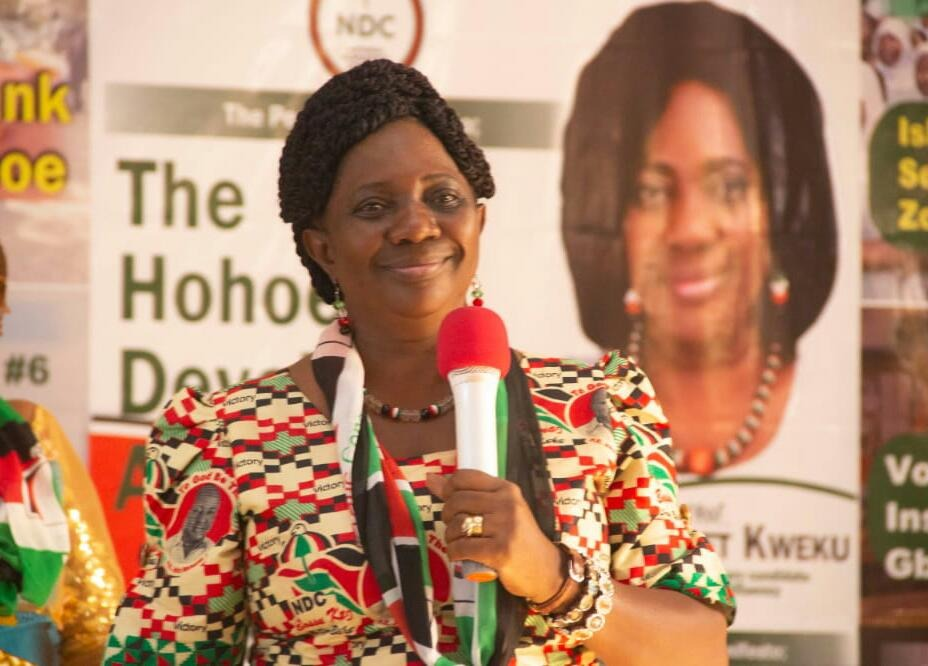
Professor Margaret Kweku, National Democratic Congress’ (NDC) Parliamentary Candidate for Hohoe Constituency, says the party has not abandoned its plans to establish a military training centre between Alavanyo and Nkonya.
     
She said the centre when built would come with tools production point to employ the youth.
     
Prof Kweku, in an interview with the Ghana News Agency, said the people of Alavanyo would also get an organic fertilizer production factory when voted to represent the Constituency in Parliament.
     
She said the completion of the permanent campus of the University of Health and Allied Sciences (UHAS) at Fodome was paramount and she would lead the charge to ensure that it was completed, adding that “the economic benefits are huge for the whole constituency.”
     
The Parliamentary Candidate said prioritising local businesses, making market women gain from their trade, getting farmers to be proud of their job, ensuring job opportunities for the youth, good health, making room for physically challenged and accepting everyone irrespective of their religious and ethnic background, would be key in her administration as an MP.
   
 “We have a nation to rescue and for all those who are putting their shoulders on the wheel, I see and I appreciate you. It is time to reward loyalty and commitment to the hard work towards resounding victory. I pledge to be there for you, comrades.”
     
She said if, given the nod, she would ensure the completion of the Wli Tourism Village and push the roads agenda within the areas since the value of the tourist site in the Municipality could not be underestimated.
     
Prof Kweku said she would build a Vocational and Technical Institute at Gbi South and have a Teachers Emergency Support (TES) and the ambulance funds to support constituents.
     
“I have a Job Eight by Ten (JET) agenda for our youth to be employed. Each year, from each traditional area, I will ensure the employment of ten youth to further their education or learn a trade.”
     
She said she would partner government and non-governmental organisations (NGOs) to execute the party’s agenda and added that her common fund would support developmental agenda for the Constituency which was achievable.
     
The PC said she would upgrade the Zongo clinic to a polyclinic, construct a new ward for the hospital, a well-being clinic for market women and lobby for southern Islamic Senior High School to be located in Hohoe.
   
 “My dream is to see Hohoe have a cancer screening centre, a taxi rank and okada parks.”
 
 
By Edward Williams, GNA

NCCE engages Sekyere Krobo residents on social auditing

0
The Wassa East District Directorate of the National Commission for Civic Education (NCCE) has engaged the chiefs and people of Sekyere Krobo on Social Auditing as part of its activities to deepen local governance.
 
   
The programme, which is to help the beneficiary communities to collectively identify some pressing developmental needs, is part of the Commission’s flagship programme of Accountability, Rule of Law and Anti-corruption programme (ARAP), with sponsorship from the European Union (EU).
 
   
The Wassa East District Director of the NCCE, Mr Andrew Acquah, said Social Auditing was an innovative mechanism, which enhanced citizen’s participation in local governance.
 
   
He said the exercise would help promote community ownership of development projects, increase awareness on the operations of local government and empower the people to demand accountability from duty bearers.
 
   
He reminded the people that political participation was not limited to voting and that citizens must make conscious efforts to get actively involved in local governance by monitoring and evaluating development projects in their communities, identify the problems and get the authorities to resolve them.
 
   
Touching on benefits to be derived from Social Auditing, Mr Acquah mentioned the raising of awareness and knowledge of the people, promoting citizen empowerment, strengthening community voice and enhancing transparency.
 
   
He said Social Auditing would enhance policy makers’ understanding of stakeholders’ concerns.
 
   
Assistant Social Development Officer at the Department of Social Welfare and Community Development of the Wassa East District, Mr Joel Archer, enlightened participants on the operations of the District Assembly with reference to the Local Government Act, 2016 (Act936).
 
   
The participants identified the lack of public places of convenience, containers for refuse, teachers’ quarters and extension of electricity to new sites as some development needs of the community.
 
   
A Seven-Member Committee was set up to initiate interactions with officials at the District Assembly for redress.
 
By Seth Danquah

Beneficiaries of Coronavirus Alleviation Programme receive training in Ho

0
 The National Board for Small Scale Industries (NBSSI) has held a two-day training workshop for beneficiaries of the Coronavirus Alleviation Programme Business Support Scheme(CAP BUSS) in Ho.
 
     
The about 100 operators of small to medium enterprises (SMEs), who benefitted from the programme, received entrepreneurship skills and financial literacy upgrades.
 
     
The workshop also offered participants the opportunity to clarify issues related to eligibility, application process and fund distribution.
 
     
Mr Joseph Aflakpui, the facilitator of the training, said basic marketing, bookkeeping and financial management remained key to successful entrepreneurship, and that the training must be considered an integral part of the CAP BUSS.
 
     
He said the money was not always the challenge to the progress of most SMEs, noting that most failed due to the lack of rudimentary entrepreneurial skills.
 
     
“Some businesses don’t necessarily need money. All they need is sound management and marketing skills,” Mr Aflakpui said.
 
     
Mr Seth Klutse,  the Regional Director of the NBSSI, said over 10,000 entrepreneurs in the Volta and Oti regions have received funds under the ‘Adom’ micro loans package of the Scheme.
 
     
He said fund managers had also begun the disbursement of the ‘Anidaso’ loans, and added that registration for the Mastercard Foundation’s Young Africa Works Initiative entrepreneurial support programme was ongoing.
 
   
“The loans are for everybody,” the Director said and added that delays in disbursements were as a result of a rigorous assessment process.
 
     
He relayed the appreciation of beneficiaries to the Government, saying “it’s a joy receiving. At least something has come to boost businesses.”
 
     
Mrs Eyram Vigbedor, CEO of Panda Development Centre, a producer of dyed textiles, and a fashion designer said to the Ghana News Agency (GNA) that she had received the first instalment of her loan amount.
 
     
She said was able to buy some production materials, and was hopeful the rest of the funds would be disbursed soon to enable her to meet demands.
 
     
Mrs Vigbedor, who is also Secretary of the Norvisi Soap Makers Association in Ho, said some members had received the CAP fund.
 
By Samuel Akumatey, GNA

Parliament reiterates calls for Police protection for MPs

0
The Speaker of Parliament, Professor Aaron Mike Oquaye, has reiterated calls for Police protection for Members of Parliament.
 
 
Speaking during a visit to commiserate with the family of Mr Ekow Quansah Hayford, the slain Member of Parliament (MP), the Speaker stressed the need for pragmatic steps to protect MPs to prevent further attacks on them.
 
“We will have to look at this seriously because it is urgent. I believe that the Interior Minister will go all out and ensure that MPs are given maximum protection,” he said.
 
He said by the nature of the members’ job, it was likely they might not be liked by all, hence the need for some level of protection for them.
 
Mr Osei Kyei-Mensah Bonsu, Majority Leader, wondered how many more MPs would have to die before the state realize the need for their protection.
 
In 2016, Mr J.B Danquah, the then MP for Abuakwa South was murdered in his house and the perpetrators were yet to be established.
 
“Some of us have been calling for protection for MPs for some time now but people do not understand and say all sort of things. How many more MPs will have to die before people understand that MPs need police protection,” he said.
 
He added that the late MP could have survived if he had police protection.
 
For his part, the Minority Leader, Mr Haruna Iddrisu described the late MP as a fine gentleman, who always beamed with joyful smiles and said Ghana had lost a great asset.
 
He said the cruel murder of the MP must be a reawakening of policing in Ghana and called for protection for MPs.


“I pray that God will give you the fortitude to accept your loss,” he said while conveying his condolences to the family and hoped that justice would be served at the end of the day.
 
Mr Hayford, 49, was shot by unknown assailants who stopped his vehicle on the Abeadze-Dominase–Abeadze-Duadzi– Mankessim road while returning from a campaign trip.
 
By Afedzi Abdullah, GNA

Asante Kotoko secures Black Stars’ goalkeeper Razak Abalora

0
Ghana Premier League (GPL) side Asante Kotoko has secured the services of Black Stars goalkeeper Razak Abalora on a three-year deal.
 
     
This was announced by the club on its official social media handles.
 
     
The agile shot-stopper last played for Azam FC of Tanzania, after spending much of his playing career with West Africa Football Academy (WAFA) in the GPL.
 
     
The 24-year-old inked a three-year deal with the Porcupine Warriors after a mandatory medical test.
 
     
Abalora manned the post for the Black Stars of Ghana in their 5-1 heavy win over Qatar in an international friendly staged in Turkey.
 
     
He had been unattached after ending his three-year stay with Tanzanian club Azam FC in July and subsequent extension of the contract.
 
     
Kotoko already has four goalkeepers namely Kwame Baah, Felix Annan, Osei Kwame, and Danlad Ibrahim.