Home Blog Page 1058

Civil Society Organisations urges Government to prioritize deployment of mini-grid in island communities.

0
Civil Society Organisations (CSOs), championing sustainable development in Ghana, have urged Government to prioritize the deployment of mini-grids in island on the Volta Lake and remote communities by including it in the Rural Electrification Project.
 
The CSOs said they recognized that there was a slow pace in the extension of electricity to about two million people residing in lakeside and island communities, and the lack of comprehensive policies, coupled with the absence of regulatory frameworks guiding the provision of mini-grids in Ghana.
 
Among other recommendations was that the Government should create an enabling environment for the private sector to lead mini-grid interventions with government providing monitoring and regulations to speed up deployment of mini-grids in island and remote communities.
 
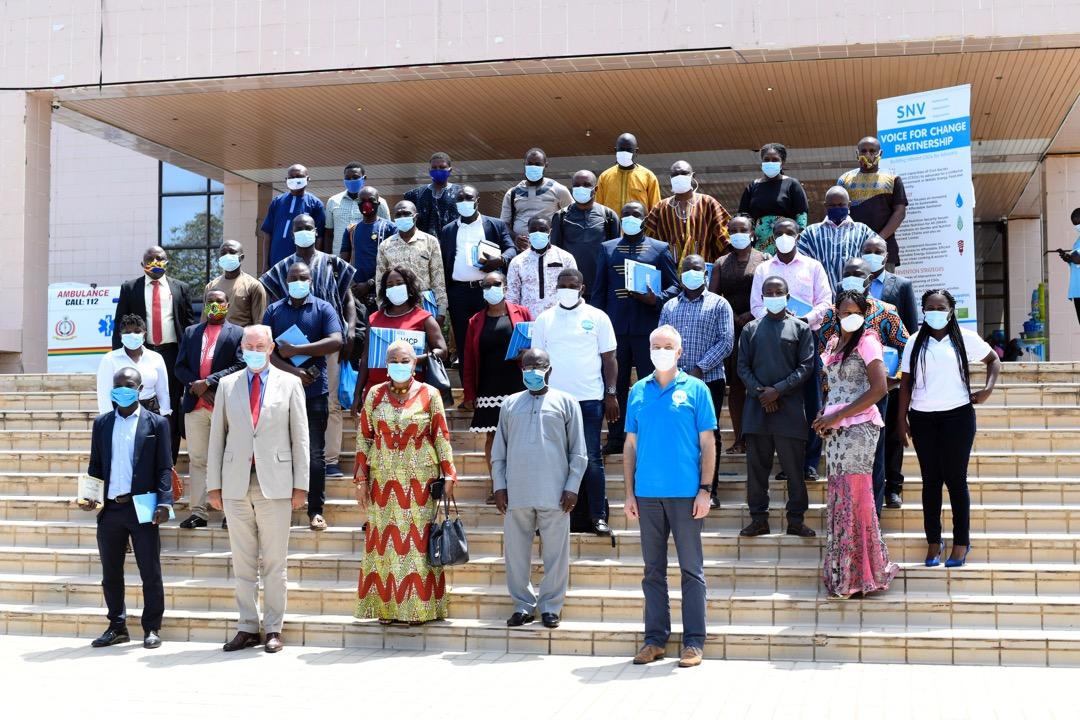
Madam Nora Ollennu, Chief Executive Officer, Intervention Forum, who represented the CSOs at the SNV Voice for Change Partnership (V4CP) programme closure and learning event in Accra, noted that for the renewable energy sector, private sector must come up with innovations that reduce pricing whilst giving value for money.
 
The event, hosted by the SNV Netherlands Development Organisation was on the theme: “Building Vibrant CSOs for Advocacy”.
 
SNV has been implementing the V4CP programme since 2016 which aims at strengthening CSOs to advocate for an enabling environment in which Governments and Businesses provide good and affordable services for low-income segments in society.
 
Through the five-year implementation period of V4CP, SNV worked extensively with their CSO partners, strengthening and enhancing advocacy towards policy formulation in three thematic areas; Food and Nutrition Security, Renewable Energy, and Water, Sanitation and Hygiene (WASH).
 
These have included knowledge and capacity building, workshops and accountability forums, town hall meetings, coaching, evidence-generation, lobbying, funding support, and baseline studies.
 
Madam Ollennu stated that for the WASH category, the CSOs identified challenges including the absence of legal provisions to allow metropolitan municipal and district assemblies (MMDAs) to retain a percentage of exacted funds from sanitation and hygiene prosecutions.
 
She said the reluctance shown by most private sector entities to invest in sanitation and hygiene due to low interest and profitability concerns, was identified.
 
She, therefore, recommended that the government should initiate the passage of an Act of parliament on quotas for MMDAs as part of sanitation fines resulting from prosecutions.
 
She said the Government should create conditions for more public-private arrangements to sustainably address existing WASH delivery gaps to strengthen efficiency, and there also be an effective collaboration, broad-based consultation and active involvement of the private sector in WASH services and end-users.
 
Mr Anjo Van Toorn, SNV Country Director, stated that V4CP had been a remarkable five- years supporting civil society organisations to engage in evidence-based advocacy.
 
He said this covered areas of improved clean cooking, access to off-grid electrification, food and nutrition, Post-Harvest Loss (PHL) reduction and sustainable sanitation and hygiene under the V4CP Programme in Ghana.
 
“Implemented in five other SNV countries; Burkina Faso, Honduras, Indonesia, Kenya and Rwanda, the V4CP project has proven to be one of our successful projects that has effectively encompassed and promoted the 3 sectors SNV specializes in; WASH, Renewable Energy and Agriculture”, he added.
 
Mr Ron Strikker, the Netherlands Ambassador to Ghana, encouraged CSOs to make sure they deliver quality; they have to be well organized, have access to political circles and the media, must be active and outgoing and have to be vocal.
 
He said CSOs could help make government more accountable to citizens, and by so doing, contributing to greater social cohesion, stronger and more open democracies, a better response to environmental problems, a better business climate, more opportunities for all and less inequality.
Minister urges educational institutions to embrace ICT in training

0
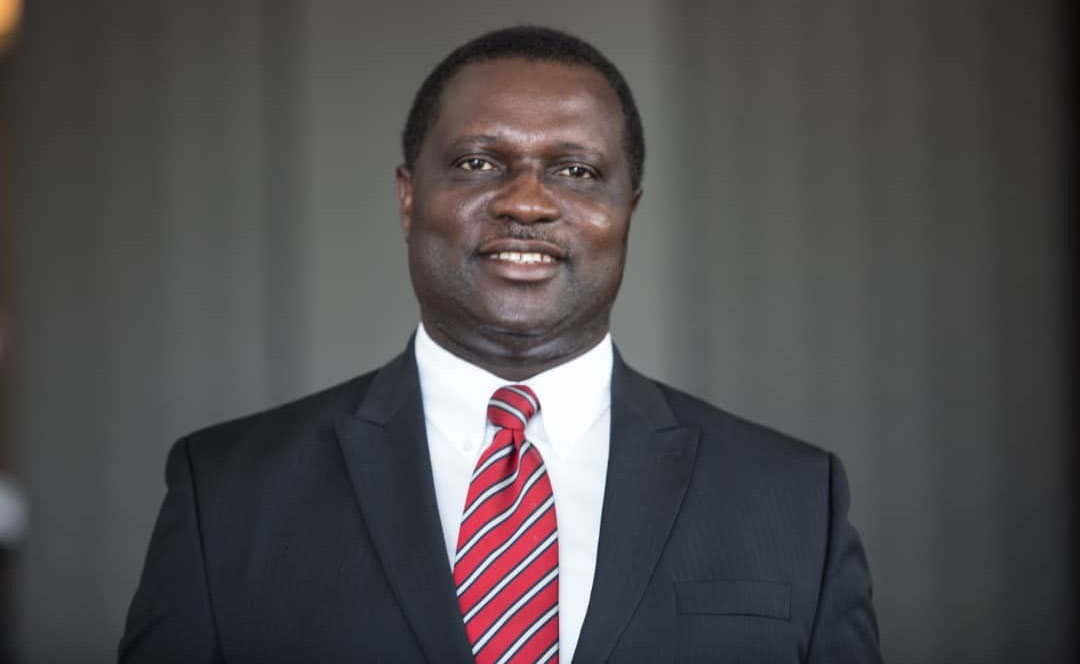
He said the outbreak of the coronavirus pandemic had reinforced the need for educational institutions to adopt and make effective use of technology to transmit instructions to their students and pupils.
 
     
Dr Adutwum made the call in a virtual message transmitted at the 8th congregation of the Jackson College of Education (JCE) at Ayeduase, in the Oforikrom Municipality.

 
     
A total of 1, 024 trained teachers, made up of 477 males and 547 females received a Diploma in Basic Education through Distance Learning.
 
     
The Deputy Minister pointed out that virtual teaching and learning had become the norm in modern educational delivery.
 
     
There is, therefore, the need for schools and training institutions to invest in that area to stay relevant and contribute to the development of the human resource needs of the country.
 
     
Dr Adutwum lauded the JCE for adhering to best practices in line with quality assurance measures put in place by the National Accreditation Board (NAB).
 
     
He advised the graduating teacher trainees to uphold the code of ethics of the teaching profession to enhance their image.
 
       
Mrs. Theodosia Wilhemina Jackson, Principal of the College, said the College had over the last eight years trained a total of 12, 411 qualified teachers for quality education delivery in the country.
 
         
The majority of these teachers who were jointly trained and issued with Diploma in Basic Education, by the College and the University of Education, Winneba (UEW), we’re currently offering their services in deprived Ghanaian communities.
 
         
“We vehemently believe, as an institution, that pupils in less privileged areas also deserve quality education as their peers in towns and cities,” Mrs. Jackson, noted.
 
       
She said children in deprived communities, when given the requisite educational opportunities, could also develop their potentials and groom into responsible adults and future leaders of the country.
 
       
Mrs. Jackson said as an institution that believed in continuous development and long-life learning, the College had introduced a project dubbed ‘Capacity Building Seminar’.
 
     
The objective is to create an arena to train students to obtain and retain the requisite knowledge and skills needed to accelerate their job competencies and employability.

 
   
 The project since its introduction has focused on issues bothering on business communication, the new Ghana Education Service Curriculum, Teachers’ Licensure Examination, and the fundamentals of English Grammar.
 
By Florence Afriyie Mensah, GNA

Catholic Church launches project to build capacities of rural women

0
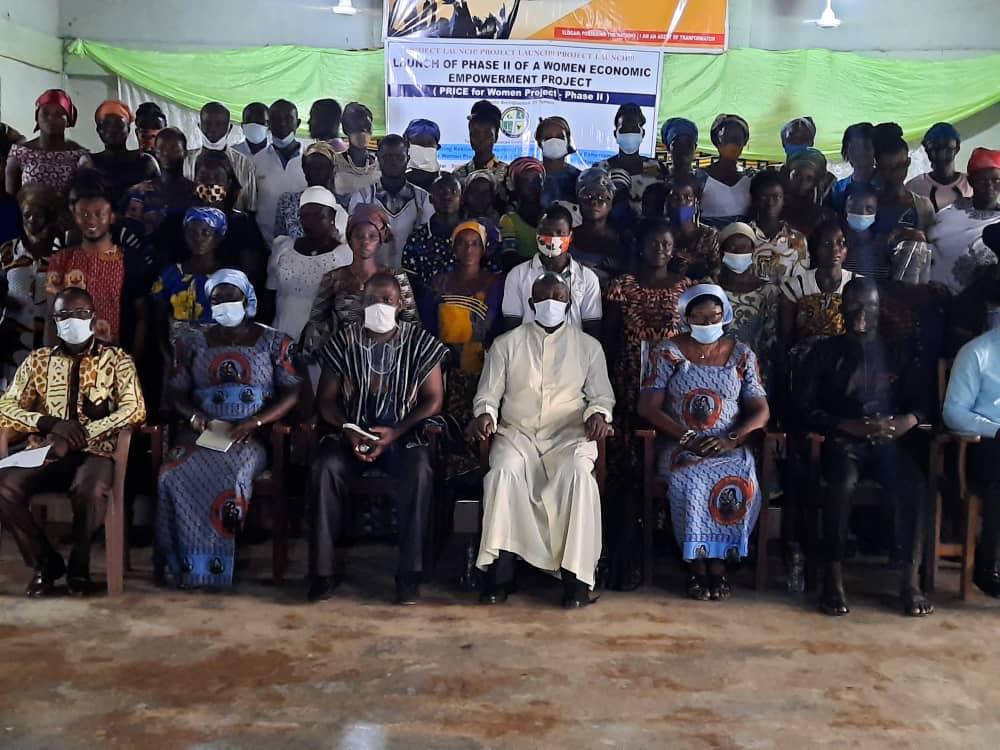
About 1000 Women living along the Eastern Corridor enclave in the Kpandai District of the Northern Region are to be enrolled onto a platform meant to improve their entrepreneurial capacities.     The Promoting Resilience for Improved Income through Capacity Enhancement for Women (PRICE) project is also to ensure that they have improved access to economic empowerment opportunities and reduce gender inequalities in traditional communities. The programme is targeting 1,000 women directly and about 28,000 indirect beneficiaries and is expected to increased rights, urgency, and capacity for decision-making.      This is the second phase of the PRICE project, which also seeks to improve access to rural financial services for 1,468 rural women in the Eastern Corridor of the country and enroll them into Village Savings and Loans Associations (VSLA) groups where at least 800 of them would access loans and savings services from the VSLA.      It will also work to promote gender-sensitive practices towards reduced inequalities.      The PRICE project, which runs until May 2023, is an initiative of the Catholic Archdiocese of Tamale and sponsored by Misereor, an organisation based in Germany.          Very Reverend Matthew Yitiereh, Vicar General of the Catholic Archdiocese of Tamale, who launched the PRICE project on behalf of the Metropolitan Archbishop of Tamale, at Kpandai, said it was in line with the Church’s human development efforts to make lives better.      Access to financial services is very low among women along the Eastern Corridor of the country and they are unable to raise the needed collateral to enable them access loans from the formal financial institutions.      Their capacity in enterprise development also is very low.      There is also inequality between men and women in the area and domestic violence was predominant in homes and communities where women are not economically empowered.      Through the PRICE project, therefore, about 15,000 community members will be sensitised on gender equity promotion and at least two men volunteers will serve as gender models and advocates in each community to amongst others reduce gender-based violence by 70 percent in project communities.      The first phase of the PRICE project ensured improved access to economic empowerment opportunities for some 250 vulnerable women and promotion of gender-sensitive practices in 10 communities targeting about 1,000 people in the broader context of the Sustainable Development Goals.      Very Reverend Yitiereh expressed confidence that through the project, women along the Eastern Corridor enclave would be empowered to better manage their resources for the benefit of all.      He expressed gratitude to Misereor for funding the project, saying the funds would be judiciously applied to ensure that they ultimately developed the beneficiaries and the Church.      Reverend Father Sebastian Zaato, Manager of the PRICE project said the project amongst others would improve financial literacy among the beneficiaries, increase their capacities to undertake sustainable entrepreneurial ventures, and further bridge the inequality gap between men and women in traditional communities.      Rev Zaato added that the project was anchored on the transformative principle of the SDGs, which stipulated that all development efforts must ensure that “No one is left behind.”      Mr Emmanuel Tatablata, District Chief Executive for Kpandai, who was represented during the launch, commended the Catholic Archdiocese of Tamale for initiating the project in the area to better the lives of women.      Mr Tatablata said he was convinced that the Assembly would create the enabling environment to ensure the success of the project, which would empower the people for self-development in line with the government’s Ghana Beyond Aid agenda.      Some of the beneficiaries of the first phase of the PRICE project praised it for helping them to identify opportunities and understand business management where they were generating enough income to take care of their families.      Madam Esther Nsiadong, one of the beneficiaries of the first phase of the project, was optimistic that the second phase would further sustain their gains and put them on the path of economic freedom.

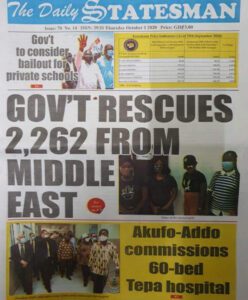
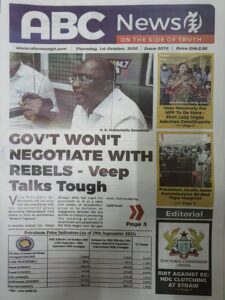
Newspaper Headlines Thursday 1st October 2020

0

Newspaper Headlines Thursday 1st October 2020

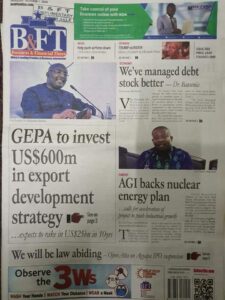
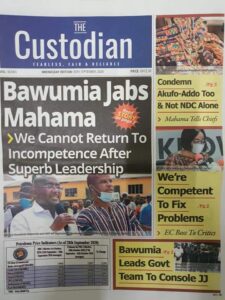
Newspaper Headlines Wednesday 30th September 2020

0

Newspaper Headlines Wednesday 30th September 2020

Africa: Orange improves access to mobile internet in Africa supported by Google

0

Affordability of devices remains one of the most significant barriers to smartphone adoption in Africa. The average cost of an entry level smartphone in Africa still exceeds 60% of average monthly income (https://bit.ly/36hb2e2) making smartphones largely inaccessible for the majority of the population. As part of the line-up of activities for the GSMA Thrive Africa 2020 (https://bit.ly/3cG3GSt), Orange (www.Orange.com) announced the Sanza touch – an exclusive Orange smartphone and the most affordable 4G Android (Go edition) device globally. This exciting new launch is supported by Google and builds upon efforts since the launch of Android (Go edition) (https://bit.ly/349O0D8) in 2018 to accelerate the pace of digital adoption across the continent. The device will retail around 30 US$ and the ultra-affordable price point is intended to make it the most accessible on the market with the goal of driving digital inclusion and providing more people access to mobile internet.

The Sanza touch is an accessible alternative for everyone due to its price point and features including the Payjoy application, which allows customers to overcome budget issues by paying for their smartphone over several instalments (depending on availability in their country [1]).

This 4G Android (Go edition) smartphone has a 4” screen, 8GB memory and a 1750mAh battery, offering over 4 hours battery life while streaming videos. Customers can use the Orange app collection (My Orange, Orange Money and Livescreen to stay informed on the latest news trends) and access the most popular apps including YouTube Go, Google Go, Facebook and WhatsApp.

The Sanza range was first launched in April 2019 in 13 countries [2] in Africa and the Middle East, making it easier for many customers to come online for the first time and discover the benefits of connectivity.

From October 2020, the Sanza touch smartphone will be available with a bundled mobile data plan (voice, SMS, data) at around 30 US$. It will be sold in most countries in the Middle East and Africa region, starting with Guinea Bissau, Côte d’Ivoire and Madagascar.

For Alioune Ndiaye, CEO of Orange Middle East and Africa: “Orange wants to strongly accelerate access to connectivity on the African continent. One of the barriers to Internet use is the price and ease of use of most smartphones. The partnership with Google to offer the Sanza touch smartphone for sale will enable us to solve this problem thanks to its affordable price and advanced functionalities. While 90% of the world’s population is now covered by mobile broadband, 3.3 billion people who live in areas covered by mobile broadband remain unconnected for reasons such as affordability, low levels of literacy and digital skills [3]. »

Mariam Abdullahi – Director, Platform Partnerships, Android and Play – Africa for Google added: “Our mission at Google has always been to “Organise the world’s information and make it universally accessible to everyone”.  We deliver this mission through building and providing our products and services via key partnerships like this one with Orange. We are excited about the endless possibilities this Sanza touch smartphone will present in learning, economic opportunities and digital accessibility. The Goal of our Android devices, including this first-of-its kind highly affordable Android (Go edition) device is to bring the power of computing equitably to all.  We can only achieve this mission if everyone is able to access devices at affordable price points to use in their daily lives and have access to the benefits presented by the digital world.

Orange is present in 18 countries in Africa and the Middle East where it had 124 million customers on 30 July 2020. With 5.6 billion euros in turnover in 2019 and 6% annual growth, Orange MEA is the Group’s main region of growth. Orange Money, its mobile-based money transfer and financial services offer is available in 17 countries and has 54 million customers. Orange, a multi-service operator, benchmark partner of the digital transformation, provides its expertise to support the development of new digital services in Africa and the Middle East.

Sanza touch images available: Mediacenter Orange.com

[1] Available in Côte d’Ivoire, Senegal and Madagascar

[2] Botswana, Burkina Faso, Cameroon, Central African Republic, Democratic Republic of the Congo, Côte d’Ivoire, Guinea Bissau, Jordan, Liberia, Mali, Morocco, Sierra Leone and Tunisia

[3] Source GSMA (https://bit.ly/2S7HUO3)


SOURCE
Orange

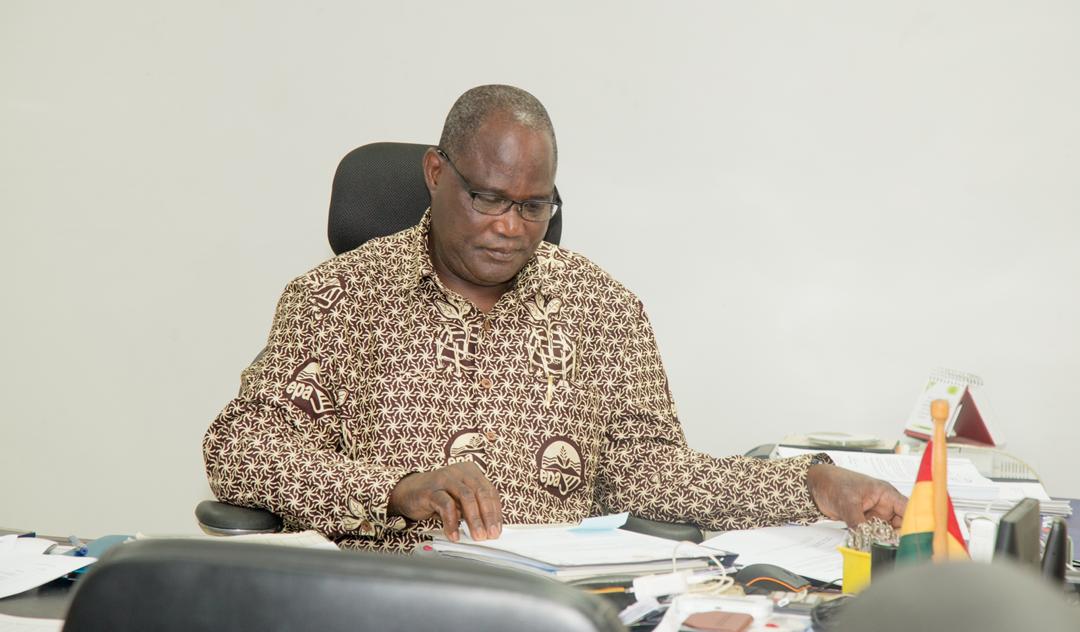
Ghana needs more enforcement of environmental laws

0
Mr Emmanuel Appoh, Deputy Director, Environmental Quality Standards of the Environmental Protection Agency (EPA) has for active enforcement of environmental laws to reduce the negative health and economic impact of air pollution.
 
‘We need to enhance the enforcement of environmental laws to protect ourselves from air pollution, which is costing the nation a fortune,” Mr Appoh, said in Accra, adding, “the authorities must apply the laws fully.”
 
The situation of air pollution, he said, is more serious in the Greater Accra Metropolitan Area (GAMA); and dwelling on the EPA Act 1994 (Act 490), announced that the Agency, would in collaboration with its stakeholders begin to enforce strictly the standards and guidelines relating to the pollution of air, water, land and noise.
 
Mr Appoh made the revelation at a training programme organized by the Environmental Protection Agency for members of the Parliamentary Press Corps at the Institute of Environmental Studies at Amasaman in the Greater Accra Region.
 
The workshop was to educate and equip the Press Corps on the issues of the environment so that they can partner the EPA in promoting environmental issues across the country.  

 
The participants discussed the EPA Laws and Regulations, Hazardous Waste Management, Environmental Quality Standards, Pesticides Management, Ozone and Climate Change.

 
Mr Appoh said the EPA would work in effective partnership with stakeholders and to catalyze change to make environmental protection and sustainable development commonly held values.
 
He said the Agency can do so by liaising and cooperating with government agencies, Metropolitan, Municipal and District Assemblies (MMDAs) and institutions to control pollution and protect the environment.
 
Mr Ekow Gurah-Sey, the Acting Director Legal of the EPA, said the EPA, being the lead institution in protecting Ghana’s environment, plans to amend some sections of the EPA laws and regulations to make it more effective in tackling environmental issues.
 
He cited for example the amendment of the Environmental Assessment Regulations of 1999 (L.I.1652) to make the offences and penalties under the rule more punitive against offenders.
 
He said the Agency had already forwarded its proposed amendments to the Attorney Generals (AG’s) Office after which they would also forward the Amendment Bill to Parliament for consideration.
 
Mr Lovelace Sarpong, the Deputy Director at the Chemicals Management Unit (CMU) of the EPA, said the government was engaging scrap collectors and providing them training on how best to practice their business to protect the environment.
 
Additionally, the EPA is embarking on environmental awareness campaigns for scrap dealers, with a further view to give them alternative livelihoods.
 
Mr Sarpong indicated that burning of car tyres and other materials and the extraction of copper from electronic waste were illegal under the new law.
 
He announced that the government had already cut the sod for the state-of-the-art recycling facility to deal with the problem of e-waste in the country.
 
Prof Abeku Blankson, a Consultant to the EPA, urged the media not only to develop an interest in the issues of the environment but must sustain it to get the needed results.
 
He urged the Press Corps to take advantage of its proximity to the Legislature to effectively shape public opinion on environmental issues.
 
GNA

Webb Fontaine Appoints New CEO

0
Alioune Ciss

Webb Fontaine (www.WebbFontaine.com) today announced that Alioune Ciss has been appointed as the new CEO, effective 1st January 2021. He succeeds in this role Didier Reymond who has successfully led the company since 2016.

Alioune Ciss has held the position of Executive Director of Sales and has been instrumental in the company’s growth strategy and management of world leading Customs reform digitalisation projects across the globe with key Governmental partners.

“While stepping away from a company and team that I am passionate about is not an easy decision, one of the key responsibilities of a good leader is to strategically decide the right time for the company and pass the reins to the right person to lead.” said Didier Reymond. 

“In his career, Alioune Ciss has built a well-deserved reputation in the Trade and Customs field strategically bringing together new technology and ideas to practically implement and change mindsets. I am confident that he will build successfully on the momentum gained over these past few years and lead, define and execute our next phase of growth.”

Having first joined Webb Fontaine in 2015, Alioune Ciss brings to the role extensive experience at the United Nations Conference on Trade and Development where he had been for the last 10 years.

“I am humbled and excited to be Webb Fontaine’s next Chief Executive Officer, working with some of the best minds in the industry. When Governments are facing significant challenges in a time of disruption, we see opportunity in global Trade – assisted by our products offering real transformation through artificial intelligence. Webb Fontaine has made significant investments in all technologies and we are ready to unleash new value for all; Perfectly positioning us to partner with Governments across the world to modernise their processes and systems.” said Alioune Ciss

As Alioune Ciss moves to CEO, Samy Zayani has been appointed Executive Director of Sales and will support the company on its aggressive growth strategy across the world.

Samy Zayani, who joined Webb Fontaine in 2012, has played a significant role in the company’s growth to date. His experience in marketing coupled with sales, is key to the development and expansion of the brand across new markets and regions; In his role managing the development, commercialisation and deployment of industry leading projects worldwide, including key Reform work with Benin, Guinea and the Cote d’Ivoire Government.

Prior to joining Webb Fontaine, Samy Zayani worked at Procter & Gamble, which enabled him to acquire a solid background in marketing and product strategy.

Pascal Minvielle, Executive Director for Technology and Project Implementation, and Francois Bonvin, Executive Director for Finance, Legal & HR shall remain in their current positions.


SOURCE
Webb Fontaine

President commissions Kasapreko juice and water Factory in Kwadaso

0
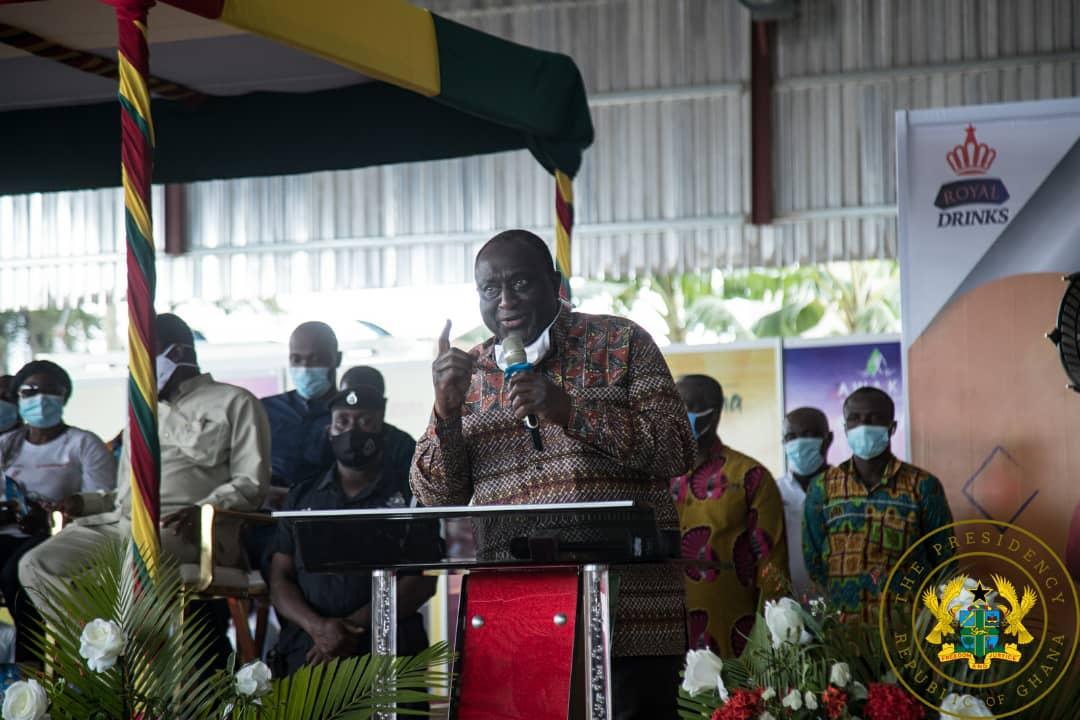
President Nana Addo Dankwa Akufo-Addo Monday commissioned the Kasapreko Water, Juice and Soft Drinks Factory at Kwadaso in the Ashanti Region.
 
The company, operating under Government’s One -District- One-Factory (1D-1F) initiative, can produce 35,000 bottles of juices and non-alcoholic soft drinks per hour, and 15,000 bottles of water per hour.
 
The factory, which will employ 300 people directly, and generate 3,000 indirect jobs through the supply chain, will cater for the Ashanti, Bono, Ahafo, Northern, Savannah, North East, Upper East and Upper West Regions, as well as export to neighbouring countries including Burkina Faso and Côte d’Ivoire.
 
Speaking at the ceremony, the President said the factory was evidence that the government’s insistence on a value-added industrial development as a panacea for economic growth was making a headway.
 
He indicated that commissioning of the factory was a  fulfilment of the promise by Government to partner the private sector to set up at least one medium to large scale enterprise in every district of the country.
 
President Akufo-Addo noted that the Kasapreko Company Ltd, with government’s support, took advantage of the 1D-1F initiative, which focused on the promotion of commercially viable business ventures, to build the new factory at Tanoso, in the Kwadaso district of the region.
 
He disclosed that as an incentive to attract private sector investments in rural economic activities, the government had granted a waiver of duties and taxes on machinery and raw materials, as well as a 5-year tax holiday to Kasapreko Company to nurture the new factory.
 
He further applauded the company for sourcing 90 per cent of its packaging materials domestically.
 
The President emphasized that government remained committed to supporting private sector operators, like Kasapreko, to become globally competitive, and to take advantage of market integration frameworks such as the African Continental Free Trade Area (AfCFTA).
 
“I am particularly pleased that a successful and innovative company like Kasapreko is finding new opportunities under the 1D1F policy, and would like to assure them of Government’s unwavering support.
 
 
“I commend the shareholders and management of Kasapreko for their diligence and commitment towards boosting the capacity of our nation towards self-reliance,” he said.
 
GNA

Your support and campaign for NPP victory is unprecedented-Speaker of Parliament

0
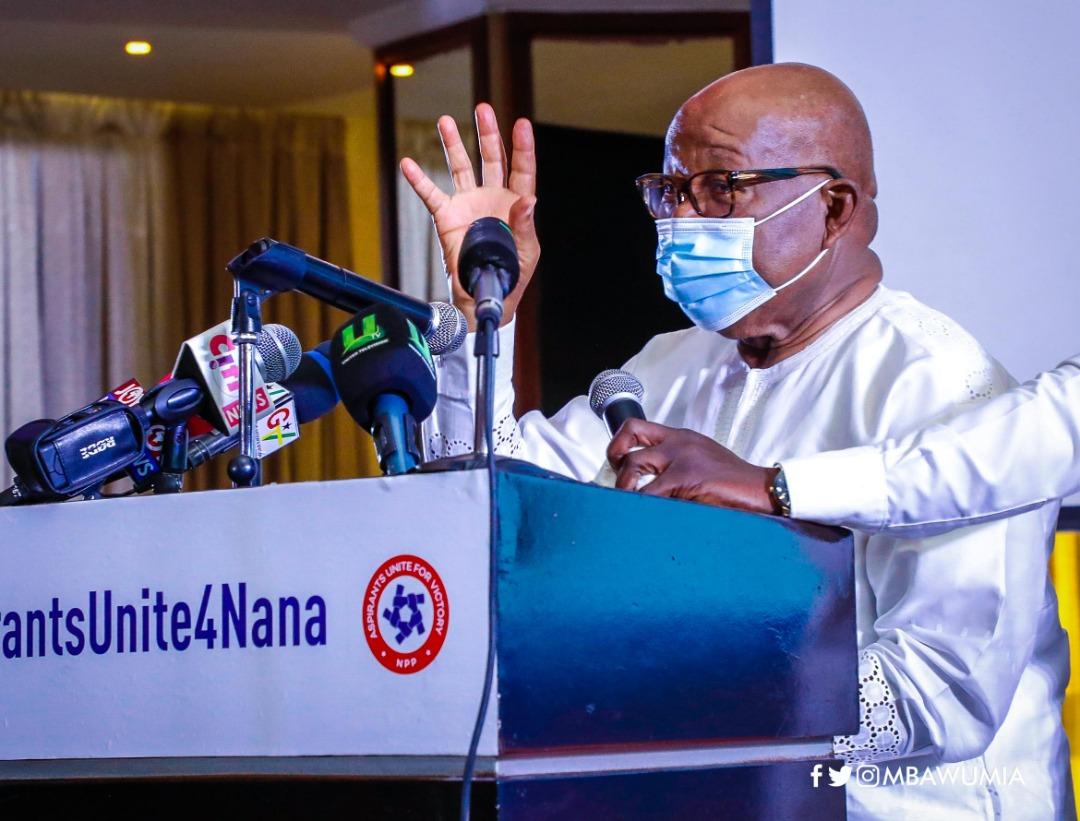
The Speaker of Parliament, Professor Aaron Mike Oquaye, has commended the ‘Aspirants Unite for Victory Movement’ of the New Patriotic Party (NPP) for joining forces to campaign for victory in the December 7 Election.
 
Speaking at the official launch of the group in Accra on Monday, Prof. Oquaye described the action of the group as unprecedented in the annals of the party.
 
The group is made of 220 parliamentary aspirants and 42 NPP sitting members of Parliament (MPs) who lost the party’s parliamentary primaries in June this year.
 
The Speaker told the defeated aspirants to take inspiration from President Akufo-Addo, who suffered several electoral defeats both within the party and general elections before eventually winning power in the 2016 general elections to become the President of the Republic.
 
Prof. Oquaye entreated them to work assiduously to ensure victory for the President and all the 275 parliamentary candidates of the party.
 
He indicated that usually after the party’s primary, there was much bitterness and agitations from aspirants who lost the bid to contest on the ticket of the party.
 
That internal wrangling, he said, mostly cost the party in the general elections, especially when those who lost in the primary contested as independent candidates and refused to campaign for the party.
 
Prof. Oquaye asked the aspirants not to rest on their oars, but campaign vigorously to ensure the NPP maintain the majority seats in parliament, to support the passage of policies of the ruling government.
 
Members of the group have announced plans to adopt Upper West Akyem and Mion constituencies, which the NPP has never won and to campaign vigorously to win for the first time.
 
They also intend to intensify media engagements and produce documentaries to drum home the achievements of the party over the past three and a half years in government.
 
GNA