Home Blog Page 118

Barnier to resign as French PM after government collapse.

0

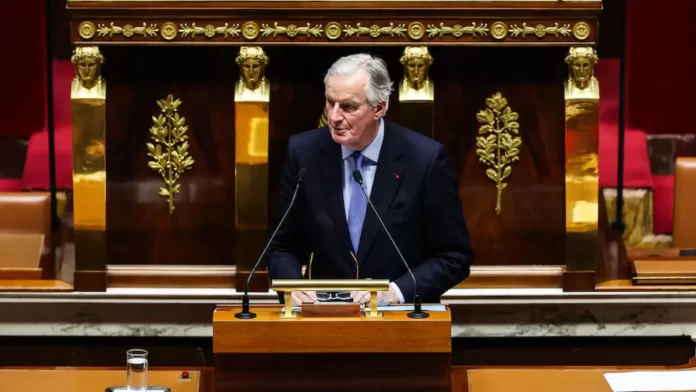
France’s Prime Minister Michel Barnier is expected to tender his resignation today, hours after being ousted in a no-confidence vote.

Barnier’s government collapsed after MPs voted overwhelmingly in support of the motion against him, just three months after he was appointed by President Emmanuel Macron.

The prime minister is likely to stay on as caretaker while Macron chooses a successor, a process which could take weeks.

Last night’s vote was the first time a French government had been voted down by parliament in more than 60 years.

Marine Le Pen’s far right and the left-wing New Popular Front both united to censure Barnier’s government after the former Brexit negotiator controversially used special powers to force through his budget without a vote.

A total of 331 voted in support of the motion, far more than the 288 required for it to pass.

Barnier is now obliged to present the resignation of his government, while the budget which triggered his downfall was automatically withdrawn.

Macron, who has returned to France following a state visit to Saudi Arabia, is due to give a televised speech to the nation on Thursday evening.

The president is constitutionally unaffected by Barnier’s resignation. But many opposition politicians are increasingly open about wanting to force him to resign and call early presidential elections – something Macron has insisted is off the cards.

EPA-EFE/REX/Shutterstock Marine Le Pen, who has a bleach blonde cropped bob and kohl-rimmed eyes, smiles as she is interviewed on a French TV channel
Marine Le Pen said the “only dignified solution” for opposition MPs was to oppose the budget

The left-wing alliance New Popular Front (NFP), which won the most seats in the parliamentary elections, had previously criticised Macron’s decision to appoint centrist Barnier as prime minister over its own candidate.

Alongside the far-right National Rally (RN), it deemed Barnier’s budget – which included €60bn (£49bn) in deficit reduction – unacceptable.

Marine Le Pen, the RN leader, said the budget was “toxic for the French.”

Ahead of the vote, Barnier told the National Assembly that voting him out of office would not solve the country’s financial problems.

“We have reached a moment of truth, of responsibility,” he said, adding that “we need to look at the realities of our debt.”

“I did not present almost exclusively difficult measures because I wanted to.”

In an interview with French broadcaster TF1 on Wednesday, Le Pen said there was “no other solution” than to remove Barnier.

Asked about the French president’s prospects, she replied: “I am not asking for the resignation of Emmanuel Macron.”

Many of her allies, however, are increasingly openly hoping they can force him to resign. RN adviser Philippe Olivier told Le Monde the president was “a fallen republican monarch, advancing with his shirt open and a rope around his neck up to the next dissolution [of parliament].”

No new parliamentary elections can be held until July, so the current deadlock in the Assembly – where no group can hope to have a working majority – is set to continue.

CBG renovates sick-bay at Mpraeso Senior High School.

0

Mr. Daniel Wilson Addo, the Managing Director (MD) of Consolidated Bank Ghana (CBG), has inaugurated the renovated infirmary of the Mpraeso Senior High School to address the immediate medical needs and improve the well-being of the students.


The provision would end the situation where students were forced to seek medical attention far from the school, with its related risks.


The CBG, he said, financed the refurbishment of the facility as part of its Corporate Social Responsibility (CSR).


The MD said the bank’s CSR efforts focused on health, education, and community development pillars that aligned closely with the United Nations Sustainable Development Goals (SDGs).


He said by investing in this sick bay, CBG aimed to ensure timely access to essential and emergency healthcare services in the school.


The MD commended the staff and management of the school for their dedication to shaping young minds.
Mr. Williams Frempong Nyarko, Ghana Education Service (GES) Municipal Education Director, expressed his delight about the renovation of the sick bay.


The sickbay would not solely be beneficial to the students but also candidates who sat for the Basic Education Certificate Examination (BECE) and faced emergency health problems, he explained.

Special Voting: Eastern, Western regions vote today.

0
????????????????????????????????????

Eligible voters in the Eastern and Western regions are taking their turn to vote today (December 5) in the special voting exercise meant for security agencies, officials of the Electoral Commission (EC), journalists and other persons who will be playing special roles in the December 7 general election.

The exercise will take place at 33 voting centres in the Eastern Region and 17 in the Western Region from 7 a.m. to 5 p.m.

A total of 131,478 voters, representing 0.007 percent of the total registered voters (18,741,159), is captured in the list of special voters by the EC.

Although the special voting took place across the country on Monday (December 2), it could not be held in the two regions following the recall of ballot papers for the presidential and parliamentary elections.

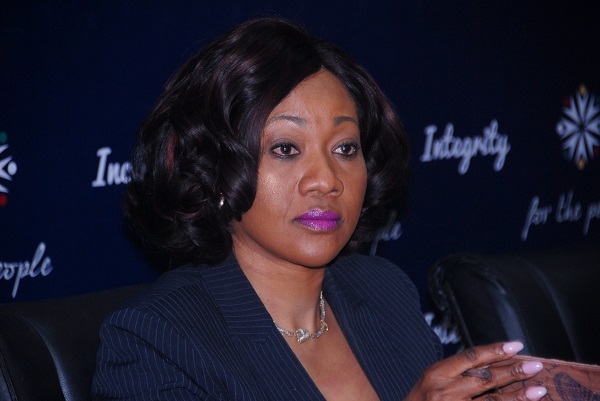
As explained by the Chairperson of the EC, Jean Mensa, during an emergency Inter-Party Advisory Committee (IPAC), the decision to recall the printed ballot papers was prompted by the detection of a broken seal on electoral materials in the Eastern Region.

In the case of the Western Region, there were no reported challenges with the ballot papers, but the EC suspended the special voting in the region as a precautionary measure because the printing press responsible for the Eastern Region ballots also handled those for the Western Region.

EC’s preparedness

Meanwhile, in an interview with Joy FM Mid-day News yesterday, which was monitored by the Daily Graphic, the Deputy Chairperson of the EC in charge of Corporate Services, Dr Eric Bossman Asare, said the Commission was ready for the special voting exercise in the two regions.

Dr. Asare said the necessary logistics for the election had already been dispatched to the respective regions.

“We expect that all those who are special voters in these two regions, regardless of where they are located now, will be able to make it to their special voting centres,” he said.

Again, he said adequate measures have been put in place to ensure a free, transparent and fair election.

“We had a meeting with the parties, and all of us are committed to the integrity of the process. The main conclusion from that meeting was about ensuring that the election will be very fair, free, transparent and embedded in integrity,” he added.

Caution

In a similar interview on Asempa FM’s Eko Sii Sen, the Director of Training at the EC, Dr Serebour Quaicoe, urged eligible persons on the special voters list in the two regions to go out and vote because they would not have the opportunity to do so on Saturday, December 7.

“If your name appears on the special voters list and you fail to go there to vote, bear in mind that you will not be able to vote because your name will be on the absent voters list,” he said.

He added that the temporary staff of the EC had been trained and well-conditioned to stick to the professional duties during the elections to guarantee its integrity.

Dr. Quaicoe urged the agents of political parties to cooperate with the EC officials for the smooth conduct of the election.

Election 2024: I’ll accept results only if process is fair, transparent—Mahama.

0

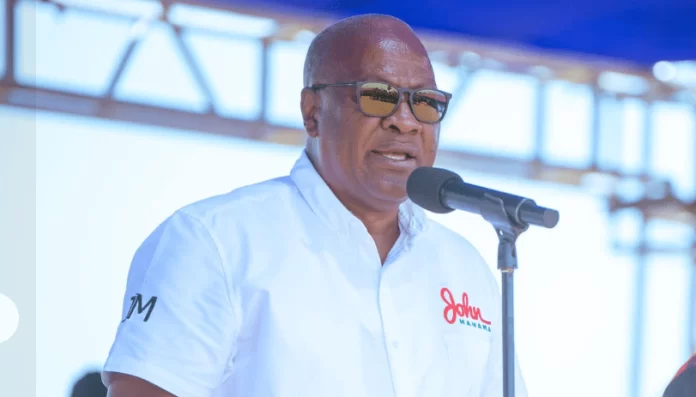
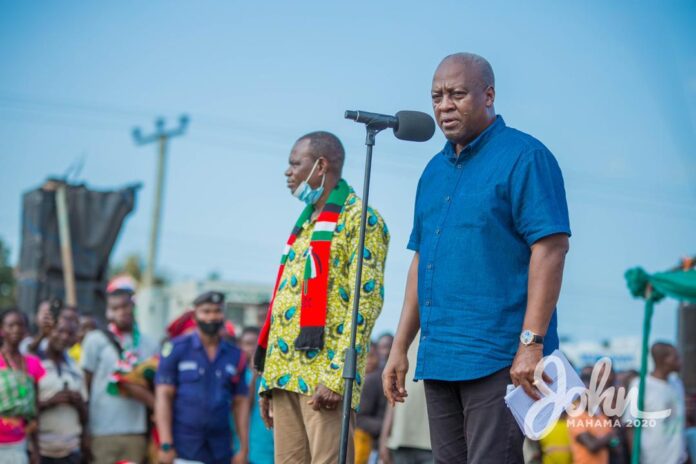
Ahead of the December 7 General Election, the flagbearer of the National Democratic Congress (NDC), John Dramani Mahama, has stated that he will only accept the election results if the process is transparent and credible.

In an exclusive interview with the BBC, Mahama expressed concerns about the fairness of the electoral process and emphasized that he would not accept the outcome if the election was tainted by violence or irregularities.

He highlighted the importance of ensuring a free and fair election, noting that the integrity of the process is crucial for the country’s democracy.

“If on the election day, there is widespread ballot snatching, beating of people and the military moving in and intimidating people and thugs are all over the place, rampaging the place, you want me to accept that result? It will depend on the transparency and the fairness of the process,” he stated.

Akufo-Addo Commissions 3 More District Hospitals In Eastern Region.

0

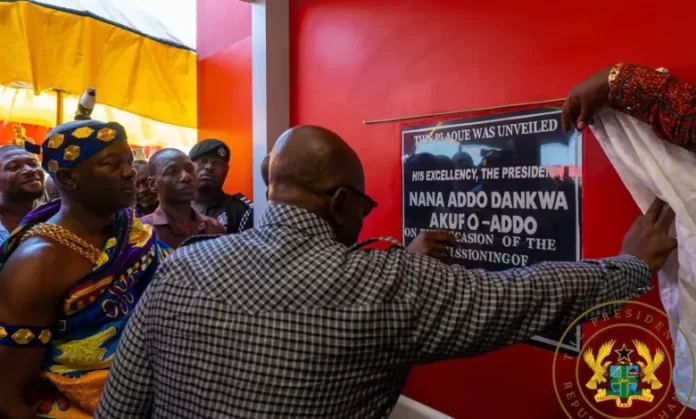
In a significant boost to Ghana’s healthcare infrastructure, President Nana Addo Dankwa Akufo-Addo has commissioned three new 40-bed district hospitals in the Eastern Region.

The hospitals, located in Adukrom in the Okere District, Jumapo in the New Juaben North Municipality, and Kwabeng in the Atiwa West District, bring the total number of hospitals commissioned by the President in recent weeks to seven.

This latest commissioning is part of a larger project that involves the construction of 12 new 40-bed hospitals across the Ashanti, Eastern, and Greater Accra regions, as well as a polyclinic in the Brong Ahafo region.

The project, which was initiated by former Health Minister Kwaku Agyeman Manu in 2020, aims to improve healthcare infrastructure and services in Ghana.

The hospitals are equipped with state-of-the-art facilities, including an Out-Patient Department, Public Health Department, theatre, and residential accommodation for hospital workers. Each hospital has a 36-seater capacity waiting room, three ante-natal consulting rooms, a counselling room, and two offices for Public Health Officers.

The hospitals also have a Surgical Suite, 8-bed Paediatric Ward, 8-bed Male Ward, 8-bed Female Ward, four Labour Delivery stations, 8-bed Maternity Ward, 4-bed Lying-in, and 2-bed Recovery room.

The construction of the hospitals was undertaken by VAMED Engineering GmbH of Austria, with funding from Erste Group Bank AG and Česká Spořitelna a.s.

The total cost of the project is €71,500,000, which includes the construction and equipping of the hospitals, as well as the provision of 12-units of 2-bedroom semi-detached accommodation for hospital workers at each facility.

President Akufo-Addo urged the staff and people of the areas to ensure that the facilities are adequately administered and maintained to ensure that the government’s commitment to improving the health status of all residents in the country through improving healthcare infrastructure is realized.

The commissioning of the three hospitals in the Eastern Region follows the commissioning of four hospitals in the Ashanti Region last month.

The four hospitals, located in Drobonso, Sabronum, Twedie, and Suame, were also part of the larger project to improve healthcare infrastructure in Ghana.

With the commissioning of these hospitals, the government has demonstrated its commitment to improving healthcare services in Ghana.

The hospitals are expected to provide quality healthcare services to residents in the Eastern Region and beyond, and will help to reduce the burden on existing healthcare facilities in the region.

Women in Cybersecurity: Bridging the Gender Gap in Ghana’s Tech Industry.

0

Women all over the world continue to grapple with unfairness, discrimination and unequal representation in workplaces—the Tech industry is no exception.


The industry faces a significant skills gap, with women vastly underrepresented. According to Cybersecurity Ventures, women make up only 11 percent of the global cybersecurity workforce.


Creating equal opportunities for women in cybersecurity is crucial to bridging this gap and fostering a more diverse, innovative, and resilient industry.


The Gender Gap in Tech
Statistics reveal the scope of the gender imbalance across the workforce. Globally, less than half of working-age women participate in the workforce, and those who do often earn less than their male counterparts.


In tech specifically, women hold only 28 percent of jobs, with an even smaller percentage of five per cent occupying leadership positions. Women of colour, including Black women, are particularly underrepresented in the field.


In Ghana, women represent about 17.57 percent of the tech workforce, with the majority working in sectors like manufacturing, mining, and public utilities. While this shows some participation, the representation of women in more specialized and technical fields such as cybersecurity remains low.


Challenges Facing Women in Cybersecurity

Gender bias remains one of the most significant hurdles for women in the cybersecurity field. Mrs. Olayinka Naa Dzama Wilson-Kofi, President of Women in Cybersecurity (WiCyS), West Africa, highlights several key challenges women face, including gender stereotyping, lack of mentorship, and unequal recognition in the workplace.


Her own journey in cybersecurity has been fraught with obstacles. Throughout her career, she has experienced discrimination, intimidation from male colleagues, and difficulty achieving a healthy work-life balance.


Despite these challenges, Mrs Wilson-Kofi has built a successful career spanning over 16 years, working across Ghana, Nigeria, and now with Ericsson as an Information Security and Privacy Specialist.


Her experience reflects a broader trend in the industry. Women often face fewer opportunities for career advancement and are underpaid compared to their male counterparts. In addition, the lack of female mentors in the cybersecurity space exacerbates these challenges.


Mrs Wilson-Kofi herself was fortunate to have a male mentor in the person of Mr. C. K. Bruce, Chief Executive Officer of Innovare, Ghana, however she believes that having female role models would provide greater insight into the unique struggles women face in this field.


A Story of Resilience: Mrs. Wilson-Kofi’s Journey

Mrs. Wilson-Kofi’s passion for technology began as a child in Tema, Ghana, where she developed an interest in computers in the 1990s. Despite financial constraints, she pursued her passion for IT with the support of her family. Her father took out loans to fund her education, enabling her to pursue a career that seemed out of reach for many women her age.


Overcoming challenges such as gender stereotyping, Wilson-Kofi has played a key role in developing cybersecurity policies and initiatives in organisations like the National Lotteries Authority and Ecobank.
Today, she mentors women across Ghana and internationally, helping to inspire and guide the next generation of female cybersecurity professionals.


Wilson-Kofi’s story is a testament of resilience and determination. Her journey underscores the importance of perseverance in overcoming societal barriers and achieving success in a male-dominated industry.


WiCyS West Africa: Empowering Women in Cybersecurity
Under Mrs Wilson-Kofi’s leadership, Women in Cybersecurity (WiCyS) West Africa is working to bridge the gender gap in the cybersecurity field. The organisation aims to improve diversity in the cybersecurity workforce by offering mentorship, training, and networking opportunities for women across the region.


WiCyS is a global non-profit established in 2012, with chapters in several countries, including the U.S. and Ghana. The West Africa chapter, which began in 2022, focuses on creating more opportunities for women in cybersecurity across countries such as Ghana, Nigeria, Togo, and Côte D’Ivoire.


The organisation’s mission is to provide support for women in the field and help them overcome the unique challenges they face.


WiCyS offers various initiatives, including student chapters at universities like the University of Ghana and Accra Technical University, as well as partnerships with organizations like Cyber Bells.
These partnerships help raise awareness of cybersecurity and encourage young girls to pursue Science, Technology, Engineering, and Mathematics (STEM) education.


Creating Opportunities for Women in Tech
Mrs Wilson-Kofi advocates creating funding schemes, such as grants and scholarships, to support women pursuing careers in STEM. Such funding could help alleviate the financial barriers that many women face when entering the tech industry, enabling them to pursue their goals without the burden of student loans.


She also calls for partnerships between the government and tech training institutions to organise boot camps that offer hands-on experience, as well as mentorship programmes where successful professionals can guide and inspire women. These initiatives can help close the skills gap by providing practical experience and fostering a supportive community.


In addition, Mrs Wilson-Kofi emphasises the importance of incorporating hands-on training into university curricula, allowing students to gain industry experience before they graduate. This real-world experience will equip them with the skills needed to succeed in the competitive cybersecurity field.


On the part of parents, she encourages support for young girls interested in STEM education, stressing that parents play a vital role in helping their children navigate the digital world safely and responsibly.
She advises parents to monitor their children’s use of the internet, set appropriate screen time, and provide guidance on how to explore the digital world safely.


A Collective Effort for Change
Empowering women in cybersecurity requires a concerted effort from governments, organisations, educational institutions, and individuals. The goal is to close the gender gap, foster a more inclusive work environment, and create opportunities for women to thrive and lead in this critical field.


Organisations like the Cyber Security Authority and WiCyS play a pivotal role in providing mentorship, training, and a supportive network for women in cybersecurity.


By breaking down barriers and fostering a culture of inclusion, these institutions are helping to create a more diverse and resilient cybersecurity workforce.


As the industry continues to evolve, it is essential to create equal opportunities for women to enter and succeed in cybersecurity.


With the right support, policies, and initiatives, women can play a vital role in shaping the future of cybersecurity—both in Ghana and globally.

Prez Akufo-Addo urges end to gender disparities to curb HIV/AIDS.

0

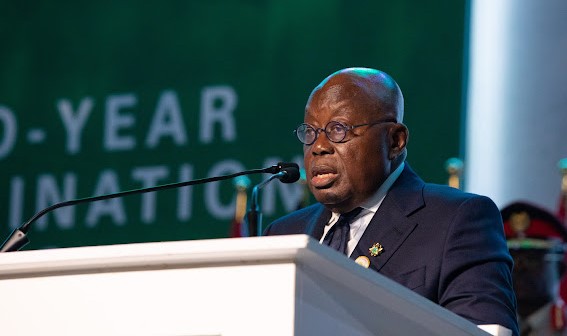
President Nana Addo Dankwa Akufo-Addo has highlighted the urgent need to tackle gender disparities to effectively end the HIV and AIDS epidemic in Ghana. 


He stated that Ghana cannot eliminate AIDS without addressing gender-based violence, harmful practices such as child marriage, and the silence surrounding these issues in many communities. 


The President made the call in a speech delivered on his behalf by Mr. Osei-Kyei Mensah Bonsu, Member of Parliament for Suame, during a durbar held to commemorate the 2024 World AIDS Day celebration in Accra. 


Research shows that globally, 44 percent of new HIV infections occur in women, with women and girls accounting for 62 percent of new infections in Sub-Saharan Africa. 


In Ghana, women represent 60 percent of all new HIV infections. 


“It is alarming that two-thirds of people living with HIV are women, and that adolescent girls account for the majority of new infections among young people,” President Akufo-Addo said. 


“These are not just numbers, they are our daughters, they are our nieces, they are our sisters. 


“We cannot end AIDS if we ignore the challenges of gender-based violence, harmful practices like child marriage, and the silence around these issues in many of our communities,” he stated. 


The President said that despite Ghana’s progress in tackling HIV, stigma and discrimination remained persistent challenges. 


He urged unity among healthcare workers, civil society groups, religious leaders, and communities for ongoing education and advocacy. 
President Akufo-Addo also assured that the government had taken decisive steps, including waiving import duties on essential commodities and making significant investments in procuring antiretroviral medicines, to resolve the issue of co-financing. 


World AIDS Day is observed annually to reflect on the impact of HIV on millions of lives worldwide. 


It provides an opportunity to assess progress in managing and controlling the epidemic, celebrate successes, identify challenges in service delivery, and renew commitments towards ending AIDS by 2030. 


Dr. Kyeremeh Atuahene, Director-General of the Ghana AIDS Commission, said Ghana had made considerable progress in its national response to HIV, including maintaining a low prevalence rate of 1.5 percent as well as increased access to essential prevention, treatment, care, and support services. 


“We are implementing the right policies, proven strategies, and standard models of care to help accelerate progress towards achieving the 95-95 targets and eventually attain epidemic control,” he said. 
Dr. Atuahene acknowledged that despite Ghana’s progress in addressing HIV, the epidemic curve remained high with slow declines in new infections and AIDS-related deaths. 


He attributed this to a low uptake of HIV services, with 35 percent of people living with HIV unaware of their status and 55 percent not on antiretroviral treatment (ART).

 
Dr. Atuahene emphasised that ART not only prevents disease progression but also lowers the viral load to undetectable levels, preventing transmission. 


He urged the public to take advantage of free HIV testing and stressed the importance of unity and enhanced prevention efforts to achieve the 95-95-95 targets. 


In attendance at the event were the World Health Organisation (WHO) Country Representative, the Deputy Chief of Mission from the US Embassy, traditional leaders, and the Secretary-General of the Trade Union Congress, among others. 


The event featured an exhibition, community engagement activities, and the distribution of HIV awareness materials, condoms, and information on medical services. Additionally, HIV testing, blood pressure screenings, and other health services were provided to participants. 

SHS Staff, Students Break To Vote On Saturday.

0

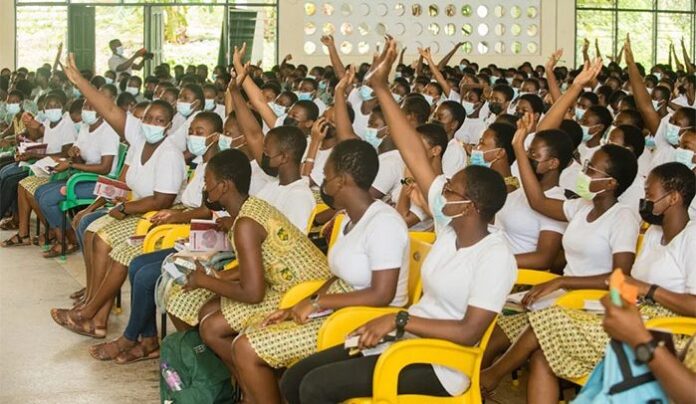
In a move to ensure that all eligible staff and students of Senior High Schools (SHS) exercise their constitutional right to vote, the Ghana Education Service (GES) has announced a special break for all SHS staff and students.

According to a letter dated November 29, 2024, and signed by Dr. Kwabena Bempah Tandoh, Deputy Director-General (Q&A) of the GES, all SHS schools are to close on Thursday, December 5, 2024.

This break will allow staff and eligible students to travel to their respective constituencies to cast their votes in the upcoming general election scheduled for December 7, 2024.

The GES has instructed Regional Directors of Education to ensure that heads of SHS schools strictly adhere to this directive.

This move is aimed at ensuring that all eligible voters among the SHS staff and students exercise their franchise and participate in shaping the future of Ghana.

The Ghana Education Service has consistently demonstrated its commitment to supporting the nation’s democratic process.

In May 2024, the GES granted permission to SHS students who had attained the age of 18 and above to take a four-day break to register and participate in the voter registration exercise.

Govt operating fake news machinery to tarnish my image—Mahama.

0

The flagbearer of the National Democratic Congress (NDC), John Dramani Mahama, has accused the New Patriotic Party (NPP) government of operating a covert fake news operation aimed at spreading misinformation to tarnish his image.

During a visit to the Asantehene, Otumfuo Osei Tutu II on Tuesday, November 3, as part of his campaign tour in the Ashanti Region, Mahama alleged that this disinformation campaign is part of a deliberate strategy to undermine his credibility ahead of the 2024 elections.

Addressing specific claims, Mahama urged the Asantehene to disregard reports accusing him of orchestrating an attack on his convoy in Techiman. He dismissed such allegations as baseless and intended to sow discord.

Mahama emphasized his commitment to peaceful campaigns and expressed his desire for credible and transparent elections, urging all stakeholders to prioritize unity and national interest over divisive tactics.

“The seat of government knows about the recent propagation of fake news…Because their campaign has failed, they have resorted to lying and propagating fake news.

“But I know God knows everyone’s heart, and just as He enstools kings, He will have mercy on us and enstool His king,” he stated.

Black Stars players send important message to Ghanaians ahead of 2024 General Elections.

0

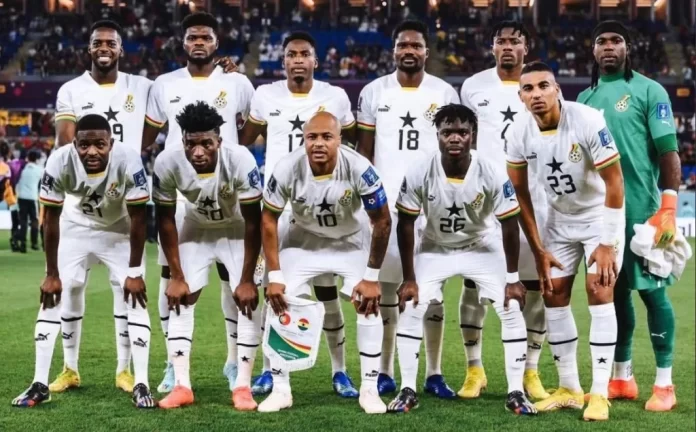
Black Stars players are calling on Ghanaians to embrace peace in the upcoming 2024 general elections this weekend.

Ghanaians go to the polls on Saturday, December 7, 2024 to elect a new Ghana president and parliamentarians for the next four years.

A video broadcasted on the Black Stars social media channel saw Mohammed Kudus, Gideon Mensah, Manaf Nurudeen and others imploring Ghanaian to ensure a peaceful election.

Additionally, they appealed to citizens to refrain from action that could lead to violence before and after the elections while urging them to protect the integrity of Ghana’s democracy by accepting the outcome of the elections.

Meanwhile, the Black Stars will for the first time in 20-years miss the Africa Cup of Nations after falling short in the qualifiers.

Ghana, who are four-time champions of the AFCON finished bottom of Group F in the recently concluded qualifiers.

The team succumbed to three defeats and three draws during the 2025 AFCON qualifiers.