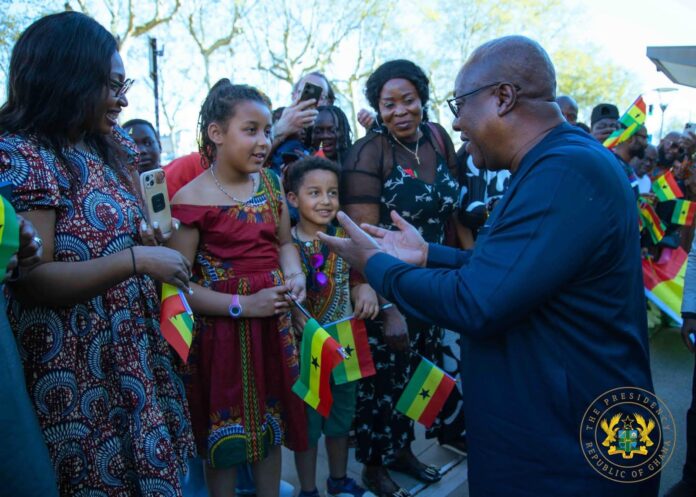
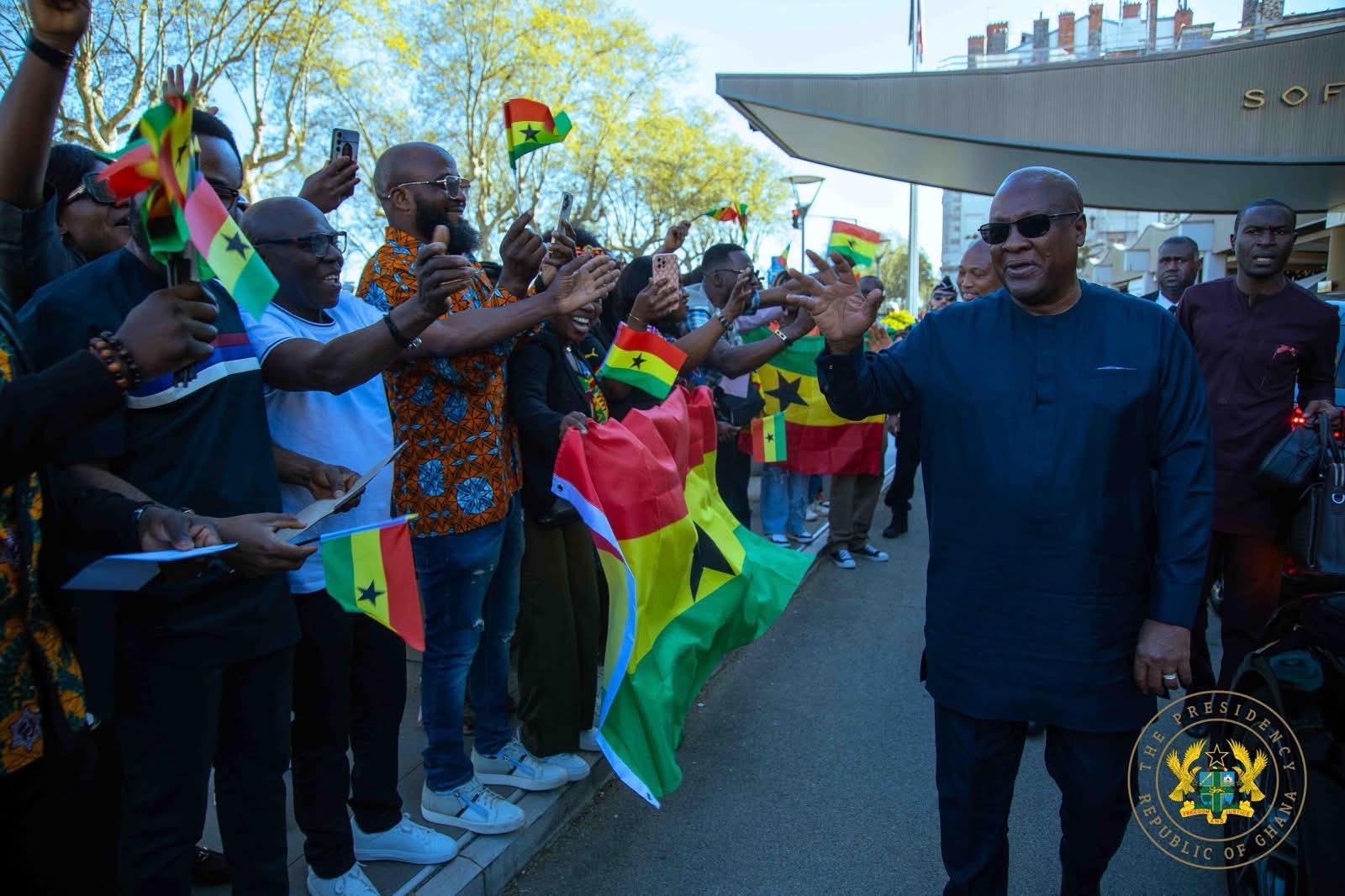
President John Dramani Mahama has arrived in Lyon, France, to attend the One Health Summit, a high-level gathering of world leaders, health ministers and global health experts.
The President will co-chair the summit alongside French President Emmanuel Macron.
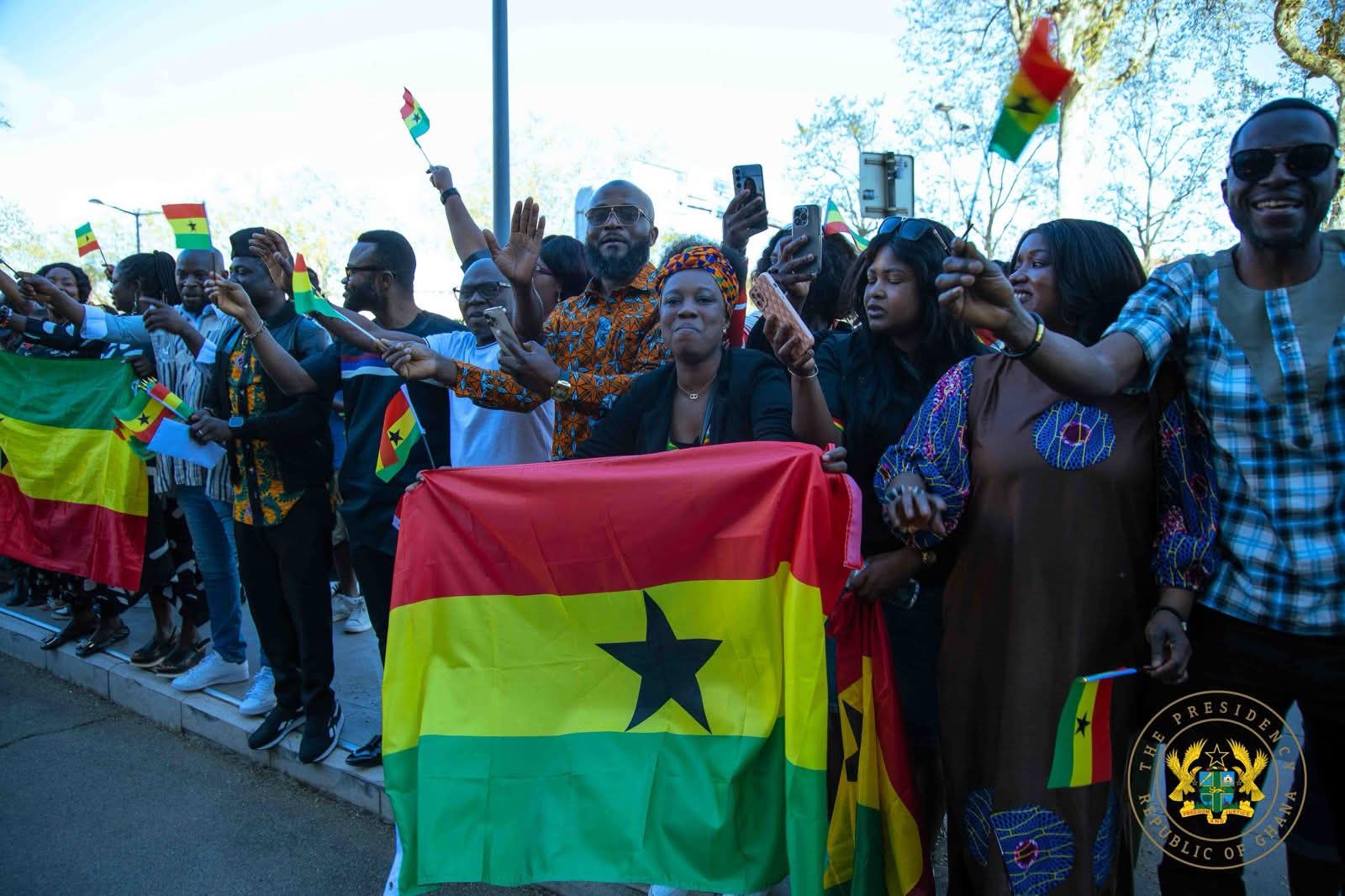
A statement issued by the Presidency said President Mahama was warmly welcomed on arrival by Ghanaian families resident in Lyon, who came out in their numbers to meet him on Easter Monday.
According to the statement, President Mahama will travel to Paris after the summit on Tuesday for a bilateral meeting with President Macron at the Élysée Palace.
President John Dramani Mahama has joined the Gonjaland Youth Association in Buipe to mark its fiftieth anniversary, and reaffirmed Government’s commitment to the development of the Savannah Region.
Addressing participants, the President outlined key interventions in the education sector, including plans to establish STEM schools in Tinga and Busunu, expand infrastructure across Senior High Schools, and upgrade selected Category B schools to Category A status.
He emphasised the transformative role of education, stating, “Education is the bridge between where we are and where we aspire to be.”
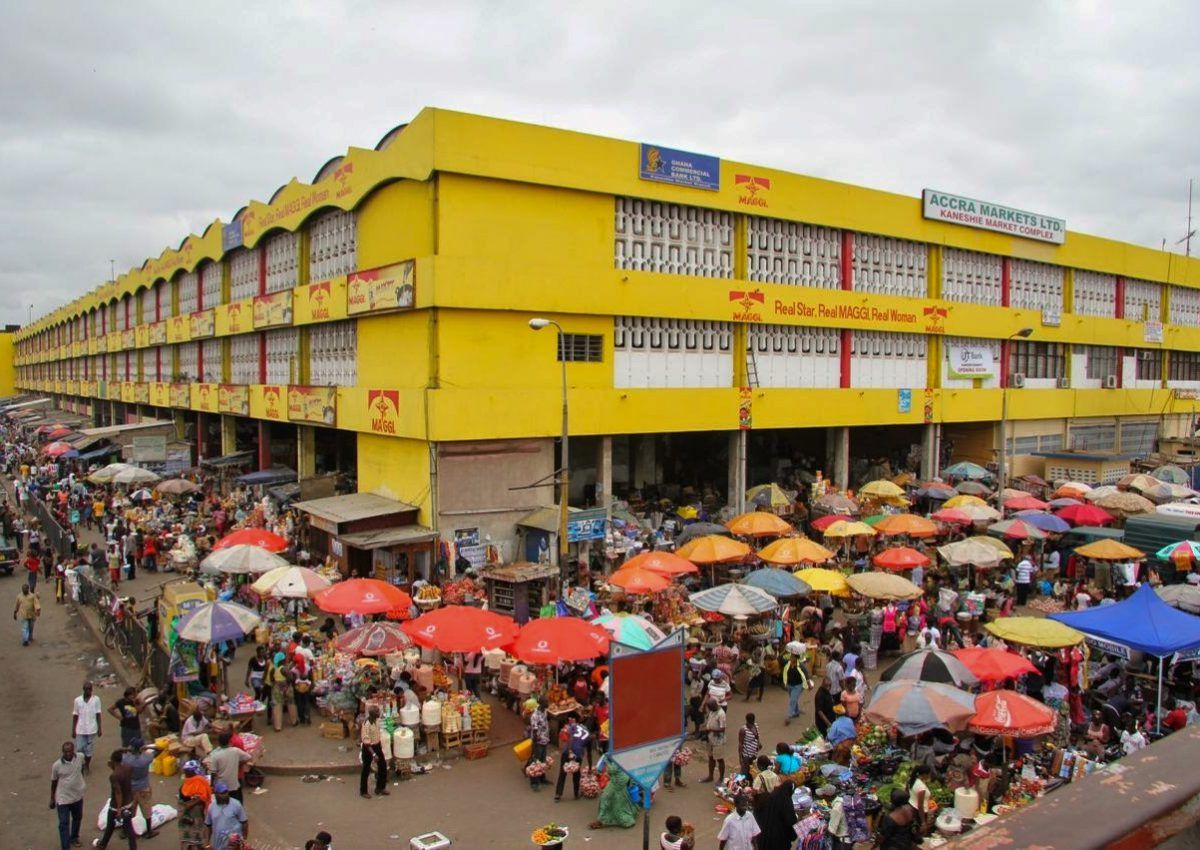
The President also announced plans for a modern sports stadium for the region, alongside the construction of 24-Hour markets in every district to drive job creation, support businesses, and expand economic opportunities, particularly for the youth.
The Ministry of Trade, Industry and Agribusiness has announced that sachet water prices will remain unchanged following engagement with industry stakeholders.
The decision follows a meeting between the Ministry, the Ghana Plastic Manufacturers Association (GPMA) and the National Association of Sachet and Packaged Water Producers (NASPAWAP).
“Consumers can continue to purchase sachet water at the current price,” the Ministry stated.
NASPAWAP had earlier announced a planned price increase on April 2, citing rising production costs linked to global supply disruptions.
The Ministry commended stakeholders for suspending the adjustment, which was to take effect on Monday, April 6, 2026.
“This decision reflects our commitment to protecting consumers and ensuring market stability,” it said.
The Ministry said it would “remain steadfast” in working with trade associations to address industry concerns and maintain price stability.
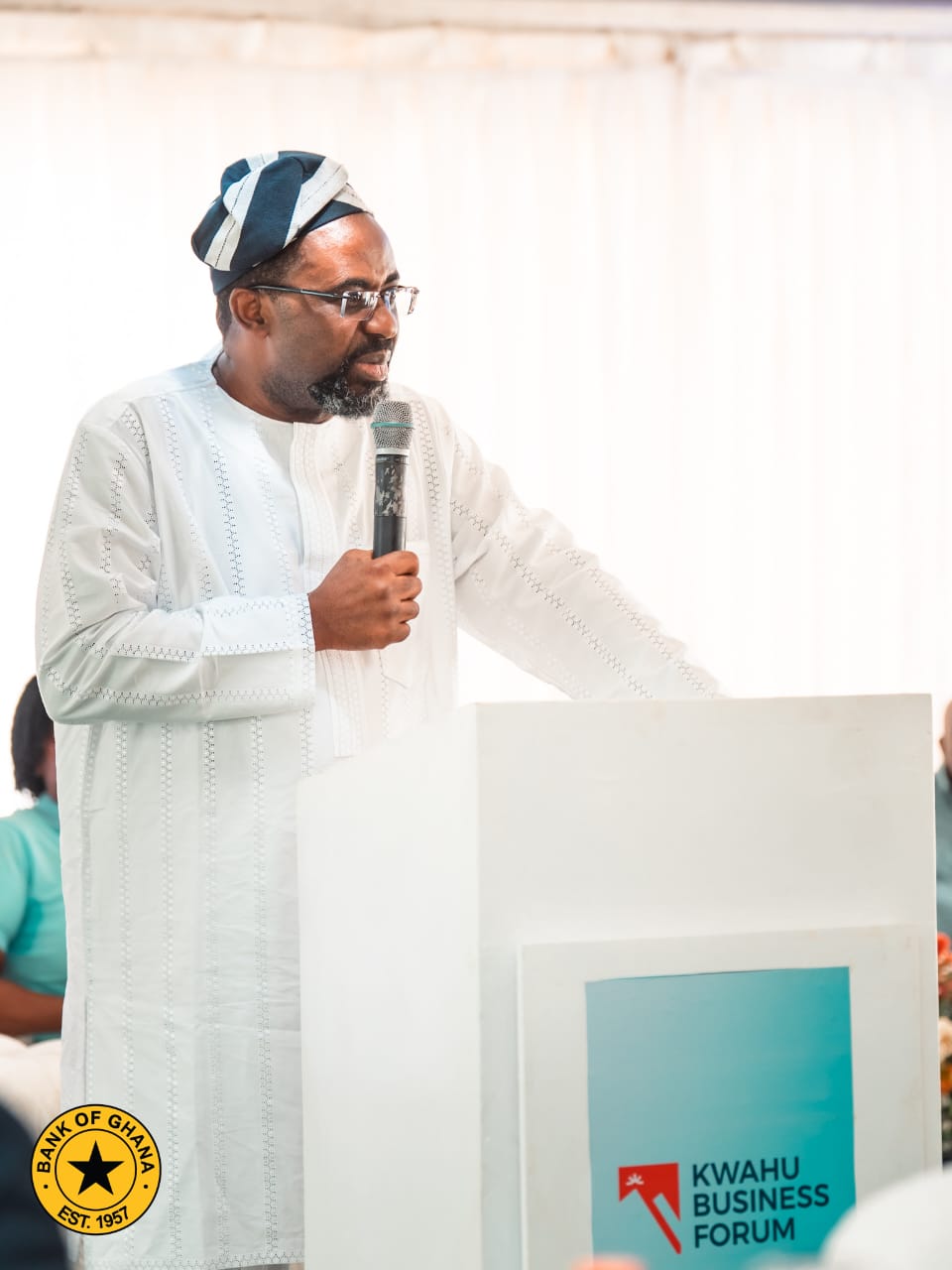
The Bank of Ghana incurred significant costs in 2025 to reduce inflation to 5.4 per cent through tight monetary policy, Governor Dr Johnson Pandit Asiama has said.
He said the disinflation effort, though successful, required aggressive liquidity management, including open market operations to mop up excess funds from the system.
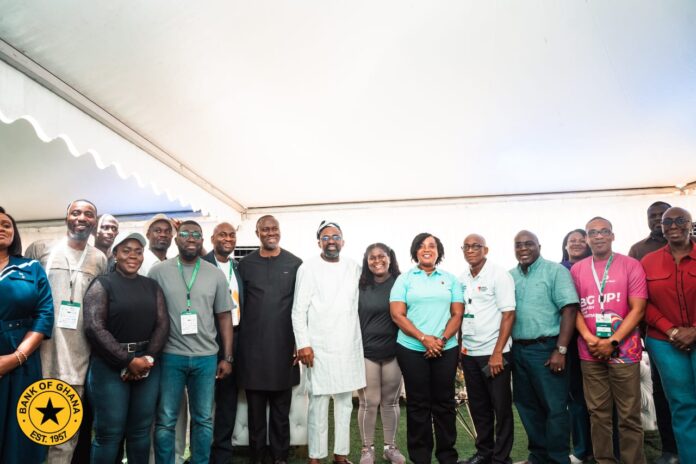
“Last year was good but expensive for the Central Bank. It took us a lot of money to mop up excess liquidity and bring inflation down,” Dr. Asiama said at the Governor’s Roundtable during the Kwahu Business Forum, where he outlined the policy trade-offs involved in balancing inflation control with economic growth.
“The work we do is always about trade-offs… trying to strike the right balance,” he said.
Dr Asiama explained that while tight monetary policy helped reduce inflation from 23.8 per cent in December 2024 to 5.4 per cent by end-2025, it came with high financial costs to the Central Bank.
He said exchange rate stability was a key outcome of the policy measures, noting that “the cedi is stable and under control.”
The Governor, however, expressed optimism that maintaining low inflation in 2026 would be less costly due to improved macroeconomic conditions.
“If you look at where inflation was at the end of December 2024 and where it is now, it would not involve the same level of resources to keep it low and stable going forward,” he added.
Dr Asiama noted that central banks globally, including the US Federal Reserve and the European Central Bank, faced similar challenges, as tools used to control inflation often carried high financial costs.
He stressed that despite the cost implications, controlling inflation remained critical to protecting real incomes and ensuring macroeconomic stability.
Dr Asiama also underscored the importance of a strong financial sector, stating that improved bank resilience would boost credit to businesses and support growth.
“When banks are strong, they can give more credit and there is the need for collaboration between the Central Bank and the financial sector,” he said.
Dr Asiama assured the business community that the Bank of Ghana would continue to pursue policies aimed at sustaining low inflation while supporting economic expansion.
Activa International Insurance Ghana is leveraging digital innovation and targeted products to expand insurance coverage among small and medium-sized enterprises (SMEs) and underserved segments.
The company is deploying online policy acquisition, claims tracking and mobile-based solutions to improve access, reduce entry barriers and enhance customer experience across urban and informal sectors.
Mr Salifu Abubakari, Acting Managing Director, told the Ghana News Agency that insurance penetration in Ghana remained below the global average, largely due to accessibility and trust constraints.
He said regulators, including the National Insurance Commission, continued to advocate digitalisation and product innovation to broaden coverage, particularly within the informal sector.
Mr Abubakari said the company had intensified its adoption of digital technologies and tailored products, “to lower barriers to entry and improve customer experience, especially for SMEs and informal workers who often remain outside formal insurance systems.”
He said Activa had introduced SME-focused products covering risks such as fire, theft and business interruption, alongside gender-focused initiatives such as Activ’Ladies to support women entrepreneurs.
Mr Abubakari noted that digital transformation had become essential for expanding market reach, improving operational efficiency and building customer confidence.
“These efforts reflect a broader industry recognition that tailored solutions are needed to address the realities of Ghanaian businesses and households,” he said.
Mr Abubakari called for collaboration among stakeholders to address low awareness, affordability challenges and cultural perceptions affecting insurance uptake.
He said the company had also strengthened its operational standards, including internationally recognised certification in information security, to enhance trust in digital insurance services.
“We will continue to position Activa as a key player in bridging the protection gap, leveraging technology and inclusive product design to bring insurance closer to individuals and businesses nationwide,” he said.
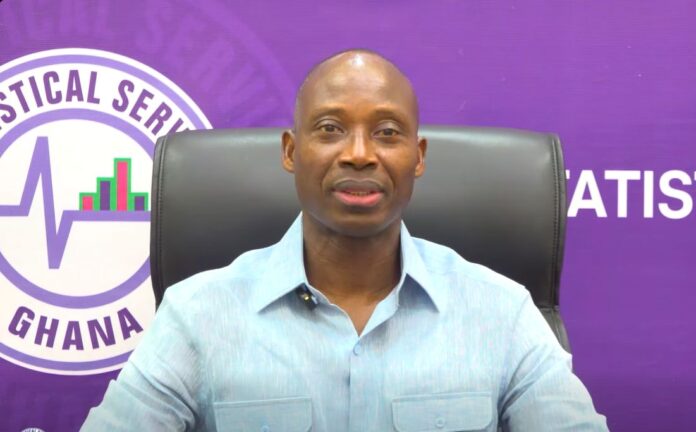
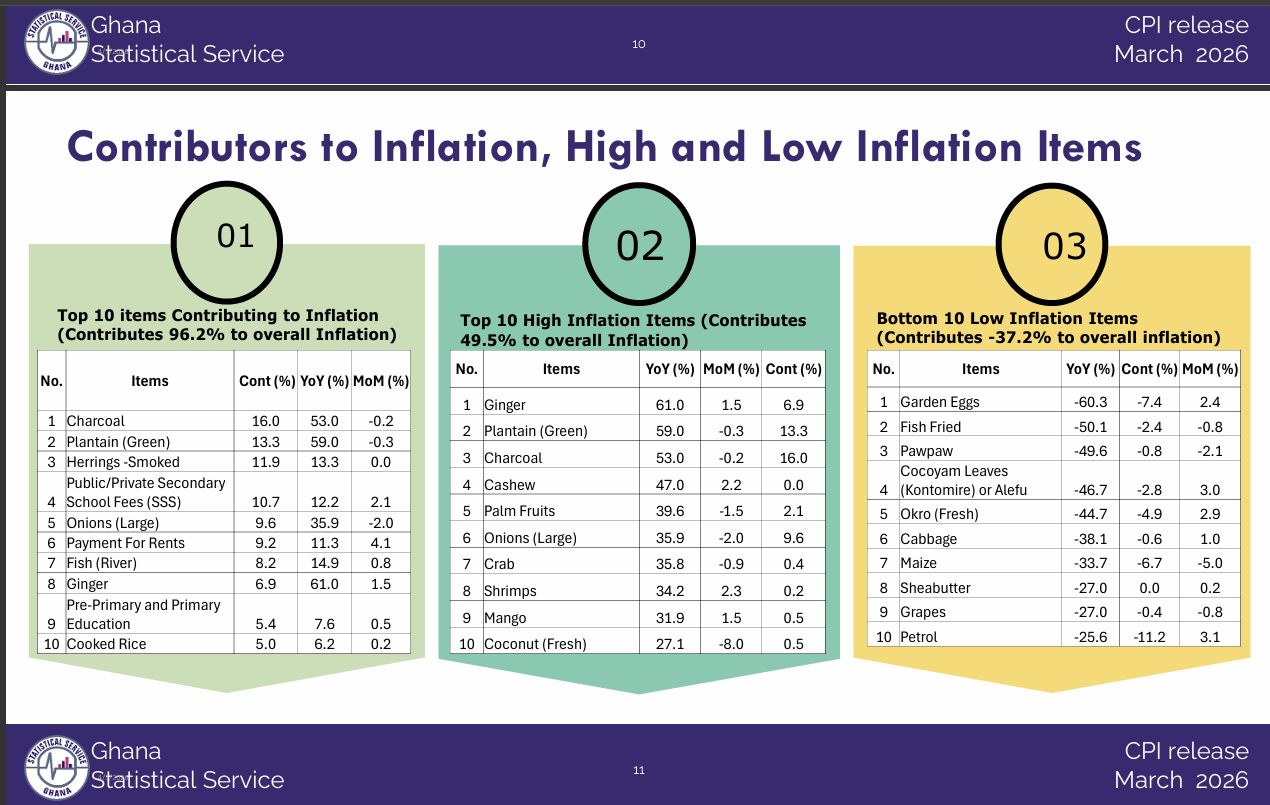
Ghana’s consumer price inflation eased for the 15th consecutive month in March 2026, recording a rate of to 3.2 per cent year-on-year, the Ghana Statistical Service (GSS) said on Wednesday.
The Consumer Price Index (CPI), which measures the change over time in the general price level of goods and services that households acquire for the purpose of consumption, rose to 264.8 from the previous 252.6 in January 2025.
The 3.2 per cent inflation rate for March 2026 marks the lowest level in about three decades since August 1999, when inflation was 1.4 per cent and the lowest rate recorded following the 2021 CPI rebasing.
“This is the lowest inflation we have recorded since the rebasing of the Consumer Price Index in 2021 and… it shows a steady and sustained movement towards stability,” Dr Alhassan Iddrisu, Government Statistician said during a virtual press briefing.
However, on a month-on-month basis, overall prices edged up by 0.1 per cent between February and March 2026, indicating that price pressures remained well contained in the near term despite recent economic crisis from the Middle East war.
Dr Iddrisu explained that the fifteen-month constant decline reflected combined effects of exchange rate stabilisation following Ghana’s debt restructuring, tighter fiscal and monetary policy, and the normalisation of global commodity prices that had fuelled earlier price spikes.
In terms of components, food and non-alcoholic beverages recorded the largest single component of the CPI basket, carrying a weight of 42.7 per cent with a year-on-year inflation rate of 2.3 per cent in March 2026, easing slightly from 2.4 per cent in February.
Nonetheless, monthly food prices declined by 0.3 per cent between February and March, a condition Dr Iddrisu said provided direct relief to households for whom food expenditure dominated their budgets.
“The broad deceleration in food inflation, which peaked above 29 per cent in early 2023 and stood at 26.5 percent as recently as March 2025, reflects improved domestic food supply conditions and a stronger cedi reducing the cost of imported food inputs,” he said.
Non-food inflation, while also declining on a year-on-year basis to 3.9 per cent from four per cent in February, remained relatively high to food inflation, contributing 57.3 per cent to the basket.
On month-on-month basis, non-food prices increased by 0.3 per cent, driven by persistent pressures in services and housing categories, indicating that structural cost pressures in services and utilities remained a work in progress.
While inflation for goods inflation slowed to 1.7 per cent year-on-year from 3.2 per cent in February 2026, services inflation, by contrast, surged to 7.2 per cent year-on-year in March from 3.7 percent in February.
At the divisional level, housing, water, electricity, gas and other fuels remained the largest contributor to year-on-year inflation, recording a rate of 12.4 per cent in March 2026 and contributing 1.3 percentage points to the headline figure.
Education services came in second among the high-inflation divisions at 8.1 per cent year-on-year, up from 7.1 per cent in February, driven by increases in school fees across both public and private secondary schools.
Insurance and financial services recorded 8.4 per cent, sport and culture posted 6.4 per cent, and restaurants and accommodation, 6.2 percent, while transport recorded a negative year-on-year inflation at 7.3 percent.
At the regional level, the North East Region recorded the highest year-on-year inflation rate at 8.6 per cent, followed by Ashanti at five per cent, Volta at 4.6 per cent, Central at 4.4 per cent, and Eastern at 4.1 per cent.
On the other hand, the Savannah Region recorded deflation of negative (-4.6 per cent) year-on-year, meaning prices were lower in March 2026 than in March 2025, followed by Bono East, recording -3.4 per cent and Upper East, n
-1.8 percent.
The Government Statistician attributed these differences to disparities in local food supply conditions, transport costs, and market access, and flagged the persistence of regional inflation inequality as a structural challenge requiring targeted policy attention.
He recommended to the government to stay the course on fiscal discipline and sustain measures to stabilise food prices, while directing targeted investment into storage infrastructure, irrigation, transport networks, and market access improvements.
Dr Iddrisu told businesses to invest in operational efficiency and strengthen local supply chains, translating cost savings from the lower-inflation environment into more stable consumer prices rather than pocketing them as margin.
He advised households to have effective budget plans with greater confidence, track spending on food, rent, and school fees, reduce non-essential expenditure, and build small savings buffers to strengthen financial resilience ahead of any potential reversal.
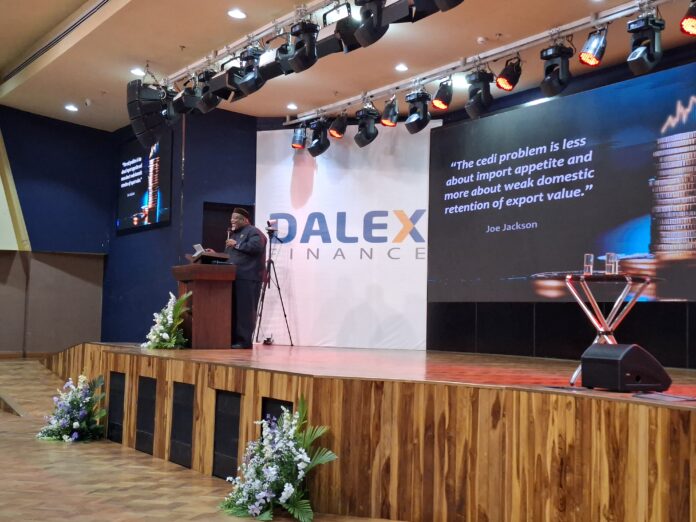
Mr Joe Jackson, Chief Executive Officer of Dalex Finance, has said Small and Medium‑Scale Enterprises (SMEs) funding in Ghana has become economic charity rather than a deliberate growth strategy.
Speaking at a Chartered Institute of Marketing Ghana (CIMG) public engagement dubbed “Evening with Joe Jackson” on the theme “Ananse Stories About the Ghanaian Economy,” he argued that the persistent framing of SME support as a catalyst for national growth was misleading.
Mr. Jackson explained that while SMEs formed an important part of the economy, most operated informally, faced chronic productivity challenges, and struggled to scale.
“SME funding in its current form is economic charity, not a growth strategy. We have over 60 different SME initiatives launched in just 10 years, yet productivity remains low, firms remain informal, and many collapse within three years.
“If launching SME programmes created growth, Ghana would be an economic superpower by now,” he stated.
Mr Jackson noted that Ghana’s failure to nurture exceptional productive firms or champions had left the country without strong domestic companies capable of anchoring industrialisation, dominating regional markets, or retaining value created from local resources.
He called for a shift from generic SME interventions to a targeted model that backs high‑performing domestic firms with proven capacity.
“Countries such as Singapore, Malaysia, and South Korea grew by intentionally nurturing strategic winners, not by spreading scarce resources across thousands of micro‑businesses.
“Not all SMEs will grow. Some are simply fighting for survival. Growth comes from exceptional firms, not from scattering support to everyone. We must select champions regardless of politics,” he noted.
Mr Jackson also linked the absence of strong domestic companies to Ghana’s persistent currency challenges, capital leakages, and the dominance of foreign firms in key sectors.
He cautioned that as long as capital, ownership, and decision‑making remained external, profits would continue to be repatriated, leaving Ghana as a “tenant in its own economy.”
Mr Jackson urged policymakers to restructure pension fund rules to channel long‑term domestic capital into productive Ghanaian firms rather than limiting investments largely to government securities.
On the broader economy, he warned that excessive dependence on external capital, limited value addition in the extractive sector, and weak enforcement of local content laws continue to undermine Ghana’s economic sovereignty.
The Millennium Supporters Union Ghana (MISUGHA) has stepped up efforts to expand its presence in the Ketu South Municipality, as part of a broader drive to strengthen support for the Ghana national football team.
Leading the call is Bright Kumordzie, Deputy High Commissioner to Togo, who has urged supporters to adopt a more vibrant and coordinated approach to backing the national team both locally and internationally.
Addressing a gathering of MISUGHA members, Mr Kumordzie stressed the need for a renewed supporters’ culture that reflects passion, unity, and visible national pride wherever the Black Stars compete.
“The time has come for Ghanaian supporters to show up strongly, singing, chanting, and energising the team just as we see in other countries. That spirit must define us,” he said.
He noted that while MISUGHA has already been inaugurated in Ho, the regional capital, Ketu South must move swiftly to establish its own branch to keep pace with other areas such as Keta and Sogakope, where mobilisation efforts are ongoing.
Mr Kumordzie expressed concern over what he described as weak supporter presence during some international matches, citing a recent friendly involving the Black Stars and Austria.
He said the absence of organised Ghanaian supporters during such games can negatively affect player morale and overall performance.
“When supporters are missing, the team feels about it. A strong fan base can make a real difference, especially in away matches,” he emphasised.
He disclosed that government, through the Ministry of Sports, recognises the importance of structured supporters’ groups and is committed to expanding the base nationwide.
He proposed that Ketu South could serve as a strategic starting point, given its population and proximity to neighbouring countries.
The Deputy High Commissioner acknowledged initial challenges in mobilising members but expressed optimism that sustained efforts and visible impact would attract more people to join the movement.
“Our immediate task is to successfully inaugurate the Ketu South branch. We expect high-profile dignitaries, including the Sports Minister, and we must ensure a strong showing,” he added.
Looking ahead, he revealed that the countdown to the next FIFA World Cup presents a unique opportunity for active supporters to be considered for international engagements, including official supporter delegations.
He clarified that MISUGHA operates as a non-partisan organisation, stressing that membership and opportunities are open to all Ghanaians regardless of political affiliation.
“This is about national pride and supporting the Black Stars. Politics has no place here,” he said
Members were also informed of an upcoming opportunity to demonstrate their readiness, as the Black Princesses prepare qualifiers in Lomé.
Given the proximity of Ketu South to Togo, local supporters are expected to play a key role in cheering the team.
Mr Kumordzie noted that a strong and well-organised turnout during the qualifiers could position the group for future opportunities, including participation in major international tournaments.
He further encouraged members to formalise their membership by acquiring official identification cards, explaining that this would not only strengthen the organisation but also open doors for travel and exposure.
Also addressing the gathering was Mr Gabriel Tanko Kwamigah-Atokple, who urged members to remain committed and resilient in building a strong supporters’ base.
He pledged his support to the group and donated GH¢5,000 on the spot to assist with administrative activities.
The meeting ended on a high note, with renewed determination among members to expand their ranks, strengthen their organisation, and play a vital role in boosting Ghana’s football spirit both at home and abroad.
The coastal town of Keta is set to come alive this Easter as preparations intensify for the Norvikporgbe Za Water Sports Festival, an initiative aimed at promoting sports tourism and showcasing emerging water-based sporting disciplines.
Ahead of the celebrations, a delegation from the festival’s organising team has officially received three prestigious trophies to be awarded to winners of the Water Volleyball, Water Handball, and Relay Regatta competitions.
The trophies were donated by Awards Centre through the National Sports Authority, underscoring a growing commitment to the development of non-traditional sports across the country.
Presenting the trophies, Mr Yaw Ampofo Ankrah, Director-General of the National Sports Authority reaffirmed the NSA’s dedication to nurturing emerging sports, noting that such initiatives are crucial to broadening Ghana’s sporting landscape.
“Investing in these disciplines is key to sustaining their growth and creating new opportunities for young people, while also enhancing tourism potential,” he said.
Mr Paa Kwesi Amuah, Chief Executive Officer of Awards Centre, expressed enthusiasm about the increasing popularity of innovative sporting activities, particularly those that engage communities and attract visitors.
He revealed that, beyond the trophies, individual awards would be presented to outstanding participants to encourage excellence and reward performance.
Mr Dzidodo Ruben Adjahoe, Volta Regional Sports Development Officer of the National Sports Authority, commended stakeholders for their collaboration in bringing the event to fruition.
He noted that partnerships involving the NSA and the National Recreation and Wellness Programme were critical to the success of the festival and would help position Keta as a hub for water sports in Ghana.
“This festival is not only about competition but also about promoting tourism and creating economic opportunities for the local community,” he said.
The brief presentation ceremony was witnessed by key stakeholders, including Mr Awuku Shine Mawulawoe, Vice Chairman of the Ghana Water Volleyball Association; Mr Sesenu Augustus, Assembly Member for Kedzi; and officials of the National Sports Authority.
The Norvikporgbe Za Water Sports Festival is expected to attract participants and spectators from across the country, further strengthening Keta’s reputation as an emerging destination for sports and recreational tourism.
The Atwima Nwabiagya South Municipal Assembly has adopted seven key strategies aimed at addressing challenges in revenue mobilisation and improving its internally generated funds.
The strategies include capacity building for revenue and core management staff in revenue mobilisation and expenditure management, tax education campaigns in communities to build consensus, and review meetings with commissioned collectors to set realistic targets.
Others are the identification and analysis of the causes of low revenue performance, the formation of a strong revenue task force, public sensitisation on municipal bye-laws, and strengthened supervision, monitoring and evaluation of revenue mobilisation and accounting processes.
Mr. Wisdom Osei Boamah, the Municipal Chief Executive (MCE), announced this in his sessional address at the first ordinary meeting of the Assembly held at Nkawie.
He said the measures were designed to address key challenges, including ineffective sub-district structures, weak revenue mobilisation systems, inadequate data on revenue collection, and logistical constraints affecting the Assembly’s revenue drive.
Mr. Boamah noted that the Assembly recorded a total revenue of GH¢3,225,336.90 in December 2025, representing 79 per cent of its target of GH¢4,070,500.
He said the figure also fell short of the GH¢3,902,095.79 realised during the same period in 2024.
He expressed optimism that with improved cooperation, dedication and commitment from Assembly Members, staff and other stakeholders, the Assembly would enhance its revenue performance to support its development agenda.
On funding, the MCE disclosed that the Assembly had received GH¢11,559,525.80 from the District Assemblies’ Common Fund (DACF), representing 50 per cent of the expected GH¢23,000,000 allocation.
Despite the shortfall, he said the Assembly was undertaking a number of development projects, including the construction of school blocks in 10 communities, provision of health facilities and equipment in eight communities, as well as the implementation of agricultural and other flagship programmes across the Municipality.
Mr. Boamah highlighted progress made in sectors such as energy, sanitation, roads, the local economy, and security.
He mentioned Atwima-Agogo, Abuakwa-Caanan, Abakomadi, Abuakwa-Housing, Asenemaso, Manhyia, Mmetiam, Hyiremanso, Nkawie, Toase, Nerebehi, Sepaase, Afari, Mim, Zibukrom, Nfankamawe, Amoabeng, Bankyease and Nkorang as some of the beneficiary communities of ongoing development projects in the Municipality.