
Home Blog Page 1313

Why the EC will compile new voters’ register for 2020 elections

0

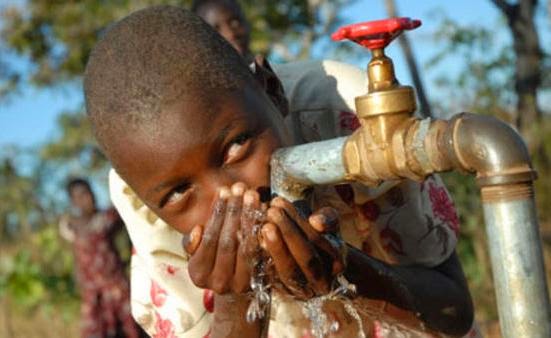
Parliament approves €276m facility for Tamale water project

0

Parliament has ratified a plan drawn by the government of Ghana, for an amount of €12 million  within the 2019 financial year, to commence the construction of a potable water infrastructure project in Tamale and its environs.

The amount represents part of a €233.963 million facility by the government of Ghana and Deutsche Bank AG, London Branch, and the United Kingdom Export Finance and a €43.007 million  commercial facility agreement with the same entity.

The object of the loan, according to a report of the Finance Committee, released to the House, is to finance the design, construction and commissioning of the water project in Tamale, Northern Region.

About 27 communities are expected to benefit from the water project. These include, Chesegu, Nanton, Yapei, Yipala, Chirifoyili, Nyankpala, Yepeligu, Dalun, Pong Tamale, Yaggoo, Gbullung and Sanerigu.

Others are Zagayull, Gurugu, Sankpala, Zagbullung, Jinosayili, Savelugu, Kusawgu, Kakpagayili, Tibung, Bagabaga, Kanvili, Tolon, Tamale Towship, Kumbungu and Vitin.

The project is expected to improve potable water to areas that were not originally supplied, with a total of 30 million gallons of water to be added to the existing system.

This would lead to a reduction in the prevalence of common water borne diseases, enhance opportunities for agro-processing businesses and generally improve the social wellbeing of the people of Tamale and its environs, as well improve on the services of health facilities.

Additionally, the provision of reliable water supply will further help to improve economic activities within the project catchment area, as direct and indirect jobs would be created during the construction period.

Ms. Abena Osei-Asare, Deputy Minister of Finance, announced in the Finance Committee’s Report, presented to the House that, “government intends to commence the project as quickly as possible and has programmed to draw down an amount of €12 million within the 2019 financial year upon the completion of all the loan and project approval processes.”

All other things being equal, the project is expected to be completed within 54 months, comprising six months development phase and 48 months works implementation phase.

The proposed project is expected to be the single biggest water project in the northern part of Ghana, since independence, and its successful implementation is expected to be a significant boost to the Water for All by 2030 agenda of the government.

It is expected to meet the increasing water demand for Tamale and its environs, up to the year 2040 planning horizon.

Tamale and its environs contribute significantly to the agricultural fortunes of Ghana by producing a large number of arable crops like maize, yam, cassava, beans and rice.

Together with the newly created Savannah Region, the Northern Region boasts of a significant part of the population of Ghana, thus having a significant and increasing demand for water.

The Area also hosts several tourist sites including the Mole National Park as well as the Magic Stone, a patterned vernacular architecture and at the entrance to the Mole National Park, and the Historical Mosque, both located at Labaranga.

The current water supply system for Tamale and its environs was constructed in 1972, and a Treatment Plant is located at Nawuni, on the White Volta, 37 km North West Tamale.

Expansion works were carried out on the system in the year 2008, and that included the construction of a 20,000m3 storage reservoir at Yapei Yepalsi, which increased the production capacity of the water treatment plant from 25,000m3/day to 44,000m3/day.

As a result of the rapid population growth in Tamale and its environs, the demand for water has once again outstripped supply and there are increasing numbers of residents who do not have reliable access to potable water.

In order to mitigate the situation, Ghana Water Company Limited has had to implement a water rationing programme in the Metropolis and its environs.

The Committee, however, expressed concern over the law governing the agreements, explaining that in the event of arbitration or other dispute resolution in connection with the agreements, the briefs may go to English lawyers to the disadvantage of Ghanaian lawyers.

It therefore recommends that going forward,  the government of Ghana should insist on Ghanaian Law to be the governing law for the resolution of all disputes arising under or in connection with agreements to which the government is a party.

As part of measures to enhance revenue collection from the water to be produced under the project, there would be rigorous metering for water consumed, and District Metering Areas would be established to monitor the water pumped to each locality.

The Committee informed the House that the project design include the installation of a source and Collection Data Acquisition System to help detect faults and ensure that water losses are reduced to the barest minimum.

Source: GNA

Half of population in sub-Saharan Africa to subscribe to mobile services by 2025

0

Mobile subscribers in Sub-Saharan Africa will increase from 456 million by the end of 2018 to over 600 million by 2025, representing around half the population in the region, said a report released here by the Global System for Mobile Communications Alliance (GSMA) on Tuesday.

Sub-Saharan Africa will remain the fastest growing region of mobile subscribers with the average annual growth rate of 4.6 percent over the period to 2025, said the report released at the opening session of the three-day GSMA Mobile 360 Africa conference in Kigali, capital city of Rwanda.

Nigeria and Ethiopia will record the fastest growth rates between now and 2025, at 19 per cent and 11 per cent respectively, said the report, adding that the demographic bulge across the region will result in large numbers of young consumers becoming adults and owning a mobile phone for the first time, who will account for the majority of new mobile subscribers and will “significantly” influence mobile usage patterns in the future.

The report indicated 3G will overtake 2G to become the leading mobile technology in sub-Saharan Africa during 2019, following doubled 3G adoption over the last two years as a result of network coverage expansion and cheaper devices.

The report also said Sub-Saharan Africa lags other regions in 4G adoption, as it accounted for 7 per cent of total connections in the region by the end of 2018, compared to the global average of 44 percent.

The high cost of 4G-enabled devices and delays in assigning 4G spectrum to established service providers in some markets have been among the factors holding back 4G uptake, it said.

The report however said the 4G adoption is beginning to change with new 4G spectrum assignments in several countries over the last 12 months and a marked increase in network deployment. Seven LTE networks have been launched in the region since the start of 2019, it added.

It predicted 4G adoption in the region will overtake 2G in 2023 and rise to 23 per cent of connections by 2025.

Mobile technologies and services generated 8.6 per cent of GDP in sub-Saharan Africa, according to the report.

Source: GNA

Benchmark value reduction is having positive effects on consumers – GUTA

0

The Ghana Union of Traders Association (GUTA) says the 50 per cent reduction in benchmark value of imported goods and 30 per cent reduction on calculated value of vehicles in April this year, has enabled many businesses to transfer some benefits of the price reduction of 10 per cent and 15 per cent to consumers.

It said the reduction could have even been more, but for other factors like balancing the price of the new goods as against the old stock.

It said many of the gains have also manifested in stability of prices on the market, even in the midst of currency depreciation.

A press release issued and signed by Mr. Alpha Shaban, the General Secretary of GUTA in Accra, said it has successfully worked with the Ghana Revenue Authority’s Customs  Division on most of the modalities involving different lines of commodities and still working on the remaining few ones.

It said some category of goods have not seen reduction at all, because the modalities involved in their values are yet to be completed.

However, the association believes that, prices will come down, especially if the exchange rate remains stable.

“We are by this statement, urging all importers to share the benefits gained from the reduction with the consuming public,” it said.

In April this year, Vice President Dr. Mahamudu Bawumia announced during a town hall meeting in Accra, a 50 per cent reduction in benchmark value of imported goods and 30 per cent reduction on calculated value of vehicles due to persistent calls from the business community, for a reduction in high import duties.

Source: GNA

Prof Bawole appointed Dean of University of Ghana Business School

0

Professor Justice Nyigmah Bawole has been appointed the new Dean of the University of Ghana Business School (UGBS).

Prof Bawole’s appointment was confirmed to Graphic Online by the Public Affairs Director of the University of Ghana, Madam Stella Amoah.

Prior to his appointment, Prof Bawole was an Associate Professor and Head of Department for Public Administration and Health Services Management, University of Ghana Business School, Legon.

He replaces Prof Joshua Yindenaba Abor as Dean of the prestigious UGBS.

Prof Bawole obtained a PhD in Development Policy and Management from the Global Development Institute (former Institute for Development Policy and Management), University of Manchester, UK in 2013.

He holds an MPhil, BSc. Administration (Public Administration Major) and Diploma in Public Administration degrees from the University of Ghana Business School obtained in 2006, 2003 and 1999 respectively. In 1995, he passed out as a trained professional teacher from Wesley College of Education (Kumasi, Ghana).

Prior to his appointment as lecturer at the University of Ghana, he worked as Project Manager of an Accra-based NGO.

He has taught at all levels of Ghana’s educations system.

GraphicOnline

Prof Atuguba appointed Dean of the University of Ghana School of Law

0

Professor Raymond Atuguba has been appointed the new Dean of the University of Ghana School of Law (UGSL).

Prof Atuguba’s appointment was confirmed to Graphic Online by the Public Affairs Director of the University of Ghana, Madam Stella Amoah.

The Harvard Law School Master of Law (LL. M) degree graduate replaces Prof Edward Kwasi Quashigah as Dean of the (UGSL).

Prof Atuguba is a 1997 graduate of the Faculty of Law, University of Ghana. He recently earned an Executive Master’s degree in Business Administration from the Ghana Institute of Management and Public Administration (GIMPA).

In 2015, he resigned as the Executive Secretary to President John Mahama.

Prior to his appointment as the Executive Secretary to the President, Dr Atuguba was for over 15 years engaged in the fields of constitutional governance and the consolidation of democratic gains; law and policy advocacy; public policy reform; natural resource governance; justice sector reform and rights-based approaches to development.

As the co-founder and former Executive Director of the non-profit Legal Resources Centre and later Founder and Team Leader of a Policy Consultancy Firm – Law and Development Associates, he has consulted for various governments and international organizations.

These include the Governments of Ghana and Liberia; the UN-OHCHR, UNDP, UNODC, the World Bank, the EU, ECOWAS, DFID, USAID, GTZ (GIS), DANIDA, ILO, IOM, FES, British Council, IIED, CHRI, OSIWA, IBIS, Action Aid International, Plan International and Oxfam.

Dr Atuguba is a member of the Ghana Bar Association and has argued several precedent-setting cases in the Supreme Court of Ghana. He is also a member of the African Studies Association, the Ghana Society for Development Dialogue and a Senior Fellow of the International Institute for Advanced Studies (IIAS).

GraphicOnline

100 Structures demolished at Abofu

0

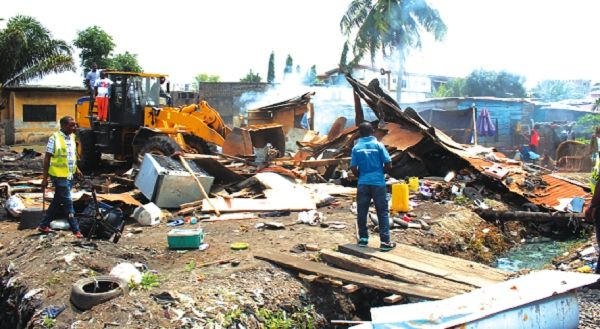
More than 100 illegal makeshift structures along the railway line at Abofu, a slum community in Achimota were pulled down yesterday by the Okaikwei North Municipal Assembly (ONMA).

The exercise, which was undertaken in collaboration with the Tesano Divisional Police Command was intended to allow the Ghana Railway Company to put the land to good use and to rid the place of criminals.

The team also impounded 39 vehicles belonging to some garage operators that were parked on the shoulders of the roads.

Officials of the assembly said the owners of the cars would be arraigned before court today.

Demolition

While some of the victims pleaded for their structures to be spared, others made attempts to salvage some of their belongings before they were destroyed by the bulldozer.

According to the victims, they were surprised by the move of the assembly as they did not receive any prior notice from any authority.

But the personal assistant to the Municipal Chief Executive of ONMA, Mr Rexford Frimpong maintained that the people were warned many times to vacate the area but they would not budge.

“Reports that we received about security situations indicate that this is one of the most dangerous flashpoints in the municipality and we realised that allowing them to dwell over here gives them the opportunity to perpetuate those evil acts.

“It is important that we eradicate this base to minimise the act of drug peddling in the area.

Recently there was a melee over some drug issues and it led to one person losing his life and we have to take the proactive action to bring this thing to an end,” he added.

Garage operators

Garage operators whose vehicles were impounded also challenged the move by the assembly, with some denying ever receiving notices from the assembly.

But, the MCE, Mr Boye Laryea said that since they had been warned severally to desist from parking on the shoulders of the road and they had refused, they could not be pardoned.

“This is to forestall any unfortunate incident. We will not wait until something happens. Some of them have been washing their cars along the roads, causing damages and creating potholes.

They will be processed to court today and we will ensure they don’t return to the road,” he said.

The Divisional MTTD Commander, Deputy Superintendent of Police (DSP) Mr Francis Aboagye said the activities of such garage owners caused traffic obstruction and put roads users in danger.

GraphicOnline

School riots: One student dies in Sandema Senior High Technical School riot

0

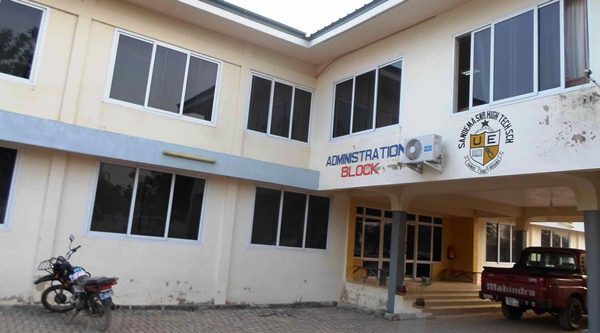
One student has been confirmed dead during a midnight campus riot at the Sandema Senior High Technical School in the Upper East Region.

The deceased, only identified as Nashiru was reportedly hit in the chest by a stray bullet said to have been fired by police officers who responded to the distress call to restore calm.

The incident is said to have happened around 11:30pm on Tuesday.

Sources say the student was pronounced dead at the Sandema District Hospital.

Another female student is said to have collapsed during the unrest.

In a radio interview on Accra based Starr FM on Wednesday, the Builsa North District Chief Executive Officer, Mr David Afoko said the assembly was holding an emergency District Security Council (DISEC) meeting on the incident.

“We are about to have a DISEC meeting. I just returned from the school. I went to see the situation for myself. The students are gathered, from the way things are, we want to take a decision and get back to them,” the DCE said in the radio interview on Starr FM monitored by Graphic Online. 

GraphicOnline

Fish Stocks Double After Launch of Kenya Coast Guard Services

0

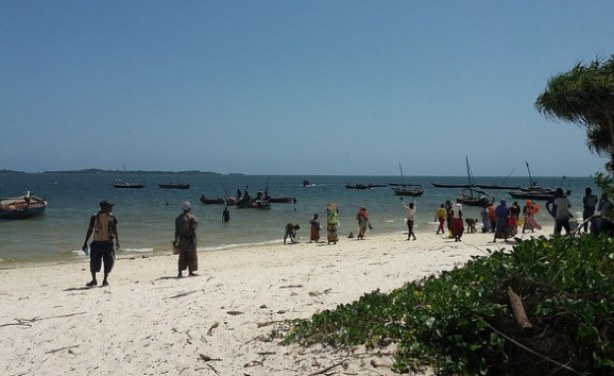
The country has doubled its fish stocks since the launch of the Kenya Coast Services Guards six months ago, reports show.

According to records in Liwatoni, Mombasa County, the stock has increased by 155,000 tonnes after the KCGS and international security teams stopped illegal fishing vessels from operating in Kenyan waters.

More than 400,000 tonnes of fish have landed at Liwatoni Fisheries Complex since the facility was reopened and KCSG launched in November.

Early this week, President Uhuru Kenyatta said a number of vessels flying the Kenyan flag are operating in the country’s waters.

“I launched the coast guard to secure Kenya’s territorial waters and protect the country from threats that emanate from the sea. I am pleased to say that even before the rehabilitation of the fisheries complex is completed, some 12 Kenyan vessels are utilising the facility,” he said.

DAILY PATROLS

Mr Kenyatta said the service has maintained daily patrols of Kenya’s waters to guard against illegal, unregulated and unreported fishing, provide safety to seafarers and prevent drug smuggling and the illegal movement of people and goods.

“We should ensure that we land at least 30 per cent of fish caught in our waters. This will be achieved by recovering and securing gazetted landing sites for the benefit of the fishing community,” he added.

The government has set aside funds to support the development of designated ports in the Coast to facilitate landing by deep sea fishing vessels.

The money will also be used to develop aquaculture technology.

The fish landing sites under construction are Kichwa cha Kati and Ngomeni in Kilifi County, Gazi, Kibuyuni and Vanga in Kwale and two markets in Malindi and Mombasa.

According to the 2018 Kenya Economic Survey, the total quantity of fish landed declined from 147,700 tonnes in 2016 to 135,100 in 2017.

This was partly attributed to improper and destructive practices and illegal fishing.

ECONOMIC ZONE

Kenya’s stocks are also exploited by vessels from distant water fishing nations which access the country’s exclusive economic zone upon paying a fee to the Fisheries Department.

The department’s resources are constrained and it lacks proper training and enforcement capacity for monitoring and controlling the activities of the foreign vessels.

The government has identified a number of blue economy projects in order to fight hunger but illegal, unreported and unregulated fishing is a setback to the industry.

Illegal, unreported and unregulated fishing depletes stocks, corrodes the marine environment and decreases aquatic and marine biodiversity, scientists say.

The Food and Agriculture Organisation estimates that nearly a third of fish resources are overexploited or extinct.

More than half of the global stocks are fully exploited and have reached their maximum fishing capacity.

Only 15 per cent of fish stocks worldwide are under-exploited. However, these are predominantly low value species.

The decline of fish stocks has necessitated the introduction of conservation measures.

OVERFISHING

Globally, more than Sh2.3 trillion is lost to illegal, unreported and unregulated fishing every year. Out of this, Kenya loses Sh10 billion.

“The sea cucumber is a rare species. It is very expensive but is being overexploited, leading to the reduction of the species. Regulations are needed for it to recover,” Kenya Marine and Fisheries Research Institute director James Njiru said.

Tuna and sharks are among the species that are declining mainly due to overfishing.

In its latest study, KMFRI says tuna and tuna-like resources globally are valued at more than $42 billion, with the Indian Ocean contributing about 20 to 25 per cent of the total.

In 2003, the Indian Ocean Tuna Commission plot of geographical distribution of main tuna species in the South West Indian ocean showed that Kenya lies in the upwelling region of the ocean and supports the second most productive tuna fishing grounds after Somalia.

Allafrica

Young South Africans Want to Farm But the System Isn’t Ready

0

Persistent unemployment has become synonymous with the youth experience across South Africa. Youth unemployment rates are almost four times higher than the regional average – 62% of South Africans between 15 and 35 years are unemployed and of these 60% have never been employed.

Add to this the fact that even those who have jobs are earning below what is considered to be a monthly living wage and what emerges is youth employment crisis.

The agricultural sector could be a key source of job creation for young people. But conventional opinion has it that they are turning their backs on the sector despite high levels of unemployment. So what gives?

Drawing on personal narratives collected from 573 young people across three provinces in South Africa, recent research has begun building a picture what young people think and feel about work in agriculture.

Overall, the prevailing notion that they are turning their backs on the sector seems to hold true. Over 60% of respondents felt that it was harder to make career decisions relating to agriculture than other careers.

But our research dispels the view that this is because of a lack of interest. Based on our interviews, more than half of those surveyed suggested that they saw a place for agriculture in the long-term visions for their lives. This was either as a useful stepping stone, or as an exciting option in its own right.

The problem wasn’t a lack of interest: rather it had to do with the fact that jobs in agriculture were either back-breaking and financially unappealing – at the subsistence level – or they were in large agri-businesses where workers are often treated appallingly.

These voices present a clear mandate to those interested in the future of youth, land and employment in South Africa: open up an economic space for viable family farming in South Africa and young people will throw their energy into the sector.

Stigma, risk and reward

Unsurprisingly, agriculture appears to carry a stronger set of negative stigmas than other careers. Examples included themes around agriculture being for poor and elderly people, on the one hand, or, on the other, for wealthier white people.

Agriculture was also perceived by many as a risky career path that involved a lot of hard work for little financial reward.

One 27-year-old put it this way:

I was 17 and had to put through my university application. I sat my parents down and told them that I wanted to do farming as one of my career choices. They said no, farming was for old people and they didn’t put me {through} school to get dirty running after pigs. They wanted me to do an office job. I had to choose between my parents funding and career.

Other themes that emerged included peer pressure, shaming, racism and substantial family pressure when considering agriculture as a career choice.

A 20-year-old from Limpopo said:

I once went to a certain farm to buy tomatoes, while I was there, there was a huge argument between the white boss and a worker who put wrong grades of tomatoes, she was kicked and fell on tomatoes in front of the customers, I started to have questions about working in agriculture.

Nevertheless, over a third of the young people we spoke to expressed positive vies about working in agriculture.

Many want to work in agriculture. But they said they battled to navigate the spaces between their own vocational motivations, the available work opportunities and the pressures they encountered from friends and family.

A 25-year-old from Kwa-Zulu Natal put it this way:

I studied agriculture at university. It was a very good career path. I enjoy doing it a lot while my friends were against it, but I carried on {to} finish my year. But the problem came when I have to apply for a job. I didn’t get any job and that was painful to me and it felt like it {was} a waste of time because my parent have faith in me now I’m sitting home with my degree. But I still have hope.

Context

Stepping back to look to contextualise youth narratives within the broader food system presents good news and bad.

The bad news is that there aren’t enough farmers who fill the space between subsistence agriculture and large-scale agri-businesses. This “missing middle” leaves young people feeling trapped.

They either feel trapped by the poverty, isolation and backbreaking drudgery associated with rural subsistence agriculture. Or they face the unappealing prospects of unskilled minimum wage jobs on increasingly industrialised (and often racialised) commercial farming operations.

Seen in this light, it’s not surprising that young people are turning away from agriculture. The choices they are making simply reflect the fact that they are avoiding work that is demeaning.

There is some good news: many young people see potential. They aspire to entrepreneurial work with a deeper social purpose. Encouragingly, many believe that the act of working on the land to produce food is meaningful work.

Allafrica