Home Blog Page 1315

Sonny Liston: The mysterious death that haunts boxing

0

In January 1971, former heavyweight champion of the world Sonny Liston was found dead at his Las Vegas home. A coroner ruled that he died of natural causes – but some say the truth is far darker.

It was late in the evening when Geraldine Liston returned home and found the newspapers piled up at her door.

She had been trying to contact her husband – the recently retired heavyweight boxer Sonny Liston – for almost two weeks but had failed to get through. When her most recent call went unanswered, she apologised to her mother, who she had been visiting in St Louis over Christmas, and rushed back to Las Vegas to check on him.

The doors were unlocked and the house was in darkness. Geraldine felt uneasy. She hoped to find her husband in one of his usual spots – perhaps playing cards with a friend or watching TV. Instead, as she entered their large, split-level, home, she was struck by a sickening smell that hung heavy in the winter air.

“I thought he must have cooked and left something on the stove,” she would say in a rare interview years later. “But I went in the kitchen and I didn’t see anything there.”

She followed the strange odour to an upstairs bedroom where she found her husband. Once the most feared fighter in America, he was sprawled at the foot of their bed wearing only his underwear. His body was bloated – he had been dead for at least six days – and there was dried blood streaking from his nose. Geraldine led the couple’s seven-year-old son, Daniel, downstairs and told him to wait there.

She did not ring the police for several hours. According to a Las Vegas police report, she first called her lawyer and then tried desperately to reach a doctor. When one finally arrived he could do little more than confirm what she already knew. Charles “Sonny” Liston was pronounced dead at the scene. Why he died remains one of sport’s most enduring mysteries.


Geraldine and Sonny Liston
Geraldine married Sonny Liston in 1950Presentational white space

It was well after midnight when the police arrived at the Liston house, which sat in an affluent, largely white, suburb called Paradise Palms.

The doorstep was cluttered with days’ worth of unopened milk bottles as well as a stack of unread Las Vegas Sun newspapers, which investigators would later use to determine the exact day Liston had died. Several windows had been left open, but this did little to ease the stench of rotting flesh.

Sergeant Dennis Caputo, now 69, was one of the first officers to arrive. “The call came over despatch and we were aware that it was the Liston residence,” he tells the BBC from his home in the city. “But in Las Vegas it wasn’t unusual to get high-profile calls like that. For me, it wasn’t a big deal.”

He quickly began a thorough search. “It was a very nice house,” he says. “Well-kept and orderly. I got the feeling it hadn’t been lived in too much.” There was nothing to suggest – at least on first sight – that something sinister may have happened. “There were no apparent signs of forced entry, no visible weapons, and no signs of a struggle,” he recalls.

Sgt Caputo was escorted to the master bedroom where he found a small bag of marijuana and a glass of vodka alongside Liston’s prone corpse. “He was wearing a T-shirt and boxer shorts and was in a state of decomposition,” he says. While some accounts of Liston’s death say a revolver was discovered in the bedroom, Sgt Caputo remembers things differently: “There were no visible wounds and no weapons were found.”

Shortly after, he discovered a small amount of heroin in the kitchen but no syringe. “The kitchen was spotless except for a penny balloon on the counter,” he says. “It was common knowledge that these kind of balloons were used to transport illegal narcotics. I will also say that it was pretty well-known that Liston was a part-time user.”

Dennis Caputo in his home
Former Las Vegas Police Sergeant Dennis Caputo was one of the first officers to arrive at the scene of Sonny Liston’s death
Presentational white space

Most reports of Liston’s death state that fresh needle marks were found on his arm. While Geraldine has disputed that her husband ever used drugs, some have alleged that she may have cleared the syringe away. “Geraldine and her attorney were in the house for an unknown period of time before we arrived,” Sgt Caputo says. “I did find it odd that [she] called her attorney when the body was discovered rather than the police.”

But others – including some of Liston’s closest friends – say that he would never have used heroin because he was terrified of needles. “He wouldn’t even go to a doctor for a check-up, for fear some doctor would want to stick a needle in him,” his former trainer, Johnny Tocco, told the Washington Post in 1989.

Liston’s body was eventually moved into a waiting ambulance. According to some witness accounts, his vast weight proved too much and he was dropped several times. It was an undignified exit, reminiscent of a felled boxer being carried out of the ring.

An autopsy would later reveal that traces of morphine and codeine – of a type commonly produced by the breakdown of heroin – had been in Liston’s system. But there was not enough of it to definitively state that he had died of an overdose. Officially, the Clark County Coroner ruled that the boxer died of natural causes, specifically lung congestion and heart failure.

It was a verdict that – in the eyes of many boxing fans – only raised more questions. How could a man – still active as a professional fighter – suddenly drop dead? Was it possible that he could have been training while using hard drugs? And wasn’t he afraid of needles anyway?

The strange circumstances of Liston’s death – and the murky life he had been living at the time – have fuelled fierce speculation about what may have happened to him. Some, such as Sgt Caputo, accept the coroner’s verdict of natural causes. But many still struggle to do so, and the prevailing theory – one that has only gained traction since his death – is that his criminal connections came back to bite him and he was murdered by the mob.

“The whole Liston story is so shrouded in mystery,” says Rob Steen, who wrote a biography of the boxer. “There’s so many people who died who might have been able to shed a little bit of light on it.

“But I don’t think anyone ever really believed he had a heart attack.”
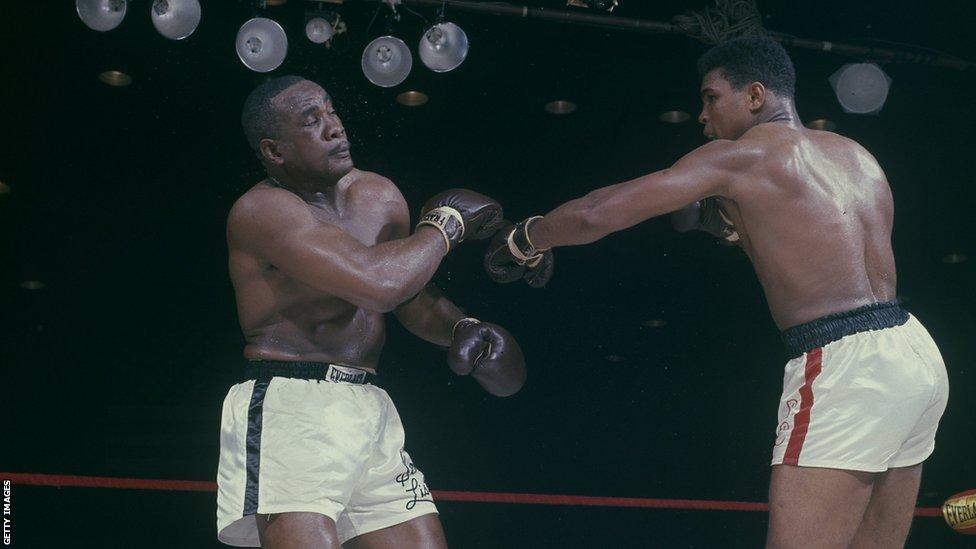
Liston and Ali fight in 1964
Sonny Liston lost his heavyweight title to Muhammad Ali in a major upset in 1964

The mystery surrounding Liston’s death is in some ways fitting. This is a man, after all, whose most basic details were the subject of speculation. He was born in rural Arkansas to a family of sharecroppers – the 24th of 25 children – but birth certificates were not a legal requirement at the time and so Liston did not have one. It is believed he was about 40 when he died, but some have suggested he may have been closer to 50.

As a child he was beaten at home and he struggled at school. “We hardly had enough food to keep from starving, no shoes, only a few clothes, and nobody to help us escape from the horrible life we lived,” he would later say. “We grew up like heathens.”

The young Liston was teased relentlessly because he was unable to read or write and, when his family upped sticks and moved from Arkansas to St Louis, he abandoned education and turned to crime. “The police were forever chasing him,” says Steen. “Apparently they had his photograph stapled to the inside of the visor in their cars. He was in trouble with the police quite a bit.”

In one early incident, he made his disdain for the police clear while demonstrating his remarkable strength. “He started a fight with a cop, beat the cop senseless, snatched his gun, picked him up and dumped him in an alley,” recounts Jonathan Aig in Muhammad Ali: A Life. “[He] then walked away smiling, wearing the cop’s hat.”

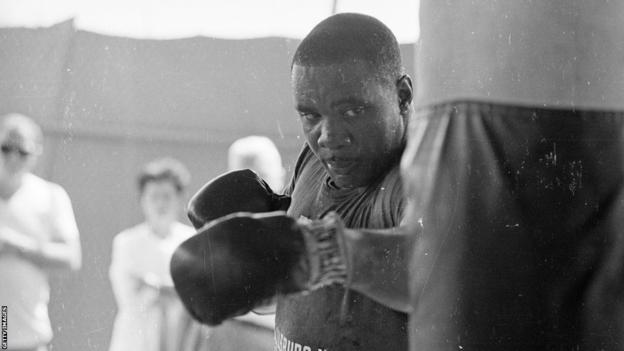
His first serious conviction was for armed robbery when he was about 22. He was sent to Missouri State Penitentiary where his natural athleticism and talent for fighting were soon spotted by Father Alois Stevens, a Catholic priest who also ran the prison gym. “He was the most perfect specimen of manhood I had ever seen,” Stevens later told Sports Illustrated. “Powerful arms, big shoulders. Pretty soon he was knocking out everybody in the gym. His hands were so large! I couldn’t believe it.”
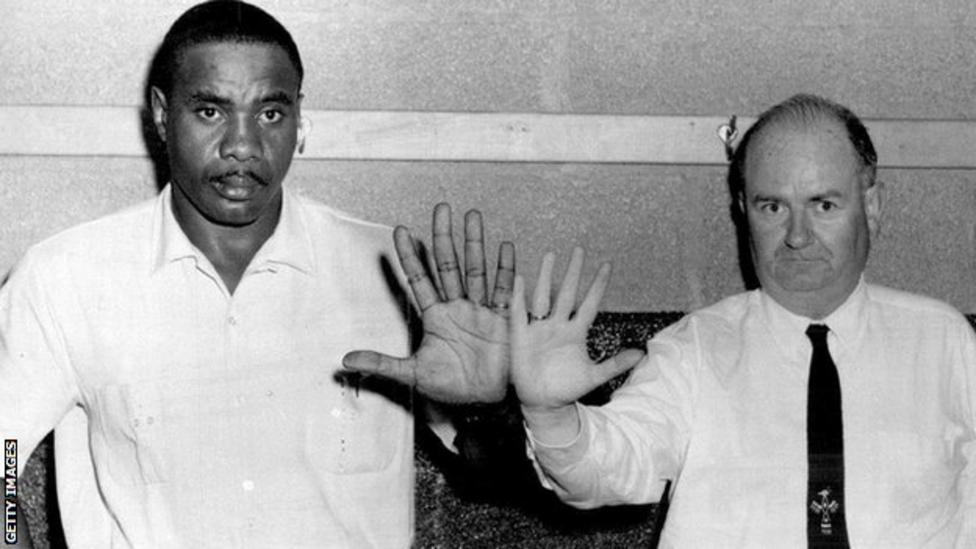
Liston shows off his huge hands
Liston shows off his huge hands – his fists measured 15 inches around and were the largest of any heavyweight champion
Presentational white space

After two years in jail he was freed on parole and – in 1953 – he turned professional. But his newfound freedom was short-lived as the mob, which would go on to dominate his career and later life, quickly claimed him as their own. They would – according to boxing historians – manage his every fight and control his every earned dollar.

“When he comes out of jail, because he is such a muscular figure, such a powerful figure, people don’t really want to fight him,” Rob Steen says. “In order to get the kind of fights that he needs to progress as a boxer he needs ‘heavyweight representation’, shall we say.”

“This is where the mob comes in,” Steen continues. “They manage to create fights for him that other people couldn’t because they use their muscle. He’s the last great investment the mob make in boxing.”
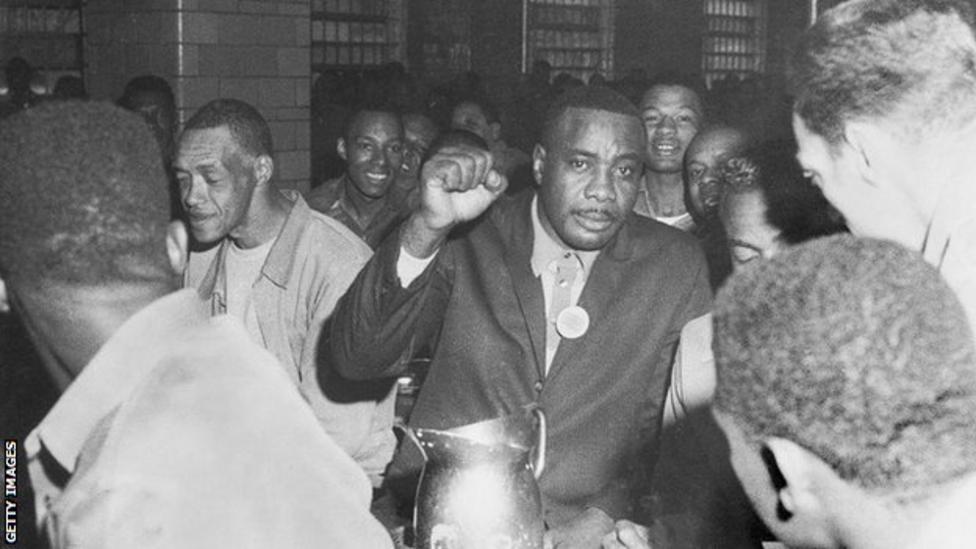
Sonny Liston pictured visiting Missouri State Penitentiary
Sonny Liston pictured visiting Missouri State Penitentiary – where he once served time – ahead of his first fight with Muhammad Ali in 1964
Presentational white space

Mobsters were attracted to Liston because of his formidable talent. After all, for a fighter to be a worthwhile investment he needs to able to win. With an eventual record of 50 wins and 4 losses with 39 knockouts, Liston’s power was frightening. His left jab was one of the most concussive ever seen in boxing and his stare was one of the most menacing, burning through opponents in the minutes before the opening bell.

“Of all the men I fought in boxing, Sonny Liston was the scariest,” Muhammad Ali would later say.

“Liston does not merely defeat his opponents,” Jonathan Aig wrote of the fighter. “He breaks them, shames them, haunts them, leaves them flinching from his punches in their dreams.”

Liston’s frightening reputation was something he exploited as he went on an impressive run of wins in the late 1950s and early 1960s. But it was also stoked by a racist press keen to portray him as the kind of brutish black man ‘White America’ so badly feared.

“He’s arrogant, surly, mean, rude and altogether frightening,” the famed New York Times columnist Arthur Daley wrote. “He’s the last man anyone would want to meet in a dark alley.” Reporters often used thinly-veiled racist terms – ‘gorilla’ and ‘beast’ – in their descriptions of him. When he was set to face Floyd Patterson for the heavyweight title, President John F Kennedy went so far as to urge Patterson to find an opponent with “better character”.

Sonny Liston faces off with Floyd Patterson in 1963
Sonny Liston stares down his opponent – Floyd Patterson – ahead of their rematch in 1963
Presentational white space

The public and the press did not take to him. Liston was cast as an outsider, loathed for his outlaw past and his criminal connections.

This dislike reached its peak when he destroyed Patterson – who was widely liked – in two minutes and six seconds to win the heavyweight crown in 1962. When he returned home to Philadelphia, he hoped a crowd would be there to welcome him. “He rehearsed his speech with the journalists on the flight,” Rob Steen says. “He gets to the top of the stairs when they arrive ready to greet everyone with this speech about how he’s going to be a great role model for the black race – and there’s no one’s there! It makes him shrink back into his shell.”

It was not just ‘White America’ that rejected him. The civil rights movement did too – in large part because of his ties to organised crime. “Liston was about the last person the movement wanted to signify black achievement,” Steen explains. “He was illiterate, he’d been in prison, and he’d supposedly beaten up striking workers for the mob where he was living. He’d sold his soul to the mob in order to get proper fights. His management was the mob.”

A mugshot of Frank 'Blinky' Palermo
A mugshot of Frank ‘Blinky’ Palermo – who managed Liston in his early days and was later jailed for conspiracy and extortion
Presentational white space

There was John Vitale in St Louis, a mob boss for whom Liston worked ostensibly as a chauffeur but – more accurately – as an enforcer and leg-breaker. In the early days of his professional career, he was managed by Frank ‘Blinky’ Palermo, an associate of the notorious mafia hitman Frankie Carbo. “The trouble with boxing today is that legitimate businessmen are horning in on our game,” Palermo once famously said.

Ultimately, as David Remnick wrote in his book about Muhammad Ali’s early years: “Liston was the last great champion to be delivered straight into the hands of the mob.” Some would say these connections followed him to the grave.

It wasn’t until Liston lost his title to Muhammad Ali – then known as Cassius Clay – in 1964 that his status as the most feared man on the planet began to wane. But it was the pair’s controversial rematch the following year that did the most damage to his reputation.

Just 104 seconds into the fight, which took place in the tiny town of Lewiston, Maine, Liston went down after an apparently innocuous punch that few people at ringside even saw. The infamous ‘phantom punch’ enraged Ali – who screamed at the downed Liston to get up and continue. “You’re supposed to be so bad! Nobody will believe this!” he cried. Sprawled flat on his back, Liston would roll and stumble and then roll again. That scene, of Ali imploring Liston to get up, would produce one of the most iconic photographs in sports history.

Sonny Liston looks up at a taunting Muhammad Ali
Muhammad Ali stood over Liston shouting at him to get off the canvas
Presentational white space

The phantom punch has been analysed and debated down to its finest details. While many believe it was a solid right-hand that caught Liston, many others have argued that he took a dive because the fight had been fixed by the mob. Even Geraldine had her suspicions: “I think Sonny gave that second fight away,” she told a TV journalist 35 years later. “I don’t know whether he was paid [but] that’s my belief, and I told him.”

Whatever the truth, the public jumped at the opportunity to label Liston corrupt. He was embarrassed on boxing’s biggest stage amid fierce accusations that he was little more than a mafia stooge.

In the years following the Ali loss, Liston moved to Las Vegas and reverted to form. He was virtually broke – his earnings likely skimmed by his mob handlers – and he was forced to make money outside the ring in the only way he knew how. Allegedly, according to those who knew him, by working for the city’s loan sharks and drug dealers.

“Sonny comes to Vegas after this unimaginable public humiliation,” says Shaun Assael, who investigated the final year of Liston’s life for his book: The Murder of Sonny Liston. “It’s either a public humiliation of his own doing, meaning that he took a dive for whatever gains had been negotiated, or he was felled by Ali’s huge hook. Either way, the public’s verdict was that Sonny was a bum.”

Despite his lowly public standing, Liston was hopeful he could resurrect his career. He went on an impressive run of victories after his two defeats to Ali – winning 14 fights in a row. He even spoke of recapturing his heavyweight title. But, in 1969 – about a year before his death – he fought his old sparring partner Leotis Martin and was knocked out in brutal fashion. It extinguished any lingering title hopes and he was left penniless and adrift.

“Vegas is a deeply segregated town at that point,” Assael explains. “Sonny starts to spend more time in the segregated west side and begins to lead a double life.”

On the one hand there was the family time he would spend at his home in Paradise Palms. This would be interspersed with occasional public appearances at the city’s casinos, where he would cash-in on his celebrity status by shaking hands and signing autographs.

Las Vegas in the 1960s by night
Liston was known to cruise around Las Vegas at night in his conspicuous pink cadillac
Presentational white space

But a different side to Liston would come out at night. He would cruise over to the west side in his conspicuous pink Cadillac. “There were a lot of places that were run down and others that were struggling to keep their heads above water,” Assael says. “Sonny was a fixture in a lot of these places. His routine largely involved drinking and, as I discovered, dealing some cocaine out of a casino and also getting involved in heroin. This double life begins to weigh on him.”

Liston was associating with some of the city’s darkest characters. “There was a drug raid on the home of a beautician named Earl Cage who was also dealing drugs,” Assael says. “Sonny was there, and when the police raided it [they] thought they were going to have to shoot him because he wasn’t backing off.”

The boxer once ran into an old acquaintance, Moe Dalitz, one of the most powerful mob figures in the city. “As a joke, Liston made a fist at Dalitz and cocked it,” writes David Remnick in his book King of the World. “Dalitz turned to Liston and said: ‘If you hit me, you’d better kill me, because if you don’t, I’ll make one telephone call and you’ll be dead in 24 hours.'” Perhaps it was a premonition. Before long, Liston would be dead and the shadow of the mob would loom large over his corpse.

“He was moving in dangerous circles, even without organised crime,” says Michael Green, a professor of history who has studied Nevada and the mob extensively. “He appears to have had involvement with drugs and if you’re involved with drugs, then you’re dealing possibly with the mob.”
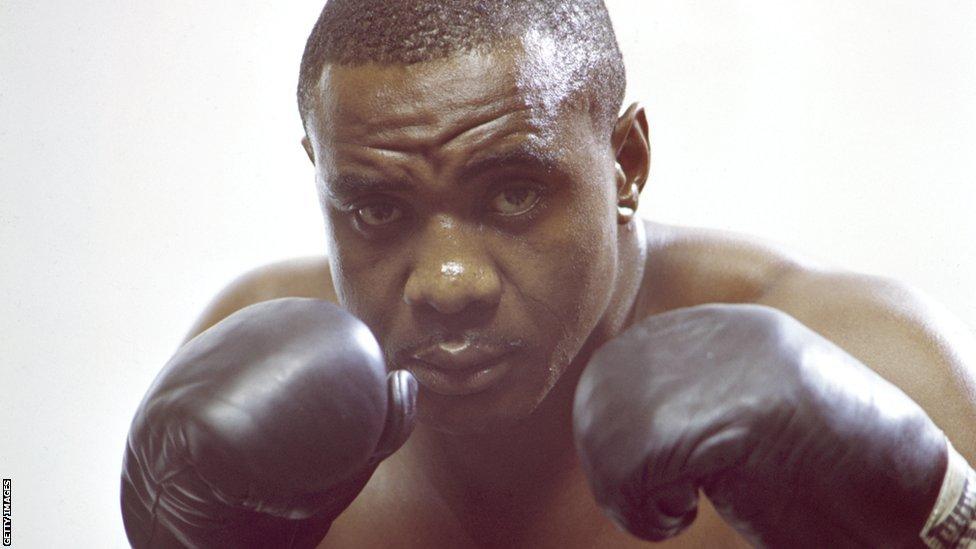
Sonny Liston
Sonny Liston poses for the camera in 1961
Presentational white space

So could the mob – or at least drug dealers and criminals – have been involved in Liston’s death? And why would they have wanted him dead? The most common theory is that his boxing career at the top-level was over by the time he died. This meant he was no longer a profitable investment for the mob but, owing to his long career in their grasp, he simply knew too much to be left alone.

“My inclination is that he was bumped off because he was of no use to the mob anymore,” says Rob Steen. “He knew things that may have come out, or indeed have come out over the years, and they decided it was too big a risk having him around.”

“I’m not alone in this theory by any stretch of the imagination,” he continues. “After the second Ali fight, when his life was in a bit of turmoil, he was apparently less than respectful to a particular member of the mob from Cleveland. This guy was very angry that he had not been shown sufficient respect by Liston and that was the trigger. That made the powers that be decide that they didn’t need him around anymore.”

Michael Green, who is also a board member at the Las Vegas Mob Museum, believes the growing concern over what Liston knew may explain his death. “Hits on mobsters were generally in connection with the fear they were going to talk,” he explains. “If you go back throughout [Liston’s] career, and the mobsters who were involved in it, and what he had done as an enforcer, he was the man who knew too much.”

What – for example – did Liston know about the second Ali fight and the ‘phantom punch’? Could he have been about to speak publicly about boxing’s corrupt underbelly?

Green continues: “The alternative was the fear that they would not do what they were supposed to do. Perhaps they wanted Liston to do something in particular and he wouldn’t. That is always a possibility.” Some boxing historians have alleged that Liston refused to throw his final fight with Chuck Wepner, which he won just months before his death. A refusal of that kind would have no doubt gone down badly with any criminal handlers.

“Evidence suggests there were a lot of people who wanted to see him dead,” says Shaun Assael. “I do believe he was murdered. There were five or six people who could have done this.”

The nature of Liston’s death – quiet, relatively unbloody and exceptionally murky – does not fit with the typical image of a mob hit. After all, the accepted view is that the mob would kill with the intention of sending a message and, even today, it is unclear what exactly happened to him. “I am inclined to suspect it’s a mob hit, but at the same time it gets difficult to put it in the perspective of other mob hits,” says Michael Green. “That isn’t the way the mob normally would have done this.”

Sonny Liston with the Kray Twins
Sonny Liston pictured with the notorious London gangsters the Kray twins in 1965
Presentational white space

But Green says Liston’s death does match with the mob’s transition towards a new kind of subtlety. “The mob itself was changing,” he says. “This had a combination of subtlety – you don’t have a body with 10 bullets – and a lack of it, because he was just found dead. This suggests it could have been a mob hit.”

So what can be made of the needle marks on Liston’s arm and the heroin in his house? What if the boxer simply overdosed? There has been speculation among some boxing writers and mob historians that Liston was killed by an enforced heroin overdose. “The way he was killed was a typical mob sort of execution – making it look as if someone had taken too much heroin,” says Rob Steen. This would explain how a man supposedly terrified of needles could end up with marks on his arm and heroin in his blood.

Of course, there are also theories that lack this level of intrigue and mystique. “It should be pointed out that Sonny had a car accident shortly before his death,” says Shaun Assael. “He was gripping his chest and so on and so forth. There are people who think that his death was the result of him medicating himself from pain from the car accident.” Others believe it may have been caused by cardiac arrest or a stroke.

Whatever the theory, Liston’s mysterious death marked the end of a life pockmarked with shadowy figures and secretive criminal activity. It has haunted boxing ever since – serving as a morbid reminder of the characters that used to inhabit its ringside seats and smoky backrooms. “His death did a great deal to damage the image of boxing,” says Rob Steen. “In a sense, he is a symbol of the way the world once was. His death is a signpost as to how bad things were and how fortunate the sport was that Muhammad Ali came after him.”

“You don’t find other boxing champions dying in that way,” he adds. “But, then again, boxers usually didn’t have the depth of involvement with the mob that Liston had.”


 

Sonny Liston's grave
Sonny Liston’s grave in Las Vegas carries the simple epitaph ‘A man’

BBC

Ships without sailors: Will it be the future of trade?

0

On 7 May, customs officers in Ostend, Belgium, received a box of oysters from the UK.

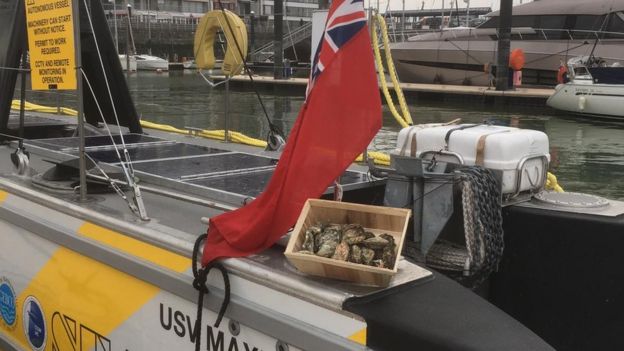
The molluscs had been caught in Essex and transported to Belgium on a 12m (39ft) aluminium-hulled vessel, which traversed the English Channel with no humans on board.

It was the world’s first unmanned commercial shipping operation.

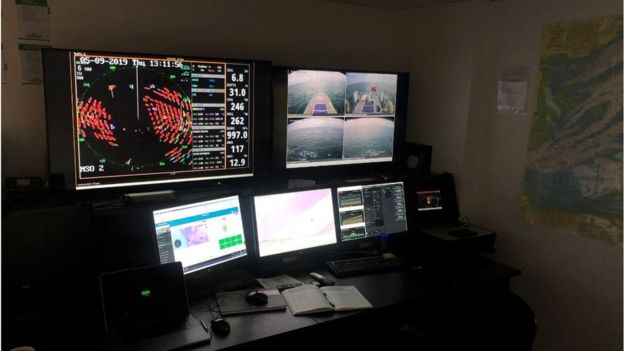
The crewless boat was carefully watched by four people in a control centre in Tollersbury, Essex, headquarters of Hushcraft, the company behind the design and development of the craft.

UK and Belgian coastguards also monitored the oysters’ progress.

OYSTERS
HUSHCRAFT: The boat’s minimalist payload was a box of local oysters

“You could actually listen to the waves hitting the boat,” says Ben Simpson, Hushcraft’s managing director.

It boasts a hybrid diesel engine, electrical generators, satellite links, CCTV and thermal cameras, an automatic identification system to warn approaching vessels of its position and more.

Prize-winning

The boat was made by SeaKIT, and the same vessel helped an international team of hydrographers, funded by the Japanese non-profit Nippon Foundation, win the $4m (£3.2m) Shell Ocean Discovery Xprize for advances in autonomously mapping the oceans.

Now Hushcraft wants SeaKIT to be used for transporting cargo, hence mounting the 5kg box of oysters – a local delicacy – on to the vessel and sending it to Ostend. But is there a market for it?

control centre
HUSHCRAFT: Onboard cameras and microphones feed information to the control centre

“The benefits are many,” says Mr Simpson. “You can send them around the world to do different jobs at a significantly reduced cost. Then, you don’t have to have a galley, you don’t have to have toilets. You can utilise space.”

They are better for the environment as they can be electrically propelled, and since they can use smaller ports they can replace road transport and cut even more fumes, he says.

Ghost ships

For Lawrence Brennan, a retired US navy captain and adjunct professor of admiralty and maritime law at Fordham University School of Law, all these virtues of uncrewed cargo ships come with certain caveats.

Ships with no sailors mean no risk to human life from fires or other hazards at sea. No-one needs to recruit staff, pay them, keep them trained or guard against unlicensed crew. The boats can go anywhere.

BOAT
HUSHCRAFT

But, in Prof Brennan’s view, the first Achilles heel of unmanned shipping might be the very technology that created it.

A failure in communications between vessel and base will render it a ghost ship, hopelessly drifting without a soul on board, a hazard to its owners, the owners of its cargo, and the environment, he argues.

Get creative

“Unmanned ships may be stopped by pirates by disabling shots or damaging the ship’s propeller and rudder,” Prof Brennan continues.

Karolina Zwolak, head of the Navigation Section at the Institute of Navigation and Marine Hydrography of the Polish Naval Academy, contributed to the success of the oysters’ voyage. Part of her job was collision avoidance.

Dr Zwolak is already working on the SeaKIT international team’s next ambitious endeavour, which will be to sail across the Atlantic next year, but is aware of the technology’s limitations.

“When unexpected situations occur on board, human creativity, experience, and non-schematic thinking can solve the problem,” she says.

So she does not see a revolution in the shipping industry in the near future.

“I just believe more and more tasks will be delegated on shore, using communication technology,” she says.

From crew to office

For his part, Mr Simpson, who believes crewless short-sea transportation might not be a rarity in five years from now, says that problems such as the risk of piracy plague both manned and unmanned vessels.

He also thinks it is not economically sound to lay people off.

“Unmanned ships need to be built, maintained, and controlled. The people that would have been on the bridge of a manned vessel are now in the office,” he maintains, adding that a lot of training will be involved in the transition.

The other obstacle is the law.

“The legal regime is decades, if not a century-and-a-half out of date,” says Prof Brennan. “As unmanned ships were never contemplated until recently, legislation says manning is essential for having a ship that is seaworthy, classified, and authorised to operate in national waters and on the high seas,” he explains.

Legal catch-up

For self-navigating ships to crisscross the oceans free from legal constraints, an entirely new maritime legislation will have to be drawn up and embedded in national laws and international regimes, otherwise financiers will be frightened off.

Still, the international maritime community is going through such a frenzy of technological creativity, that for Dr Zwolak there will be a solution soon.

“Technology has always preceded law,” she says.

BBC

Iran nuclear deal breaches not yet significant, EU says

0

Iran’s recent breaches of the 2015 nuclear deal are not significant and can be reversed, the European Union’s foreign policy chief says.

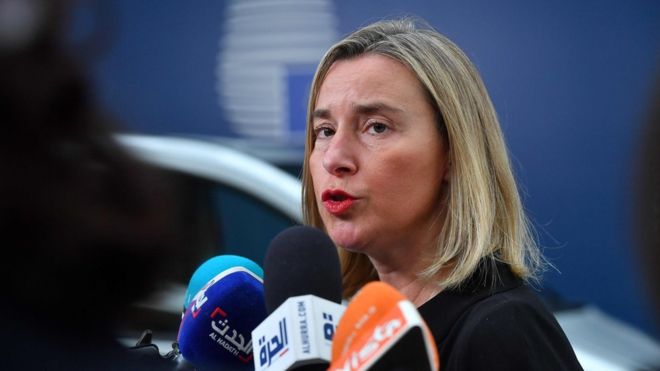
“We invite Iran to reverse the steps and go back to full compliance,” Federica Mogherini said on Monday.

Iran stepped up production of enriched uranium, used to make reactor fuel but also potentially nuclear bombs, in May.

It is responding to sanctions imposed by the US since it withdrew unilaterally from the agreement.

The breaches come amid heightened tensions between Iran and the US.

There has been tension with the UK, too, following the UK seizure of an Iranian oil tanker earlier this month suspected of taking oil to Syria in breach of sanctions. Iran denies this.

The long-term nuclear deal involves Iran limiting its nuclear activities in return for the easing of economic sanctions, which have badly hurt its economy.

“Technically all the steps that have been taken, and that we regret have been taken, are reversible,” Ms Mogherini said, following a meeting of EU foreign ministers.

She said none of the signatories to the deal considered the breaches to be significant, and so they would not be triggering its dispute mechanism which could lead to further sanctions.

The meeting in Brussels was focused on reducing tensions with Iran and ensuring the nuclear deal remains in place.

Iran’s Foreign Minister: We cannot leave our own neighbourhood

Earlier on Monday, UK Foreign Minister Jeremy Hunt said there was a “small window” to save the deal.

“Iran is still a good year away from developing a nuclear weapon,” he said.

In a joint statement issued ahead of the meeting, Britain, France and Germany reiterated their support for it.

Inside Iran: Iranians on Trump and the nuclear deal
Presentational grey line

Why does saving the Iran nuclear deal matter?

Even if Iran does not actually build a nuclear warhead, it only has to reach the point at which it COULD produce one for its nervous neighbours to decide this is too much of a risk.

They will want their own one too – as a deterrent.

Statements from Saudi Arabia, Iran’s Middle East rival, have made it clear the country would not accept a nuclear-armed Iran.

So then, as stated by diplomats in Brussels, we are into a nuclear arms race.

What does that mean in practice?

In all probability Saudi Arabia, Turkey and Egypt would all want to become nuclear weapons powers, with the potential to obliterate entire cities.

This would be in a part of the world that has seen almost continuous conflict in places for the last 71 years.

Finally, there is the risk that should Iran ever go nuclear some fear it could pass on a warhead to a non-state militia like Hezbollah.

This is why the Iran nuclear deal matters, even if you don’t live anywhere near the Gulf.

Presentational grey line

Why is the deal in trouble?

In 2018, US President Donald Trump said he would unilaterally withdraw the US from the agreement which was signed under the administration of his predecessor Barack Obama.

The other parties criticised Mr Trump’s decision and said they remained fully committed to the deal.

The BBC’s Paul Adams looks at the recent developments behind the US-Iran tensions

The Mail on Sunday published a leaked memo from the UK’s ambassador in Washington which said Mr Trump abandoned the nuclear deal to spite Mr Obama.

Earlier this month, the International Atomic Energy Agency confirmed that Iran had breached the deal’s cap on stockpiling of low-enriched uranium.

Iran said it was responding to sanctions reinstated by the US after Mr Trump abandoned the deal. Last week it confirmed it will break another of the limitsimposed by the deal.

Trump under fire for attacks on Democratic congresswomen

0

US President Donald Trump came under fire from Democrats and even some members of his own Republican Party on Monday after launching an extraordinary xenophobic attack on four progressive Democratic congresswomen.

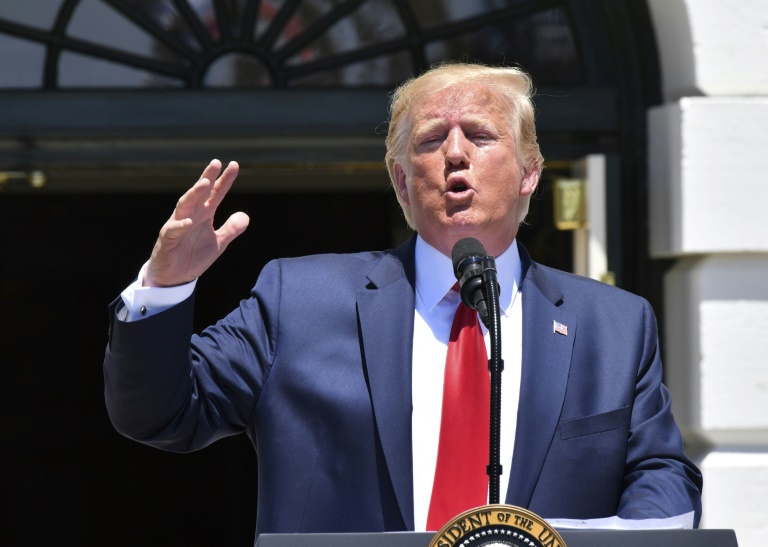
“All they do is complain,” Trump told reporters at a White House event featuring products “Made in America.”

“These are people that hate our country,” he said of the four lawmakers. “If you’re not happy here, you can leave.”

Trump also accused the four first-term congresswomen — who are of Hispanic, Arab, Somali and African American origin — of having “love” for US “enemies like Al-Qaeda.”

Asked by a reporter whether he was concerned that many people saw his comments as racist, Trump said: “It doesn’t concern me because many people agree with me.”

US Representatives Ayanna Pressley (R), Rashida Tlaib (second from R), Alexandria Ocasio-Cortez (third from R) and Ilhan Omar (L) at a press conference to respond to President Donald Trump

Several hours after his remarks, the four — Alexandria Ocasio-Cortez of New York, Rashida Tlaib of Michigan, Ilhan Omar of Minnesota and Ayanna Pressley of Massachusetts — hit back at a news conference.

Pressley condemned Trump’s “xenophobic and bigoted” comments and said “we will not be silenced.”

Omar said Trump made a “blatantly racist attack” on four lawmakers “of color.” “This is the agenda of white nationalists,” she said.

Omar and Tlaib repeated calls for Trump to be impeached.

Democratic congressman Al Green, of Texas, separately said he would bring an impeachment vote to the House floor this month “for bigotry in policy, harmful to our society.”

– ‘Destructive’ –

The president first attacked the lawmakers — all but one of whom were born in America — with a series of tweets on Sunday, saying they should “go back” to their countries of origin.

His comments prompted critical reactions from foreign leaders, and outrage at home from Democrats — while Republicans were initially silent.

On Monday, several of his party faithful began to speak up.

“My view is that what was said and what was tweeted was destructive, was demeaning, was disunifying, and frankly it was very wrong,” said Senator Mitt Romney, a Republican from Utah.

“There is no excuse for the president’s spiteful comments — they were absolutely unacceptable and this needs to stop,” said Senator Lisa Murkowski, a Republican from Alaska. “We must demand a higher standard of decorum and decency.”

Republican Senator Susan Collins of Maine said she disagreed with the policies espoused by the “far-left” Democratic lawmakers, but that Trump was “way over the line.”

Senator Susan Collins of Maine was one of several Republicans to criticize President Donald Trump’s remarks about four Democratic congresswomen

For Republican Senator Pat Toomey of Pennsylvania, “the citizenship of all four is as valid as mine.” He said “they are entitled to their opinions, however misguided they may be.”

Texan Will Hurd, the only black Republican in the House of Representatives, told CNN that Trump’s behavior was “unbecoming of the leader of the free world.”

And Senator Tim Scott, a black Republican from South Carolina, criticized the president for using “unacceptable personal attacks and racially offensive language.”

New Zealand Prime Minister Jacinda Ardern became the latest international leader to condemn Trump’s tweets.

“I completely and utterly disagree with him,” she told Radio New Zealand, noting that her country welcomed diversity in the corridors of power.

Canadian Prime Minister Justin Trudeau and Britain’s Theresa May also expressed disapproval.

– ‘Cold, hard strategy’ –

Trump’s comments appear to be aimed at galvanizing his mostly white electoral base ahead of the 2020 presidential vote — while also stoking racial tensions and divisions among his political opponents.

In the line of fire of Donald Trump

“With his deliberate, racist outburst, @realDonaldTrump wants to raise the profile of his targets, drive Dems to defend them and make them emblematic of the entire party,” said David Axelrod, who served as chief strategist for Barack Obama’s two White House campaigns.

In his initial Twitter attack on Sunday, Trump — who before becoming president pushed the racist “birther” conspiracy theory that Obama was not born on US soil — said the congresswomen came from corrupt, poorly managed countries to which they should return.

Ocasio-Cortez, Tlaib and Pressley were all born in the United States while Omar arrived as a refugee from war-torn Somalia, which she fled as a child.

Former vice president Joe Biden, who is seeking the 2020 Democratic presidential nomination, denounced Trump as the most “openly racist and divisive” president in US history.

“Go home to your country? It’s sickening, it’s embarrassing,” Biden said.

Nancy Pelosi, the Democratic speaker of the House of Representatives, has had a tenuous relationship with the four left-leaning congresswomen, but she jumped to their defense.

Pelosi said she was seeking Republicans to co-sponsor a House resolution “condemning the president’s xenophobic tweets” and “characterization of immigrants.”

Democratic Senator Chuck Schumer of New York said he planned to do the same in the Senate.


Source: AFP

4 Illegal loggers nabbed at Mpameso Forest Reserve

0

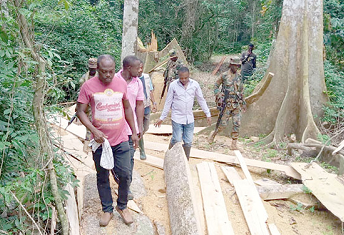
Officials of the Forestry Services Division (FSD) of the Forestry Commission have arrested four illegal chainsaw operators who entered the Mpameso Forest Reserve in the Dormaa Forest District to harvest 18 trees.

They are Amadu Moro, Shadrack Mensah, Kwabena Albert and Kwame Joe.

The Bono Regional Manager of the FSD, Dr Ebenezer Djagbletey, told the Daily Graphic that officials of the division had a tip-off about the activities of the alleged chainsaw operators but when they went into the reserve, they could not match the strength of the suspects.

The FSD officials, therefore, returned to restrategise and went back to the reserve with some security personnel in the wee hours of Sunday, July 7, 2019.

Dr Djagbletey said the team met the four deep in the reserve busily sawing the logs in the night.

According to him, there was also a vehicle parked nearby ready to cart the wood out of the forest.

Police take over

Dr Djagbletey said even though some of the illegal chainsaw operators ran away, the team was able to arrest the four and they handed them over to the police for further action.

The four are currently on police bail pending the completion of investigations and possible prosecution.

The regional FSD manager said the chainsaw machines and a motorbike which were used by the suspects were impounded, while the tyres of the vehicle were deflated by the security personnel.

He said efforts were being made to speed up the prosecution of the culprits to discourage persons who harboured any intention to enter the forest reserves in the region to engage in chainsaw activities. 

Dr Djagbletey said it was unfortunate that while huge sums of money were being committed by the government to help restore the nation’s forest cover, some miscreants were bent on reversing the gains so far chalked up through their nefarious activities.

He called on members of the various forest fringe communities to collaborate with officials in their efforts to protect the reserves for posterity.

GraphicOnline

Cry for Infrastructure; Schools in East Mamprusi moan for furniture,

0

Schoolchildren in public schools in the East Mamprusi Municipality in the North East Region are forced to learn under harsh conditions.

The municipality has a total of 100 primary and junior high schools (JHSs) and all are faced with challenges ranging from lack of furniture to poor infrastructure.

A visit by the Daily Graphic to 10 basic schools revealed that in spite of the government’s resolve to ensure that all children of school age were enrolled, most schoolchildren were studying under bad conditions.

Some pupils lie prostrate to write while others are combined in the few available classrooms.

The schools visited were Langbinsi A/G, Bongbini M/A, Zarantinga M/A, Namasim Presbyterian, Sakogu E/A, Duuni and Nalerigu E/A Primary schools.

The rest are Gbintiri and Kufori JHSs.

Deplorable state

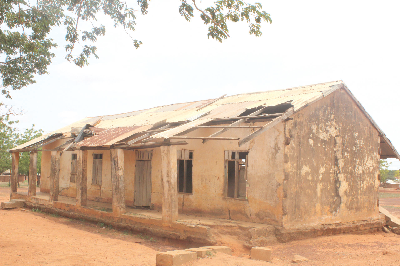
All the basic schools visited lacked furniture and were in a deplorable state, affecting teaching and learning.

In some schools, pupils from Kindergarten (KG) to Primary Three had no desks to sit on while others shared the few available desks.

Moreover, authorities of most of the schools had combined both upper and lower primary pupils in the existing dilapidated classrooms.

Some schoolchildren also study under trees due to the lack of classrooms, exposing them to environmental hazards.

Aside from the lack of furniture and infrastructure, checks by the Daily Graphic revealed that the Sakogu E/A Primary School, for instance, since its establishment some years ago had not been provided with teaching and learning materials, compelling teachers to improvise for academic work.

The school also had no tables and chairs for the teachers.

School dropout

According to authorities of the various schools, the situation had resulted in a number of pupils dropping out of school.

“Because of the bad conditions, some pupils have dropped out of school and are now helping their parents on their farms, other parents who are able to afford have also withdrawn their wards to better endowed private schools where the environment is conducive for learning,” a teacher, who wishes to remain anonymous, told the Daily Graphic.

Another teacher said: “I have complained and took pictures of the pupils lying on the bare floor and sent to the District Chief Executive but nothing has been done about it”.

Ghana Education Service

The Municipal Director of the Ghana Education Service (GES), Mrs Hawa Yussif, in an interview said the situation had affected academic performance of the pupils enrolment over the years.

“It is true that there are infrastructure and furniture challenges in the municipality, the GES does not provide furniture and infrastructure so I have written to the assembly on several occasions but nothing has been done about it, almost all the schools in the area are facing same challenges,” she noted.

“The Complementary Basic Education (CBE) programme will prepare the out-of-school children but transitioning them into the formal education system is always a big challenge,” she added.

A dilapidated structure being used by the Zarantinga M/A Primary School


Teachers seeking transfer

Mrs Yusif disclosed that due to the bad conditions in the various schools, a number of teachers were seeking release from the area which had become a major worry to the directorate.

Available data indicated that there were 671 trained teachers in the municipality, however, a large number of them have sought transfer to leave the area.

“About 25 teachers who were posted to the area in 2015/2016 have currently applied for release,” the Municipal Human Resources Director, Mr Francis Adongo added.

Assembly’s commitment

When contacted, the Municipal Chief Executive, Mr Abdul-Nasir Danladi, said the assembly had received reports on the bad state of the schools and was making frantic efforts to address it, adding that “the issue of lack of furniture is not a small problem but we are working on it. Last year we distributed a number of furniture to the schools but that was not enough”.

He appealed to non-governmental organisations (NGOs) and benevolent organisations to assist the assembly in its quest to provide furniture to the schools to ensure quality education.

GraphicOnline

Private sector relevant to attainment of SDGs – Gayheart Mensah

0

The private sector players have immense potential to accelerate the attainment of the UN Sustainable Development Goals (SDGs) in Ghana, if they put their minds and efforts behind it, Mr Gayheart Mensah, External Affairs Director of Vodafone Ghana has said.

Speaking at a side-event during the UN High Level Political Forum (HLPF) at the UN Headquarters in New York on the theme, ‘Empowering people and ensuring inclusiveness and equality’, he called for a relook at how successful organisations were assessed, in order to ensure that the private sector contributed more significantly to delivering on the SDGs.

“Organisations should not be assessed only by how profitable or economically sustainable they are. The social and economic sustainability of their activities should be key components of any assessment, and not just left to conscience, morality and ethics. This will make organisations strive for partnerships and the appropriate governance framework that will support the attainment of the 2030 Agenda,” he suggested.

He said: “Vodafone is persuaded that there is something more valuable than just being a profitable organisation and that is the impact an organisation has on people and communities. That, he stated, explains the current partnership Vodafone has with the government of Ghana, particularly the Ghana Statistical Service (GSS).”

Vodafone Ghana, two years ago, entered into a partnership with the GSS to use mobile-derived customer insights to make better predictions for sustainable development and life-saving decisions.

Using aggregated and anonymised CDRs, the GSS will analyse and generate statistics that will support decision-making in public health delivery, humanitarian, agriculture and development planning. The project, tagged, ‘Data for Good’, receives support from Vodafone UK, Hewlett Foundation with technical support from Flowminder, a not-for profit organisation.

 “When we get to the junction where the operations of the majority of organisations contribute to empowerment and inclusiveness, and also promote gender equality, that will be a major leap towards delivering on Agenda 2030,” Mr Mensah said.

 He pledged Vodafone’s commitment to partner government to effectively track trends in health, agriculture and population movements among others and said “this demonstrates what Private-Public Partnership (PPP) could contribute to the attainment of the SDGs”.

Government’s delegation to the UN Forum was led by Minister for Planning, Prof George Gyan-Baffour and included the Chief Executive Officer of Stanbic Bank, Alhassan Andani, Ambassador Nana Effah-Apenteng, Paramount Chief of Bompata and Country Director for SEND Ghana, George Osei-Akoto Bimpeh.

Source : Ghanaian Times

Koulibaly to miss final

0

Senegal moved a step closer to a maiden Africa Cup of Nations title with their semi-final victory on Sunday but will be without key defender Kalidou Koulibaly against Algeria in Friday’s title decider.

The imposing centre back, who is regarded among the best in European club football, was cautioned for a second time in three matches after conceding a penalty in Sunday’s 1-0 semi-final win over Tunisia in Cairo and will be suspended for the final.

“It’s a shame we will be without Kalidou, he’s vital in this team, a player who gives us a lot. We will also be playing for him,” midfielder Pape Alioune Ndiaye told reporters after the extra-time triumph at the 30 June Stadium.


Source: Reuters

Damaged Odaw River drain to be fixed

0

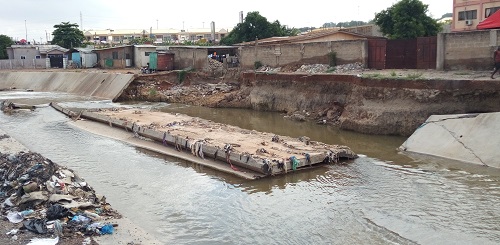
The Abofu stretch of the Odaw River drain near Achimota in Accra is to see temporal rehabilitation works in the coming weeks, following Ghanaian Times report on the life-threatening condition of the drain.

The Hydrological Services Department is concluding arrangements to have the deteriorated 400-metre part of the stretch fixed with construction stones to prevent further erosion of the area.

The Head of the Department, Mr Herbert Owusu -Ansah and Head of Drains Unit, Mr Seth Kudzordzi briefed the Ghanaian Times on the development in an interview in Accra yesterday.

According to Mr Kudzordzi , the drain that has collapsed and the base slabs that have dislocated would be removed from the river to allow the free flow of water as part of the project.

In his estimation, work on the drain should be completed within two months time when it starts soon, adding that should there be any delay, “work should be completed before the next major rainyseason”.

He could not state how much the rehabilitation work would cost explaining the department and the contractor were concluding discussion on issues, including how to get the rocks to the drain since the area is not motorable.

A temporary measure, he said, had been put in place to prevent the loss of property and the destruction of the rail lines nearby, ahead of a permanent solution to the situation, sometime next year.

According to Mr Kudzordzi, the damaged portions of the entire Odaw drain would be reconstructed under the recently authorised $200 million Ghana Accra Resilient Integrated Development (GARID) Project funded by the World Bank.

The first phase of the project, among other things, seeks to mitigate flooding in the Odaw River basin through the construction and rehabilitation of drainage systems and bridges.

Mr Owusu-Ansah, on his part, acknowledged the danger the state of the drain posed to residents and assured that it would be fixed soon.

He commended the Ghanaian Times for highlighting the state of the drain for redress.

On June 4, this year, the paper reported that tragedy was imminent in the area as portions of the concrete walls of the drain had caved in, causing floods in the area during downpours.

It said if the problem was not fixed, the next heavy rains and subsequent overflow of the drain could submerge houses in the area, damage property and even lead to loss of lives.

When the Ghanaian Times visited the area prior to the report, more than 10 large slabs on both sides of the drain had collapsed into the river, impeding free flow of the river.

There were cracks in some of the existing slabs which could deepen and collapse sooner than later. The last flood has left its marks on the walls of neighbouring buildings, including the GH Media School.

The drain, constructed over two decades ago, according to residents, has been weakened and unable to accommodate the pressure of the river during rains due to lack of maintenance.

BY JONATHAN DONKOR, GhanaianTimes 

Govt sets up committee to pay arrears owed contractors

0

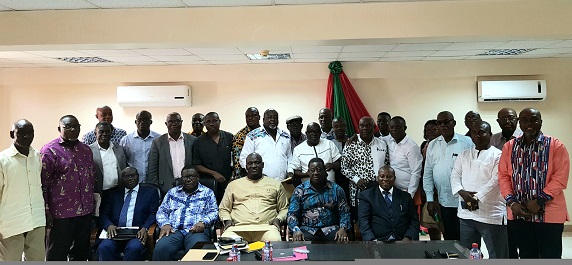
A Special Committee has been constituted by the President to work assiduously towards raising the required funds to pay arrears owed contractors. 

It is made up of the Vice President, Dr Mahamudu Bawumia, Ministers of Finance and Road and Highways, Ken Ofori-Atta and Kwasi Amoako-Atta respectively.

The committee is expected to submit its recommendations to resolve the issues about settlement of arrears by the end of July.

This was contained in a statement issued by the Ministry of Road and Highways in Accra yesterday, following a meeting between the Minister and executives of contractor associations to discuss issues related to outstanding payment to contractors.

The meeting brought together Executives of the Ghana Chamber of Construction Industry, Progressive Road Contractors Association, Association of Road Contractors, Board Chairman of the Ghana Road Fund Board and Heads of Agencies of the Ministry.

At the meeting, the statement noted that, the contractor associations, led by Emmanuel Martey, Chairman, Ghana Chamber of Construction Industry, presented a paper to the Ministry for consideration, which was discussed with recommendations provided.

It said the deliberations would be completed by the end of the month with recommendations for a resolution of the issues.

The Ghanaian Times on July 11 reported that contractors numbering about 100 yesterday besieged the Ministry of Roads and Highways to demand immediate payment for project executed for the government.

Looking angry, the contractors who said they were frustrated for non-payment of government contracts awarded them chanted war songs and called out the Minister, Kwasi Amoako-Atta, severally to respond to their concerns.

Some others, clad in red head bands, accused the minister of “politicking” with the livelihoods of contractors and threatened court action if their demands were not addressed urgently. 

Some personnel of the Ministries Police Station, who had arrived to the scene on time to avert any unforeseen circumstance, preached for calmness while protecting the main entrance of the ministry building.

Majeed Yahaya, one of the contractors told the Ghanaian Times that the group was angry with the government  for delaying payment for contracts which were executed between three and five years ago.   

He explained that the delay in the payment had crippled the operations of some contractors due to huge debts they owe banks and suppliers.

“We have not been paid which means our workers have also not been paid all these years and so it is kind of crippling effect. Some of us have employees more than 10 to 15, others having over 100. There is pressure from our workers and banks and our suppliers. Most of us are in debt ranging from GH¢200,000 to GH¢30 million and above. These are for contracts that we have all executed from asphalts to road maintenance and construction of drains”, he stated.

He said the government’s decision to audit all projects before payment was a ploy to withhold payment due contractors saying that “they wanted to buy time for themselves, there has being no report but we have no problems about an audit.”

Failure on the part of government to expedite payment, Mr Yahaya explained, would see both contractors and their workers troop the ministry to demonstrate.

Another contractor, Abdul Rashid Issah, alleged that the government was selective in paying some contractors and leaving out others because they were perceived to be members of the main opposition, National Democratic Congress (NDC).

He further alleged that some officials of the ministry were demanding a fee before processing payment details of the contractors saying that “some of us have been pushed back because we didn’t agree to the percentage demand from them.”

BY TIMES REPORTER / Ghanaian Times