Home Blog Page 1350

Working stiffs: China’s tech minions burn out in ‘996’ rat race

0

Shanghai software engineer Wu Linfeng watched the silent comedy “Modern Times” recently and soon found himself crying — watching Charlie Chaplin’s classic stressed-out assembly-line worker was like watching himself.

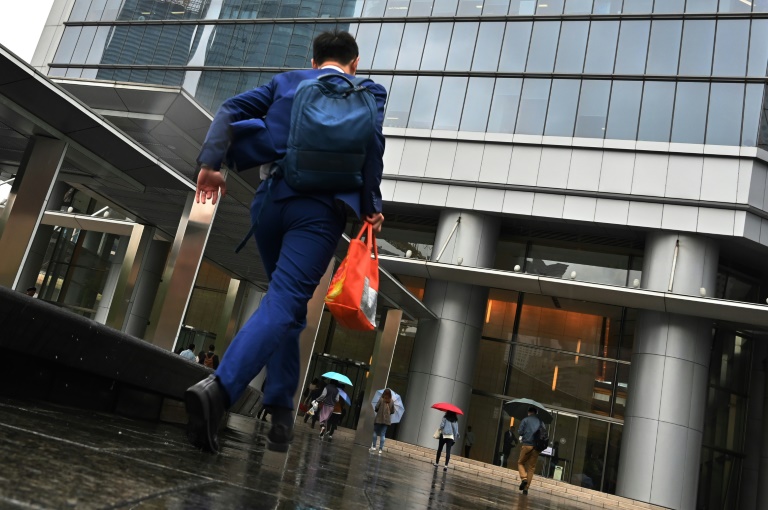
Overworked, underpaid, and feeling like a hamster on a wheel, he is among China’s masses of mostly male tech-industry staff whose long hours have sparked a national debate about work-life balance.

The coders, engineers, programmers, software developers, game designers and other IT manpower behind China’s burgeoning digital economy have become known as “996” workers due to the 9am-9pm, the six-day week they work, without overtime pay.

Wu, who asked that a pseudonym be used to protect his job, has followed that schedule for three years at a leading Chinese internet company.

“You’re the first girl I’ve spoken to in about a year,” he told an AFP reporter, with just a hint of exaggeration.

Chinese tech companies have grown rapidly along with the country’s digital transformation, becoming giants at home while some like Huawei and Alibaba are globally recognized brands.

The millions of tech workers behind their success had for years attracted little attention, but the issue went viral recently with the anonymous release online of a “blacklist” of Chinese companies where “996” prevails.

The list this week reached 139 companies, including fast-growing e-commerce platform Pinduoduo, messaging and games giant Tencent, and Bytedance, creator of popular apps and content platforms.

Its host page, located at 996.ICU — because working those hours supposedly puts you in intensive care — has been translated into more than 20 languages.

– Work till you drop –

As China marks the May Day worker’s holiday on Wednesday, the affair has sparked national soul-searching over whether China’s rapid modernization was creating a work-till-you-drop culture.

The 996 hashtag on China’s popular Weibo platform has been viewed more than 15 million times, with many comments criticizing companies and the government for not enforcing laws limiting work hours.

“They say (China) is led by the working class,” said one post, an apparent reference to the Communist Party.

Despite the long hours, many web users have said the gainfully employed should be grateful for what they have 


“But have you ever seen leaders exploited like this?”

A video game designer who withheld his name told AFP he once spent 110 straight hours in the office, sleeping and eating there, to keep up with work.

After years of hard toil, the 31-year-old suffers endocrine disorders and depression, which he blames on excessive work.

“I don’t get a sense of achievement, and I’m hardly getting rich,” he said.

“My hourly wage is even lower than our office cleaning lady.”

Working excessive hours is viewed as vital to surviving in the competitive industry, tech workers told AFP.

Employers will often stipulate “flexible” work schedules in job contracts while setting unrealistic performance goals requiring workers to burn the midnight oil.

– Huge blessing? –

Leading tech tycoons have stoked the debate.

Alibaba founder Jack Ma, called “996” a “huge blessing” for go-getters who strive for success, while Richard Liu, the head of Alibaba’s e-commerce rival JD.com, denounced those unwilling to work hard as “slackers”.

Their comments drew widespread criticism.

Chinese tech workers average around $5 per hour worked, according to leading Chinese recruitment app Boss Zhipin — one-fifth of what their Japanese counterparts make, and one-tenth of Silicon Valley employees, according to various data sources.

“If you are unwilling to do the work, others are standing in line, waiting to replace you,” said a software engineer –- a “code peasant”, as he puts it — who also declined to give his name.

Japan was long viewed as the standard-setter on overwork, but a new labor law there limits monthly overtime to 45 hours, while South Korea last year cut its maximum workweek to 52 hours, from 68.

Chinese authorities have yet to wade into the debate, but Communist Party mouthpiece the People’s Daily said in a recent editorial that “996” violates laws stipulating a 40-hour workweek.

“An extended 996 schedule does great harm to employee morale, makes them extremely fatigued, may cause mental disorders and negatively influence their family lives,” said Su Yong, dean of the Institute of Oriental Management in Shanghai’s Fudan University.

“Companies should focus on cultivating smart, creative and more productive staff rather than increasing working hours.”

Still, a nose-to-the-grindstone culture remains strong in China, and many web users said the gainfully employed should feel grateful.

“If you don’t strive when you are young, do you truly want to regret your mediocrity when you are old?” said one.


 

AFP

Newspaper Headlines Tuesday 30th April 2019

0

[ngg src=”galleries” ids=”35″ display=”basic_thumbnail”]

Newspaper Headlines Monday 29th April 2019

0

[ngg src=”galleries” ids=”34″ display=”basic_thumbnail”]

British Airways rewards travel agents

0

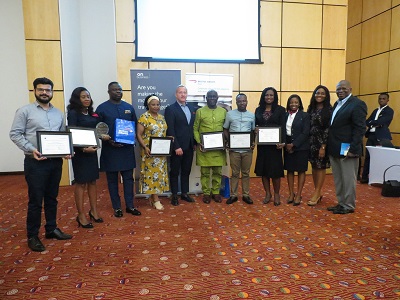
British Airways has celebrated 40 of its Ghanaian travel trade partners for their outstanding performance in 2018 at an event held in Accra

Sat Guru Travel and Tours Ltd was honoured for being the overall highest selling travel agent and also the agent with the highest point-to-point volumes during the year 2018.

Stellar Travel and Tours Ltd received the award for the highest North Atlantic sales, while Grandeur Consult was adjudged the Most Promising Agent, 2018.

 Paolo De Renzis, British Airways Commercial Manager for Europe and Africa in his remarks commended the agents for their hard work.

“This year is a special year for British Airways, as we celebrate 100 years of operation, and our ongoing £6.5 billion investment is being channelled into upgrading aircraft and our products and service for the best customer experience,” he said.

He said, “There have been significant changes to onboard products and services, including a brand-new Club World suite which will be out-doored on the airline’s new Airbus A350 aircraft and Boeing 777 aircraft later this year.”

“In the World Traveller (Economy Class) cabin, British Airways has introduced new amenity kits, quilts and pillows for added comfort and a touch of luxury. New routes to Charleston, Pittsburgh, Osaka, Kos and Corsica, Ljubljana, Montpellier, among others have also been launched as part of the ongoing investment,” he said.

British Airways also used the opportunity to explain the ‘OnBusiness’ loyalty programme to the travel agents. OnBusiness is a loyalty scheme for small and medium-scale businesses that allows member companies to earn points from corporate travel, which can later be redeemed for free or discounted flights and other services.

Kola Olayinka, British Airways’Regional Commercial Manager for West Africa said that typically, large companies with large travel budgets tend to enjoy more from the airlines and their travel partners, however, British Airways took into consideration ways that they could also support the smaller companies, especially those with at least two staff of the company travelling regularly.

“We encourage you to introduce your clients to the OnBusiness programme, as you will still be able to manage their travel and they will greatly appreciate the extra value it brings. Best of all, the individual passenger can still collect their Avios if they are registered with the British Airways Executive Club, while the company also receives points in its OnBusiness account,” he said.

By Times Reporter

Standard Chartered Bank committed to BRI – CEO

0

Standard Chartered Bank has reiterated its commitment to the Belt and Road Initiative (BRI) to enhance the development of Africa, Asia, and Middle-East and the global economy at large.

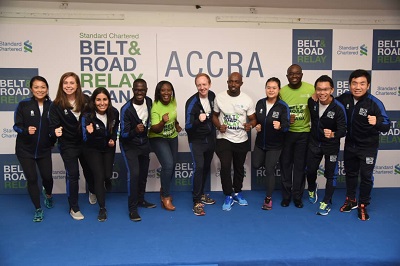
The Chief Executive Officer (CEO) of the Bank, Mrs. Mansa Nettey disclosed this during the Standard Chartered BRI, the first-ever global running event spanning the Belt and Road initiative, which stopped in Accra on April 18, 2019.

Standard Chartered Bank recently announced the launch of the Standard Chartered BRI.

It is a Chinese investment initiative which was launched in 2013 and aims to invest in infrastructure and development and also to build new trade routes over the land and sea, in Africa, Asia, Middle-East and Europe.

Activities for the Relay in Ghana included a 10-kilometer run at the University of Ghana, Legon and interaction with clients and Chinese interests.

Mrs Nettey said Standard Chartered was committed to supporting the initiative to help improve businesses in Africa, Asia, and Middle East markets.

The Bank, she said, in 2017 committed additional financing for Belt and Road projects of at least $20 billion by 2020 and was involved in more than 50 Belt and Road Deals worth more than $10 billion across a range of products and services.

“We are very excited to be participating in the first-ever Belt and Road Relay.  The Belt and Road initiative is strongly aligned to the footprints of the Bank with its deep-rooted history across Africa, Asia and the Middle East.  As a key market in the African Region, Ghana has been a supporter of the Belt and Road Initiative since its inception and is very well positioned to help clients leverage on the Belt and Road opportunities,” she said.

She said the Relay was to highlight the Bank’s continued commitment to Belt and Road, and the positive impact of the initiative to communities and businesses globally.

Mrs Nettey indicated that the Relay was led by eight staff athletes from Standard, selected from the Bank’s diverse footprint across Asia, the Middle East, Europe and the Americas.

The Associate Director, Global Banking, Standard Chartered China, Li Xiaoqi Henry said most African economies were embracing the BRI.

He said the BRI was helping to improve infrastructure, especially in Africa, saying about 200 Chinese companies were investing under the BRI in Kenya.

Standard Chartered Bank and Road Relay kicked off in Hong Kong on February 17, 2019, and will make a stop in Ghana on April 18 and collude in China on May 1 after the Belt and Road Forum.

By Kingsley Asare

World Malaria Day

0

“Zero malaria starts with me”

After more than a decade of steady advances in fighting malaria, progress has levelled off.  

According to WHO’s latest World malaria report, no significant gains were made in reducing malaria cases in the period 2015 to 2017.

The estimated number of malaria deaths in 2017, at 435 000, remained virtually unchanged over the previous year.

Urgent action is needed to get the global response to malaria back on track – and ownership of the challenge lies in the hands of countries most affected by malaria.

On World Malaria Day 2019, WHO joins the RBM Partnership to End Malaria, the African Union Commission and other partner organizations in promoting “Zero malaria starts with me,,” a grassroots campaign that aims to keep malaria high on the political agenda, mobilize additional resources, and empower communities to take ownership of malaria prevention and care.

WHO

Sri Lanka suicide bomber was previously arrested and then released

0

One of the Sri Lanka suicide bombers was previously arrested by police and then released, a senior government official told CNN Thursday.

Ilham Ahmed Ibrahim — one of two sons of a spice tycoon who blew themselves up in Sunday’s attacks — detonated a device at the Cinnamon Grand hotel in Colombo, the official told CNN.
 
“It was the suicide bomber of the Cinnamon Grand bomb attack who was released earlier,” the official said.
 
Ilham Ahmed Ibrahim and his brother Imsath Ahmed Ibrahim were previously identified as two of the suicide bombers in Sunday’s attacks, which left at least 359 people dead across the country.
 
Police have confirmed to CNN that they are holding the brothers’ father, Mohamed Yusuf Ibrahim, a wealthy spice trader, on suspicion of aiding and abetting his sons.
 
Police spokesman Ruwan Gunasekera said the elder Ibrahim was in custody, as were all other members of the Ibrahim family known to police.
 
CNN has not been able to reach Mohamed Yusuf Ibrahim or other members of his family for comment.
 
In an interview with CNN, Sri Lanka’s Prime Minister Ranil Wickremesinghe said the suspected bombers were upper and middle class, well-educated and educated abroad, a profile he described as “surprising.” He added that several of them were under surveillance ahead of the attacks, but that there had not been “sufficient” evidence to take them into custody.
 
Spice trader Mohamed Ibrahim, center, looks on as his son Imsath, right, shakes the hand of a government minister, in a 2016 photo.
 
Meanwhile, a huge international criminal investigation is ramping up in Sri Lanka, with six foreign police agencies and Interpol assisting local police, including Scotland Yard from the UK and the FBI from the US.
 
Gunasekera told CNN that officers from Sri Lanka’s Criminal Investigation Department (CID) and Terrorism Investigation Department (TID) have raided five safe houses across the country in connection with Sunday’s attacks. Those locations have since been sealed for forensic investigation.
 
More than 70 suspects have been taken into custody on a range of charges, including suspicion of terrorism, aiding and abetting terrorism and conspiracy to commit terrorism, Gunasekera said. Four high-level suspects are being held by TID, and 33 are being held by CID, he added.
 
Of those arrested, four suspects are female, and all are Muslims. Gunasekera said most of them are family members and friends of the suspected suicide bombers. None of those arrested are foreigners.
 
Significant raids were carried out on Wednesday night, he added, in which 16 people were arrested at various locations, most near the capital Colombo. Three shotguns and two walkie-talkies were also seized.
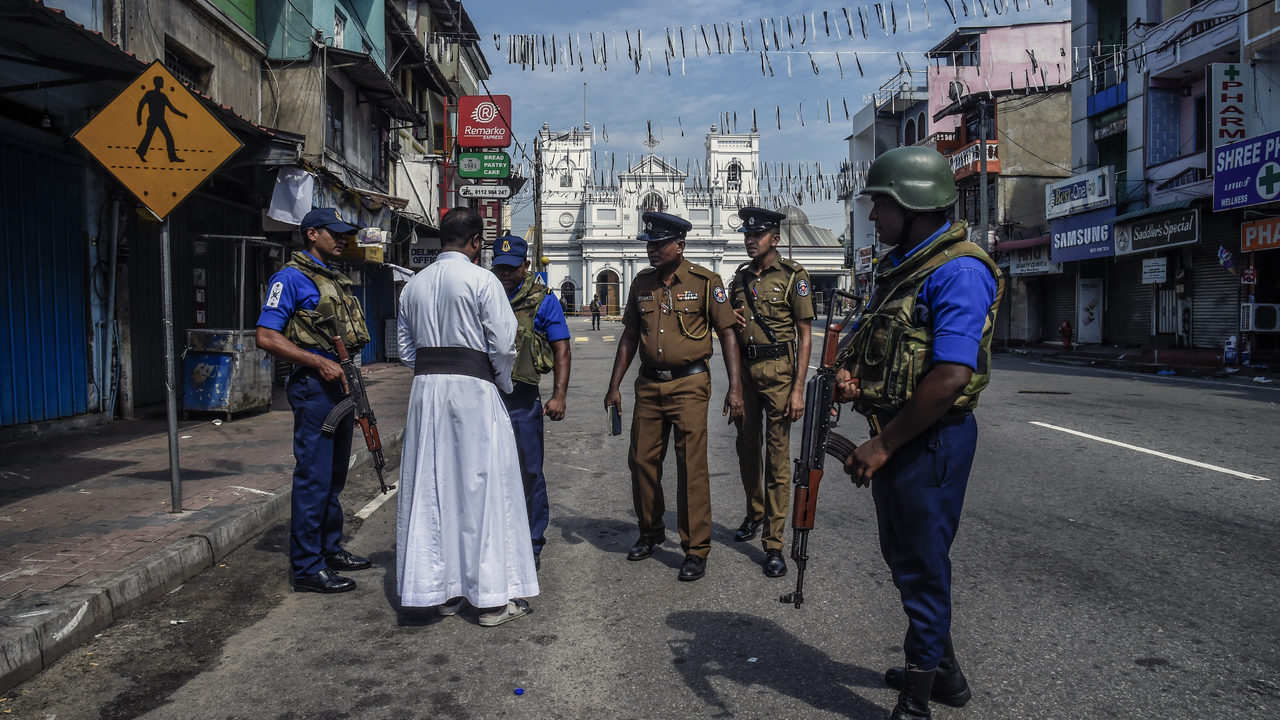
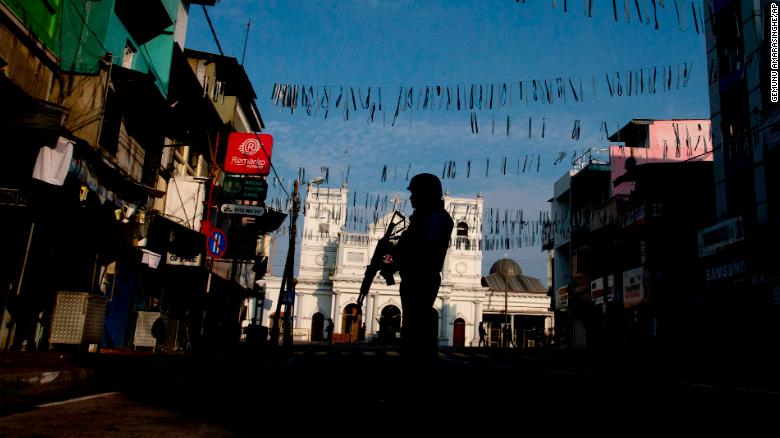
A security officer stands guard outside St. Anthony's Shrine where bombing was carried out on Easter Sunday, in Colombo.
A security officer stands guard outside St. Anthony’s Shrine where the bombing was carried out on Easter Sunday, in Colombo.
 
On Thursday, police said search operations were currently underway across Colombo, including the setting up of roadblocks. Police have asked the public not to panic, a police spokesman told CNN.
 
Sri Lanka remains on high alert and numerous controlled demolitions have been carried out of suspicious packages and vehicles in recent days. However, Gunasekera said that he did not believe the controlled demolitions on Thursday were of actual explosives.
 
Prime Minister Wickremesinghe warned of the potential for more attacks in the country. In his CNN intevriew, he said authorities were targeting “sleepers” — terrorists who could activate to initiate another round of attacks.
 
“Police and security forces are rounding up those involved, but they’re also rounding up the sleepers, those used on second and third rounds (of attacks),” he said.
 

Bodies ‘left to decompose’ on Waterford hospital trolleys

0

An Irish hospital has pledged to take action after it emerged bodies were being left to decompose on trolleys.

Four consultants at University Hospital Waterford said families faced “almost unspeakable” distress.

They added that due to inadequate refrigeration facilities: “Most bodies lie on trolleys, often leaking body fluids on to the floor.”

A hospital spokeswoman said it was currently examining arrangements to address the issues.

The problems were outlined in a letter to Gerry O’Dwyer, chief of the South-South-West Hospital Group.

The letter was sent last October, but it has been claimed that no significant action has yet been taken to address the situation.

‘Gaseous decomposition’

The letter, signed by consultant pathologists Prof Rob Landers, Dr. Fergus MacSweeney, Dr. Nigam Shah and Dr. Christine Shilling, said: “Bodies decompose in the corridors, leading to closed-coffin funerals with relatives unable to view the remains as a result of gaseous decomposition.”

“The cramped facilities expose the public to the noise and odours of a working postmortem room when visiting the public areas of the mortuary for identification/viewing purposes and funerals,” added the letter, which was first reported by the Waterford News and Star.

The pathologists’ letter warned that the mortuary “poses serious health risks, due to the danger of infection spreading and the circulation of unfiltered air”.

It stated that the facility had been deemed unfit for purpose in 2004, but the HSE has failed since to replace it.

The hospital is currently examining interim arrangements to address the issues raised, a spokeswoman told the BBC.

“University Hospital Waterford has recently received approval for a new replacement mortuary building,” she said.

“It is expected that the request for tender will be issued shortly with the expectation that construction will commence before the end of this year.”

BBC


Huawei row: UK to let Chinese firm help build 5G network

0

The government has approved the supply of equipment by Chinese telecoms firm Huawei for the UK’s new 5G data network despite warnings of a security risk.

There is no formal confirmation but the Daily Telegraph says Huawei will build “non-core” components such as antennas.

The US wants its allies in the “Five Eyes” intelligence grouping – the UK, Canada, Australia, and New Zealand – to exclude the company.

Huawei has denied that its work poses any risks of espionage or sabotage.

But Australia has already said it is siding with Washington – which has spoken of “serious concerns over Huawei’s obligations to the Chinese government and the danger that poses to the integrity of telecommunications networks in the US and elsewhere”.

A spokesman for the Department for Digital, Culture, Media, and Sport has said it is reviewing the supply of equipment for the 5G network and will report in due course.

Digital minister Margot James responded to the reports by tweeting: “In spite of Cabinet leaks to the contrary, final decision yet to be made on managing threats to telecoms infrastructure.”

According to the Daily Telegraph, Huawei would be allowed to help build the “non-core” infrastructure of the 5G network.

This would mean Huawei would not supply equipment for what is known as the “core” parts – where tasks such as checking device IDs and deciding how to route voice calls and data take place.

‘Different approaches’

Huawei, a private company which already supplies equipment for the UK’s existing mobile networks, has always denied claims it is controlled by the Chinese government.

It said it was awaiting a formal announcement, but was “pleased that the UK is continuing to take an evidence-based approach to its work”, adding it would continue to work cooperatively with the government and the industry.

Ciaran Martin, the head of the National Cyber Security Centre – which oversees Huawei’s current UK work – told BBC Radio 4’s Today programme a framework would be put in place to ensure the 5G network was “sufficiently safe”.

Asked about the potential of a conflict in the position of Five Eyes members, he added: “In the past decade there have been different approaches across the Five Eyes and across the allied wider Western alliance towards Huawei and towards other issues as well.”

Presentational grey line

What is 5G?

Woman on smartphone and interactive touchscreen
5G promises great benefits but may come with higher security risks

5G is the next (fifth) generation of mobile internet connectivity, promising much faster data download and upload speeds, wider coverage, and more stable connections.

The world is going mobile and existing spectrum bands are becoming congested, leading to breakdowns, particularly when many people in one area are trying to access services at the same time.

5G is also much better at handling thousands of devices simultaneously, from phones to equipment sensors, video cameras to smart street lights.

Current 4G mobile networks can offer speeds of about 45Mbps (megabits per second) on average and experts say 5G – which is starting to be rolled out in the UK this year – could achieve browsing and downloads up to 20 times faster.

BBC

Silent streets after dozens of children killed in Sri Lanka attacks

0

The streets of Sri Lanka’s Katuwapitiya should be full of the sound of children’s games. But after deadly Easter attacks that killed at least 45 children, they have fallen silent.

“These streets are usually full of children playing,” said Suraj Fernando, whose own 12-year-old grandson Enosh was among those killed.

“Now everybody is inside because they are sad and scared.”

The community is in the town of Negombo, where a suicide bomber targeted Easter services at the St Sebastian’s church, one of three churches and three hotels hit on Sunday.

Anusha Kumari lost her husband and two children


But the blast at St Sebastian’s is believed to be the single deadliest of all the attacks, and the toll it has taken in Katuwapitiya is clear.

Almost every street has a story of shattering sorrow.

There is 43-year-old Anusha Kumari, transformed by the attack from a mother-of-two into a grieving widow.

She lost her husband Dulip, her 13-year-old son Vimukthi and her 21-year-old daughter Sajeni.

“We were such a close family but now there is only me left,” she said, sobbing and beating her chest in anguish.

Her sister-in-law lived next door with her three children aged between seven and 13. They were all killed as well.

– Shellshocked –

The United Nations’ children’s agency UNICEF says at least 45 children were killed in the Sunday blasts, 27 of them in Negombo.

Among them was 13-year-old Shine Fernando, who was laid to rest on Wednesday afternoon.

Before her burial, she lay in an open casket, wearing a pink dress, with rosary beads tucked into her hands clasped together over her chest.

Her father Tushara was unable to speak.

Residents went house-to-house offering condolences and trying to support parents dealing with the unimaginable pain of outliving their children.

Ranjeewa Silva’s 12-year-old son died in the Easter Sunday attacks

Enosh’s distraught father Ranjeewa Silva, his left ear and arm bearing bandages from the blast, sobbed as he showed off his son’s drawings of animals, cars, landscapes, and sunsets.

He recalled a happy-go-lucky child who was loved by everyone.

“He was very intelligent and creative. He loved football and knew all the players from around the world. His favourite was Lionel Messi.”

His mother sat looking shellshocked. Family members said she hadn’t eaten or spoken since her son’s death. Later she lay slumped against a wall in the living room as mourners chanted prayers.

– ‘My best friend’ –

“Enosh was a very curious boy. He was always asking questions about Sri Lanka’s history,” added Silva, who also lost two other relatives in the blast.

“He was also a good artist. I’m just a small contractor but I always thought Enosh would grow up to become a great architect.”

Children are also among those in mourning, including Enosh’s brother Dimithra.

On the streets around St Sebastian’s, banners paying tribute to the dead are hung on the gates of their former homes


“We always played together. He was like my best friend,” the tall 15-year-old said, speaking softly with a shy smile.

“Enosh was always performing in front of everyone and making speeches. He was the most important member of our family.”

Local residents have hung white flags in the gardens of their homes along streets lined with coconut trees as a mark of respect for the community’s many dead.

On the streets around St Sebastian’s, banners paying tribute to the dead are hung on the gates of their former homes.

Many of them bear the faces of young, smiling children. Others depict parents who have left children behind.

Schools in Negombo are closed this week, and when lessons resume next Monday the loss will be starkly clear from the empty desks left in some classrooms.

“Our lives have collapsed,” Enosh’s grandfather Fernando said. “Our hearts have been cracked.”

AFP