
Home Blog Page 1355

Netanyahu looks to form right-wing government after victory

0

Prime Minister Benjamin Netanyahu sought to form a right-wing governing coalition on Thursday after securing victory in a high-stakes Israeli election despite a strong challenge from a centrist alliance.

The results from Tuesday’s vote came despite corruption allegations against the 69-year-old premier and kept him on course to become Israel’s longest-serving prime minister later this year.

The allegations are likely to play an important role in coalition negotiations as many analysts expect Netanyahu to demand pledges from potential partners to agree to remain in his government if he is indicted.

Netanyahu will rely in part on politicians of the nationalist right opposed to a Palestinian state to put together his government.

His current government is already seen as the most right-wing in Israel’s history, and his next is expected to be similar if not even further to the right.

Netanyahu himself, in a campaign pledge just three days before polling day, pledged to begin annexing settlements in the occupied West Bank.

Applying sovereignty in the West Bank on a large scale could effectively end remaining hopes for a two-state solution with the Palestinians.

Netanyahu’s pledge was widely seen as an appeal to the far right, and it appears to have worked: he boosted the number of parliamentary seats for his Likud, while smaller, far-right parties struggled.

The Likud said late on Wednesday that Netanyahu “will form a right-wing government and he is already in advanced negotiations with the national camp partners.”

– ‘Advanced negotiations’ –

Throughout the campaign, Netanyahu highlighted his bond with US President Donald Trump, who has swung US policy sharply in Israel’s favour and openly backed the prime minister.

On Wednesday, Trump said the incumbent’s election to a fifth term gives the White House’s long-awaited peace plan, expected to be released in the coming weeks, a “better chance”.

It was not clear what he meant.

He also tweeted a picture of a Netanyahu supporter waving a Trump flag and telephoned the premier to offer congratulations.

The election was seen as a referendum on the veteran prime minister, who has built a reputation as guarantor of Israel’s security and economic growth, but whose divisive right-wing populism and alleged corruption led to calls for change.

Netanyahu, who has been accused of damaging Israel’s social fabric with his divisive brand of populism, tells supporters he will lead a right-wing government but be “prime minister for all”

The results reflected his deft political skills, Israel’s shift to the right and wide satisfaction with Netanyahu’s achievements, but also the fact that many voters are fed up with him.

The new centrist Blue and White alliance put together by ex-military chief Benny Gantz will finish with a similar number of seats to the Likud even though it came together less than two months before the polls.

Gantz’s alliance, which conceded defeat on Wednesday night, however could not peel away enough right-wing votes to unseat Netanyahu.

The results showed that the Likud together with other right-wing parties allied to the prime minister would hold around 65 seats in the 120-seat parliament.

Final official results are expected to be announced by Friday.

They leave President Reuven Rivlin, who must ask one of the candidates to form a government, with little choice but to pick Netanyahu.

Intensive coalition negotiations could drag on for days or even weeks.

Rivlin said he would begin consultations with party leaders next week ahead of making his decision.

His office said the consultations would be broadcast live in their entirety for the first time.

– ‘Make life bitter’ –

Gantz, a 59-year-old former paratrooper, mounted a strong challenge by brandishing his security credentials while pledging to undo damage he says Netanyahu has inflicted on the country with divisive politics.

Retired Israeli general Benny Gantz praised his alliance for a ‘historic accomplishment’

“We respect the decision of the people,” Gantz said Wednesday night.

Former finance minister Yair Lapid, who co-led Blue and White, vowed to “make life bitter for the Netanyahu government”.

The close race between the two main parties had led to uncertainty after polls closed Tuesday night and exit surveys were released.

Both Netanyahu and Gantz claimed victory after the initial exit polls, though even then it appeared Netanyahu was best placed to form a coalition.

Speaking in the early hours of Wednesday at the Likud’s post-election party in Tel Aviv, Netanyahu called it a “magnificent victory.”

The vote had been expected to be close as Netanyahu faced potential corruption charges.

Fighting for his political life, he spent the weeks ahead of the vote campaigning furiously to energise his right-wing base.

Netanyahu has been premier for a total of more than 13 years.

But “King Bibi,” as some have called him, now faces the prospect of becoming the first sitting prime minister to be indicted.

The attorney general has announced he intends to charge Netanyahu with bribery, fraud and breach of trust pending an upcoming hearing.


Source: AFP
Russian MPs approve controversial bill restricting internet

0

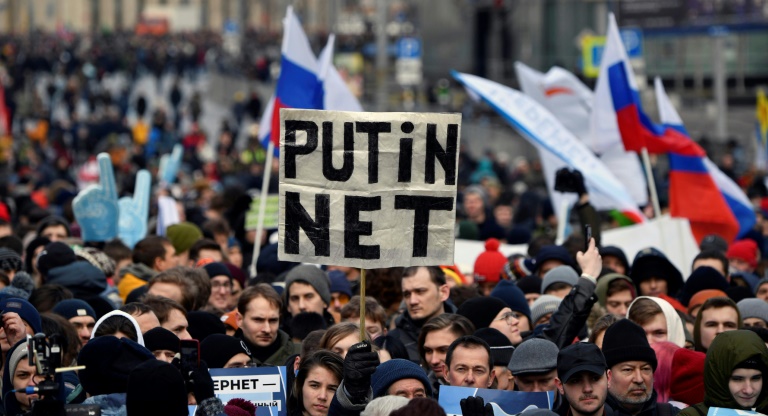
Russian lawmakers on Thursday approved in a key second reading a controversial bill that would allow Moscow to cut off the country’s internet traffic from foreign servers.

Lawmakers in the State Duma, parliament’s lower house, voted 320 to 15 to pass the proposed bill.

It is set to take effect on November 1 once it formally becomes law.

The proposed measures would create technology to monitor internet routing and steer Russian internet traffic away from foreign servers, ostensibly to prevent a foreign country from shutting it down.

Authors of the initiative say Russia must ensure the security of its networks after US President Donald Trump unveiled a new American cybersecurity strategy last year that said Russia had carried out cyber attacks with impunity.

The legislation has been dubbed a “sovereign internet” bill by Russian media.

Critics say implementing the measures would be expensive and give vast censorship powers to the government’s new traffic monitoring centre.

“It’s a bill on digital slavery and the introduction of censorship for the web,” said Sergei Ivanov, a member of the nationalist Liberal-Democratic Party.

The bill’s authors insist however that the measures only outline a plan to make Russian internet “more secure and reliable”.

“The bill’s popular name — ‘The Chinese Firewall’ — has nothing to do with our initiative,” said Leonid Levin, a lawmaker from the ruling United Russia party which dominates Russian parliament.


Source : AFP

The Masters: Soft conditions ideal for Rory McIlroy, but Grand Slam bid creates huge pressure

0

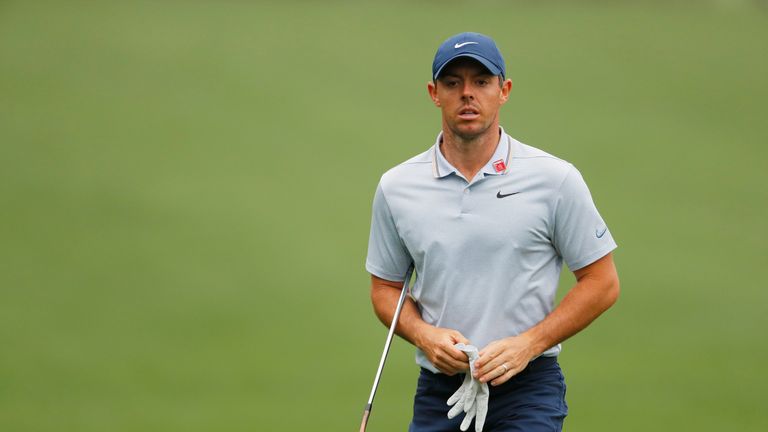
Can Rory McIlroy defy the “ghosts of Augusta” and win his first Masters this week? The soft conditions are in his favour, but Paul McGinley has a word of caution over the added pressure and expectations…

Rory McIlroy is the pre-tournament favourite ahead of the Masters this week and that’s not surprising given his start to the year, and he has a lot of things going in his favour this week.

McIlroy's long, straight driving will be a huge asset at a soft Augusta
McIlroy’s long, straight driving will be a huge asset at a soft Augusta

Firstly, he’s in the form of his life coming in here, and it’s not just about the win at Sawgrass and his performances in general this year, just look at his stats for 2019.

I had a good look through all his stats as of last week, and they correlated very closely to his best ever run of form back in 2014, when he won two majors and a WGC in the space of a few weeks. So, he knows he’s playing as good as he’s ever played.

Secondly, when you look at each of his four major wins, they have all been on soft, long golf courses, and that includes Hoylake, when there were massive thunderstorms that week.

So Rory has always revelled in being able to take advantage of his massive, long and accurate driving when conditions are soft and the course is playing long. It makes the fairways that little bit wider, and he will be hitting eight or nine-irons into greens when others are going in with a six-iron.

History proves that iron play is a huge factor at Augusta National, and all the champions will have been riding high in the stats for strokes gained from approaches. So McIlroy’s length and accuracy in these conditions gives him a big advantage, particularly this week.

 McIlroy has to deal with the pressure of trying to emulate Tiger Woods in joining the Grand Slam club
McIlroy has to deal with the pressure of trying to emulate Tiger Woods in joining the Grand Slam club

However, a word of warning for everybody jumping on the Rory bandwagon, and that includes myself! There is a reason why only five players in the history of golf have won all four major championships.

Rory McIlroy is again on the threshold of massive history here, which is great, but it also brings added pressure and expectation. That is the biggest challenge he faces this week, and it remains to be seen how he deals with it in terms of his mentality.

The ghosts of Augusta, and the ghosts of golf in general are all out there trying to trip him up.

This is why the likes of Brad Faxon can be a huge help for him, and his influence will be of extreme importance to Rory this week.

Faxon was one of the first clients of Dr Bob Rotella, widely regarded as the best sports psychologist out there. So Rory is getting a lot of Rotella input through Faxon, and that’s another reason why he is on the right path – something he alluded to in his press conference on Tuesday.

McIlroy is getting invaluable advice from Brad Faxon to help his mindset

Having the right mindset to tackle Augusta National is absolutely crucial, and it was very wise of Rory to go down that route. We all need some help now and then, even Tiger Woods would stress the value of having a great team around you.

Rory has now got that support and it sets him up nicely for the next phase of his career as he approaches 30 years of age. Wouldn’t it be great to see him wearing a Green Jacket as he heads into the next chapter of his life?


Source : Sky Sports

South Korean constitutional court orders abortion ban be lifted

0

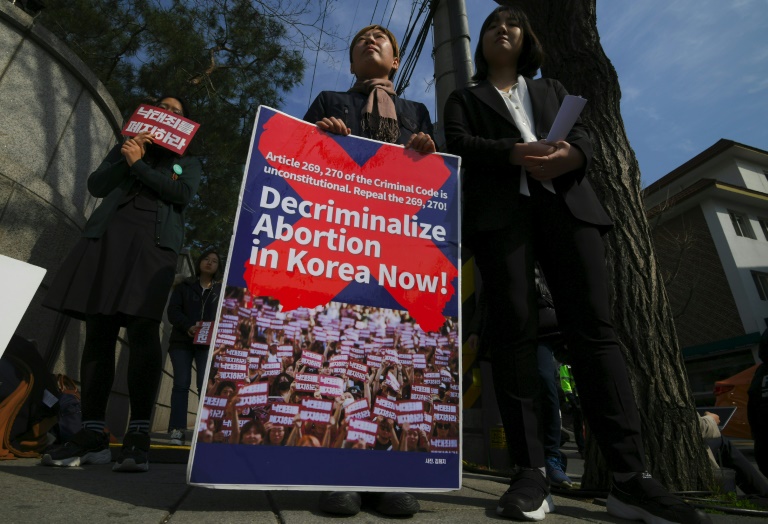
South Korea’s constitutional court on Thursday ordered the country’s decades-old abortion ban to be lifted in a landmark ruling over a law that campaigners say puts women at risk.

South Korea remains one of the few industrialised nations that criminalises abortion, except for instances of rape, incest and when the mother’s health is in jeopardy.

But the nine-member bench ruled by seven to two that the 1953 statute aimed at protecting lives and traditional values “goes against the constitution” and ordered the law to be revised by the end of next year.

“The abortion ban limits women’s rights to pursue their own destinies, and violates their rights to health by limiting their access to safe and timely procedures,” the court said in a statement.

“Embryos completely depend on the mother’s body for their survival and development, so it cannot be concluded that they are separate, independent living beings entitled to rights to life.”

Bursting into tears of joy and celebrating, hundreds of women — including teenagers and females with disabilities — cheered wildly in front of the Constitutional Court in central Seoul, where the official ruling was announced.

The nine-member bench ruled by seven to two that the 1953 statute aimed at protecting lives and traditional values “goes against the constitution” 

“Women deserve to be happy as much as we want to be today,” activist Bae Bok-ju told AFP.

“Today’s decision was made because countless women ceaselessly fought for their rights for so many years. We deserve the world’s attention and we deserve its recognition,” Bae added.

Under the ban, women who undergo the procedure can face up to a year in jail and a fine, while doctors who performed the procedure are given two years in prison.

The 1953 law had been widely flouted and rarely resulted in prosecutions, but activists had claimed it left women facing being unable to pay for terminations, unsafe procedures and social ostracisation.

Under Thursday’s ruling, the ban will be automatically lifted on January 1 2021 unless new legislation is introduced sooner by parliament to follow the court order.

– ‘Proof’ of rape –

Calls to repeal the law had gained traction as the country’s growing feminist movement gathered momentum, but support for the ban had also been staunch in a country that remains conservative towards female sexuality and highly influenced by evangelical Christianity.

The constitutional court last upheld the law in 2012, saying that abortion would “end up running rampant” if not punished.

Seven years later and an opinion poll on Wednesday showed 58 percent of the public are in favour of abolishing the law.

Thursday’s ruling was made after a woman doctor who was prosecuted for performing almost 70 abortions filed a challenge in 2017.

Religious belief is widespread in South Korea and the Catholic Bishops Conference of Korea has expressed “deep regrets” over the ruling

According to campaigners, the procedure has been commonplace in South Korea and it has unfairly targeted mostly young, unwed women — who are most vulnerable to abortion-related stigma in the country.

Teens who fall pregnant are often forced to discontinue their studies, or transfer to remotely-located educational institutions, according to youth rights groups.

Women with disabilities, on the other hand, are often forced to undergo abortion against their will by family members — which, according to disability rights campaigners, demonstrates the country’s selective views about which lives matter.

Also under the ban, rape victims need “proof” that they were raped, or — in the case of their health at jeopardy — are required to get permission from their partners, often causing lengthy and risky delays.

– Future steps –

Religious belief is widespread in South Korea, and some of its evangelical mega-churches are among those defending the ban.

The Catholic Bishops Conference of Korea expressed “deep regrets” saying, adding: “The ruling denies the rights to life of embryos who do not have the ability to defend themselves.”

But activist Kang Min-jin says the hard work begins now.

Hundreds of women gathered outside the court in Seoul on Thursday to hear the ruling result

“For one, we have to make sure that the procedure will be covered by the national health insurance,” Kang said.

“Without it, many women’s health will continue to be in danger.

The country’s doctors also welcomed the decision with the Korean Association of Obstetricians and Gynaecologists saying: “This ruling will ensure women’s rights to health.”

One campaigner, Lim — who had kept her abortion experience a secret for more than 25 years — said the court’s decision will allow women to make their own decisions about their future without the fear of being shamed.

“Keeping my abortion a secret has been making me feel unnecessarily guilty for all these years,” said the 50-year-old who asked for her forename not to be used to protect her anonymity.

“I want to see a different future for the next generation.”


Source : AFP

Sinohydro projects take off … as President cuts sod for construction of Tamale interchange

0

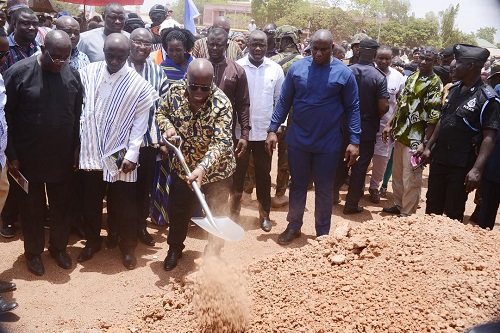
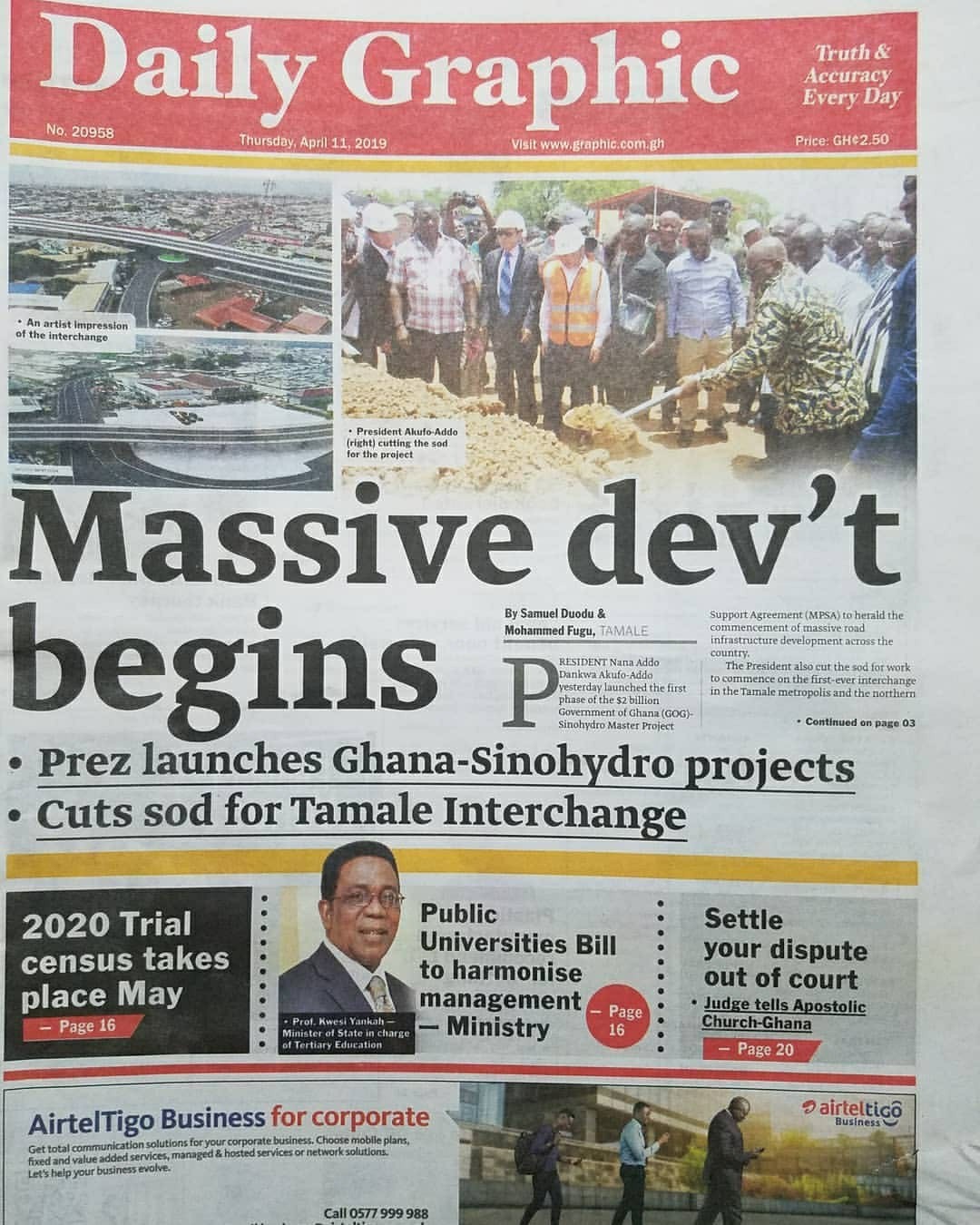
President Nana Addo Dankwa Akufo-Addo yesterday cut the sod for the commencement of the construction of an interchange here in Tamale in the Northern Region.

The interchange, which is a dual carriage way is the first of its kind to be constructed in the Northern part of the country.

The project which is to cost $500 million is being executed under the government’s Master Project Support Agreement (MPSA) deal with Sinohydro.

The deal which is estimated at about of $2 billion is aimed at infrastructure projects of Ghana’s choice across the country in exchange for refined bauxite (Aluminum or Alumina). 

President Akufo-Addo said the construction of the interchange would help open the area for socio-economic activities.

He added that the project would create jobs for the teeming youth of the region and enhance the lives of the people.

The President warned that his government and the Chinese government would not countenance any delay and shoddy works.

He, therefore, entreated the local constructors who would be given jobs under the projects to follow strictly guidelines and specification of the project.

President Akufo-Addo admonished the constructors to institute measures to minimise the environmental pollution during the construction.

He indicated that the government was determined to transform the lives of the people of the region and urged them to help sustain the current peace in the area.

The Chinese Ambassador to Ghana, Mr Shi Ting Wang maintained that for years the Chinese government was devoted to the development of Ghana’s economy and well-being of Ghanaians. 

He added that both countries were benefiting from friendly relationship between them and that the Chinese government would continue to offer the needed assistance to address the challenges of the country.

The Minister for Roads and Highways, Mr Kwasi Amoako-Atta  explained that Tamale being the main transit town to Ghana’s northern neighbour, Burkina Faso and other landlocked countries and also which serves an important trading route, deserved the project.

He said that the most of the traffic from the port of Tema to the landlocked countries use the city of Tamale as a thoroughfare making it very important for both local and international traffic.

Mr Amoako-Atta explained that the Tamale interchange which was about one kilometre long and links the Kumasi road through the Point 7 road, the Central Taxi Rank, Central Market intersection with the Melcom Road and Bolgatanga Road would ease congestion and save a lot of time.

The Minister called on the chiefs and people of the region, particularly the overlord of Dagbon, Yaa-Naa Mahama Abukari to support the contractors to execute the project on schedule.

Yaa-Naa Abukari on his part commended the government for the project and pledged to offer the needed assistance to contractors to ensure its completion on time.

“I wish to assure the President of my willingness to support the contractors on the project,” he said.

The Northern Regional Minister, Mr Salifu Saeed said the project would significantly enhance trade, economic growth and development of the region and called on all to prepare to support it.

“The construction of the interchange will contribute to municipal, regional and international trade and development hence improved standard of living and poverty reduction,” he stated.

The project includes the construction of 10km of ancillary roads around the interchange to improve traffic management.

The Vice President, Dr Mahamudu Bawumia and other ministers of state accompanied the President to the ceremony.

Some of the officials of the Sinohydro Corporation Company of China were also present at the sod cutting ceremony.

FROM YAKUBU ABDUL-MAJEED, TAMALE


GNPC seeks parliamentary approval for US$65.75m projects

0

The Ghana National Petroleum Corporation (GNPC) is seeking parliamentary approval to spend US$65.75 million on non-petrochemical capital projects as part of its 2019 programme of activities. 

Out of the total sum, the corporation has earmarked US$10.75 million for refurbishment works on nine landed properties across the country.

Per the Mines and Energy Committee report on the work programme of the corporation presented to the Plenary of Parliament in Accra yesterday, projects under the non-petrochemical activities are a US$20 million head office in Accra and a US$10 million corporate operational head office in Takoradi. 

According to the report, which is yet to be adopted or rejected, the corporation has allocated US$25 million to “redevelop the Laboratory and Data Centre into a modern facility.”

The report, signed by the chairman of the committee and Member of Parliament for Odotobri, Emmanuel Akwasi Gyamfi, said the corporation was allocated a 40 acre land within the Energy City enclave in Accra for the office complex and that an architectural brief with spatial and facility requirements for the design of the head office building has been completed. 

Same, it said has been done for the proposed Takoradi office, adding that due diligence was undertaken on identified project sites and works were underway to secure the parcel of land for the project. 

“The corporation is committed to engaging owners of identified properties and other stakeholders towards the realisation of this project,” the report stated. 

On the laboratory and data centre to be known as the Research and Technology (RAT) Project, the report said it would enable effective and efficient information management and repository of the corporation’s oil and gas exploration, development and production data. 

“The RAT Centre is also to serve as a reference point for training professionals in the use of cutting-edge technology in the petroleum industry,” the report argued. 

As part of refurbishment works on landed properties, the GNPC has earmarked US$1.5 million for a “suitable property in West Airport residential area to be adapted into a state-of-the-art clinic.”

Other landed properties to benefit from the US$10.75 million package for landed properties include the Chapel Hill residential properties, US$0.26 million, Enpro Rehabilitation Project, US$0.34 million, Redco Madina Bungalow two and three US$0.20 million, Unacourt Flats, US$0.70, Beach Road Redevelopment Project US$1.90 million and GNPC Training Centre Furnishing, US$0.04 million. 

“The committee has thoroughly scrutinised the programme activities of the GNPC and the associated financial requirements for the 2019 Financial Year and it believes that the activities outlined fall within the scope of the mandate of the corporation. 

“The committee therefore recommends to the House to adopt its report and approve the 2019 programme activities of the GNPC,” the report concluded. 

BY JULIUS YAO PETETSI 

President begins nationwide tour today

0

President Nana Addo Dankwa Akufo-Addo today begins the first phase of his 2019 nationwide tour.

The five-day tour which will be the third to be embarked on by him, since his assumption of office is in line with his overall objective of obtaining firsthand knowledge of developments and ongoing projects across the country.

The tour will take him to the Western North, Bono East and Ahafo regions and as part of the visit, the President will commission completed projects, cut sod for the construction of several projects.

Addressing journalists in Accra yesterday, the Minister of Information, Mr Kojo Oppong Nkrumah, said the tour would also afford the President the opportunity to engage traditional leaders, citizens and participate in durbars.

In addition, the President would be expected to participate in town hall meetings with identifiable groups and opinion leaders.

Mr Oppong Nkrumah said while in the Western North Region, the President would cut sod for the construction of the new Regional Coordinating Council (RCC) building complex at Sefwi Wiawso, the new regional capital and the Sefwi Wiawso town roads.

In addition, the President would cut sod for the commencement of the Juaboso Town roads and a warehouse at Bia in the Bia District.

According to Mr Oppong Nkrumah the President would proceed to the new Ahafo Region on Friday where he would be expected to meet with the chiefs and people of the region before undertaking a number of activities.

On Sunday the President would make a stop at the Bono East Region where he would also cut the sod for the construction of the Bono East RCC building complex, inaugurate a new maternity ward for the Atebubu Government Hospital and the Health Insurance Authority building.

The President is expected to also attend church services while in the region before returning to Accra.

By Cliff Ekuful

Newspaper Headlines Thursday 11th April 2019

0

[ngg src=”galleries” ids=”31″ display=”basic_thumbnail”]

On rising insulin prices, lawmaker tells pharma execs: ‘Your days are numbered’

0

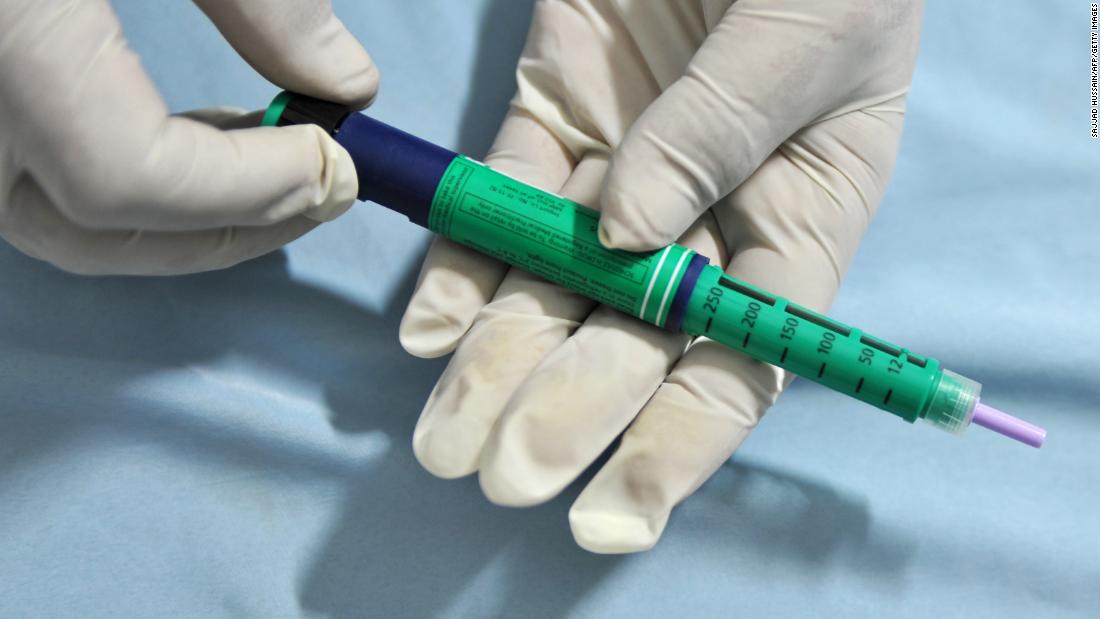
Lawmakers tensed with frustration, some clenching their jaws, while grilling a panel of pharmacy and pharmaceutical company executives about the soaring cost of insulin during a congressional hearing on Wednesday.

The tension could be felt as some executives fidgeted in their chairs while answering lawmakers’ questions.

The hearing, held by the House Committee on Energy and Commerce’s Oversight and Investigations Subcommittee on Capitol Hill, was the second this month to examine how fast-rising insulin costs affect diabetes patients across the United States.
 
The average price of insulin tripled over the course of a decade, from $4.34 per milliliter in 2002 to $12.92 per milliliter in 2013, according to a study published in the medical journal JAMA in 2016.
 
Illinois Rep. Jan Schakowsky vehemently said during the hearing that prices of insulin are “curiously close” between manufacturers and “way too high.”
 
“I don’t know how you people sleep at night,” she told the panel of executives.
 
“We have the names of people who have died because they couldn’t get their insulin,” she said. “This is a commitment on the part of the Congress to get drug prices — particularly life-saving life necessities — to get those prices under control. … Your days are numbered.”
 
In response, several executives — including Doug Langa of Novo Nordisk and Kathleen Tregoning of Sanofi — pointed to how the health care system is “broken,” and they all agreed it was unacceptable that some patients are struggling to afford medications.
 
As the hearing adjourned, lawmakers made clear that an investigation into the rising cost of insulin and what can be done about the issue will continue.

Companies aim to lower costs; lawmakers argue it’s not enough

People with diabetes are prescribed insulin because their bodies either do not produce it (as with Type 1 diabetes) or do not use it properly (as with Type 2 diabetes). There are more than 20 types of insulin sold in the United States, according to the American Diabetes Association.
 
The new monthly price for qualifying patients will start in June, according to the company.
 
“It is unacceptable to Sanofi that some people living with diabetes are struggling to pay for their insulin, so we have moved to act creatively and aggressively to help address affordability and access needs,” Michelle Carnahan, head of North America Primary Care at Sanofi, said in the announcement.
 
“By giving those who require both long-acting and/or mealtime insulins or use more than one box of pens or one vial per month access to their insulins for one flat price, we aim to help limit the burden on the individuals who have high out-of-pocket costs at the pharmacy counter,” she said.
 
US Senate Finance Committee Chairman Chuck Grassley of Iowa, who helped launch a bipartisan investigation into insulin prices in February, called the move “a step in the right direction” in a written statement Wednesday.
 
“But like Cigna’s announcement on insulin prices last week, this raises a lot of questions. Why was Sanofi charging so much more before this announcement? What took them so long to offer the price reduction?” he added. “It shouldn’t take months of bad press, persistent public outcry, and increasing congressional scrutiny to get a company to charge a fair price. That’s not how a functioning marketplace works.”
 
Health insurer Cigna said last week that it’s launching a program that will cap out-of-pocket expenses at $25 for a 30-day supply of insulin. Last year, patients paid an average of $41.50 a month out of pocket, including deductibles, copays or coinsurance, for the lifesaving diabetes drug, according to the company.
 
Its Patient Assurance Program will be available to members of participating nongovernment-funded pharmacy plans managed by Express Scripts, including Cigna and other plans. Cigna acquired Express Scripts, the largest US pharmacy benefit management company, in December.
 
“In most cases, people who use insulin will see lower out-of-pocket costs without any increased cost to the plan,” the company said.

‘A matter of life and death’

Also last week, the US Food and Drug Administration announced that it intends to bring competition to the insulin market as a way to lower prices. Commissioner Dr. Scott Gottlieb said the agency would change how insulin is regulated in order to enable products that are biosimilar to, or interchangeable with, insulin to come to market.
 
“Access to affordable insulin can be a matter of life and death for Americans with diabetes. Insulin is a critical hormone that regulates sugar metabolism,” Gottlieb said in the announcement.
 
“But access to this critical drug can be increasingly difficult for these Americans. Insulin list prices regularly increase by double digits annually,” he said. “Driving down drug prices requires a comprehensive approach. But one impactful route is through competition.
 
This is particularly true following the introductions of generics, especially when there are three or more generic competitors — which has been shown to bring down prices more sharply than with only one or two generic competitors.”
 
In March, pharmaceutical company Eli Lilly announced plans to sell a cheaper generic version of its rapid-acting insulin Humalog. At half the price of Humalog, the generic insulin lispro will carry a list price of $137.35 per vial, the company said, or $265.20 for a pack of five pens. Brand-name Humalog will remain on the market.
 
Colorado Rep. Diana DeGette, chairwoman of the Oversight and Investigations Subcommittee, said at Wednesday’s hearing that Humalog cost only $35 a vial in 2001 and that the price increased even though the drug formulary remained the same.
 
“Let’s not kid ourselves that the generic equivalent of this is really any cheaper,” she said shortly before the hearing adjourned.
 

Newspaper Headlines Wednesday 10th April 2019

0

[ngg src=”galleries” ids=”30″ display=”basic_thumbnail”]