Home Blog Page 1450

Saudi Arabia pumps record amount of oil as Trump piles on pressure

0

Saudi Arabia raised oil production to an all-time high in November, an industry source said on Monday, as U.S. President Donald Trump piled pressure on the kingdom to refrain from production cuts at an OPEC meeting next week.

The meeting, at which OPEC members will consider how to arrest a decline in oil prices, comes days after leaders of top global oil producers – Russian President Vladimir Putin, Saudi Crown Prince Mohammed bin Salman and Trump – travel to Argentina for a G20 summit this week.

Saudi Arabia agreed to raise supply steeply in June, in response to calls from consumers, including the United States and India, to help cool oil prices and address a supply shortage after Washington imposed sanctions on Iran.

But the move backfired on Riyadh after Washington imposed softer than expected sanctions on Tehran. That triggered worries of a supply glut and prices collapsed to below $60 per barrel on Friday from as high as $85 per barrel in October.

The industry source, who is familiar with the matter, said Saudi crude oil production hit 11.1-11.3 million barrels per day (bpd) in November, although it will not be clear what the exact average November output is until the month is over.

Those levels are up around 0.5 million bpd – equal to 0.5 percent of global demand – from October and more than 1 million bpd higher than in early 2018, when Riyadh was curtailing production together with other OPEC members.

Non-OPEC Russia, which teamed up with Saudi Arabia in the first OPEC joint production cuts since 2016, has also raised production steeply in recent months to a post-Soviet high of 11.4 million bpd.

Analysts at Goldman Sachs, one of the most active banks in commodities, said the G20 meeting could be a catalyst for prices to rebound.

“We expect an OPEC cut and its announcement to lead to a recovery in (Brent) prices,” the bank said in a note.

KHASHOGGI FACTOR

Saudi oil industry sources have signaled they wanted prices to stay above $70 per barrel and Saudi energy minister Khalid al Falih said this month global oil supply could exceed demand by over 1 million bpd next year, requiring OPEC to take action.

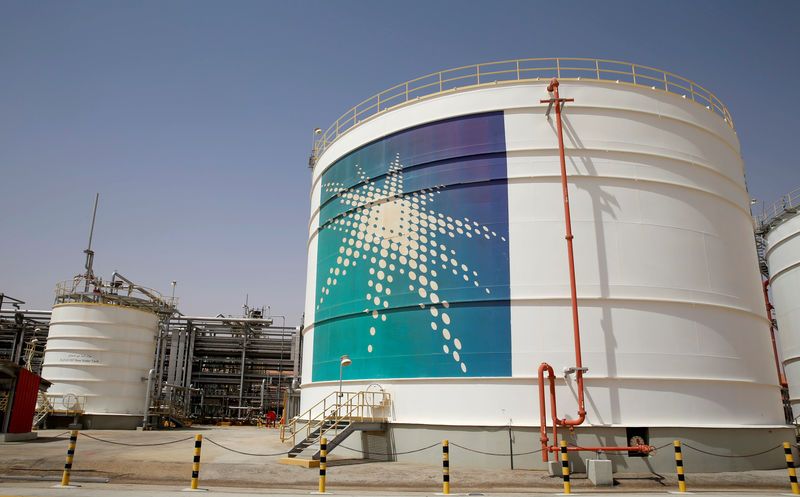
Falih said earlier this month that state oil giant Saudi Aramco would ship 0.5 million bpd less crude in December than in November as demand from customers was lower.

Possibly complicating Saudi decisions on oil output is the crisis around the killing of journalist Jamal Khashoggi at Riyadh’s consulate in Istanbul last month.

Trump stood behind Saudi Crown Prince Mohammed bin Salman despite calls from many U.S. politicians to impose stiff sanctions on Riyadh. Prince Mohammed is the ultimate Saudi oil policy maker and Saudi watchers have said the Prince will try to avoid confrontation with Washington, including on oil prices.

The United States is not a member of OPEC and is not participating in the output reduction. Trump has repeatedly called on OPEC to refrain from cuts and has raised pressure on the group in the last few days.

On Sunday, Trump thanked himself for lower oil prices and compared it to a big tax cut for the U.S. economy.

“So great that oil prices are falling (thank you President T),” Trump tweeted, referring to himself.

Last week, Trump tweeted: “Oil prices are getting lower… Thank you Saudi Arabia but let’s go lower”.

By Reuters Business News

Bernardo Bertolucci, Italian film director, dies at 77

0

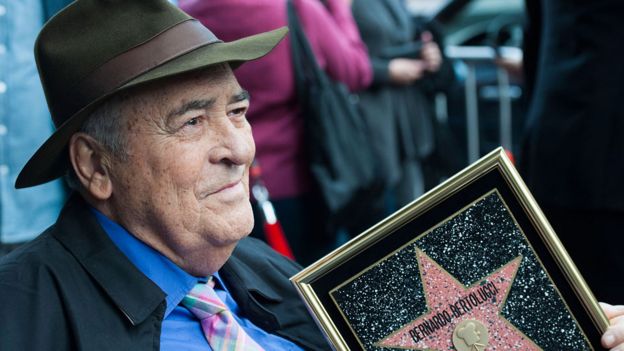
Bernardo Bertolucci, Italian director of Last Tango in Paris and The Last Emperor, has died in Rome, aged 77.

Born in Parma in 1941, his other films included The Conformist, The Dreamers, 1900 and The Sheltering Sky.

Winner of two Oscars, for directing and co-writing The Last Emperor, he was known for his bold visual style and the controversy stoked by Last Tango in Paris’s explicit sexual content.

A spokesperson confirmed to the BBC he died of cancer after a short illness.

His final feature, Me and You, had its premiere at the Cannes Film Festival in 2012.

Bertolucci began his career as an assistant director to Pier Paolo Pasolini on his 1961 film Accattone.

Bernardo BertolucciImage copyright GETTY IMAGES

He directed his first feature, 1962’s La Commare Secca, at the age of 21.

The films Before the Revolution and The Spider’s Stratagem followed, although it was Last Tango – starring Marlon Brando – that brought him to the attention of the world.

The film, about an American businessman who begins a sexually charged relationship with a young Frenchwoman, was banned in several countries.

The Last Emperor, a biopic of the Chinese emperor Pu Yi, won nine Oscars in 1988, including best picture.

Bertolucci received a star on the Hollywood Walk of Fame in 2008 and was awarded an honorary Palme d’Or at Cannes in 2011.

BBC

GM to slash jobs and production, cancel some car models

0
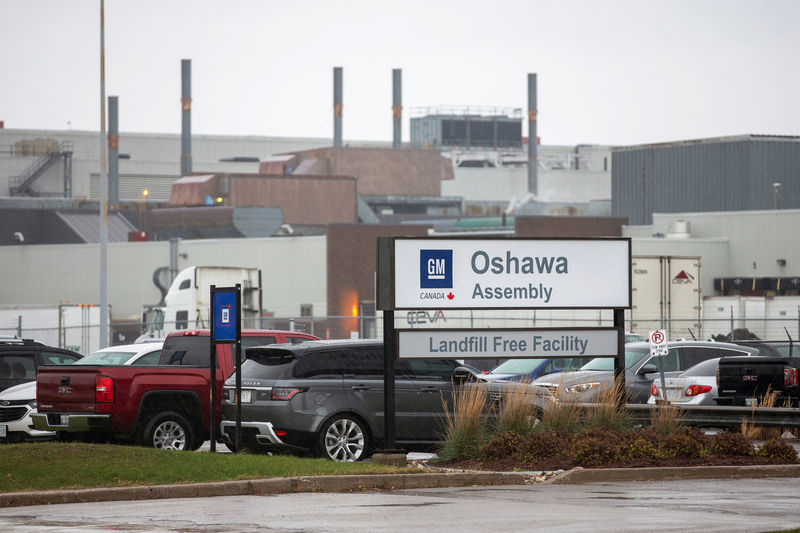
The General Motors assembly plant in Oshawa, Ontario, Canada November 26, 2018. REUTERS/Carlos Osorio

General Motors Co said on Monday it will cut production of slow-selling models and slash its North American workforce in the face of a stagnant market for traditional gas-powered sedans, shifting more investment to electric and autonomous vehicles.

The announcement is the biggest restructuring in North America for the U.S. No. 1 carmaker since its bankruptcy a decade ago. Its shares rallied 7.6 percent to $38.66.

GM plans to halt production next year at three assembly plants – Lordstown, Ohio, Hamtramck, Michigan, and Oshawa, Ontario. The company also plans to stop building several models now assembled at those plants, including the Chevrolet Cruze, the Cadillac CT6 and the Buick LaCrosse. The Cruze compact car will be discontinued in the U.S. market in 2019.

Plants in Baltimore, Maryland, and Warren, Michigan that assemble powertrain components will have no products assigned to them after 2019 and thus are at risk of closure, the company said. It will also close two factories outside North America, but did not identify them.

“We are right-sizing capacity for the realities of the marketplace,” Chief Executive Mary Barra said, adding that the cuts were prompted by auto industry changes. Barra said the company will double resources dedicated to electric and self-driving vehicles over the next two years.

The UAW union vowed to “confront this decision by GM through every legal, contractual and collective bargaining avenue open to our membership.”

“General Motors decision today to stop production at the Lordstown, Ohio, and Hamtramck, Michigan, assembly plants will idle thousands of workers, and will not go unchallenged by the UAW,” Terry Dittes, UAW Vice President in charge of negotiations with GM, said.

In a statement, Detroit Mayor Mike Duggan described the news as “troubling” and said that the city’s economic development team and the UAW union are “working together to come up with a solution that works for GM and the employees.”

Canadian Prime Minister Justin Trudeau said he spoke with Barra and expressed “deep disappointment.”

GM said it will take pre-tax charges of $3 billion to $3.8 billion to pay for the cutbacks, but expects the actions to improve annual free cash flow by $6 billion by the end of 2020.

The General Motors assembly plant in Oshawa, Ontario, Canada November 26, 2018.

SMALLER WORKFORCE

Its North American salaried workforce, including engineers and executives, will shrink by 15 percent, or about 8,000 jobs. The company said it will cut executive ranks by 25 per cent to “streamline decision making.”

Even as GM is moving to lay off salaried staff, the company is hiring. At GM’s Detroit headquarters on Monday, there were signs directing people to a “New Hire Orientation” meeting.

Barra said GM can reduce annual capital spending by $1.5 billion and increase investment in electric and autonomous vehicles and connected vehicle technology because it has largely completed investing in new generations of trucks and sport utility vehicles. Some 75 percent of its global sales will come from just five vehicle architectures by the early 2020s.

It plans to reduce annual capital spending to $7 billion by 2020 from an average of $8.5 billion a year during the 2017-2019 period.

Cost pressures on GM and other automakers and suppliers have increased as demand waned for traditional sedans. The company has said tariffs on imported steel, imposed earlier this year by the Trump administration, have cost it $1 billion.

Barra did not link Monday’s cuts to tariff pressures, but said trade costs are among the “headwinds” GM has to face as it deals with broader technology change and market shifts.

With U.S. car sales lagging, several car plants have fallen to just one shift, including its Hamtramck and Lordstown, assembly plant.

A rule of thumb for the automotive industry is that if a plant is running below 80 percent of production capacity, it is losing money. GM has several plants running well below that. Consultancy LMC estimates that Lordstown will operate at just 31 percent of production capacity in 2018.

Barra said the automaker is running at about 70 percent capacity utilization in North America, and the company will provide an update on how the latest moves will improve utilization in January.

“We need to make sure that we are well positioned to compete, not just over the next few years, but well beyond,” she said.

Unlike its plants making passenger cars, many of GM’s plants producing its higher-margin trucks and SUVs are running on three shifts, with some running six and sometimes seven days a week to keep up with demand.

Rivals Ford Motor Co and Fiat Chrysler Automobiles NV have both curtailed U.S. car production. Ford said in April it planned to stop building nearly all cars in North America.


By Joseph White, David Shepardson, Reuters

Power outages purely technical; problems resolved – Deputy Energy Minister

0

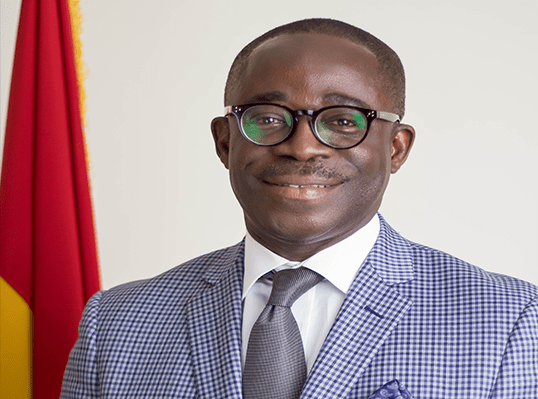
The Deputy Minister of Energy in charge of Power, Mr William Owuraku Aidoo has explained that the recent power outages experienced in some parts of the country was as a result of some technical challenges.

According to him, there was a problem with the supply of gas from the Sankofa field and around the same time, gas from Nigeria was also cut as a result of scheduled cleaning of the pipeline.

In a radio interview with Accra-based Citi FM on Monday in a reaction to fears that the power crisis – ‘dumsor’ – which challenged the country between 2014 and 2016 had resurfaced, Mr Aidoo assured that the problems had been solved.

“We had two major challenges happening at the same time which culminated into this rather unfortunate power outage that we’ve been suffering. But I’m happy to announce that the problems have been solved and going forward we shouldn’t be having power outages.”

“We had a problem with the supply of gas as a result of some challenges with a machine at the Sankofa field and around about the same time, the Nigerians were also doing some pigging, which in English means cleaning of the pipeline which is a normal scheduled maintenance

“But unfortunately, when they tried to hook us onto the supply again, they experienced a major fault which resulted in the inability of the company to supply gas to the Tema enclave,” he said.

Deputy Minister of Energy in charge of Power, Mr William Owuraku Aidoo

Deputy Minister of Energy in charge of Power, Mr William Owuraku Aidoo

Explaining further, Mr Aidoo said the Kar Power Plant was also faced with some technical challenges which have been resolved.

“I mean, all these came in at the same time which is very unusual. But now Kar Power has about 230 megawatts and they are still hoping to go up to the maximum of about 450 megawatts.”

He, however, dismissed claims that the Asogli Power Plant had reduced production due to government’s indebtedness.

“That is false because Asogli went down simply because the Nigeria gas is what they use and without that gas they cannot produce. We’ve paid Asogli recently and we are really on top of the financials.”

Mr Aidoo also assured the public that “everything really is now working fine. What has happened in the last few days is not financial. It’s purely technical and that we have solved”

He stated, however, that “there may well be some localized problems here and there which are distribution problems that I will entreat people to have patience while the ECG goes round to solve those localized problems.”

GRIDCo

Meanwhile, Della Russel Ocloo reports that the recent power outages being experienced by consumers would soon be a thing of the past, according to sources at the Ghana Grid Company Limited (GRIDCo).

According to the source, the company was shedding between 20 megawatts to about 150 intermittently at four hours each day owing to inadequate generation.

“Presently, we have some 2600 megawatts available and therefore do not expect to shed load since the country’s maximum requirement stands at 2300”, a management source told Graphic Online.

While consumer complaints have been rife with many arguing of being plunged into darkness for 12 to 24 hours, the official indicated that they were only doing four-hours of outages.

“If any community experienced an outage for more than four hours or more, it means, there could be localised faults along the distribution lines which ought to be reported to the Electricity Company of Ghana for investigations”, the source suggested.

Asked, whether there would be the need for the ECG to come out with a timetable to guide consumers on the outages, the source stated that while it wouldn’t be necessary for a timetable to be out-doored, the power companies would be holding a meeting with the Minister of Energy at 2 pm today after which a communique would be issued to the public on the way forward.

By Jasmine Arku, Graphic Online

Lack of routes, money for fuel reasons for grounded Aayalolo buses

0

The lack of designated routes to allow for the free movement of ‘Aayalolo’ buses under the Bus Rapid Transport (BRT) system in Accra, is one of the main reasons for the suspension of the bus service, the Ministry of Transport has explained.

Besides that, there is also no money to run the bus service in terms of purchase of fuel and payment of remuneration for drivers and managers, the Greater Accra Passenger Transport Executive (GAPTE), the operator of the BRT in Accra – Aayalolo – has said.

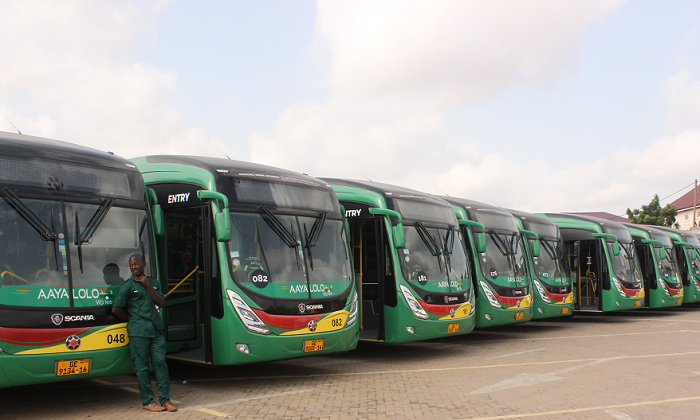
More than 170 Aayalolo buses have been grounded at the Achimota bus terminal in Accra, while another 60 deployed to Kumasi for use are yet to start operations.

Staff of the company have not been paid their salaries since March this year.

Reacting to the development in a radio interview on Accra based Class FMon Monday, the Deputy Minister of Transport, Mr Daniel Titus Glover said there were talks to find a lasting solution to the challenges of Aayalolo.

“The problem of Aayalolo is a challenge to all of us… We realise that all the work that they are doing, they are incurring debt, the running cost of the buses, the payment of remuneration, the management and the drivers have become a big challenge.”

“So currently what the Ministry of Transport did was that we organised a meeting between the board of directors headed by the AMA Chief Executive and the Ministry of Local Government and the Ministry of Transport, then SCANIA, they provided the buses to Aayalolo, we sat down to look at the way forward.”

So currently what we are trying to do is, first of all we need to raise money to pay for the arrears of the drivers. The buses have to come to the road and we need to raise a minimum of 45,000 litres of fuel and an additional 45,000 as standby so that we will be able to run the buses.”

“As we speak the big challenge of Aayalolo is the lack of designated routes for the passes to pass through,” the Deputy Transport Minister, Titus Glover said.

GAPTE’s explanation

In a radio interview with Accra based Class FM on Monday, Mr Fred Chidi, the Public Affairs Manager of GAPTE said the Aayalolo service has been shut down because there was no money to run it.

“We don’t have money to run the buses, simple and short, because about three weeks ago, we noticed that our revenue target that we projected for the Aayalolo service was not enough, what came in was not enough to run the service.”

“And so after several appeals to the owners of the system, being the government have failed, we decided to shut down the service.”

“Public transport anywhere in the world is heavily subsidised by the state, but unfortunately in our case that is not what happens. And so eventually what happens is whatever revenue that comes in from ticket sales, that is what is used to run the service, administrative cost, overhead and then workers salaries.”

“So it got to a point where we couldn’t take it anymore, whatever was coming in was not enough, and so the prudent decision was to shut down whilst we make an appeal to the owners of the system to resuscitate the service.”

Why no subvention

Mr Chidi said Aayalolo since its inception, has been running as a private entity even though it was providing a social good.

“We made several interventions to government but nothing was forthcoming. We have some bailout packages, from the suppliers [SCANIA] of the buses which was done intermittently but that was just a drop in the ocean, given the huge financial cost involved in running these buses.”

“Remember the fuel that we put in the buses, we go to the open market just like you buy fuel into your vehicle, there is no subvention, we even made an appeal for some taxes to be waived off fuel but that didn’t come and so running the service was like running any public entity and unfortunately for us we were unable to sustain it.”

“Everything is on the desk of the Ministry of Transport and the AMA Mayor who happens to the chairman of board for GAPTE, that is the regulator for the Aayaolo service, and so there have been several meetings, I’m even coming out of one right now, so there are so many options that are being considered, probably in the next couple of days, you will hear a major announcement about Aayalolo,” Mr Chidi said.

Buses

In all, the government secured 245 buses from the Scania Group of Sweden in 2016 to operate a bus rapid transport (BRT) system.

59 buses were deployed in Greater Accra on the Amasaman – Tudu and Kasoa – Tudu route whilst 60 have sent to Kumasi.

With the exception of six buses that are being used as shuttles between terminals two and three at the Kotoka International Airport in Accra, all the other buses in Accra numbering about 170 have been parked at Achimota

Graphic Online

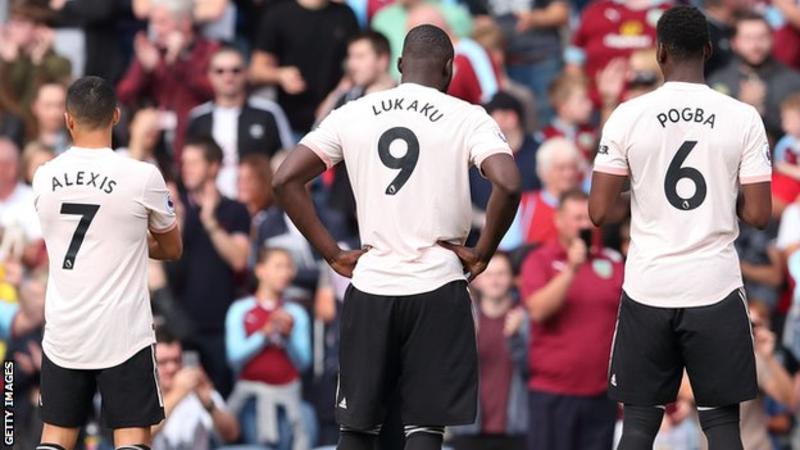
Premier League stats: How Man Utd’s goals have dried up since Sir Alex Ferguson left

0

Manchester United were known as the Premier League’s entertainers, sweeping all before them under Sir Alex Ferguson.

Over the 26 years of the Scot’s reign some of the finest attacking talent the country has seen, goalscoring heroes such as the enigmatic Eric Cantona, the prolific Ruud van Nistelrooy and the sublime Cristiano Ronaldo graced Old Trafford.

And there was ‘Fergie time’ – those precious final minutes at the end of the game where it became inevitable the Stretford End would suck in a goal to secure the points for the Red Devils.

Those days seem like a long time ago now, with United proving a fading force in front of goal since Ferguson retired in 2013.

Instead, cries of “attack, attack, attack” are commonplace from the home crowd at Old Trafford as they urge their side to regain some of their offensive magic.

Saturday’s dour goalless draw with Crystal Palace was United’s 65th 0-0 draw in the 26 seasons of the Premier League.

But what is notable about that statistic is that 20 of those draws – 31% – have come in the six seasons since Ferguson left.

That is six more than any of their ‘big six’ rivals over the same period.

The ‘big six’ Premier League goalless draws since start of 2013-14
Manchester United 20
Chelsea 14
Liverpool 14
Arsenal 12
Manchester City 12
Tottenham Hotspur 10

United have had three managers in that time – David Moyes, Louis van Gaal and now Jose Mourinho. It won’t be surprising to hear all three have an inferior goals-per-game ratio than Ferguson.

Mourinho’s ratio of 1.6 is an improvement on his predecessor Van Gaal, who averaged 1.46 goals a game during his two-year spell in charge.

Manchester United’s goals-per-game ratio in the Premier League
Manager Games Goals Goals per game
Sir Alex Ferguson 810 1,627 2.01
David Moyes 34 56 1.65
Jose Mourinho 89 142 1.60
Louis van Gaal 76 111 1.46

One player who has impressed in front of goal for United this season is Anthony Martial, with the Frenchman scoring six so far.

So, despite their struggles, they do have a contender for the Golden Boot – but he faces some stiff competition.


By Thomas Mallows, BBC Sport

Barcelona break the £10 million mark

0

Not only have Barcelona become the first sports club in the world to pay an average of more than £10m a year to first-team players, the Spanish giants have also broken the £200,000-per-week barrier for the first time.

On average, first-teamers at the Nou Camp earn £10,454,259 a year, which translates to an average £201,043 per week.

European champions and La Liga rivals Real Madrid are second on the list with a yearly average of £8,089,582, with Italian side Juventus the third-highest paying football club at £6,726,615 on average per year.

Despite Barca and Real’s dominance on the pay scale, the average Premier League yearly salary remains 36% higher than that of La Liga and almost double the amount paid to players in Italy’s Serie A.

Basketball’s Oklahoma City Thunder are the highest-paying non-football club, closely followed by Golden State Warriors, while outside of football and basketball it is Major League Baseball’s Chicago Cubs who lead the way as the 30th highest-paying sports team.

BBC Sports

Manchester United players earning half a million more than Manchester City rivals

0

First-team players at Manchester United are earning on average half a million pounds a year more than Premier League champions Manchester City, according to the Global Sports Salaries Survey.

United players are also picking up almost double what Tottenham are paying their first-team squad.

Meanwhile, Barcelona have become the first sports team to pay an average yearly salary of more than £10m.

Real Madrid, Juventus and Manchester United are also in the top 10 spenders.

The other six clubs in the top 10 all come from the NBA.

Clubs in the Premier League are paying, on average, more than top-flight football clubs in any other country per game, although cricket’s Indian Premier League and American football’s NFL top the spending on a per-game basis.

Premier League big spenders

Manchester City may have won the Premier League last season, but they come in behind Manchester United this term on wages with the Old Trafford club paying an average of £6,534,654 per year to first-team players.

City’s yearly bill comes in at £5,993,000, followed by Chelsea (£5,020,004), Liverpool (£4,862,963), Arsenal (£4,853,130) and Tottenham (£3,515,778).

Everton and West Ham follow closely behind Spurs, while Cardiff, Huddersfield and Burnley make up the bottom three – the Bluebirds are the only Premier League club to come in under £1m for the year.

That said, despite Burnley’s average annual first-team wage of £1,603,197 placing them third-bottom of the Premier League pile, the Clarets are still paying more than the likes of Ligue 1’s Monaco and Bundesliga side RB Leipzig.

“The two Manchester clubs, United and City, remain clear of the rest in basic pay terms according to our calculations,” say Sporting Intelligence, who conduct the survey.

“We thought last year that whichever of the pair achieved the most on the pitch would end up with the larger of the two overall wage bills (all staff) for 2017-18.

“In fact City won the league and had wages of £260m and United faltered but paid out £296m.”

City finished as champions ahead of United, but while Pep Guardiola’s side top the league again this campaign Jose Mourinho’s outfit have slipped to seventh.

Sporting Intelligence says this was largely down to United’s return to the Champions League, but do point out some of Manchester City’s wage bill appears under the City Football Group.

BBC Sports

Apple in court over 30% app commission

0

Apple is facing the US Supreme Court to defend the commission it makes on iPhone app sales.

The company takes a 30% commission on every sale and is accused by a group of consumers of breaching anti-trust laws because there is no alternative place to buy an iPhone app.

Apple says it does not own or sell the apps.

The court must decide whether there is a case if there is no direct link between Apple and the app buyers.

While app developers set their own prices, Apple collects the payments.

Apple is appealing against a previous decision made by a lower court. The case began in 2011 and was revived last year.

Apple says if the legal action is allowed to proceed, it could affect other technology giants as well – Google and Microsoft, for example, also take 30% commission on app sales.

Jack Kent, an analyst at IHS Markit, told the BBC Apple’s App Store was an increasingly important part of its business.

“The Services category – which includes App Store commissions, alongside other media, content and services – is now Apple’s second biggest driver of revenue after iPhone sales and has been its fastest growing source of revenues,” he said.

“As many of Apple’s device categories mature, services are vitally important as a means of driving incremental revenue after the device sale and also for tying users in to Apple’s ecosystem of devices, apps and services.”

BBC

Countdown to 5G

0

In 63% of the 50 nations where 4G was available, mobile networks were quicker, said Mr Fogg.

And the gap would only widen once fifth-generation (5G) networks were turned on, because most improvements to wi-fi speeds were set to come from work to upgrade fixed broadband networks, which would take much longer to accomplish.

However, another data speed-measuring company cautioned that it could take a while for the benefits to be shared by all.

“The infrastructure deployed for 5G will likely not extend into remote areas,” Kevin Hasley, head of product at RootMetrics, told the BBC.

“Wi-fi will remain an important tool for the provision of fast internet connections for a segment of the populous.”

Even so, OpenSignal said phone-makers needed to “ensure they do not accidentally push consumers’ smartphones on to a wi-fi network with a worse experience than the mobile network”.

Technology news site The Register said Huawei now made phones that performed tests to find the fastest network.

The report also noted efforts by Samsung to make phones that joined to both wi-fi and mobile networks to send data and boost browsing speeds.

CNN