Home Blog Page 190

Krachi East: Former MCE to “go home” in November 2024 

0

The final funeral rites of former Municipal Chief Executive (MCE) of Krachi East, Mr Patrick Charty Jilima, is scheduled for November, this year, at Pai-Katanga near Dambai. 

Madam Jennifer Jilima, a family member, disclosed this to the Ghana News Agency (GNA). 

She said Mr Jilima who contested twice for parliamentary elections on the ticket of the New Patriotic Party (NPP) before his appointment in 2017 as MCE, initiated a lot of development projects in the Municipality. 

“He prioritised education and sponsored many children to pursue both basic and tertiary education,” she said. 

The late former MCE passed away at WoraWora Government Hospital on Thursday, May 9, 2024, after a short illness. 

The body has been kept at the morgue for preservation.  

The late Jilima was survived by a wife and 10 children. 

When the Ghana News Agency (GNA) contacted the Municipal Chief Executive (MCE) of Krachi East, Mr Charles Gyamfi Boateng, he said a high-level government delegation would be represented during the burial service. 

When the family called on him at Pai-Katanga to announce the burial arrangement, Mr Boateng expressed his sympathy to the bereaved family. 

He described the late MCE as “a good man who dedicated his life to serve his people when he was in office. 

“We really need him here, but as it is often said, God needs good people better than we do; let us therefore pray for his soul.” 

Ghana Link adjudged Trade Facilitation Company of the Year

0

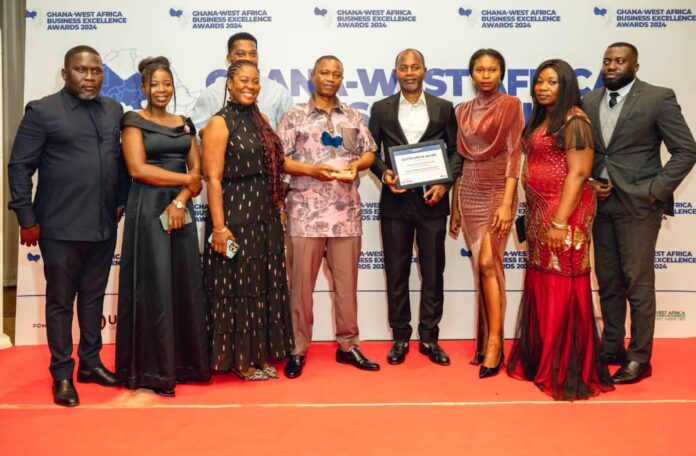
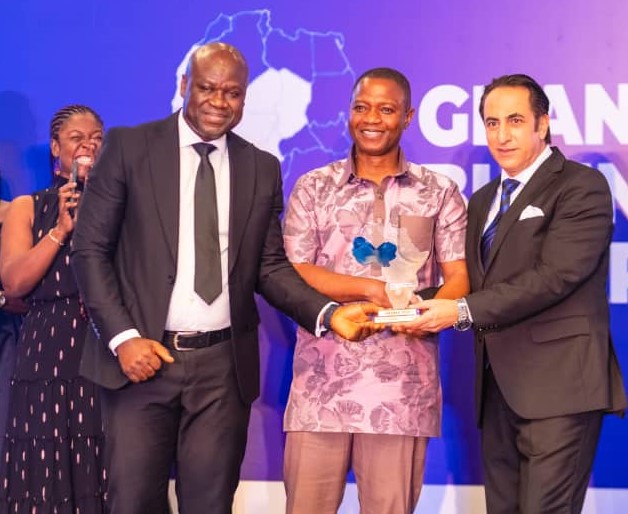
The Ghana Link Network Services Limited, operators of the Integrated Customs Management System (ICUMS), has been named the Trade Facilitation Company of the Year at the Seventh Edition of the Ghana-West Africa Business Excellence Awards.

The award recognises the company’s robust implementation of the ICUMS and its impact on the trade ecosystem.

This year’s Ghana-West Africa Business Excellence Awards, endorsed by the Ghana Chamber of Commerce and Industry (GNCCI), rewarded innovative ideas that have pushed boundaries to bring together business players and recognise the achievements of local and international companies involved in various sectors.

ICUMS connects over 8,000 daily users, including freight forwarders, shippers, and numerous regulatory bodies such as the Ghana Food and Drugs Authority (FDA) and the Environmental Protection Agency (EPA), streamlining processes that were previously cumbersome and time-consuming.

The ICUMS has been pivotal in enhancing operational efficiencies at Ghana’s ports and borders, leading to a significant increase in the country’s revenue and improvements in doing business.

Meanwhile, Dr. Nick Danso Adjei, the Chief Executive Officer and the Executive Chairman of Ghana Link Network Services Limited, was also honoured as Ghana’s “Entrepreneur of the Year” for the sixth time.

Dr. Adjei led his company to revolutionise trade facilitation in the region through the implementation of the ICUMS.

He told the media that he was thrilled to receive such recognition, as it highlights hard work and fuels their commitment to continue improving their services.

“These awards are a testament to the dedication of our staff, who strive to provide the best services at our ports and borders,” he said. 

He indicated that his outfit has received several other awards this year, including the Trade Facilitation Technology Leadership Award, the E-Solution for Trade Excellence Award, and the Excellence in Innovation and Technology Award.

Dr. Danso Adjei stated that it was important that young entrepreneurs and the youth of Ghana become focused, be diligent, and work hard towards achieving their goals.

Week two of limited voter registration exercise progresses smoothly in Hohoe

0

The second week of the nationwide limited voter registration exercise has begun smoothly in the Hohoe Municipality.

The exercise, which began May 7, was greeted with software and network glitches nationwide delaying the exercise in the Municipality.

Mr. Enoch Danso Agyekum, Hohoe Municipal Electoral Officer, told the Ghana News Agency (GNA) the week one had been successful.

He noted that the mobile registration team, which ended its operations at the Alavanyo Senior High Technical School, had not recorded any incidents.

Mr Agyekum said the Team after its two-day exercises moved to Wli Todzi to register eligible registrants.

The Ghana News Agency has also observed that the number of eligible registrants had reduced at the Municipal Office Centre where the exercise is being held as at 1030 hours.

Some new registrants were happy to own voter identity cards.

Security presence at the centre continued to be heavy.

I need your prayers and support for victory-Dr. Bawumia

0

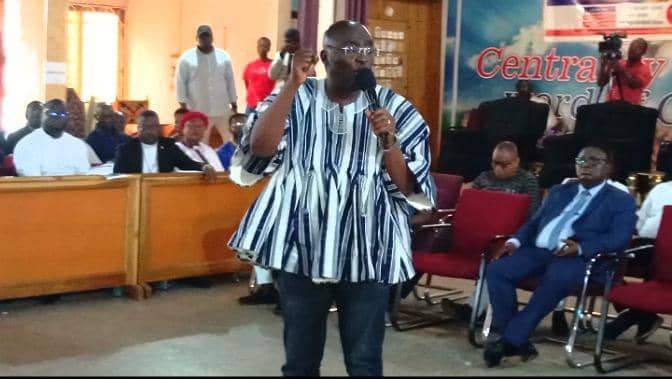
Dr. Mahamudu Bawumia, the flag bearer and Presidential Aspirant for the New Patriotic Party (NPP), has called on religious bodies to support him with prayers to become victorious in the 2024 election.

Dr. Bawumia made the call at Techiman in the Bono Region as part of his nationwide campaign in a separate meeting with the religious bodies, Muslim community, Bono East traditional leaders, the youth wing of NPP, traders at Techiman market and artisans at Magazine.

He asked the religious groups, the clergy, Muslim and traditional leaders to intensify their prayers for a peaceful and fair elections as well as for his bid to become the next President. 

Dr.  Bawumia stated that the religious tolerance in the country had endeared the nation to many, particularly on the issue of peace, adding that the NPP party would collaborate with all stakeholders during and after the election to sustain the peace of the nation.

He outlined the achievements and policies of the NPP, saying he would exceed his previous achievements by creating a digitalized economy, introducing the flat tax system and realigning import duty regime.

Mr.  Dan Kweku Botwe, the National Campaign chairman for Dr. Bawumia’s election campaign team, hinted that the collaborations, which the party sought to create with the religious bodies was not solely for political reasons, but because they were prominent institutions in ensuring peace and unity among the people. 

International Help of Missionaries to provide mechanised borehole for Konor-Kofe 

0

International Help of Missionaries (IHM) Inc, a New York-based Foundation has promised to construct a mechanised borehole water for the people of Konor Kofe, to salvage their water problems. 

The residents of the farming community in the Agortime -Ziope District of the Volta Region presently share water with cattle. 

At a meeting at Kono-Kofe to brief community members on the project approval and roles they should play during its execution, Mr Fred Hagan, the Project Lead Person assured the people that their letter seeking support from IHM for their water challenges had been approved for execution. 

Mr  Hagan urged the community to own the project by lending their massive support to ensure its early completion within the maximum period of two months. 

Mr Semenyo Kuenyehia, an opinion leader of the community, on behalf of the people pledged their full support for the project. 

He said they had suffered for too long in accessing portable water, so they deemed the intervention as a saviour. 

The Foundation in October 2023 commissioned a similar project at Adzonkor, another farming community in the Agortime -Ziope District. 

The call to scrap COVID-19 Health Recovery Levy Act: Any justification?

0

The year, 2019 started just like any other year. However, before the end of its fourth quarter, a strange disease emerged killing many people in China, and started spreading to the United States and Europe in early 2020.

Background

It was later named COVID-19. The emergence of the COVID-19 pandemic compelled many governments to implement various measures to mitigate its impact on public health and the economy. In Ghana, one of such measures was the introduction of the COVID-19 Health Recovery Levy Act.

However, in recent times, there have been growing calls from especially members of the Ghana Union of Traders Association (GUTA) for the levy to be scrapped.

Dr Joseph Obeng, President of GUTA, in a few media engagements last year, reaffirmed this position saying the levy had increased the cost of doing business in the country.

He said the levy had become a nuisance tax given that COVID-19 was no longer a health emergency aand impressed on the government to use its 2024 Budget Statement and Economic Policy, which was presented to Parliament in November, last year, to announce the cancellation of the levy.

Also, Mr Anthony Oppong, Ashanti Regional Chairman of GUTA, in March, this year, reiterated the position of GUTA saying the levy was contributing to a decline in business in the country adding most importers had lost their capital.

Amidst the growing calls to scrap the levy, there is a compelling argument emerging that this is the time for the government to rename the levy for a Public Health Emergency Fund (PHEF).

It is argued that renaming the levy PHEF will shift its focus from recovery to preparedness and response. This will ensure dedicated support for its continued collection.

The COVID-19 Health Recovery Levy Act, 2021 (ACT 1068), and its potential Ghana recorded her first two cases of the COVID-19 pandemic on March 12, 2020. Besides its negative impact on the country’s socio-economic development, statistics by the Ghana Health Service shows that more than 1,400 deaths were also recorded.

A year into Ghana’s fight to contain the COVID-19 pandemic, Ghana passed the COVID-19 Health Recovery Levy Act to impose a special levy on the supply of goods and services and imports to raise revenue to support COVID-19 expenditures and to provide for related matters.

At the time, the government had already committed a lot of funds derived from loans, and grants from donor partners including the World Bank to fighting the disease.

The passage of this law in 2021, was, therefore, seen as a move towards establishing a reliable source of funds to fight the pandemic.

However, the nature of this law implies that when the pandemic is over, the country will cease to collect this levy.

The implementation of the levy began in May 2021. The fiscal data released by the Ministry of Finance on April 22, 2022, showed that an amount of GH¢773.93 million was realised from the levy within the first eight months (May 2021 to December 2021) of its implementation.

This amount, which was spent to contain the spread of the virus and its effects on lives and the economy, represented a substantial portion of the budgetary allocation to the country’s health sector. This shows that the levy has the potential to rake in the resources needed for the intended purpose.

Why rename the levy as PHEF

On May 05, 2023, the World Health Organization declared an end to COVID-19 as a global public health emergency. Following this declaration, calls have been made for the government to scrap the levy.

The proponents of these calls argued that the government lacked the moral right and justification to continue to collect the levy since the reason for its introduction no longer existed.

These calls are legitimate to the extent that the levy was purposely to support the fight against the COVID-19 pandemic.

However, what if there is another outbreak given that diseases will continue to come? For instance, records by the Ministry of Health, and the Ghana Health Service (GHS) show that within the space of three years (2020 to 2023), Ghana recorded outbreaks of eight major diseases namely Yellow Fever, CSM, the COVID-19 pandemic, Polio, Monkeypox (Mpox), Marburg virus disease, Measles, and Lassa fever.

While the past three years (2020-2023) put a lot of strain on the country’s health system in terms of her ability to respond to public health emergencies, the subsequent years could even be worse because other major disease outbreaks could be recorded.

In all this, how is the country prepared to face such a situation? Given the potential of this levy, the country cannot afford to stop collecting it even as the COVID-19 pandemic is over or no longer a public health emergency.

This is why this levy needs to be renamed as PHEF to change its focus from recovery from COVID-19 to public health emergency preparedness and response especially when the country currently does not have a PHEF to ensure a reliable source of funds to attend to public health concerns.

By renaming it as PHEF, the calls to scrap it will cease and the PHEF will garner greater support from the public since it is for a worthy cause. Given its potential, this levy, now PHEF, could offer the country a reliable source of funds to undertake routine activities as part of her Integrated Disease Surveillance and Response (IDSR) Plan and for that matter Epidemic Preparedness and Response (EPR).

Professor Yidana Adadow, Dean, School of Public Health, University for Development Studies, in an interview with the Ghana News Agency in Tamale, expressed support for calls to rename the levy PHEF.

He said as a nation, “We find ourselves in a situation where all our development hinges on donor funds. So, if you are a beggar, you are just begging from hand to mouth. How can you take care of eventualities when they befall you? So, the government should rename the levy PHEF. Once you have a dedicated fund, with managers managing the fund, the state will be able to take care of any eventuality that is likely to hit it.”

He advised members of GUTA to add their voices to calls to rename the levy PHEF, which would be in the best interest of the nation and businesses as well.

Dr Hilarious Abiwu, Deputy Northern Regional Director of Health in-charge of Public Health, also supported calls for the setting up of PHEF saying this would strengthen the public health sector to effectively respond to disease outbreaks.

Challenges in Implementing EPR in Ghana

Over the past couple of years, funding for routine disease surveillance activities or ISDR has dwindled. Budgetary allocations to the health sector go into emoluments for health staff, and the construction of health facilities leaves significantly fewer resources available to undertake routine disease surveillance activities.

This implies that diseases that could be detected and managed on time will be left to degenerate into an epidemic level with their devastating consequences on the population.

In the year 2021, the total national health budget was $1.30 billion. This budget included payment of salaries and health research amongst others. Out of the figure, $803m was expected to be spent on health delivery, and $9 million on goods and services.

EPR fell under the goods and services budget. This was inadequate considering the volume of work expected under the EPR.

In subsequent years too, budgetary allocations to the health sector have been inadequate. As has been witnessed over the years, diseases will continue to come.

Therefore, the country needs to be prepared by strengthening her ISDR through ensuring funds to undertake public health emergency activities.

Just as efforts were made to create the Health Insurance Fund to ensure availability of funds to handle the clinical aspect of the country’s health care system, the country must also establish the PHEF by renaming and or converting the COVID-19 Health Recovery Levy to PHEF to ensure availability of resources to effectively support the public health aspect of the health care sector as well.

Other sources of funds such as some percentage of tax revenues from mining and telecoms sectors could be added to funds from the levy and leverage on the PHEF to access external support from the World Health Organization and the likes should it be necessary.

The way forward

The continued collection of this levy despite COVID-19 being no longer a public health emergency shows that it is important to the country’s economy.

However, there are moral and transparency concerns in terms of how the levy is expended since the purpose for its introduction does not exist anymore.

This is why it is time to rename the levy PHEF and repurpose it as a fund to generate resources to support the country’s public health sector to be ready to adequately respond to any public health emergencies to protect the population and the country’s economy.

By renaming it and repurposing it in this direction, the growing calls to scrap it will cease since the people now know the reason for charging or collecting it.

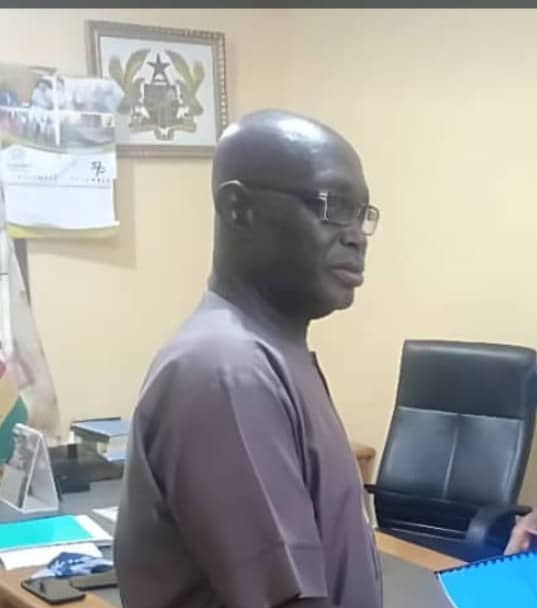
Private sector participation in energy distribution crucial under IMF programme 

0

The participation of the private sector in Ghana’s energy distribution is critical to the reforms outlined in the International Monetary Fund’s (IMF) ongoing US$3 billion loan-support programme. 

The development, which is part of the government’s efforts to improve energy efficiency and reduce debt, is outlined in the document guiding the implementation of the country’s three-year Extended Credit Facility (ECF). 

Over the last month, there have been intermittent power outages, prompting calls for the government to involve the private sector in resolving the issues to ensure that Ghanaians get reliable and affordable electricity.  
The Ghana News Agency went over the proposal for the IMF loan-support programme and found that the government planned to enter a concession arrangement in the energy distribution sector. 

There are no timelines for the move, but pages 15 and 67 of the programme documents note the government’s plan to develop a strategy with specific goals for reducing distribution losses and improving revenues. 

“[It] will entail estimating investment requirements for upgrading equipment and systems, finalising the modalities of private sector participation in the distribution sector,” the programme document indicated.  

A comparable initiative in recent times has been the agreement with Power Distribution Services (PDS), which was terminated in 2019 due to PDS’s failure to achieve certain pre-conditions. 

This led to the country missing some US$190 million in investment under the second tranche of the Millennium Challenge Corporation (MCC) power compact for the long-term sustainability of related infrastructure and financial recovery in the energy sector. 

At the time, the government stated that it was committed to private sector participation in the operations of the Electricity Company of Ghana (ECG) in keeping with due process and fidelity. 

Ms Alice Albright, Chief Executive Officer, MMC, stated on Thursday, May 9, 2024, that while they are open to working in Ghana again, there are no immediate plans to do so. 

Nana Amoasi VII, Executive Director, Institute for Energy Security (IES), has endorsed private sector participation through a concession agreement in the energy distribution sector. 

Speaking with the Ghana News Agency about the situation, he explained that since the intermittent power outages started, there had been no observable improvement in power generation. 

That, he stated, could prolong the situation unless the government ensures an adequate and consistent supply of fuel to power-producing facilities, necessitating private sector participation. 

“This approach can bring in expertise, investment, and efficiency improvements that are often needed to address infrastructure challenges and improve service delivery in the power sector,” he said. 

He said lessons from the PDS deal meant that the government must ensure that “the concession agreement is well-designed, transparent, and aligned with best practices to avoid the pitfalls experienced in the past deal.” 

Gadayi, Janet are champions of 2024 GNPC Ghana Fastest Human “Tamale Open”.

0

Edwin Gadayi and Janet Mensah of the Sagnation Club, Ashanti Region won the seniors races respectively in men and women 100meters at the first show dubbed Tamale Open Meet of the GNPC GFH held at the \Alhaji Aliu Mahama Sports Stadium on Saturday.

The two, who participated at the 13th African Games for Ghana were in good form and really thrilled fans as expected and won in good times.

The Tamale Meet which was highly patronized by students from tertiary and SHS was graced by the Minister of Youth & Sports Mr. Mustapha Ussif.

From Tamale the next meet is at the Cape Coast Stadium on May 25, then Kumasi Baba Yara Stadium on June 15 before the final of finals at the University of Ghana Stadium in Legon, Accra on June 29, 2024.

Here are the full Hand – Time Results

U15 Boys – 100m

1st. Abdul Rahman Mahamudu, Gbewah Athletics Club, Northern Region (11.08s)

2nd. Seidu Mohammed Hardi, Gmariga Athletics Club, Northern Region (11.34s)

3rd. Seidu Abdul Basit, Walewale Shs, North East (12.07s)

U15  Girls – 100m

1st. Mary Kofi, New Generation Club, Upper West (13.15s)

2nd. Baburidei Nima, New Generation Club, Upper West ( 13.31s)

3rd. Dor Martha, Sisco Athletics Club, Northern Club (13.69s)

U18 Boys – 100m

1st. Abdulai Alhassan, Sora Club, Northern Region (10.68s)

2nd. Abdul Adam Wakilu, Sora Club, Northern Region (11.18s)

3rd. Abdul Basit Abdulai, Sora Club, Northern Region (11.31s)

U18 Girls – 100m

1st. Behir Beatrice, Max Speed, Northern Region (12 55s)

2nd. Damba Abigail, Bawa Barracks, Northern Region (13.28s)

3rd. Naparija Ruth, Sisco Athletics Club, Northern Region (13.37s)

Seniors (Males) – 100m

1st. Edwin Gadayi, Sagnation Club, Ashanti Region (10.29s)

2nd. Gabriel Fletcher, UDS, Northern Region (10.49s)

3rd. Francis Kweku Nnuro, UDS, Northern Region (10.65s)

Seniors (Females) – 100m

1st. Janet Mensah, Sagnation Club, Ashanti Region (11.69s)

2nd. Grace Aduntira, UDS, Northern Region (11.84s)

3rd. Felicia Awudu, UDS, Northern Region (12.22s)

Keta FC celebrates owner for promoting sports, empowerment initiatives 

0

Keta Football Club (Keta FC) has extended a heartfelt appreciation to its owner, Madam Enyonam Adzo Apetorgbor, for her profound impacts on not just the club but the “entire community.”

The Division Two football club in the Volta Region with a rich history and promising future, and currently top on the table, thanked Madam Apetorgbor for being a truly remarkable woman of many purposes, citing her “grace, dedication, and leadership” among others as contributing to the success of the club.

Keta FC, in a special Mothers’ Day message to her, signed by Mr Franklin K. Denu, its General Secretary and made available to Ghana News Agency, described the owner as an “incredible woman” whose efforts and initiatives were inspiring, thus, deserved to be celebrated.

“Your unwavering support and tireless efforts in promoting sports, community engagement, and empowerment initiatives have been truly inspiring. Your ability to juggle multiple responsibilities with such finesse is a testament to your strength and resilience.

As a leader, you have guided us with wisdom and compassion, fostering a sense of unity and purpose within our club. Your passion for our community and its people shines through in everything you do, and for that, we are truly grateful.”

The message concluded by wishing her the best of the day.

“On this special day, we want to express our deepest gratitude for all that you do. May your day be filled with love, joy, and appreciation for the incredible woman you are.”

Mother’s Day, an annual holiday celebrated globally on different days, and in Ghana on the second Sunday in May, recognises the selfless sacrifices, unconditional love, and unwavering support that mothers provide while offering an opportunity for individuals to express their love, appreciation and gratitude towards their mothers.

3i Africa Summit Starts Today with 4 000 Finance, Technology and Policy Players

0

The much-awaited 3i Africa Summit which seeks to generate greater momentum and traction for Africa’s digital finance agenda by causing finance, policy and technology to meet at the crossroads begins Monday at the Accra International Conference Centre for the next three days.

In the face of higher-than-projected registration characterised by a subsequent turnout of over 4,000 participants which is well above the initial target of 2,500, the organisers, the Bank of Ghana (BoG), Development Bank Ghana (DBG) and the Monetary Authority of Singapore (MAS) through its subsidiary, Elevandi, remain poised to deliver what they promised. 

Over the three days, the participants will benefit from a multimodal forum for policy discussions, international intellectual resource alignment, entrepreneurial pursuits and investment networking.

This is expected to foster important conversations and also strategic alliances to nurture the flourishing African digital economy and fintech sector. 

Through this coordinated effort the Summit will support the development of creative solutions made especially to handle Africa’s unique problems and take advantage of its wealth of prospects.

As expected, the 3i Africa Summit is bringing together key players in the financial, investment, policy-regulatory and digital technology domains in Africa. These include three Heads of State, 10 Governors of Central Banks within and outside Africa, including the Bank of Ghana’s Dr. Ernest Addison, the Central Bank of Nigeria’s Dr. Olayemi Michael Cardoso and the National Bank of Rwanda’s Hon. John Rwangombwa. 

In addition, there are over 150 Chief Executives and Senior Executives of FinTechs and Financial institutions across the globe, including Serigne Dioum, CEO of MTN Group Fintech, Dr. Patrich Saidu Contech, CEO of Africa Fintech Network, Saurav Bhattacharya, CEO of Proxtera, Conrad Kraft, Strategic Advisor, DigitalEuro Association, and Co-Founder and CFO, Tradelite Solutions, Mariame MacIntosh Robinson, President of Qenta Inc., Sopnendu Mohanty, Chief Fintech Officer at MAS.

Over the three days, the participants will engage in over 15 sessions with speakers and discussants contributing to over 60 topics aimed at finding the pathways that deliver the most traction in the drive to generate momentum and achieve progress in line with the Summit’s theme: “Unleashing Africa’s Fintech and Digital economic potential”. 

The exciting series of sessions include “the Capital meets Policy Dialogue”, “Opening; Main Stage” on Day One with “Main Stage – Africa”, “Fintech for inclusion forum”, “3i Africa Dialogues on Digital Assets”, “Founders’ Peak”, “the Deal Zone”, “Women in Tech Conference”, “Agriculture and Fintech Forum” and “Roundtable” on the second day. The third and final day offers “Smart SMEs and Digital Skills Forum”, “Digital Public Infrastructure”, “ESG Forum”, “Financing businesses, Accelerating Trade; Universal Trusted Credentials” and “Main Stage – Global”.

The topics for the three days will engender a dissection of the issues in order to bring to the fore solutions, ideas and channels to deliver the much-needed progress on the fintech front. 

These include Interoperability of data; Digitalizing intra-Africa Trade, State of Fintech; Africa, Africa’s Digital Economic Policy; Incentives, Infrastructure, Financing and Regulations and Skilling up, Stepping up; Building Africa’s workforce with women and youth at the forefront.

Others are Sheconomics; Building a financial future for women with fintech, Seeding Innovation; The convergence of agriculture and fintech in Africa, Integrating fintech to de-risk agriculture value-chains in Africa and Africa’s Digital Renaissance, among others.

One thing is certain, however, that the 3i Africa Summit is not going to be a talk-shop. 

The discussions, views and solutions over the three days will be packaged as recommendations, collaborative deals, progressive policies and projects to enable the unleashing of Africa’s fintech and economic potential. 

This will be shared with the rich assemblage of leaders in the finance, policy and digital technology space for implementation thanks to the efforts and commitment of the Bank of Ghana, Development Bank Ghana and the Monetary Authority of Singapore.