Home Blog Page 223

Commuters urged not to pay additional transport fares

0

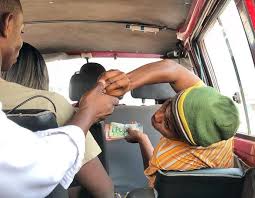
Commuters across the country have been asked not to pay any additional transport fares.
This advice is coming from the Ghana Private Road Transport Union (GPRTU) and the Ghana Road Transport Coordinating Council (GRTCC), and on the heels of recent arbitrary increase in transport fares by some drivers.


A press release jointly issued by GPRTU and GRTCC, and copied to the Ghana News Agency, asked the citizenry not to pay any extra fares, until a consensus was reached.

 
The statement described such increases as illegal and in contravention of the Administrative Instrument on the review of public transport fares.


The transport bodies indicated that they had not reached a consensus with the Ministry of Transport on adjustment in fares following recent hikes in fuel prices and the attendant operational cost.


“As has been the practice, the leadership met with the Ministry of Transport on Wednesday 10th April 2024 to present our demands.

Once consensus is reached, the public will be duly informed,” the statement said.


“Therefore, any increase outside the Administrative Instrument should be disregarded and treated with contempt,” the statement added.


“We, therefore, urge commuters not to pay any fare outside the existing fares.


“We also want to urge all drivers to abide by this directive and have confidence in the leadership,” the statement said.


It urged all Regional Administrations, Metropolitan, Municipal and District Assemblies, and the Station Welfare Committees to ensure compliance to the existing fares.


They assured transport operators of the leadership of the two bodies’ commitment to continuously push for the welfare of transport operators.

We need to disabuse mindsets so our people can feed well

0

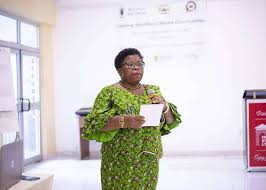
Professor Lydia Aziato, Vice Chancellor of the University of Health and Allied Sciences (UHAS), has emphasised the need to break socio-cultural barriers to quality nutrition in communities.

 
She said that long held cultural beliefs and practices that tabooed the consumption of certain foods continued to inhibit access to the nutrition sources, and that stakeholders needed to work to deconstruct such food myths.

 
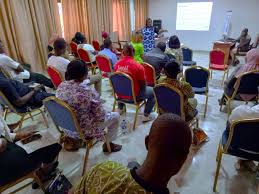
Several communities are known to ban the consumption of certain food sources particularly animals, and the Vice Chancellor made the call while opening a three-day workshop on nutrition reporting for media practitioners in the Volta Region.

  
The Workshop was organised by Africa Catalysing Action for Nutrition (AfriCan), an organisation of nutritionists from Across the African Continent, which seeks to address nutrition shortfalls.

 
Prof Aziato said the media should play key roles in the efforts, and that the training initiative should equip them to throw down food taboos and common misconceptions.

 
“How do we disabuse the minds of our people so that they can feed well?, she called out to practitioners and said, “with quality foods and nutrition we would be able to prevent even generational diseases.” 
The Vice Chancellor commended AfriCan for the training opportunity believing it would “breakdown nutrition for the media to propagate.”

  
She said with quality foods and nutrition, the nation could prevent even generational diseases, and that media should master key nouns and terminologies in local languages for better communication.

 
She said media should help promote sustainable agriculture amidst changing climate, and also help guide food processing and nutritious preparation.

 
UHAS ready to partner with all stakeholders in promoting healthy living in the Region and beyond. 
Madam Catherine Adu-Asare, Programmes Manager of the Diet and Healthy Life Program of the Ghana Health Service, who was a key facilitator at the training, spoke of changing nutrition landscape and said the media should help ensure a reversion to traditional food sources.

 
She said the media role would help address increasing lifestyle diseases, resulting from the consumption of modernised ultra processed foods, and also called to consider the role of food taboos in nutrition deficiency.

 
A total of 25 media practitioners benefited from the training workshop, which focused on all aspects of nutrition, and provided for them practical approaches to dealing with the subject.

 
Professor Francis Zotor, Trustee of the AfriCan, said media would be positioned to lead the charge for enhanced nutrition in the communities, adding that the Organisation was working with various stakeholders for the ultimate outcomes. 

WIN trains women with disability in livelihood skills

0

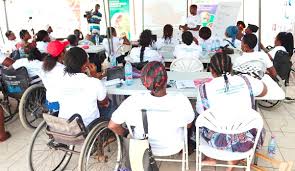
Women In Need (WIN), a local non-governmental organisation with focus on supporting females with disability, has trained some vulnerable women and girls in livelihood skills to assist their growth.

  
They were empowered to break the myriad of barriers that hinder their growth and serve as a lifelong saving opportunity.

  
The training will also help the women and girls fend for themselves and improve on their standards of living, rather than becoming a burden on society.

  
This forms part of a three-year project by WIN, dubbed: “Promotion of Equal Rights for Women and Girls with Disabilities,” with the aim of increasing women’s capacity through entrepreneurship, financial literacy and life skills training to ensure their independence.

  
Beneficiaries were trained on snail, palm weevil and mushroom farming techniques for economic empowerment.

  
WIN has already trained the first batch in beads, fascinator and soap making among other things.

All participants would be given financial literacy training to enhance profit.

 
Ms Susie Ama Korakoma Arkuh, the Executive Director, WIN, told the Ghana News Agency in an interview after the training that women and girls were the most vulnerable, hence the project was to empower them to become self-reliant and help in their development process.

   
She said though the government was doing its best to provide security for the vulnerable, WIN found some loopholes, hence the idea of supporting them to bridge the inequality gap.

  
Ms Abena Opare, the Mfantseman Municipal Director, Social Welfare Department, applauded WIN for its continuous support to persons with disability within the area.

  
She called on all stakeholders to join hands in pushing forward the welfare of women and children and bridging the stereotypes against persons with disability.

  
The Department would monitor and support the beneficiaries to ensure the intended outcomes were achieved, she said.

  
Madam Grace Amoah, a beneficiary, expressed gratitude to the organisers for the opportunity to make money.

  
She said her family lost a snail farming business due to less knowledge about it and that with the training she would revive the business. 

December Polls: Prioritise national peace, unity – Akrofuom DCE urges Ghanaians

0

Mr Rabiu Awal, the Akan Constituency Chairman of the New Patriotic Party (NPP) in the Oti Region, has expressed interest in contesting the upcoming Parliamentary Candidate (PC) slot.

The election has become necessary following the demise of Alhaji Rashid Bawa, a former Diplomat and Akan NPP Parliamentary candidate for the 2024 polls.

Mr Awal told the Ghana News Agency (GNA) that after the demise of the former PC, he received countless calls from Party faithful to contest and that he could not afford to disappoint them.

He said he was born and bred in the Constituency and knew the challenges confronting the constituents.

Chairman Awal said he has been elected as Chairman in 2018 and re-elected unopposed in May 2022 due to his hard work and commitment to the Party.

He said his election as PC and eventual election as Member of Parliament (MP) in December 7 polls would see an unprecedented development projects in the Akan Constituency as he had worked closely with the late Alhaji Rashid Bawa and learnt how to lobby for projects.

He said he was a ” true grassroots soldier” and would not disappoint.”

Lawyer Tapha Tassah, an Accra -based private Legal Practitioner will be challenging Chairman Awal in the primary fixed for Saturday, April 27, 2024.

In the December 2, 2023 PC election, the late Alhaji Rashid Bawa won with 492 votes as against 103 votes secured by the younger brother of lawyer Tassah, Abubakar Safiwu Tassah and 17 votes by Alhaji Tanko Issifu Yakubu.

Securing a better future for children must be a collective responsibility – NCCE

0

The National Commission for Civic Education (NCCE) at Anloga in the Volta region has stated that children’s ‘better protection and better future’ must be a collective responsibility of all.

 
The call, according to them, would also involve the active participation of the entire society for a better coexistence.

  
Madam Emmanuella Woelikplim Afetorgbor, Assistant NCCE Director at Anloga, in an interview with the Ghana News Agency during a worship for some Basic schools in the area, stated that the public should get involved in nurturing children.

  
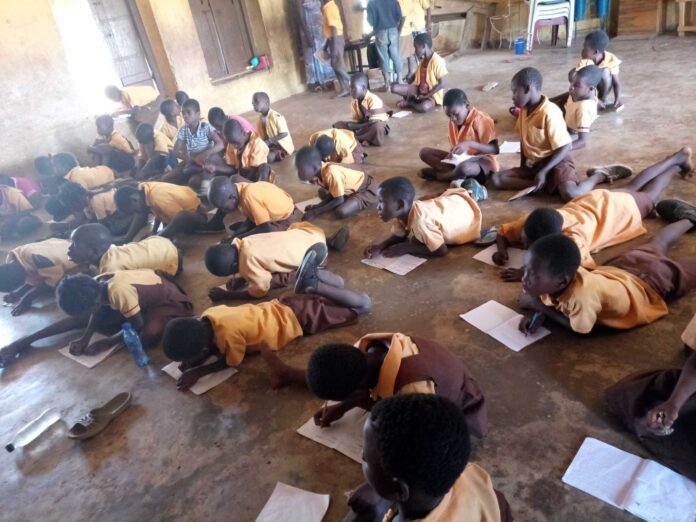
She revealed that to secure a better future for younger generations, children should be allowed to have proper and quality education regardless of their family background to equip them with the requisite knowledge and skills needed to succeed.

 
“These things did not only include academic education but also to inculcate into the children important values such as empathy, tolerance, and resilience,” she said.

 
Madam Afetorgbor said that society must also prioritise access to quality healthcare service, good nutrition, clean water, and safe living environments for all children.

 
This, she said, would address issues of child malnutrition, inadequate healthcare infrastructures, as well as the eradication of preventable diseases.

 
“We must empower children to voice out their opinions, participate in decision making, and take actions on issues that affect their lives.” 


Madam Afetorgbor further indicated that climate changes, pollution, and environmental degradation posed serious threats to the well-being of future generations that must be addressed with all urgency.

 
She also explained that children should be encouraged to be agents of change “since they are not only passive recipients of our efforts, but they can be capable of driving change in the various communities.”

 
Madam Afetorgbor also encouraged pupils to work hard with determination, and perseverance, and above all, abide by the rules and regulations of the nation to avoid any punishment by law.

 
The exercise was on the theme: “Creating an Enabling Environment for Future Generations.” 

Man beaten over missing genitals at Senya Bereku

0

A man, believed to be in his late 30s, has been beaten to pulp by a group of motorcycle riders at Senya Bereku in the Awutu Senya West District of the Central Region over an allegation of causing the disappearance of a colleague rider’s penis.

 
On Tuesday April 10 at around 2200hrs at Zion C Basic School at Senya Bereku, a group numbered about 30 welding metals, stones and sticks stormed the residence of the victim, identified as Mr Isaac Saint and alleged that a ‘pragya’ driver informed them that his penis got missing after he picked the victim. 

 
According to some eyewitnesses, the pragya driver claimed that his penis varnished few minutes after dropping off the victim at home.

 
An eyewitness said the victim was beaten with metals, sticks, stones among others as no pleadings could save him from the angry youth.

  
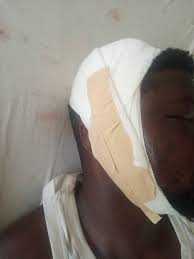
The witness said there was blood oozing from the nostrils, the head and other parts of the body while vomiting same before the police came to his rescue.

  
The Senya Bereku police, later accompanied the complainant for a medical examination at the Senya polyclinic but found his penis intact.

 
He told the police he had visited a spiritual healer at Jehovah El Shaddhai 7th Day Sabbath Assembly at Senya who prayed for him.

  
The police after the examination arrested the complainant and the spiritual healer, who are currently in police custody, while the victim is receiving treatment at the Winneba Specialist and Trauma Hospital.

 
When the GNA visited the church, some of the people claimed that the complainant approached the prayer grounds with a shrunken penis and that the pastor prayed for him and that the pastor was innocent.

 
During a follow up at Senya polyclinic, Acting Medical Superintendent, Dr Samuel Agyapong, told the GNA that the man reported to the facility, but he found out after the examination that the information was false.

  
He advised the public not to blindly brutalise people based on mere allegations but first verify through medical examination. 


Upper West Region must scale-up advocacy to abolish open defecation – M-CODe

0

The Media Coalition Against Open Defecation (M-CODe) has called on the Upper West Regional Coordinating Council, traditional leaders and landlords to scale up efforts to abolish open defecation by 2030. 
 
Mr Francis Ameyibor, M-CODe National Convenor, who made the call in an interview with the GNA, noted that the United Nations Sustainable Development Goal Six Target Two mandates that nations must end open defecation by 2030. 
 
He said that by this calculation, Ghana has about six years to stop open defecation and called for coordinated stakeholder advocacy against the practice. 
 
Mr Ameyibor noted that as part of efforts to scale up advocacy against the practice, the M-CODe, in collaboration with the World Vision, Ghana, and Kings Hall Media, would launch the Upper West Regional branch on April 25 to galvanise the media to pro-actively campaign against open defecation. 
 
The M-CODe National Convenor pointed out that GOAL Six has six targets, all of which were centred on access to safe water, sanitation, and hygiene-three of the most fundamental requirements for human health and welfare. 
 
“The SDG Six recognises that if progress does not triple, billions of people will not have access to these basic services by 2030. This is because water demand is increasing due to population expansion, urbanisation, and growing water requirements for agriculture, industry, and the energy sector,” Mr Ameyibor noted. 
 
“We are building up synergies with all stakeholders to ensure that we work together to achieve the set goals,” he said, urging traditional and religious leaders to join the fight against open defecation in their areas. 
 
Communities that have achieved open defecation-free status must also get in touch with M-CODe for special recognition and to tell the rest of the world about their successes,” Mr. Ameyibor noted. 
 
Other SDG Goal Six targets that Ghana is anticipated to meet by 2030 include achieving universal and equitable access to safe and affordable drinking water for all, access to adequate and equitable sanitation and hygiene for all and ending open defecation.  
 
Special attention will be given to the needs of women, girls, and those in vulnerable situations. 
 
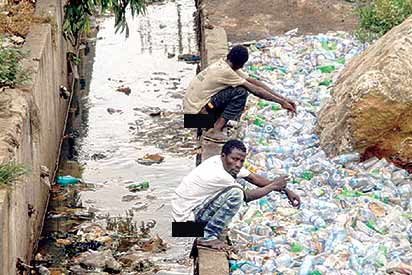
“The country also has a duty to reduce pollution, stop dumping dangerous materials and chemicals, limit their release, cut the percentage of untreated wastewater in half, and significantly increase recycling and safe reuse on a worldwide scale,” Mr Ameyibor stated. 
 
He said M-CODe will simultaneously launch the Upper West Regional M-CODE branch and the M-CODe Strategic Stakeholders Dialogue platform. 
 
Mr Caesar Abagali, the Interim Upper West Regional M-CODe Coordinator, noted that the region must also plan to significantly improve water usage efficiency across all sectors and ensure sustainable rainwater harvesting and supplies to manage water scarcity and significantly lower the number of people affected by it. 
 
He said that as a region, “we are expected to take advantage of and gain from increased international cooperation and capacity-building support in activities and programmes related to water and sanitation, including technologies for water harvesting, desalination, water efficiency, wastewater treatment, recycling, and reuse.” 
 
Mr Abagali pledged the commitment of journalists in the region to relentlessly advocate against open defecation as its impact affects all, irrespective of status in society. 
 
Organisations to participate in the Upper West Regional launch of M-CODe and seminar on open defecation include the Regional Coordinating Council, the Environmental Health Department, the Ghana Education Service, the Ghana Health Service, the National Commission for Civic Education, the Department of Community Development, the Department of Gender, and the Community Water and Sanitation Agency. 
 
Others included the representatives from civil society organisations, regional environmental officers, the Environmental Protection Agency, CONIWAS, Kings Hall Media, and World Vision. 
 
The rest are groups made up of regional officers from organisations such as the Ministry of Sanitation and the Ministry of Local Government and Rural 

Health professional must be committed to saving lives – Rev. Gyamfi

0

 Nursing and midwifery students have been urged to be passionate about their training and take their courses seriously to acquire the requisite skills and knowledge to enable them to save lives.

 
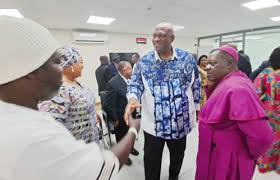
The Most Reverend Matthew Kwasi Gyamfi, the Bishop of the Catholic Diocese of Sunyani, said every patient that visited the hospital had hope in the health professionals, who they believed could restore their lives through effective treatment.

 
Therefore, it would be unpardonable for health workers to contribute to a patient’s death through negligence and improper procedures, he added.

 
 Most Rev. Gyamfi said this during the 26th matriculation ceremony of the Holy Family Nursing and Midwifery Training College at Berekum, which also saw the 10th anniversary launch of the Saint Mary’s campus, Drobo, in the Bono Region.

 
It was on the theme: “Qualified Healthcare Training at Holy Family Nursing and Midwifery Training College: The 10 years of experiencing at Saint Mary’s Campus, Drobo.”

 
 He urged the students to love the work they had chosen and bear in mind that the lives of patients were in their hands, which must be cherished and handled with care.

 
  Most Rev. Gyamfi said health professionals needed to prepare very well on the type of cases or ailments they may be attending to and advised the students to explore and deepen their understanding of the chosen career, be creative, and demonstrate their skillfulness in every situation.

 
  He called for networking among the students to promote their work and support each other when the need arises, even after school.

 
 Madam Monica Nkrumah, the Principal of the College, said the students’ decision to enroll at the college signified their belief in the excellence of its educational delivery and the commitment to the noble profession of nursing and midwifery.

 
 She advised them to uphold the values of diligence, truth, and service to the greater good of the institution and the nation as a whole.

 
 Madam Nkrumah asked the students to embrace the opportunities with determination and be disciplined to become exemplary ambassadors of the institution.

 
The college received 1,401 applications for the 2023/2024 academic year but was able to admit 530 candidates, to be trained at the Berekum and Drobo campuses.

 
 Madam Nkrumah stated that the departure of qualified staff members seeking better opportunities abroad posed challenges in maintaining continuity and stability within the academic and administrative departments.

  
That notwithstanding, measures were in place to ensure that the school continued to provide quality education and support to the students, she said, while urging them to pay their fees on time. 

ActionAid Ghana trains informal sector workers on ILO conventions

0

Some actors in the informal sector in Wa have been trained on the ILO Conventions and decent work principles to enable them to appreciate the concept of decent work in their quest to hire employees or seek jobs.

  
The employers and employees of hotels, restaurants and private schools were exposed to the provisions of the ILO Conventions 190, C189, C183, decent work principles and the domestic worker’s regulation as well as their responsibilities in fulfilling the requirements of Social Security and National Insurance Trust (SSNIT).

  
Representatives from the Wa Municipal Labour Department, Domestic Violence and Victim’s Support Unit (DOVVSU), SSNIT, and the Trades Union Congress (TUC) among others were present to train the participants on the protocols and the formation and management of associations.

  
Speaking at the opening of the training in Wa, Madam Abiba Nibaradun, the Upper West Regional Programme Manager of ActionAid Ghana, said lack of knowledge on these conventions had served as a conduit for the perpetuation and entrenchment of indecent work practices in some workspaces, particularly in the informal sector.

 
She added that the training was also aimed at increasing the understanding of the employees in the informal sector of their rights and what constituted abuse or violations of such rights.

 
Madam Nibaradun said that would also inform them of where they could seek redress if their rights were violated.

  
She observed that some employers engaged workers verbally without a contract that outlined the terms and conditions and thus dismissed such employees anytime at will, which was against the laws of Ghana.

  
“In every employment situation, there must be a contract that serves as the binding agreement between the employer and the employee with the terms and conditions clearly spelt out,” Madam Nibaradun explained. 

 
On Sexual harassment at workplaces, Madam Nibaradun urged managers of the informal sector to have policies on sexual harassment in pictorial printouts in brochures and other mediums and pasted at vantage points in their work premises prohibiting such acts of abuse around the workplaces as part of efforts to prevent such acts. 

 
She added that ActionAid Ghana had developed a sexual harassment Charter that would be shared with employers for guidance and adoption.

 
She also urged employers to periodically empower the workers to resist any form of harassment at the workplace and to report harassment when it occurred without fear of losing their jobs.

  
Assistant Superintendent of Police (ASP) Adongo Apiiya, the Coordinator of the Upper Regional DOVVSU, who made a presentation on the ILO Convention 190, observed that some employees of the informal sector were afraid of reporting issues of harassment and abuses to their employers for fear of losing their jobs.

 
While encouraging the workers to report such issues they suffered at the workplaces to the police for action, he said the labour law of Ghana prohibited arbitrary dismissal of a person from work.

  
Mr Apiiya also entreated managers of the hospitality industry and private schools to strengthen their security measures, including the installation of functional security cameras to help ensure the safety of their workers and property.

 
Brother Prosper Ganye, the Assistant Manager of the In-service Training Centre, reacting to the “the customer is always right” notion, said it was the responsibility of the managers to protect their staff from abuse and harassment from customers and other employees.

 
He indicated that female workers, especially, should be made to know that they should always stand for the right thing, by making their “Yes be Yes and No be No” and they would be always supported once they were right.

  
Some of the employees at the training identified sexual harassment and abuse, working overtime and overdue payment of remuneration as some challenges they faced at the workplace.

 
The employers made a commitment to initiate steps that would make the workplace harassment-free while employees committed to always engage their employers for a contract of employment for better conditions of service.  

Fake military officer arrested by Nkwanta South Police

0

The Nkwanta South Municipal Police have arrested one Abdul Majeed, a 27-year-old man, for posing as a military officer in the area.

The suspect is said to have taken the fake soldier’s identity to a local chop bar in town by engaging the services of a commercial motorbike rider (okada) for some hours but refused to pay for service rendered.

The suspect, however, told the motorbike rider to send him back to his residence for money to pay, which the rider obliged.

Upon arrival, the fake military officer refused to pay the rider, using his fake identity to intimidate him leading to a fight between them. 

After interrogation by some military officers in the area, it was revealed that the suspect had no affiliation with the Ghana Armed Forces but had been using his fake identity to gain respect and authority in the area.

The suspect was subjected to some drills for deceiving the public.

The suspect, Abdul Majeed, has since been handed over to the Police for further investigation and prosecution, and is currently facing charges of impersonation and fraud.