
Mr Reindolph Afrifa-Oware, Political Analyst has expressed worry that the 2026 State of the Nations Address ‘failed miserably’ to address the growing inequality gap among Ghanaians.
President John Dramani Mahama presented the 2026 SoNA to Parliament on Friday February 27, 2026, highlighting key government interventions and strategies for the year.
Reacting, Mr Afrifa-Oware, also the Director of Communications and Corporate Affairs of the National Tenants Union of Ghana, told the Ghana News Agency (GNA) in an interview at Dormaa-Ahenkro in the Bono Region that the nation’s economic indicators looked great “on paper” however many Ghanaians still grappled daily with high cost of living.
He said that it was manifesting in issues of rent increases, food inflation, utility tariffs, youth unemployment, and rising cost of transport.
“There is a growing emotional fatigue among ordinary Ghanaians. The SoNA projected stability, however, the streets reflect anxiety”, Mr Afrifa-Oware stated.
He stressed the need “to match growth figures and the expansion of the Gross Domestic Product with realities like quality standard of living, inclusiveness and purchasing power”.
Mr Afrifa-Oware expressed concern that real wages were stagnant as informal workers remained vulnerable with rent consuming 40 percent to 60 percent of incomes in urban areas while youth unemployment remained structurally high.
He said: “Economic growth that does not reduce inequality, stabilize housing, and improves disposable income for the poor becomes growth without relief.
Then growth becomes theoretical rather than transformational”.
Mr Afrifa-Oware bemoaned that the young graduates continued to express their frustration over underemployment, which remained a major concern, as the government claimed providing and creating one million jobs.
He said housing affordability remained out of reach for many of the working youth, questioning why the government allowed smallholder farmers to absorb global market adjustments.
Mr Afrifa-Oware called on the government to establish buffers for smallholder farmers as subsidies or productivity incentives to cushion them against external shocks and impact.
“When citizens feel, they are always asked to sacrifice, while accountability at higher levels appears limited. Public agitation intensifies”, he stated and reminded the government to build trust with the people by fulfilling its social contract.
Mr Afrifa-Oware called on the government to implement socio-economic intervention policies that tackled the emerging needs of the people and thereby alleviate the plight of ordinary Ghanaians.
2026 SoNA projects economic stability-Political Analyst

Centre-Right Legacy: Empowering Ghanaians through economic freedom – Afenyo-Markin
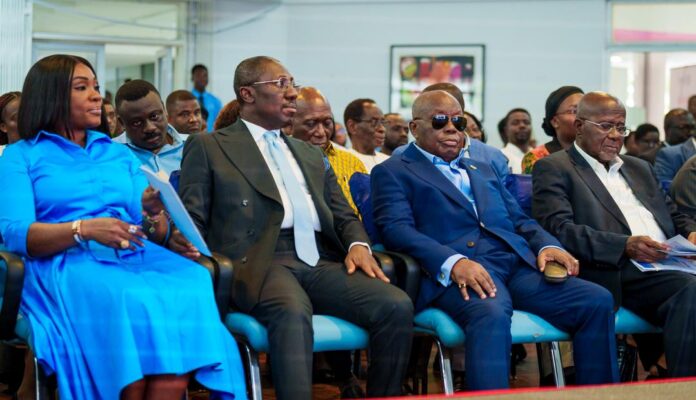
Mr Alexander Kwamena Afenyo-Markin, Minority Leader, on Monday underscored the impact of the centre-right ideology on Ghana’s political landscape, describing it as instrumental in shaping the country’s economic trajectory.
He said the Dombo-Busia tradition was rooted in the fight for farmers’ rights and had promoted health insurance, free education and rural industrialisation, reflecting its commitment to social justice and empowerment.
Mr Afenyo-Markin made the remarks at the maiden lecture series of the Institute of Economic Research and Public Policy (IERPP) in Accra, held on the theme: “The Centre Right Impact on Ghana’s Political Landscape.”
He noted that key figures, including former leaders, had championed economic liberalisation, private sector-led development and infrastructure expansion. He added that the New Patriotic Party (NPP) had remained at the forefront of advancing free-market economics, individual liberty and limited government intervention.
Mr Afenyo-Markin, who is also the NPP Member of Parliament for Effutu, urged citizens to reconnect with the tradition’s roots and promote empowered citizenship.
“As Ghana looks to the future, the centre-right legacy will depend on investments in education, health, skills development and strong institutions that foster sustainable growth and broad-based ownership of opportunity,” he said.
The Minority Leader stated that the ideology had driven economic liberalisation, boosted entrepreneurship and private sector growth, and supported infrastructure development to enhance overall economic performance. He also stressed the importance of fiscal responsibility in managing inflation and ensuring sustainable development.
Dr Hackman Owusu-Agyemang, Chairman of the Council of Elders of the NPP and Chairman of the event, commended the IERPP for initiating the lecture series and emphasised the need to understand and learn from the past to advance Ghana’s development.
Government reviews decentralisation reforms, commits to local development
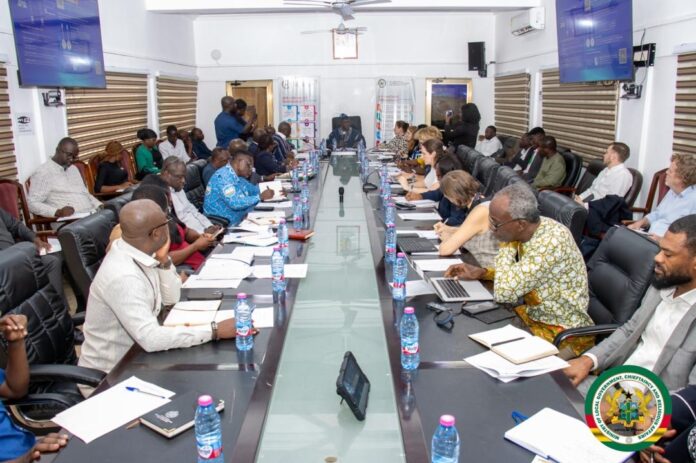
Mr Ahmed Ibrahim, Minister for Local Government, Chieftaincy and Religious Affairs, has reaffirmed government’s commitment to deepening decentralisation, strengthening accountability and accelerating development across Metropolitan, Municipal and District Assemblies (MMDAs).
Speaking at a meeting of the Decentralisation Sector Working Group (DSWG) in Accra, he said decentralisation remained central to Ghana’s democracy and grassroots development. Reforms being pursued, he noted, focusing on transparency in public fund utilisation, improved institutional performance, and inclusive local development.
Mr Ibrahim, who chairs the DSWG, recalled that members in July last year discussed measures to enhance accountability in the use of the District Assemblies’ Common Fund (DACF), improve professionalism in the Local Government Service, advance the SDGs through Local Voluntary Reviews, and finalise the National Decentralisation Policy and Strategic Framework (2026–2030).
Current policy priorities include implementation of the 24-Hour Economy Markets across all 261 MMDAs, the National Sanitation Campaign, the DACF-Responsiveness Factor Grant (DACF-RFG) Programme, legislative reviews, digital mobilisation of Internally Generated Funds (IGF), and strengthening transport departments to address urban mobility challenges.
He said the National Sanitation Day, dubbed the “Clean Up Ghana” Initiative, was launched on September 6, 2025, at the Institute of Local Government Studies, Ogbojo, Accra, by President John Dramani Mahama, and is observed on the first Saturday of every month to improve sanitation, public health and tourism.
On the proposed upgrade of selected assemblies, the Minister disclosed that a committee chaired by Johnson Asiedu Nketiah had submitted its report after consultations and field assessments. The report, under review for onward submission to the President, seeks Executive approval to upgrade 12 municipalities, one district and 20 districts to metropolitan and municipal status, based on objective standards, population, infrastructure and service capacity.
Mr Ibrahim said the Ministry, in partnership with the 24-Hour Economy Secretariat, had completed designs and advanced procurement for modern markets nationwide. He added that GH¢6.29 billion had been secured from the DACF for 2025, with GH¢4.3 billion already disbursed, alongside allocations under the DACF-RFG Programme, monthly allowances for Assembly Members, and a 300 per cent increase for Paramount Chiefs and Queen Mothers.
He further reported the finalisation of key policies awaiting Cabinet approval, successful inspections of DACF-RFG projects in the Ahafo, Bono and Volta Regions, and announced that the President would launch a Regional Accountability Series on March 18, 2026, to enhance transparency and combat corruption.
Mr Ibrahim reiterated the Ministry’s commitment to working with stakeholders to ensure effective implementation of decentralisation reforms in line with national development objectives.
Polls open amid heavy security in Ayawaso East by-election
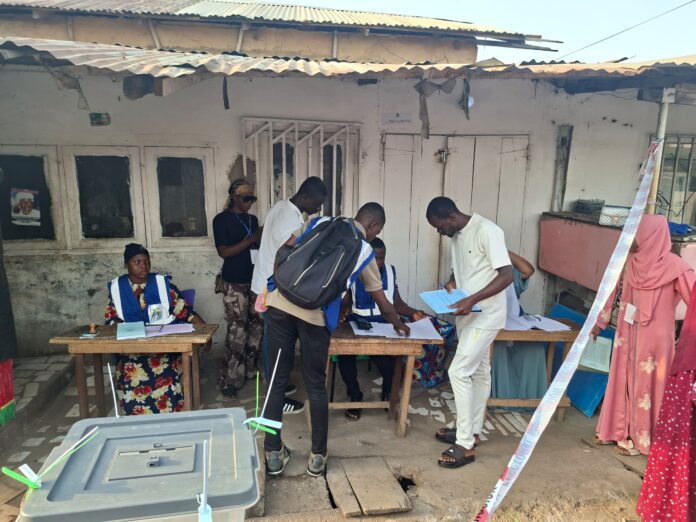
Polls have opened in the Ayawaso East Constituency for a parliamentary by-election, with voting commencing at 0700 hours under heavy police presence.
Voting is expected to close at 1700 hours, after which ballots will be counted at the various polling stations before final collation at a designated centre within the constituency, where the Electoral Commission (EC) will declare the winner.
The by-election follows the death of the sitting Member of Parliament, Mr Naser Toure Mahama, in January 2026, with 49,966 registered voters expected to cast their ballots.
Five candidates are contesting the seat: Mr Baba Jamal Mohammed Ahmed of the National Democratic Congress (NDC), Mr Baba Ali Yussif of the New Patriotic Party (NPP), Mr Ibrahim Iddrisu of the Liberal Party of Ghana (LPG), Mr Umar Sanda Mohammed, an Independent candidate, and Mr David Akonor, also an Independent candidate.
Security personnel were deployed early to polling stations across Nima, Maamobi, Accra New Town and adjoining communities to maintain law and order, with police officers stationed at strategic points and patrol teams moving within the electoral areas.
The Ghana Police Service earlier indicated that 80 officers would be deployed to each electoral area to provide security throughout the voting process.
The NDC is seeking to retain the seat it has held since the inception of the Fourth Republic in 1992.
In the 2024 general election, the late Mr Mahama secured more than 70 per cent of the valid votes cast, defeating his closest contender by a wide margin.
An opinion poll conducted by Global InfoAnalytics projected a lead for the NDC candidate, Mr Baba Jamal, estimating that he could secure about 75 per cent of the vote.
The poll placed the NPP candidate in second position, with the remaining candidates projected to attract marginal support.
Political analysts say the projection aligns with the constituency’s historical voting pattern, noting, however, that voter turnout could influence the final outcome.
Ayawaso East, within the Accra Metropolitan Area of the Greater Accra Region, is a densely populated urban constituency with a predominantly youthful electorate that has shaped its electoral trends over the years.
Economist calls for resources to push 24-hour economy implementation
Dr Daniel Anim-Prempeh, Chief Economist with the Public Initiative for Economic Development (PIED), has recommended that the Government provides the resources, security, and professional leadership for a successful rollout of the 24-hour economy initiative.
Dr Anim-Prempeh, also a legal practitioner, described the passage of a law to back the establishment of the 24-hour Economy and Accelerated Export Authority as “a progressive step,” calling for adequate funding to execute its objectives and activities.
He said without resources, the initiative, capable of transforming Ghana into a self-sufficient and export-led economy by promoting continuous productivity and job creation, risked remaining a political instrument rather than a transformative economic framework.
Delivering the message on the State of the Nation, last Friday, President John Dramani Mahama announced GHS110 million for the implementation of the 24-hour economy, describing the programme as “the boldest economic transformation initiative in Ghana’s recent history.”
“We have moved decisively from planning to action on our flagship 24-Hour Economy and Accelerated Export Development Programme… All is now set for take-off,” the President said.
In an exclusive interview with the Ghana News Agency, on Monday, Dr Anim-Prempeh said; “If implemented with adequate resources, strong security, and professional oversight, the 24-hour economy could reshape Ghana’s economic landscape.”
“It is important that the Authority is well-resourced. They should be able to go out and look for funding to be able to execute most of the activities that they have outlined.”
He recommended expansion of recruitment into various security services with both human and technical logistics strengthened to safeguard businesses operating round-the-clock, in addition to functional streetlights and effective road networks.
Dr Anim-Prempeh advised the government against the failure to provide the incentives promised private sector participants to encourage them to adopt continuous operations, increase production, and create more job opportunities.
The incentives include no taxes on importing of machinery for manufacturing, solar and renewable energy inputs, raw materials (if not available locally), vehicles and logistics equipment, as well as a corporate income tax exemption for farming in strategic value chains.
The Economist said it was important for the government to leverage diplomacy to create markets within the sub-region, boosting demand for Ghanaian products without putting pressure on the Cedi.
He cautioned against politicising appointments within the authority, saying: “The people that ought to be appointed must be technical and professional people, not just mere political affiliates and actors.”
Accountability and transparency were critical to driving confidence in the initiative, he said, urging the government not to compromise on dealing with persons found culpable of taking undue advantage of the system.
Ghana aims to restore food sovereignty, stabilise food prices, reduce import dependence, create decent jobs, especially for the youth, and reposition agriculture as a strategic growth sector under the 24-hour economy initiative.
Already, the Tema Port has started operating 24/7, enabling importers to clear goods at any time, easing congestion, bringing together customs, banking, and other relevant agencies to enhance efficiency and boost trade.
The Driver and Vehicle Licensing Authority (DVLA) has also opened a new office at Adenta Bus Terminal, providing round-the-clock services and improving accessibility and convenience to motorists.
While the Passport Head Office has cleared a backlog of over 40,000 passport applications, the Ministry of Local Government, Chieftaincy and Religious Affairs has finalised the designs for construction of 24-hour modern markets across the country.
Govt’t announces expiration of DDEP-induced restrictions on domestic bond issuance
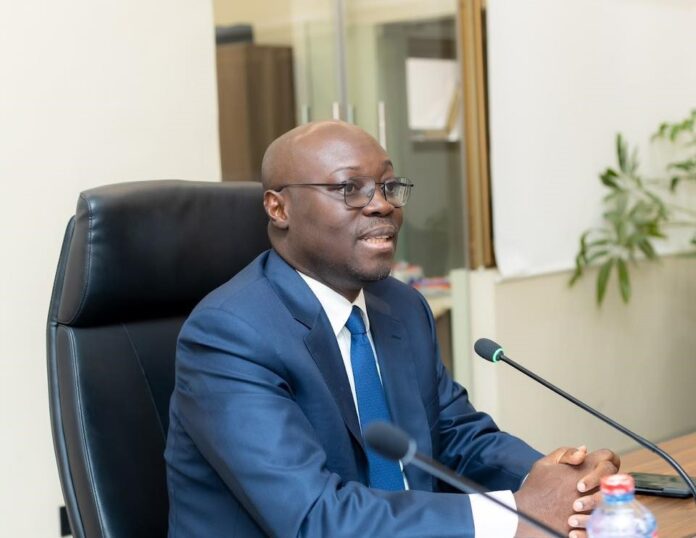
The Ministry of Finance has announced the expiration of the restrictions on new domestic bond issuance.
The three-year restriction was imposed in 2023 to prevent the Government from issuing new bonds following the debt default that preceded the Domestic Debt Exchange Programme (DDEP).
A statement issued in Accra on Monday said the expiration of the restrictions paved the way for the government to drastically reduce its dependence on Treasury Bills to finance its budget and allow for the issuance of new longer-dated domestic bonds.
It came at a time when inflation was low, investor confidence had improved, and the macroeconomic environment was strong, the statement said.
“This is supported by a robust medium-term debt management strategy and significant buffers.”
Since 2025, the Government has honoured every coupon payment and obligation under the restructured bonds, demonstrating its credibility, fiscal discipline, and commitment to responsible debt management.
The statement expressed President John Dramani Mahama’s administration’s gratitude to the Ghanaian people for their forbearance and cooperation during the difficult period.
Research gap hindering horticulture growth – Stakeholders
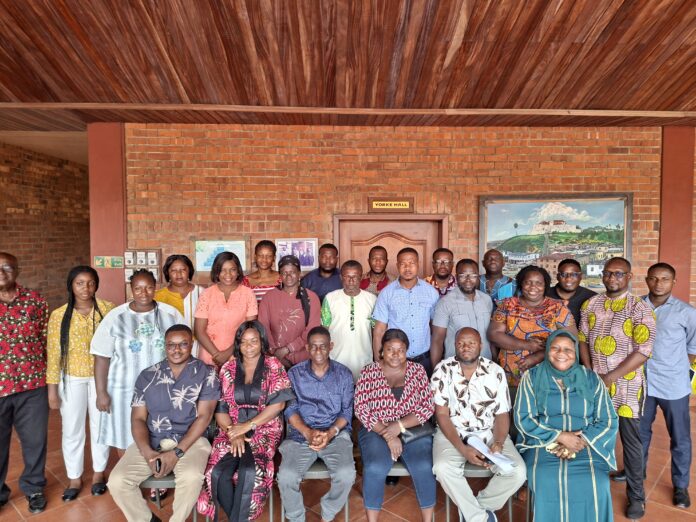
Stakeholders in Ghana’s horticulture value chain have renewed calls for the establishment of a dedicated Horticulture Research Institute to drive growth, jobs and exports.
They described the proposed institute as a critical missing link required to unlock employment opportunities, boost exports and stimulate agro-industrial development.
The call was made at a stakeholders’ meeting in Accra convened by the General Agricultural Workers’ Union, where a position paper on investing in agriculture, particularly horticulture, was presented to policy actors and development partners.
Participants noted that although horticulture provided a practical pathway for advancing youth employment, women’s economic participation, agro-processing and regional trade, the sector continued to underperform due to inadequate research and innovation structures tailored to its specific needs.
Dr Paschal Ajongba Kaba, who delivered the presentation, said Ghana lacked a dedicated horticulture research institute despite the sector’s short production cycle, high value per hectare and growing export demand.
“We don’t have an agricultural research institute dedicated to horticulture. We have a unit in the Crop Research Institute, and that makes it difficult to appreciate and prioritise the relevance of the sector,” he said.
Dr Kaba explained that Ghana’s agricultural research architecture had historically evolved by carving out specialised institutes from broader structures when certain commodities assumed strategic importance.
He cited the Savannah Agricultural Research Institute and the Oil Palm Research Institute as examples of bodies that were previously part of the Crop Research Institute but later became autonomous institutions to deepen research and development in their respective value chains.
Dr Kaba said a similar approach was required for horticulture, particularly as the country sought to expand non-traditional exports and strengthen domestic food safety standards.
He said proposals to establish a horticulture research institute had existed since 2016 but stalled following a change in government.
“When a change in government came, the whole process stopped. Yet, as early as then, the need had been identified,” he stated.
Dr Kaba said enhanced research capacity would improve yields, address pest and disease challenges, strengthen planting materials, expand irrigation-driven cultivation and promote value addition to reduce post-harvest losses and improve competitiveness under the African Continental Free Trade Area (AfCFTA).
CMC proposes local processing drive to stabilise cocoa sector

The Cocoa Marketing Company (CMC) Ghana Limited has proposed a set of measures, including increased local processing and strengthened forward sales strategies, to stabilise Ghana’s cocoa sector.
Some key proposals, contained in a policy brief written by Dr. Wisdom Kofi Dogbey, Managing Director of CMC, include accelerating local processing of cocoa beans to achieve at least 50 per cent value addition, allocating more beans to domestic processors, maximising forward sales to lock in favourable prices, and leveraging existing processing capacity without major new capital investment.
The brief, shared with the Ghana News Agency, comes at a time the cocoa sector is grappling with global market volatility.
After reaching historic highs in 2024 due to supply shortfalls in West Africa, international cocoa prices have corrected sharply.
The downturn has affected revenue projections and compelled authorities to review producer payments for the remainder of the 2025/2026 crop season.
The producer price of cocoa has been reduced to GH¢2,100 per 64-kilogramme bag for the remainder of the season, down from the previous rate of GH¢3,625 announced at the start of the crop year.
The Government has announced local processing of 50 per cent of cocoa beans as part of broader reforms to transform the sector through value addition.
In the policy brief, Dr. Dogbey said the CMC had already taken steps to cushion the impact of the global price slump through proactive sales strategies.
“For the current crop season, CMC had already contracted approximately 90 percent of projected volumes during the period of historically high cocoa prices, before the recent correction in global markets,” he stated.
He explained that the early contracting strategy had provided “a significant buffer against the subsequent decline in prices and softer demand conditions.”
Dr Dogbey emphasised that Ghana’s cocoa pricing mechanism was based on the weighted average of total seasonal sales rather than spot prices at a particular time.
“As a result, the significant proportion of sales concluded at higher levels means that the final gross FOB outcome for the season remains commercially sound,” he said.
Beyond immediate price management, the document outlines “Project Elevate” as a strategic response to strengthen the sector’s resilience and reduce overreliance on raw bean exports.
“It is designed to move the country beyond predominantly exporting raw cocoa beans and toward capturing greater value through increased local processing,” Dr. Dogbey wrote.
Under the initiative, more cocoa beans would be allocated to domestic processors for conversion into semi-finished products such as cocoa liquor and cocoa butter, which generate higher value per tonne compared to raw exports.
The brief identified the Cocoa Processing Company (CPC) and the West African Mills Company (WAMCO) as strategic partners.
Both firms, in which Government holds equity stakes, were currently operating below installed capacity, it added.
“Processing volumes can be increased immediately using existing infrastructure without the need for significant new capital investment,” he oted, adding that private processing companies would also play “significant roles” in operationalising the policy.
The CMC, the commercial arm of Ghana Cocoa Board, is responsible for marketing and selling the cocoa beans on the international market.
Its performance determines export earnings and directly influences farmer payments.
The policy brief maintained that combining prudent forward sales management with accelerated local value addition offerred practical pathway to stabilise revenues, protect farmer incomes and reposition Ghana competitively within the global cocoa value chain.
Finance Minister’s transit cargo ban could affect trade flows – GIFF
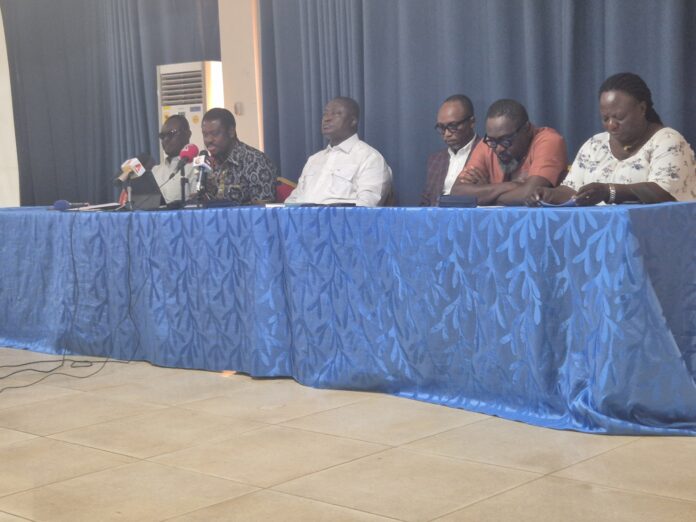
The Ghana Institute of Freight Forwarders (GIFF) has cautioned that the directive by Dr Cassiel Ato Forson, the Minister of Finance, restricting the transit of commercial quantities of cooking oil through Ghana’s land borders, could have implications for the country’s transit trade.
The directive followed the alleged diversion of trucks carrying cooking oil under transit arrangements, linked to Bill of Entry (BOE) 80226125039.
Mr Paul K. Mensah, the General Secretary of GIFF, addressing the media at Tema, called on the Minister to undertake an urgent, evidence-based review of the policy actions that followed the enforcement episode.
He stressed that the Institute’s intervention did not seek to excuse illegality but rather to ensure policy balance that protected government revenue, while safeguarding Ghana’s strategic position as the preferred transit gateway to the Sahel region.
“Transit trade is highly sensitive to policy signals. If restrictions are perceived to be broad or prolonged, Sahel-bound cargo may progressively divert,” Mr Mensah said.
He noted that cargo owners in Niger, Burkina Faso and Mali, maintained alternative coastal corridor options and could quickly adjust routes in response to perceived regulatory friction.
GIFF warned that hardened restrictions could lead to underutilisation of Ghana’s transit infrastructure and a potential softening of customs volumes over the medium term.
“In the West African transit ecosystem, corridor policies often attract reciprocal treatment. If Ghana is perceived as tightening transit access broadly, neighbouring jurisdictions may introduce mirror administrative frictions and recalibrate corridor preferences,” he explained.
The Institute emphasised that Ghana’s leadership role under the African Continental Free Trade Area (AfCFTA) framework, must be preserved through enforcement mechanisms that remain visibly facilitative.
GIFF therefore recommended a focused reform package built on risk-tiered escort protocols, real-time reconciliation dashboards within the Integrated Customs Management System (ICUMS), strengthened transit bond reviews, and the establishment of a joint Customs–Ghana Link anomaly review cell.
It also proposed sanctions targeted strictly at proven offenders rather than broad commodity-level restrictions.
The institute argued that broad restrictions, if not carefully calibrated, could unintentionally penalise compliant operators and introduce regulatory uncertainty into the transit regime.
Mr Mensah indicated that systemic gaps, including escort policy consistency, transit bond adequacy, route dwell monitoring, and post-clearance reconciliation, should be addressed through targeted, intelligence-driven controls rather than blanket commodity suppression.
GIFF further urged the minister to commission an independent technical reconciliation of the BOE incident, review the proportionality of current measures, convene structured stakeholder engagements, and reaffirm Ghana’s commitment to freedom of transit under strengthened compliance protocols.
“GIFF reiterates its full support for the government’s revenue protection mandate. Our position is straightforward: enforcement credibility and trade facilitation must move in tandem,” he stated.
The institute maintained that balanced, evidence-led reforms would protect revenue while sustaining Ghana’s competitiveness as a transit hub for landlocked countries in the sub-region.
GOC Backs Ghana Sports Fund as Game-Changer for Sports Development
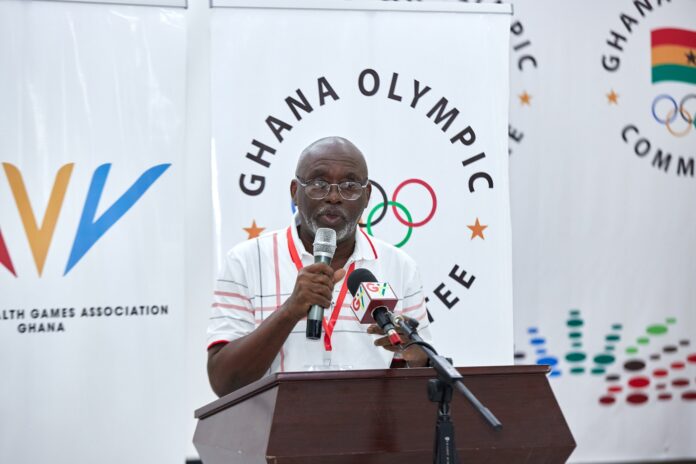
The Ghana Olympic Committee (GOC) has warmly welcomed the passage of the Sports Fund Bill, describing it as a landmark intervention that will help resolve the persistent funding constraints facing sports in the country.
The Committee believes the establishment of the Fund marks a defining moment that would reposition Ghana’s sports sector into a path of stability, growth, and sustained international competitiveness.
Mr Richard Akpokavie, President of the GOC, told GNA Sports the initiative represents a bold and forward-looking decision that would transform the way sports is financed in the country.
He stressed that consistent and dedicated funding had long been the missing link in Ghana’s quest for sporting excellence.
“Just as the Value Added Tax has become a reliable pillar for funding critical national interventions, the Sports Fund will serve as a dedicated and dependable stream of support for the development of sports in Ghana,” he stated.
He added that “this is not just about funding competitions; it is about building systems, investing in talent, and creating opportunities for future generations.”
According to the GOC President, chronic underfunding has over the years stifled progress across several sporting disciplines, affecting athlete preparation, infrastructure development, technical training, and grassroots programmes.
He noted that with the establishment of the Fund, federations would now be better positioned to plan strategically, implement long-term development programmes, and provide improved welfare for athletes.
The Committee emphasised that National Federations stand to benefit significantly from the Fund, as it will strengthen their operational capacity and enhance their ability to prepare athletes for major continental and global events.
The GOC believes this renewed financial backing will ultimately translate into improved performances for Ghana on the international stage.
The GOC also commended the Minister for Sports and Recreation, Hon. Kofi Iddie, for his leadership and commitment in ensuring the successful passage of the Bill.
The Committee acknowledged the Minister’s collaborative approach and determination in seeing the initiative through to fruition, describing his efforts as instrumental in delivering this important milestone for Ghana sports.
“This achievement demonstrates what can be accomplished when there is vision, partnership, and decisive leadership,” the GOC added, expressing optimism that the Sports Fund will usher in a new era of accountability, transparency, and excellence within the sporting ecosystem.