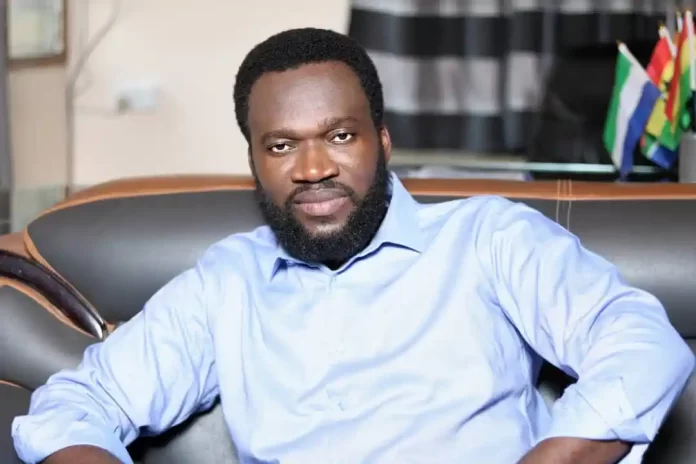
The National Democratic Congress (NDC) in the Volta Region has appointed Dr. Donald Agumenu as Director of Special Duties ahead of this year’s General Election.
Mr. James Gunu, Volta Regional Secretary of NDC said Dr. Agumenu’s nomination and subsequent approval was considered at the Functional Executive Committee meeting held on 25th February 2024.
“It is a great pleasure to inform you Dr. Donald Cog Senanu Agumenu about your appointment as the Director of Special Duties for the National Democratic Congress, Regional Secretariat,” the letter stated.
The Regional Secretary said the Party was expecting the former Special Aide to late President Jerry John Rawlings to “use your rich experience to help strengthen the Directorate for the Party to win the 2024 General Election.”
Dr. Agumenu said he viewed the appointment as one that carried a special burden of helping to achieve the “Ghana We Want for socio-economic development and meaningful livelihoods for our people”.
Ghana goes to the polls later this year to elect parliamentarians and a new president for the next four years.
The electoral dynamics demand all political parties to maintain a good showing nationwide, especially in their traditional strongholds, Volta for the NDC, and Ashanti for the governing New Patriotic Party (NPP).
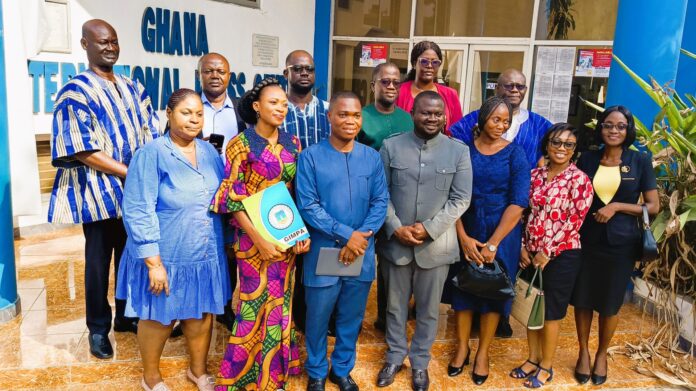
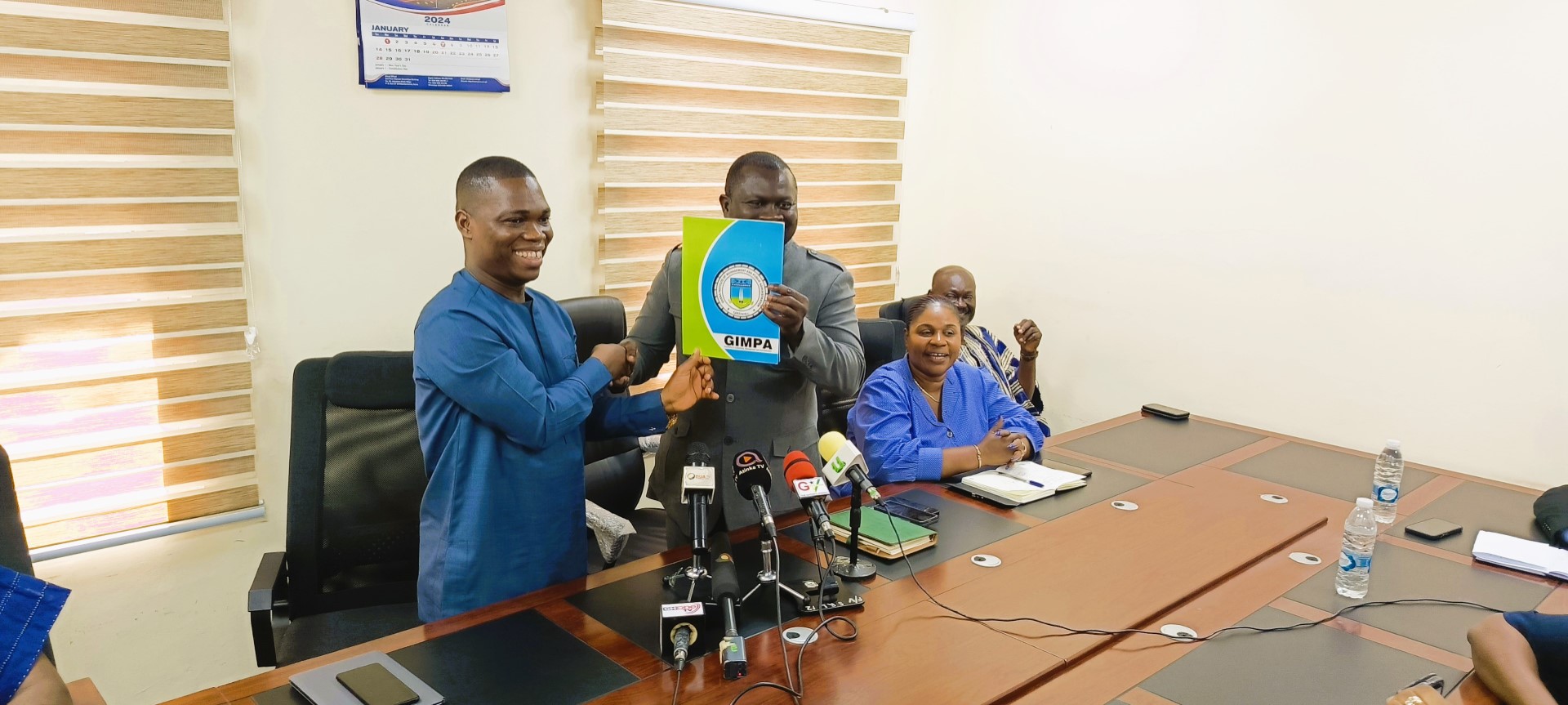
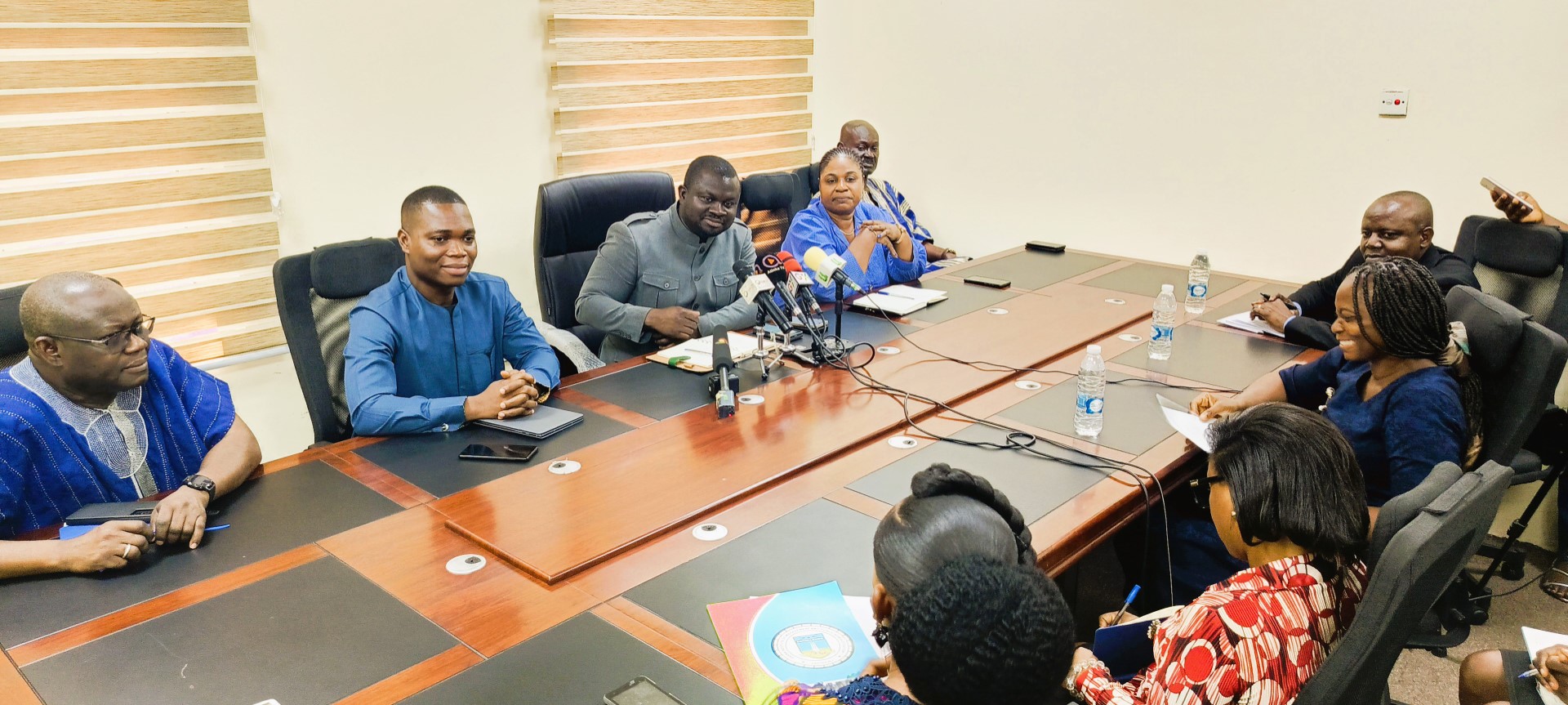
Some staff and alumni of the Ghana Institute of Management and Public Administration (GIMPA) Business School on Tuesday paid a courtesy call on the President of the Ghana Journalists Association (GJA).
The GIMPA Business School team visited the GJA President, Mr Albert Kwabena Dwumfour, an alumnus, to honour him for his exploits and officially admit him into the GIMPA Business School Alumni Network (GiBSAN).
Set to be launched 1700 hours on Thursday March 14, at the GIMPA GB Auditorium, GiBSAN is an initiative to mobilise students and alumni of the GIMPA Business School to carry on the torch of effective leadership and excellence.
Professor Ebenezer Adaku, Acting Dean, GIMPA Business School, said the School’s vision was to develop strong leaders to shape the future of Ghana and the globe.
“If we do not take the right steps to train the leaders of tomorrow, our businesses, our society cannot be safe. Everything rises and falls on leadership,” he noted.
To achieve that, he said the alumni had an indispensable role to play, resulting in the need to bring the GJA President on board and to tap his rich experience.
He said GiBSAN would enable some of the alumni to teach and to mentor the students.
The network would offer career transition programmes to help members ascend in their chosen professions, as well as to track the impact of past students over time.
He said GiBSAN would also have scholarship scheme to support students.
He assured the GJA President of GiBSAN’s full support in all his endeavours.
Mr Dwumfour expressed gratitude to GIMPA Business School for the honour, saying that he owed much to GIMPA.
“Thank you profusely for the honour done me. We have come this far by His grace and through the tutorials, guidance and teachings we got from the Centre of Excellence,” he said.
He said being part of the network would be an opportunity for him to give back what he got from the School.
He commended the team for birthing the network idea, adding that, with strong mobilisation, GiBSAN could become a vibrant network within the Institute and beyond.
Mr Dwumfour assured the GIMPA team that they could always count on the media to achieve the desired success.
He reiterated the need for the rights of journalists to be protected always so that they could continue to work without hindrance.
Professor Amin Alhassan, Director-General, Ghana Broadcasting Corporation, commended the GIMPA Business School’s effort to moblise the past students.
He urged GiBSAN to reignite the leadership and entrepreneurial spirit that GIMPA had always been known for.
Mr Gabriel Asante Bosompem, Member of the National Media Commission, said the formation of GiBSAN was a noble cause as it would “get students close to experience”.
He said the leadership abilities of the GJA President would help drive the network to greater heights.
Ghana and South Africa’s Heads of State have called for immediate ceasefire to halt the ongoing carnage in the Palestine region due to the Israel-Hamas war.
The two Presidents – Nana Addo Dankwa Akufo-Addo and Cyril Ramaphosa – are also advocating the opening of space for medical supplies and related humanitarian assistance for the needy and the destitute.
This was contained in a joint communiqué issued by the Heads of State on the occasion of the second session of the South Africa-Ghana Bi-National Commission (BNC), in Pretoria, South Africa.
Israel’s ongoing offensive attack against Hamas has killed over 30, 000 people, two-thirds of them women and children, according to the Gaza Health Ministry.
The war was triggered by Hamas’ October 07 attack on southern Israel that killed about 1,200 and led to 250 others being taken hostage.
The United Nations High Commission for Human Rights on the situation in Gaza and in the Israeli-occupied West Bank, says “the entrenched impunity that the UN rights agency has reported on for many years cannot persist”.
It urges the feuding factions to implement a ceasefire on human rights and humanitarian grounds to ensure full respect for international law, and to ensure accountability for violations and abuses.
In the joint communiqué, the two Heads of State further renewed their call for a responsive international system of governance through a reformed UN Security Council, respect for and promotion of universal human rights in a just and equitable world.
Additionally, they have agreed to intensify support for the cause of Western Sahara for self-determination, freedom and justice.
On continental issues, the Heads of State took note of the ongoing peace and security challenges in some parts of the continent, and underscored the need to redouble efforts to realise the African Union (AU) Agenda 2063 aspiration to “Silence the Guns”.
They also underscored the need for a common approach in the operationalisation of the decisions of the AU related to the implementation of Agenda 2063 in general and the African Continental Free Trade Area Agreement to bolster intra-Africa trade, in particular.
In this regard, the Heads of State expressed satisfaction that the South Africa-Ghana Business Forum, which was held on the margins of the BNC, placed the two countries at the cusp of increased bilateral trade and enhanced contribution to intra-Africa trade as envisaged by the AfCFTA Agreement.
The communiqué welcomed the first shipment of South African exports to Ghana in January 2024 in a ceremony which was witnessed by President Ramaphosa.
The two Heads of State expressed appreciation regarding the broadening and sustained entrenchment of bilateral cooperation in a wide range of sectors, and renewed their commitment to work closely to further enhance strategic cooperation and partnership for mutual benefit.
In this context, the Heads of State noted with satisfaction that 46 decisions were taken during the BNC, and directed the respective Ministers to ensure full implementation of the decisions.
The communiqué reaffirmed the importance of continued nurturing of the existing historic relations and bonds of friendship between the two countries and people.
The relations are based on mutual partnership and solidarity dating back to the struggle against apartheid and colonialism.
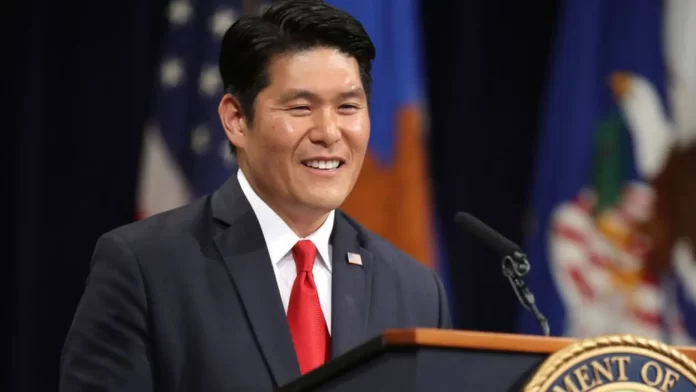
He faced heavy fire from both sides of the aisle during congressional testimony about his inquiry on Tuesday.
Republicans demanded to know why Mr Hur, 51, had decided not to prosecute the president.
Democrats attacked Mr Hur’s remarks in his explosive report on Mr Biden’s mental acuity.
During a tumultuous stint as a top aide to the deputy US attorney general under former President Donald Trump, Mr Hur was known for his unflappable demeanor.
In an interview with the New York Times, Mr Rosenstein said the department had found itself under a partisan microscope during that tenure.
Mr Rosenstein said he was at risk of being fired by Mr. Trump because of his choice to appoint special counsel Robert Mueller to investigate Mr Trump’s alleged ties to Russia.
“We were coming under tremendous criticism from the commentators – and the president – and Rob kept his head down, pushed ahead, and never lost his sense of humor,” Mr Rosenstein said of Mr Hur.
Over more than a decade as a federal prosecutor, Mr Hur has worked on cases involving national security, violent crime, and public corruption.
He clerked for the late William Rehnquist, a conservative chief justice of the US Supreme Court who was originally appointed by Richard Nixon.
Mr Hur was an aide at the Justice Department to Christopher Wray before Mr Wray was appointed in 2017 to head the FBI.
The son of Korean immigrants, Mr Hur graduated from Harvard College and Stanford Law School.
He met his future wife, then-law student Cara Brewer, in 2002 on the Washington DC subway as she pored over some legal notes, and invited her out for dinner on the spot. They wed two years later.
Mr Hur was appointed in 2017 by President Trump as the chief federal law enforcement officer in Maryland.
In that role, he handled several high-profile cases, including tax evasion charges against former Baltimore Mayor Catherine Pugh, a Democrat.
Mr Hur departed from that position when Mr Trump left office in 2021.
Despite his work in the Republican administration, Mr Hur drew praise at the time from Democrats.
As he left the federal government three years ago, Maryland’s two senators, Chris Van Hollen and Ben Cardin praised Mr Hur’s “excellent service” in having “faithfully followed the facts and the law”.
Yet Mr Hur has found himself in a political maelstrom since he released a 345-page report in February that alleged Mr Biden had “wilfully retained and disclosed classified materials”, but should not face criminal charges.
Investigators interviewed 147 witnesses, including Mr. Biden himself, whom Mr. Hur said seemed to be a “sympathetic, well-meaning, elderly man with a poor memory”.
Mr Hur has maintained his composure as he faces potshots from left and right. But his unruffled approach will be no surprise to at least one colleague.
Mr Hur has most recently been in private practice as a partner at the Washington DC office of Gibson, Dunn & Crutcher.
Thomas Dupree, who worked alongside Mr. Hur at the law firm, described him as “a very talented lawyer, a man of excellent judgment and a man of the highest integrity”.
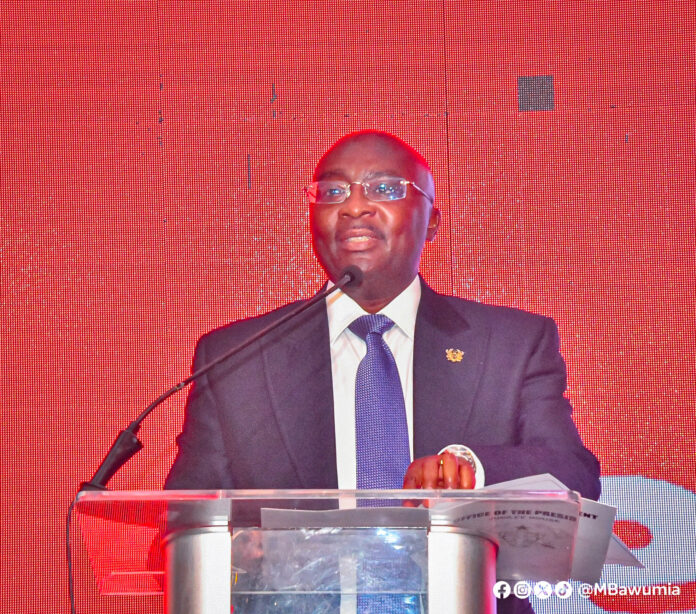
Vice President Mahamudu Bawumia has called on Telecommunication companies operating in the country to move beyond seeking to expand the physical infrastructure of their operations to investing in the human and other resources that are at the heart of their offerings to the Ghanaian and African markets.
Speaking at the launch of operations for Telecel Ghana, new majority shareholders in the company formerly known as Vodafone Ghana, on Monday, March 11, 2024, Dr Bawumia reminded telcos, fintechs, and stakeholders in the technology ecosystem that one of the surest ways of ensuring lasting success is investing in the youth, who are the future of any endeavor.
“Let me challenge you to look beyond physical infrastructure. Your corporate social responsibility must include a deliberate investment and development of the digital capabilities and capacities of young Ghanaians across the country at all levels. As we celebrate this momentous occasion, remember that you also have a role in shaping the future of our nation,” he reminded them.
Dr. Bawumia reminded the leadership of Telecel that innovation is the heartbeat of success in the telecom and indeed the business environment, and challenged them to make a difference in the Ghanaian telecom market with offerings that would make their brand attractive.
“In the ever-evolving landscape of technology, innovation is key to staying ahead. Your customers require an accessible, safe, affordable, and reliable network always. I am happy about Telecel’s commitment to expanding its network and bringing more innovation into this space. In that regard, you have the government’s firm support.
He continued: “I am also delighted to see the emphasis placed on inclusivity and accessibility in your services. In Ghana, like in many parts of the world, there are still underserved communities with limited access to telecommunications infrastructure. By expanding your reach and investing in infrastructure development, you are not only expanding access to communication but also creating opportunities for economic growth and social empowerment for the underprivileged.
Extolling the virtues of the introduction and growing use of Mobile Money, Vice President Bawumia urged the management of Telecel to explore the many opportunities available for deepening financial inclusion, saying although much had been done, there was more to do.
The value of mobile money transactions as of December 2016 was GH¢78.5billion. However, since the introduction of Mobile Money Interoperability between different networks and bank accounts, there has been a very rapid expansion in the volume of transactions. In 2023, mobile money transactions hit a record GHC199.3 trillion, which represents a 64.3% increase from the previous year. This has made Ghana the number one country in Africa for financial inclusion because we have achieved 100% availability and inclusion for every Ghanaian.
“The opportunities that the Mobile Money platform, backed by the introduction of Mobile Money Interoperability, has created are enormous. I commend your company for the role it has played in the past, but most importantly, I urge you to strive to do more as mobile money is one of the surest ways to promote financial inclusivity.”
Welcoming the Telecel Group to Ghana with a hearty “Akwaaba”, Dr. Bawumia urged them to be worthy partners for national development.
“I applaud your commitment to corporate social responsibility through the Telecel Foundation and Africa Start-Up Initiative Programme (ASIP). Your initiatives to support education, healthcare, and support for start-ups reflect your dedication to making a meaningful impact beyond business success. This aligns perfectly with our government’s vision of building a more equitable and prosperous society for all Ghanaians.
“As key players in the telecommunications industry, I urge you to uphold the highest standards of ethics, transparency, and corporate governance in all your endeavors. I do not doubt that this brand will not only thrive but also contribute significantly to the advancement of our nation’s telecommunications sector.”
Telecel Group
The Telecel Group acquired Vodafone International’s 70% stake in Ghana Telecom in February 2023, with the Government of Ghana retaining its 30% stake. The two organizations have since been working to synergize their operations, with changes in leadership and operations. Patricia Obo-Nai, the first Ghanaian CEO of Vodafone Ghana, has been tapped as the first CEO of Telecel Ghana.
Operating in over 27 countries, with over six million active subscribers, Telecel aims to digitally empower Africa through technology, connecting remote areas for inclusivity, and focusing on education as a catalyst for growth and accessibility, according to its Board.
Speaking at the launch, the Chairman and Co-founder of the Telecel Group, Mr. Nicolas Bourg, said the company intends to focus on “positive disruption and innovation in the Ghanaian telecoms market,” adding “We chose to invest in Ghana because of the manifest potential of the youth and people of Ghana.”
MTN Group and Huawei have signed a Memorandum of Understanding (MoU) for a Joint Innovation Technology Lab aimed to deepen cooperation in technological innovation.
The strategic partnership will see the creation of an Innovation Technology Lab at MTN Group’s headquarters in South Africa.
A statement issued in Accra said the signing ceremony, which was held at MWC Barcelona, Spain was attended by senior delegations from MTN and Huawei.
The lab will serve as a neutral platform for collaboration within Africa’s digital ecosystem, accelerating the development, deployment, and adoption of innovative digital solutions driven across the continent.
It said together, the two companies would leverage this initiative to focus their research and development efforts on key areas such as 5G and beyond, Artificial Intelligence, Big Data analytics, cloud computing, and digital financial services.
The partnership aims to accelerate the time-to-market of MTN’s products and services while addressing the unique challenges faced in Africa, including improving network coverage in rural areas and enhancing energy efficiency, and affordability.
The statement said additionally, MTN’s operational teams would actively participate in the innovation process, ensuring the solutions developed directly address real-world challenges and drive meaningful digital transformation and sustainable development in Africa.
Mr Mazen Mroué, Group Chief Technology and Information Officer, MTN said, “The Joint Innovation Technology Lab is more than a partnership between two companies; it’s an investment in the growth of Africa’s digital ecosystem.”
He said the collaboration was essential for developing solutions that truly meet the continent’s needs, and the Lab would pave the way for a more inclusive, sustainable, and prosperous future for Africa.
Mr Li Peng, Huawei’s Corporate Senior Vice President and President of ICT Sales & Services, said, “Huawei will continue innovating with MTN to ensure they have the products and solutions required to best serve Africa’s unique market.”
He said they would not only give MTN a competitive edge in terms of network quality, user experience, and rapid deployment but also help MTN achieve its business objectives.
“We believe that this newly established lab will help supercharge both MTN’s Research and Development as well as Africa’s digital economy, bringing more prosperity to the African continent,” he added.
He said the partnership further demonstrated MTN and Huawei’s shared commitment to shaping Africa’s digital landscape, opening new pathways for innovation digital inclusion, and economic growth.
MWC Barcelona 2024 was held from February 26 to February 29, 2024, in Barcelona, Spain.
During the event, Huawei showcased its latest products and solutions at stand 1H50 in Fira Gran Via Hall 1.
With the 2024 commercial launch of 5.5G, Huawei is collaborating with operators and partners around the world to pursue exciting innovations in networks, cloud, and intelligence.
Together, we will drive 5G business and foster a thriving industry ecosystem, creating a new era for intelligent digital transformation.
Mr Alexander Kwamena Afenyo-Markin, the Majority Leader in Parliament, has called on citizens to desist from politics of insults and engage in positive debates to ensure peace in the lead-up to Election 2024. He said citizens should pay attention to the promises and policies proposed by the various political parties and make decisions in the best interest of the development of the country. “It is not about the insults; it is not about the name calling and it is not about the extremist views. It is about the future of our country,” he noted.
Mr Afenyo-Markin, who is also the Member of Parliament (MP) for Effutu in the Central Region, made the call at the 84th Anniversary and Speech and Prize Giving Day of the Aggrey Memorial A.M.E Zion Senior High School. The anniversary, sponsored by the 1999-year group of the Aggrey Memorial Old Students Association (AMOSA ‘99) was on the theme: “Developing Character for a New Ghana: The Responsibility of all Stakeholders in Education.”
Mr Afenyo-Markin cautioned Ghanaians not to be misled by the heated squabbles they sometimes witnessed on the floor of Parliament, indicating that about 99 per cent of the issues were agreed upon by consensus.
“MPs don’t fight in Parliament,” he stressed. The Majority Leader rallied all stakeholders, including teachers, parents and policymakers, to nurture and support the youth as they grew into the future leaders of the country. “As we look towards developing a new Ghana, let’s remember that the strength of our nation lies not just in the wealth of our resources but also in the character of our people,” he said. “In the Ghana that we desire, we aim to thrive not just economically, but become a beacon of integrity, resilience and unity and the role of education is very paramount.”
Narrating how he stood resilient in his political life experiences; the MP urged the students never to give up if they were to succeed in life, saying, the lessons learnt both inside and outside of the classroom would shape the future of the nation. Mr Afenyo-Markin encouraged parents to make time and pay close attention to their children’s development and life challenges including depression.
Rev. Dr Emmanuel Donkoh, the Rector of the Christian Leadership University and leader of the Abundant Life Bible Church urged citizens to prioritise honesty and integrity in their personal lives for development. “As we look towards the future of our nation, let us affirm our recommitment to upholding the virtues of integrity, honesty, forgiveness, perseverance and humility and impart these virtues to the next generation,” he said.
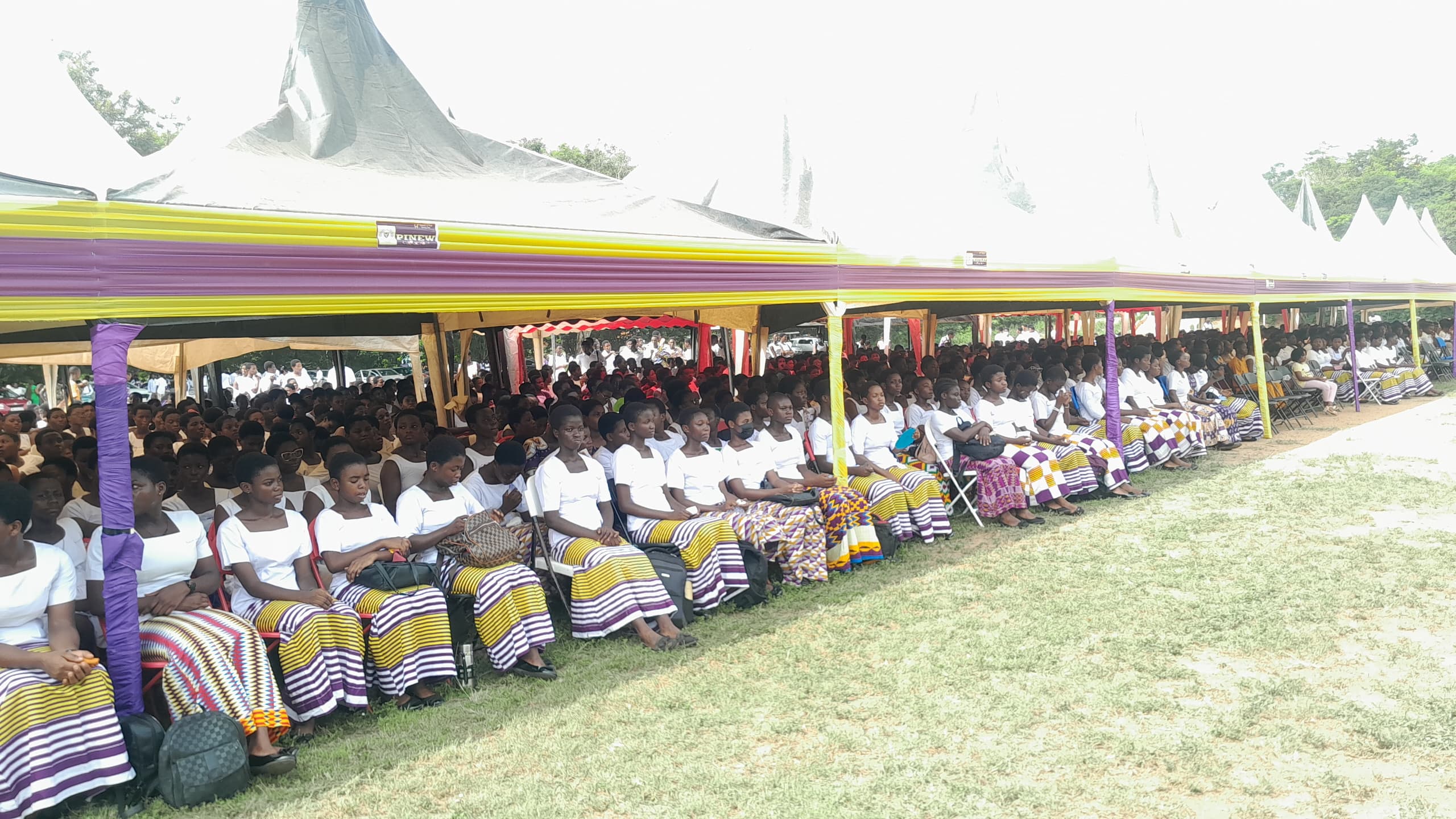
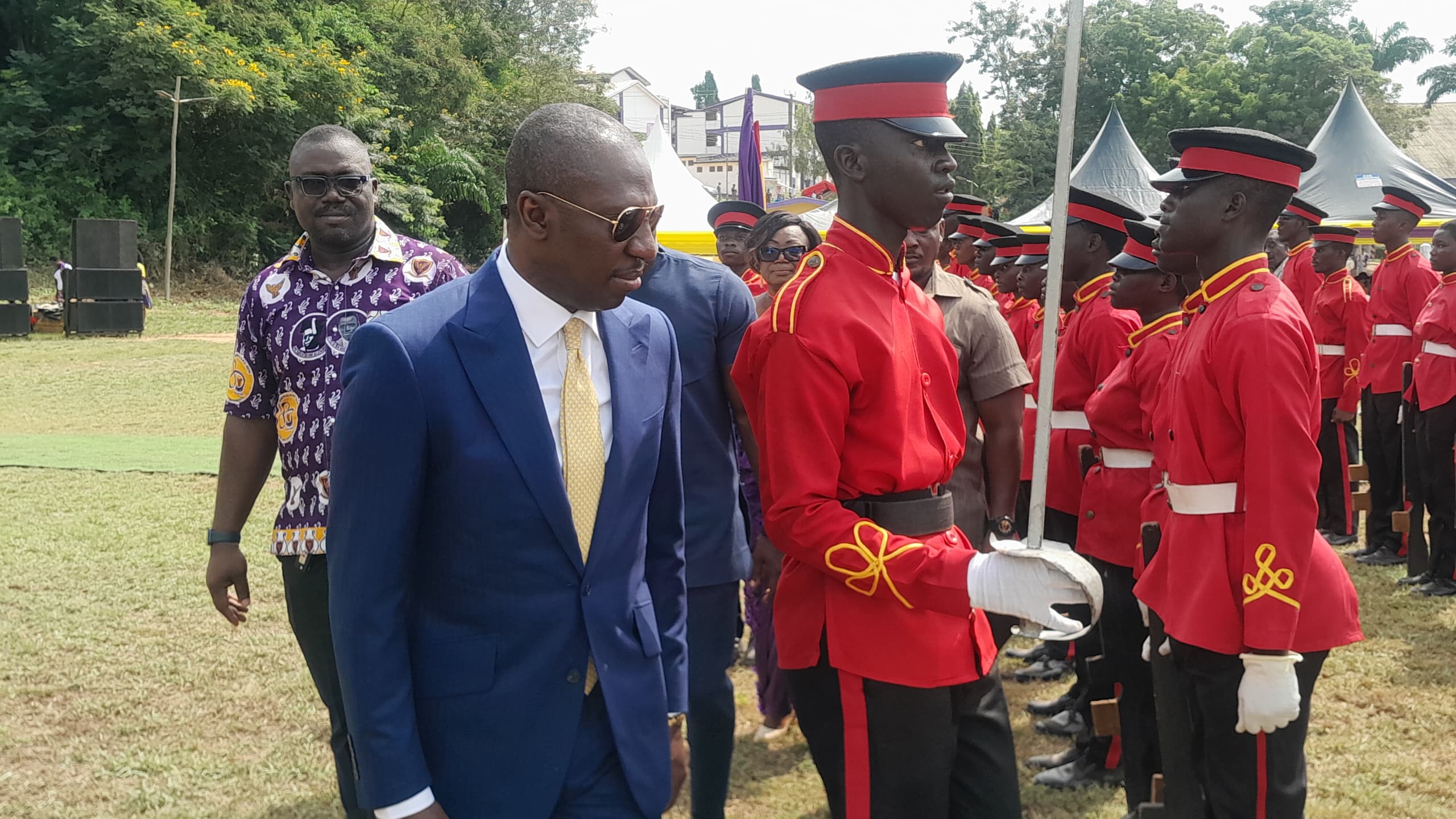
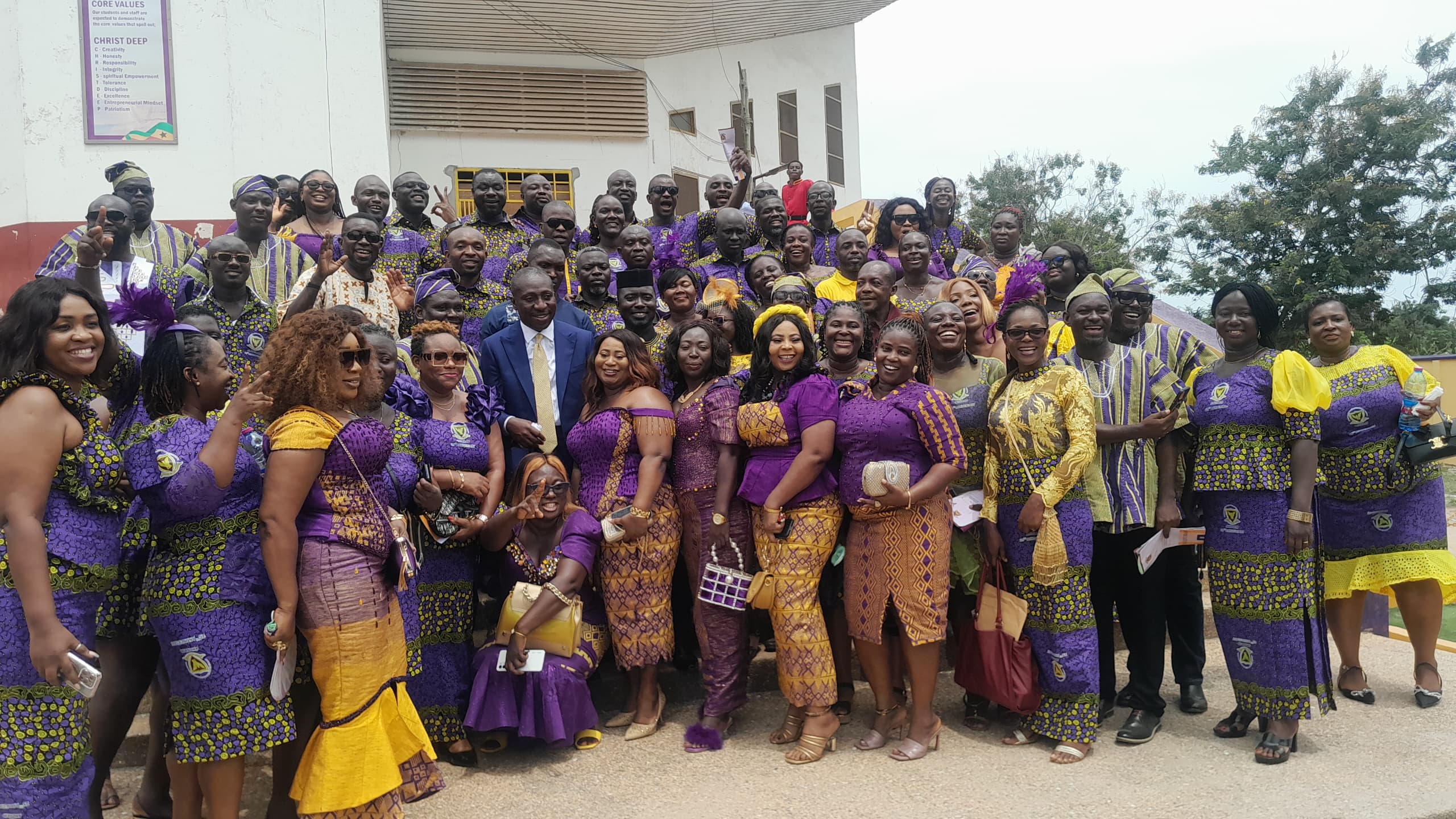
The highly patronised ceremony was spiced up with cultural displays and fascinating drills by the school’s cadet. The event also saw Madam Kate Annan-Wilberforce, the Headmistress, handing over the headship to Madam Dorothy Adentwi Hayford as the new head of the school. The outgoing Headmistress touted the achievements within her four-year tenure against all the odds. She said the school had financial and other challenges including dilapidated structures when she took over, but with the support of her management team, teachers, old students and other stakeholders, she was able to institute measures to turn its fortunes around. She created a synergy with her management team to change the atmosphere of the school to a more disciplined academic one.
Again, with support from some old students, the school was able to acquire 27 projectors and rewiring of the various classroom blocks to enhance academic work. Madam Annan-Wilberforce said the school was working to add entrepreneurship as part of its subjects and touted the good grades they had achieved in WASSCE over the years.
She commended all groups and individuals for lending her their support and urged them to give the same support to her successor. At the end of the programme, Amosa ’99 handed over the mantle of sponsorship and development of the school to Amosa 2000. Many students were honoured for distinguishing themselves in various fields of academics.
International Women’s Day (IWD) has indeed served as a platform to recognize and celebrate the achievements of women while highlighting the ongoing challenges they face. Over the years, there has been progress in various aspects, such as women’s representation in leadership roles, advancements in gender equality legislation, and increased awareness of women’s issues.
As we celebrate International Women’s Day this year with the theme “Investing in women, accelerating progress,” it’s imperative to delve into how women can invest in themselves to enhance their well-being and lives. Women have been making significant strides in the tech industry, yet a need to empower them further through self-investment remains. Women play pivotal roles in society, often juggling multiple responsibilities. Amidst these demands, prioritizing physical and mental well-being is crucial for holistic health and empowerment.
Investing in oneself is not just a luxury but a necessity. It’s about prioritizing personal growth, resilience, and self-fulfillment. For women in technology, self-investment takes on a unique significance, as it not only contributes to individual well-being but also fosters innovation, diversity, and inclusivity within the tech sector.
In the fast-paced world of technology, it’s easy for women to neglect their health and well-being in pursuit of professional success. However, maintaining a healthy work-life balance is essential for long-term happiness and productivity. Cultivating a supportive work environment that values employee well-being and promotes work-life balance is crucial for retaining and empowering women in technology. Companies can implement policies and initiatives such as flexible work hours, remote work options, and wellness programs to support women’s holistic development and create a culture of inclusivity and respect.
Below are some tips women can weave into their daily routines, investing in their physical and mental health to nurture a happier and healthier life.
Physical Well-being
Caring for one’s body is foundational to overall wellness. Regular exercise, balanced nutrition, and sufficient rest are cornerstones of physical health. Women can invest in their physical well-being by incorporating simple habits into their daily routines. Whether it’s taking a brisk walk around your neighborhood, joining virtual and online fitness classes at home, or signing up for gym workouts such as aerobics, squats, rows, or lunges, small actions can yield significant benefits. Prioritizing self-care not only enhances physical health but also boosts confidence and vitality. The most important thing is to get the body active to facilitate good blood circulation and accumulation of body muscle mass for strength and vitality.
Aiming for a balanced diet rich in fruits, vegetables, lean proteins, and whole grains is also another way of investing in your physical well-being. Also remember to constantly stay hydrated and schedule regular check-ups and screenings with healthcare professionals, while avoiding harmful habits such as smoking and excessive alcohol consumption. Be sure to have at least 7 hours of deep sleep each night to stay happy, healthy, and sharp.
Be intentional about budgeting for the hours of sleep your body needs and be sure not to trade off your sleep hours with work or social activities. Additionally, engaging in activities that bring joy and promote mental well-being, such as spending time outdoors, practicing hobbies, and connecting with loved ones, can also contribute to overall physical health.
Mental Well-being
Mental health is equally vital though often overlooked. Prioritizing mental well-being is essential for women to cultivate healthy relationships at the workplace and home, navigate life’s ups and downs, and enjoy fulfilling day-to-day experiences.
Women face unique stressors and societal pressures, making it imperative to prioritize mental wellness. Practices such as mindfulness and meditation can foster emotional resilience and inner peace. It is important to identify one’s stressors and actively work on them to keep those stressors at bay. If you feel driving stresses you out, then please consider a public mode of transportation for long journeys so you can rest and read a book while commuting.
Adopt time management techniques such as task prioritization, SMART goals, and time-blocking to help you prioritize your tasks and execute them without stress. Be sure to take time off work regularly to regroup, rest, and rejuvenate. Indulge in activities that release happy hormones and get you excited, it is ok to find some 5-minute comedy video that spikes some adrenaline in you and makes you laugh.
The aim is to be happy. Know that it is perfectly normal and ok to have a bad day, it is okay to make mistakes, small steps are good progress, and it is not a show of weakness to ask for help and delegate tasks when you feel you are drowning. Seeking support from friends, family, or professional counselors can also provide valuable guidance during challenging times. Investing in mental well-being enables women to navigate life’s complexities with clarity and resilience.
When women prioritize their mental well-being, it positively impacts their relationships and day-to-day experiences in several ways:
Better Communication: Improved mental well-being can lead to better communication skills, allowing women to express themselves more effectively and navigate conflicts with greater ease.
Emotional Regulation: Enhanced mental well-being equips women with the tools to manage stress, anxiety, and other emotions, leading to a more stable and fulfilling life.
Improved Boundaries: Women with strong mental well-being are more likely to set and maintain healthy boundaries in their relationships, which fosters mutual respect and understanding.
Enhanced Satisfaction: Taking care of mental health can lead to increased overall life satisfaction, allowing women to approach their day-to-day experiences with a more positive outlook and sense of fulfillment.
Conclusion
International Women’s Day acknowledged and observed globally, on March 8th, serves as a reminder of the importance of women’s empowerment. Investing in physical and mental well-being is not only an act of self-care but also a catalyst for positive change. By prioritizing their health and happiness, women can cultivate resilience, achieve their goals, and inspire others to do the same.
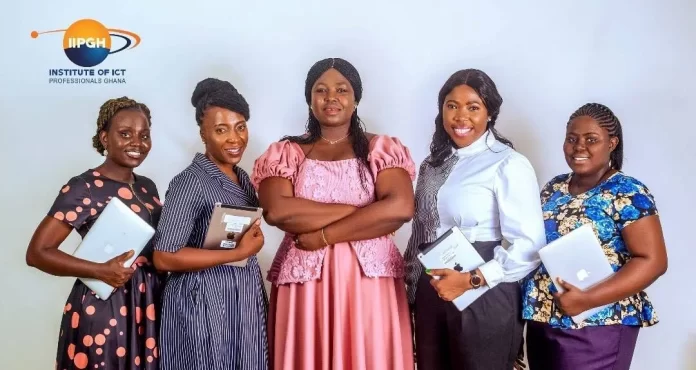
As the head of Women in Tech, IIPGH, and an engineer, this is a call to serve and invite fellow women in the ICT space to be part of the Institute’s WiT, to experience how today’s women perfectly fit in the future of work, taking responsible and leading roles. And as we celebrate IIPGH’s 7th anniversary, we look forward to increasing women-led activities and empowerment.
Let us celebrate the strength and resilience of women worldwide and continue working towards a more inclusive and equitable future for all. By investing in ourselves and supporting each other, we can accelerate progress, drive innovation, and create a more inclusive and equitable future for women in technology and beyond.
A team from the International Monetary Fund (IMF) led by Jose Gijon, Mission Chief for Guinea Bissau, held videoconferences and meetings in Bissau during February 28– March 11, 2024, to discuss macroeconomic policies in the context of the Fourth and Fifth Reviews of the ECF arrangement. The initial arrangement was approved by the IMF Executive Board on January 30, 2023, for a total amount of SDR 28.4 million (about US$ 37.9 million) on January 30, 2023. The IMF Executive Board granted an augmentation of access (140 percent of quota or SDR 39.76 million) on November 29, 2023.
At the conclusion of the mission, Mr. Gijon issued the following statement:
“I am pleased to announce that the Guinea Bissau authorities and the IMF staff have reached a staff-level agreement on economic and financial policies that could support the approval of the Fourth and Fifth Reviews of the ECF program. Conclusion of the Fourth and Fifth Reviews by the IMF Executive Board, tentatively scheduled for mid-May 2024, would enable the disbursement of SDR 6.17 million (about US$ 8.2 million), bringing total disbursement under the arrangement to SDR 19.44 million (about US$ 25.9 million).
“Economic growth was resilient in 2023 and reached 4.3 percent, slightly higher than in 2022. Headline inflation averaged 7.2 percent and would have reached double digits without tax cuts on fuel and food, and rice price subsidies introduced in late 2023. The current account deficit reached 8.6 percent of GDP, reflecting a severe terms of trade shock.
“Program performance during the fourth and fifth reviews was weaker than expected in the context of a challenging economic and socio-political environment. The floor on tax revenue was missed for both September and December test dates, mainly because of tax cuts on rice and fuel introduced in the last quarter of 2023. The ceiling on wages was missed for September due to lower-than-expected savings from the 2022 census, but a strict no-new-hiring policy made the deviation marginal in December. The floor on the domestic primary balance for September was missed due to discretionary spending overruns during the legislative elections period. The floor for December was missed due to tax cuts, lower-than-expected fishing revenue, and higher discretionary spending. The ceiling on domestic arrears was missed for December due to delays in debt service payments.
“The authorities made some progress in implementing structural reforms. Three out of nine structural benchmarks (SBs) for December 2023 were met while two SBs were completed with delays. Three SBs for March 2024 and one for September 2024 have already been met. The authorities requested the cancellation of the SB to submit the 2024 budget to Parliament, which was dissolved in December 2023. The continuous SBs on external debt service and the Technical Committee of Arbitration of Budgetary Expenditure (COTADO) were not met, because together with the Treasury Committee, they were discontinued during last quarter of 2023. Both committees have resumed their activities in early 2024.
“Going forward, the authorities face important near-term risks, including policy implementation challenges stemming from a challenging socio-political climate and capacity constraints. Improving domestic revenue mobilization and strengthening expenditure controls will be key to support fiscal consolidation and put public debt on a firm downward trajectory. Moreover, the authorities should sustain efforts to mitigate fiscal risks from State-Owned enterprises, improve cash and debt management, and enhance governance. Political stability will be critical to support these reforms. Finally, support from the international community continues to be crucial for the successful implementation of the IMF-supported program.
“The team thanks the authorities for their openness, and constructive discussions and looks forward to continuous close cooperation through the Extended Credit Facility (ECF) arrangement over the next reviews.
“The IMF team met with H.E. President Sissoco Embaló, Prime Minister Barros, Minister of Finance Te, Minister of Economy, Planning and Regional Integration Sambu, Minister of Public Administration, Labor, Vocational Training and Social Security Hijazy, BCEAO National Director Cassama, President of the Court of Auditors Baldé. The team met with officials from the Ministries of Finance, Economy, Agriculture, Fisheries, Justice, Public Health, the National Directorate of the BCEAO, the National Institute of Statistics, the Financial Intelligence Unit, the procurement authorities, and other officials. The team also met with representatives of public sector enterprises, as well as key bilateral and international partners.”
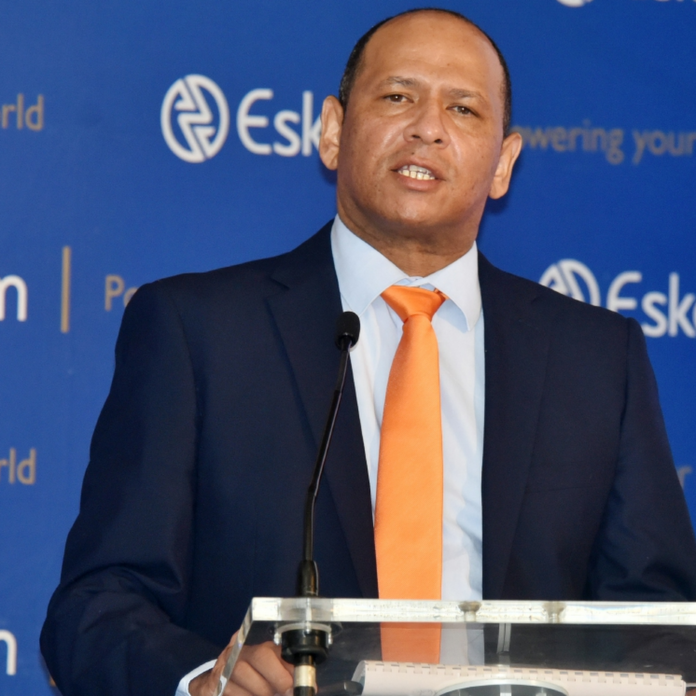
Eskom CFO Calib Cassim will speak at the upcoming Invest in Africa Energy (IAE) forum in Paris, affirming the South African utility’s commitment to upgrading and expanding its national energy infrastructure with the participation of private investors and developers.
Uniting African and global investors for two days of networking and dealmaking, IAE 2024 will showcase Africa’s leading energy prospects. Eskom – South Africa’s main energy supplier – is seeking private investment to guarantee energy security for the country, which has faced rolling blackouts since 2007 due to insufficient power supply and generation failures of aging coal plants. The utility has estimated investment requirements at around $21 billion over the next decade to upgrade its current transmission network, as well as connect new installed capacity – particularly from private renewable energy projects – to the national grid.
Organized by Energy Capital & Power, IAE 2024is an exclusive forum designed to facilitate investment between African energy markets and global investors. Taking place May 14-15, 2024 in Paris, the event offers delegates two days of intensive engagement with industry experts, project developers, investors, and policymakers.
Eskom’s transmission grid currently has a 14,000-km expansion backlog due to newly installed generation capacity developed in the Western Cape, Eastern Cape, and Northern Cape provinces, incentivized by the country’s Renewable Energy Independent Power Producer Program (REIPPP). As a result, the state utility has approved nearly $1.4 billion to be invested in two priority programs targeting transmission projects, including 46 expansion projects currently underway that will enable over 15,000 MW of generation capacity. In terms of private sector participation, Eskom is interested in a Build-Operate-Transfer model, whereby the government will retain full grid ownership.
“The participation of Africa’s largest electricity producer at IAE 2024 speaks to the forum’s role as a key investment promotion and facilitation platform. Global investors are hungry to deliver energy access to Africa, especially in a way that supports and aligns with global sustainability goals. South Africa represents a regional leader in renewable energy development through its flagship REIPPP – now it needs private investment to connect new capacity to the grid and rehabilitate its power sector,” says Sandra Jeque, Event and Project Director at IAE 2024 organizer, Energy Capital & Power.