Home Blog Page 256

GRA did not auction COCOBOD’s chemicals, fertilizers, others

0

Management of the Ghana Revenue Authority (GRA) has urged the public to disregard a false publication on GRA’s auctioning of COCOBOD’s chemicals and fertilizers.

The article alleged that Ghana Cocoa Board (COCOBOD) was unable to pay import duties on some agrochemicals, fertilizers and implements to be used in the enhancement of cocoa farming and this led the GRA to auction these items, resulting in dire implications to the cocoa season.

The GRA Management said the article was disingenuous and misleading and sought to draw conclusions not founded on facts. 

It said the facts were that in April and May 2023, some agrochemicals and other items were imported into the country by COCOBOD.

These items overstayed at the State Warehouse and as a result were sent to the Uncleared Cargo List (UCL).

The statement said the items were gazetted as the law demanded.

However, because the agro products are essential commodities needed for effective running of the operations of COCOBOD, they were not allocated to a different entity.

It said as such, although the containers were under UCL, GRA carefully considered the request from COCOBOD and the key role it played in the economy of Ghana and restored the items to them. 

The statement said COCOBOD had, therefore, paid the required duties on the agrochemicals and no agroproduct of COCOBOD had been auctioned. 

It further stated that GRA recognized the contribution of COCOBOD to the development of the country and would not carry out any action that was detrimental to its operations while at the same time ensuring that the Tax laws were applied fairly. 

The management of GRA assured the public that they were committed to their mandate of revenue mobilization with integrity, fairness, and professionalism.

GRA urged media houses to verify any such information before publication. 

Assembly cuts sod to construct ultra-modern market at Kpone

0

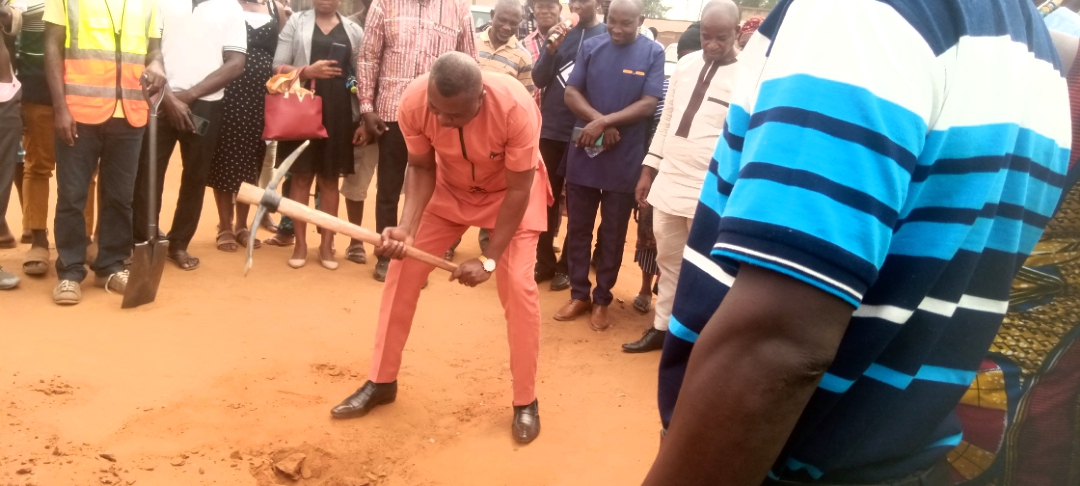
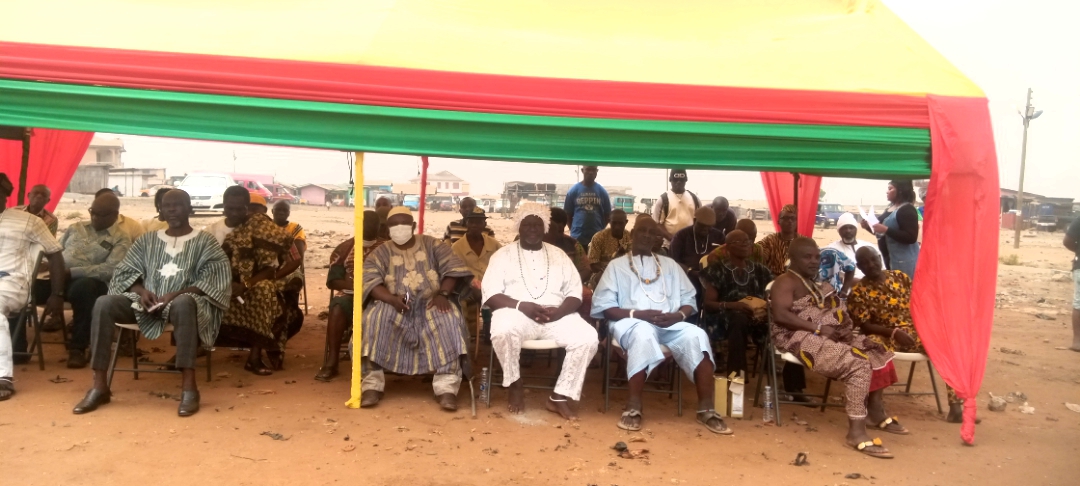
The Kpone-Katamanso Municipal Assembly (KKMA) has cut the sod for the construction of an ultra-modern market facility at Kpone in the Greater Region to boost trading activities in the municipality.

Mr Samuel Okoe Amanquah, the Kpone-Katamanso Municipal Chief Executive (MCE), explained that the existing market did not befit the area’s status, hence his administration’s resolve to reconstruct the facility into a modern trading centre.

The existing market had just a few sheds, shops and containers, therefore, was unable to supply all the needs of the residents, he said, and that thieves also continued to take advantage of the unprotected space to steal from traders.

He said the new edifice, when completed, would contain 120 lockable shops on the ground and first floors, 64 sheds at the centre of the market, a banking facility, and a pharmacy to create an enabling environment for trading.

Again, the eroded grounds of the lorry station adjacent to the market would be paved, with sheds created and offices made available for the transport operators as well as washrooms for commuters.

The MCE indicated that logistics needed for the work to start had been made available, saying: “Now that we have approval from the Government who has voted GHS10 million for the construction of the new market”.

Construction works were estimated to take a maximum of 12 months, with the contractor assuring the Assembly of his resolve to complete it ahead of schedule within eight months.

Mr Joseph Akuerteh Tettey, the Member of Parliament for Kpone-Katamanso, pleaded with the contractor to stay within schedule and hand over the completed project, for effective trading to commence.

Ms Christina Teiko Ablade Kpobe, the Market Queen, commended the MCE for his effort, which would provide more spaces for traders to occupy.

Ghana needs a rethink of natural resource management contracts – Dr Bawumia

0

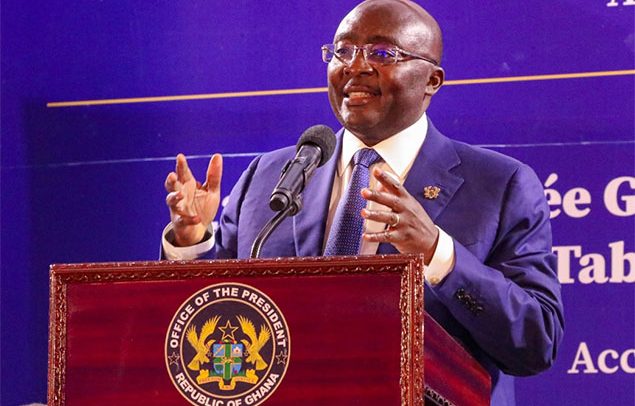
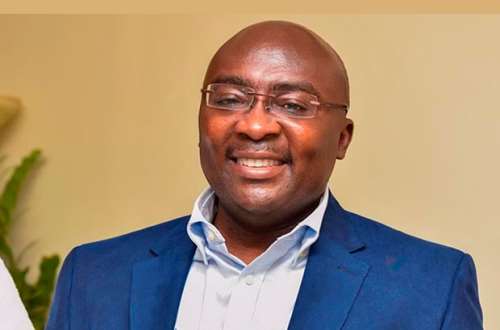
The Vice President and Flagbearer of the New Patriotic Party, Dr Mahamudu Bawumia, says Ghana needs a new paradigm in natural resource contracts to ensure the nation maximises the benefits of her natural resources.

He said successive governments had often come under criticism for the type of agreements they entered into with external interests for the exploitation of Ghana’s natural resources.

In an address in Accra on Wednesday to outline his vision if he became the president of Ghana, Dr Bawumia provided measures, including value addition and Ghanaian ownership of the natural resources, to streamline the sector and ensure it brought Ghanaians the maximum benefits.

“As president, I will usher Ghana in a golden age for the maximisation of the benefits from our natural resources like gold, lithium, bauxite, and so on.”

“The key to doing this is value addition and Ghanaian ownership. We need a new paradigm in natural resource contracts,” the NPP Flagbearer said.

Some of the key policies his government intended to implement are formalised, regularised and regulated environmentally sustainable small-scale mining.

“About one million people are engaged in small scale mining. Our goal would be to help grow small-scale mining companies into large scale companies with capacity building and assisting them to access financing to acquire equipment.”

“We can create many millionaires in the small-scale mining industry if we support them,” he said.

“My government will support the Minerals Commission and key stakeholders to formalise the artisanal and small-scale gold mining (ASGM) sector with the objective of ensuring that the activities of the entire value-chain are sustainably and responsibly done so that most of the gold produced by this sector can be sold to the Bank of Ghana (BoG) and be eligible to be part of the gold reserves of the Central Bank.”

In line with this vision, Dr Bawumia said his government would license all miners doing responsible mining and that district mining committees, including chiefs, would provide initial temporary licenses to miners.

“As long as miners mine within the limits of their licenses, for example no mining in river or water bodies, there will no longer be any seizure or burning of excavators.”

The event was on the theme: “Ghana’s Next Chapter: Selfless Leadership and Bold Solutions for the Future,” which enabled the NPP Flagbearer to outline his vision and direction for the nation.

Mrs Rebecca Akufo-Addo, the First Lady, Wife of the Vice President Hajia Samira Bawumia, former President John Agyekum Kufuor, former Speaker of Parliament, Professor Mike Aaron Oquaye, and Mrs Osei Frema-Opare, the Chief of Staff were in attendance.

The others include the National Chairman of the NPP, Stephen Ayensu Ntim, Mr Justin Kodua Frempong, General Secretary of the Party, former presidential aspirants, ministers of State, members of Parliament, Party Executives, Council of Elders of the Party, and the diplomatic community.

The Kofi Ohene Konadu Auditorium of the University of Professional Studies, Accra (UPSA) where the forum was held, was filled to capacity with enthusiastic party supporters and sympathizers having to find space outside the auditorium.

Parliament’s new Standing Order creates economic committee to scruitinise loan agreements

0

The new Standing Orders of Parliament have allowed the creation of an Economic Committee, which will have the primary function of scrutinising the implications of government loan agreements meticulously.

The Committee would constitute Members of Parliament (MPs) with expertise in economics “to enhance Parlaiment’s ability to offer and seek professional advice economic wise,” Mr Osei Kyei-Mensah-Bonsu, the Majority Leader, said at a Leaders’ Media Briefing in Parliament on Thursday. 

The briefing is a periodic engagement between the leadership of the House and the media at the beginning of every meeting of Parliament to outline the framework of the meeting.

It also serves as a platform of interaction between the leaders, the Media Relations Department of Parliament and the Parliamentary Press Corps.

Mr Kyei-Mensah-Bonsu said: “We didn’t use to have a committee on the economy, we now have one. The reason is simple, when we contract loans and we refer the same agreements to the Finance Committee, they will come to us with the goodness or otherwise of the facility.”

“Usually, they will relate to the terms and conditions of the loan, the payment schedule, and the impact of the loan they don’t report on.”

“And we felt that, no, we need a committee on the economy that will dive into this. Even if they don’t have the competency in its entirety to advice, we will engage experts who will go into this and inform Parliament accordingly so that in making any decision on the approval of a loan facility or whatever facility we will be so guided,” the New Patriotic Party MP for Suame told the media.

New flat tax regime for Ghana under my Presidency – Dr Bawumia

0

Vice President Dr Mahamudu Bawumia, the Flagbearer of the New Patriotic Party, says Ghana will have a new “friendly” flat tax regime if elected as President of Ghana.

Addressing the nation in Accra on Wednesday to outline his vision and policy priorities for Ghana, the NPP Flagbearer said to enhance businesses, especially small and medium enterprises (SMEs), he would constitute the majority of the Ghanaian business community to reform the tax system to their advantage.

He would also encourage the payment of the new friendly taxes to boost the national treasury.

“My Administration will introduce a very simple, citizen and business friendly flat tax regime. A flat tax of a percentage of income for individuals and SMEs, which constitute 98 per cent of all businesses in Ghana, with appropriate exemption thresholds set to protect the poor,” Dr Bawumia pledged.

There would be digital reforms to boost online filing of tax, tax returns should be completed in minutes, he added.

“With the new tax regime, the tax return should be completed in minutes! We will also simplify our complicated corporate tax system and VAT regime,” Dr Bawumia added.

“To start the new tax system on a clean slate, my government will provide a tax amnesty, i.e. a complete exemption from the payment of taxes for a specified period and the waiving of interest and penalties up to a certain year to individuals and businesses for failures to file taxes in previous years so that everyone will start afresh.”

“Tax digitalisation will be implemented across all aspects of tax administration. Everyone will be required to file a very simple tax return electronically through their mobile phone or computer.”

“There will be no manual or paper filing of taxes from 2025. Faceless assessments will provide transparency and accountability,” he added.

Dr Bawumia said with the new system, there would be no need for the Ghana Revenue Authority (GRA) to send officers to go to shops and monitor proceedings in order to collect taxes as the E-invoicing, being implemented by the GRA, would be extended to all companies.

“Any audits by the GRA would also be done electronically and facelessly by the GRA. Furthermore, no entity would be audited more than once in five years unless anomalies are detected, which the individual or company does not correct after being given the opportunity to do so,” he said.

“My government will amend the law such that if there is a dispute about tax assessment, a binding arbitration will take place through a body constituted by institutions such as the  Ghana Arbitration Centre, Institute of Taxation, AGI, Institute of Chartered Accountants, PEF, and  Ghana Employers Association with a mandate to resolve any appeal in a maximum of three months”.

“This will not affect companies who by their agreements have such arbitrations taking place in international jurisdictions.”

Dr Bawumia announced that his government would abolish e-levy, the tax on electronic payment transaction, to enhance a cashless system, as well as the emissions tax, tax betting, and the proposed 15 per cent VAT on electricity tariff.

The event was on the theme: “Ghana’s Next Chapter: Selfless Leadership and Bold Solutions for the Future,” which enabled the NPP Flagbearer for the December Election to outline his vision and direction for the nation.

In attendance were Mrs Rebecca Akufo-Addo, the First Lady, Wife of the Vice President, Hajia Samira Bawumia, former President John Agyekum Kufuor, former Speaker of Parliament, Professor Mike Aaron Oquaye, and Mrs Osei Frema-Opare, the Chief of Staff.

Others include Mr Stephen Ayensu Ntim, the National Chairman of the NPP, Mr Justin Kodua Frempong, the NPP General Secretary, former presidential aspirants of the party, ministers of State and members of Parliament, Party Executives, Council of Elders, the diplomatic community and supporters across the 16 regions.

The Kofi Ohene Konadu Auditorium of the University of Professional Studies, Accra (UPSA), the venue of the lecture,was filled with the interior decoration magnifying the elephant family colours: red, blue and white.

Zenith Bank doubles down on expansion, opens 42nd branch in thriving Ashaiman

0

Zenith Bank (Ghana) Limited has marked a significant milestone with the official opening of its 42nd physical business location in Ashaiman. 

With the Bank’s presence in 11 out of the 16 regions, the new branch located at the Ashaiman Shell Filling Station on the Ashaiman-Klagon road demonstrates the Bank’s commitment to expanding its reach and bringing its services closer to communities.

A statement issued in Accra by the Bank said it also underscored the Bank’s aim to solidify its presence in the country’s vibrant financial landscape.   

Mr. Henry Onwuzurigbo, the Bank’s Managing Director/Chief Executive Officer, speaking at the ceremony emphasised that the new branch

reflected the Bank’s philosophy of being wherever its services were needed.

He acknowledged the impact of digital banking but underlined the importance of maintaining brick-and-mortar branches to ensure the benefits of human interaction are not lost in the banking industry.

According to the MD/CEO, the choice of Ashaiman for the new branch was strategic, considering its dense population, multicultural composition, and thriving micro, small and medium sized business ecosystem.

He said with a bustling manufacturing sector encompassing textiles, agricultural inputs, metalwork, and others, Ashaiman he said presented a compelling opportunity for Zenith Bank to contribute to the local economy.

“With this branch opening in this vibrant and commercially active town that is Ashaiman, Zenith Bank has once again demonstrated its commitment to wider accessibility, and we have more openings coming,” Mr. Onwuzurigbo said.

He hinted at another branch opening in the pipeline.

The MD/CEO said the Bank was always committed to an exceptional customer experience, assuring all present of the readiness of staff to serve.

Mrs. Getrude Amui, the Market Queen of Ashaiman, acknowledged the initial apprehensions many traders have towards financial institutions. 

She commended Zenith Bank’s approach, citing positive interactions with leadership, transparent communication, and visible growth, factors that instilled confidence and encouraged wider participation in the formal financial sector.

“When you come to the markets many have not had very good experiences and are therefore hesitant to commit to financial institutions, but Zenith Bank’s approach, our interactions with the highest level of its leaders, the assurances provided and what we have seen with our eyes give us confidence that our deposits are not only safe, but we will grow with the bank,” she explained.

The event was graced by a notable assembly of dignitaries representing various sectors and institutions within the Ashaiman community. 

Among the esteemed guests were Imam Yakubu Abdul-Hamid, the Imam of the Ashaiman Jericho Mosque; Superintendent Osman Alhassan and ASP Isaac Avornorkadzi, Acting District Police Commander – Ashaiman.

Others are Rev. Anslem Okafo, Chairman of the Nigerian Union of Traders – Ashaiman; Mr. James Ahiadome, CEO of J.K. Ahiadome Transport Limited. 

Parliament’s new Standing Orders takes effect

0

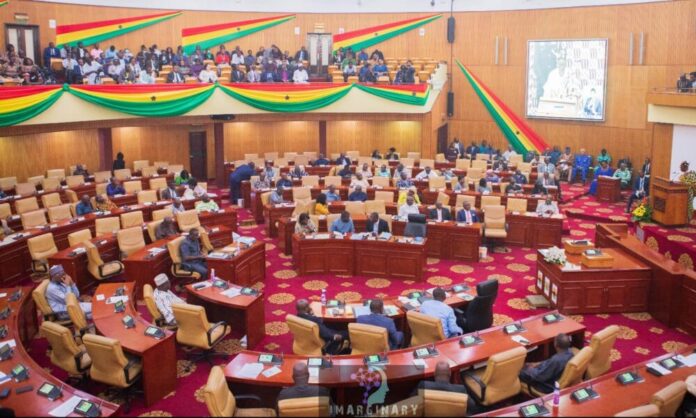
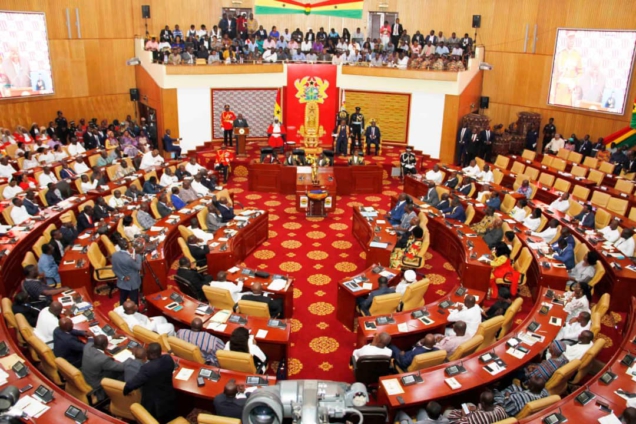
The new Standing Orders of Parliament took effect from Tuesday, February 6, when the House resumed from the Christmas recess.

Speaker Alban Sumana Kingsford Bagbin, who made this known when he formally opened the First Meeting of the Fourth and Final Session of the Eighth Parliament of Ghana, noted that the new Standing Orders came into effect on January 2, 2024.

Standing Orders are the written rules, which regulate the proceedings of the House. 

At the beginning of Tuesday’s sitting, the Speaker asked for a roll call to be conducted for members of the House who were in attendance, which was followed by the recitation of Ghana’s national anthem by the Members of Parliament (MPs).

Order 14 (1) of the new Standing Orders states that: “At the commencement of a Sitting and after Prayers, the Speaker may cause to be conducted a roll call of Members of Parliament”

The Speaker explained that in line with Order 14 (2) Members shall attend a sitting of the House and sign a record of attendance in the Chamber that shall be manual or electronic.

He said the response to the roll call, a signed record of attendance at plenary or committee, shall be evidence of attendance of a Member in Parliament.

“Roll call! Honourable Members, pursuant to Order 14 (1) of our Standing Orders, a roll call will be taken, and a member is expected to respond to the roll call, which shall be evidence of attendance.”

Touching on the recitation of the Ghana National Anthem by the MPs, the Speaker noted that under the new Standing Orders of the House, it would be done at the beginning of the first sitting of every weeklong meeting.

PIAC launches simplified version of annual reports

0

The Public Interest and Accountability Committee (PIAC) has launched the “citizens version” of the statutory annual report on the management and use of petroleum revenue.

The initiative is part of efforts to simplify and disseminate information to equip citizens with the needed knowledge for advocacy and decision- making.

The first edition of the document which was launched on Tuesday provides summarised and comprehensive information, which otherwise was regarded voluminous and technical in the original 2022 annual report.

It entails petroleum production and sales statistics, petroleum utilization, collection and allocation of petroleum revenues, distribution, and utilization of the Annual Budgetted Funds Amount (ABFA) among other areas.

Professor Nana Susubribi Krobea Boaten (S. K. B.) Asante, the paramount chief of Asante Asokore and the former President of the Ghana Academy of Arts and Sciences launched the 60-page document at a brief ceremony.

Emerita Professor Elizabeth Ardayfio-Schandorf, the Chairperson of PIAC, said the “Citizens Version” reflected the committee’s commitment to promoting transparency and accountability which was crucial for prudent financial management.

She said the document was a vital resource aimed at empowering citizens to contribute to the governance of petroleum resources.

“We believe that getting the public informed is the foundation of a transparent and accountable governance structure for our petroleum revenues,” she said.

Ms Kathleen Addy, the Chairperson of the National Commission for Civic Education (NCCE), observed that participation in governance had become tedious for citizens due to lack of information to make informed comments and decisions on national issues.

The introduction of simplified version of the PIAC annual report would go a long way to help NCCE in civic education.

“It is hoped that this model will be adopted by other institutions to ensure that they have reports that citizens can learn from and engage with,” she said.

Dr Steve Manteaw, former Chairperson of PIAC, encouraged the government to be savvy of trends and changes within the sector to ensure the country was not left behind in the energy transition phase.

Poor yields responsible for the fall in the price of cashew – TCDA

0

The Tree Crops Development Authority (TCDA) has attributed the sharp decline of the price of cashew in the country to poor yields.

Accordingly, Mr Joseph Alexander Bonsu, farmers’ representative on the TCDA said Ghana’s international price for cashew fell marginally from US$1,050 dollars to US$830 dollars per ton.

In 2023, he said the country’s cashew product was considered the best quality in the sub-Saharan region, internationally and thereby fetching the nation a good price.

Locally, the price of cashew has declined from GHC8.5, selling between GHC7.5 and GHC7.00 per kilogramme.

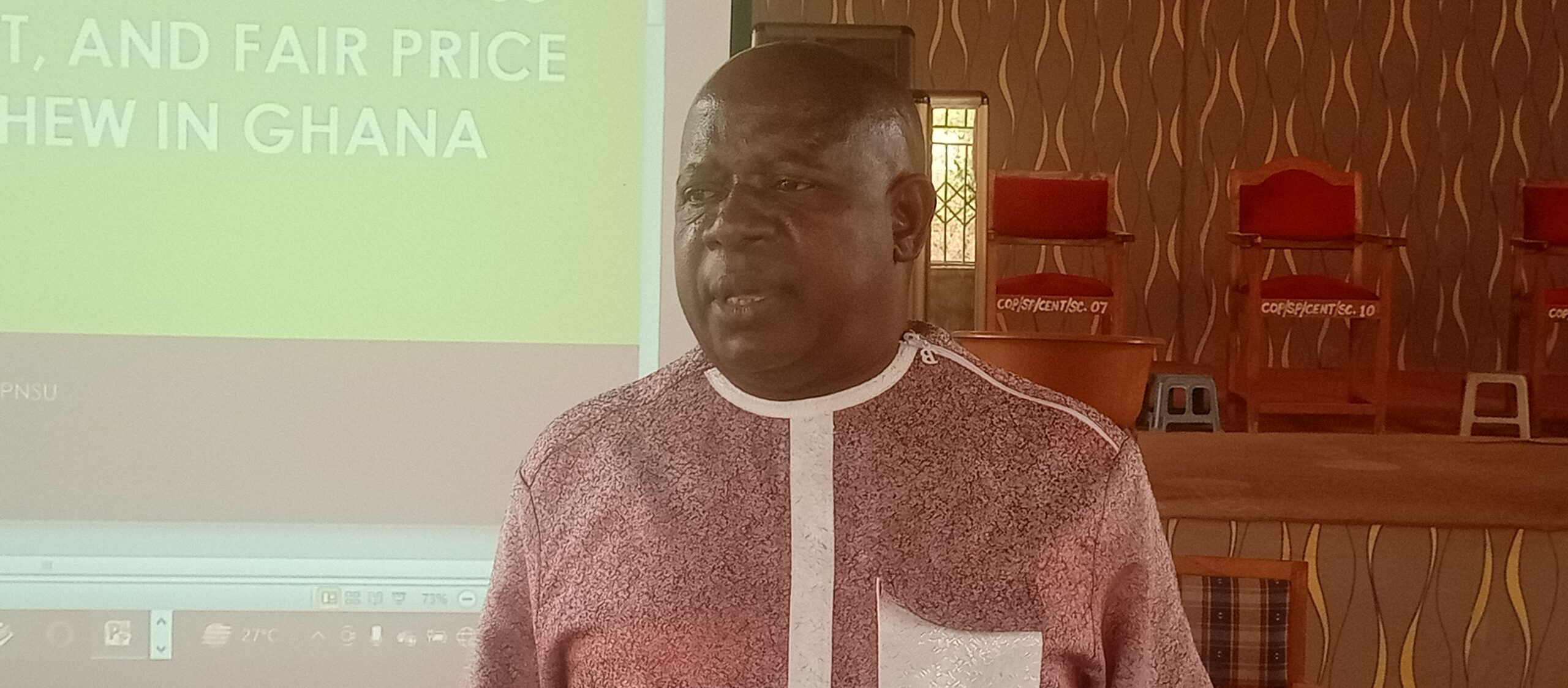
Mr Bonsu was speaking at a media engagement with cashew farmers and stakeholders organised by the Cashew Watch Ghana (CWG) held at Sampa in the Jaman North District of the Bono Region.

The engagement attended by farmers and processors drawn from the Tain and Jaman North Districts as well as the Jaman South Municipality formed part of activities of a project being implemented by the CWG with support from the Star Ghana Foundation.

CWG is a platform of civil society groups comprising cashew farmers, media practitioners and non-governmental organisations that advocates and promotes the economic livelihoods of especially women farmers in cashew production.

Titled “Amplifying the Voices of Cashew Farmers”, the project among other objectives sought to identify, advocate, and help tackle pertinent challenges confronting cashew farmers and the growth of the sector.

Mr Bonsu said the rise in the dollar rate and improved quality yields that met international standards remained a key index to determine a better price for cashew products.

He therefore advised cashew farmers to dry their nuts well and also form cooperatives, as the government worked to find a standardised scale for the measurement of cashew nuts in the country.

Mr Raphael Godlove Ahenu, the National Convener of CWG underscored the need for cashew farmers in the country to form cooperatives in tackling the challenges confronting the sector, including access to ready markets and good market price for the nuts.

Bia East District Assembly supports farmers with 8000 coconut seedlings

0

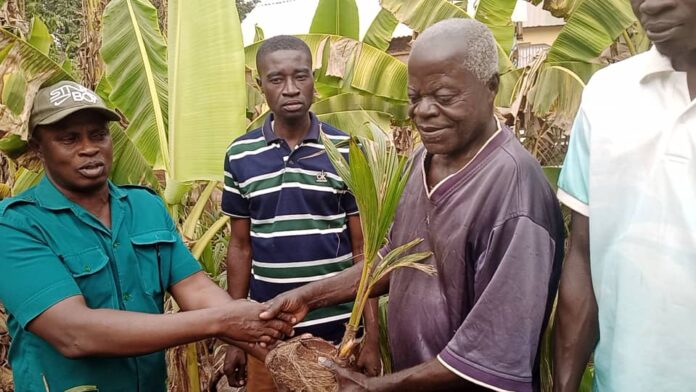
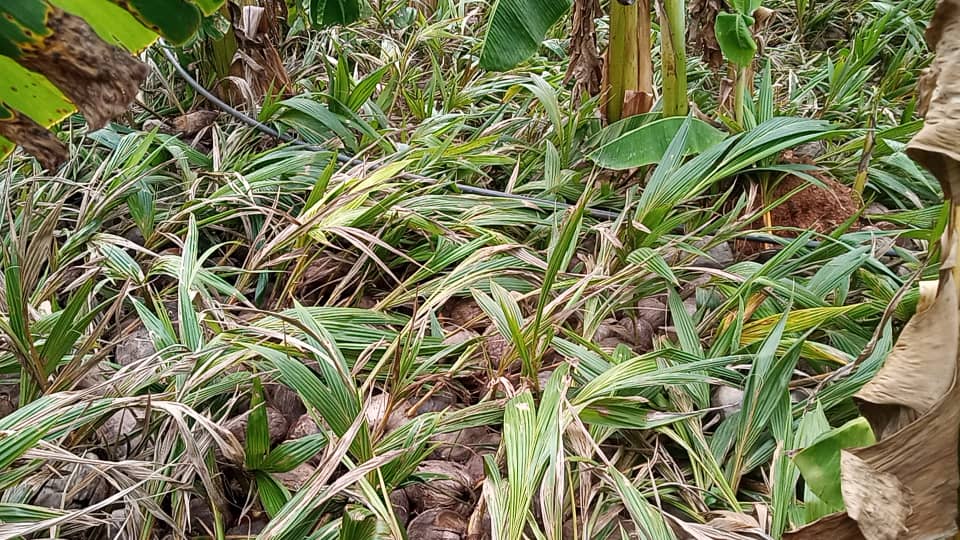
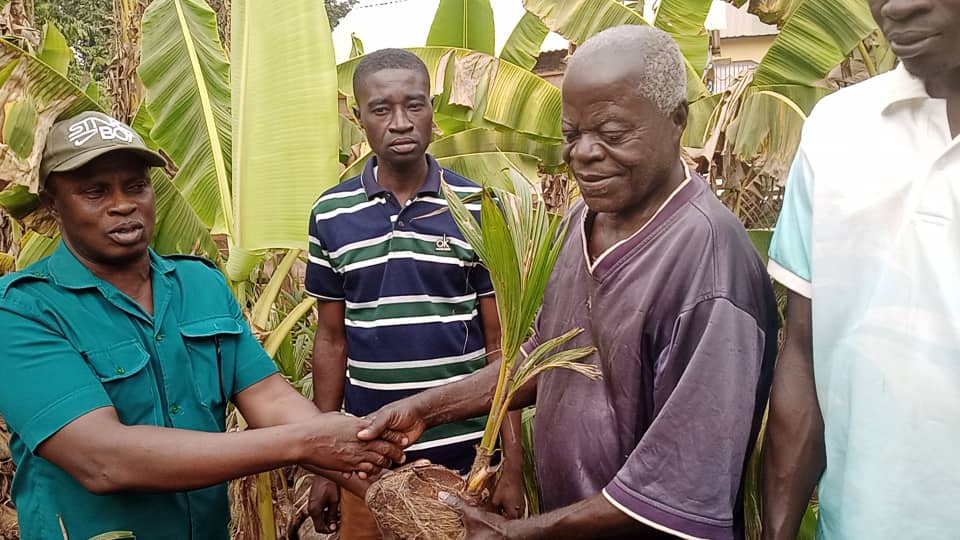
The Bia East District Assembly in the Western North Region, in collaboration with Safety-Net Programme, a non-governmental organisation, has presented 8000 coconut seedlings to famers in the area for free to augment their output.

 Mr Nicholas Yayin Kupog, the Bia District Chief Executive, handing over the seedlings to the District Agriculture Officer for onward distribution to the farmers, said the Government was committed to supporting farmers with alternative livelihoods, as well as improving upon the agricultural sector to produce more for exports.

He lauded the Government for the initiative, noting that the coconut, in some few years, would aid the economic conditions of the beneficiaries and their families.

The DCE entreated the beneficiary farmers to plant the seedlings and nurture them, especially during the dry season, to sustain their growth.

He asked the residents to have faith in the Government since the current administration had brought much development to the district.

Mr Kupog announced that palm seedlings would soon be distributed to the farmers to ensure a variety of crops in the area instead of farmers solely depending on cocoa production.

Mr Charles Ennin, the Bia East District Director of Food and Agriculture, who received the seedlings, said Agric officers in the various communities would assist the farmers to plant the seedlings to meet acceptable standards.

Some of the farmers commended the Government for the gesture and pledged to follow laid down practices to plant the seedlings.

They said the coconut would go a long way to support them during the off-cocoa season.