
Home Blog Page 26

Cocoa farmers decry price cut, demand action 

0

Cocoa farmers across Ghana have intensified calls for urgent government intervention following the reduction of the producer price from GHS3,625 to GHS2,587 per 64kg bag, a decision authorities attribute to falling global market prices. 

The decision has triggered widespread dissatisfaction among farmers, with many describing it as a setback to livelihoods and rural economic stability. 

Dr Frank Awuah, a lecturer at Dambai College of Education (DACE) and aspiring Oti Regional Secretary of the New Patriotic Party (NPP), criticised the move, questioning whether the promise by the government when they were in opposition to increase the producer price from GHS3100 to GHS6,500 was grounded in sound economic forecasting or was just meant to win votes. 

In an interview with the Ghana News Agency (GNA), Dr. Awuah said the reduction had raised serious concerns about the government’s commitment to responsive and empathetic leadership during periods of economic difficulty. 

He noted that cocoa producer prices had witnessed a steady upward trend over the past three crop seasons before the recent reversal. 

According to him, during the 2023/2024 crop season, prices opened at GHS1,308 per bag and later increased to GHS2,070, representing a 58.26 percent rise. In the 2024/2025 crop season, the price began at GHS3,000 per bag, was adjusted to GHS3,100, and subsequently rose to GHS3,625 per bag. 

However, for the 2025/2026 crop season, the government announced a reduction to GHS2,587 per bag, citing what it described as a sharp decline in global cocoa prices and a reported 70 per cent drop in market value. 

Dr Awuah argued that while global market dynamics were significant, the socio-economic impact of the price cut on cocoa-dependent communities must not be overlooked. 

He drew parallels with policy decisions taken during the COVID-19 pandemic under the New Patriotic Party (NPP) administration led by former President Nana Akufo-Addo, when public sector salaries were maintained despite low economic activities and fiscal pressures. 

He said that during the same period, Ghana’s gold reserves reportedly increased from about eight tonnes to 30.5 tonnes by January 2024 and later to 37.5 tonnes. 

Dr Awuah claimed that part of the gold reserves had subsequently been sold to support the cedi, raising questions about whether similar interventions could not have been used to cushion cocoa farmers against the impact of falling global prices. 

He suggested that the government could have maintained the GHS3,625 per bag price or introduced targeted support measures to protect farmers’ incomes. 

Meanwhile, some cocoa farmers have reportedly traveled from the Western North region to Accra to embark on a protest. They demonstrated at the headquarters of the Ghana Cocoa Board (COCOBOD) to press home their demands. 

Dr Awuah said the protests reflected deep frustration within the cocoa sector and cautioned against dismissing the concerns as politically motivated. 

He appealed to government and relevant authorities to engage stakeholders constructively and address the substantive economic challenges facing cocoa farmers to restore confidence and stability within the industry. 

Ghana remains one of the world’s leading cocoa producers, with the crop serving as a major source of foreign exchange and livelihood for hundreds of thousands of households. 

President Mahama cuts sod for new float glass factory in Shama  

0

President John Dramani Mahama has cut the sod for the construction of a $ 250 million float glass manufacturing facility at Aboadze in the Shama District of the Western Region.  

The first Phase of the Float Glass Factory would have a capacity production of 600 tons per day, with Phase two adding another 800 tons per day, bringing the total capacity to 1,400 tons per day.  

The project which would be executed in two phases, would generate approximately 2,182 direct jobs.  

There would be 2,182 jobs during construction with 729 people being employed in building the factories, and 1,453 permanent operational jobs being created.  

Speaking at the ceremony, President Mahama said the feat was not merely an expansion of factories, but a policy that Ghana was no longer content to be a consumer and importer economy, and that they were determined to produce, process, manufacture and export.  

According to him, the global float glass market was valued at approximately 60 billion US, dollars annually and Ghana must not remain on the margins of this industry.  

He announced that the facility has a total investment of USD 250 million, and would  rank among the largest industrial investments in the history of Ghana.  

“This project aligns fully with our national industrial strategy and the broader objectives of the 24-hour economic programme”, he emphasised.  

Mr Shen Yanchang, Chairman of Twyford Group commended the Government of Ghana for the significant progress made in advancing the microeconomic stability.  

He said the 24-hour Economy Authority Law would enable continuous production, increased efficiency and expanded output, thereby enhancing the global competitiveness of made in Ghana products.  

Mr Yanchang said the Twyford Group was among the first in the industries to expand into the overseas market across Africa with operations in Ghana, Tanzania, Kenya, the Ivory Coast, Nigeria, Senegal and many around 20 countries in Africa.  

Mr Lorry Li-Wei, Managing Director of the KEDA Ghana Ceramics Ltd indicated that the floating glass factory, with an estimated investment of 250 million US dollars was designed to address the significant gap in local glass production.  

He hinted that the construction of phase one was expected to be complete by August next year.  

Upon completion, he said the facility would create over 1,500 direct jobs and approximately 3,000 indirect jobs, increasing total employment to nearly 6,000 while, significantly boosting national revenue generation.  

Sharing love: Over 800 children at Piisi receive free eye screening   

0

Over 800 basic school children at Piisi and its surrounding communities in the Wa Municipality have received free eye screening as part of activities to mark the month of love.  

The initiative was under the Blissful Sights for Kids (BS4Ks) outreach, implemented by Bliss Eye Care in partnership with Ghana Vision, a Swiss-based charity organisation, since 2015.  

A total of 802 children from Piisi and surrounding communities, including Dapuoha, Kparsaga, and Konfabiala, were screened during the exercise, with 159 children found to have normal vision.  

While 621 children presented pathological conditions requiring medication, 17 were diagnosed with refractive errors requiring corrective lenses, and five cases of cataract and glaucoma were identified.  

A child, who was diagnosed with glaucoma during the exercise, had been booked for corrective surgery, while those requiring medications and corrective lenses were provided to them for free.  

Dr. Zakarea Al-Hassan Balure, the Manager of Bliss Eye Care, expressed the hope that the surgery could help restore some level of vision for the child.   

He expressed concern about the high prevalence of eye conditions among children, which he said threatened their education and holistic development.   

Dr. Balure urged parents and guardians to take the eye health of their children very seriously, stressing that sight, once lost, could be difficult or impossible to restore.   

He noted that early detection and timely intervention remained critical in preventing avoidable blindness among children.  

Mr Raymond Kanyiti, the President of the Rotaract Club of the University of Business and Integrated Development Studies (UBIDS), said the club partnered with the BS4Ks initiative as part of its commitment to volunteerism and community service.  

“As Rotractors, it is an everyday thing to volunteer our service, time and resources to impact society, so on a day like this, we see it necessary to come together with the BS4Ks to spread love”, he stated.  

Mr Abudi Issahaku, the Wa Municipal School Health Education Programme (SHEP) Coordinator, expressed disappointment over low parental involvement in the exercise, particularly for children in lower primary who required adult support.  

“When medication is prescribed, the parents need to understand the instructions to ensure proper administration.   

Their presence would have enabled us to explain the conditions and treatment processes to them directly”, he said.  

Mr Issahaku added that eye conditions among schoolchildren remained prevalent and said some children who previously had no visible problems could develop them over time, which underscored the need for regular screening.  

The BS4Ks project is aimed at enhancing children’s education through improved eyesight, particularly in underserved communities.  

The outreach at Piisi was organised in collaboration with the Rotaract Club of UBIDS and the Wa Municipal Education Directorate.  

The Bliss Eye Care and its partners reaffirmed their commitment to sustaining the outreach to promote good eyesight and enhance academic performance among children in the Upper West Region and beyond.  

Cocoa farmers demand legal framework to protect industry from political interference

0

Cocoa farmers in the Ahafo Ano South-West District have called on the government, the Ghana Cocoa Board (COCOBOD), and other key stakeholders to enact a comprehensive legal framework to regulate the cocoa industry and safeguard farmers’ interests.

The appeal was made by about 160 concerned cocoa farmers at a press conference held at Mankranso, the District Capital.

Mr. Edward Kwame Yeboah, the 2025 National Best Cocoa Farmer, addressing the media on the theme, “Stop the Cocoa Politics,” noted that frequent changes in government often lead to policy shifts that disrupt cocoa farming activities. 

He stressed the need for a permanent parliamentary act to provide policy continuity and protect farmers from political interference.

Mr. Yeboah acknowledged current government interventions, including the proposed 70 percent automatic price adjustment mechanism, distribution of free fertilizer, and supply of cocoa seedlings, describing them as beneficial but unsustainable without firm legal backing to ensure implementation by successive administrations.

He emphasised that cocoa farmers were non-partisan actors who deserved impartial treatment under a stable legal regime insulated from political manipulation and prejudice.

Mr. Yeboah urged farmers to accept the current producer price and remain patient for future increments, as promised by government when international market conditions improve. 

He said such a restraint would demonstrate patriotism and commitment to national development amid declining global cocoa prices, which have affected government revenue.

He also advised groups of farmers, staging demonstrations without recognised representation to desist, explaining that legitimate farmer representatives already participate in national price negotiation processes.

He encouraged cocoa farmer leaders to maintain effective communication with their members by sharing outcomes of negotiations to prevent misinformation and mistrust.

Mr. Yeboah appealed to Cocoa Buying Companies and their Purchasing Clerks to honour government directives on prompt payments, noting that some farmers remain unpaid weeks after the official price announcement.

Village of Hope appeals for support to sustain operations 

0

Village of Hope, an orphanage in the Gomoa East District, Central Region, has appealed for increased support from government, corporate organisations and philanthropists to sustain and expand its interventions for vulnerable children. 

The appeal was made at the pre-launch of the orphanage’s 30th anniversary celebrations at Gomoa Fetteh in the Central Region. 

Speaking in an interview with the media, Mr Fred Asare, Group Managing Director of Village of Hope, said the institution had grown from a modest children’s home in 1996 into a multifaceted establishment providing residential care, education, healthcare and vocational training. 

“Village of Hope started on 24th February 1996 with just a married couple as house parents, one security man, one administrator and eight children at Ayawaso in Accra,” Mr Asare recounted. 

“Today, we are caring for about 245 children, with more than 50 of them in the university and over 40 in senior high school,” he said. 

Founded in 1996 by three ministers of the Church of Christ – Jerry Reynolds, Emmanuel Alfred Asante and Christian Nsua – the organisation was established to support orphaned, abandoned and destitute children.  

It relocated from Ayawaso in Accra to Gomoa Fetteh in 1998 following land litigation, after the chief of the area offered land for expansion. 

From a single house, the facility has developed into a social intervention hub comprising a residential children’s village, two babies’ homes operating in collaboration with the Department of Social Welfare, a vocational training institute at Ayawaso, two basic schools, a senior high school and a 70-bed hospital serving Gomoa East and adjoining districts. 

The vocational centre, now known as Hope Training Institute, has trained more than 300 street-connected youth in hairdressing, sewing, leatherworks, catering and auto mechanics, equipping them with tools and start-up capital upon completion.  

Hope Christian Academy was established in 2002 to provide basic education; with Hope College added at the senior high level a decade later. 

Healthcare services expanded from a small clinic in 2003 to Hope Christian Hospital, which provides specialist services including eye and dental care, laboratory services and a neonatal intensive care unit serving Gomoa East, Awutu Senya East and Effutu. 

We and the Cape Coast Teaching Hospital are the two facilities that provide neonatal intensive care for preterm babies in the Central Region,” Mr Asare said, underscoring the hospital’s regional importance. 

Despite the achievements, he said financial constraints remained the institution’s major challenge. 

“A major challenge has been financial, being able to care for so many children. 

“Each university student needs fees, accommodation, a laptop and other essentials. Providing food, clothing and healthcare for all the children is a huge responsibility,” he said. 

Mr. Asare said the organisation relied largely on donations from individuals, churches, families and corporate bodies, with no direct government subvention. 

“Thankfully, we have a 30-year track record. When you support Village of Hope, you can see the results, transformed lives serving Mother Ghana,” he added. 

Mr Rexford Asumeng, Acting Manager, said the home operated a family-based care system where each child was placed under a married couple serving as house parents. 

“When a child wakes up in the morning, they can say ‘Good morning, Daddy’ and ‘Good morning, Mummy.’ That is how our system works,” he said. 

Ms Tracy Nash Adu, a social worker, said admissions were undertaken in collaboration with the Department of Social Welfare and supported by court-issued care orders. 

“Children in need of care and protection are the responsibility of the state. We are only partnering to help,” she said. 

Some beneficiaries shared testimonies. 

“I started from kindergarten here, went through basic school, senior high school and university, and today I am back serving in leadership,” Mr Sappah Yahaya, Head of Operations, said. 

“Many of us came here without hope, but through discipline and opportunity, we have become useful to society.” 

Similarly, Ms Adriana Adu, who arrived at the age of five, described the Village as home. 

“The love, care and guidance we received shaped who we are today. Without Village of Hope, we would not have come this far,” she said 

As part of its anniversary, the organisation is undertaking year-long activities to raise awareness and mobilise resources to support its programmes. 

Bagbin calls for emergency care law after hit-and-run victim’s death sparks outrage 

0

Mr Alban Bagbin, the Speaker of Parliament, has urged lawmakers to pass an emergency care law to tackle the persistent “no-bed syndrome” in hospitals, following the death of the late Charles Amissah, who was allegedly denied treatment at three major hospitals. 

“This is one of the needless deaths we have experienced in this country,” Speaker Bagbin said on Tuesday on the Floor of Parliament.  

As a result, he directed the Health Committee of Parliament to investigate and submit reports from relevant agencies within two weeks. 

“I will urge the House to legislate on the matter. We need to pass an emergency care law… to prevent similar deaths resulting from delays or denial of urgent medical attention,” Mr Bagbin added. 

The Speaker’s call follows public outcry over Amissah’s death and alleged negligence by hospitals.  

The Health Committee will work on the matter, with the Health Minister expected to appear before Parliament. 

The late Amissah, a 29-year-old engineer, died on Friday, February 6, after he was allegedly turned away by three major hospitals after a hit-and-run accident. 

Farmers encouraged to use rabbit urine as natural pesticide – UESD 

0

Dr Lloyd Larbi, a Pest and Vector Control Lecturer at the University of Environment and Sustainable Development in Somanya, has said rabbit urine and neem extract are effective natural pesticides for managing pests on farms. 

He said organic pest control methods such as rabbit urine and neem extract offered farmers a safer and more affordable alternative to synthetic chemicals, which he noted could harm human health, damage the environment, and reduce beneficial insect populations. 

He made the remarks in an interview with the Ghana News Agency on the sidelines of the launch of the 2026 Community Development Challenge competition at UESD in the Eastern Region. 

Dr Larbi said organic farming remained important because it relied on natural processes and avoided the use of synthetic chemicals and fertilisers. 

“Now we have come to realise the effect of these synthetic products on the environment and even on human health,” he said.  

Adding, “Research has revealed that these synthetic chemicals can be carcinogenic, while some are also neurotoxic, meaning they can affect our nervous system and even lead to birth defects.”  

He explained that synthetic chemicals could also harm the environment by destroying beneficial plants and insects.  

He said farmers should focus more on organic options and prioritise the use of natural products to control pests. 

“Some of these natural products include neem extract. Extracts from neem plants can be used as pesticides that control many of the pests that may damage our crops, especially vegetables,” he said. 

The lecturer added that rabbit urine is also an effective natural pesticide and encouraged rabbit farmers to collect and store the urine for agricultural use. 

“These are organic substances coming from living organisms, so they don’t persist in the environment for a long time, which is why they are very good compared to synthetic chemicals, which can stay in the environment for years, pass through the food chain, and reach the human body system,” he explained. 

He added that farmers may apply the rabbit urine directly to crops or mix it with garlic and pepper to make it more potent against pests. 

Secure customs system critical to Ghana’s competitiveness – Trade Minister 

0

Mrs Elizabeth Ofosu-Adjare, Minister for Trade, Agribusiness and Industry, has stressed that a secure, stable, and predictable customs system is central to Ghana’s trade competitiveness and industrial growth. 

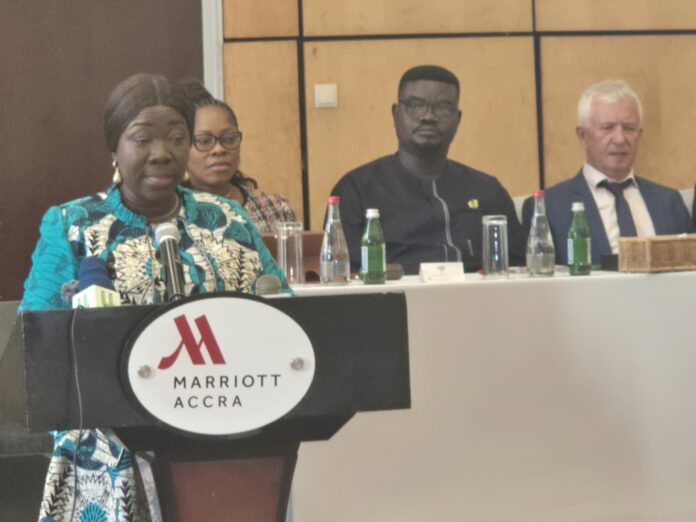
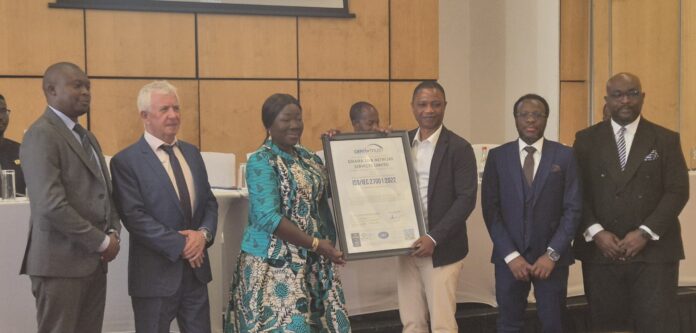
Mrs Ofosu-Adjare made the remarks at a ceremony to mark the ISO/IEC 27001:2022 certification of Ghana Link Network Services Limited’s new Tier IV data centre, which now hosts the Integrated Customs Management System (ICUMS). 

She said Ghanaian traders, manufacturers and agribusiness operators depended on efficient and reliable systems to move goods across borders without avoidable delays. 

“Our traders, manufacturers and agribusinesses succeed when the trading environment is predictable, efficient and trustworthy,” she stated. 

She noted that whether businesses were importing raw materials, clearing machinery, exporting processed foods, or moving perishable goods, time and reliability were critical determinants of profitability. 

“When the system is available, processes are consistent, and issues are resolved promptly; goods move. When it is not, delays build up, costs rise, and the effects are felt across the entire value chain,” she said. 

The Minister explained that the successful migration of ICUMS to the new Tier IV data centre, coupled with the ISO certification, meant the platform now operated under clearly tested international standards for information security and operational continuity. 

“In plain terms, this means the data centre has clear and tested measures to protect information and to keep the system secure and available,” she said. 

She highlighted key operational safeguards, including access control, incident management, disaster recovery readiness, and structured change management processes. 

Mrs Ofosu-Adjare indicated that a dependable customs platform supported broader government objectives such as lowering the cost of doing business, enabling firms to plan with confidence, and strengthening fair competition in the domestic market. 

She observed that Ghana had faced challenges in the past, including undervaluation and other practices that undermined state revenue and distorted competition. 

“When duties are avoided, some goods enter the market at prices that honest traders and local manufacturers cannot match,” she said. 

She added that strengthening traceability and controls through ICUMS would help curb unfair practices and protect legitimate businesses. 

The Minister also linked the certification to investor confidence, stating that investors in logistics, warehousing, agro-processing, and manufacturing looked for dependable and well-managed systems before committing capital. 

“A secure and well-run customs platform signals seriousness. It reassures the trading community that Ghana is committed to modern trade administration and protecting the integrity of the trading system,” she said. 

Mrs Ofosu-Adjare placed the development within the context of the government’s recent engagement with the private sector, referencing assurances by the president to maintain Ghana’s industrial competitiveness. 

“That commitment must be reflected in the daily experience of businesses, particularly at the point where goods enter and leave our country,” she noted. 

While congratulating Ghana Link and its partners for achieving the certification, she cautioned that maintaining the standard would require continuous improvement, routine reviews, and sustained staff commitment. 

“Achieving certification is important, but sustaining the standard is where lasting value lies,” she said. 

She urged all institutions involved in customs administration to remain responsive to users and resolve issues promptly to ensure long-term trust in the system. 

Muslims, Christians advised to increase fruits, vegetables intake during fasting 

0

Mr Mershack Bankam, a Physician Assistant at HealthWise Hospital in Tema, has advised Muslims observing Ramadan and Christians undertaking the annual Lent fasting to increase their intake of fruits and vegetables to maintain hydration and proper nutrition. 

Mr Bankam explained that consuming fibre-rich and nutrient-dense fruits and vegetables before and after fasting helps manage thirst, improve digestion, and sustain energy levels during fasting hours. 

In an interview with the Ghana News Agency (GNA) in Tema, Dr Bankam said eating whole fruits and vegetables at both the beginning and breaking of the fast was essential to maintaining energy and electrolyte balance. 

“It is vital for Muslims and Christians to eat fruits and vegetables to maintain energy and electrolyte stores,” he said. 

He emphasised the importance of dark leafy greens and other nutrient-packed vegetables, noting that fibre-rich foods help maintain digestive health and prevent constipation, which is common during fasting periods. 

He cautioned against excessive consumption of fruit juices, advising individuals to consume whole fruits instead. 

“When you consume the whole fruit, you gain the full fibre benefit, which is lost in most fruit juices,” he explained. 

Dr Bankam further urged individuals living with chronic conditions such as diabetes, high blood pressure, heart disease, chronic kidney disease, or epilepsy to consult their healthcare providers before undertaking prolonged fasting. 

“Consultations help prevent complications such as severe dehydration, hypoglycaemia (low blood sugar), and hyperglycaemia (high blood sugar),” he stated. 

He noted that medical professionals could adjust medication dosages or timing, such as moving doses to before or after fasting, to ensure safe fasting practices. 

“Fasting is not recommended if your medical condition is unstable, if you have advanced heart or kidney disease, or if you are on twice-daily blood thinners,” he cautioned. 

The physician assistant reiterated that while fasting holds spiritual significance, health should not be compromised, and individuals must take proactive steps to protect their wellbeing. 

Ghana Link secures ISO 27001:2022 certification for new data centre 

0

Ghana Link Network Services Limited, operators of the Integrated Customs Management System (ICUMS), have received ISO/IEC 27001:2022 certification for their newly constructed Tier IV data centre.  

The certification, which is valid until February 2029, affirms that the company’s information security management systems meet internationally recognised standards for confidentiality, integrity, and availability of data. 

Mrs Cynthia Addy, Director of Human Resources, speaking on behalf of the Managing Director at a ceremony to present the certificate, described the certification as more than a symbolic achievement. 

“Today is not just a certificate moment; it is a trust moment. Ghana Link supports critical national trade and revenue-related operations. In that environment, performance cannot depend on effort alone. It must be built on standards, clear controls, repeatable processes, strong governance, and measurable accountability,” she said. 

She explained that ISO 27001 was globally regarded as the gold standard for information security management and that the certification followed independent international scrutiny of the company’s systems, processes, and personnel. 

“They have verified that we do not just talk about security. We live it, we audit it, and we improve it daily,” she stated. 

Mrs Addy assured stakeholders, including the Customs Division of the Ghana Revenue Authority (GRA), customs house agents, trade associations, importers, exporters, shipping lines, airlines, and road transport companies, that their data remained secure. 

“The data that powers Ghana’s trade through ICUMS is the lifeblood of our economy, and we treat it with the highest level of confidentiality, integrity, and availability,” she added. 

Dr Albert Kwabena Ansah, Chief Technical Officer of Ghana Link, described the milestone as a declaration of resilience and disciplined governance. 

“We constructed a Tier IV data centre engineered for fault tolerance and business continuity, eliminating single points of failure and ensuring operational stability for Ghana’s digital trade ecosystem,” he said. 

Dr Ansah disclosed that the company executed a near-zero-downtime migration of critical ICUMS operations onto the new infrastructure without service disruption. 

He noted that infrastructure alone was insufficient, explaining that the ISO certification process required structured risk management, strengthened asset governance, integrated business continuity planning, and independent external audits. 

“Passing that audit affirmed that we operate at globally recognised standards of security and accountability,” he said. 

Mrs Elizabeth Ofosu-Adjare, Minister for Trade, Agribusiness and Industry, said the certification had direct implications for Ghana’s trade and industrial agenda. 

“Our traders, manufacturers, and agribusiness succeed when the trading environment is predictable, efficient, and trustworthy,” she said. 

Mrs Ofosu-Adjare explained that reliable customs systems reduced delays, lowered the cost of doing business, and enabled firms to plan with confidence. 

“In plain terms, this means the data centre has clear and tested measures to protect information and keep the system secure and available. For a platform that supports daily trade and national revenue, this assurance is essential,” she stated. 

The Minister added that strengthened controls and improved traceability under ICUMS would help curb undervaluation and unfair trade practices, thereby, protecting legitimate businesses and supporting local industry competitiveness. 

Mr Mike Kamau, Managing Director of CERTI TRUST, the certification body, said ISO certification was a deliberate choice rather than a mandatory requirement. 

“With ISO, you are never forced. It is a deliberate decision to invite an independent party to verify that what you claim is actually happening on the ground,” he said. 

Mr Kamau explained that the core expectations of data centre stakeholders revolved around confidentiality, integrity, and availability. 

“Are you able to assure your customers that today and tomorrow their data will be available? Can you assure them it will not be altered? Can you assure them that only authorised persons can access it? That is what this certification confirms,” he stated. 

He added that beyond external validation, the certification process strengthened internal competencies within Ghana Link’s technical teams.