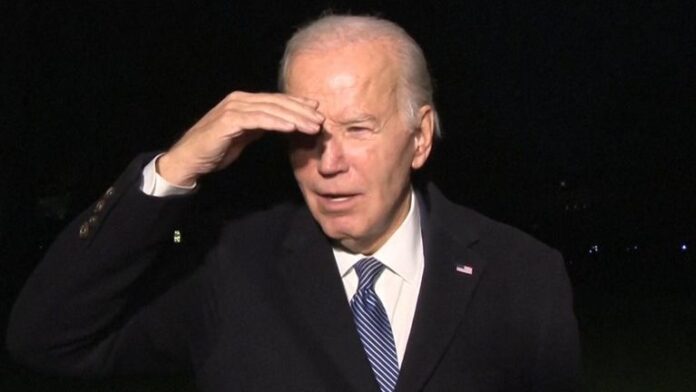
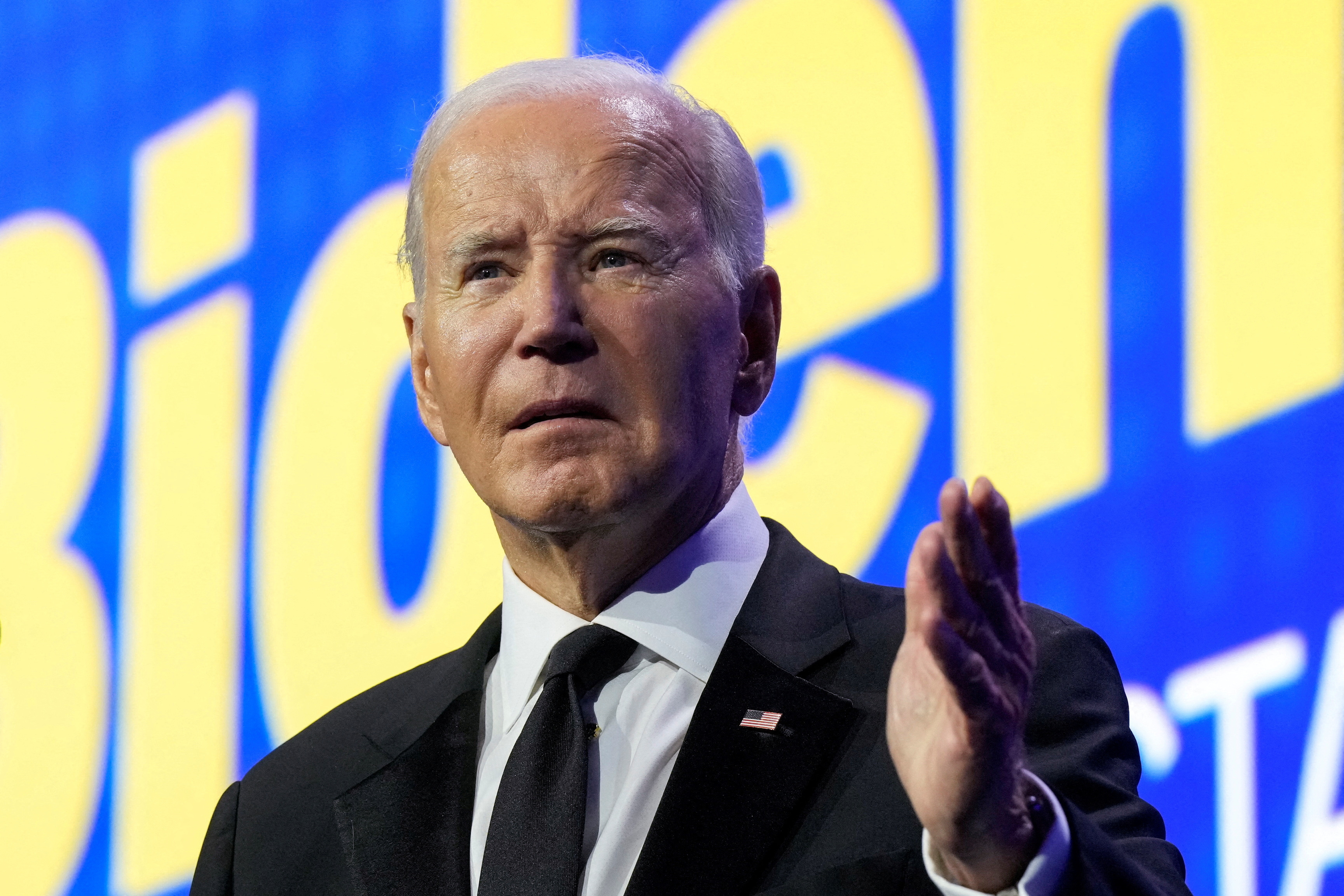
President Joe Biden said on Tuesday that if he had not been facing Donald Trump, he might not have run for re-election in 2024.
“If Trump was not running, I am not sure I would be running,” Biden said at a fundraising event for his 2024 campaign outside of Boston.
“We cannot let him win.” Biden’s self-assessment comes as even staunch Democratic voters express concerns about the president’s age.
“Somebody gave him a talking point they thought would sound good,” Trump, who was president from 2017 to 2021, said at a Fox News town hall on Tuesday.
Biden, seeking a second four-year term in next year’s election, later told reporters at the White House that he would not drop out of the race.
“No, not now,” Biden said when asked if he would consider stepping aside if Trump, 77, stopped seeking his own second term. “Look, he is running, and I have to run.”
Asked if he would have run were Trump not in the race, Biden said, “I expect so.”
During his 2020 presidential campaign, Biden often mentioned that his decision to run was due in part to then-President Trump’s handling of issues, including a 2017 white nationalist rally in Charlottesville, Virginia.
Now, Biden faces limited competition for his party’s nomination and is again positioning Trump as a danger to democracy itself.
Trump, who faces criminal charges over his efforts to reverse his 2020 election loss, has painted Biden as a dangerous autocrat.
After considering the decision for weeks with family and close confidants, Biden announced his re-election bid in April, coming to the private belief that neither Vice President Kamala Harris nor any other Democratic hopeful could beat Trump in next year’s general election, according to a former White House official who requested anonymity to discuss the president’s thinking.
The president’s aides increasingly regard Trump’s frontrunner status for the Republican presidential nomination as insurmountable, according to two of those Democrats who also declined to be named.
Biden has repeatedly made comments about Trump during a fundraising blitz that started on Tuesday in Boston and is set to include at least nine events before the end of the month.
“I don’t think anyone doubts our democracy is at risk again,” Biden said earlier on Tuesday.
Recent polling has shown the Republican frontrunner leading Biden in hypothetical matchups in key swing states and on the national level.
The AfCFTA desk at the ongoing Volta Trade and Investment Fair has engaged nearly 100 businesses within the first week of the event, which have signed up for membership.
Mr Divine Kutortse, the Programme Officer for Enterprise Development and Support at the National AfCFTA Coordination Office, heading a desk at the fair, told the Ghana News Agency, that more than 90 businesses had signed up, and were being taken through preparations towards the attainment of the coveted Certificate of Origin.
He said many of the businesses trooped in during the Farmer’s Day Holiday.
“There were lots of local producers here, and raw materials are an important part of AfCFTA, therefore we promote the local value chain, because to get their involvement is important to us,” he said.
Processes leading up to the attainment of the Certificate included capacity building to improve packaging and other components of trade requirements, and beneficiaries would receive training in negotiating and other skills needed.
The AfCFTA would also support them to attain some financial support.
Mr Kutortse, who is also the Programme Officer in charge of Trades and Finance, noted how some businesses in the Region were already exporting to countries even outside Africa, and said a prior regional sensitisation helped created a database of potential enterprises in the Region.
He said more than 300 enterprises have signed up so far in the Region, that Volta’s interest in the continental free trade initiative was refreshing for a region that had so much investment potential.
“It’s a sign that Volta should be the leader in AfCFTA. Looking at the produce and the farmlands, they are ripe for AfCFTA,” Mr Kutortse stated.
He described how local produce from the country had gained acceptance across the African Continent and said commodities such as shea butter topped favourites in such African Giants as Kenya.
“We want to see more local businesses take advantage of the AfCFTA in Volta. We encourage them to add value to their products and pay attention to packaging”.
An AfCFTA desk has been created at the Volta Regional Coordination Council (VRCC) and at the offices of the Food and Drug Authority, and the Ghana Standards Authority to support businesses.
The 2023 Volta Trade and Investment fair is the sixth instalment of what has become the most popular regional fair in the country, and more than 400 exhibitors and thousands of patrons are partaking.
It is being organised by the Association of Ghana Industries, the VRCC, and the AfCFTA on the theme: “Leveraging the AfCFTA for Economic Development,” and is running from November 26 to December 10, 2023, at the Ho Jubilee Park.
A total of six women in the Akatsi South Municipality of the Volta Region have filed to contest in the upcoming District-Level elections in their respective Electoral Areas.
The female aspirants, drawn from different Electoral Areas, if elected, would break the ‘all-male dominance’ structure of the current assembly members.
Madam Patience Agozi, an aspirant for Live Electoral Area (EA), explained to the Ghana News Agency that she remained optimistic about a massive victory to represent the voice of her electorates.
The other aspirants include Madam Happy Justine Akorlor, Anyidzime-Zuta electoral area, Davordzi Angela, Agbedrafor electoral area, Akpalu Charity Sherry, Gefia electoral area, Comfort Afi Gorni, Kpevi-Gornikope electoral area, and Ahiabu Diana for Dzogadze electoral area.
The GNA also gathered that a total of 96 males have since filed to join the race.
Figures from the Electoral Commission in Akatsi South also revealed that 21 females formed part of the Unit Committee slots as compared to a total of 217 males from the 28 Electoral Areas within the Municipality.
The EC has slated December 19 for the conduct of the district-Level Elections across the country.
The elections would take place in 6,252 electoral areas and with 38,672 polling stations nationwide.
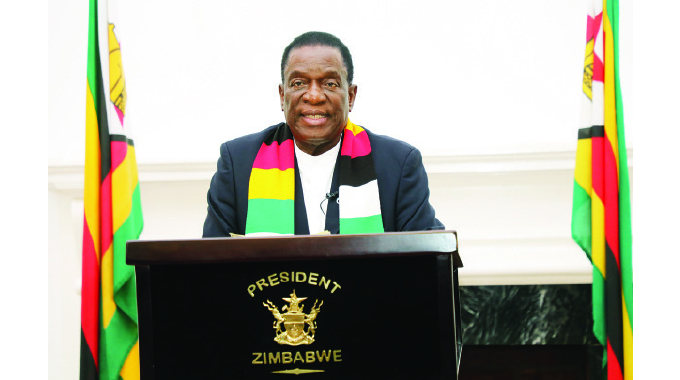
President Emmerson Mnangagwa of Zimbabwe has opened the 22nd edition of the International Conference on Aids and Sexually Transmitted Infections in Africa (ICASA) in Harare, Zimbabwe, which started on December 4th and is expected to end on December 9th.
Among the high-profile dignitaries who attended the opening section were Ghana’s Ambassador to Zimbabwe, Mr. Alexander Grant Ntrakwa, who is a career diplomat with extensive experience in multilateral diplomacy as well as some African diplomats, Civil Society Organisations working in the health sector and the donor community in Zimbabwe.
President Mnangagwa noted that over the past 10 years, Zimbabwe has recorded the highest decline of 78 percent in new HIV infections in East and Southern Africa.
“We have to redouble our efforts, mop up new infections, and sharpen our focus on most-at-risk groups,” he said.
The Zimbabwean President urged African nations to continue raising awareness about HIV and AIDS and stressed that Zimbabwe remains committed to creating an enabling environment for the pursuit of HIV prevention, treatment, care, and support.
“As a continent and a nation, let us continue to raise awareness about the existence of the pandemic and equally seek to utilise HIV prevention and treatment services that are available throughout the country,” President Mnangagwa stated.
“As a country, we are committed to addressing inequalities related to access, control, and utilisation of HIV-related services,” he said.
He said African countries HIV response must tackle factors that drive new infections, such as child marriages, violence against women, and culture-driven practices that put men, women, and children at risk.
The ICASA 2023, on the general theme “AIDS is not over: Address inequalities, accelerate inclusion, and innovate,” is being organised by the Society for AIDS in Africa in collaboration with the government of Zimbabwe and other partners, including the World Health Organisation, the Global Fund, and others.
The conference seeks to offer a unique platform for leaders, activists, scientists, and the community to take stock of the multiple and overlapping crisis and, with eyes wide open, examine the devastating impact on people living with and affected by HIV.
The new data revealed in the report are frightening; progress has been faltering, resources have been shrinking, and inequalities have been widening.
Insufficient attention, innovation, and investment on the ground are putting the globe in danger. We face millions of AIDS-related deaths and millions of new HIV and STI infections if we continue on the current trajectory.
The Ghanaian delegation includes officials from the Ghana AIDS Commission and the National AIDS/STI Control Programme. The delegation includes Dr. Stephen Ayisi Addo, Programme Manager, National AIDS/STI Control Programme; Dr. Samuel Kwabena Boakye-Boateng, Upper East Regional Director of Health Service; and Mr. Majeed Sulemana, both from the Upper East Regional Health Directorate.
The others are Ms. Gifty Boakye, Mr. Philip Boakye, Mr. David Adika, and Dr. Raphael Adu-Gyamfi, all from the National AIDS/STI Control Programme; Mrs. Gifty Addo-Tetebo, Eastern Regional HIV/AIDS/STI Coordinator; and Mr. Jacob Acquah Andoh, Ghana Health Service Headquarters.
The rest are: Dr. Kafui Senya of WHO Ghana, Ms. Roberta Araba Amoquandoh, HIV Coordinator Ashaiman Municipal, as well as other stakeholders in the fight against HIV and AIDS in Ghana.
Meanwhile, Dr. Ayisi-Addo, in an interview with the Ghana News Agency in Harare, Zimbabwe, stressed that Ghana has upscaled enhanced strategies aimed at empowering the population to prevent new HIV infections and ensuring the availability of and accessibility of prevention, treatment, care, and support services.
The strategies were also geared towards mitigating the social and economic effects of HIV on persons infected and affected by HIV and subsequently ensuring the availability of adequate funding to execute the policy strategies.
He said the programme was determined to continue implementing key policies geared towards accelerating progress to ending the AIDS epidemic by 2030.
Dr. Ayisi-Addo said it was the goal of the NACP to achieve epidemic control and fast-track targets of 95-95-95 by 2025 as a means of accelerating the global target to end the epidemic by 2030.
The 95-95-95 targets, which was launched globally by the Joint United Nations Programme on HIV/AIDS (UNAIDS), have the aim of diagnosing 95 percent of all HIV-positive persons, putting at least 95 percent of those diagnosed on antiretroviral therapy (ART), and also achieving viral suppression for 95 percent of those on treatment by 2025.
“There was also the provision of timely pre-exposure and post-exposure prophylaxis to key populations and persons exposed to HIV,” he said.
Dr. Ayisi-Addo noted that NACP has also initiated the implementation of HIV self-testing and the effective integration of HIV services to ensure universal health coverage.
He said the targets and commitments in Ghana’s HIV Strategy, which were in line with those of the Global Strategy when achieved, would ensure that the number of people who newly acquired HIV would decrease from 1.7 million in 2019 to less than 370, 000 by 2025, and the number of people dying from AIDS-related illnesses would also decrease from 690,000 in 2019 to less than 250,000 in 2025.
Maria Andreeva, whose husband was mobilised in October 2022 to join the Russian armed forces involved in a military campaign in Ukraine, poses for a picture in central Moscow, Russia, November 30, 2023. REUTERS/Yulia Morozova
A growing movement of Russian women is demanding the return of their husbands, sons, and brothers who were mobilized following a decree by President Vladimir Putin in September of last year.
Initially, the movement pledged loyalty to what the Kremlin calls its “special military operation” (SVO), but what they regard as the perfunctory response they have received is hardening some of their opinions.
Maria Andreeva, whose husband has been fighting in Ukraine for more than a year, is not alone in her battle to bring her husband back home.
Since Andreeva’s husband was mobilised last year and headed to Ukraine, he has been back only for two short breaks to see his wife and young daughter. His wife says this is insufficient for a soldier fighting in a conflict.
“We want our men to be demobilised so that they can return home because we think that for over a year they have done everything they could have – or even more,” Andreeva, 34, told Reuters in an interview in Moscow.
“For me, it is not only a struggle to ensure that my daughter has a father, but it is also a struggle for my marriage.”
Tackling the movement is a delicate matter for the Kremlin.
Moscow, which sent tens of thousands of troops to Ukraine in February 2022, has in previous wars tolerated higher death tolls than would be politically palatable in Western countries.
But the growing movement of Russian women underscores the complexity and innate inequality of keeping so many men at war for so long while many more of fighting age remain at home.
Groups of Russian soldiers’ mothers campaigned for better conditions for their sons serving in the armed forces as the Soviet Union crumbled, and later for their return from wars in Russia’s Chechnya region.
It is too soon to assess the size or impact of the movement of Russian women in a society which the authorities say is united behind the war effort. Women in Ukraine have also demanded their men be allowed back from the front.
Asked about the dangers of speaking out in war-time Russia, Andreeva said: “I want you to understand: it is no longer scary because it is just not possible to put up with all this any longer. It is just too much.”
Reuters did not seek or receive any military or other potentially sensitive information from Andreeva. She asked for her husband not to be identified.
LOYAL?
When Putin ordered a partial mobilisation of 300,000 reservists in September 2022, hundreds of thousands of young men rushed to leave Russia. Millions did not leave, and some of them were called up to fight.
Since then, Russia has recruited hundreds of thousands of contract soldiers in the provinces with the lure of high wages. Russia has so far recruited 452,000 contract soldiers this year, underscoring the numerical advantage Russia has over Ukraine, according to Dmitry Medvedev, the former president who is now deputy chairman of Russia’s Security Council.
Petitions to bring their men back produced almost no response, and Russia’s defence ministry has barely engaged with the women, Andreeva said.
The ministry did not respond to a Reuters request for comment.
The lack of a response has persuaded some of the women to stop behaving like “good girls” over their demands and changed their perceptions of the conflict, Andreeva said.
“Our position at the start was: Yes we understand why it is needed, we support it, we occupied a rather loyal position,” she said. “But now the position – including mine – is changing because we see how we are being treated, and how our husbands are being treated.”
Protests planned by the women did not secure the authorities’ approval to go ahead. The women have been accused of being backed by Western-based dissidents and opposition parties – slurs without foundations, Andreeva said.
Their “Way Home” Telegram channel has 23,000 members.
‘GOOD GIRLS’?
Two women peppered lawmaker Vitaly Milonov last month with blunt questions about the return of their men, piercing his attempts to brush aside their questions with phrases about his own patriotism.
“We are all Russian here,” one interrupted in a video clip posted online. “When will the mobilised be changed over?”
“Of course there will be (a changeover). We will be victorious and all…” Milonov said.
“Oh, we have heard all that before,” the woman interjected.
For Andreeva, and other wives, mothers and sisters, the inequality of the burden of war is an important complaint. While opulent restaurants in Moscow will be serving fine wine and truffles over the New Year festive period, some men are freezing in trenches at the front.
“We have 1 percent of the population who are taking on the whole burden of the SVO at the front while the other 99% are preparing for New Year and having some fun,” Andreeva said.
“Having fun is not what is in stall for our boys or our families.”
The government has announced the release of GH¢20 million for the payment of capitation grants for public basic schools across the country.
The scheme was introduced to replace all fees paid by parents in public basic schools to improve and expand access to education and support school performance improvement efforts.
Payments of the grants had been in arrears for two years, leading the Minority in Parliament and stakeholders in the education sector to complain about the delays that, in their view, were negatively impacting education at the basic level.
Answering questions on the Floor of Parliament, the Education Minister, Dr. Yaw Osei Adutwum, stated that efforts have been made to clear the arrears.
“Mr. Speaker, capitation grant arrears of GH¢15 million were disbursed to schools in May 2023 and the remaining arrears of last year amounting to GH¢20 million have been released by the Ministry of Finance and are currently being processed for disbursement. In addition, GH¢4.2 million of this year’s capitation is also being processed for disbursement.”
Abdul Manaf Nii Adjei Sowah, the New Patriotic Party’s (NPP) parliamentary candidate in the Odododiodoo constituency, has vehemently refuted claims that he was a National Democratic Congress (NDC) delegate before filing his nomination forms with the party.
In an interview with Umaru Sanda Amadu on Eyewitness News on Citi FM, he claimed that certain NPP members had planned a plot to damage his reputation and discourage delegates from supporting him in Saturday’s election.
These statements follow claims by the MP for the area, Edwin Nii Lante Vanderpuye, who accused Manaf of being a former member of the NDC.
“I have never been an NDC member. You know, when people enter a contest and lose, they often resort to throwing tantrums and political gimmicks to gain sympathy from delegates. This started with my brother Nii Lante and his supporters attempting to tarnish my image and disqualify me,” he stated.
The NPP conducted parliamentary primaries on Saturday, December 2, in its orphan constituencies nationwide. In the Greater Accra region, Abdul Manaf Nii Adjei Sowah emerged victorious in the Odododiodio parliamentary primary, securing 737 votes and defeating the NPP’s longstanding candidate Nii Lante Bannerman.
Giving further details on his victory, Abdul Manaf Sowah used the opportunity to outline some of the initiatives he intends to implement once elected into power.
He emphasized his unique qualities that, in his view, make him exceptionally qualified for the responsibilities associated with the role.
“I believe I possess the qualities to secure the seat for the NPP. When you consider the dynamics in Odododiodoo, you need someone with a background in the NDC to contest on the NPP ticket, and that’s precisely what I’m doing this time around,” he added.
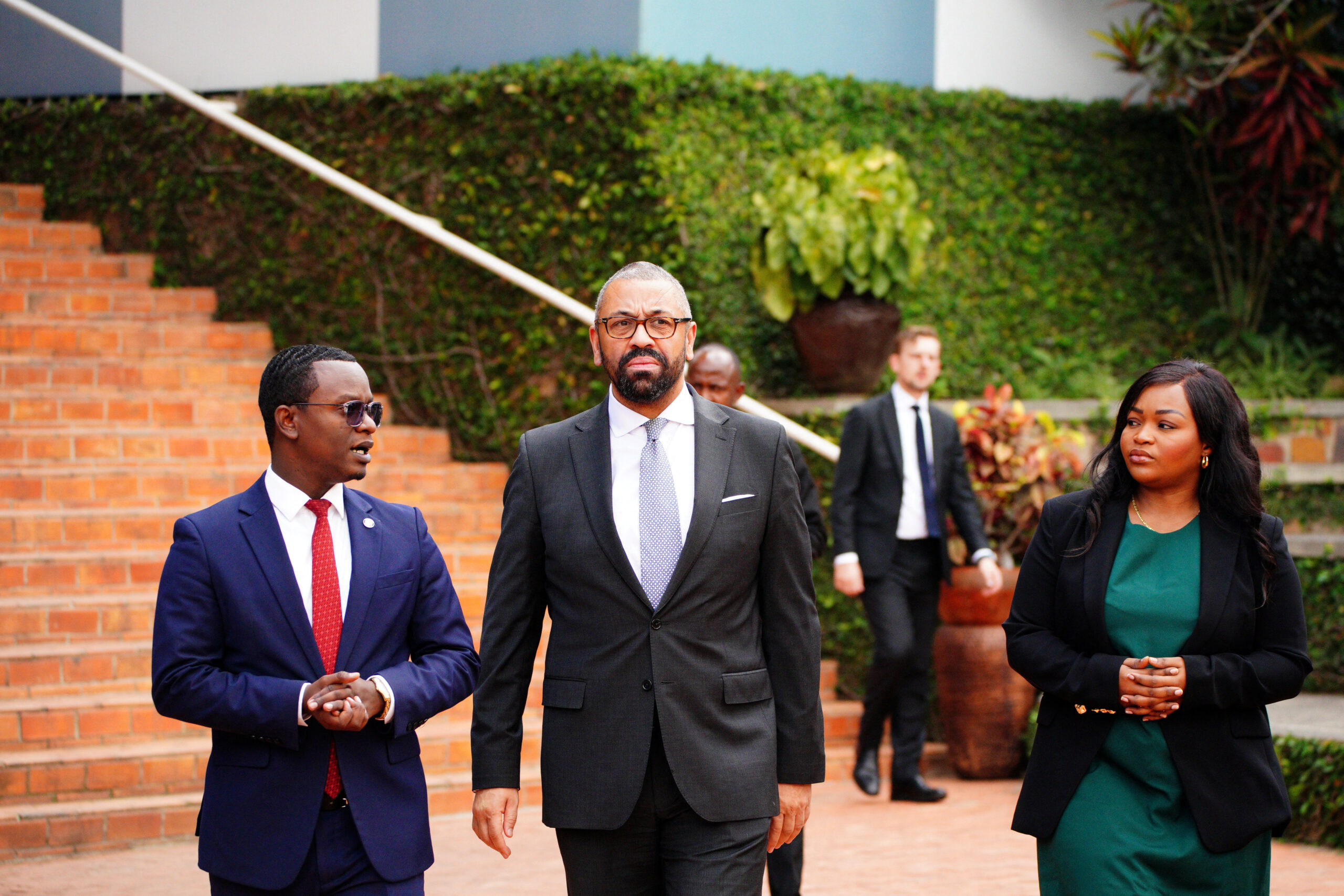
British Home Secretary James Cleverly tours the Kigali Genocide Memorial during his visit to Kigali, Rwanda, to sign a new treaty with Rwanda, December 5, 2023. Ben Birchall/Pool via REUTERS
The British Home Secretary, James Cleverly, arrived in Rwanda on Tuesday to sign a new treaty to send asylum seekers to the African country after the UK Supreme Court ruled last month that such a move would violate international human rights laws.
Since that ruling, Britain has been attempting to renegotiate its agreement with Rwanda in order to include a binding treaty that it would not expel asylum seekers sent there by Britain – one of the court’s major concerns.
Cleverly, who arrived in Rwanda’s capital Kigali on Tuesday morning, is scheduled to meet with the country’s foreign minister, Vincent Biruta, to sign the agreement.
Under the plan, Britain intends to send thousands of asylum seekers who arrived on its shores without permission to Rwanda to deter migrants crossing the Channel from Europe in small boats.
In return, Rwanda has received an initial payment of 140 million pounds ($180 million) with the promise of more money to fund the accommodation and care of any deported individuals.
Prime Minister Rishi Sunak is under intense pressure to cut net migration, which hit a record 745,000 last year, and end the flow of asylum seekers who pay people smugglers for their Channel crossings, often in overcrowded, unseaworthy boats.
Britain’s immigration minister Robert Jenrick said the government had to act because those arriving on small boats were effectively breaking into the country.
“The law says you can’t enter the country illegally. If you or I crossed an international border, we literally broke into another country, we would expect to be treated very seriously,” he told Sky News.
The vast majority of those arriving in Britain came via legal routes, and the government also announced plans to cut those numbers on Monday, raising the minimum salary they must earn in a skilled job.
Ministers are also expected to publish new legislation soon, declaring Rwanda a so-called safe country, designed to stop legal challenges against the planned deportation flights.
“Stop the boats” is one of five goals Sunak set for his government before a national election expected next year.
The Supreme Court ruled the government’s scheme to send asylum seekers to Rwanda was unlawful because there was a risk that deported refugees would have their claims wrongly assessed or returned to their country of origin to face persecution.
The court said the plan breached international undertakings – including the European Convention on Human Rights, the United Nations’ Refugee Convention and Convention against Torture.
There are growing tensions in the Conservative Party over how to respond, with some members of parliament putting pressure on the government to leave the European Convention on Human Rights, after the European Court of Human Rights originally blocked deportation flights from leaving.
This year almost 29,000 people have arrived on the southern English coast without permission, after a record 45,755 were detected in 2022.
The Rwanda policy was originally announced by former Prime Minister Boris Johnson last year, but no asylum seekers have been sent to the country yet.
Critics, ranging from opposition lawmakers as well as some Conservatives to church leaders and the United Nations refugee agency, have argued the policy is flawed, a waste of money, immoral and simply would not work.
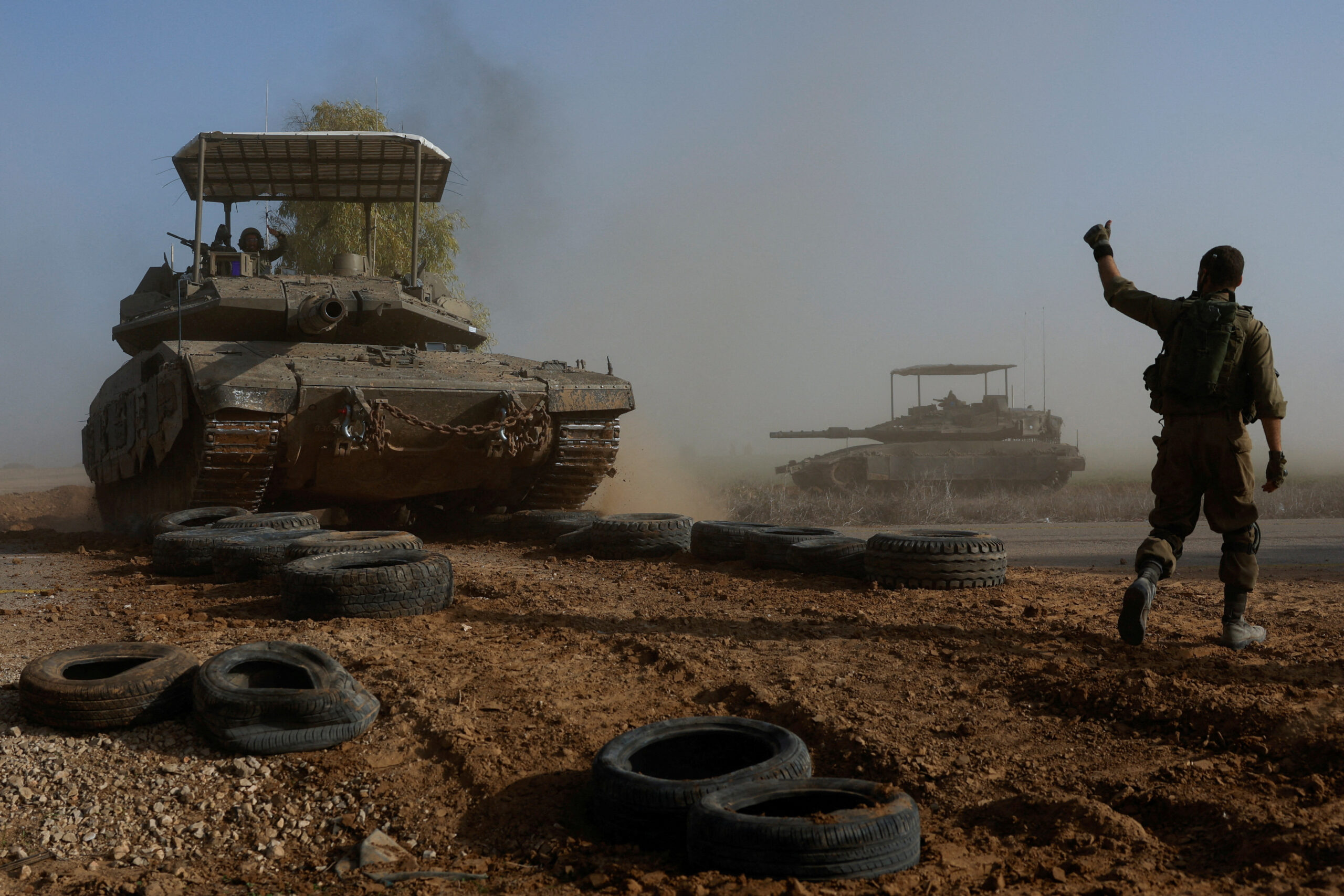
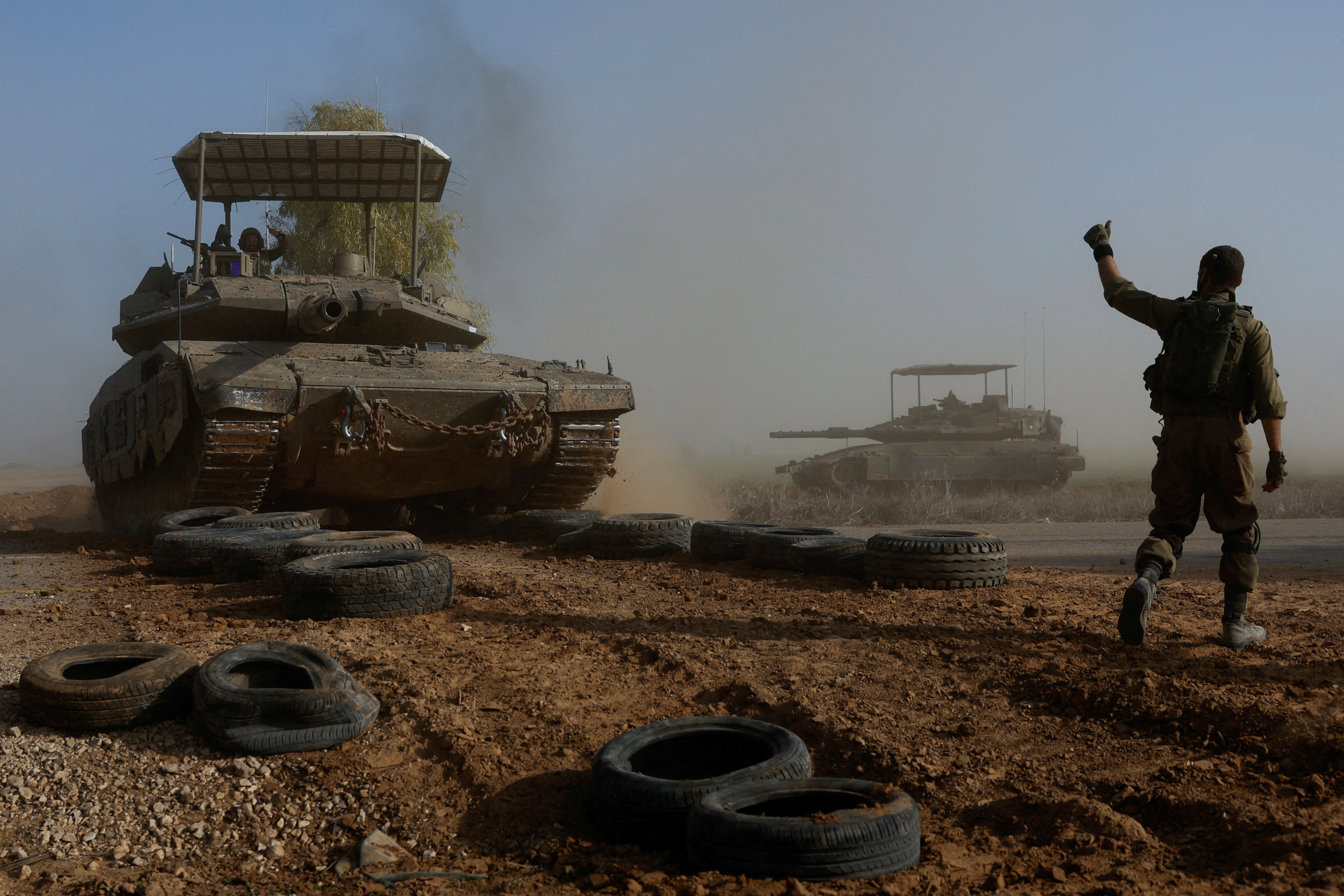
An Israeli soldier gestures towards a tank crew member as it crosses a road, as part of the convoy, amid the ongoing conflict between Israel and the Palestinian Islamist group Hamas, near Israel's border with southern Gaza, in Israel, December 4, 2023. REUTERS/Amir Cohen
When asked about the growing number of deaths since Israel and Hamas broke their ceasefire on Friday, the US, Israel’s closest ally, said it was too soon to say whether Israel was doing enough to protect civilians and that it expected Israel not to strike zones it has identified as safe.
However, residents and journalists on the ground said that Israel had told people to seek shelter in areas where its intense airstrikes were taking place.
Israeli forces continued to bombard the southern Gaza Strip with their weapons, killing and wounding dozens of Palestinians while doing so.
At the United Nations, Secretary-General Antonio Guterres appealed to Israel to avoid further action that would make the already dire humanitarian situation in Hamas-run Gaza worse, and to spare civilians from more suffering.
“The Secretary-General is extremely alarmed by the resumption of hostilities between Israel and Hamas… For people ordered to evacuate, there is nowhere safe to go and very little to survive on,” U.N. spokesperson Stephane Dujarric said.
Israel largely captured the northern half of Gaza in November, and since a week-long truce collapsed on Friday they have swiftly pushed deep into the southern half.
Hamas ally Islamic Jihad’s armed wing said its fighters engaged in fierce clashes with Israeli soldiers north and east of Khan Younis, Gaza’s main southern city.
Israeli tanks have driven into Gaza across the border and cut off the main north-south route, residents said. The Israeli military said the central road out of Khan Younis to the north “constitutes a battlefield” and was now shut.
Israel on Tuesday said three of its soldiers had died in combat in Gaza on Monday, in what Army Radio described as a day of fierce battles with Hamas fighters. Seventy-eight soldiers have died in Gaza since the start of the military’s ground invasion.
Israel launched its assault to wipe out Hamas in retaliation for an Oct. 7 cross-border attack by Hamas gunmen on border towns, kibbutzim and a music festival. The militants killed 1,200 people and seized 240 hostages, according to Israeli tallies – the deadliest single day in Israel’s 75-year history.
In eight weeks of warfare, the Gazan health ministry said at least 15,899 Palestinians, 70% of them women or under 18s, have been killed.
Philippe Lazzarini, who heads the UN agency for Palestinian refugees in Gaza (UNRWA), said the resumption of Israel’s military operation was repeating “horrors from past weeks” by displacing people who had been previously displaced, overcrowding hospitals and further strangling the humanitarian operation due to limited supplies.
“We have said it repeatedly. We are saying it again. No place is safe in Gaza, whether in the south, or the southwest, whether in Rafah or in any unilaterally so-called ‘safe zone’,” he said.
The Director General of the World Health Organisation (WHO), Tedros Adhanom Ghebreyesus, reiterated calls for Israel to protect civilians and civilian infrastructure including hospitals.
“WHO received notification from the Israel Defense Forces that we should remove our supplies from our medical warehouse in southern Gaza within 24 hours, as ground operations will put it beyond use,” he posted on X, formerly known as Twitter, on Monday.
[1/2]An Israeli soldier gestures towards a tank crew member as it crosses a road, as part of the convoy, amid the ongoing conflict between Israel and the Palestinian Islamist group Hamas, near Israel’s border with southern Gaza, in Israel, December 4, 2023. REUTERS/Amir Cohen Acquire Licensing Rights
DISPLACED IN OVERCROWDED ENCLAVE
As many as 80% of Gaza’s 2.3 million people have already fled their homes in the eight weeks of war that has wrought devastation across the overcrowded enclave.
On Monday, Israel ordered Palestinians to leave parts of Khan Younis, indicating they should move towards the Mediterranean coast and towards Rafah, a town near the Egyptian border.
Desperate Gazans in Khan Younis packed their belongings and headed towards Rafah. Most were on foot, walking past ruined buildings in a solemn and silent procession.
In Washington, a State Department spokesperson said it was an “improvement” that Israel was seeking evacuations in targeted areas as opposed to entire cities.
U.S. National Security Advisor Jake Sullivan said Washington expected Israel to avoid attacking areas identified as “no-strike” zones in Gaza.
He said the U.S. had discussed with Israel how long the war with Hamas should continue, but he declined to share that timeline.
A senior Israeli official said it was taking the time to order more precise evacuations in order to limit civilian casualties, but that Israel could not rule them out altogether.
“We did not start this war. We regret civilian casualties but when you want to face evil, you have to operate,” the official said.
Over 100 of the hostages seized by Iran-backed Hamas were freed during a seven-day truce last month. Israeli authorities say seven civilians and an army colonel died in captivity, while 137 hostages remain in Gaza.
The Gazan health ministry says about 900 Palestinians have been killed since the truce ended on Friday.
Israel accuses Hamas of putting civilians in danger by operating from civilian areas, including in tunnels which can only be destroyed by large bombs. Hamas denies it does so.
The Wall Street Journal reported on Monday, citing U.S. officials, that Israel had assembled a system of pumps that could be used to flood Hamas tunnels.
It was not clear whether Israel would consider using the pumps before all hostages were released, according to the story.
In the West Bank, Israeli forces killed one Palestinian man and critically wounded another person in different areas on Tuesday, the Ramallah-based health ministry said.
On Monday night, Lamine Yamal of Barcelona took home the inaugural Golden Boy The Youngest title, while Aitana Bonmati won the Golden Woman award.
The 16-year-old Barcelona sensation broke numerous records for both his club and his country, Spain, in 2023, making him the youngest player to appear on the Golden Boy gala podium. He also took home the first-ever Golden Boy The Youngest trophy for 2023.
The Catalan giants also saw their star player Aitana Bonmati bag the Golden Woman prize. Last season, the 25-year-old won the Champions League with her club and then helped Spain to glory at the Women’s World Cup 2023 before finally landing the prestigious Women’s Ballon d’Or award.
After an important win over Atletico Madrid during the weekend, Xavi’s Barca side will now aim to beat second-placed Girona on Sunday and close the gap on La Liga leaders and arch-rivals Real Madrid. Yamal will be in line to feature, having started seven of Barca’s 15 La Liga games so far this term.