Home Blog Page 345

Government must pay attention to art sector  

0

Some players in the arts sector have called for increased support from the government.  

The players, including artists, researchers, and art advocates, said the sector’s potential for economic growth remained untapped due to the lack of attention and investment, particularly from the government.  

Speaking with the Ghana News Agency at the ongoing Chale Wote Street Art Festival in Accra, they urged the government to increase funding support to arts education, periodic regional festivals, and create avenues for marketing of artwares.  

“We don’t give attention to arts from the economic, social, and cultural perspective because of the stigma attached to arts in society. So, the potential of the arts is not realised, but it’s a ‘gold mine’, Madinatu Bello, an art Researcher at the University of Cape Coast (UCC) said.  

“The global north is relying on the arts (cultural and creative industry) to build a sustainable economy, and it’s contributing a lot to their Gross Domestic Product (GDP), but we’re not doing that,” she added.  

To change the situation, Ms Bello called for research practice, community engagement, and a refocus of the minds of Ghanaians to appreciate arts and its potential in increasing revenue, foreign exchange and job creation.  

“We must decolonise our minds and look at the numerous positives of the arts in creating wealth and jobs, contribution to overall economic growth, and acting as a medium to achieve the other Sustainable Development Goals (SDGs),” she said.   

Ms Eva Seraphim Tandoh Quansah, also an Arts Researcher, asked that arts be inculcated into Ghana’s educational system, especially at the basic level, and encouraged the young ones with the potential to embrace it.  

“We used to have technical schools, which have now been converted into secondary technical, and most of the students are shying away from technical and arts subjects, and this won’t augur well for the country,” the arts advocate said.  

David Nyemah, an artist, said they needed a lot of support from the government, noting that should the government see the need to ‘pump’ money into the arts industry, it would eventually contribute to economic growth.  

“Despite the enormous economic potential, many artists in Ghana don’t get the needed attention and support, including infrastructure, and marketing channels like Chalewote. All these must be addressed,” Nyemah said.  

“On our own, we look out for exhibitions to attend and showcase our works and use social media to promote them,” the artist, who has been practicing for the past three years after his Senior High School education, said.  

Junior Justice, also an artist, explained that the prices of most of the materials they used were costly and imported, which contributed to the finished work being expensive, especially to many Ghanaians, who admired their works.  

He, therefore, urged the government to create the enabling environment for Ghanaian companies to produce those items locally to grow the sector.  
Food Security: Nsawam Medium Prison calls for support to expand crop, animal production

0

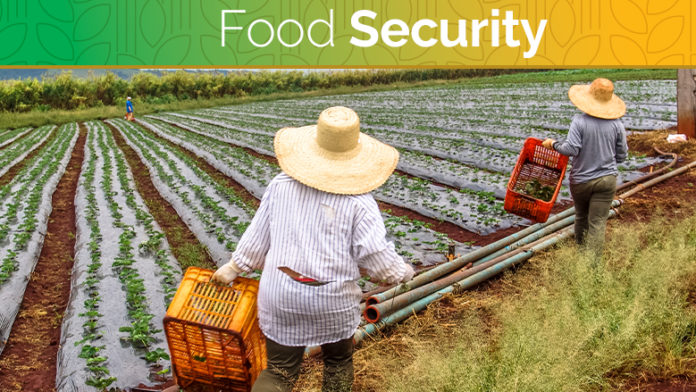
The Agriculture Department of the Nsawam medium Security Prison (Male/Female) needs farm machinery, tools and inputs to expand crop and animal production. 

Access to modern machinery and farm inputs will also help the department to produce more crops to supplement inmates’ daily feeding grant of GHC1.8pesewas. 

Superintendent Martin Duah, the Officer in-charge of Agriculture at the Male section of  Medium Prison made the appeal in an interview with the Ghana News Agency. 

He said with adequate support the Department would be able to produce high-value vegetables, including leeks, cauliflower cucumber, lettuce, cabbage, eggplants, and carrot to supplement the ration of inmate and sell the surplus to sustain the projects. 

The Officer said the Prison had over 5,000 acres of land out of which only 200 was under cultivation. 

Supt. Duah said the only tractor the facility had was old, with some of its accessories, including tillers, reaching ‘end of life’.  
He said they had started a two-acre vegetable farm under irrigation on pilot for the season and needed planters, boots, and cutlasses. 

 The Officer thanked the Ministry of Food and Agriculture for donating a maize thresher to the Prisons under the Planting for Food and Jobs Programme, adding that it had reduced the stress involved in processing maize after harvesting. 

“Prior to receiving the thresher, inmates spent days de-husking and shelling maize,” he said. 

The Nsawam medium security was built to hold a total of 850 prisoners, but currently, the facility is holding over 3,500 prisoners, with feeding challenges.  

GNPC-GENSER agreement raises concerns that cannot be overlooked – Minority

0

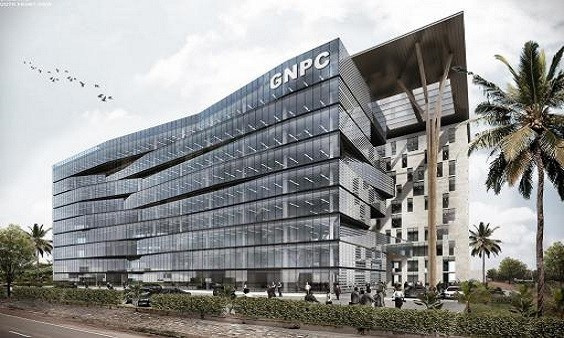
The National Democratic Congress (NDC) Parliamentary Minority says the Ghana National Petroleum Corporation (GNPC)-GENSER agreement requires an urgent review to ensure a level playing field for all industry players and transparency in gas pricing.

It said the agreement raised concerns that could not be overlooked, including issues of transparency, a statement signed by Mr Emmanuel Armah-Kofi Buah, the Deputy Minority Leader and Member of Parliament for Ellembele, copied to the Ghana News Agency, said on Wednesday. 

The call for a thorough review of the agreement was premised on grounds that it combined the Gas Sales Agreement and the Gas Transmission Agreement (GTA), which did not ensure transparency in gas pricing.

The statement said shifting of the agreement from the Ghana Gas Company and its signing by the GNPC when Ghana Gas was supposed to be the gas transmission utility also raised concerns.

It cited the discount given to GENSER by the GNPC for the GTA and GNPC’s inability to explain satisfactorily how that discount would be recovered.

“We appreciate the timely intervention by the Right Honourable Speaker to rope in the Finance Committee to jointly work with the Mines and Energy Committee to deal with these outstanding issues to ensure that Ghana is not shortchanged,” it said.

“The Minority believes that the issues are now properly before Parliament and requires the actual thorough work to begin. It is, therefore, unfortunate that the Chairman of the Mines and Energy Committee went public with the work done by the Energy Committee when a new referral is pending,” the statement said.

“On behalf of the Minority colleagues on the joint committee of Finance and Mines and Energy, we pledge to unravel all the flaws in the agreement to ensure value for money”.

The Minority would do so on a firm conviction that the heart and soul of Ghana’s future was sn its energy security and all the critical issues around it, including transparent gas pricing, it said.

“I have personally dedicated my political career towards building a sound energy security for our country, since I had the opportunity to serve on Ghana’s first-ever gas task force as Deputy Energy Minister under President John Evans Atta Mills, that led to the formation of Ghana Gas and the gas infrastructure…”

“…. And supervised the historic construction of ENIs OCTP gas-power project as Energy Minister under President John Mahama; projects that have transformed Ghana’s energy sector.”

“This is a record I intend to jealously protect.”

The Minority Group was committed to upholding the interests of the people of Ghana and believes that they must strike the right balance between private enterprise and social benefit.

“The Minority would want to assure Ghanaians that we will not compromise the trust reposed in us by the people.”

It called on the chairmen of the Finance and Energy committees to immediately convey a meeting to consider the Speaker’s referral.

Vice President inaugurates phase two of Tamale International Airport

0

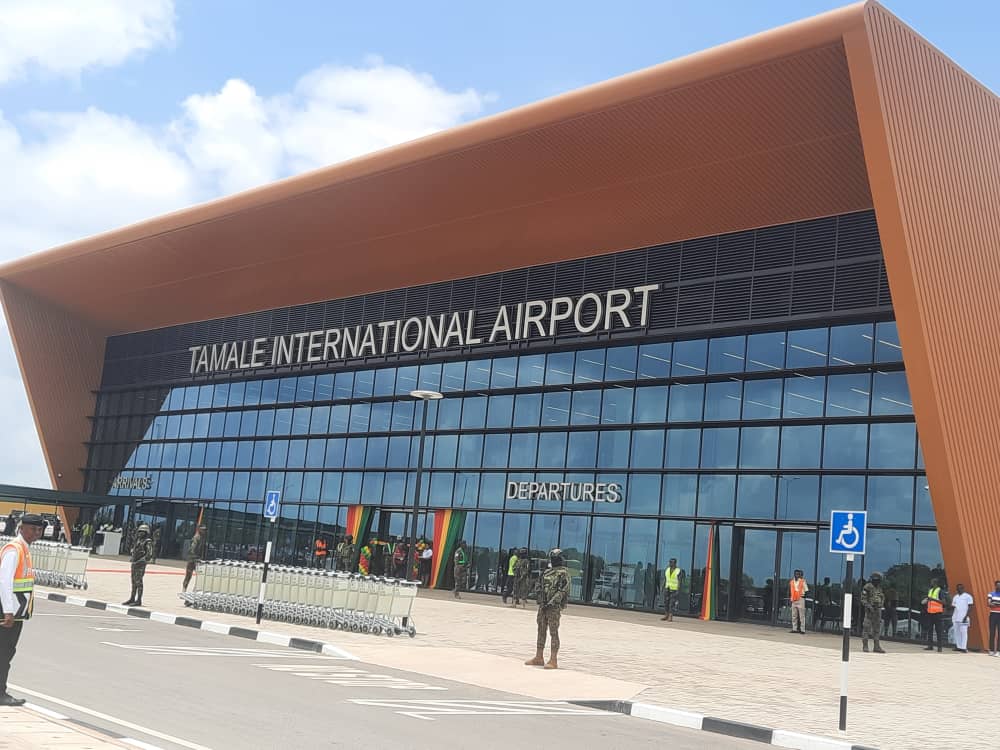
Vice President Dr Mahamudu Bawumia has inaugurated the phase two of the Tamale International Airport to open the country as an aviation hub in the sub-region.

      The $70 million project, which commenced in July 2019 and financed by UK Export Finance and KFW IPEX-Bank of Germany, involved the construction of an expandable modular airport terminal building, designed for annual passenger capacity of 400,000.

     The Airport has a VIP lounge, two boarding gates, two self-service check-in kiosks, eight check-in desks, airline offices, commercial retail areas, a multi-purpose terminal to include Hajj travel facilitation, a five-kilometre road network, and other ancillary facilities.

     It is expected to enhance regional economic activity, accelerate the potential increase in domestic travel, and open the growth potential of the region in terms of tourism and agriculture, among others.

     Dr Bawumia said it was part of the Government’s commitment to expanding the frontiers of the country’s aviation industry and make her the aviation hub in West Africa.

     The facility would provide the needed impetus for increased economic activities and make Tamale the gateway to the Sahelian region and other parts of the world.

      He charged all relevant institutions to ensure proper management of the airport’s land to prevent encroachment and facilitate its future expansion.

     Mr Kwaku Ofori Asiamah, the Minister of Transport, said the facility would handle the growing number of passengers and ease travelling to ensure economic growth.

     Alhaji Shani Alhassan Saibu, the Northern Regional Minister, expressed happiness at the completion of the second phase and said it would complement the Kotoka International Airport for air travel to other parts of the globe.

      It would not only promote movement but also propel economic growth and development of the area, he said.

     Mrs Pamela Djamson-Tettey, the Managing Director of Ghana Airports Company Limited, gave the assurance that the company remained committed to managing the facility and providing world class services to patrons.

   Operations at the old terminal of the Airport have been migrated to the new terminal.

     Mrs Harriet Thompson, the British High Commissioner, was hopeful that the Airport would enhance tourism and agriculture to get processed foods across the world.

     Ya-Na Abukari II, Overlord of Dagbon, expressed delight that the Tamale International Airport, which had been the dream of various successive governments, had been realised.

     In September 2014, work commenced on the upgrade and expansion of the Tamale Airport to an international status.

    The development was in two phases, with the first phase involving the upgrade and extension of the runway from 2,438 metres to 3,400 metres, construction of a new apron and taxilink, rehabilitation of existing apron and the installation of Aeronautical Ground Lighting Systems.

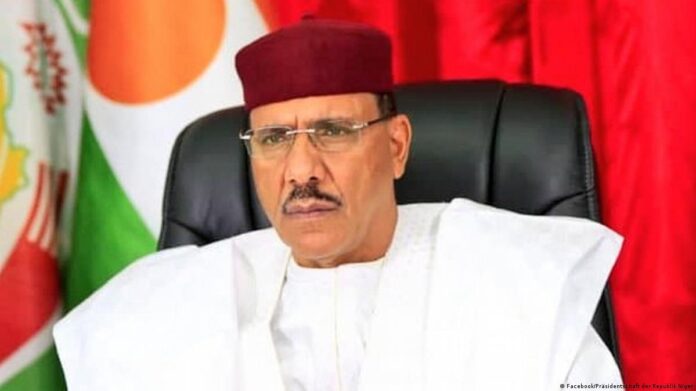
President Mohamed Bazoum of Niger, who was deposed, is “determined to fight for democracy.”

0

The daughter of former Niger President Mohamed Bazoum, who was deposed on July 26 in a coup d’état and has been imprisoned ever since, promises us in an open letter printed in the French newspaper Le Figaro that her father is not quitting and is “committed to fight to protect democracy.”

Zazia Bazoum Mohamed, a resident of Paris, requests in the letter both the “establishment of constitutional order” in Niger and the release of her father, who is being kept hostage at the presidential palace.

She reminisces on how her father was “democratically chosen,” “he is the people’s choice,” and that she thinks he “has made a great imprint, both domestically and internationally.”

“He has made the fight against corruption and bad governance his main battleground”, she continues, underlining the progress made on the economic front.

“Today, taken hostage with his family, he is not resigning because he holds democratic values dear and has always fought against military regimes,” she adds. “He fights and sacrifices himself for the future of our dear country, Niger, for the Sahel and for the whole of West Africa”.

She points out that her father could have given up, “spared his family this suffering” and “found an important international position”. “But he decided to fight to safeguard democracy in Niger”.

The soldiers who overthrew President Bazoum, who is due to be elected in 2021, mainly justified their coup by the “deteriorating security situation”.

His daughter denounces these “totally fallacious” arguments.

“All the terrorist attacks denounced by the hostage-takers took place before my father was president and, better still, all the hostage-takers and their accomplices were already part of the system they denounce”, she writes.

What’s more, she points out, “Since they took my country, hostage, we have watched helplessly and sadly as terrorist attacks have increased at an alarming rate: more than seven attacks in three weeks, with many deaths”.

A way out of the crisis is difficult, as the countries of the Economic Community of West African States (Ecowas) are demanding the reinstatement of Mohamed Bazoum and his immediate release, which the military are refusing.

Ecowas has threatened military intervention but has favored diplomatic channels, to no avail so far.

“This injustice against my family and against Niger makes me wonder if there isn’t a link with the fact that Niger was due to become an oil-exporting country in three months’ time”, says Zazia Bazoum Mohamed.

According to her, “the hostage-takers and their accomplices know that no one will benefit personally from the oil windfall” with her father at the head of the country. Mohamed Bazoum “will always ensure that this wealth benefits the people of Niger and not an elite that believes itself superior to Nigeriens”, she assures.

Niger: A group requests the departure of French forces

0

M62, a civil society organisation in Niger, has urged France to pull its soldiers out of the nation.

On Monday, M62’s Abdoulaye Seydou declared that his group would not give up until French soldiers left Niger. M62 is a coalition of civil society organisations. Since Paris designated Niger the focal point of its Sahel campaign last year, 1,500 French soldiers have been stationed there.

“We won’t give the French forces one second on our territory once this deadline has expired, as the CNSP itself has made clear. All the villages, all the surrounding communes will descend on the capital and we will get them out. They will leave Niamey. They’re saying they’re in Niger, they’re not going to leave … but they’re going to leave.” Abdoulaye Seydou, M62 national coordinator

On August 3, Niamey’s ruling military denounced a series of military agreements with France, some of which include a one-month notice period. In recent months, fervent anti-French sentiment has been on the rise across France’s former colonies in west Africa.

BRICS: Brazilian President Lula da Silva advocates stronger relations with Africa

0

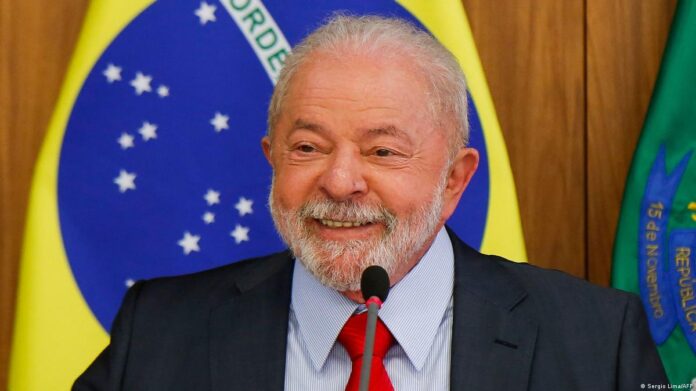
During his remarks at the BRICS Economic Summit on Tuesday in Johannesburg, Brazilian President Luiz Inácio Lula da Silva spoke in favour of greater connections with African nations.

The greatest rising economies in the world—Brazil, Russia, India, China, and South Africa—make up the BRICS alliance.

According to South African officials, more than 20 countries have sought to join the bloc, which is currently home to 40% of the world’s population and generates more than 30% of the world’s economic output. These countries include Saudi Arabia, Iran, and the United Arab Emirates.

“Brazil is back on the continent it should never have left. Africa offers vast opportunities and enormous potential for growth,” said the Brazilian President.

“The BRICS have a unique chance to shape the trajectory of global development. You, entrepreneurs, are part of this effort. Our countries together represent a third of the world economy.”

Former President Jair Bolsonaro didn’t visit the African continent during his four year term in office.

The meeting was also attended by the President of South Africa, Cyril Ramaphosa, and the Prime Minister of India, Narendra Modi.

Chinese President Xi Jinping and Russian President Vladimir Putin did not attend, but sent representatives to the event.

I’m confident the government is participating in judicial proceedings against me – Quayson

0

James Gyakye Quayson, Member of Parliament for Assin North Constituency, has accused the Akufo-Addo government of meddling in his daily trial.

During the campaign for the Assin North by-elections, then-candidate James Gyakye Quayson was ordered to stand trial on a daily basis.

Until the trial was switched to a daily schedule, he commuted from his constituency to the court on a weekly basis.

Godfred Yeboah Dame, the Attorney General, claimed that given the allegations against Quayson, he might be convicted and imprisoned if found guilty, hence the necessity for a speedy trial.

In a letter, James Gyakye Quayson formally requested that the General Legal Council (GLC) initiate disciplinary measures against the Attorney General.

Quayson’s request stems from allegations of professional misconduct leveled against Dame in the context of his ongoing criminal trial in the High Court.

During an interview with Umaru Sanda Amadu on Face to Face on Citi TV, the legislator stated, “The daily trial began during the 2023 campaign. I interpreted it as an attempt to prevent me from campaigning and winning the seat. That was the best they could do. I never believed that the government could be involved in the judiciary, but now I am convinced.”

“An AG can just walk into court and request that the file be moved. Before, it was mostly every two weeks, but suddenly they say I have to come every day. In fact, I was on the campaign trail. I went from my constituency to court from 12pm to 2pm, and then I was back in my constituency by 4pm to campaign until about 11pm.”

He admitted that the daily trial put some pressure on him, but it did not affect his chances of winning the seat.

“During the elections, the pressure of the daily trial was there, but that daily trial didn’t work. I even joked that they could give me a chamber in the court, and I would still win the seat. I didn’t have to be on the grounds,” he asserted.

Asked if he was not afraid of ending up in Nsawam prison, he said, “Why should I be? I believe in the justice system. The fundamental issue in any judicial matter is whether or not the person intended to commit the crime. Did he plan it? I have not planned anything of the sort.”

Background

The High Court in Accra on Thursday adjourned to July 4 an application for a stay of proceedings of the criminal trial of the newly elected Member of Parliament for Assin North, James Gyakye Quayson.

The trial judge, Justice Mary Yanzuh, said the adjournment was because the court had not received the full complement of the application documents.

The lawyers for Mr. Quayson argue that the application is to stay proceedings in the High Court so that the Court of Appeal can determine whether or not the High Court was right to rule that Gyakye Quayson’s criminal trial be heard on a daily basis.

Mr. Quayson, who was representing the Assin North constituency after the 2020 polls, was kicked out of Parliament after the Supreme Court directed Parliament to expunge his name from its record.

Mr. Quayson was dragged to court for having dual citizenship.

A by-election organised later in the Assin North constituency was won by Mr. Quayson.

PURC’s tariff review procedure must be open – CUTS International

0

CUTS International, an energy think tank, has chastised the Public Utilities Regulatory Commission (PURC) for raising power rates by 4.22%.

The organisation claims that the increase, together with the tough economic conditions, puts an excessive strain on suffering residents.

PURC, on the other hand, claims that the modification is necessary to maintain the true cost of delivering utility services.

Adomako Appiah Kusi, West Africa Regional Director for CUTS International, told Citi News that the PURC must be open in its transactions and tariff review systems.

“I don’t know whether the PURC is trying to do the bidding of the utility providers by consistently increasing tariffs. Of course, electricity has gone up by 5 percent, but there was a time when you looked at all the factors, we should have had a reduction by 4 or 6 percent which the PURC said we should ignore because it was not significant, but now that it is a 4 percent increase, it has had the effrontery to increase it and I think that the PURC is not being fair to consumers.”

“One thing I will like the PURC to do is like the way the National Petroleum Authority puts out the data in the public domain for anyone to calculate the possible adjustment. PURC should do the same.”

Mr. Appiah Kusi further emphasized the need for the PURC to ensure that utility companies retrieve debts to provide balance in its revenue drive.

“PURC has kept quiet and consumers are paying for the inefficiency of the electricity gridlines. Lots of people are consuming power without paying and instead of the PURC asking the ECG to go and chase those monies, all those debts are rather being pushed to the few ones that are paying.”

Traditional authorities are partially to responsible for the rise in galamsey activity, according to Osafo Maafo.

0

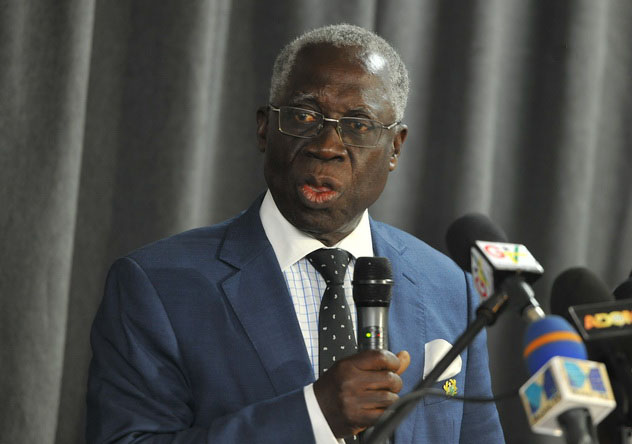
Yaw Osafo Maafo, the senior presidential advisor, has blamed traditional elders in part for the increased contamination of water bodies in the country by illegal miners.

According to Osafo Maafo, some chiefs in places where illicit mining, also known as “galamsey,” occurs donate their lands to the miners, who subsequently contaminate the water sources beyond cleansing.

Yaw Osafo Maafo delivered the keynote address during the 23rd General Assembly of the Presbyterian Church of Ghana at Kwahu Abetifi, Eastern Region.

“Look at what galamsey is doing to the land, and should we allow monies that a few people want to make to destroy the very base of water that we need to drink? There are areas where you cannot even purify the water and where you can, we are spending more than three times what we used to spend in purification and all this is happening in the direct face of our chiefs that gave the land for the galamsey.”

He also expressed concern about the growing problem of corruption, despite the high number of Christians in Ghana.

“If 72 percent of us are Christians and corruption begins to grow from bad to worse, then there is something wrong with even the message that we give to this 72 percent of the population. We need to do some retrospection and as a country, together with the government, take certain actions to redeem the country from corruption and can’t just keep talking about corruption without doing anything about it.”