Home Blog Page 490

The Twitter-Elon Musk $44 billion takeover trial is still on schedule and will begin on October 17, according to a US judge.

0

Despite the billionaire’s apparent U-turn, the judge presiding over Twitter’s legal effort to hold Elon Musk to his $44 billion purchase bargain declared on Wednesday that the case was still on course for trial.

The trial is scheduled to begin on October 17, according to Judge Kathaleen McCormick’s decision. Neither Twitter nor Musk have asked the court to postpone the matter, so “I, therefore, continue to press on toward our trial.”

Motions by Twitter to obtain communications, documents, or depositions that might be utilized as trial evidence in Delaware’s Chancery Court were heard by McCormick.

According to McCormick’s judgement, Musk’s side “likely” allowed certain Slack discussions about the takeover agreement and failed to give Twitter copies of every message he exchanged about it.

“If Defendants deleted documents after they were under a duty to preserve, some remedy is appropriate, but the appropriate remedy is unclear to me at this stage,” McCormick said in her ruling.

She added that she will reserve judgement on the matter until after the trial, when she has “a fuller understanding of the record.”

Musk on Tuesday offered to push through with his buyout of Twitter at the original agreed price, as the trial over his efforts to withdraw from the deal loomed.

The Tesla founder said in a filing with the Securities and Exchange Commission that he sent Twitter a letter vowing to honor the contract.

Conditions of his offer included halting the litigation, but McCormick made it clear she had received no such request.

Given that Musk has already tried to walk away from the deal once, the judge is expected to seek assurances that he will keep to his word this time around.

Private Universities to pursue Presidential Charter

0

Professor Nicholas N.N Nsowah-Nuamah, Chairman, Council for Independent Universities, has encouraged private universities to work hard to meet the Ghana Tertiary Education Commission’s (GTEC) criteria for a Presidential Charter.

That, he said, would enable the private universities to award their own degrees and diplomas after being mentored by a public university.

The Government merged the National Council for Tertiary Education and the National Accreditation Board under the new Education Regulatory Bodies Act, 2020 (Act 1023) to form the GTEC in August, 2020.

Following the creation of the GTEC, under the Education Regulatory Bodies Act, 2020 (Act 1023), it is no longer mandatory for new tertiary education institutions to go into affiliation arrangements with existing chartered institutions to be accredited.

As part of the new transitional arrangements for the granting of a Charter, all existing University Colleges have been given up to the end of 2024 to demonstrate their capability and readiness for a Charter, by meeting the prescribed conditions.

The Act states that, if an affiliated institution is unable to meet the requirements for a Charter within the specified four-year period, but demonstrates sufficient cause for preparing for a Charter, an additional two years may be given by GTEC to the institution to enable that institution meet the requirements for Charter.

President Akufo-Addo on Tuesday, August 30, 2022, awarded Presidential Charters to Methodist University College, Presbyterian University College, and Catholic University College. This means they have transitioned into autonomous Universities, with the capacity, now, to award their own degrees and diplomas.

Prof Nsowah-Nuamah, in an interview on the side lines of a workshop on quality assurance for private Universities, urged founders and management of private Universities to make funds available to meet the charter requirements.

He said GTEC organised a workshop in Koforidua for private universities to take them through the charter system, adding that “today’s meeting was to assess members’ preparedness in meeting the criteria for a Charter.”

“We have asked members to prepare the self-assessment document indicating their strengths and weaknesses and find ways to address the gaps,” he said.

The Professor said the participants were taken through topics like conceptualizing quality and quality assurance in tertiary education, charter policy dimension and regulatory framework, among others.

Prof Albert Addo-Quaye, President of Kings University College, said over the years, admission into the private universities had reduced which had affected their revenue strength, making it difficult to pay for the institutional affiliation fees.

The workshop, Prof Addo-Quaye stressed, was timely and would enable participants to know how to prepare for the Presidential Charter.

Mr Anthony Kwame Archiabah, Computer Engineer, said he had manufactured a software application dubbed “Performance Machine” to provide security in education, transport, cyber and other sectors.

Oti Regional Minister urges AGI to help empower the youth

0

Dr Joshua Makubu, the Oti Regional Minister, has called on the Association of Ghana Industries (AGI) to identify and develop the potential of the youth in the region.

He said the move would enable the youth to be productively engaged and not undertake activities that could jeopardise their lives.

Dr Makubu during the 2022 Regional Annual General Meeting of the Eastern, Volta and Oti Branch of AGI, said the local economies must be strengthened to serve as catalysts for economic prosperity.

Dr Makubu noted that the African Continental Free Trade Area (AfCFTA) presented a golden opportunity for the region to market and utilize its full economic potentials to transform its economic landscape, which will ultimately result in the creation of decent jobs for the teeming youths.

He said there was the need to strengthen the collaborative efforts with the private sector with the AGI at the forefront to achieve the above stated objective.

Dr Makubu urged businesses to explore opportunities in the region, adding that they were assured of adequate security and human resources.

Mr Eliphas Barine, Kenya’s High Commissioner to Ghana, said the trade opportunities available under the African Continental Free Trade Area must not elude the continent due to its benefits.

He said the continent must own the AfCFTA policy and begin to look internally and encourage citizens to patronise locally produced goods since it would help businesses grow.

Mr Barine said if industries received the needed support under the trade policy, it would help solve unemployment issues and create wealth.

He said although the continental policy would not solve all problems of the continent, it must be fully supported by all and not only governments and few businesses.

He called on the young people to begin their own businesses with the little resources they had and must be willing to work in groups to share ideas.

Nana Owusu Afari, Executive Chairman, Afariwaa Group of Companies, said he hoped the event would unearth a lot of businesses within the Oti region as well as host more industries to enable businesses and people get access to potentials in the region.

He said employment avenues needed to be created in rural areas of the region for the youth to prevent rural-urban migration.

Nana Afari urged businesses to leverage on all opportunities available at the regional and district levels as well as get the support and grants to thrive.

The event was on the theme: “Promoting Local Economic Development for the African Continental Free Trade Area.”

Mr Dela Gadzanku, Regional Chairman, Eastern, Volta and Oti, said it was important the local economy a must that the local economy be strengthened.

He said local economies formed the cornerstone of the national economic superstructure and needed to be supported by both the public and private sectors.

Mr Gadzanku said the AfCFTA was a powerful instrument at our disposal that offered the greatest opportunities for collaborative partnership between public and private actors to unleash the highest dividends for both players

He said a major strategy was to dissolve potential barriers that hindered the effective public-private partnership and fast-track processes that improved performance in both sub-sectors.

Madam Millicent Kabuki Carboo, the Biakoye District Chief Executive (DCE), said stakeholders must help to promote local economic development to get the best out of the African Continental Free Trade Area.

She said the district was making conscious efforts to promote local economic development through projects like completion of sheds for fish processors at Ahamansu, training in batik tie and dye association in branding and marketing and assisting in registration of hairdressers’ associations.

Madam Carboo urged AGI to partner with the Assembly in implementing Local Economic Development interventions and establish a factory in the district.

Mr Emmanuel Agbaxode, Chairman, Volta and Oti Ghana Journalists Association (GJA), said the media too had a role to play under the African Continental Free Trade Area and assured that GJA’s relationship with the AGI and businesses in the region would be further deepened to ensure a win for all.

Users of Apple News received obscene push alerts from Fast Company hackers.

0

The bad actors released a database with thousands of employee records.

Readers of the business newspaper Fast Company who subscribe to updates through Apple News on Tuesday night reported receiving few vulgar push alerts with racial epithets.
 
Many users were taken aback by the messages, which if you weren’t expecting them, may really make you spit up, and many of them turned to Twitter to provide screenshots. 
Fast Company claims that its Apple News account was hacked and used to deliver “obscene and racist” push notifications in statement to Engadget. 
It further stated that the incident was connected to Sunday afternoon hack and that it had gone so far as to temporarily shut down the entire FastCompany.com domain.

The publication said:

“Fast Company’s content management system account was hacked on Tuesday evening. As a result, two obscene and racist push notifications were sent to our followers in Apple News about a minute apart. The messages are vile and are not in line with the content and ethos of Fast Company. We are investigating the situation and have shut down FastCompany.com until the situation has been resolved. Tuesday’s hack follows an apparently related hack of FastCompany.com that occurred on Sunday afternoon, when similar language appeared on the site’s home page and other pages. We shut down the site that afternoon and restored it about two hours later. Fast Company regrets that such abhorrent language appeared on our platforms and in Apple News, and we apologize to anyone who saw it before it was taken down.”

Apple has addressed the situation in tweet, confirming that the website has been hacked and that it has suspended Fast Company’s account:

At the moment, Fast Company’s website loads a “404 Not Found” page. Before it was taken down, though, the bad actors managed to post a message detailing how they were able to infiltrate the publication, along with a link to a forum where stolen databases are made available for other users. They said that Fast Company had a default password for WordPress that was much too easy to crack and used it for a bunch of accounts, including one for an administrator. From there, they were able to grab authentication tokens, Apple News API keys, among other access information. The authentication keys, in turn, gave them the power to grab the names, email addresses and IPs of a bunch of employees.

A user called “Thrax” posted in the forum they linked on the publication’s website, announcing that they were releasing a database containing 6,737 employee records. These include employees’ emails, password hashes for some of them and unpublished drafts, among other information. They weren’t able to get their hands on customer records, though, most likely because they’re kept in a separate database.


The Ghana Chamber of Construction Industry elects new executive officers

0

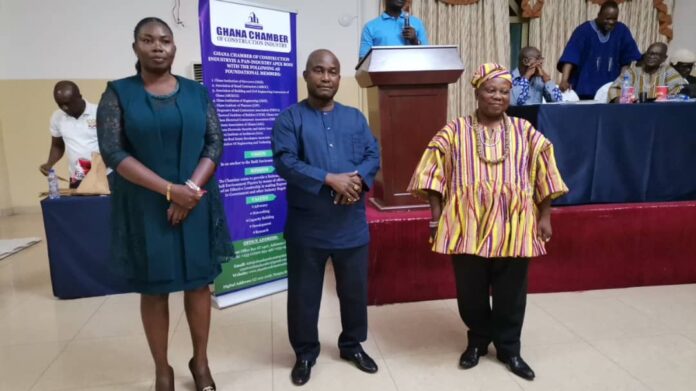
The Ghana Chamber of Construction Industry (GhCCI) has elected new executive officers for a three-year mandate to help turn the fortunes of the built environment.

They are Mr Nene Martey of the Ghana Institution of Surveyors, who retained his position as Chairman, Nana Opare-Kwafo II, Vice-chairman and Mrs Harriet Naa Lamiley Bentil, Chief Executive Officer of Solidcast construction and Rareoaks limited as the General-secretary.

The newly elected executive officers, together with a representation from the Chamber’s constituents, would form the governing council of the GhCCI to take strategic decisions to drive its policies.

The election supervised by the Eastern Regional Electoral Commission was held in Koforidua as part of the GhCCI annual infrastructure conference.

The GhCCI is an advocacy and policy-driven for the built environment with a make-up of the Association of Road Contractors (ASROC), the Progressive Road Construction Association (PROCA), the Ghana Institution of Engineers, the Ghana Institution of Surveyors, the Ghana Institution of Architects and the Ghana Real Estate Developers Association (GREDA).

Others are the Artisans Association of Ghana (AAG), Ghana Electrical Contractors Association (GECA), the Ghana Institution of Planners and the Ghana Electronic Security and Safety Association (GESSA) and others.

Mr Martey expressed his appreciation to the members for the confidence reposed in him for the second time and pledged to lead the team to chart a progressive path for the Chamber.

He noted that one of the issues to deal with was the delay of payment by government to those in the road construction sector and assured of their commitment to address it.

He announced that plans were advanced for the construction of an office complex for the Chamber to facilitate their operations.

“In the coming weeks and months, we are going to work harder, of course with the support of all members, to champion the establishment of the Construction Industry Development Authority as a state regulatory body,” he noted.

Earlier, Osagyefo Amoatia Ofori Panin Okyenhene, who chaired the conference, indicated that despite the progress made in the infrastructural sector, a lot remained to be done and urged the Chamber to use their expertise to support the government close the gap.

“For instance, lack of a superhighway to connect two cities in Ghana without any hitch or a highway which guarantees safety of all road users in 65 years of nationhood is a big hurdle, which the nation must cross,” he added.

Somalia experiences starvation, death, and fear due to a protracted drought.

0

A man pulling a donkey cart through the sand with two young, quiet lads on board appears. The sky is cloudy. It might pour. Not at all. Not in a very long time, actually.

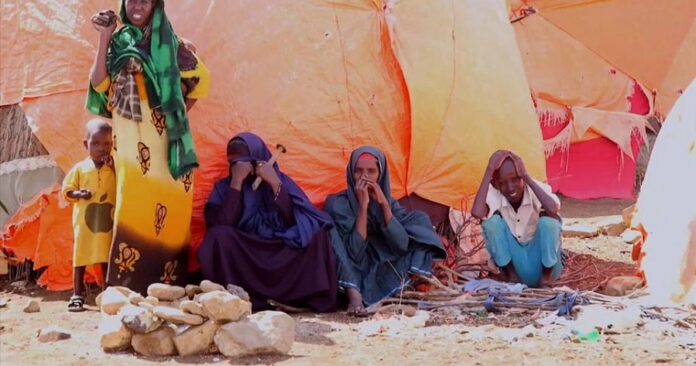
At the age of 60, Mohamed Ahmed Diriye is completing the most dreadful journey of his life. Two weeks ago, he left a beach town on the northern border of Somalia.

Animals were perishing. He made the decision to stop working as a day laborer and leave the country, traveling through areas controlled by Islamic extremists and across a landscape of corpses.

He is worn out after traveling 700 miles. There is no more food. He holds the practically empty cart in one hand and a tattered stick in the other. His boys are just 4 and 5.


They had tried to escape, Diriye says. “But we came across the same drought here.”

More than 1 million Somalis have fled and discovered that, too.

In Somalia, a nation of poets, droughts are named for the kind of pain they bring. There was Prolonged in the 1970s, Cattle Killer in the 1980s, and Equal five years ago for its reach across the country. A decade ago, there was Famine, which killed a quarter-million people.

Somalis say the current drought is worse than any they can remember.

This drought has astonished resilient herders and farmers by lasting four failed rainy seasons, starting two years ago. The fifth season is underway and likely will fail too, along with the sixth early next year.

A rare famine declaration could be made as soon as this month. Thousands of people have died, including nearly 900 children under 5 being treated for malnutrition, according to United Nations data. The U.N. says half a million such children are at risk of death.

They include climate change, with some of the harshest effects of warming felt in Africa. Russia’s invasion of Ukraine stalled ships carrying enough grain to feed hundreds of millions of people. A drop in humanitarian donations, as the world shifted focus to the war in Ukraine.

The Associated Press spoke with a dozen people in rapidly growing displacement camps during a visit to southern Somalia in late September. All say they’ve received little or no aid. A day’s meal might be plain rice or just black tea.

Many camp residents, overwhelmingly women, and children beg from neighbours, or sleep on an empty stomach.

Mothers walk for days or weeks through bare landscapes in search of help, at times finding that the withered, feverish child strapped to them has died along the way.

“We’d grieve, stop for a while, pray,” Adego Abdinur says. “We’d bury them beside the road.”

She holds her naked 1-year-old in front of her new home, a fragile hut of plastic sacks and fabric lashed together with cord and stripped branches. It’s one of the hundreds scattered over the dry land.

Behind a thorn barrier marking her hut from another, giggling children pour cherished water from a plastic jug into their hands, sipping and spitting in delight.

The home the 28-year-old Abdinur left was far superior — a farm of maize and dozens of livestock in the community where she was born and raised. The family was self-sufficient. Then the water dried up, and their four-legged wealth began to die.

“When we lost the last goat, we realized there was no way to survive,” Abdinur says. She and her six children walked 300 kilometers (186 miles) here, following rumors of assistance along with thousands of other people on the move.

“We have seen so many children dying because of hunger,” she says.

At the heart of this crisis, in areas where famine likely will be declared, is an Islamic extremist group linked to al-Qaida.

An estimated 740,000 of the drought’s most desperate people live in areas under the control of the al-Shabab extremists. To survive, they must escape.

Al-Shabab’s grip on large parts of southern and central Somalia was a major contributor to deaths in the 2011 famine. Much aid wasn’t let into its areas, and many starving people weren’t let out.

Somalia’s president, who has survived three al-Shabab attempts on his life, has described the group as “mafia shrouded with Islam.” But his government has urged it to have mercy now.

In a surprise comment on the drought in late September, al-Shabab called it a test from Allah, “a result of our sins and wrongdoings.” Spokesman Ali Mohamud Rage claimed that the extremists had offered food, water and free medical treatment to more than 47,000 drought-affected people since last year.

However, in rare accounts of life inside al-Shabab-held areas, several people who fled told the AP they had seen no such aid.

Instead, they said, the extremists continue their harsh taxation of families’ crops and livestock even as they withered and died.

One woman says al-Shabab taxed up to 50% of her family’s meager harvest: “They don’t care whether people are left with anything.”

Some flee their communities at night to escape the fighters’ attention, with men and even young boys often being forbidden to leave.

One woman says no one from her community was allowed to leave, and people who received assistance from the outside would be attacked.

Weeks ago, she says, al-Shabab killed a relative who had managed to take a sick parent to a government-held city and then returned.

Those who escaped al-Shabab now cling to a bare existence. As what should be the rainy season arrives, they wake in camps under a purple sky, or a gray one offering the tiniest specks of moisture.

Children send up kites, adults their prayers. Black smoke rises in the distance as some farmers clear land just in case.


 

NGOs criticize the Uganda oil project

0

According to a report issued on Wednesday by two environmental NGOs, a contentious project between the National Offshore Oil Corporation of China and the French oil company TotalEnergies may inflict harm that is “unacceptable” (CNOOC).

In order to develop Ugandan oilfields and transport petroleum through a 1,445-kilometer pipeline to Tanga, Tanzania’s Indian Ocean port, the two businesses struck a $10 billion agreement earlier this year.

“In actuality, we’re referring to a pipeline that will be more than 1,400 kilometers long. The project’s proponents also bragged that it would be the world’s longest heated pipeline. Why get hot? The oil in Uganda is too thick, so they need to heat it to liquefy it and make it go, therefore it will be heated to 50 degrees.

The report said the pipeline would emit “up to 34 million tonnes of CO2 per year into the atmosphere — far more than the combined greenhouse gas emissions of Uganda and Tanzania”.

The NGO’s accuse the oil companies of not putting in place adequate measures to safeguard communities and the environment.

“Lake Victoria, but also Lake Albert, where the oil drilling is going to take place, are sources of the Nile, so the impacts go far beyond Uganda and Tanzania. And unfortunately, what the experts who have studied Total’s social and environmental impact studies tell us is that there will definitely be leaks. Moreover, Total has not yet put in place adequate measures to prevent these leaks”, said the activist.

Reacting to the report, TotalEnergies said it would “do everything possible to make it an exemplary project in terms of transparency, shared prosperity, economic and social progress, sustainable development, environmental awareness and respect for human rights”.

The European Parliament has already passed a resolution saying that more than 100,000 people were at risk of being displaced by the pipeline and called for them to be adequately compensated.


Is Benzema’s goalless streak since August a cause for concern? Real Madrid’s coach Ancelotti explains their lack of concern

0
PONTEVEDRA, SPAIN - AUGUST 20: Karim Benzema of Real Madrid during the La Liga Santander match between Celta de Vigo v Real Madrid at the Estadio Municipal de Balaidos on August 20, 2022 in Pontevedra Spain (Photo by David S. Bustamante/Soccrates/Getty Images)
  • Has suffered with a muscle complaint
  • Three goals in La Liga this season
  • Still favourite to win Ballon d’Or

WHAT HAPPENED? The Blancos captain found the target on 44 occasions across all competitions last season, with a collection of talismanic performances contributing significantly to La Liga and Champions League title triumphs. Benzema has suffered a muscle injury this season, forcing him to sit out three games, but he has also failed to hit the net since August 28 – with his last four outings seeing a blank drawn in the final third.

WHAT THEY SAID: Madrid boss Ancelotti has said of Benzema’s slight dip in end product, with another goalless outing taken in during a 2-1 Champions League victory over Shakhtar Donetsk: “He’s feeling great and was crucial thanks to his quality and his positioning. He put in a team performance and was a presence in the penalty area. He didn’t get on the scoresheet, but that’s the last thing we’re focusing on. His condition has improved a lot and he put in a complete performance.”

THE BIGGER PICTURE: While Benzema may be struggling for a spark at present, his exploits in the 2021-22 campaign have made him a heavy favourite to claim the prestigious Ballon d’Or prize later this year.

IN THREE PHOTOS:

Karim Benzema Real Madrid 2022-23Getty


Karim Bemzema Real Madrid 2022-23Getty


Karim Benzema Real Madrid 2022-23Getty

WHAT NEXT FOR BENZEMA? The France international will be eager to get back in the goal groove as soon as possible, with the World Cup finals in Qatar also fast approaching, and Real will be in La Liga action on Saturday against Getafe.


24-year-old driver remanded for alleged murder of 70-year-old farmer

0

The Agona Swedru Magistrate Court has remanded a 24-year-old driver for allegedly killing Opanyin Kweku Oppong Abdulai, a 70-year-old cocoa farmer at Agona Abodom in the Central Region.

The plea of the accused, Samuel Appiah, was not taken and would reappear in court on October 17.

Prosecuting Sergeant Emmanuel Akunor told the court presided over Mr Isaac Apeatu that the accused resides at Ofankor, a suburb of Kasoa in the Central region.

He said the complainant in the case was Madam Halifatu Abdulai, a daughter of the deceased based at Agona Abodom in the Agona West.

The prosecution said the deceased owned a cocoa farm at Dapong, a village near Upper Bobikuma, and shared boundary with the accused father’s cocoa farm, of which the accused is the caretaker.

He said about three weeks ago, the accused visited the village and a misunderstanding ensued between him and the deceased over missing cocoa beans that belonged to the deceased, which the accused was suspected of stealing.

The prosecution said according to the complainant, she received a call on September 21, from her late father to come to him because he was afraid the accused might harm him due to the accused’s demeanour.

The complainant later received another call from a nearby village that the deceased had gone missing, and that a search team highly suspected the accused arrested and handed him over to the Upper Bobikuma Police for investigation.

The prosecution said while the search team continued with the search on September 22, the body of the late Opanyin Abdulai was found lying under a mango tree covered with timber slaps and was taken to the Swedru Government Hospital, where he was pronounced dead.

The prosecution said after intensive interrogations, the accused confessed killing the 70-year-old cocoa farmer for accusing him of stealing the cocoa beans.

Weija Floods: Houses built on waterways to be demolished

0

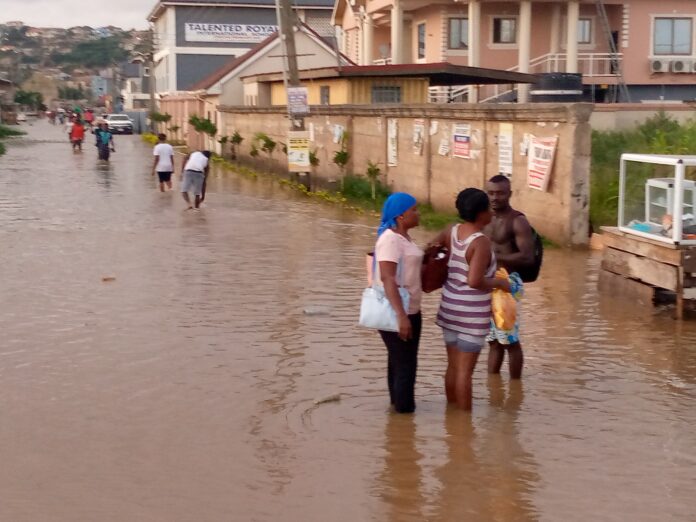
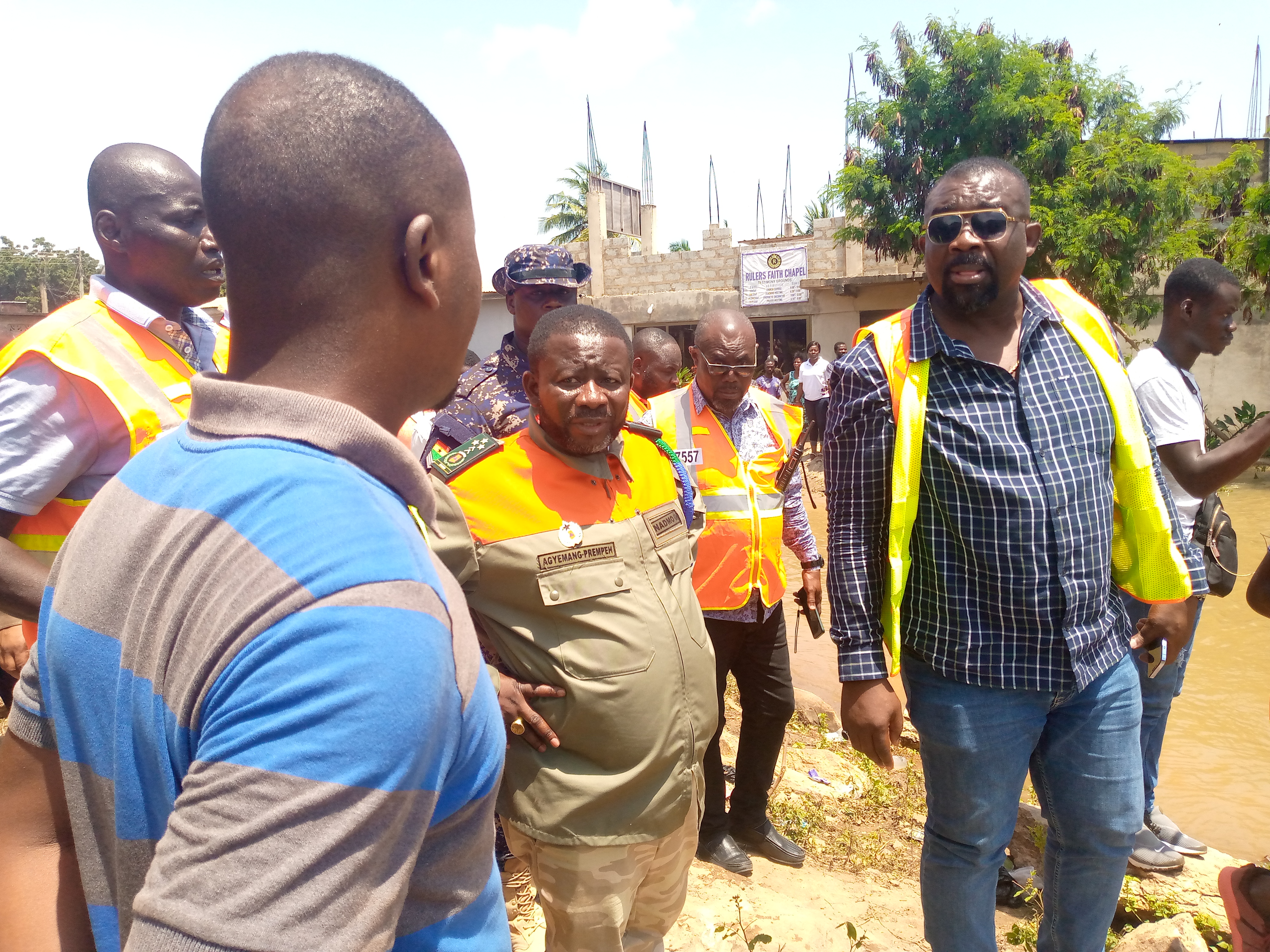
Mr Eric Nana Agyemang Prempeh, Director-General, National Disaster Management Organisation (NADMO) says houses built on waterways in the Weija-Gbawe Municipality will be demolished “immediately” the flood recedes.

He said that had become necessary to maintain buffers of the Weija Dam to contain water whenever there was spillage.

The NADMO Director-General said this after he visited communities within the Municipality that had flooded following spillage from the Dam.

He visited the Weija Dam Site, Tatop, and White Cross to commiserate with affected persons and then proceeded to the Bojo Beach , where an estuary had been created to direct the floods into the sea.

Mr Agyemang Prempeh said persons whose houses would be affected in the demolition would not be compensated because they had built on unauthorised routes.

He said checks indicated that none of the residents on those sites had permit to build there.

Mr Agyemang Prempeh said NADMO would provide relief items to the affected victims and ensure they were properly evacuated and accommodated.

Some residents who spoke to the GNA said NADMO and the Assembly must compensate them before they demolished their buildings.
They also appealed for relief items.