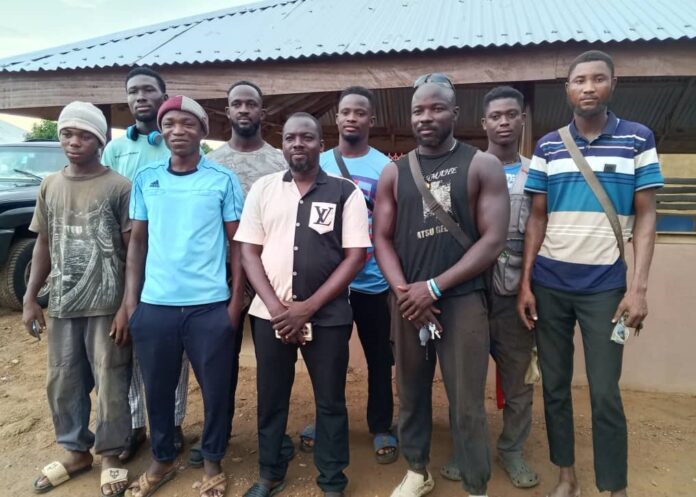
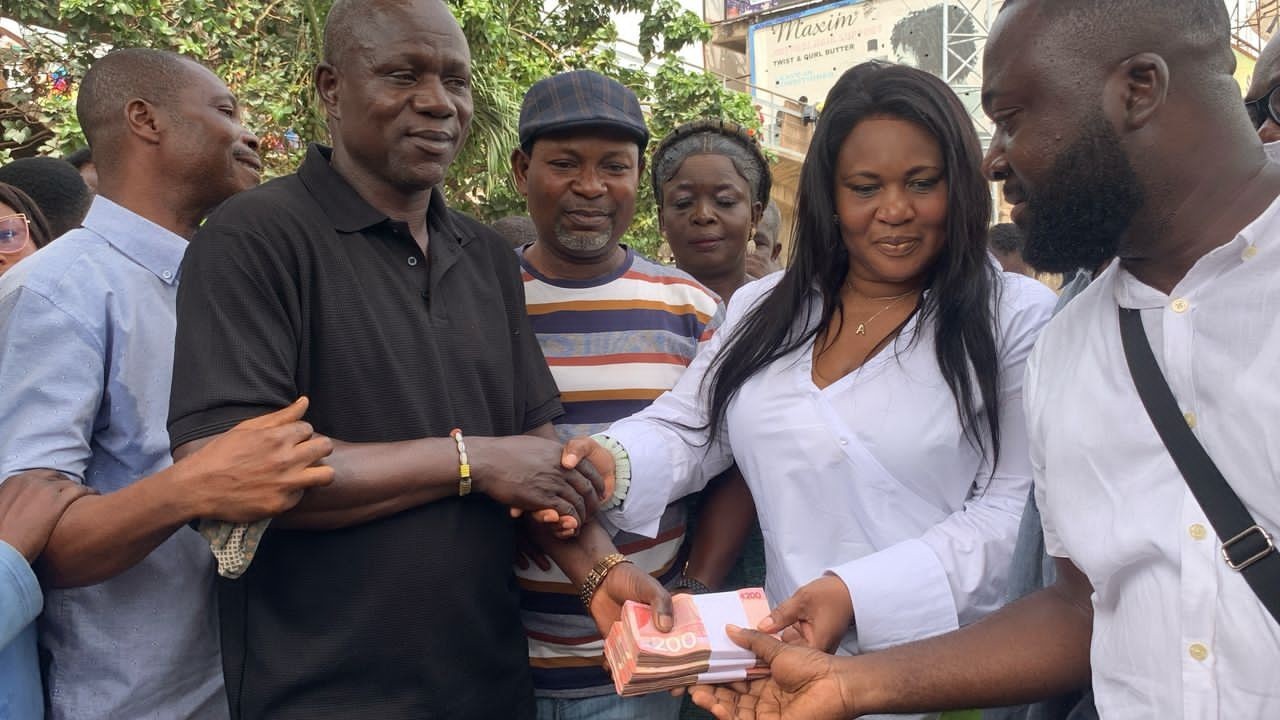
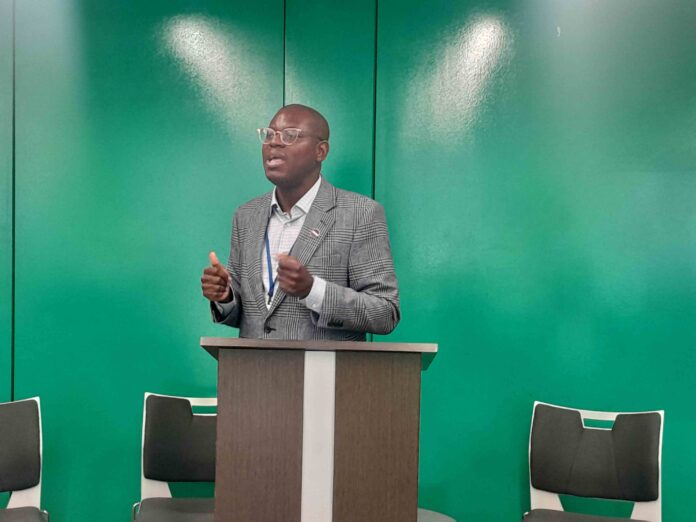
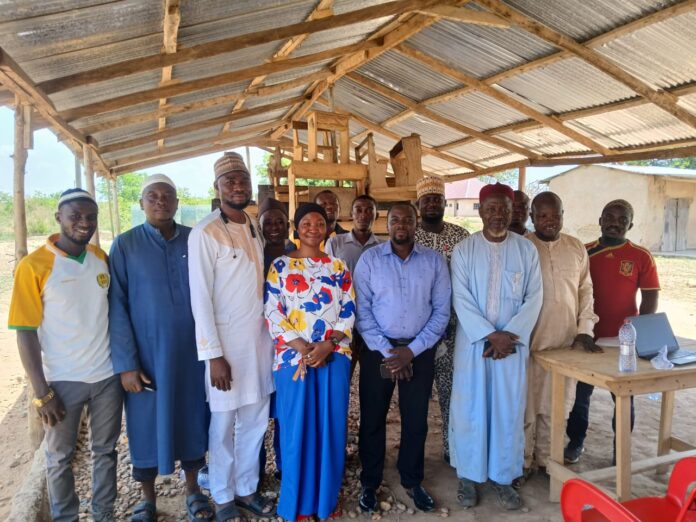
The Municipal Chief Executive for Krachi East (MCE) Mr Safo Nketia, has held a crucial meeting with local ‘Okada’ riders to discuss ways to enhance their operations and safety within the Municipality.
Mr Nketia educated the riders on the registration process for special number plates, emphasizing its importance in promoting safety and accountability.
He assured the riders that the municipal assembly is committed to addressing their challenges and ensuring sustainable operations.
The MCE highlighted plans to standardize fare charges, promoting fairness and transparency in pricing.
Additionally, he announced a specialised screening process for riders to obtain a riding license, reinforcing the importance of proper licensing and adherence to safety regulations.
This initiative aims to benefit riders and passengers, contributing to the municipality’s overall development.
The Okada riders have expressed heartfelt gratitude to the MCE for his initiative to engage with them and address their concerns.
The riders commended the MCE for showing genuine interest in their well-being and working conditions.
Mr Peter Kwabena Osei, on behalf of the riders appreciated the MCE’s efforts to standardize fare charges, provide special number plates, and ensure proper licensing.
He expressed optimism that these initiatives will improve their operations and overall livelihoods.
Mr Osei told the Ghana News Agency (GNA) that, the MCE’s gesture has fostered a sense of appreciation and cooperation between them and the Municipal Assembly, paving the way for a more harmonious and productive working relationship.
Bank of Ghana (BoG) has underscored the need for accuracy in financial journalism, stressing that the effectiveness of journalists depends on their understanding of economic issues.
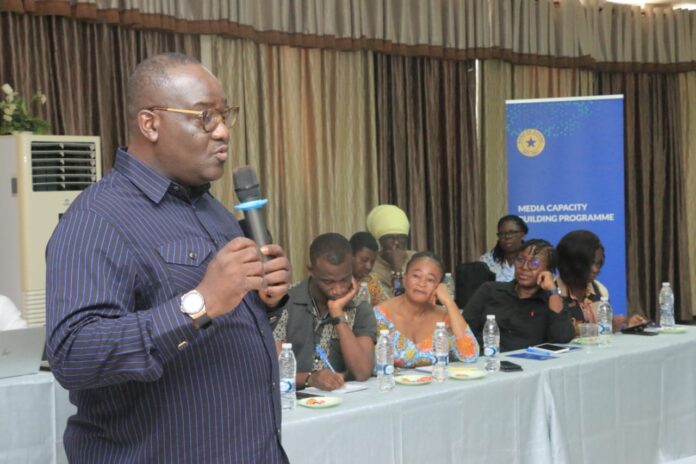
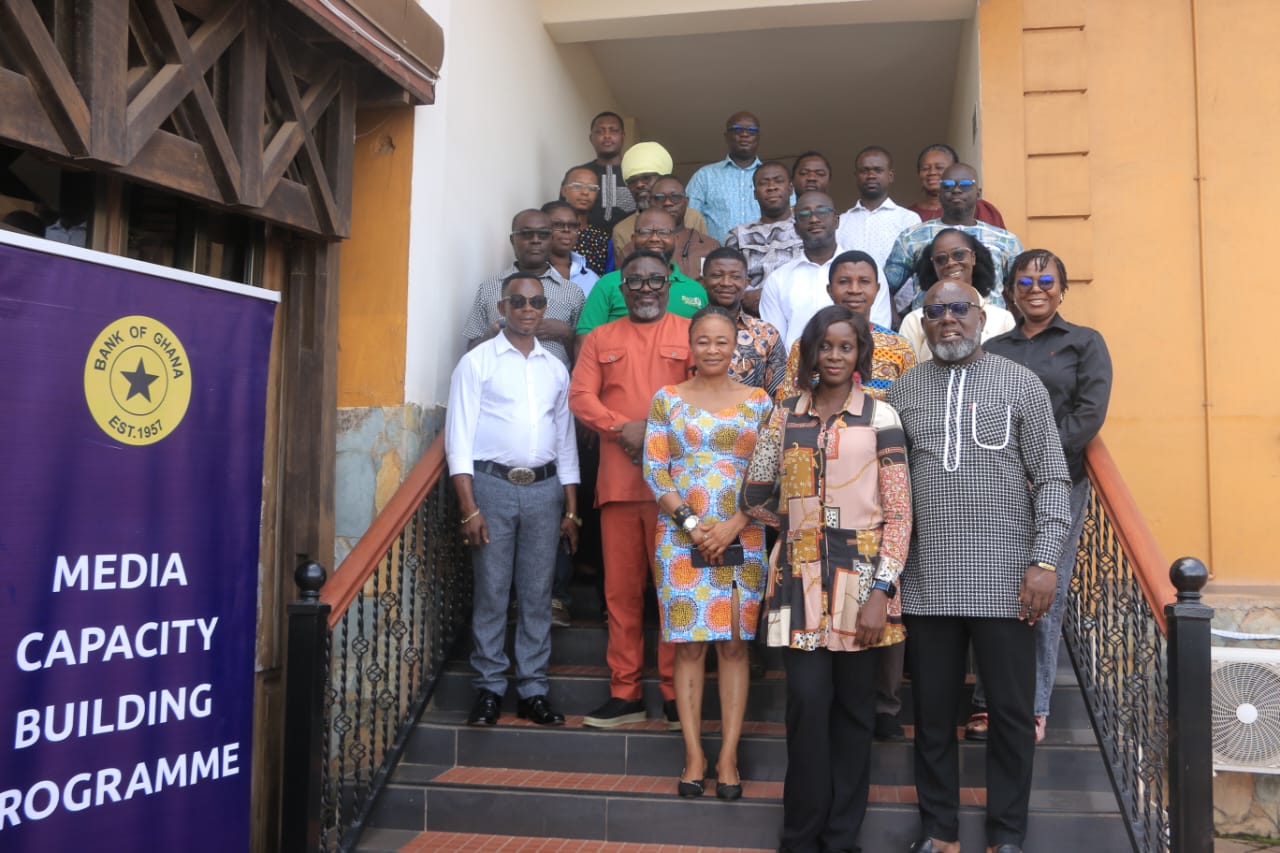
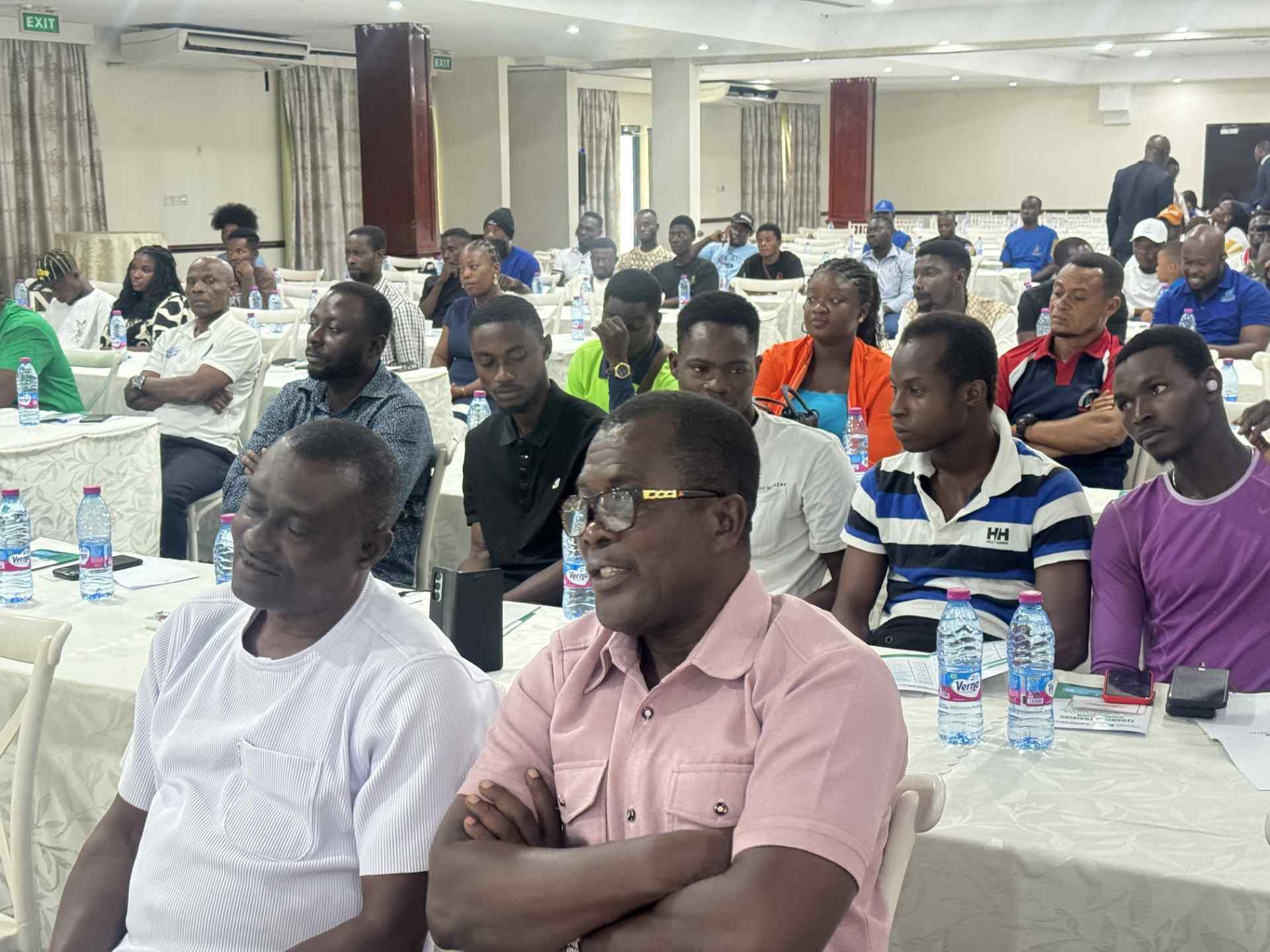
Mr. Bernard Otabil, Director of Communications at the BoG, said this during the opening of a two-day media capacity-building workshop in Takoradi in the Western Region.
The workshop which is the third in a series is being attended by 26 journalists from the Western and Western North Regions to equip them with a deeper understanding of economic and financial reporting.
The initiative is part of the BoG’s broader efforts to enhance media capacity, ensuring that financial news coverage remained accurate, insightful, and beneficial to the public.
Mr Otabil said the Management of the Bank recognised the important role journalists played in sensitising the public about its policies and programmes nationwide, especially after the Bank’s Monetary Policy meetings and the media engagements that followed.
He said communication remained critical to enhancing the Bank’s policies, therefore, with the approval of Management, the Communications Department consistently created platforms to improve strategic media partnerships.
Mr. Otabil said misinformation in financial journalism often resulted in a lack of knowledge and urged reporters to continuously educate themselves.
He said, “This media training is not to enhance your interviewing skills nor to help you define the old question of journalism: What is News! Rather, it is to further enhance your ability to craft compelling narratives about the policies and objectives of the Bank, especially as far as monetary policy is concerned.
“We want you to be able to navigate the often-complex world of economics and finance. Essentially, the Bank is committed to empowering journalists to deliver impactful narratives about the Monetary Policy Committee (MPC) and build your confidence in writing about business and finance”.
Adding, “A journalist is only as good as their understanding of the subject they are reporting on. That is why we are here to provide training on what we do as a central bank, particularly our monetary policy report. There have been instances where reports have been inaccurately presented, and this often stems from a lack of deep understanding of financial and economic issues,” he stated.
He cautioned Journalists not to play propaganda with the activities of the central bank, noting that “there are repercussions with your actions and in actions as journalists”.
Touching on accurate reporting, Mr Otabil encouraged journalists to report on precision clarity, specificity and Consistency.
He also asked journalists to play their gate-keeping role effectively and be mindful of the kind of headlines they give to their stories.
On specialisation in journalism, Mr. Otabil stressed the importance of continuous learning and advised journalists interested in financial reporting to dedicate time to reading at least one article per week on economic and business topics, stating that this practice could transform them into experts over time.
“One workshop cannot make you an expert overnight, but consistency in learning will. If you read a 500-word article on financial matters every week, in a year, you would have read 52 articles, enough to give you a strong grasp of the subject,” he advised.
Mr Kofi Assan Regional Manager BOG Takoradi, said the bank and media were the same stakeholders and should therefore work collectively to ensure effective financial management in the country.
For his part, Mr Desmond Cudjoe Western Regional Chairman of the Ghana Journalists Association (GJA), lauded the bank for the initiative and asked that regular such workshops should be organised to build the capacity of Journalists.
He said it was important for the media to build an interface that would help them to effectively interpret financial issues to the public.
The participants were taken through key topics, including Macroeconomic Analysis and the Significance of Macroeconomic Indicators, Monetary Policy Practice in Ghana, and Understanding Inflation Dynamics in Ghana, Responsible Borrowing and inflation dynamics.
A 27-year-old Mobile Money (MoMo) vendor has died from gunshot wounds he sustained from a robbery attack on his shop at Aflao Diamond Cement area near Onyxma Fuel Station.
The late Christopher Ahordor’s shop was allegedly attacked in the evening of Monday, April 28, 2025, by a gang of five males, one of whom was in a mask and wielding a gun.
They robbed the victim of his sales for the day.
Information Ghana News Agency (GNA) gathered suggested that one of the suspects shot the victim on the rib while they struggled with him over the sales bag, bolting into a bush with the booty.
The victim, bleeding profusely from the wounds, was rushed to the Ketu South Municipal Hospital, Aflao, for medical attention where he was pronounced dead.
The body has since been deposited at the hospital morgue for preservation, pending autopsy.
A police source who confirmed the incident to GNA said the Police at Aflao District Command were at about 1830hours that Monday, alerted of the incident and upon receipt of the information, proceeded to the scene.
They recovered three spent BB cartridges, and further extended the search to the bushy area where the suspects allegedly fled to, chancing on a backpack containing, one Itel Android and one Itel keypad mobile phones (both without a SIM card), in addition to an android phone charger, one Galaxy Note 8 phone cover, a charger, one MP3 player and personal effects including a pair of rubber sport slippers.
The case is currently under investigation, with the police inviting credible informants to assist in bringing the suspects to book.
Meanwhile, Mr. Saviour Mawuena Kofi Ahiati, Volta Regional Chairman, Mobile Money Advocacy Group Ghana, in an interview described the incident as unfortunate and called for police visibility in Aflao and neighbouring areas to ensure the safety of MoMo operators.
He also called on the MoMo agents to close their shops by 1700-1730hours to mitigate the risks, saying per the information he had, the deceased who always closed early, sadly met his death on the day he closed a bit later than his usual closing time.
There had been some reports of increasing attacks on MoMo vendors across the country with recent ones (January-February, 2025) being the robbery and murder of a vendor at Krofom, Ashanti Region, a fatal shooting at Nkrankwanta, Bono Region, robbery attack on a vendor at Kasoa, Central Region and another at Spintex, Greater Accra Region, with Aflao, Volta Region being the latest.
Chalom Hights, a Not-for-Profit Organisation, has expressed its commitment to empowering young women to achieve their full career potential through mentorship, coaching, career counselling, and financial education.
With a strong focus on building capacity, confidence, and resilience, Chalom Hights aims to break down barriers that limit opportunities for young women and to create a future where their success is not confined by circumstance.
Madam Rita Adu Boateng, the Founder of the Organisation, during the launch on Monday, said: “We want to build a future where no young woman feels her dream is out of reach.”
She said Chalom Hights was here to support, guide, and walk alongside women on their journey to success.
The organisation planned to work across Ghana, in collaboration with government agencies, corporate institutions, and development partners to implement sustainable programmes that support women’s career advancement and personal growth.
“Chalom Hights is also actively seeking collaborative partnerships with like-minded individuals and organisations to expand its reach and impact,” she added.
Madam Boateng said the organisation was dedicated to empowering young women through career development, mentorship, and financial education.
The organisation’s vision was to ensure that every woman, regardless of her background, has access to the tools and support needed to thrive professionally and personally, she said.
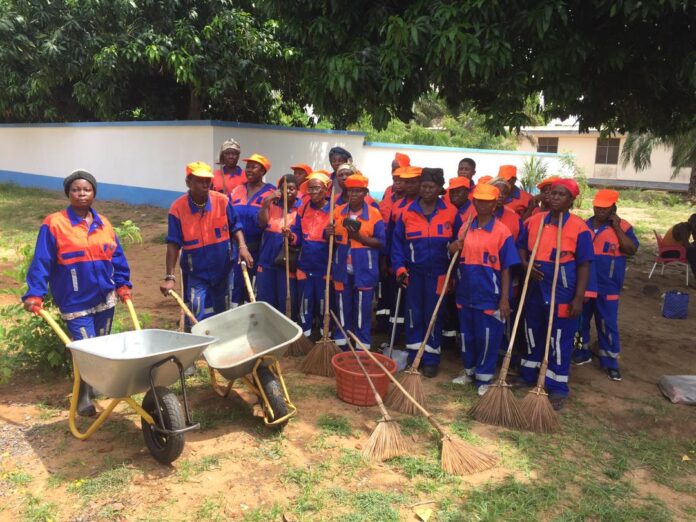
More than 90 workers of Zoomlion in the Keta Municipality of the Volta Region are demanding payment of 18 months of unpaid allowances from the management.
The workers employed by the Youth Employment Agency (YEA) and working with Zoomlion, have been facing significant challenges due to the non-payment of their allowances.
Mr Godwin Lumor, leader of the Zoomlion workers at Keta, in an interview with the Ghana News Agency, said that most of his colleagues have been working for more than two years, with many passing away due to inability to afford medical treatment or cater for themselves.
“Some of my Zoomlion colleagues have been evicted from their homes due to non-payment of rent, while some are bedridden due to illness, we are pleading with management to consider our allowances so we can take care of ourselves and our children,” he said.
He said that workers were concerned about the delayed payment of their allowances, which supposed to be GH₵ 250 per month and 18 months of unpaid allowances has created a struggling situation for members to make an ends meet which include paying for medical treatment, house rent, schools fees, buying of food stuff, and taking care of other family needs.
He said that the workers are pleading with management to consider their welfare and take necessary steps to address the issue such as immediate payment of the outstanding allowances to help alleviate the increasing plight of Zoomlion members in the area.
“The non-payment of allowances has significantly impacted the livelihood, forcing others to take drastic measures and we hope that management will take our demands seriously and settle the outstanding allowances.”
Madam Vivian Helu and other Zoomlion workers, accused their leadership of intentionally refusing to pay the supposed GH₵250 monthly allowances that could have enable them to settle their debts as well as manage other family issues.
Other information GNA gathered revealed that the YEA has pushed for the abrogation of the contract with Zoomlion Ghana Limited, citing failure to pay sanitation workers while the agency has also proposed taking over the direct payments to workers, with Zoomlion receiving GH₵ 600 per worker for management services.
The management of Zoomlion was said to have rejected the proposal insisting on maintaining control over the GH₵ 600 management fee which many feared would create confusing situation among the bodies.
It has been indicated that Zoomlion’s Director of Communications and Corporate affairs, Ms Emma Osei-Duah, has acknowledged the payment delays, citing the contract with YEA as the reason and explained that the company would require to pre-finance payments before reimbursement with discussions underway to resolve the issues.
The demand by Zoomlion workers in Keta for 18 months of unpaid allowances highlighted the challenges faced by workers in the sanitation sector and the call to action for management to address the issue and ensure that all workers receive their outstanding allowances is expected to be adhered to with immediate effect.
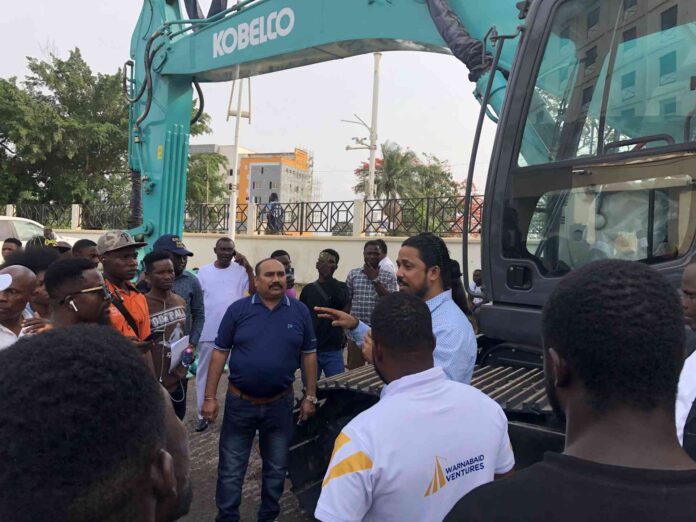
Operators of excavator machines have received a day’s intensive practical and theoretical education on the best practices to maintain the heavy-duty equipment.
Among other things, the beneficiaries were exposed to safety measures in the field and optimal use of the machines to increase production.
Mr Michael Kwadwo Peprah, President of Concerned Small Scale Miners Association at the opening of the training in Kumasi, observed that machines including excavators played critical roles in modern day mining.
It was therefore important for operators of this equipment to receive periodic training on the basis of maintenance, adding that, when these machines were in use, wear and tear occurred and the cost of maintenance was quite high.
The event was put together by Kobelco, a worldwide excavator manufacturer, together with PL International Holdings and Warnabaid Ventures.
It was themed: “Safe and Efficient Excavation Practices for Sustainable Mining in Ghana.”
Mr Peprah, touching on ensuring sanity in the mining sector, applauded the government for instituting the GOLDBOD and the Cooperative Mining Scheme.
He explained that over 60 percent of gold exported in a year were smuggled and “once the GOLDBOD is in check, it will help sanitize the sector” and “the Board could get traceable gold for the government to also realize the needed benefits”.
Again, as the pricing of gold would be determined by the government, he explained, it would go a long way to help the small-scale mining sector, enabling members to mine responsibly and get fair pricing for their products.
He said with cooperative mining, people could come together, form a group and secure licenses to mine correctly which would further curb the activities of illegal mining.
Mr Pravin Garle, Country Manager, PL International Holdings, indicated that mining was important in the development of Ghana, which was why operators of the heavy mining equipment including excavators, needed improved skills to deliver quality services.
It is crucial, he noticed, that Kobelco worldwide, known for the quality and sturdiness of machines used in very heavy mining operations streamlined efforts to get small scale miners and their machine operators ready for production.
This included education on optimally utilizing the machine to increase performance and boost production and to support sustainable and safe mining.
Mr Garle observed that operators’ continuous use of excavator machines after 10 hours was not the best and explained that after this period the machine must be made to rest to reduce the work pressures on the gadget.
Bright Simons, the Vice President of policy think tank, IMANI Africa, has called for reforms to programmes of the International Monetary Fund (IMF) and the World Bank Group (WBG), criticising them for lack of sustainability mechanisms.
He argued that the recent architecture of loan-supported programmes of the IMF and development initiatives of the World Bank lacked accountability and transition to ensure durable structural reforms for better outcomes.
The Policy Analyst said this in an exclusive interview with the Ghana News Agency on the sidelines of the just ended spring meetings of the IMF and WBG, in Washington DC, USA.
Developing countries like Ghana are noted for resorting to the IMF for loan-supported programmes to restore macroeconomic stability and debt sustainability, paving the way for economic resilience and inclusive growth.
On the other hand, the World Bank programmes focused on poverty reduction, Human capital development, Infrastructure development, and sustainable economic growth and job creation.
Mr Simons noted that the short-term nature of IMF loan-supported programmes, coupled with the lack of clear transition plans to other development agencies and proper continuation by governments were responsible for the periodic return of Ghana and other countries to the Bretton Woods institutions for antidotes to their economic crisis.
“The World Bank accountability mechanism is to the government, the same government that they are supervising. They need to incorporate civil society into the process so that when you do that long-term structural transition, there is more accountability,” he said.
“Government officials wield significant authority and often deploy it to serve political interests, including those of their business associates,” he said, noting that the IMF and World Bank processes inadvertently reinforced such concentration of power.
Mr Simons pointed to several examples of failed accountability in Ghana, including expensive drone programmes for drainage monitoring and illegal mining (galamsay) surveillance that disappeared without adequate tracking.
“A new minister came and said you can’t find them. Nobody can find where they are,” he said, adding that similar programmes continued to receive funding despite those failures.
He called for reforms in the structure of programmes of the Bretton Woods institutions to create the necessary checks and balances through strengthened civil society participation for effective enforcement and empowering of voices within the country.
He encouraged deliberate investment in policy literacy and civil society capacity to bridge the gap between paper reforms and actual implementation, to propel the effectiveness of international development programmes.
Baffour Agyarko Kwakye, Vice President of Debt Capital Markets & Distribution at Stanbic Bank Ghana, has said that the sustainability of Ghana’s capital markets is dependent on a stable macroeconomic environment.
Speaking on a panel at West Africa Bond Market Conference on the topic “The Opportunities and Challenges of Developing Africa’s Bond Market – Demand, Supply, and Liquidity,” Mr. Kwakye highlighted the importance of coordinated regulatory collaboration and macroeconomic resilience as central pillars for a thriving bond market.
He said that “Restoring and maintaining macroeconomic stability in Ghana is essential to the recovery and sustained development of our capital markets. Following the 2022 Domestic Debt Exchange Programme, it is clear that trust and investor confidence are the lifeblood of any successful bond market. Without macroeconomic stability, it becomes increasingly difficult to attract and retain investment.”
Mr. Kwakye pointed out that Ghana’s capital market had undergone significant stress in recent years, particularly during the domestic debt restructuring exercise, but remained a critical vehicle for long-term financing for both the public and private sectors.
He also acknowledged the strides made by key stakeholders, especially the Ghana Stock Exchange (GSE), in rebuilding confidence and creating a more robust and responsive capital market ecosystem.
“I want to take a moment to commend the Ghana Stock Exchange for the tremendous support they continue to provide to market participants,” he said.
He further advocated for enhanced collaboration among regulators, particularly between the GSE, SEC and the Bank of Ghana, to address structural issues and unlock the full potential of Ghana’s bond market.
“Often, we see that regulatory silos can stall progress. But with more strategic collaboration, some of the persistent issues we face could be resolved more efficiently, and this would significantly deepen the resilience and liquidity of our bond market,” Mr. Kwakye explained.
The West Africa Bond Market Conference is a premier industry event jointly hosted by the Ghana Stock Exchange and the International Capital Market Association (ICMA). This high-level gathering convenes senior market participants, including policymakers, regulators, central banks, financial institutions, and market infrastructure providers, to engage in in-depth discussions on the current state and future direction of West Africa’s bond markets. The conference serves as a critical platform for knowledge exchange, regional collaboration, and the promotion of deeper, more integrated capital markets across the sub-region.
The Municipal Chief Executive of Krachi East (MCE), Mr.Safo Nketia, has met Mr. Zulkiphil Alhassan Osman, Oti Regional Director of Islamic Units to discuss plans to enhance Islamic schools in the area.
The meeting aimed to revitalise Islamic education by providing necessary resources and guidance.
The MCE expressed the Municipal Assembly’s commitment to supporting initiatives that promote quality education within the community.
An engagement with the Ghana News Agency (GNA), Mr Nketia said the National Democratic Congress (NDC) led government was committed to ensuring fairness, justice and development for all.
He told the Muslim community that government has been able to reduce Hajji fares, commence the construction of a Hajj Village and many other things.
He further said the government was working to establish community Senior High Schools in predominantly Muslim communities to improve access to secondary education.
Beyond restoring the economy, he noted that the Reset Ghana agenda seeks to restore hope to Ghanaians regardless of religious, political or ethnic grouping.
The collaboration highlights the Assembly’s dedication to fostering inclusive educational opportunities for all students in the area.
In a strategic move to strengthen trade ties between Ghana and Turkey, Access Bank Ghana has launched a Turkish Desk to facilitate smoother business transactions, boost manufacturing, and attract foreign investment into Ghana.
The initiative is aimed at creating a one-stop hub for Ghanaian and Turkish businesses looking to expand across both countries and into broader African markets.
Mr. James Bruce, Executive Director of Wholesale Banking at Access Bank, said the move signalled a long-term commitment to bridging business opportunities between the two countries.
“For Ghanaian businesses, this means easier access to Turkish suppliers, secure terms of trade, and guidance from professionals who understand both the Turkish financial system and local needs,” he said.
The Desk is expected to help double trade volumes between Ghana and Turkey from approximately $600 million to over $1.2 billion, by making it easier for Turkish investors to navigate the Ghanaian market and vice versa.
He said, currently, Turkish businesses were active in Ghana’s construction, retail, and healthcare sectors, but few have ventured into manufacturing. That’s a gap the bank hopes to fill.
“There’s already a $50 million Turkish manufacturing facility under development, when Turkish companies see familiar faces, a local bank they can trust, and government support, it makes investing here more attractive,” Mr. Bruce noted.
The Turkish Desk is modeled after similar initiatives Access Bank has undertaken with German, Chinese, and Lebanese partners.
He said the bank is working closely with institutions like the Ghana Free Zones Authority, Ghana Investment Promotion Centre, and the Ministry of Foreign Affairs to create a business-friendly environment.
Access Bank is also looking beyond Ghana’s borders, positioning itself as a launch-pad for Turkish companies to access other African markets. “This is not just about Ghana. We operate in several African countries. So a Turkish company may start here, but we’ll help them scale across the continent,” Mr. Bruce added.
On the local front, the bank is taking steps to prepare Ghanaian SMEs for partnerships with Turkish investors. This includes training and certifying entrepreneurs through collaborations with the Development Bank Ghana and other institutions, followed by access to blended finance solutions involving MasterCard and other partners.
“The first step is always capacity building. Once the SMEs are trained and certified, they’re ready for financing, we’ve put in place risk-sharing schemes that cover up to 50 per cent of collateral requirements, giving banks more confidence to lend to these businesses,” Mr. Bruce said.
Mr. Bruce emphasized that Ghana’s economy had grown not through large corporations, but through the resilience and ambition of its SMEs.
“We are not just financing businesses but we are scaling them up from micro to medium and even large enterprises,” he said, referencing examples like Kasapreko as aspirational models.
Huseyin Güngör, Turkish Ambassador to Ghana reaffirmed that the Turkey was ready to collaborate and cooperate with Ghana to ensure economic growth and prosperity for both countries.