Home Blog Page 763

Takoradi: Fake kidnapping and pregnancy case adjourned to November 11

0

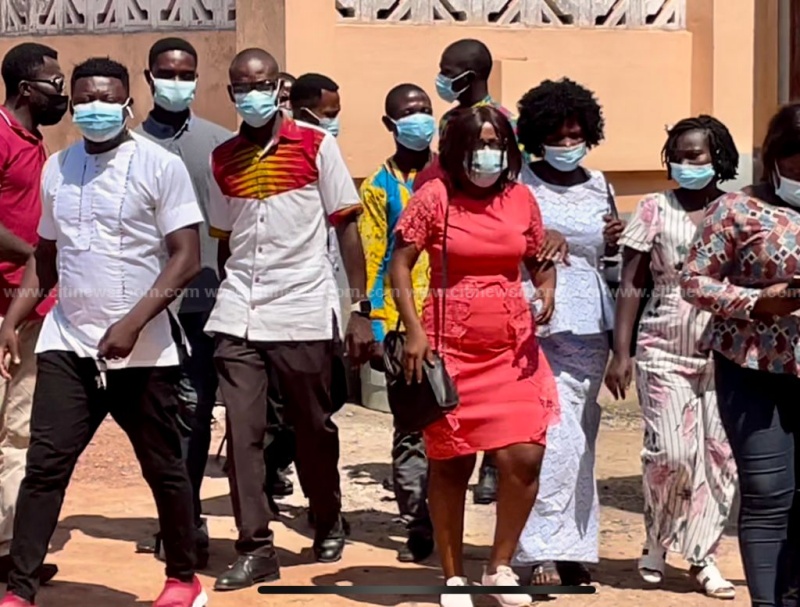
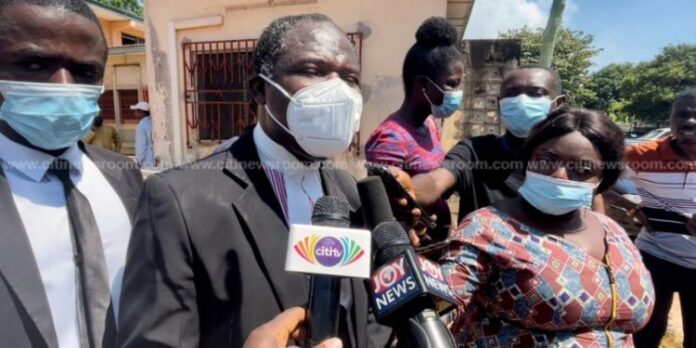
Philip Fiifi Buckman, lawyer for Josephine Panyin Mensah, the Takoradi woman accused of faking her kidnapping and pregnancy, says the police prosecution team is yet to furnish his client with all intended prosecution documents.

Speaking to Citi News after the Presiding Judge for the Takoradi Habour Circuit A, His Honour Michael Cudjoe Ampadu adjourned the case to November 11, 2021, Mr. Buckman said they were in court for case management but could not proceed because the prosecutor failed to furnish the court and the defense team with all the necessary documents.

“We came to court today [October 14, 2021] for the prosecution to provide us with their documents which they intend to rely on for the trial. The law is that they have to disclose everything they intend to use for prosecution, including their witnesses, witness statements, and their evidence.”

“After that, we were to decide on a date for Case Management Conference, which we could have done today. Unfortunately, there were some documents which the prosecution needed to add, and the substantive prosecutor couldn’t also attend court today. So we have to send all the documents back to him to look through and when we come on the next adjourned date, we will do the Case Management, thus, if they serve us before we come to court. If they do not serve us before we come to court but serve us on that day, then we have to take another date for the case management. This is because we need to go through the documents to see that everything is in order,“ he said.

Josephine Panyin Mensah is currently on bail after she was charged with deceiving public officers contrary to section 251 (B) of the Criminal Offences Act and Publication of false news with intent to cause fear and panic contrary to section 208 (1) of the Criminal Offences Act.

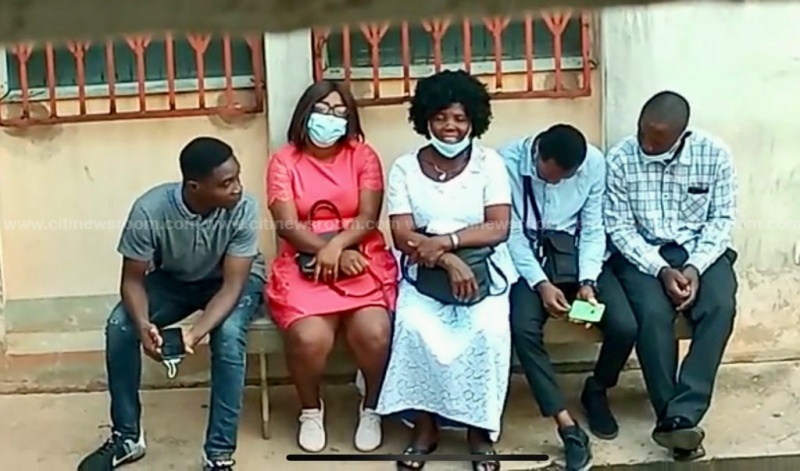
She was at the court today in the company of her husband, Michael Simmons and the mother, Agnes Essel.

NADMO Coordinator calls for inclusion of safety in school curriculum

0
IMAGE COPYRIGHT / AFP/

Mr James Obeng, Sekondi-Takoradi Metropolitan Coordinator for the National Disaster and Management Organization (NADMO), has called for the inclusion of safety education in the school curriculum.

This, he noted, would help improve the level of knowledge and awareness of safety among citizens.

He said many children in the Sekondi-Takoradi Metropolis lacked the basic knowledge in safety to either sense or detect danger in their environment and how to avoid it.

Speaking in an interview with the Ghana News Agency on this year’s International Day for Disaster Reduction (IDDR) commemoration, he expressed concern about the increasing cases of kidnaps in the Metropolis as well as the numerous accidents, which could be averted if citizens had basic knowledge in safety.

“From my research, no one can buy security. Per our experience in Sekondi-Takoradi and the whole of Ghana, a lot of people lacked knowledge in safety. The kidnaps and many accidents we have experienced could be averted in the Metropolis if victims had safety backgrounds.

I believe safety should be introduced as a non-scoring course that will be taught at all levels of the educational system to prepare citizens for all forms of dangers or threats in real life,” he said.

He, therefore, called on the GES to consider introducing safety in the school curriculum to create safety awareness among citizens to avert kidnaps and other safety-related incidents and advocated basic safety be taught at the basic level while advanced safety also was taught at the higher level.

Mr Obeng also described it as a worrying situation in the Metropolis where children lacked basic knowledge in practical safety in their household and on the streets.

He observed that safety education could easily correct such a deficiency for the effective protection of children.

“It’s a worrying situation where children can misplace their belongings in a commercial car yet they cannot recognize either the vehicle’s registration number or colour also children should know when to pass through the rains and when to sense danger.

When gas is on, children must recognize that using a phone around it is not advisable, furthermore when someone knocks at your door, the child has to allow an adult to open,” he stressed.

APC preaches procreation

0
IMAGE COPYRIGHT/ AFP/

Mr Hassan Ayariga, Leader of the All People’s Congress (APC) says it was not for nothing that God created males and females for procreation, therefore, any practice that would halt procreation should not be tolerated.

He said he found it a wonder that these same countries pushing for the adoption of for Lesbian, Gay, Bisexual, Transgender, Queer and Intersexed (LGBTQI+) were not promoting polygamy in those jurisdictions but found it as a crime.

“LGBTQI+ is barbaric and against our traditional and moral values. Everybody has a right but not a right to abuse it or impose your rights on others,” he said.

Mr. Ayariga also said the practice of LGBTQI+ was a sign of the end times.

The whole LGBTQ+ brouhaha has stirred up a debate in the country with traditional rules, politicians, religious leaders and the corporate world all expressing disagreement over calls being made by LGBTQ+ activists that their practice should be legalised in the country.

To a greater extent, eight Members of Parliament (MPs), led by NDC’s Sam George, MP for Ningo Prampram have set out to sponsor the drafting of the Promotion of Proper Human Sexual Rights and Ghanaian Family Values Bill, which seeks to criminalise the activities of LGBTQ+ persons.

The draft document also seeks to criminalise organisations that advocate or promote the activity in the country.

If the Bill is passed, persons who engage in the said practice could face up to five years imprisonment.

Proponents say they have the overwhelming support of Ghanaians, one of the reasons why they are pushing that it be passed without delay.

However, the legislation faces stiff opposition as the Parliament’s Committee on Constitutional and Legal Affairs receives over 120 memos geared towards shaping the bill.

While these memoranda trickle in ahead of Parliament’s resumption on Tuesday, October 26, 2021, top christian and Islamic clerics have presented memos to the House’s Committee of Constitution and Legal Affairs in support of the bill.

The Church of Pentecost has declared its readiness to vote out any political party that stands against the bill’s passage.

However, a series of memoranda, which oppose the legislation, have also been presented to the Committee.

The sponsors of the memoranda describe the bill as an endorsement of state-sponsored violence against minority groups and an infringement on their human rights.

They have been accused by a section of the Ghanaian population as bootlickers of the West, which only seeks to undermine and disintegrate Africa.

Africa Water Activists resist Corporate Privatisation of Water in Africa

0
IMAGE COPYRIGHT / AFP/

African Civil Society and labour activists have called on African governments to reject the agenda of privatisating water systems being pushed on them by the bretton woods institutions.

The activists, who are on the platform of the “Our Water Our Right Africa Coalition, ”
said African leaders should rather demand the return of water systems seized by private corporations back to the hands of the African people.

They argued that African water systems must be publicly funded and equitably managed by the African States.

The coalition made the demand at a virtual international press conference where the report on “Africa Must Rise & Resist Water Privatisation” was launched as part of activities marking the Africa Week of Action Against Water Privatisation, from 11 October to15 October, 2021.

The week of action coincides with annual meetings of the World Bank and International Monetary Fund (IMF), institutions, which the coalition accused of being among the biggest drivers of water privatisation in Africa.

The Africa Must Rise & Resist Water Privatisation report, details how privatisation had become the most potent threat to Africans’ human right to water and cites water privatisation failures in the United States, Chile, and France as lessons for African governments being pressured by the World Bank and a host of multilateral financial institutions to toe the privatisation path.

Activists making the demands come from Ghana, Nigeria, Cameroon, Gabon, Kenya, Mozambique, Senegal, Tanzania, and Uganda, representing parts of the continent currently under acute threat of water privatisation.

Among the groups were the Corporate Accountability and Public Participation Africa (CAPPA), Public Services International (PSI), Africa Centre for Advocacy (ACA), Syndicat Autonomes des Travailleurs de l’Eau du Sénégal.

The virtual meeting were addressed by activists who insisted that while water remained one of the most fundamental necessities of life, giant corporations like Veolia and Suez, backed by international financial institutions like the World Bank were exploiting “this basic need by trying to privatise water across the African continent, threatening to leave millions of people suffering without water.”

The Our Water Our Right Africa Coalition insist that government leaders must invest in public water systems that included meaningful public participation in water governance, with particular focus on the perspectives of those typically left out of decision-making processes, including but not limited to women, low-income people, and rural communities.

Mr Akinbode Oluwafemi, Executive Director of CAPPA, who detailed the need for community and labour resistance to water privatisation said:
“No matter where you are from on this continent, the threat of water privatisation is real. Corporations and institutions like the World Bank are trying to suck water and profits out of Africa as though they have a massive drinking straw. But Africans say no—our water, our right.”

On the impacts of water privatisation on workers in Africa and the role of labour in the movement confronting it, Dr. Everline Aketch, Sub-regional Secretary for English-Speaking Africa, PSI said:
“As labourers and citizens, we are guardians of good governance. So, the labour movement joins civil society in saying that water is life. When governments move to allow water privatisation, it means they are trying to kill our people.”

Mr Leonard Shang-Quartey, Coordinator of the Alternative World Water Forum Africa, also outlined the World Bank’s plans to ensure its privatisation plans advance unchallenged in Africa.

He said: “The determination of the World Bank to grab Africa’s water is the reason why the World Water Council wants to hold the so-called World Water Forum in Africa in March of 2022 in Senegal, one of the few countries where public-private partnership in water is still running despite huge failures and havoc it has caused the people.”

In connecting the struggle for water justice in Africa to the broader Pan-African movement for Black liberation, Dr. Melina Abdullah of Black Lives Matter Grassroots said:
“It is an African principle that people should share in and have a right to the world’s resources.

“The idea that water could be privately owned is a white supremacist notion. Access to water should be a human right, not something held by white supremacist capitalism.

“When we say Black Lives Matter, that is not only a fight to end state sanctioned violence and police brutality against Black people. It is also about any form of injustice against Black people and people of colour all over the world through capitalist policies such as privatisation of social services, including water. So, we must stand against privatization everywhere.”

A position statement shared by the coalition reinforcing its opposition to water privatisation and voicing demands to governments, corporations, and institutions has been endorsed by over 100 organisations from around the world.

SUWMA Tarkwa circuit organizes free breast screening for women

0

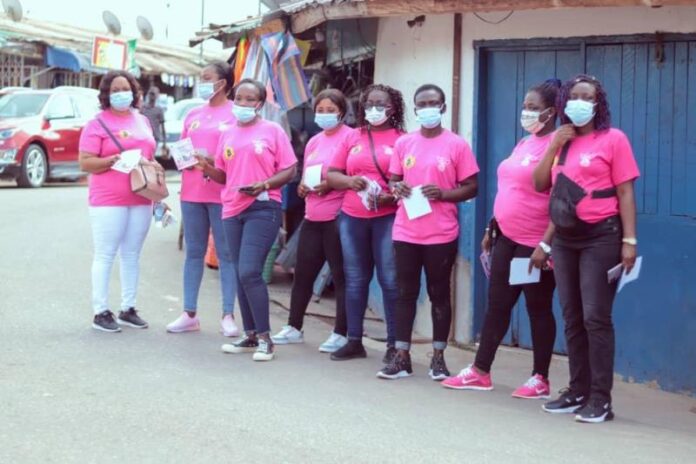
Susanna Wesley Mission Auxiliary (SUWMA) Tarkwa Circuit of the Methodist Church, Ghana has organized a free breast screening for women in Tarkwa and its environs.

The programme dubbed “Awareness is power” formed part of the group’s activities for the year to create awareness, prevention and treatment of breast cancer.

Madam Juliana Aseidu, Midwife at the Tarkwa Municipal Hospital, educated about two hundred women on how to self examine their breasts every month.

She said, “if every woman adopts the habit of self-examining her breasts on a routine basis it would ensure early detection of breast cancer.”

Madam Aseidu advised women to eat a balanced diet, exercise regularly, avoid excessive intake of fats, alcoholic beverages and smoking as these could contribute to breast cancer.

“Some women alleged they would lose the shape of their breast so they do not breastfeed their babies when they deliver; this is wrong. At least breastfeed your baby between one to two years to prevent the increasing cases of breast cancer,” she said.

Madam Lydia Oduro, President of SUWMA Tarkwa circuit, said the programme was part of their commitment to addressing the health needs of women.

She entreated women to observe their breasts and report to any health facility when they noticed a lump or any changes in their breasts to help reduce breast cancer deaths.

Mrs Gloria Tandoh Siaw, the Secretary of SUWMA Tarkwa circuit, indicated that the programme was the first of its kind, adding that, “We would organise more in the subsequent years to promote the welfare of women in Tarkwa-Nsuaem Municipality.

Madam Naomi Manu, one of the beneficiaries, thanked the organizers and called on women to take part in regular breast screening exercises to save more women from the deadly disease.

At the end of the programme over one hundred women were screened by medical professionals.

Ban on illegal mining activities affected Western Region in 2020 election-Boadu

0

The General Secretary of the ruling New Patriotic Party (NPP), Mr John Boadu, says the government’s ban on illegal mining activities affected the party in the Western Region during the 2020 election but stressed that the ban was for the good of the nation.

He said the NPP had majority parliamentary seats in the Western Region but after the 2020 election lost many, adding that, “Prestea Huni-Valley constituency was one of them and even in Tarkwa-Nsuaem constituency we nearly lost that seat.”

Mr Boadu said, “I am so gratified it caused us in the just-ended election but it was to protect our forest reserves, including water bodies from individuals who illegally tampered with it”.

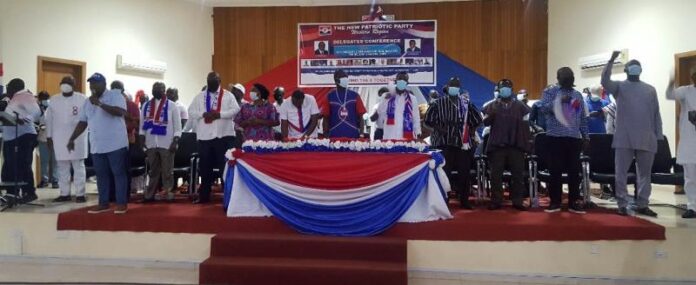
The General Secretary disclosed this to the media during the Western Regional NPP annual delegates conference held at the University of Mines and Technology (UMaT), Tarkwa.

It was on the theme: “Consolidating our gains of 2020 election, the role of stakeholders.”

“We cannot sit down unconcern and watch few people destroy the country because of politics without taking any action. President Akufo-Addo took a bold decision and we supported him,” he said.

“In as much as we try to protect the environment, we would also provide alternative livelihood for people who have been displaced as a result of government decision to halt illegal mining in this region”

Mr Boadu said, “Currently if one gets a concession, the government would provide the needed machines and equipment that are environmentally friendly to these miners to enable them to go about their duties.”

“As we speak now we have even procured 200 processing machines to be given to these miners to help them practise safe mining,” he announced.

He emphasized that the government would resolve this issue once and for all to ensure the safety of every citizen and the generations unborn.

Mr Kwabena Okyere Darko-Mensah, the Western Regional Minister, said the government would do more to transform the Region and assured residents to be patient.

He appealed to NPP supporters to protect the interest of the party to enable them to win the 2024 polls.

Mr Joe Ghartey, MP for Essikado-Ketan constituency, on behalf of the Western Regional NPP Parliamentary Caucus, charged the youth to be decorous in their behaviour and urged them to propagate the good work of the party.

“We cannot afford to leave Parliament because both sides in the house have 137 seats. We will, therefore, depend on the MMDCE’s and constituency executives to hold forth while we are away,” he added.

Mr Kojo Acquah, Municipal Chief Executive of Effia-Kwasimitim, who spoke on behalf of all MMDCE’s, said they would work tirelessly to ensure NPP break the eight years governance cycle in Ghana.

The NPP Western Regional Chairman, Mr Francis Ndede Siah, commended the NDC for cooperating in the confirmation of the five MMDCE’s and implored them to do the same for the remaining nominees.

Newly sworn-in MMDCEs urged to live moderate lifestyles

0
IMAGE COPYRIGHT / AFP/ Dr Hafiz Bin Salih, Upper West Regional Minister in a shot with the newly sworn-in MMDCEs

Dr Hafiz Bin Salih, the Upper West Regional Minister, has urged the new Metropolitan, Municipal and District Chief Executives (MMDCEs) to live moderate lifestyles and be concerned about the people’s development and not their gains.

“There is a perception, whether true or false and whether we like it or not, that politicians go into the office to amass wealth,” he said and appealed to the MMDCEs to live worthy lives beyond reproach.

Dr Bin Salih said this in Wa during the swearing-in of the eight MMDCEs that had so far been confirmed by their respective Assemblies in the region.

The Minister also appealed to those coming in for the first time to learn fast and abreast themselves with the various local government laws including the Local Governance Act 2016 (Act 936), the Public Procurement (Amendment) Act, 2016 (Act 914) and the Public Financial Management Act, 2016 (Act 921).

He urged the Chief Executives to follow due process in their dealings and to work closely with their District Coordinating Directors and other Technical Officers to succeed.

“You also need to develop cordial relations with Assembly members, Traditional Authorities, community members, Non-Governmental Organizations, Religious bodies and vulnerable groups in your jurisdiction,” he urged.

Dr Bin Salih admonished the newly sworn-in MMDCEs to do well to address issues related to security, low local economic development and internally generated funds, building in unauthorized areas, illegal mining and sanitation.

His Lordship Justice Yusif A. Asibey, the Wa High Court Judge, led the eight confirmed MMDECEs to take the oath of office and allegiance.

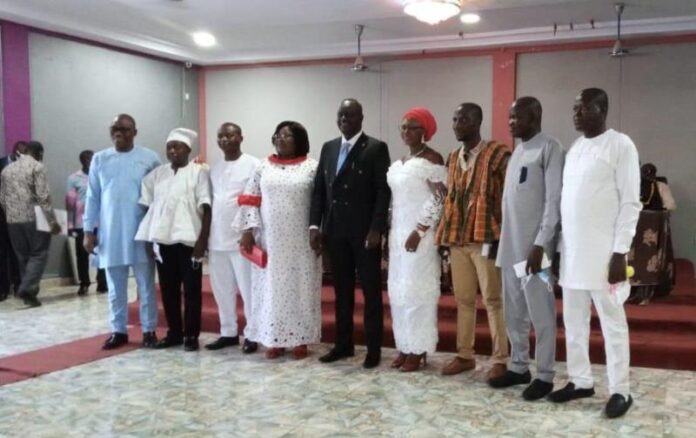
The eight include Alhaji Tahiru Issahaku Moomin, Wa Municipal Assembly; Madam Katherine Lankono, Nadowli-Kaleo District; Mr Nalure George Gerard, Lambussie District; and Mr Nadi Imoro Sanda, Daffiama-Bussie-Issa District.

The rest are Madam Ayisha Imoro Batong, Sissala West District; Mr Fuseini Yakubu Batong, Sissala East Municipality; Mr Nero Raymond, Nandom Municipality; and Dr Ewurah Suleman Kandia, Wa East District.

Meanwhile, three of the remaining nominees namely, Mr Martin Domotier Bomba-ire, Lawra Municipality; Madam Christine Amadu Bombanye, Jirapa Municipality; and Mr Ali Bukari, Wa West District, who had been rejected by their respective Assemblies had all been re-nominated by President Nana Akufo-Addo pending confirmation.

FoN holds roundtable with GHEITI MSG

0
IMAGE COPYRIGHT / AFP/

A revenue impact study on Ghana’s extractive industry has indicated an accrued additional 713 million cedis to the economy.

The fiscal impact study conducted by the Ghana Extractives Industry Transparency Initiative (GHEITI) also revealed positive growth, stability and investment in the country.

Dr Steve Manteaw, the Co-Chair of GHEITI, said at a meeting with the GHEITI Multi-Stakeholders Group, (MSG) organized by the Friends of the Nation.

The Co-Chair said the differentials arose from the impactful reforms in Corporate income tax from 25 to 35 per cent, Royalty to five per cent and ground rent from five pesewas to 15 cedis.

Ghana signed on to the initiative to promote sanity in the oil and gas sector to abide by global standards to ensure proper accountability mechanisms.

Dr Manteaw said although the initial focus was only on the collection of revenue and its utilisation, it had now been opened to procurement and contracting, among other indicators.

He said Ghana had over the period showed compliance to the global standards on validation and was recognized for some meaningful progress in the area of validation.

Dr Manteaw said the GHEITI reports of 2017/2018 had shown an impressive leap into doing the right things in the sector and prayed that such lessons would be translated into the minerals sector to change the narrative from there.

He, however, noted that subsequent reports had been delayed due to COVID-19 and the need to get audited reports from industry players.

The Co-Chair drew the attention of stakeholders to the need to keep engaging and keeping an eye on the sector to enhance transparency.

He said, “the sector still witness abuse despite greater successes in transparency… I think we should begin thinking of Public Interest Litigation framework for the people of Ghana to demand justices on infractions in the sector”.

Former Minister of Aviation, Kofi Adda dies at age 65

0
IMAGE COPYRIGHT / AFP/

A former Minister of Aviation, Joseph Kofi Adda, has died.

Mr. Adda who is the immediate past Member of Parliament for Navrongo Central in the Upper East Region died at the age of 65.

According to a relative, Mr. Adda died in the early hours of Thursday, October 14, 2021, on arrival at the Legon Hospital.

The relation told Citi News he had been battling with ill-health for the past few years.

Mr. Adda also served as Minister of Sanitation in President Nana Addo Dankwa Akufo-Addo’s first term.

He was also a Financial Economist and a Management Consultant.

A former Deputy Minister for Agriculture, Kennedy Nyarko Osei, also confirmed the death of his former colleague on social media and commiserated with the family.

About Kofi Adda
Joseph Adda was born at Navrongo, the capital of the Kassena-Nankana District in the Upper East Region of Ghana.

He had his secondary education at St. John’s School, Sekondi, and obtained a Bachelor of Science degree in politics and economics from the Indiana Wesleyan University, Marion, Indiana, the United States, which he attended between 1979 and 1982.

Between 1982 and 1984, he was at Columbia University, New York, where he studied for a Master’s degree in International Affairs, specialising in Finance and Banking.

He went on to get a graduate certificate in African Studies from the same university.

In 1989, he obtained a certificate in French language and civilization from the Sorbonne University, Paris, France.

Political career
Mr. Adda first entered Parliament in 2003 after winning the Navrongo Parliamentary seat in a by-election.

This was after the death of its sitting MP, John Achuliwor. He subsequently retained his seat in the 2004 general elections.

Mr. Adda served in various capacities under the Kufuor administration.

He was appointed in 2005 as the Minister for Manpower Development and Employment and later became the Energy Minister in April 2006.

In 2008, Joseph Kofi Adda retained his seat when the NPP lost the general elections but lost it in 2012 to Mark Woyongo.

He won the seat back in the 2016 election then, lost it to Upper East Regional Minister Tangoba Abayage in the NPP’s parliamentary primary ahead of the 2020 election.

Jean Mensa decries loss of lives during 2020 polls

0
IMAGE COPYRIGHT / AFP/

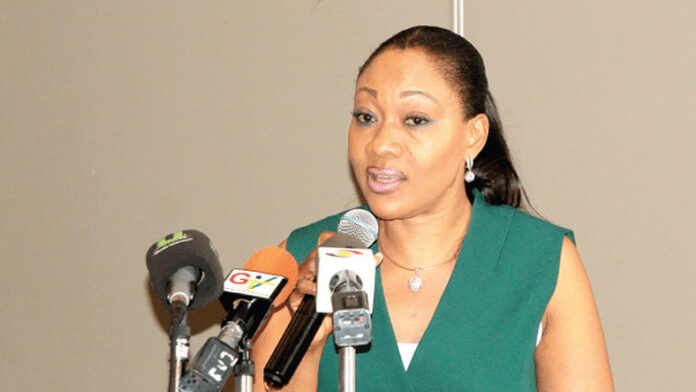
The Chairperson of the Electoral Commission (EC), Jean Mensa, has described the 2020 General election as historic, transparent, efficient, and cost-effective.

According to her, the fact that the comparative cost of the election was reduced by 41% which is equivalent to 90 million dollars and a voter turn-around time of between 10 and 12 minutes makes the election exemplary within the West African sub-region.

Speaking at a major forum at the opening ceremony of the 2021 ECOWAS Parliamentary Seminar in Winneba, Madam Jean Mensa however expressed regret about the loss of seven lives in the election.

“Notwithstanding inflation and price hikes and the fact that we incurred additional costs owing to the COVID-19 protocols we deployed throughout the election, we cut the cost per voter, from 13 dollars per head in 2016 to 7 dollars per head. Through a reduction in cost, we saved the government a formidable sum of $90 million.”

“We were met with many challenges, but we surmounted most of them and those we could not overcome, we learned from. Sadly, seven lives were lost, and though these did not occur at our polling stations or arise as a result of misconduct on our part, one life lost is one too many. We are hoping that our security agencies will share their findings and recommendations for future learning”.

The Commission had initially heaped praises on itself for the way the election was conducted, regardless of the deaths and the many disagreements that eventually led to an election petition by the opposition NDC’s Presidential Candidate, John Dramani Mahama, to challenge the presidential results at the Supreme Court.

There were 61 recorded cases of electoral and post-electoral violence across the country, according to the police.

Six members of the Minority earlier tabled a private members’ motion in the House seeking a full-scale probe into the acts of violence that occurred in the 2020 general elections.

The MPs; Haruna Iddrisu, Muntaka Mubarak, Mahama Ayariga, Alhassan Suhuyini, and James Agalga want the scope of the probe to take a look at the inappropriate interferences by state security in the elections, and violence against citizens, leading to the loss of lives.

They insist the IGP and other security agencies reneged on a promise to Parliament and Ghanaians to protect lives.

Many have criticized the government for doing little about the violence and the deaths through an investigation to bring the perpetrators to book.

2020 election deaths have dented Ghana’s image – Ibn Chambas
The immediate past Head of the United Nations Office for West Africa and the Sahel (UNOWAS), Dr. Mohammed Ibn Chambas, has said the deaths that were recorded in the 2020 general elections have dented the country’s image.

According to him, Ghana needs to work to reclaim its enviable democratic credentials on the continent.