
Home Blog Page 769

Thoughts of a Nima Boy: God bless our teachers, they affected our lives

0
IMAGE COPYRIGHT / AFP/

I remember when I once listened to Citi FM’s Umar Amadu Sanda Amadu recount how a teacher basically became a father to him, and moved heaven and earth to ensure he never dropped out of school. It triggered a gale of thoughts on the teachers that have shaped, developed and directed my life to this stage. Though all are precious and special to me, there are some whose memory I will take with me to the grave.

I begin with the one who really grew my intellectual capabilities at a very tender age. In St. Cecilia’s Basic School in Nima, I met a real teacher. His name was as eccentric as his intellectual peculiarities. Mr. John Dzahene Tsuglo Anumu Atiogbe – affectionately called ‘tsoolo’ because he taught Ga language. The man’s eccentricity went beyond his habits to cover his mode of punishment, mode of teaching and mode of handling students.

Under him, we learnt music – outlining its various intricacies. We used a graph sheet to plot a tortoise, the black star in Ghana’s flag and other shapes. We drew the Agama lizard, knowing its parts and how it lives. I can’t forget the hen we learnt about. It was later in Senior High School Biology class that I realised that the lizard and hen were removed from the biology syllables because they were considered above our level then. Our teacher had us learning advanced science, and my intellectual capabilities were as a result sharpened and harnessed.

In Junior High School, a teacher lingers in mind. This teacher was Dennis Nchor and he taught us Social Studies. It was through him that my interest in history was sparked. The Ghana, Mali, Songhai Empires, the Moroccan Invasion, the Trans-Atlantic slave trade are topics whose intricacies I could never forget because of how he treated them with what the Rastas would call TLC (Tender love and care). One thing he also imbued in us was vocabulary. At our young age he made sure we appreciated the importance of words. He brought to us to realise that words are not only “the verbal embodiment of power” but “are the pegs with which ideas are built”.

I attended O’Reilly Senior High School, then in Adabraka, where I studied General Science from 2004 to 2007. Though a Science student, Miss Sandra Arhinful really whipped up the literature sentiment in me -something I still carry and, if need be, I am ready to die for; to liberate men from the manacles of illiteracy. “Illiteracy is a disease,” as my grand-dad used to say.

One person I can never talk about life in secondary school without mentioning is my form-master from year one to three. He was a Chemistry teacher called Kwabla Kuwornu.
“The man is different in many ways,” as stated by Mr. Ansah, the Physical Instructor and one-time Assistant Headmaster of Odorgonnor Senior High School. Mr. Kuwornu used unique methods to teach us. From his swagger and talk, one was careful not to laugh in his face. In the end one could easily conclude that he taught us English instead of Chemistry.

At the Polytechnic, my academic performance could best be described as ‘dismal and abysmal’. I got withdrawn for academic non-performance and really had no teacher that stood up for me. I saved the money I made from my National Service allowance, enlisted the help of some friends, and put myself through school again without the knowledge and consent of my parents. Thus began my journey at the University of Professional Studies, Accra.

I met many teachers at the university, but one stood out to me the most. We were in a Business Management class when he entered. What stood out to us was his ‘outlandish dressing’ which one could describe as rivalling that of the late Muammar Gaddafi of Libya. We laughed under our breath. However, little did I know that he and I would have a bond. He was the teacher that imbued in me the principle of uniqueness and distinction in my dealings. In the second year, he took me through Entrepreneurship. The man tried to break our traditional thinking pattern by introducing some simple yet different dimension to our lectures.

The man was described by almost everyone as a non-compos mentis (not in one’s right mind). To me however, he may have been the sanest lecturer I ever met. Every student of the class was required to come along with his or her school identity card, an exercise book for the course, the course manual (Advanced Entrepreneurship for Blockheads) and a reading highlighter. The absence of one item meant a student forfeited the class: an offense. As part of class one day, he took us to the British Council for a programme he thought we should be part of. The highlight of my relationship with Mr. Amo Bediako was the presentation in class that required our group to go to the Accra Psychiatric Hospital to find out how the right brain and left brain work in an entrepreneur’s mind. We never saw him again after that semester.

When I studied for my degree in Marketing, I made friends with a lecturer who took a special interest in me. He kept telling me to aim higher and not to lower my standards. Long after my undergraduate studies, I am to this day still in contact with him. Whenever I needed an endorsement or a reference, he was always available. He was my referee when I got a job offer at CFAO Ghana Limited, and a referee for the four schools I applied to for my graduate studies. He has transcended from the role of a teacher to become a guide in my life. To Dr. Majeed Iddrisu of the National Communications Authority I owe a lot. I salute you.

In Tafsiliyya, an Islamic school, I met another teacher who left an impact. He raised the bar for us and in turn raised our standards. He made us realise all the while we only had those around us and not just teachers. He revolutionized our thoughts on seeking knowledge and made us realize that a man could be an institution on his own. To borrow the words of William Arthur Ward, “The mediocre teacher tells, the good teacher explains, the superior teacher demonstrates, the great teacher inspires”. That’s it. He provided us with massive inspiration, and in my speech as valedictorian of my graduating class in 2012 I made sure I mentioned him.

“The last scholar’s life is a chronicle of distinction and dynamism. His regard of our progression is grand, filled with stories of virtue and heroism, various shades of patience and unique show of enthusiasm, the likes of which is seldom found in any other person. He always took a firm stand on continuity when fatigue began to set in. us. Indeed, he is a luminary of our time.

“He had the ability to control a wide intellectual panorama without losing sight of or compassion for the complexity and the intellectually different ones among us. We will never forget a saying of his which epitomises the fact that what we do not know is far greater than us. This has spurred us on and made us warriors with an all-empowering and all-encompassing desire for knowledge. He is Mr. Abu-Bakr Safo Yanki, the man whose impact on us transcended the classroom to other special places. We doff our hats for your resilience in coping with us.”

The role of a teacher can never be quantified. As we celebrate them this week, I leave you with a story recounted by Kwame Nkrumah in a speech he titled The Noble task of Teaching. He said:

“Before I end, I would like to repeat here an old story which perhaps many Honorable Members have heard many times before, but which serves to remind us of the greatness of a teacher. There was once a man who had a very beautiful daughter. He let it be widely known that he would offer his daughter in marriage to the man who could prove beyond doubt that he was the most learned in the world. Professors, Doctors, Scientists, Engineers and Lawyers all rushed from the four corners of the earth and spent much time and energy in displaying their knowledge and greatness before the assembly of judges. When they had all had their say and Judges were trying to assess the winner, a little insignificant man climbed on to the platform and asked if he could be heard. He wanted to say a few words which might help the Judges in their decision.
“These great, mighty, and renowned men, each in his own field, claim to be the most learned man in the world. I just want to ask one question. These men say they are learned, but who taught them?”
There was a mighty roar as the great congregation said in unison: “The teacher!”

“Exactly,” he said. “And I am a teacher.” Nobody could dispute the claim of this little man, and he carried off his bride.

Which teachers of yours do you remember?

God bless all teachers!

Makola related businesses: the fears of the insurer

0
IMAGE COPYRIGHT / AFP/

Risk pooling and its management for the purpose of obtaining premium is the purpose for which the insurance company exists. However, when insurers decide to decline risks located in certain parts of the country such as the central business district of Accra, it must be signaling to the market of a deficiency in the risk under consideration.

The outpours of tenants and landlords of such properties, year in and year out after the happenings of fire gutting such properties should tell a story of the likelihood of the absence of insurance on these properties. This article seeks to identify the rationale behind the insurer’s adamancy in accepting such risk, the way forward to improve the risk appetite of these insurers and the total benefit to the nation should such risks be presented to insurers and accepted in future.

Segmentation

As risk managers, a risk under consideration is expected to be of a nature easily segmented and identified. The risk should be less likely to be affected by the happenings of immediate environment and in circumstances where they are affected by happenings in its environments, the impact on the risk under consideration should be moderate. The central business district of Accra is congested with many properties. These properties are in close proximity with each other and the occupation of these tenants vary by every shop.

As insurers, this presents a situation of blurriness in the risk being considered. This not to mention, the likelihood of bad and or illegal connections being made from premises to other premises which inadvertently makes two independent properties assume the same risk as one property. The event of fire in a premises which may not be insured is likely to be spread to other insured premises because of poor illegal electrical connections made to and fro from these premises to adjourning properties.

The presence of stalls between properties and the heterogenous nature of transactions carried out between these pathways found along these properties increases the likelihood of an insured peril. The issue raised here is similar to the issue faced by insurers when residential apartments are occupied by different people. The mistake or negligence of one member is likely to affect all members of the apartments with little they can do to minimize the occurrence.

Age and Nature of Buildings

The properties gutted by fire in recent times have been seen to be relatively old and may be described as being poorly maintained hence may fail structural integrity tests. Majority of properties in the central business district of Accra have been in existence for decades. Everyone may have a story or two to tell about an encounter on the streets of adjourning properties or properties being used as landmarks whilst travelling to the central district. As buildings get older, they have the tendency to be much more susceptible to fire and possibly collapse. As required by law in the insurance Act, commercial buildings are required to purchase insurance.

The cover provided by the insurance purchased includes a collapse cover as an insured peril. Hence in the event of an accidental collapse of the property, the insured may be indemnified. Looking at the cover provided, insurers are less likely to buy into a contract where the property under the insurance consideration is in a poor shape. It’s a fact that, insurance is a financial product for uncertainty and therefore everyone would agree that, when a risk looks certain in occurrence, then it is no more an insurance but a bad business decision.

Also, the purpose for which some of the properties may have been constructed is totally different from the business for which they are being run now. These properties are in a state of stress and possibly the weight they carry may exceed the ideal. These were constructed in times where the general population of Greater Accra was relatively low and demand for economic activity moderate.

Values at Risk

The financial services sector over the years has come to the realization that, the informal sectors of the Ghanian economy hold the key to generating higher revenue for their businesses. Small and Medium scale Enterprises (SME’s) have proven resilient to many of the financial stocks suffered by the markets in recent times and this has surely sent some signals down the spine of industry players. The central business district is a hub of SME’s. One could spend an entire day trying to make count of the total number of firms operating within the zone and they are signals of opportunities.

However, this opportunity is heavily patronized by the life insurance sector of the industry and less patronized by the general insurance sector. As Insurers, we usually look at the values at risk vis a vis the premium contribution to the pool. Most of the businesses in the central district have a high occurrence ratio. Therefore, from a risk perspective, the premium they may provide to the pool may not necessarily excite the general insurer taking a look at their values at risk.

In the event a general insurer decides to accept such risks into the portfolio, when premiums are communicated to some of these SME’s they usually find them expensive. They feel the insurer is getting away with their money in the situation nothing happens in the given year. They usually forget the premium to value at risk ratio which is usually in their favor. There is a strong bargain for premium reduction in this market. Despite the request from willing SMEs for premium reduction, the risks they present is usually higher than the average. Therefore, the general may find the central district as not being attractive.

House Keeping Issues

Good house-keeping is one of the many reasons insurers may decide to provide favorable terms to an insurance contract. Good house-keeping goes beyond what the insurer may communicate as warranties on the policy to place the business. It should be reflected as a way of life for the business. It not only makes it easier and cheaper to buy an insurance product but also creates this self-awareness for the firm’s employees.

It requires a conscious and deliberate effort on the part of the firm to make it part of the culture of the business and this starts with the commitment of top management. It translates into the safety standards of the business which protects the entity in itself as it runs day by day. SME’s are usually notable for having little regards for proper house-keeping and the central business district is not different.

Tenants do not have any knowledge of basic fire-fighting techniques, there are few to none fire extinguishers, tenants do not behave as though they have a mandate to protect the property they occupy and landlords do not comply with fire safety standards whilst partitioning the various parts of the property. There seems to be no duty of care on the part of any party and this is worrying to insurers. Insurers would like to see that landlords are concerned about their properties and tenants are compliant.

The Way Forward

Tapping into the microinsurance market has always been an issue to general insurers. The desire to tap into the market exist but there seems to be too many obstacles making them less desirable and profitable. Despite all the hinderances highlighted here, insurers may decide to create a pool. Although it may seem like a small pool, it will be a step in the right direction in ensuring the burden of the risk does not entirely rest on the shoulders of one insurer who took the risk to insure the market.

It may be the key to opening up many opportunities to the less served SME’s whilst creating room for an all-inclusive insurance market. This is because, it Is quite unfair to have the life insurance sector heavily ensuring these markets whilst we neglect their source of livelihoods for which they may potentially need to finance their life insurance premium payment. I hold the opinion they should be served holistically and priced accordingly by the market insurers.

Also, materials used in the partitioning of these properties should be fire resistant in order to reduce the impact of a fire outbreak on the content of the properties thereby reducing the intensity of the fire. The relevant agencies often complaining of illegal electricity consumption in the capital must enforce the right electricity connections are made in these areas vis a vis the relevant electrical installations are done to ensure the properties are safe for habitation. These aged properties may also need to be recertified at structurally worthy for commercial businesses alongside the installation of fire extinguishers on these properties.

The Benefit as a Nation

If these remedies are put in place and insurers find interest in writing businesses from the central business district, the insurance penetration rate of the country is definitely going to increase and this thus puts the country ahead in the financial inclusion agenda amongst other countries like India, United Kingdom and the like who have significant penetration rates.

Also, anytime a property collapses or fire guts any, the public outpour is to have the government intervene to remedy the situation. The government is usually called upon to help refinance tenants who have lost valuable properties in the cause of the accident. However, should the necessary laws be enforced concerning the compulsory commercial property insurance, the government would not need to intervene since the properties under consideration would be catered for by the insurers. This relieves the government of all financial burden and allows institutions mandated for the very purpose to work effectively. The essence of insurance will be manifested and thus provide its quota to national development.

The central business district is a hub of many opportunities both to the formal and informal market participants. The streamlining of activities is likely to draw growth to the market whilst fostering economic wellbeing.

Elizabeth Sackey named as first female AMA Mayor

0
IMAGE COPYRIGHT / AFP/

The Metropolitan Chief Executive, MCE, nominee for the Accra Metropolitan Assembly, (AMA) Elizabeth Kwatsoe Sackey, has been fully confirmed by Assembly members to become the first female AMA Mayor.

Her confirmation was done today, Thursday, October 7, 2021, at the AMA office.

33 assembly members of the AMA voted ‘Yes’ to confirm her nomination for the position.

Madam Elizabeth Sackey’s name was on the list of Metropolitan, Municipal, and District Chief Executives released by the Minister for Local Government, Dan Botwe on Sunday, September 19, 2021.

However, prior to the list being made public, some NPP youth in the Odododiodoo constituency of the Greater Accra Region, staged a demonstration on Saturday, September 18, 2021, to express their displeasure.

The Ghana Police Service subsequently arrested four leaders of the demonstration.

The outgoing MCE of Accra, Mohammed Adjei Sowah, later condemned the said demonstration.

He also disassociated himself from the incident and urged his supporters to respect the decision of President Akufo-Addo.

In a statement, he declared his support for whoever President Akufo-Addo nominates.

“We should recognize the President’s authority to nominate individuals of his choice to promote his agenda, and it’s our duty to support the appointees to succeed… I totally support all the President’s nominations and commit to continue to work towards the development of the country,” he said.

About Elizabeth Sackey

Elizabeth Sackey was a former MP for Okaikwei North on the ticket of the NPP. She hails from Asere-Accra in the Greater Accra Region and was born on May 6, 1958.

She holds a Certificate in Marketing, which she obtained in 2003.

She worked with Ghana Commercial Bank as Chief Clerk before becoming an MP.

She is a Christian and fellowships with the Church of Pentecost and is married with four children.

UTAG backs down on resumption of strike after agreement with government

0
IMAGE COPYRIGHT / AFP/

The University Teachers Association of Ghana, UTAG, has said it has indeed retreated on the decision to resume its suspended strike following an agreement with the government.

Speaking after the Education Ministry made the announcement, UTAG’s President, Prof. Solomon Nunoo, said the agreement was reached “after more than five hours of negotiations.”

“Some of our members are not too happy with our agreement reached with the government which doesn’t satisfy all the things and aspirations we were hoping for, but all the same, we have reached something and for that matter, the intended strike will not come on.”

UTAG had asked its members to resume their suspended strike because negotiations with the government were still inconclusive a month after it suspended the earlier strike.

UTAG wants a restoration of the conditions of service agreed upon with the government in 2012.

The union wants the 2012 conditions of service to peg the Basic plus Market Premium of a lecturer at $2,084.42.

It says the current arrangement has reduced its members’ basic premiums to $997.84.

Its members had been on strike since the beginning of August 2021 because they want the government to restore the conditions of service agreed upon in 2012 which they said was far better than the current situation.

The strike by UTAG severely affected academic and some non-academic work at the various tertiary campuses.

The High Court’s Labour Division, 1, advised the National Labour Commission (NLC), and UTAG, to settle the stalemate over their industrial action out of Court.

UTAG had earlier indicated that it will only call off its strike completely upon successful negotiation with the government and the NLC.

‘Critics of my campaign promises are being shamed’ – Nana Addo

0
IMAGE COPYRIGHT / AFP/

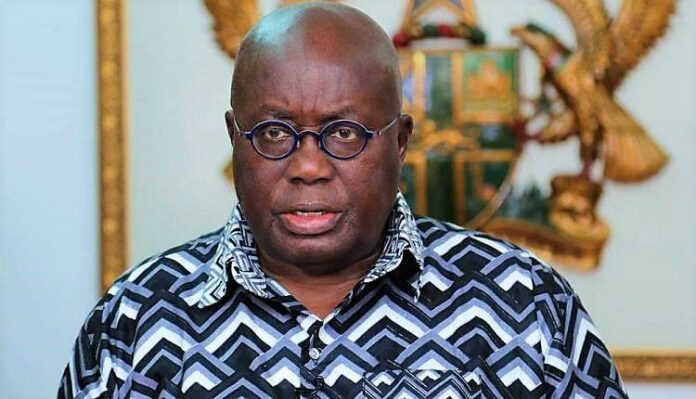
The President, Nana Addo Dankwa Akufo-Addo has taken a swipe at persons who doubted promises he made to Ghanaians during the build-up to the 20216 elections.

According to him, such persons have been put to shame because he has largely fulfilled the promises.

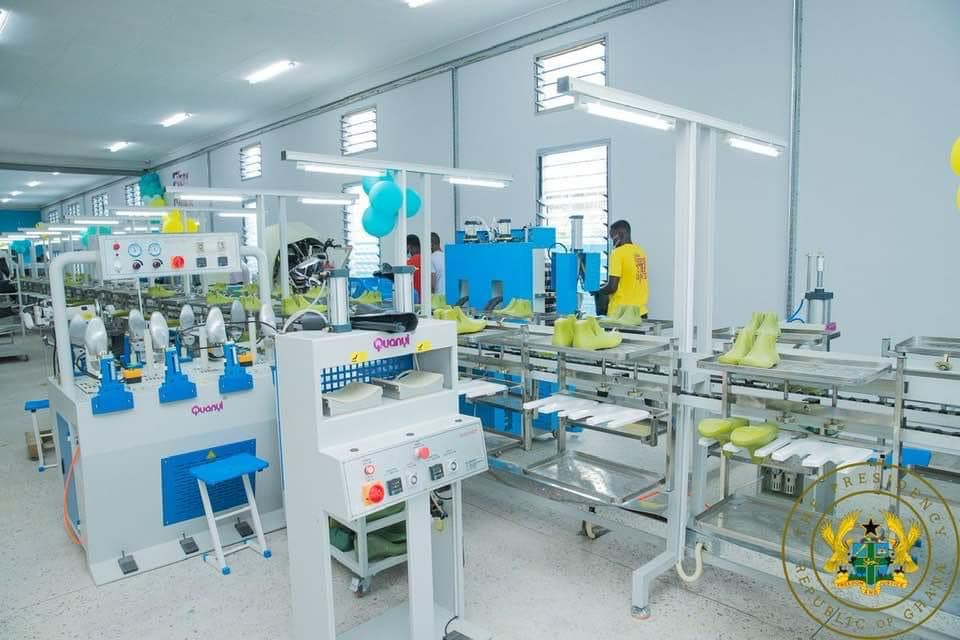
“My critics are being shamed one after the other. They said we won’t be able to deliver the One District One Factory promise but now everywhere I visit, I see some of the factories working. When I said I was bringing the Free Senior High School policy, they rejected it outrightly, saying it wasn’t possible, but it has come to stay.”

He made the remark when he commissioned a shoe factory at Akropong as part of his tour of the Eastern Region on Wednesday, October 6, 2021.

Prior to the 2016 polls, Nana Akufo-Addo, the then-presidential candidate for the New Patriotic Party (NPP) made a number of promises including introducing a free Senior High School policy, factories in every district, ambulances for every constituency, one million dollars for every constituency amongst others.

Officials of the National Democratic Congress at the time punched holes into the promises, claiming they were not feasible.

Recently, the opposition National Democratic Congress (NDC) in the Ashanti Region said the president cannot pat himself on the shoulder for developments in the region because he has done too little for the residents to merit any acknowledgment.

Its Regional Secretary, Kwame Zu, who spoke on Eyewitness News, intimated that years after the Akufo-Addo government took office, all it has been engaging in are sod-cutting ceremonies unlike the massive projects undertaken by the erstwhile Mahama administration.

“It is surprising to state with a shock that five years into the government of President Akufo-Addo, he is still cutting sods in the Ashanti Region. So I do not know which fresh breath President Akufo-Addo has gone to breathe into the Ashanti Region.”

We’ll campaign against you if you don’t pass Anti-LGBTQI Bill – Pentecost Church to MPs

0
IMAGE COPYRIGHT / AFP/

The Church of Pentecost has vowed to campaign vigorously against parliamentarians should they not see to it that the anti-Lesbian, Gay, Bisexual, and Transgender (LGBT) Bill is passed into law with immediate effect.

The Church believes the Members of Parliament (MPs) owe Ghanaians the moral duty to pass laws in the interest of the majority, hence, the Proper Sexual Rights and Ghanaian Family Values Bill brought before the house must be treated with the urgency it deserves.

Speaking on Eyewitness News, General Secretary of the Church of Pentecost, Apostle Alexander Kumi Larbi, said the Church is prepared to leverage its huge membership to kick against the normalization of same-sex sexual activities.

The warning comes after some Christian leaders, including those of the Pentecost Church on Wednesday, submitted a memorandum to Parliament to express strong support for the Bill.

“Our position is that we do not want this thing. The Church of Pentecost is 10.3 percent of the Ghanaian population. It is not about legal issues but morality. Within 48 hours, we have 15,000 signatories so if we give ourselves a week, all the 3 million members of the Church will sign. So if the MPs vote against this Bill, we also campaign against them in their constituencies. They were voted to go and defend what we want. So our position is that we are not in support of LGBT.”

“We don’t want that, that is why we are supporting parliament with our numbers. If the MPs decide otherwise, the churches are in discussions. This Bill will never survive in Ghana. If they throw it away and say that they are going to allow it, we will use our numbers to rescue the nation because we are doing this for posterity and the values and virtues of this country. We have the numbers, and they are solidly behind us because we are fighting their cause”, Apostle Alexander Kumi Larbi added.

The Bill, dubbed “The Promotion of Proper Human Sexual Rights and Ghanaian Family Values Bill 2021,” has received wide public support, with a section of the public condemning it and describing it as promoting hate.

The Christian Council and the Office of the National Chief Imam have already declared their support for the Bill.

One of the proponents of the bill and MP for Ningo-Prampram, Sam George, expressed optimism that the Bill will be passed when it is presented before Parliament.

He described the support of the clergymen as a key milestone to the passage of the bill.

Meanwhile, some prominent legal, academic and civil society professionals have also filled a memorandum challenging the anti-gay legislation submitted to Parliament.

The memo, which was signed by the likes of Professor Kofi Gyimah-Boadi, Dr. Rose Kutin-Mensah, Professor H. Kwasi Prempeh, Professor Audrey Gadzekpo, Professor Kwame KariKari, Akoto Ampaw, and Professor Raymond Atuguba, was in response to Parliament’s call for written memos on the anti-LGBTQI Bill.

They fear the Bill will flout the basic tenets of the constitution and undermine the dignity of LGBTQI Ghanaians.

Fuel prices may go up again before end of October – NPA

0
IMAGE COPYRIGHT / AFP/

Projections from the National Petroleum Authority (NPA) suggests that fuel prices in the country may surge close to GH¢ 6.86 per litre at the pumps if all other factors influencing pricing do not change.

According to Abass Ibrahim Tasunti, the Head of Pricing at the NPA, the second pricing window for October puts the price of petrol at GH¢6.84 per litre while diesel will likely sell at GH¢6.86 per litre starting October 16, 2021, baring any changes on the world oil market.

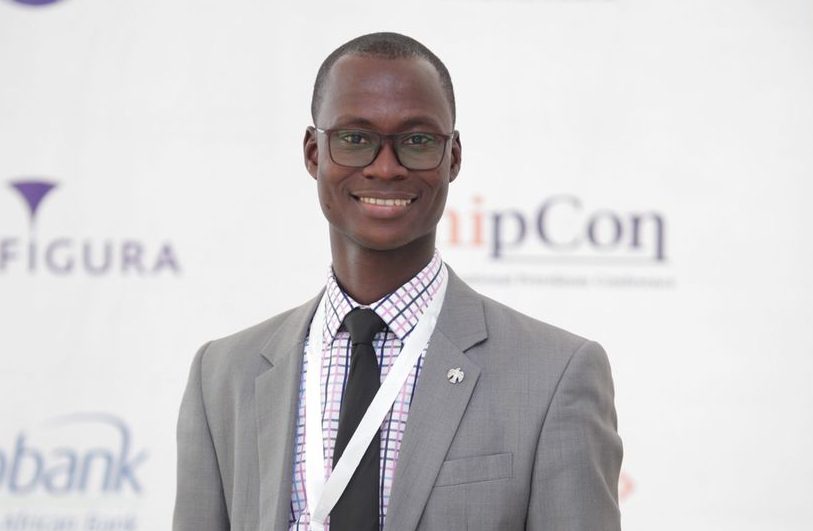
IMAGE COPYRIGHT / AFP/ Abass Ibrahim Tasunti, the Head of Pricing at the NPA

These projections do not take into account the margins of oil marketing companies and that of the bulk distribution companies, which may cause the projected amounts to go higher while statutory taxes and margins remain the same.

“All things being equal, for the next window, [since] the price of petrol on the world market has increased by about 9% and diesel has increased by about 10%, so these two, holding everything constant will project that petrol will increase by about 5% and diesel also increase around the same figure which will take us to about GH¢6.84 for petrol and GH¢6.86 for diesel… This is the next window, which starts from the 16th of October,” he said on Citi TV‘s The Point of View.

Meanwhile, the Executive Director of the Chamber of Petroleum Consumers (COPEC), Duncan Amoah has expressed fears that the movement of forex could further cause the price of fuel to increase to at least GH¢ 7 by the end of the month.

While insisting the taxes imposed by the government on petroleum prices continue to play a significant role in the rising cost of fuel in the country, he said efforts must be made by the government to address the situation to bring relief to citizens.

“We can get to GH¢ 7 by end of October. If we are doing about GH¢ 6.8 for the projection, we are just about 14 pesewas shy so by the close of the month which is the first window in November if the trend continues and the cedi comes under the kind of pressure you will normally see towards the last quarter because of the pressure from importation, I do not see how GH¢ 7 is not possible before November,” he said.

LPG Leader calls on Road Safety Regulators to be proactive

0

Mr Kofi Akpaloo, Election 2020 Presidential Candidate of Liberal Party Ghana (LPG), has called on Road Safety Regulators to be proactive in the implementation and enforcement of road safety regulations to curb accidents.

He said the agencies were to ensure sanity on the roads, however, most of them were not doing their works effectively

He said road transportation remained a major means for movement and the regulatory bodies must be active to curb the accidents.

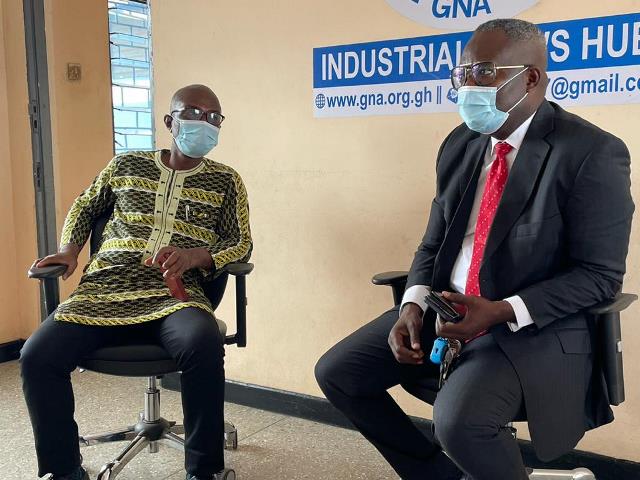
Mr Akpaloo, speaking at the Ghana News Agency and Motor Transport and Traffic Department (MTTD) road safety campaign platform, said having a flat rate for vehicle insurance was not the best.

The GNA road safety campaign is a continuous educational platform given to stakeholders to speak to their constituents on how best to contribute to making the country’s roads safer and crash-free.

The LPG Leader, therefore, charged the regulators to be up and doing as their effectiveness would check needless accidents, which were killing and maiming thousands of people.

He stated, “You sometimes see a DV number plate cars on the roads for a long time for months before they are licensed because the owners want their cars to be registered in a particular year.

“No car, that has been registered before they are brought into the country, should be giving a different date of registration in Ghana, it does not give the true identity of the vehicle.

“A car for instance registered in 2001, comes to Ghana and assume a new registration date of 2021, this is not a 2021 car, it should be registered as 2001, this shows the true age and identity of the car,” he said.

Mr Akpaloo also noted that most Insurance Companies did not conduct appropriate research to do risk assessment and be very sure of all the details of the person trying to get his or her vehicle insured.

He called on the National Road Safety Authority (NRSA), Driver Vehicle and Licensing Authority (DVLA), Police Motor Transport and Traffic Department (MTTD) and Transport Unions, including; Ghana Private Road Transport Union (GPRTU) to perform their tasks well.

Mr Akpaloo called for intensified education for the road regulators, adding that public education was also essential.

Mr Francis Ameyibor, the Ghana News Agency Tema Regional Manager, said whatever happened on the road affected everyone.

Mr Ameyibor said because of the devastation caused by road crashes, every institution must play its role effectively to ensure that we protect lives.

The GNA Tema Regional Manager also called for patience on the road, “we cannot commit mistakes on the roads, any blunder could lead to the death of someone or destruction of properties or injuries.”

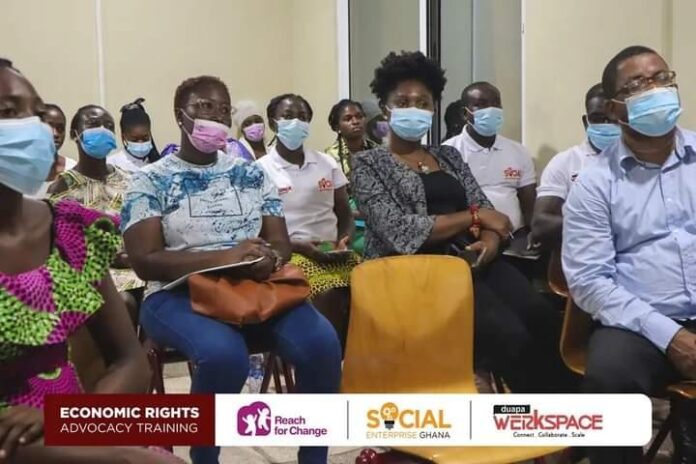
Women-led small scale businesses tutored on economic rights and social Enterprise

0
IMAGE COPYRIGHT / AFP/

Some women-led small scale businesses have been educated on their economic rights and responsibilities.

The women were also made aware of the emerging “Social Enterprise” model which uses business strategies to solve societal problems.

The training, facilitated by Duapa werkspace, an ICT oriented company, exposed the women to their civil, economic and political rights.

Mr Erasmus Ackon, the Chief Executive Officer of Duapa, who led the session, briefed the women on their economic rights to work, earn wages, need to pay their taxes and social security.

He encouraged the women to know the agencies that were responsible for providing support in growing their businesses.

On the social enterprise model, the CEO urged them to use their businesses to affect lives in their communities to help control the spate of unemployment.

“We need to use our business to solve problems”, he added.

Mr Ackon added that there was funding support to businesses that practised the social enterprise model to grow their businesses.

The women were reminded to also employ ICT tools and have websites to reach a larger audience and market.

They were later taken through good financial management practices, including budgeting, bookkeeping, cash flows, profit and loss account and balance sheet, among other financial models.

Ghana Exim Bank is behind the success of 1D1F initiative – Razak Opoku

0
IMAGE COPYRIGHT / AFP/

Mr Razak Kojo Opoku, a member of the New Patriotic Party (NPP) has said financing is considered as the main oxygen and lifeblood of any project, business or policy implementation.

He said ideas without sustainable financing was meaningless, and therefore essential to acknowledge and appreciate the role that the Ghana Exim Bank was playing to ensure the success of President Akufo-Addo’s One District-One-Factory project.

In an interview with the Ghana News Agency in Accra, Mr Razak Opoku said the Ghana Exim Bank has been properly aligned with President Akufo-Addo’s industrialization programme and has over the last four years created a special niche for itself as the main pillar, backbone and primary financing institution for the 1D1F Programme with an estimated amount of over GHC 2.1 billion in loan facilities for the establishment of 122 factories under 1D1F between March 2017 and December 2020.

He said the bank had continued to provide loan facilities to companies under 1D1F in 2021 as President Akufo-Add committed to ensuring that before the end of his tenure, at least every district in Ghana could boast of a factory and this move will help to reduce the rate of unemployment in the Country.

Mr Razak Opoku noted that it was important to point out that, the main bodies largely ensuring the financing of all the 1D1F Projects were Ghana Exim Bank and the Ministry of Finance, adding, the Ministry of Trade and Industry and importantly the project Secretariat were responsible for the selection process and coordination of the 1D1F project.

He said it was rightly so for all to also appreciate the service and efforts of Madam Gifty Ohene Konadu as the First National Coordinator for 1D1F Secretariat, who did well in the coordination of the 1D1F project.

Mr Razak Opoku said the success, survival and sustainability of the 1D1F Project would be totally incomplete without the full acknowledgement and recognition to the Chief Executive Officer of the Ghana Exim Bank, Mr. Lawrence Agyinsam and his able Board Chairman, Mr. Kwadwo Boateng Genfi for the sterling leadership they provided to ensuring the success and survival of President Akufo-Addo’s One-District-One-Factory initiative.