Home Blog Page 83

Musician Fiamor signs management contract with Afenya Media 

0

Sogakope (VR), Feb. 26, GNA – Mr Bheaman Dzam Fiamor, a musician and songwriter from the Volta Region, has signed a five-year management contract with Afenya Media, a broadcasting firm based in Sogakope in the South Tongu district. 

The contract, worth thousands of cedis, will see Afenya Media take charge of Fiamor’s management for the next five years, while the development is expected to motivate and give hope to other young and upcoming artists to chase their musical dreams. 

Mr Dumevi Kwame Apollo, the Programmes and Operations Manager at Afenya Media, in an interview with the Ghana News Agency, said that the Company was excited about Fiamor’s prospects. 

“We are particularly excited about the future successes Fiamor holds, we are very happy to be part of his story henceforth, and this mega move would see more success soon,” he said. 

He said ‘Afenya Media’ was drawn to Fiamor’s resilience and hard work over the years, as well as the motivational and inspiring messages conveyed through his music.  

Mr Apollo said that Fiamor’s mastery of the Ewe language and his flexibility in various types and genres of music also made him stood out among his peers, and the media house was happy to engage such a top talented artist. 

“Fiamor, as he is known in the music industry, as a budding artist from the Volta Region with a number of singles that gives hope, courage, and motivation to people from all walks of life and we cannot express the joy we have for signing such an artist”. 

Under the new management, Fiamor was set to release his first single, titled “Ga ne va,” to wit, financial prosperity, on Friday, February 28, which would be produced by Ray Roch and will be available on all digital music platforms for streaming and downloading. 

Fiamor expressed his gratitude to Afenya Media for the new partnership, which he believed would be beneficial to both parties. 

He thanked the new management for the hope and inspiration that would motivate him and others to work harder and achieve greater successes and urged all fans to keep faith and pray for his success.  

Some of Fiamor’s notable songs include “Yaka,” “Edzorxoxo,” “Davi Bae,” and “Bless me,” among others. 

National Vetting Committee of MMDCEs clears three women in Oti for vetting.

0

The National Vetting Committee of Metropolitan, Municipal, District Chief Executives (MMDCEs) have cleared three women aspirants from the Oti Region for vetting.


Mabel Fadji Akakpo of Akan Constituency [Kadjebi], Agbesi Simon Dziwornu of Krachi West and Ester Kuma Odartey of Krachi East have been cleared to appear before the National Vetting Committee on Wednesday, February 26.


This is according to a timetable release for the National Vetting of candidates for MMDCEs positions seen by the Ghana News Agency (GNA).


These women who, hitherto, were not part of the earlier submission, would now battle it out with the 27 all men shortlisted candidates submitted earlier.


One of the female aspirant who spoke to the GNA on condition of anonymity, said they were cleared on competency, but not on women equality ground.


One hundred and forty-three candidates from nine Municipal and District Assemblies in the Oti Region had filed for MDCEs positions, but 27 have been shortlisted for consideration by the National Vetting Committee.

CSOs in Northern Zone hold consultation on draft NPO Bill.

0

Civil Society Organisations (CSOs) in the Northern Zone have held consultation on the Non-profit Organisations (NPO) draft Bill to provide input and shape the future of the non-profit sector in the country. 


The consultation forum, held in Tamale, and supported by STAR-Ghana Foundation, was to consult widely with CSOs on the draft NPO Bill and solicit feedback to inform a CSOs position paper on the Bill. 


The CSOs in the Northern Zone came out with some input on the Bill, which was read by Madam Teiko Sabah, a Consultant at STAR-Ghana Foundation. 


Madam Sabah said there was need to have more NPO representatives in the Board’s composition and the appointment of Board Members should be co-led by NPOs. 


She called for a review of the requirements for double registration and to make registration decentralised, digitalised and flexible to enable the CSOs to register without any challenges. 


She said the validity of licenses should exceed one year and the law should establish an independent adjudication tribunal separate from the Commission. 


She said, “The Bill should provide for tax incentives and other benefits for NGOs.” 
The draft NPO Bill seeks to create an enabling environment for NPOs to strive in their development agenda due to their vital role in the country’s development. 

AngloGold Ashanti equips pupils with first aid skills 

0

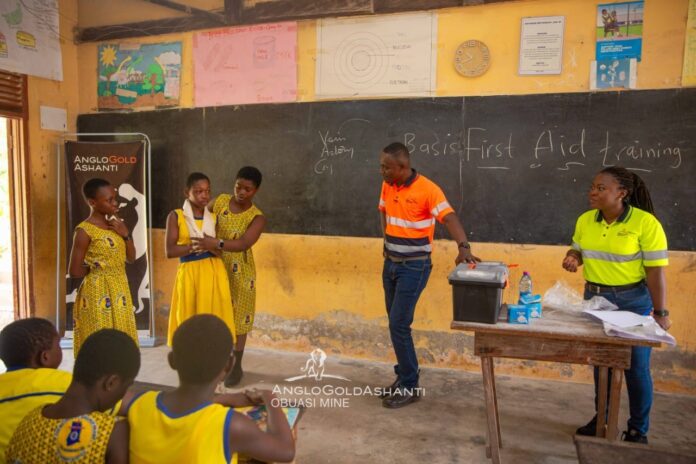
 Obuasi (Ash), Feb. 26, GNA-As part of the implementation of AngloGold Ashanti’s integrated health education programme in its operational areas, the company has commenced first aid training for basic schools in Obuasi. 

The programme, which is initially targeting public schools in Obuasi, is geared towards promoting habits and values of good hygiene and sanitation including menstrual hygiene management and safety.

First aid is a critical intervention that can prevent death and disabilities by providing timely assistance before professional medical support arrives.  

The importance of first aid cannot be overstated – it is a vital skill needed during emergency situations. 

However, in Ghana, countless lives are lost due to the lack of basic first aid knowledge.  

Available statistics indicate that over 60 per cent of accident fatalities in Ghana could be prevented with timely first aid intervention.    

It is against this background that AngloGold Ashanti has launched a basic first aid training for pupils in basic schools in Obuasi with the goal of changing the narrative. 

More than 200 students of the Anyinam Methodist A and B were the first to benefit from the maiden edition of the programme, when safety professionals from the mine’s occupational health and safety department, in a practical session, took them through basic rudiments of first aid training.  

The training covered essential skills like assessing a harmful situation and controlling bleeding during injury. 

Madam Mavis Nana Yaa Kyei, the Social Development and Gender Superintendent of AngloGold Ashanti Obuasi Mine, said the programme was expected to bring health education to the doorsteps of school children in a bid to promote a healthy, physical, psychosocial and conducive learning environment. 

It would also promote attendance and academic competence, while preventing illness- related absenteeism. 

She said first aid was an essential life skill that empowered individuals to act in emergencies hence the need to target children with this vital skill.   

“Teaching first aid in schools will not only equip pupils with the ability to manage unexpected situations but also fosters a culture of care and responsibility,” she emphasised. 

Ada College of Education matriculates 319 students 

0

Ada Foah, Feb. 26, GNA – The Ada College of Education (ADACOE) has formally admitted and matriculated 319 new students comprising of 161 males and 158 females. 

Professor Prince Boateng, the Principal of the Ada College of Education, welcomed the fresh students and urged them to approach their academic journey with diligence, discipline, and dedication.

He emphasised the pivotal role of teacher education in national development and encouraged students to uphold the institution’s core values. 

Mr Francis Ankrah, the Registrar of the College, disclosed that the institution was no longer affiliated to the University of Education, Winneba (UEW), but rather now closely associated with the Akenten Appiah-Menka University of Skills Training and Entrepreneurial Development (AAMUSTED). 

Mr Ankrah said it was worrying that although the college had initiated biodigester and installation training initiatives to curb open defecation in the area, the people of Ada hardly take advantage of it. 

He said it was surprising that people from other parts of the country eagerly participated in the biodigester training, while those in Ada chose not to take part. 

Some of the matriculates, speaking to the Ghana News Agency (GNA), expressed excitement and gratitude for joining the prestigious institution and pledged to excel academically and grow professionally. 

Employees of Vivo Energy Ghana Employees spend time with women at Chosen Rehabilitation Centre  

0

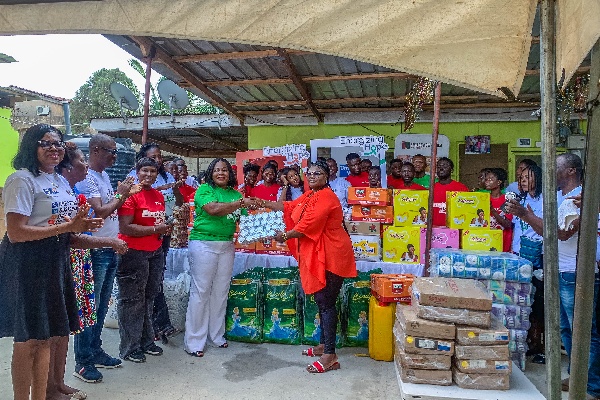
Accra, Feb 25, GNA-In the spirit of love, kindness, and compassion, employees of Vivo Energy Ghana, the exclusive marketer and distributor of Shell-branded fuels and lubricants, have celebrated this year’s Valentine’s Day with women at the Chosen Rehabilitation Centre under its Energizing Hope Campaign.  

The Energizing Hope initiative is a tradition where employees come together to share love and support underprivileged communities. For this year, Vivo Energy Ghana focused on making an impact on the lives of women at the Chosen Rehabilitation Centre through donation, skill empowerment, and heartfelt interactions.  

Speaking at the event, the Corporate Communications Manager of Vivo Energy Ghana, Shirley Tony Kum, said, “We chose the Chosen Rehabilitation Centre (Women’s Unit) because we deeply admire the incredible work being done at the centre to support women on their journey to recovery. We recognize the challenges that come with overcoming addiction, and we want you to know that Vivo Energy Ghana is with you on this path.  

Leading this year’s initiative was the Local Payment and Loyalty Manager of Vivo Energy Ghana, Mercy Etrue, who served as the Inspiro for the event, inspiring the women at the centre with her leadership, encouragement, and commitment.  

Mercy Etrue emphasized the company’s commitment to elevating vulnerable groups in society. She opined, “At Vivo Energy Ghana, we believe that Valentine’s Day is not just about celebration but also about making a meaningful impact. Through Energizing Hope, we aim to uplift and support those in need, fostering a culture of compassion and sustainability.”   

She further gave words of encouragement to inmates and attendees at the event.  

The visit featured the donation of essential food items and sanitary supplies, ensuring that the women at the center have the necessities to support their recovery.   

In addition to the donations, a bead craft training session was facilitated to equip the women with practical skills that will aid their self-sufficiency and empowerment.  

Vivo Energy Ghana also shared branded chocolates, symbolizing love, care, and support for the women as they work towards a brighter future.  

 The management and staff of the Chosen Rehabilitation Centre also expressed their gratitude for the support, noting the positive impact such initiatives have on the lives of the women at the centre.   

Through the Energizing Hope initiative, Vivo Energy Ghana continues to demonstrate its commitment to corporate social responsibility, ensuring that love, hope, and empowerment reach those who need it most.   

Mahama reiterates Government’s commitment to ensuring BoG operates free from political interference

0

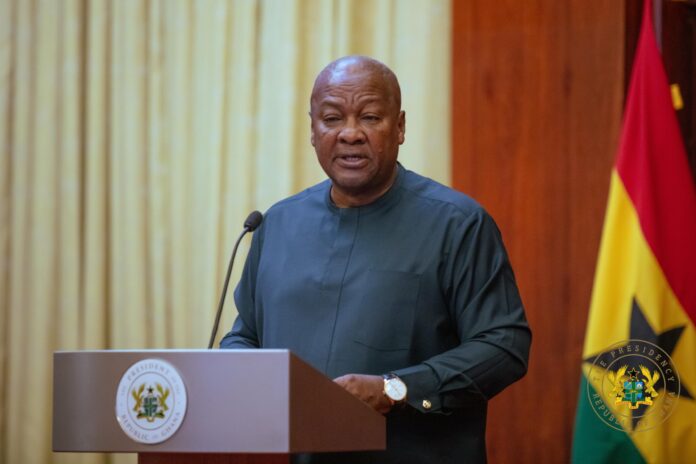
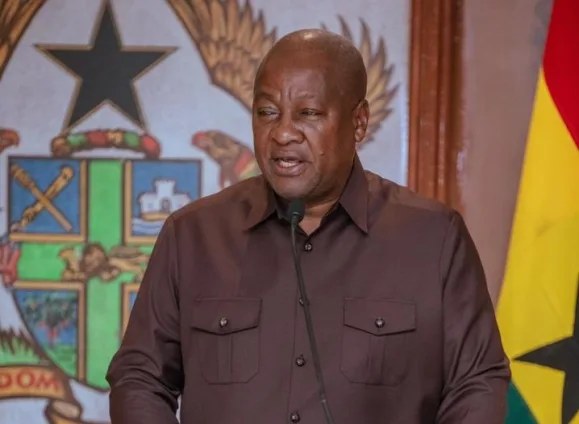
President John Dramani Mahama has reiterated the Government’s commitment to ensuring that the Bank of Ghana (BoG) operates free from political interference, guided solely by its mandate.

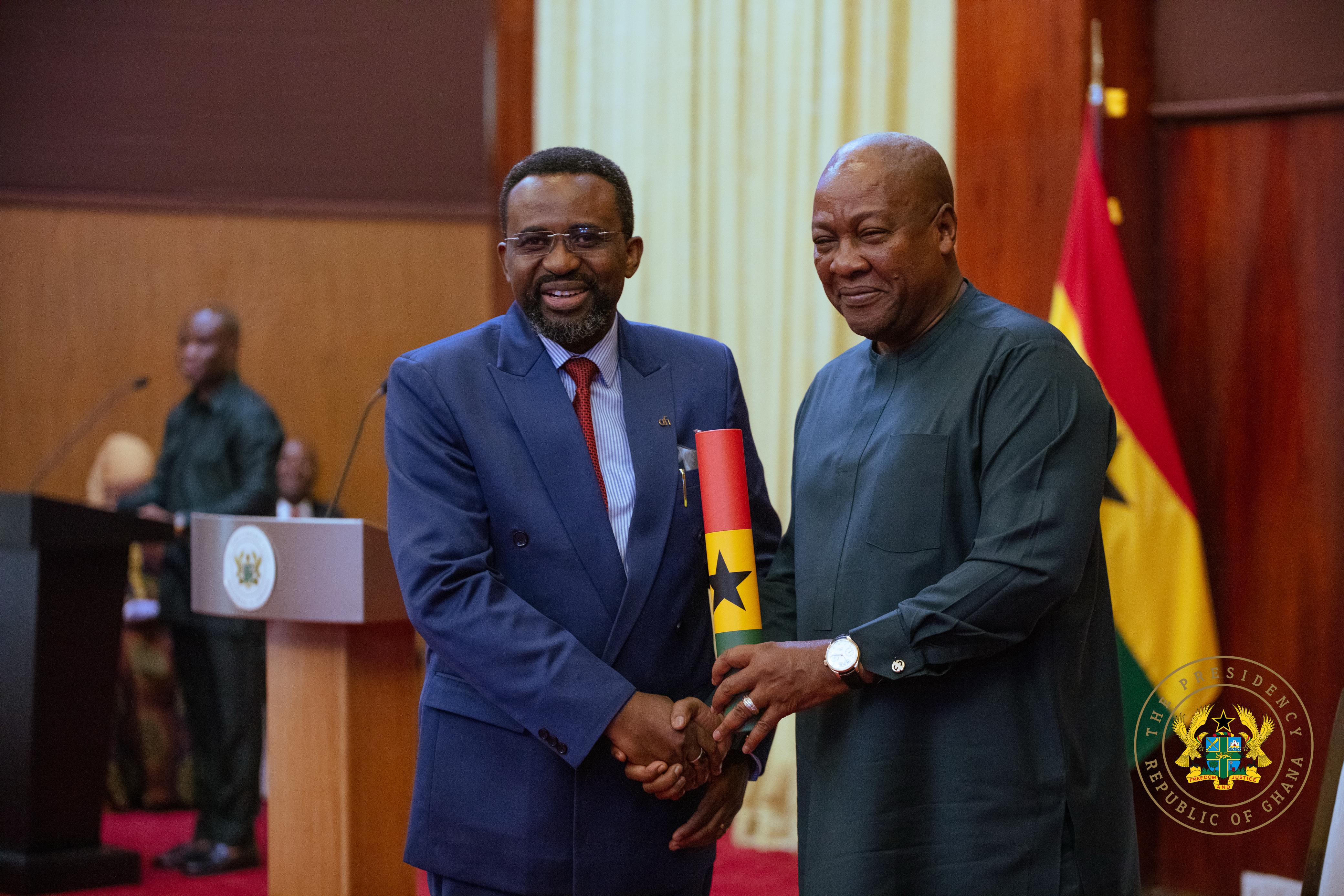
“This is the path to building a resilient economy—one where policies are driven by discipline, foresight, and the best interests of the Ghanaian people,” President stated on Tuesday when he officially sworn into office Dr Johnson Pandit Asiama as the Governor and Zakari Mumuni as the First Deputy Governor of the Central Bank at the seat of Government in Accra.

The President reiterated that the Government would not ask the Central Bank to print money for it.

“I encourage you to work closely with key institutions, including the Ministry of Finance, Parliament and the financial industry while maintaining the independence your mandate requires.”

The swearing-in follows the approval of the Council of State.

The President extended his congratulations to Dr Asiama and Dr Mumuni and expressed confidence in their expertise, vision and integrity to discharge their mandate with excellence.

President Mahama urged them to go beyond mere technical considerations and act in full recognition that every statistic, every movement on a chart, and every shift in an index was more than just data—it was the pulse of an economy, a measure of resilience or distress.

He said a dip in confidence indices might signal businesses on a brink, evolving market conditions, or changing household prospects.

He said behind these numbers were real human stories—dreams either nurtured or shattered—that demanded not just highly extolled analytical expertise, but empathy and foresight that acknowledged the profound human consequences of every decision.

President Mahama noted that recent banking history had shown Ghanaians the cost of neglecting this truth.

He said during the supposed banking sector cleanup exercise thousands of jobs were lost and lives disrupted because decisions were made with a narrow focus rather than considerations of the human impact.

“The Bank of Ghana had the opportunity to salvage some institutions, to protect livelihoods while ensuring stability, but instead, an approach that ignored human consequences prevailed,” the President said

“The test of your patriotism in this solemn duty of economic governance lies in learning from these missteps—recognizing that policies must not only enforce regulations but also safeguard the future that depend on them.”

He said the lessons of the past reminded Ghanaians of the dangers of fiscal recklessness and the lasting harm it could inflict on an economy.

He said when governments resorted to unsustainable consumption expenditure, financed by excessive and unregulated printing of money, the consequences were severe— from spiraling inflation, erosion of incomes to driving millions into poverty.

The President said such actions, not only weakened public confidence in financial institutions but also threatened long-term stability.

“To safeguard our economy from these risks, we must uphold responsible fiscal management, strict adherence to legal and regulatory frameworks and protect the independence of the Bank of Ghana.”

On his part, Dr Asiama expressed gratitude to the President and the Council of State for the confidence reposed in them.

He said the challenges facing Ghanaians require decisive leadership and prudent macroeconomic policies to reset the economy.

“Indeed, the Bank of Ghana is a key institution in this agenda to reset the economy and must remain steadfast in its mission to maintain price stability, ensure a sound financial system, and support economic growth,” he said.

Dr Asiama said as Governor, his focus would be on six priority areas; such as the need to recalibrate Ghana’s Monetary Policy Strategy and enhance the policy framework to achieve the mandate more efficiently.

He said his second priority was the need to preserve exchange rate stability and limit excessive volatility in the rates.

He also mentioned the need to boost financial inclusion and innovation to promote inclusive economic growth, reduce poverty, empower individuals, and ensure the stability and competitiveness of the financial system.

“The reset path we have embarked on is more than mere sloganeering. It is about restoring public trust, rebuilding confidence, and ensuring that Ghana’s economy is stable, innovative and ready for the future,” Dr Asiama said.

Asiama will put economy on path of sustained growth – Mahama

0

President John Dramani Mahama has expressed confidence in Dr Johnson Pandit Kwesi Asiama’s ability to put Ghana’s economy on a path of sustained growth.

The President gave the assurance on Tuesday, when he formally swore in Dr Asiama as Governor and Dr Zakari Mumuni as First Deputy Governor of the Central Bank at the seat of Government in Accra.

The President noted that the appointments were not merely routine exercises to satisfy Article 183(4) of the Constitution, but they constituted a deliberate commitment to the Bank of Ghana’s core mandate, outlined under Article 183(1-3)—to regulate currency, ensure monetary stability, and promote sustainable economic development in Ghana.

It is in full adherence to section 17(1) of the Bank of Ghana Act, 2002 (Act 612), these appointments uphold the legal stipulation that Governor and Deputy Governors of the Bank of Ghana be individuals of demonstrable financial and banking experience.

The President said to this effect, the choice of Dr Asiama and Dr Mumuni as Governor and Deputy Governor respectively, was a deliberate affirmation of their unshakable commitment to professionalism, integrity and proven competence as the sole criteria for high office.

He said a distinguished economist with a PhD from the University of Southampton, Dr Asiama’s ascent to this office was a natural progression from his long and dedicated service to the Bank of Ghana.

President Mahama said with over two decades at the institution—rising through the ranks from banking supervision and financial markets to leading research and policy implementation—Dr Asiama had played a pivotal role in shaping Ghana’s monetary policy and our efforts for financial stability.

He said as Deputy Governor, Dr Asiama was instrumental in controlling inflation, stabilizing the currency, and strengthening regulatory oversight.

He said Dr Asiama’s deep expertise in banking supervision, risk management, and digital finance positions him as the right leader at this critical time.

President Mahama said Ghana’s financial sector was in crisis, and the task ahead demanded experience, foresight, and decisive leadership.

“With Dr Asiama heading the Bank of Ghana, I am confident that we will rebuild trust, restore stability, and put our economy on a path of sustained growth,” he said.

“I entrust him with this responsibility, knowing he will serve with diligence and excellence.”

The President said Dr Mumuni’s appointment as First Deputy Governor was a recognition of his exceptional expertise, dedication, and distinguished service in banking, financial markets, and economic policy.

He said Dr Mumuni also had over two decades of experience at the Bank of Ghana, playing vital roles in shaping monetary policy and strengthening financial stability.

His academic credentials, including a PhD from the University of Nottingham and an MPhil from the University of Ghana, reflect his deep understanding of the complexities of our economy.

President Mahama said as First Deputy Governor, he would be a key pillar in supporting the Governor to implement sound policies, reinforce regulatory oversight, and navigate the challenges ahead.

He said Dr Mumuni’s experience and analytical rigour would be crucial in ensuring that the Bank remains steadfast in its mandate to maintain price stability, safeguard the financial sector, and drive sustainable growth.

He said together, Dr Asiama and Dr Mumuni bring the leadership, expertise, and vision needed to restore confidence in our economy.

“To you, Mr Governor and Deputy Governor, in discharging your mandate, you must go beyond mere technical considerations and act in full recognition that every statistic, every movement on a chart, and every shift in an index is more than just data—it is the pulse of an economy, a measure of resilience or distress,” the President said.

He said a dip in confidence indices might signal businesses on a brink, evolving market conditions, or changing household prospects.

President Mahama said behind these numbers were real human stories—dreams either nurtured or shattered—demanding not just your highly extolled analytical expertise, but empathy and foresight that acknowledge the profound human consequences of every decision.

“Our recent banking history has shown us the cost of neglecting this truth,” President Mahama said.

He said during the supposed banking sector cleanup exercise; thousands of jobs were lost and lives disrupted because decisions were made with a narrow focus rather than considerations of the human impact.

He noted that the Bank of Ghana had the opportunity to salvage some institutions, to protect livelihoods while ensuring stability, but instead, an approach that ignored human consequences prevailed.

“The test of your patriotism in this solemn duty of economic governance lies in learning from these missteps—recognizing that policies must not only enforce regulations but also safeguard the futures that depend on them,” he said.

On his part, Dr Asiama expressed gratitude to the President and the Council of State for the confidence reposed in them.

He said the reset path the nation had embarked on was more than mere sloganeering; declaring that it was about restoring public trust, rebuilding confidence, and ensuring that Ghana’s economy was stable, innovative and ready for the future.

“Through responsible financial sector governance, digital transformation, and sound economic policies, we will create an economic and financial system that is transparent, predictable, and stable,” Dr Asiama said.

“Businesses will have the confidence to plan, and individuals will have access to a secure financial system that fosters growth and opportunity.”


Women land ownership increases to 49.6 percent in some regions – Oxfam

0

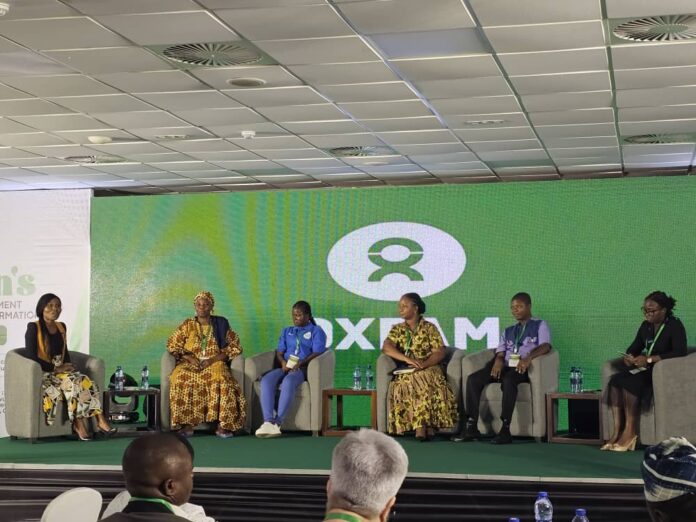
Land ownership and control by women has increased from 25.8 per cent to 49.6 per cent at the end of Oxfam and Global Affairs Canada’s five-year “WEACT” Project in four regions across the country.

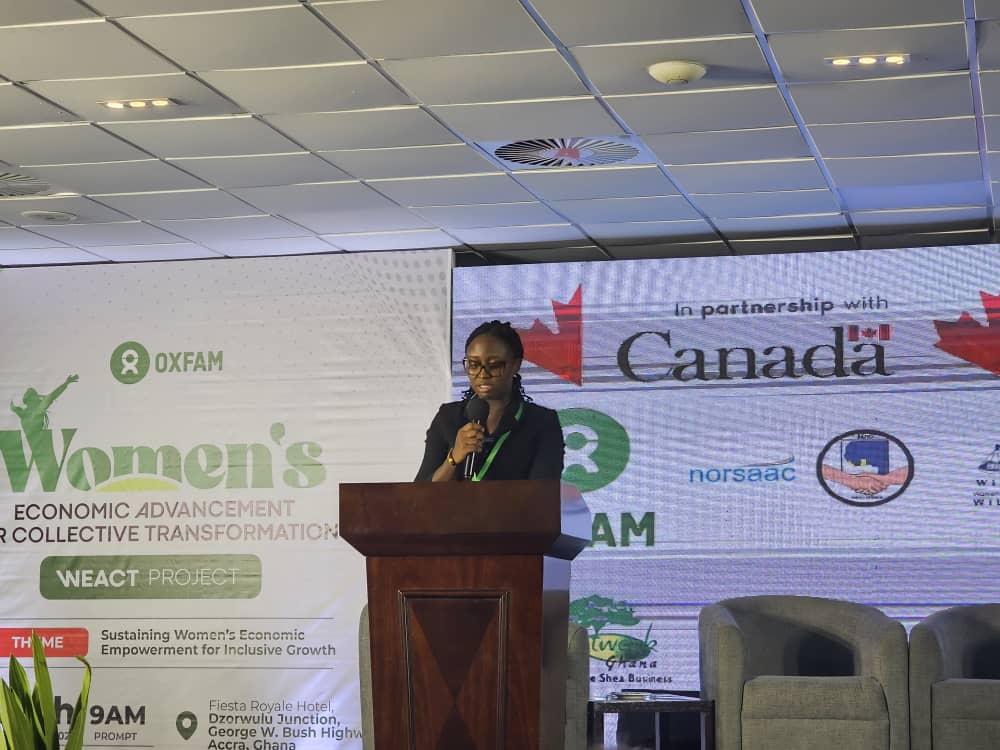
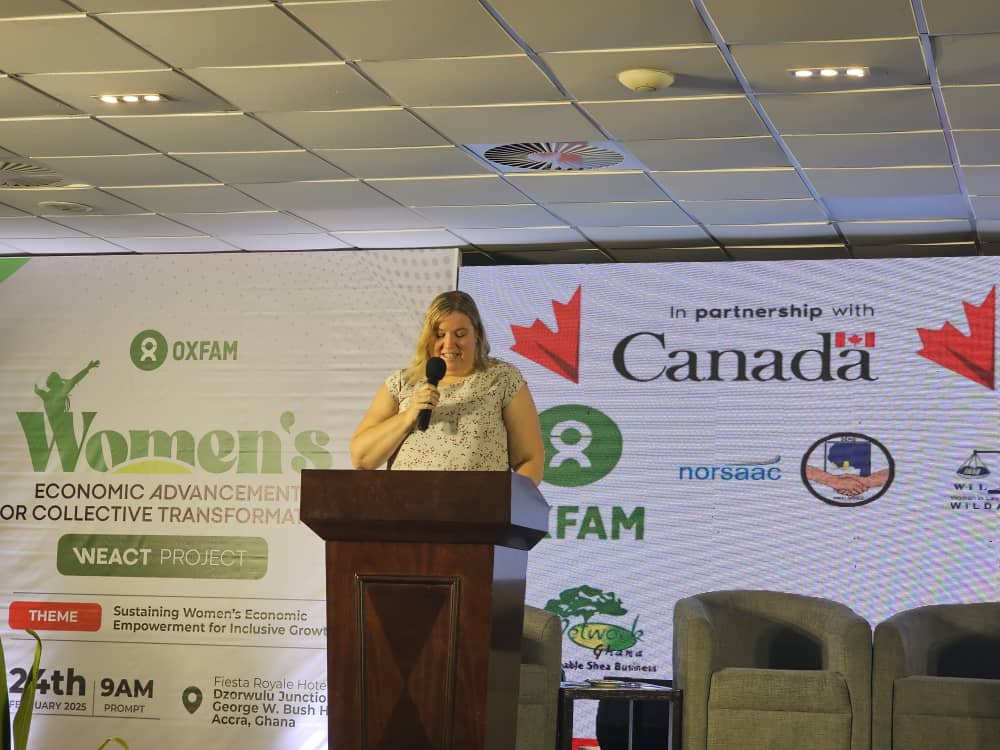
The WEACT (Women’s Economic Advancement for Collective Transformation) project, aimed at addressing the gender-specific barriers for women working in agriculture and in the informal economy of the shea and cocoa sectors in the Upper West, Upper East, Northern and Western Regions, Mr Mohammed Anwar Sadat Adam, the Country Director, Oxfam in Ghana, said at the close of the project in Accra.

It was on the theme: “Sustaining Women’s Economic Empowerment for Inclusive Growth”.

He said the project had also indicated progress in securing land tenure rights with growing support from men and traditional leaders, who had become more open to the idea of women acquiring land.

The more than 30,000 beneficiaries of the project including men were also enlightened on women’s rights, family law, inheritance law, and children’s rights.

Other cases addressed were helping to return lands to widows, securing child support, stopping eight child marriages, increasing legal knowledge for beneficiaries to claim their rights and referring cases of gender-based violence to law enforcement agencies, the Country Director noted.

More than 540 couples enrolled into the project’s Gender Model Family, he said had reported recognition, redistribution, and reduction in unpaid care work at the household level.

“It has reduced for women – 20.23 hours per week, as against 46.88 hours per week at baseline. It has also increased for men: 18.21 hours per week as against 14.36 hours per week at baseline. For a girl child, a significant free time of 29.6 hours/week is now available for them to use for studies thereby improving academic performance as compared to the baseline,” he explained.

Mr Adam said an evaluation report showed a strong commitment among men and women, as well as boys and girls, to equally sharing household chores.

 A significant majority of men (96 per cent) and women (98 per cent) believed that household responsibilities should be shared equally, reflecting a notable improvement from the midterm values (men: 39 per cent, women: 55 per cent) and baseline values (men: 27.2 per cent, women: 21 per cent).

Similarly, he said nearly equal proportions of boys (95 per cent) and girls (96 per cent) supported the view, suggesting that younger generations were being socialized into more equitable gender roles, which might lead to long-term behavioral change.

The WEACT project also recorded an increase in productivity and profit margins for the women, he said, adding: “For example, some of the Cooperatives are now able to save at least GHS2000.00 per annum.”

Ms Vera Karikari, Deputy Director of the Gender Department, Ministry of Gender, Children and Social Protection, said the project had not only broken barriers to women’s advancement but created opportunities for families to pave way for women especially at the grassroots to realise their full potential.

The Ministry, she said was elated to witness the successful implementation of the project, adding that such initiatives were a true reflection of a shared vision of a society where women and men were seen as partners for transformation.

“The project is very laudable because it has also created a bridge for a more economically inclusive future for women at the grassroots,” she added.

Madam Paulina Addy, the Director of Women in Agriculture, Ministry of Food and Agriculture, commended the Canadian government for budgetary support and strategic direction for the project and Oxfam Ghana for its successful implementation.

The agricultural sector, she said was the engine of growth and focusing on women meant the project had really “acted”.

She pledged the Ministry’s continuous support and called for strengthened data systems where the work of women at the macro and micro levels were captured to record their overall contribution in the agricultural value-chain.

Ms Patience Appiah, a District Assembly Representative, said the project had improved the women’s understanding of their legal rights and the need for couples to share household chores for both parties to get time to attend to other matters of importance.

Speaking on some of the benefits attained from the project, she said beneficiaries were given business negotiation skills, start-up kits, and financial assistance among others to thrive.

“There is peace and harmony in their homes now. The women also now know the essence of supporting their husbands physically, financially and emotionally.

“It has also increased awareness and advocacy as at first women didn’t know they could own a land. All we knew was a woman should go and work on her husband’s land and that means all the finances and other benefits go to the husbands,” she said.

She appealed to Global Affairs Canada and Oxfam in Ghana to extend the project to other remote areas in its review to touch more lives.

Ghana’s Economy: New Governor of Central Ban outlines six priority areas

0

Dr Johnson Pandit Asiama, the new Governor of the Bank of Ghana (BoG) has outlined six priority areas for turning around Ghana’s economy.

He said under the leadership of President John Dramani Mahama, Ghana was embarking on an economic reset and that this was about stabilizing the macroeconomy and addressing key issues such as high inflation, persistent fiscal deficits, and excessive debt levels.

“Achieving this stability will require monetary and exchange rate policy reforms, fiscal austerity measures, and debt restructuring to reduce fiscal risks and create a stable economic environment,” Dr Asiama stated during his swearing in as Governor and Dr Zakari Mumuni as First Deputy Governor by the President at the seat of Government in Accra.

The Governor expressed gratitude to President Mahama and the Council of State for the confidence reposed in them.

He said the inauguration was taking place at a pivotal moment in the nation’s economic history, stating that the challenges before Ghanaians required decisive leadership and prudent macroeconomic policies to reset the economy.

He noted that the Bank of Ghana was a key institution in the economy reset agenda and would remain steadfast in its mission to maintain price stability, ensure a sound financial system, and support economic growth.

He said of the six priority areas, as Governor, he would first look at the need to recalibrate the nation’s Monetary Policy Strategy and enhance the policy framework to achieve their mandate more efficiently.

He said under his leadership, their policies would be clear, predictable, and responsive to emerging threats.

“We shall adopt a more proactive and precise approach to managing inflation, leveraging on advanced data analytics and artificial intelligence,” he said.

“Also, we shall coordinate policy efforts with other government agencies, for example to manage food prices. We shall be consistent in our policy actions to avoid sending conflicting signals as happened in the recent past, and we shall work to enhance monetary policy implementation.”

Dr Asiama said his second priority was on the need to preserve exchange rate stability and limit excessive volatility in the rates.

“The days of currency speculation and exchange rate instability must come to an end, and we are poised to ensure this happens. In this regard, the Bank of Ghana under my leadership will engineer a well-functioning, and stable foreign exchange market to support economic activity.”

Touching on his third priority area, Dr Asiama mentioned the need to realign their regulatory mandate to promote greater levels of financial intermediation to support economic growth.

He said while the nation’s banking sector remained broadly stable after the recent crises, it required targeted reforms to address legacy challenges and ensure continued resilience.

“Under my stewardship, we shall enforce strict prudential regulations while fostering an enabling environment for responsible lending and innovation in the banking sector.”

With regards to his fourth priority, Dr Asiama cited the need to boost financial inclusion and innovation to promote inclusive economic growth, reduce poverty, empower individuals, and ensure the stability and competitiveness of the financial system.

He said it was gratifying to note that Ghana was well-poised to become a regional hub for financial technology and digital assets; and this transformation agenda would be pursued with appropriate safeguards and policies to ensure financial stability, while fostering innovation in the payment ecosystem.

The Governor said his fifth priority was to promote greater fiscal and monetary policy coordination while maintaining their operational independence.

Dr Asiama said his six and final priority area was the need to reverse the Bank of Ghana’s negative equity position to maintain financial stability, credibility, and public trust.

He said in this vein they would seek to re-examine the Bank’s non-core operations where savings could be made.

“We shall adopt several austere measures to help reduce the Bank’s operational costs and achieve cost efficiency. Additionally, we will craft very clear policies to return the Bank’s negative equity to positive equity in the medium term,” he said.

He said the reset path the nation had embarked on was more than mere sloganeering declaring that it was about restoring public trust, rebuilding confidence, and ensuring that Ghana’s economy was stable, innovative and ready for the future.

“Through responsible financial sector governance, digital transformation, and sound economic policies, we will create an economic and financial system that is transparent, predictable, and stable,” Dr Asiama said.

“Businesses will have the confidence to plan, and individuals will have access to a secure financial system that fosters growth and opportunity.”

On his part, President Mahama reiterated the Government’s commitment to ensuring that the Central Bank operated free from political interference, guided solely by its mandate.

“This is the path to building a resilient economy—one where policies are driven by discipline, foresight, and the best interests of the Ghanaian people,” he stated.