Home Blog Page 127

President Akufo-Addo commissions reconstructed Atafoa Bridge.

0

The Atafoa bridge over the Owabi River in the Bantama Constituency of the Ashanti Region has been reconstructed to improve commuting and ensure the safety of motorists in the area. 

The reconstruction of the bridge provided the solution to a long-standing challenge of the Owabi River, swelling andbreaking its banks, causing massive flooding. 

As a result, three lives were lost last year, and six the previous year, necessitating urgent intervention. 

The 40-metre concrete bridge is part of a larger project to rehabilitate the Abrepo-Junction-Barekese-Offinso Road, which commenced in April 2023, under the supervision of the Ghana Highway Authority. 

The scope of work includes rehabilitation of the four-kilometer stretch of the Abrepo-Junction-Barekese Road with asphaltic concrete surfacing, terminating at Kokoben. 

It also has the construction of roadside concrete drains and major culverts to address the perennial flooding, road line markings and installation of road signs to enhance safety for motorists and pedestrians. 

President Nana Addo Dankwa Akufo-Addo commissioned the bridge at a colourful ceremony and said it represented safety and accessibility.  

“The bridge is a symbol of the Government’s commitment to connecting people, places and opportunities, and ensuring the wellbeing of community members,” he said.

Mr Francis Asenso-Boakye, the Minister of Roads and Highways, said: “Over the years, surrounding communities have faced challenges that made their daily lives difficult, particularly during the rainy season, when the Owabi River swells beyond its banks, turning this area into a hazard zone.” 

The elements combined in the construction of the bridge created a resilient, durable and safe infrastructure that met the highest engineering standards, he noted. 

The Minister said the bridge would serve as a lifeline and enabler of economic growth.

People living in areas like Bohyen, Abrepo, Atafoa, Ohwim, Amanfrom, Asuofua, Nketia, Adankwame, Barekese would no longer struggle to cross the Owabi River. 

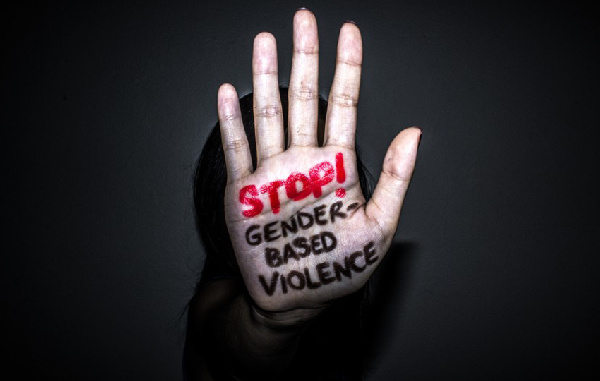
Prevention, support, and accountability vital in addressing Gender-Based Violence—GES.

0

The Ghana Education Service (GES) has stated that prevention, support, and accountability are critical in addressing sexual harassment and gender-based violence (GBV) in schools. 


According to GES, GBV was significantly impacting students, teachers, and staff in the education sector, with disturbing rates and statistics. 


Mrs. Gifty Sekyi Bremansu, the Director of Guidance and Counseling at GES, said these during the launch of the 16 Days of Activism for Safer Schools and the Nationwide Campaign against Gender-Based Violence in Secondary Schools in Accra. 


The Safe Schools Programme, which was introduced by GES in 2018, aims to eliminate all forms of violence against children in schools, ensuring a safe and conducive environment for teaching and learning. 
The theme for this year’s campaign is ‘‘Safe Spaces, Empowered Voices, Ending Sexual Harassment in our Schools:  Gender-based violence remains a pervasive issue in our schools.’’ 


The 16 Days of Activism Against Gender-Based Violence, observed annually from November 25 to December 10, is a global initiative that urges governments, policymakers, and other stakeholders to unite, reflect, and take decisive action to address issues affecting the well-being of children. 


Mrs. Bremansu said it was imperative for educators and teachers to integrate GBV prevention into the curriculum. 


‘‘ …Over here, I want to reiterate that with the support of our partners, CAMFED and T-TEL, we have developed Learner Guidance Service that is a curriculum geared towards value-based learning which will guide our learners to be equipped with the necessary skills to overcome this canker,’’ she said. 
Mrs. Bremansu harped on the need to promote healthy relationships through guidance services in schools and challenging harmful gender stereotypes to prevent GBV. 

 
She noted that such initiatives would also empower students to speak out if they experienced any form of attack. 


Mrs. Bremansu also highlighted the importance of providing safe and confidential reporting channels, counseling services, and guidance support for survivors at all levels of education, particularly at the school level. 


She urged counselors, District Directors, and other stakeholders to ensure that those trained to provide therapeutic services did so effectively and responsibly. 


Mrs. Bremansu shared findings from a study commissioned by UNICEF Ghana in 2022, which showed that 51 percent of Ghanaian students were aware of sexual harassment, while 49 percent were unaware. 
She added that female respondents felt more vulnerable to school-related gender-based violence. 


 The study further revealed that corporal punishment remained a challenge, with 71 percent of the respondents indicating that sexual corporal punishment was still being practiced in schools. 


‘‘We want to ensure that perpetrators, I mean perpetrators, are held accountable and that our schools have zero tolerance for school-related based gender violence with the support of the GES legal units,’ Mrs. Bremansu said. 


She called on all stakeholders, including parents, to join the efforts in combating GBV and stressed the need for continued support from development partners, especially in terms of research and capacity building for both students and teachers to prevent sexual harassment. 


Mrs. Bremansu also appealed to traditional authorities, clergy, and imams to use their platforms to advocate against GBV in their communities. 


She urged students to speak out against GBV, support their peers, and foster a culture of respect and inclusivity within their schools. 


Ms. Dinah Adiko, the Gender Equality and Social Inclusion (GESI) Key Advisor for Transforming Teaching, Education, & Learning (T-TEL), announced that a guideline for addressing sexual harassment in secondary education institutions had been developed. 


This initiative led to mandatory online training for all 68,000 secondary school teachers in Ghana.  
She shared that, as of six months ago, 55 per cent of teachers had completed the training, 15 per cent were still in progress, and 20 per cent had yet to begin.  
Teachers who complete the training will help roll out the campaign in their schools. 
Mr. Stephen Abamfo, the Greater Accra Regional Director of Education, said the guidelines for teachers would be distributed to ensure they fully understand the consequences of sexual harassment and how to prevent it.  
He said that the goal was to uphold high standards and ethical conduct in schools. 
Mr. Abamfo spoke about the success of the Back-to-School campaign, aimed at re-enrolling students who had dropped out due to circumstances like teenage pregnancy.  
To further the campaign’s impact, a competition is being held to identify the most active school in each of the 16 regions for promoting GBV awareness.  
The winning school will receive a prize of GHC 16,000.  
The competition, part of the 16 Days of Activism, is designed to ensure that the message about sexual harassment reaches a wide audience. 

NDC will work with Queen Mothers to eliminate poverty—Prof. Opoku-Agyemang.

0

The vice presidential candidate of the National Democratic Congress (NDC), Prof. Jane Naana Opoku-Agyemang, says the next NDC government will actively engage and work with queen mothers to fight poverty. 

Prof. Opoku-Agyemang said this when she addressed a forum of Central Regional Queen Mothers.

Speaking on the theme “building the Central Region we want, the shared perspectives from our queen mothers,” Prof. Opoku-Agyemang said it leaves much to be desired that the Central Region is described as the fourth poorest region in Ghana. She added it is imperative that governments collaborate with traditional authorities, especially queen mothers, to fight poverty in the region. 

Prof. Opoku-Agyemang said the next NDC government will introduce the 24-Hour Economy, Women’s Development Bank, National Apprenticeship Programme, and the Big Push to help create jobs and financially empower women across the country, adding “the Central Region would not be left out”.

She said, among other interventions to empower women, the next NDC government will also build new markets and expand infrastructure in the region. 

I solved ‘dumsor’ problem in Dec 2016 – Mahama to Akufo-Addo.

0

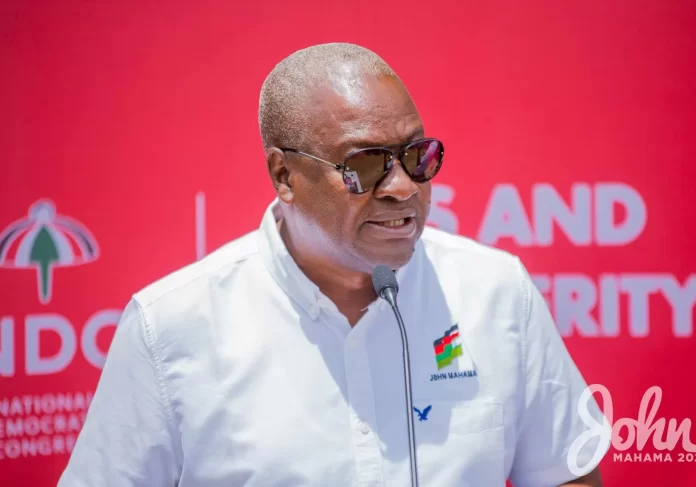
Former President John Dramani Mahama on Tuesday responded to President Akufo-Addo’s claim that the National Democratic Congress (NDC) could not solve the power outages problem popularly referred to as ‘dumsor’ before leaving office in January 2017.

Responding on a campaign platform at Ellembelle in the Western Region, Mr Mahama said he solved the ‘dumsor’ issue in 2016 before handing over power in 2017. 

“There was no dumsor by 2016 December, nobody had load shedding in 2016, go and check GRIDCO records”, he said at a rally in the Ellembelle constituency. 

He called on President Akufo-Addo to reflect on Proverbs 19:9 and stop peddling “falsehood”. 

Election 2024: Alan unveils “Fa Dada Begye Fofro” Policy.

0

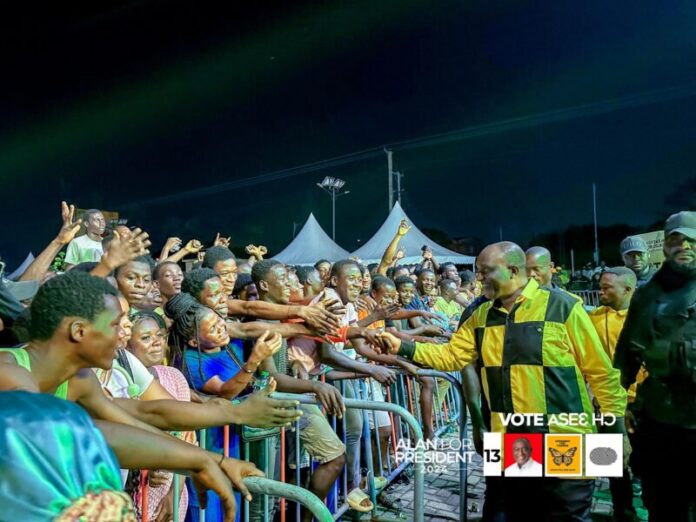
The founder and leader of the Movement for Change, Alan Kyerematen, has announced the “Fa Dada Begye Fofro to wit [Exchange the old for a new one] policy, a plan to revolutionise the transport industry should he win the 2024 general elections.

Speaking to leaders of transport unions in the Eastern Region during a recent campaign tour, the presidential hopeful, outlined this innovative intervention, designed to make vehicle ownership more accessible and profitable for drivers and transport operators.

The policy will give drivers the opportunity for vehicle owners to trade in their old cars for brand-new, locally assembled vehicles on a work-and-pay basis.

“Given the current high prices of vehicles, it has become nearly impossible for people in the transport sector to afford cars with upfront payments,” Alan Kyerematen stated.

“This policy ensures drivers can own vehicles without borrowing from banks, reducing their financial burden while improving the quality of vehicles on our roads.”

He emphasised the role of locally assembled vehicles in boosting the domestic automobile industry.

“This is about creating opportunities for every driver to own a better vehicle while supporting our local industry. The vehicles will be assembled right here in Ghana, ensuring the program drives job creation across the value chain,” he explained.

Additionally, Alan Kyerematen announced that in two years of his administration, he will abolish import duties on spare parts, a move expected to significantly enhance driver profitability.

“Transport unions are the backbone of our economy. By removing duties on spare parts, we can reduce operating costs for drivers and mechanics, putting more money in their pockets,” he assured.

He also revealed a long-term vision to manufacture vehicle components locally, which will create jobs and stimulate economic growth.

“Imagine a Ghana where the parts needed to keep your car running are produced right here. It’s not just about convenience – it’s about transforming our economy and creating thousands of jobs,” he said.

Alan Kyerematen’s transport policies also include plans to construct standardised lorry parks nationwide, each attached to major markets.

According to him, this initiative aims to streamline transport operations and improve working conditions for drivers.

“A well-structured lorry park system will enhance safety, organisation, and profitability for everyone in the transport sector. These parks will serve as hubs for drivers and traders, making their daily operations seamless,” he explained.

The leader of the Transport Union in the Eastern Region welcomed the “Fa Dada Begye Fofro” policy as a game-changer.

One union leader remarked, “This is what we’ve been waiting for—a policy that understands our struggles and offers real solutions. Alan Kyerematen’s work-and-pay program will allow drivers to dream again.” Another leader added.

“The abolition of duties on spare parts and the promise of locally manufactured components will change the face of our industry for the better.”

With the “Fa Dada Begye Fofro” policy, Alan Kyerematen is reaffirming his commitment to the transport sector, a critical driver of Ghana’s economy.

His innovative approach, which combines immediate relief for drivers with long-term industrial development, is winning the hearts of transport operators across the country.

As one enthusiastic Union leader, Kwasi Nyarkoh put it, “Alan Kyerematen is not just talking – he’s providing practical solutions. He’s the leader we need.”

Melcom, TBH Observe World Prematurity Day.

0

Management of Melcom Group of Companies joined The Bank Hospital (TBH) to observe this year’s World Prematurity Day themed, “Breaking Barriers & Access to Quality Care for Everyone”.

The observation seeks to highlight the stark global disparities in healthcare and calls for universal access to high-quality care for preterm babies, regardless of their birth circumstances or location.

Chief Finance Officer, of The Bank Hospital, Grace Awotwe, acknowledged the care and support the hospital has provided to families since the opening of its neonatal unit.

She said the hospital is committed to breaking down barriers through advanced technologies used in caring for patients, particularly neonatal babies, adding, “We also prioritise specialised training for our teams to ensure that we provide the best care and achieve positive outcomes for all our patients, including our preterm babies.”

Grace Awotwe further indicated that the hospital will continue to raise awareness about the issues surrounding preterm delivery, ensuring that compassion and support extend to all families facing these challenges.

She said, “Management has witnessed firsthand difficulties that families encounter when seeking care at our facility. Many parents come to us with hopes for their babies but are often met with the daunting challenge of affording the healthcare services we provide.”

“We must come together—government, NGOs, and other partners—to explore what can be done differently to improve access to funding and support,” she added.

Group General Manager for Melcom Ghana, Francis Sam, on his part pledged the company’s unwavering commitment to supporting the hospital to tackle challenges hindering the smooth operation of the unit.

“As part of our corporate social responsibility, Melcom has always supported organisations in need. With The Bank Hospital, we have supported them in both cash and kind and we are committed to doing more in the coming days,” he said.

At the end of World Prematurity Day, parents were provided with Cussons baby soft wipes, baby soaps, and baby gift bags.

Nacee: Poor performance fees affecting gospel artistes.

0

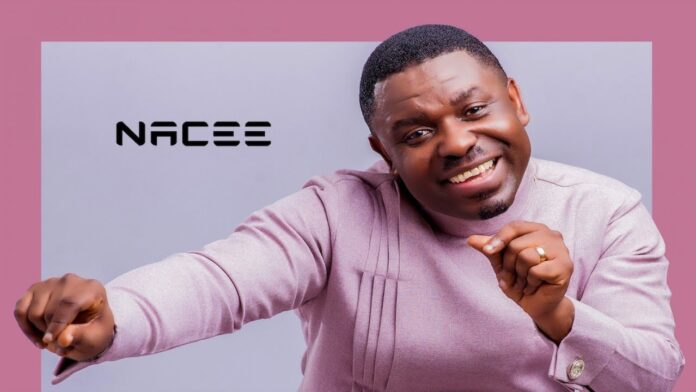
Reigning TGMA Gospel Artiste of the Year, Nacee has mentioned that the inability of event organisers to pay gospel musicians their due when it comes to performances is a situation that is drawing back the progress of the gospel music industry.

“We lack financial support because most gospel musicians, mostly they go to programmes, and then the event organisers are not paying them as much as they deserve. So we fight more than we are supposed to do,” he said.

He indicated that having enough financial backing will go a long way to impact their ministry.

“I think with good finances or financial support, we will do more,” he noted.

The conversation about gospel artistes and commercialisation of their work has been simmering for a very long time.

There have always been divided positions. Earlier in November, acclaimed gospel musician Sonnie Badu issued a clarion call to fellow gospel artistes, urging them to strike a balance between commercialising their craft and maintaining the spiritual essence of their music.

While acknowledging the importance of financial rewards for their hard work, Sonnie Badu cautioned against prioritising commercialisation over spirituality. 

He noted that gospel music should remain a vessel for spreading the message of faith, hope, and redemption.

GNPC issues alert about ‘fraudulent’ social media page.

0

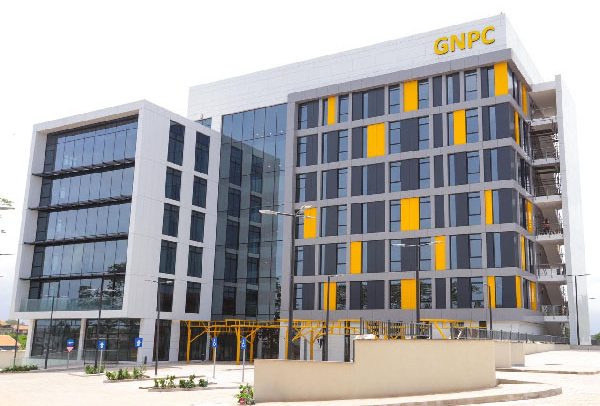
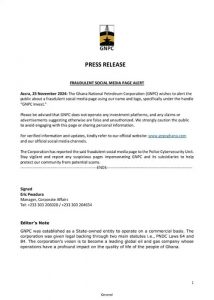
The Ghana National Petroleum Corporation (GNPC) has alerted the public about a fraudulent social media page using its name and logo, specifically under the account handle “GNPC Invest.”

A release issued on Monday, November 25, 2024 and signed by Corporate Affairs Manager, Eric Pwadura advised that “…GNPC does not operate any investment platforms, and any claims or advertisements suggesting otherwise are false and unauthorized. We strongly caution the public to avoid engaging with this page or sharing personal information.”

The release further urges the general public to refer to GNPC’s official website and our official social media channels “for verified information and updates.”

“The Corporation has reported the said fraudulent social media page to the Police Cybersecurity Unit. Stay vigilant and report any suspicious pages impersonating GNPC and its subsidiaries to help protect our community from potential scams,” Mr. Pwadura cautioned in the release.

Two arrested over human skull, sentenced to 13 years in jail.

0

A grave digger found in possession of a human skull without court authorization has been sentenced to eight years in prison by the Dansoman Circuit Court.


Abdul Razak Mohammed, a 49-year-old grave digger at Awudome Cemetery, reportedly sold the skull to Alex Frimpong for GHC600, allegedly to help Frimpong secure more contracts in his masonry work.


Frimpong, 24, also faced a sentence of five years in prison. Both Mohammed and Frimpong pleaded guilty to charges of unlawful use of human parts.


The court convicted them based on their guilty pleas and handed down the respective sentences.


Nana Attah, a fetish priest believed to have ordered the skull, also pleaded not guilty after his arrest and arraignment.


The prosecution, led by Chief Inspector Christopher Wonder, explained that Frimpong resides in Pokuase, while working as a grave digger at Awudome Cemetery.


A few months ago, Frimpong became friends with Nana Attah on Facebook, where Attah introduced himself as a fetish priest.


Frimpong, struggling with a lack of contracts in his masonry work, sought spiritual help from Attah.


According to the prosecution, during a visit to Attah’s shrine in Winneba, Frimpong was told that a human skull was needed for rituals to improve his fortune.


On October 25, 2024, at around 2230 hours, Frimpong met with Mohammed at Awudome Cemetery to arrange the acquisition of a human skull.


Mohammed agreed to provide the skull in exchange for GHC600, with the payment to be made via mobile money, and the skull was handed over to Frimpong.


Later that afternoon, at around 1400 hours, a police patrol team, Bravo Checker 3, led by General Lance Corporal Eric Dedzo, stopped Frimpong as he was riding an unregistered motorcycle near Odorgonno Secondary School.


During a search, a human skull wrapped in a black plastic bag was found in Frimpong’s backpack, leading to his arrest.


Frimpong later implicated Mohammed as his supplier, and Mohammed was subsequently arrested.
The human skull was preserved at the police mortuary for further investigation.


As the investigation progressed, police arrested Nana Attah, who has since been charged and arraigned in court.

Election 2024: All ballot papers to be deployed nationwide by end of day – EC.

0

The Electoral Commission (EC) has assured that by the close of the weekend, all ballot papers and biometric verification devices will be deployed to all regions across the country.

According to the EC, it has deployed ballot papers to 13 regions, with Northern, Bono, and Bono East outstanding.

At a meeting with the National Elections Security Taskforce, the chairperson of the Electoral Commission, Jean Mensa, emphasised the EC’s readiness for the polls

“As we speak, all our registers have been prepared, and they have been disseminated across the country. We are also near completion with our ballots for the presidential and parliamentary polls.

“All the ballots, except the Northern, Bono, and Bono East regions, have been disseminated to our police armouries across the country. I am well aware that the ballot papers for these regions will be disseminated to the police armouries this afternoon.”

The head of the National Election Security Taskforce, Dr George Akuffo Dampare, also promised the commitment of the security agencies to ensure a peaceful election

“In our readiness, we want to say that we will protect every Ghanaian and every stakeholder in this election to ensure that the election is executed to the benefit of Ghanaians to ensure peace.”