Home Blog Page 129

Ato Forson urges Speaker Bagbin to reject Majority Leader’s call to recall Parliament

0

The Minority Leader, Dr. Cassiel Ato Forson has appealed to Speaker of Parliament Alban Bagbin to dismiss a request by Majority Leader Alexander Afenyo-Markin to recall the House for urgent government business. 

In a memo addressed to the Speaker which he shared on X, Dr. Forson argued that the petition for the recall lacks merit and does not meet the constitutional threshold required for such an action. 

He pointed out that this marks the fourth time in 2024 alone that the NPP parliamentary caucus has sought an urgent recall, with little tangible progress from previous sessions. 

“The petitioner has not demonstrated that there is any emergency nor urgent government business to warrant a recall of Parliament, with barely eleven (11) remaining days to the crucial 2024 General Election,” Dr. Forson wrote. 

Highlighting logistical and campaign challenges, Dr. Forson noted that the proposed recall would disrupt critical engagements between MPs and their constituents ahead of the December 7 elections. He cautioned that reconvening Parliament at this time would place undue pressure on MPs and strain taxpayer resources. 

“This proposed two-day sitting, if acceded to, will mean that members will have less than one week to conclude their campaigns, train their polling agents, and make key logistical and other election-day arrangements. This will disadvantage many members of Parliament,” Dr. Forson stated. 

He further criticised the Majority caucus for failing to mobilise sufficient numbers during past recalls, which he said led to the indefinite adjournment of the House on November 7. 

“It is on record that the NPP parliamentary caucus failed to mobilise up to thirty (30) members of Parliament on their side to transact business on the floor,” the Minority Leader remarked, questioning the utility of yet another recall. 

Dr. Forson suggested that Parliament reconvene immediately after the December elections to address outstanding government business. He also proposed a leadership meeting post-election to resolve existing stalemates and chart a path forward for the current Parliament, which continues until January 6, 2025. 

Concluding his memo, Dr. Forson emphasised the importance of focusing on the elections, urging the Speaker to “prioritise the conduct of credible, peaceful, free, and fair elections at this stage.” 

Speaker Bagbin is yet to respond to the appeal.

We’re engaging IPPs to avert possible power cuts—ECG.

0

The Electricity Company of Ghana (ECG) has assured the public of uninterrupted power supply following successful negotiations with Independent Power Producers (IPPs) over outstanding payments.

This reassurance comes after IPPs threatened to shut down multiple power plants over the weekend, citing unpaid arrears owed by the government.

The planned shutdown sparked concerns about the return of power outages, commonly referred to as dumsor.

Speaking to the media, ECG’s External Communications Manager, Nii Ayiku, confirmed that the negotiations had averted the potential crisis.

The government is reported to have reached a temporary agreement with the IPPs, addressing part of the arrears while outlining a payment plan for the balance. This resolution is expected to stabilize electricity generation and ease tensions within the energy sector.

“We are engaging with the IPPs to make sure that the outages that were experienced over the weekend won’t continue. It is not just about the IPPs that are having issues with the ECG, but as indicated by the Acting Management Director, we are in full engagement with the IPPs, and we are very sure and hopeful that everything will fall into place.”

While ECG has pledged a consistent power supply, stakeholders have called for a more sustainable financial framework to prevent future disputes and ensure the reliability of Ghana’s energy infrastructure.

Akufo-Addo Commissions 4 District Hospitals In Ashanti Region.

0

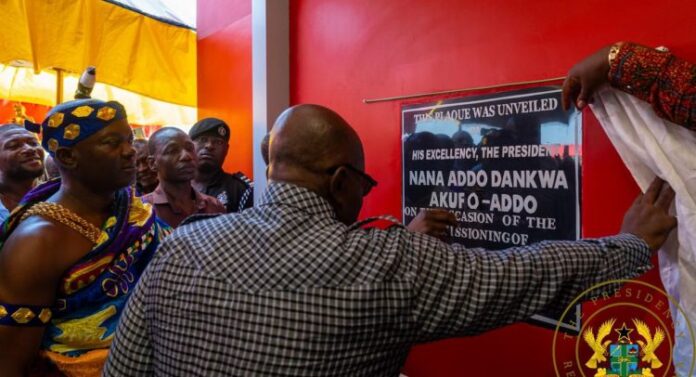
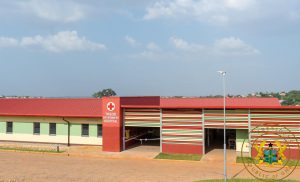
President Nana Addo Dankwa Akufo-Addo has commissioned four 40-bed District Hospitals in the Ashanti Region, marking a significant milestone in the government’s efforts to improve healthcare infrastructure across the country.

The hospitals, located in Drobonso, Sabronum, Twedie, and Suame, are part of a larger project to construct 12 hospitals in the Ashanti, Eastern, and Greater Accra regions, as well as a polyclinic in the Brong Ahafo region.

The project, which began in 2020, was made possible through a €71,500,000 facility secured from Erste Group Bank AG and Česká Spořitelna a.s.

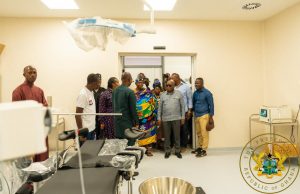
The hospitals were constructed by VAMED Engineering GmbH of Austria and are equipped with state-of-the-art facilities, including an outpatient department, Public Health Department, theatre, and residential accommodation for hospital workers.

The commissioning of the four hospitals in the Ashanti region brings to eight the total number of hospitals commissioned by the President in recent times.

In a similar ceremony, President Akufo-Addo commissioned the Fomena and Kumawu District Hospitals, which were also constructed under the same project.

The hospitals are designed to provide quality healthcare services to residents in the respective districts.

Each hospital is equipped with an out-patient Department: with consulting rooms and a waiting area, a Public Health Department: with a 36-seater capacity waiting room, three ante-natal consulting rooms, a counseling room, and two offices for Public Health Officers, a Theatre: consisting of one Surgical Suite, 8-bed Paediatric Ward, 8-bed Male Ward, 8-bed Female Ward, four Labour Delivery stations, 8-bed Maternity Ward, 4-bed Lying-in and 2-bed Recovery room.

President Akufo-Addo urged the staff and the people of the areas to ensure that the facilities are adequately administered and maintained to ensure that the government’s commitment to improving the health status of all residents in the country through improving healthcare infrastructure is realized.

Veep Bawumia commissions over 1,000 affordable housing units by TDC Ltd.

0

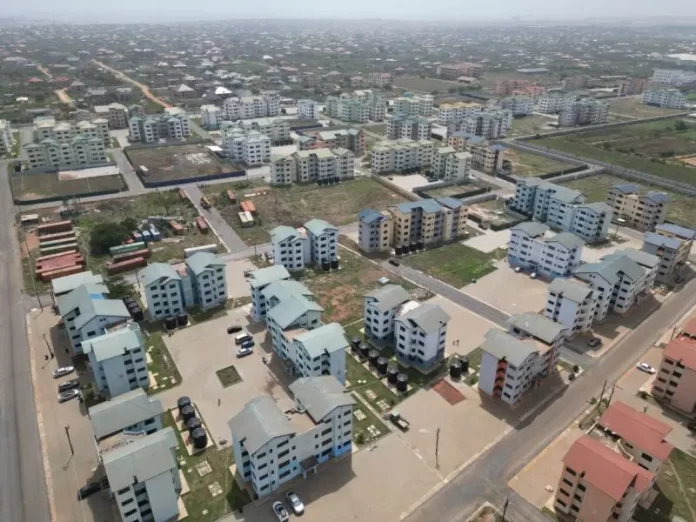
Vice President Mahamudu Bawumia on Monday inaugurated 1,072 affordable housing units constructed by the Tema Development Company (TDC) Limited in Community 26.

The Vice President also cut the sod for the construction of additional 832 housing units under Phase 4, which would bring the total houses to 1,904.

The housing units fall under Phase 1-3 Kpone Affordable Housing Units, made up of one-bedroom standard, one-bedroom special and two-bedroom apartments.

The gated community has all the necessary amenities, such as water, electricity, drainage and asphalted road network.

The housing units were started by President John Agyekum Kufuor’s government in 2006.

Vice President Bawumia, who commissioned the over 1,000 houses at a ceremony in Tema, said the Akufo-Addo’s Government was determined to reduce the country’s housing deficit, which currently stood at approximately 1.8 million and promote sustainable housing solution going forward.

He said, over the past eight years, the government had reduced the national housing units by 36 per cent and highlighted various housing projects it had implemented during the period.

The government, he said, had already set up a financing model through a private-public partnership (PPP) to address the country’s housing needs, noting that the PPP arrangements was the way to go in this modern era.

“That is the model we are going to apply as we have done with the National Home Ownership Fund to really solve this housing problem,” Dr Bawumia emphasised.

The Vice President underscored the need to deepen the mortgage market and ensure it functions effectively.

“The mortgage market doesn’t function in a vacuum. And this is why we made sure that we had the National ID Card (Ghana Card) which provides unique identity to all Ghanaians.

Other critical ingredients the government rolled out for effective mortgage market included the digital address system for property locations, Dr. Bawumia stated, noting that those soft infrastructure underpinned the development of the mortgage market.

In addition, he said, the government also implemented the mobile money interoperability payment system, which ensured financial inclusion for the citizens, and the recent credit scoring system for easy purchasing of goods and services on credit basis.

The Vice President said now that the soft infrastructure had been laid, the next chapter of the country’s housing issue would be to usher the nation into a “decade of housing.”

“We are going to bring the private sector to develop the mortgage market and so commissioning and groundbreaking ceremony is a testament to the unwavering commitment of our government to providing affordable and decent housing for all Ghanaians,” the Vice President assured.

Over the past eight years, he said. government had completed over 1,000 houses in state housing alone, noting that it remained steadfast in resolving the housing deficit in a sustainable and inclusive manner.

“Together, we are building not just hope but a future of equity, opportunity, and prosperity,” the Vice President assured.

Akufo-Addo to commission Sekyere Afram Plains District Hospital today.

0

President Nana Addo Dankwa Akufo-Addo, as part of his three-day campaign tour of the Ashanti Region, will today, November 25, 2024, visit Drobonso in the Sekyere Afram Plains to commission the Sekyere Afram Plains District Hospital.

Following that, he will travel to Sabronum in the Ahafo Ano South-East District to inaugurate another district hospital.

The President will also visit Trede in Atwima Kwanwoma to open the district hospital before heading to Bantama to commission the Atafoa-Owabi River Bridge.

His tour will conclude in Suame, where he will commission the Suame Municipal Hospital, and in Adum, where he will unveil the new office complex of the Audit Service.

Adutwum Is Minister Of The Year.

0

The Minister for Education, Dr. Yaw Osei Adutwum, has been declared the Minister of the Year for 2024 by the National Union of Ghana Students (NUGS) at a special ceremony in Accra.

Dr. Adutwum was selected for the honour following his outstanding performance as a minister; his vision, dedication and innovations introduced into the country’s education sector, making it the toast of African countries.

For emerging the Minister of the Year, he was presented with a plaque for the great feat chalked.

Dr. Adutwum was also presented with a citation for his impact on the transformation of the nation through education.

The citation read, “In recognition of your sterling performance and transformative leadership in the education sector of Ghana, we, the 57th administration of NUGS and the entire student community, both at home and abroad, extend our profound gratitude and admiration.”

“Your visionary initiatives and unrelenting commitment have redefined the education landscape in Ghana, fostering access, quality, and innovation. Popularly celebrated as “Dr. STEM,” your passion for Science, Technology, Engineering, and Mathematics has propelled ground-breaking achievements, inspiring students and stakeholders alike to embrace a future driven by knowledge and creativity,” it stated.

He was also commended for “his fatherly love, receptive spirit, and unparalleled working relationship with student leaders and educational stakeholders, you have nurtured a collaborative environment that prioritises the needs of Ghanaian students. Your efforts have not only elevated educational standards but have also underscored your unwavering dedication to building a brighter future for the youth of this nation.”

The outgoing President of NUGS, Mr. Kyeremeh Oppong Daniel, on behalf of NUGS, pledged to continue supporting the minister and other stakeholders towards improving education development in the country.

He was upbeat that the award will go a long way to motivate others to continue working hard towards the development of the nation’s economy.

Dr. Yaw Osei Adutwum, responding to the gesture, thanked the leadership of NUGS for recognising his effort towards the transformation of the nation through education.

He explained that the policies and innovations brought into the nation’s education space are geared towards equipping Ghanaian students with critical skills that would make them competitive globally.

The minister, who is also the Member of Parliament for Bosomtwe, appealed to Ghanaians to vote massively for the New Patriotic Party (NPP) during the upcoming general election.

Other Awards

A Lifetime Achievement Award was also presented to Mr. Robin Todd, Executive Director, Transforming Teaching, Education and Learning (T-TEL) as well as Dr. Eric Nkansah, the Director General (DG) of the Ghana Education Service (GES), Mr. Nuhu Mahama, CEO of Student Loan Trust Fund (SLTF), and Nana Afrah Sika Mensah, Deputy National Coordinator, Free Senior High School Secretariat among others.

Apart from the award presentation, 254 students were presented with a GH¢1,000 NUGS stipend scholarship. A package was also presented to students with disabilities, less endowed students and others to put smiles onto their faces as they pursue their education.

Gospel artiste Perez Musik ties the knot.

0

Award winning, gospel musician Perez Musik has embarked on a new journey in life.

The artiste, whose real name is Frank Tagoe, got married to his beloved on November 23, 2024.

In one of his social media posts captioned “Blessed be the Lord Who reigns forever more.. #restored,” he shared photos from his traditional wedding.

In other posts, Perez shared more beautiful wedding photos, expressing his joy for finding love.

Finding a wife is a beautiful blessing, a treasure approved by the Lord. Proverbs 18:22,” he wrote.

In an interview on Hitz FM earlier this year, Perez Muzik mentioned that a painful heartbreak led him to God.

Perez Musik is an urban gospel musician and some of his well-known songs are Hewale Lala, Blema Tesaa, Kaafo, Shake It and Walats3.

At the 24th Vodafone Ghana Music Awards, he won the Songwriter of the Year and Best Male Vocal Performance awards with ‘Hewale Lala’.

Alan proposes bold Free SHS reforms for long-term impact.

0

Presidential aspirant Alan Kyerematen has unveiled a bold plan to reform the Free SHS programme, addressing its long-term sustainability and providing structured pathways for graduates to transition into tertiary education or the job market.

Speaking during the Presidential Encounters 2024 hosted by the Ghana Broadcasting Corporation on November 22, 2024, Mr. Kyerematen emphasized the need for a comprehensive review of the policy to ensure its objectives are fully realized.

“The Free SHS programme is a great policy, and I doubt whether any government would discontinue it,” he noted. However, he cautioned that the programme, in its current form, lacks provisions for life after SHS, posing the critical question, “After Free SHS, what next?” Mr. Kyerematen argued that providing free education without clear pathways for graduates undermines the policy’s potential impact.

To address this gap, the Founder and Leader of the Movement of Change outlined reforms under his Great Transformational Plan (GTP), focusing on five key areas: financial sustainability, infrastructure development, curriculum improvement, capacity building for educators, and transitioning graduates into tertiary education and the workforce.

On financial sustainability, Mr. Kyerematen stressed the need to evaluate funding sources to ensure the programme’s continuity. “Where are we going to find the money to sustain this?” he asked, urging stakeholders to address the policy’s financial viability. He also highlighted the significant infrastructure deficits in schools, including inadequate classrooms, dormitories, and teaching facilities.

Addressing these challenges, he said, would enhance the learning environment and improve the quality of education under the programme.

Curriculum development was another critical area. Mr. Kyerematen questioned whether the current curriculum prepares students for modern economic demands or equips them with the skills needed for the job market.

“We need to ask ourselves, what are we teaching them under the Free SHS program? Is it helping them transition into the world of work?” He further emphasized the need for capacity building for teachers and non-teaching staff. Training educators to deliver quality education and equipping administrative staff to manage schools effectively were identified as key priorities.

To ensure Free SHS graduates are adequately prepared for life after school, Mr. Kyerematen has proposed innovative pathways under the GTP. Central to his plan is a compulsory one-year apprenticeship and internship programme, which will provide hands-on training and certification in artisanal and entrepreneurial skills. This initiative aims to help graduates identify their talents and develop practical skills aligned with market demands.

For graduates interested in entrepreneurship, Mr. Kyerematen has proposed access to government programs offering funding, mentorship, and resources to establish and grow businesses.

This, he said, would foster a new generation of youth-led enterprises, reducing unemployment and boosting economic activity. Moreover, he also introduced the Health Screening Booths Scheme, where graduates can operate booths on a work-and-pay basis, delivering essential health services while earning a stable income. This program not only creates job opportunities but also addresses healthcare accessibility in underserved areas.

For those aspiring to careers in national security, Mr. Kyerematen has committed to creating dedicated recruitment pathways into the security services. Meanwhile, graduates wishing to pursue higher education would receive financial support from the government to remove financial barriers. Besides, through the apprenticeship program, some graduates may discover their talents during internships and choose to continue developing their skills at their host institutions. For such individuals, the government will provide financial backing to ensure they transition seamlessly into full-time roles or advanced training.

Mr. Kyerematen also criticized the neglect of basic and pre-basic education, arguing that these foundational levels are just as critical as secondary education. “We talk about Free SHS as if the foundation doesn’t matter. Strengthening basic and pre-basic education is critical to ensure students are fully prepared for SHS and beyond,” he said.

During the encounter, Alan also unveiled a groundbreaking policy to mainstream digitalization and digitization, pledging to establish 100,000 free satellite internet hotspots nationwide. These hotspots, strategically located in vantage points, including all secondary schools, aim to provide seamless, telecom-independent connectivity.

This initiative will revolutionize teaching and learning, while significantly benefiting the youth, particularly content creators burdened by the high cost of data. Alan Kyerematen’s vision for free satellite internet connectivity is set to drive a digital revolution, empowering Ghana’s next generation to thrive in a tech-driven world.

Mr. Kyerematen’s proposed reforms envision a Free SHS programme that not only provides access to education but also equips students with the tools and opportunities they need to succeed. By addressing sustainability, quality, and outcomes, he aims to transform the Free SHS policy into a platform that empowers graduates to contribute meaningfully to the nation’s development. Through his GTP, Mr. Kyerematen offers a practical and forward-thinking solution to the challenges of Free SHS, ensuring that no graduate is left behind.

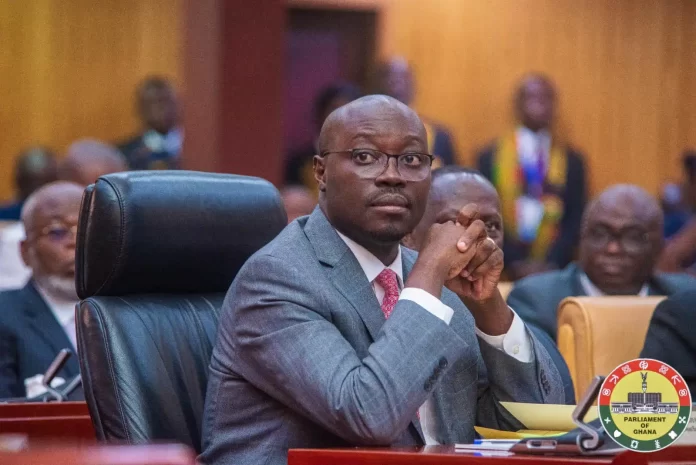
Affirmative Action Act shows government’s commitment to advancing gender equity.

0

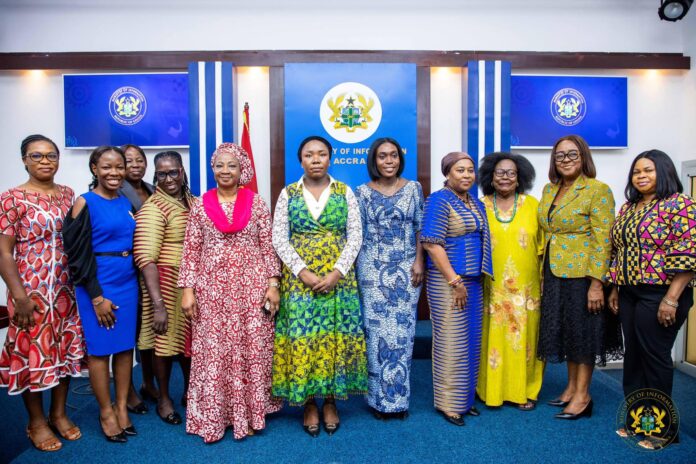
Ms. Dakoa Newman, Minister of Gender, says the Affirmative Action (Gender Equity) Act, 2024 (ACT 1121) demonstrates the government’s dedication to advancing gender equity and equality in Ghana. 
She said the passage of the Act showed the government’s strong commitment to increasing women’s participation in decision-making across political, corporate, and civil society platforms. 


Ms. Newman made these remarks at the close of the Gender Ministry’s two-day summit held in Accra, with support from various partners. 


The theme of this year’s summit was “Promoting Equality and Inclusive Development through the Affirmative Action (Gender Equity) Act, 2024 (ACT 1121).” 
The summit served as a key platform for the Ministry to update its partners and the public on progress made in areas such as gender equality, women’s empowerment, child rights promotion, protection and development, and social development. 


It also provided an opportunity to solicit feedback for the effective implementation of new bills and policies, including the Affirmative Action (Gender Equity) Act 2024. 
Ms. Newman stated that the Act would help establish fair labour practices and tackle gender disparities in the workplace. 


She said that the Act aimed to ensure equal access to comprehensive healthcare, quality education, and advancement opportunities for girls and young women.  
It would also create support systems that address the unique needs of women and marginalized groups. 
“The passage of the Affirmative Action Act 2024 is also a fulfillment of the government’s commitment in fulfilling its prior action for the World Bank support for the Development Policy Operations of government,” she added. 


The Minister highlighted concerning statistics, revealing that over 38 percent of adolescent girls aged 15 to 19 in Ghana had experienced sexual abuse at some point in their lives. 
She noted that more than 20 percent of Ghanaian girls marry before the age of 18, with rural areas seeing even higher rates. 


Regarding education, Ms. Newman noted that Ghana ranked 108th out of 146 in the 2022 Gender Inequality Index (GII). 


She emphasized that many girls, particularly in rural areas, were forced to drop out of school due to financial barriers, cultural practices, or early pregnancies, making the Affirmative Action (Gender Equity) Act 2024 (Act 1121) vital in addressing these disparities. 


Dr. Emmily Naphambo, the Deputy Representative of the United Nations Population Fund (UNFPA) to Ghana, echoed the need for intentional strategies to dismantle structural inequalities. 


She stressed that real progress required creating opportunities for all members of society to contribute meaningfully. 


“We recognise that diversity strengthens our nation, and inclusive development fosters resilience, innovation, and prosperity for everyone,” she said. 


Dr. Naphambo urged stakeholders to back policies and programs that actively empower women, girls, and other marginalized groups, ensuring they have access to opportunities, decision-making power, and the ability to drive growth within their communities. 


Mr. Fiachra McAsey, Deputy Country Representative for UNICEF, said that gender equality cannot be achieved if girls continue to face abuse, violence, and harmful practices. 


He said survivors of violence often refrained from seeking support because they may not find female frontline workers or service providers with whom they felt comfortable. 


Mr. McAsey added that the new Act must drive momentum for positive change by addressing deep-rooted challenges, such as improving gender equality within the social service workforce and law enforcement, while also ensuring social accountability. 


He called for improvements in public finance management, including through gender-responsive budgeting. 

World AIDS Day: Stakeholders urge operationalisation of National HIV/AIDS Fund.

0

Health sector stakeholders have urged the government to activate the National HIV/AIDS Fund, established to aid the country’s fight against HIV/AIDS and achieve its goal of eliminating the disease by 2030. 


The Fund, created under the Ghana AIDS Commission Act of 2016 (Act 938) and Legislative Instrument (LI 2403), was designed to generate domestic resources for the national HIV/AIDS response, addressing the decline in donor funding for HIV/AIDS activities. 


Although the Fund was meant to be operationalized in 2017, it has yet to receive any financial allocation. 
Speaking to the media following a health walk held to raise awareness for World AIDS Day 2024, Mr. Ernest Amoabeng Ortsin, President of the Ghana HIV and AIDS Network (GHANET), urged the government to prioritize funding for the National HIV/AIDS Fund.  


He emphasized that with rising HIV infection rates and declining donor support in recent years, the need to operationalize the Fund has become critical. 


According to the Ghana AIDS Commission, approximately 35,000 new HIV cases were recorded from January to September this year. 


Additionally, over 12,000 deaths were attributed to the disease last year, and more than 250,000 individuals are currently undergoing treatment. 


Mr. Ortsin called these statistics alarming, highlighting the urgent need for increased awareness efforts to reverse the trend. 


“This means that HIV is still very much around, and we need to create awareness,” he said. 


 “We need government to actually support. We have a national HIV/AIDS Fund, but as we speak now, there is zero money in the fund, and it is not good. All the work we are doing is supported by the Global Fund, but one day, the Global Fund will fold up, and then what happens?” 


“We have more than 250,000 people who are on treatment. So, if the government fund fails, what happens? We need to be able to get many medications for these people, and that is why the establishment of the National HIV and AIDS Fund is very important. 


“We are calling on the government that we should ensure we establish the National HIV and raise funds and put in money so we’ll be able to buy medication for our people, we’ll be able to do prevention activities, so that by the 2030 global targets we’ll be able to eliminate HIV/AIDS in Ghana,” Mr. Ortsin added. 


World AIDS Day is observed annually on December 1 to raise awareness about HIV/AIDS. 
This year’s theme for World AIDS Day is “Take the Rights Path: End AIDS Now.” 


Dr. Kyeremeh Attuahene, Director-General of the Ghana AIDS Commission, expressed concern that the country may not meet the United Nations’ 95-95-95 target for AIDS by 2025. 
The UNAIDS 95-95 target aims for 95 percent of people living with HIV to be diagnosed, 95 percent of those diagnosed to receive antiretroviral therapy (ART), and 95 percent of those on ART to achieve viral suppression (VLS) by 2025. 


Dr. Attuahene noted that, currently, 65 percent of people living with HIV in Ghana are aware of their status, 69 per cent of those diagnosed are on treatment, and 89 percent have achieved viral suppression. 
“We are lagging behind because we don’t have the resources to enable every Ghanaian who needs treatment and every Ghanaian who needs testing to be able to get them,” he said, urging the government to allocate more finances to support the fight against the disease. 


Dr. Stephen Ayisi Addo, Programme Manager of the National AIDS/STI Control Programme (NACP), acknowledged the considerable progress Ghana had made in combating HIV since the first case was reported in 1986. 


However, he stressed that more efforts are needed to eliminate the epidemic. 


He underscored the importance of citizens continuing to follow essential protocols, such as getting regular HIV tests to know their status, practicing abstinence, and using condoms, to help prevent further transmission of the virus. 


“By 2030, we want to establish that HIV and AIDS are no longer of public health importance. So, know your status, get treatment, prevent HIV, stop stigma and discrimination, support somebody who is HIV positive and is on treatment, and do not be a source of stigma,” he urged.