Home Blog Page 1326

Yankees, Red Sox ready to make history in London

0

As Major League Baseball prepares to make history in London, New York Yankees manager Aaron Boone and Boston Red Sox coach Alex Cora are united in their desire to make the ground-breaking trip memorable on and off the field.

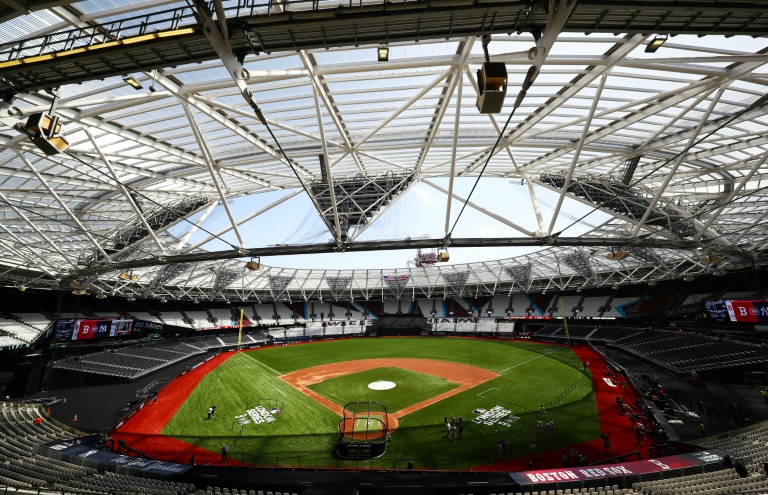
The Yankees are playing two regular-season games against the Red Sox at the London Stadium on Saturday and Sunday as MLB looks to expand its global brand.

The ‘London Series’ marks the first time MLB games have been played in Europe, although the league has previously staged matches in Japan, Australia, Mexico and Puerto Rico.

With the Red Sox controlled by the Fenway Sports Group that owns Premier League club Liverpool, baseball’s powerbrokers have decided the opportunity to cash in on the British public’s seemingly boundless passion for sport is worth a gamble at a pivotal point in the game’s history.

At a time when baseball is enduring a popularity crisis amid falling attendances and criticism of the sport’s slow pace, MLB commissioner Rob Manfred hopes playing showcase games in Europe can open up a lucrative new revenue stream.

The NFL has enjoyed huge success in exporting American Football to England, with up to four regular-season games per year playing to sell-out crowds since 2007.

Basketball’s NBA has also jumped on the bandwagon, playing one game a year in London, leaving baseball once again playing catch-up to the two sports that have surpassed them at home.

Against that backdrop, it is no coincidence the Yankees and the Red Sox are the standard-bearers for baseball’s maiden voyage into Europe.

The Yankees, baseball’s most famous team, and Red Sox, the reigning World Series champions, are historic franchises and their American League East division rivalry is the fiercest in the sport.

While the action over the weekend counts in the regular-season standings — the AL East-leading Yankees are currently nine games ahead of Boston — the consensus between players and coaches on both teams is their roles as baseball ambassadors is more important than the results.

“I’m looking forward to giving London a look at Major League Baseball, two historic franchises going at it, the best rivalry in our sport,” Boone told reporters on Friday.

“It’s exciting. To be part of the first game in London, it’s an honour. It’s something that guys cherish.

“We want to grow our game. We are bringing over a lot of big-time players that are easy to get excited about.

“If we can light a few fires for these kids in London about our game and grow that passion it will be a really good trip.”

– ‘It’s a big deal’ –

In the midst of his team’s disappointing title defence, Cora agreed with Boone that planting seeds to help baseball grow in the future makes the long trip worthwhile.

“It’s very important, not only for us and the Yankees but baseball in general. It’s a chance to show the world what baseball is all about. Having the Red Sox and Yankees here is a big deal,” he said.

“If this is the beginning of something big, if MLB and London can keep doing it, that would be great. I think it’s a great idea.”

Players from the Yankees and the Red Sox have embraced the experience, with many heading out on sight-seeing excursions on Thursday’s day off.

Boone and Cora took a trip to Buckingham Palace to watch the ‘changing of the guard’ outside the Royal residence.

“It was cool, saw the changing of the guard, it was neat,” Boone said.

“Got to experience some culture. It was good to see that.”

The royal pageantry was an eye-opener for Puerto Rico-born Cora, who said: “That was interesting to say the least!

“It’s a new experience and one we are going to embrace. We are going to have fun with it to.”

Whether Boone and Cora get the chance to return for more sight-seeing with their teams in the future is another matter.

MLB has already signed off on a two-game series between the St Louis Cardinals and Chicago Cubs in London next July.

But more than 70 percent of tickets for the London Series at the 60,000-seat arena have been sold to British people and it remains to be seen whether the novelty factor can sustain a genuine long-term interest in the UK.

Boone insists having the Yankees in town is the best possible start.

“We have a lot of eyeballs on the team. That’s why we’re the Yankees,” he said.

“That’s one of the reasons we are here to showcase our game.”
AFP

Crunch time at G20 as US-China trade showdown looms

0

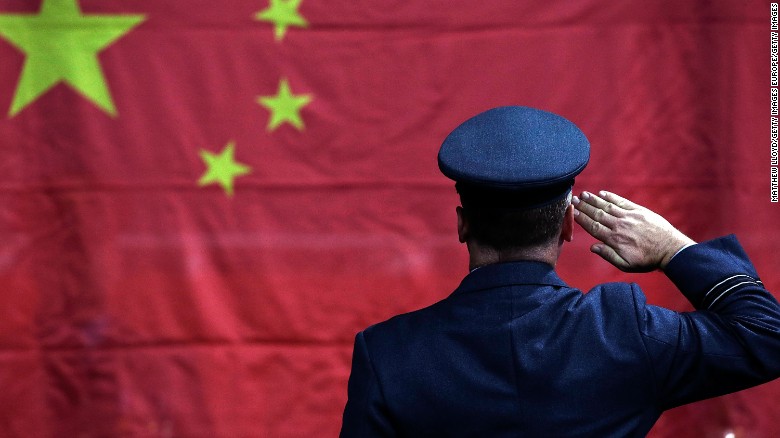
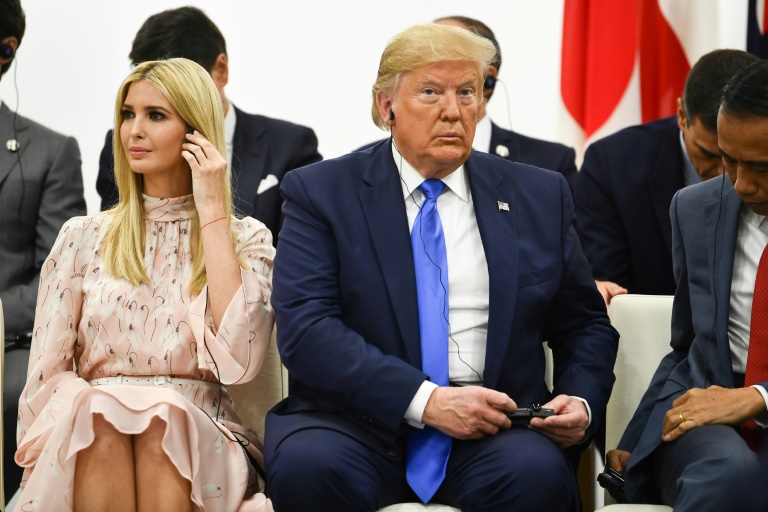
After a first day dominated by public shows of bonhomie, all eyes at the G20 turned Saturday to a pivotal trade showdown between economic rivals China and the United States.

Even before Donald Trump sat down with his Chinese counterpart, the US president grabbed the headlines with a surprise tweet saying he was open to meeting Kim Jong Un at the demilitarised zone between North and South Korea.

Trump and China’s Xi Jinping will meet at around 11:30 am (0230 GMT) in a bid to thrash out a truce in a long-running trade war that has seen hundreds of billions of dollars in tit-for-tat tariffs.

Trump has said he expects a “productive” meeting but warned before the summit he was prepared to slap tariffs on all Chinese imports if no deal could be struck on the sidelines of the G20.

“We’ll be discussing a lot of things,” Trump said Saturday morning, hours before the talks with Xi.

Donald Trump has said he expects a ‘productive’ meeting with Chinese President Xi Jinping (R) on the sidelines of the G20

“I was with him last night. A lot was accomplished actually last night. The relationship is very good with China. As to whether or not we can make a deal, time will tell,” he said.

Trump confirmed that the leaders would discuss Chinese telecoms firm Huawei, which Washington has banned over security concerns. Beijing reportedly wants the restrictions lifted as part of any trade truce.

Experts believe the most that will be agreed is a truce and a pledge to keep talking, although markets are not ruling out a complete collapse or a surprise breakthrough given the US president’s mercurial nature.

The first tete-a-tete between the leaders of the world’s top two economies since the last G20 in December has cast a long shadow over this year’s gathering in Osaka, where differences over climate change have also been laid bare.

China’s state-run Xinhua news agency said the Xi-Trump head-to-head was a “unique opportunity for the two sides to find new common ground in easing trade tensions and bring the troubled ties back onto the right track”.

However, the commentary also warned the US “needs to place itself on an equal footing with China” and “accommodate China’s legitimate concerns”.

Economists say that a lengthy trade war could be crippling for the global economy at a time when headwinds including increased geopolitical tensions and Brexit are blowing hard.

The US-China trade war has cast a shadow over the G20 leaders summit, which was originally created to craft a united global response to the Lehman Brothers crisis

On Friday, the European Union and the South American trade bloc Mercosur sealed a blockbuster trade deal after 20 years of talks that repeatedly stalled over EU farmer concerns about the beef market.

“In the midst of international trade tensions, we are sending today a strong signal with our Mercosur partners that we stand for rules-based trade,” European Commission President Jean-Claude Juncker said, hailing the deal.

– Heatwave –

Trade will be far from the only contentious issue on the table, with climate change another sticking point.

As a heat wave sweeps through Europe, Japan is hoping to bring together EU leaders who want strong action and an American administration committed to withdrawing from the Paris climate agreement.

US-China trade row

Several diplomatic sources said Washington was trying to win countries over to its side and Japanese officials admit that achieving consensus on a final statement on climate change will require Herculean diplomatic skills.

By Friday night, almost no language on climate change had been agreed and doubts lingered over whether a final statement would even see the light of day.

Trump has dominated the headlines from the summit, and once again caught observers by surprise by tweeting early Saturday that he was open to meeting Kim while in South Korea this weekend.

“If Chairman Kim of North Korea sees this, I would meet him at the Border/DMZ just to shake his hand and say Hello(?)!,” he wrote.

Protesters wearing masks of Japanese PM Shinzo Abe and Donald Trump demonstrate against climate change which has emerged as a sticking point at the G20 meeting

Several experts, however, said the focus on Trump and the talks with China struck at the heart of the G20 format, created to craft a united global response to the Lehman Brothers crisis.

“With much of the fate of the global economy and the likely direction of markets hanging on the outcome of this pivotal Trump-Xi meeting, we think things will get worse before they get better,” said ING Economics.

And the focus on bilateral meetings on the sidelines of the summit once again sparked doubts about the future of the gathering, experts said.

“The G20 was created as a forum for cooperation and the question may well be ‘have we reached the point where it can no longer serve that purpose’,” Thomas Bernes from the Centre for International Governance Innovation told AFP.

AFP

Huawei’s place in the global tech ecosystem may make it too big to fail

0

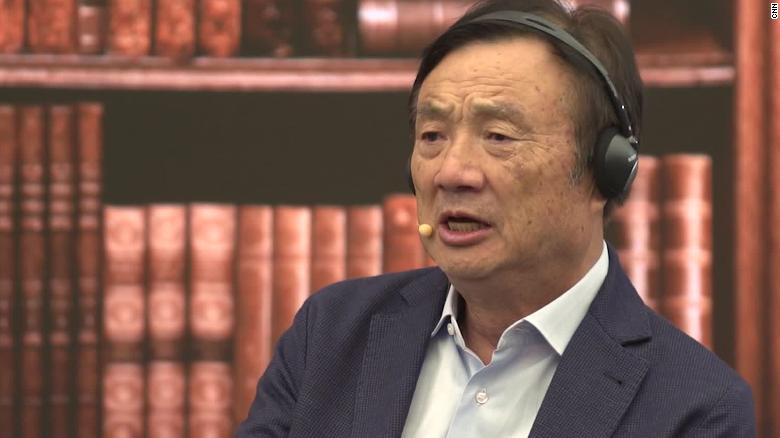
Huawei is a major, multinational company that does business with some of the most important technology and telecom businesses in the world. It’s also a central player in the push for 5G, the next generation of wireless networking.

That kind of clout is going to make it really hard for the United States to stop Huawei’s momentum.
It’s not that the White House hasn’t been trying. Last month, it banned American companies from using telecom gear from the Chinese tech company — a source that Washington has long considered a risk to national security. And the US government is also banning Huawei from buying US goods without a license. Huawei denies that it poses a security risk.
 
As President Donald Trump and China’s Xi Jinping prepare to meet this weekend at the G20 summit in Japan, the United States has to consider whether it’s worth including Huawei in any deal between the two economic superpowers, especially if government officials think the tech firm could harm national security interests.
 
But Huawei also might just be too influential for the immense amount of pressure coming from the Trump administration to work.
“This is a $110 billion company that is really too big, in some sense, to be killed in this manner because it’s too tightly intertwined with the supply chain and with standards and with critical infrastructure globally,” said Paul Triolo, global technology policy director at Eurasia Group.

5G and wireless infrastructure

Huawei is the world’s largest telecom equipment provider and it has invested $2 billion to research and develop 5G products. It also says it has already signed 50 commercial contracts spanning 30 different countries for 5G technology.
 
The American government wants to push Huawei out of that coveted position because it fears the company’s gear could be used by Chinese intelligence services to spy on other countries, a claim Huawei has denied. The United States has also been urging its allies to take similar actions to curb Huawei’s ambitions.
 
But it wouldn’t be easy for companies that already use Huawei to just switch to another equipment provider.
Huawei’s equipment already forms the infrastructure for the 4G networks of many major wireless carriers in Europe and other parts of the world, which will make the transition to 5G faster and cheaper. In Europe alone, the inability to use Huawei equipment could cost wireless carriers $62 billion and delay the deployment of 5G by about 18 months, according to estimates from the mobile operator lobbying group GSMA.
 
Huawei’s absence in Europe and other developed markets would leave a huge gap in the market. That might not be one Huawei’s competitors would be able to scale up quickly enough to fill, said Triolo, the Eurasia Group expert.
“If they suddenly can’t count on Huawei to be there, they have to consider basically ripping out all of their base stations,” he said. “You have to figure out the replacement costs, and the price increase because the other competitors are more expensive.”
 
The worst case scenario “is that we never get to 5G because of the cost,” Triolo said.
 
In the United States, Huawei’s equipment serves only a small percentage of networks. But those customers — small, federally subsidized wireless networks — have relied on the fact that the gear is up to 40% cheaper than other companies’ equipment, according to the Rural Wireless Association, a trade group for small carriers.
 
Switching Huawei equipment out in those markets could cost $1 billion, according to estimates from that group. Huawei’s US Vice President of Sales William Levy sits on the RWA board of directors.
The ban on buying from Huawei left those rural American carriers scrambling for new options, though they’ve been granted a temporary reprieve from the policy.
 
Other companies, like competitor Nokia, have talked about replacing Huawei as a supplier in America and elsewhere. But Nokia, which is smaller than Huawei, also acknowledged there are challenges.
 
“Uncertainty in general is not good for business,” said Tommi Uitto, president of mobile networks at the Finnish company, referring to the political situation surrounding Chinese suppliers. “Some of our customers may be delaying their decisions. If you have an operator who has Nokia and a Chinese supplier, then this current situation may delay their own decision-making.”

Harm to American companies

While Trump considers a trade deal, he may also need to take into account that American companies rely on Huawei as a customer.
Huawei purchased $11 billion in American goods in 2018, such as chips from Intel (INTC) and Micron (MICR), and software from Google (GOOGL).
 
Before the export ban, Huawei was Micron’s number one customer, and comprised 13% of its revenue in the first half of fiscal 2019. The restrictions have dragged down Micron’s earnings, that company said when it reported third quarter results this week.
 
“It had an impact because we could not ship at that time any product to them of nearly $200 million,” Micron CEO Sanjay Mehrotra told analysts on an earnings call.
Micron has found ways to still do business with Huawei. The company said it has been able to restart shipments of some products that are not covered by the export restrictions.
 
And the New York Times reported this week that Intel has also resumed sales to Huawei after finding a legal way to keep products from being labeled “American-made.” Intel declined to comment to CNN Business about that
report.
 
American chip companies want to retain Huawei as a customer because if they don’t, they fear they’ll lose out to foreign suppliers who can continue working with the Chinese giant. US companies may also worry that other foreign customers could see them as unreliable because of their inability to sell to Huawei.
 
“Any Chinese company designing complicated circuitry based on US technology has to rethink its strategic plan out the next five-to-10 years,” Triolo said. He added that could mean that Chinese firms stop using American chips in their designs.
 

Canadian warship gets ‘warm welcome’ from fighter jets, Chinese media say

0

Two Chinese fighter jets buzzed a Canadian warship in the East China Sea earlier this week in what Chinese media called a “warm welcome.”

The incident between the frigate HMCS Regina and two Chinese Su-30 fighters took place Monday while the ship was in international waters off Shanghai, according to Matthew Fisher, a fellow at the Canadian Global Affairs Institute.
 
“The formidable twin-tail Russian-built strike aircraft flew within 300 meters (1,000 feet) of the Canadian ship’s bow, screaming past about 300 meters above the water,” Fisher wrote in a posting on the institute’s website.
 
The Regina’s captain told Fisher the Chinese jets didn’t pose a danger to his ship, but Fisher’s report said their flight was more aggressive than anything the (Canadian Navy) has seen before from Chinese fighter jets. CNN has reached out to the Canadian Defense Ministry for further comment.
The Canadian frigate HMCS Regina

Chinese aircraft and ships had been watching the Canadian warship, and an accompanying replenishment ship, closely after it ended a visit to Vietnam and traveled through the South China Sea, Taiwan Strait and East China Sea, Fisher reported.

Chinese Defense Ministry spokesman Ren Guoqiang on Thursday acknowledged the presence of the Canadian ships.
“We were clear about the transit of Canadian vessels through the Taiwan Strait and monitored the vessels for the whole process,” Ren said.
 
However, the Chinese state-owned Global Times newspaper put out a post on its official Weibo account Thursday, seemingly mocking the encounter: “The Canadian ships have received a warm welcome from our people’s navy and air force,” said the post.
Chinese SU-30 fighters fly over the Pacific in 2016.
Before the buzzing Monday, the closest Chinese jets had come to the Regina was several kilometers, according to Fisher.
Canada is just one of several US allies and partners, including France, Japan and the United Kingdom, that have been sending ships into the South China Sea or through the Taiwan Strait this year.
 
At the Shangri-La Dialogue security conference in Singapore earlier this month, then-acting US Defense Secretary Patrick Shanahan encouraged other countries to conduct such activities to demonstrate a commitment to a free and open Indo-Pacific region.
 
Beijing claims almost the entire 1.3 million square mile South China Sea as its sovereign territory and aggressively asserts its stake, with President Xi Jinping saying it will never give up “any inch of territory.”
 
The flyby of the Canadian warship comes during a time of heightened tensions between Canada and China, following the arrest of Huawei Chief Financial Officer Meng Wanzhou in Canada in December 2018.
Meng faces extradition to the US over allegations she helped Huawei evade US sanctions on Iran. The Chinese government claims the arrest is politically motivated and is trying stop the extradition from happening.
 
Shortly after Meng’s detention, two Canadians were taken into custody in China, former diplomat Michael Kovrig and businessman Michael Spavor.
Both were formally arrested in May, accused of gathering and stealing “sensitive information and other intelligence” since 2017. Separately, Canadian man Robert Lloyd Schellenberg, who had previously been found guilty of trafficking drugs to China, was rapidly retried in January and sentenced to death.
 
The Canadian government has joined with human rights organizations to call for the release of Kovrig and Spavor, describing their detentions as “arbitrary.”
 

European heatwave: France hits record temperature of 45.9C

0

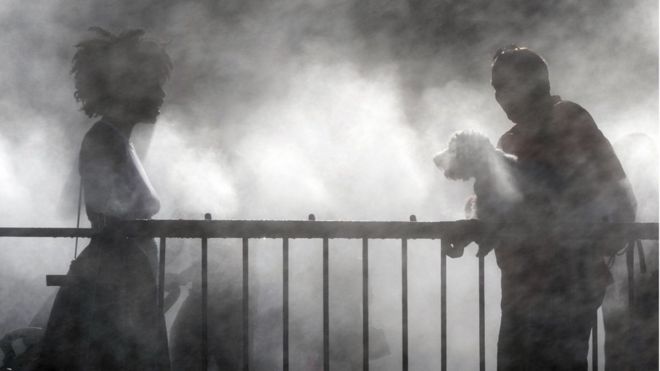
France has hit its highest recorded temperature – 45.9C (114.6F) – amid a heatwave in Europe that has claimed several lives.

The new record was measured in the southern village of Gallargues-le-Montueux. Before this year the previous record was 44.1C during a heatwave in 2003 that killed thousands.

Health Minister Agnès Buzyn warned that “everyone is at risk”.

France’s weather service has issued an unprecedented red alert for four areas.

Those are all in the south, but most of the country remains on orange alert, the second-highest level.

Meteorologists say hot air drawn in from northern Africa is responsible, caused by high pressure over central Europe and a storm stalling over the Atlantic.

In Gallargues-le-Montueux, Mayor Freddy Cerda said the record was something the village had to “put up with”.

“We have to put up with this climate, and that’s what the future holds for us, don’t forget. The south of France is going to become tropical,” he said.

Hundreds of schools were closed on Friday and water restrictions were in place.

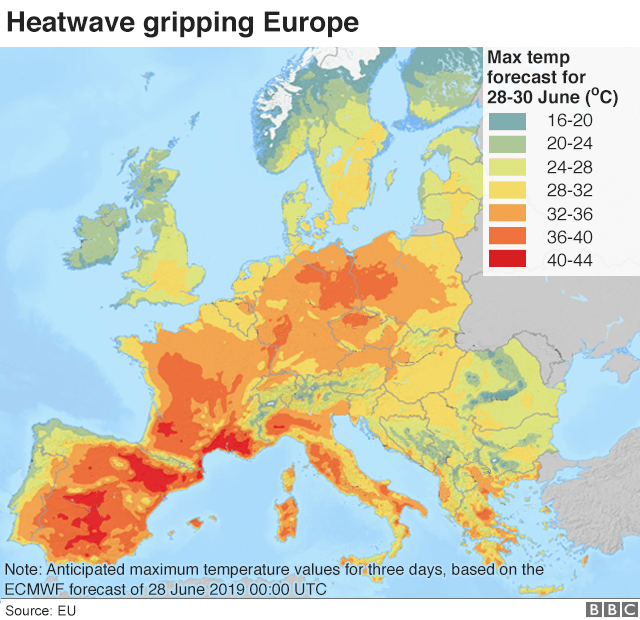
Meteorologist Etienne Kapikian tweeted a map showing temperatures had risen above 40C for much of southern France.

Presentational white space

The French weather service said temperatures of between 37C and 41C were expected across most of France on Saturday.

Swaths of the continent are experiencing extreme heat. Germany, France, Poland and the Czech Republic have all recorded their highest-ever June temperatures.

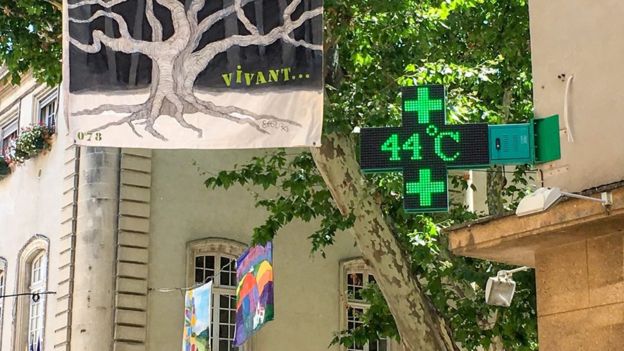
Carpentras
The southern town of Carpentras saw temperatures exceed 44C

In Spain firefighters have been battling Catalonia’s worst wildfires in 20 years. Eight provinces are on red alert while temperatures are expected to rise above 42C in many areas.

The Italian ministry of health has reported emergency levels of heat in 16 cities.

Loss of life

Several people are believed to have lost their lives as a result of the extreme temperatures, including two who died from suspected heatstroke in Spain.

One, a 17-year-old farm worker in Córdoba, went into convulsions after cooling down in the farm swimming pool, while an 80-year-old man died on a street in the northern city of Valladolid.

map

In France, Prime Minister Edouard Philippe said a drowning was taking place every day and warned that the heat was making people “take risks”.

On Thursday a 33-year-old roofer died after being taken ill as he worked on a building site in the western city of Rennes, where the temperature was 35C in the shade.

A six-year-old Syrian child was also in a serious condition after being thrown into the air by the force of a water jet from a fire hydrant that had been opened by residents in Saint Denis, north of Paris.

Ms Buzyn urged the public to avoid “risky behaviour” like leaving children in cars or jogging outside in the middle of the day.

In the UK, police warned people of the dangers of cooling off in rivers and lakes after a 12-year-old girl drowned in the River Irwell in Greater Manchester.

Is climate change to blame?

WMO: European heatwave “consistent with climate change”

Linking a single event to global warming is complicated.

While extreme weather events like heatwaves occur naturally, experts say these will happen more often because of climate change.

Records going back to the late 19th Century show that the average temperature of the Earth’s surface has increased by about one degree since industrialisation.

A climatology institute in Potsdam, Germany, says Europe’s five hottest summers since 1500 have all been in the 21st Century.

Scientists are concerned that rapid warming linked to use of fossil fuels has serious implications for the stability of the planet’s climate.

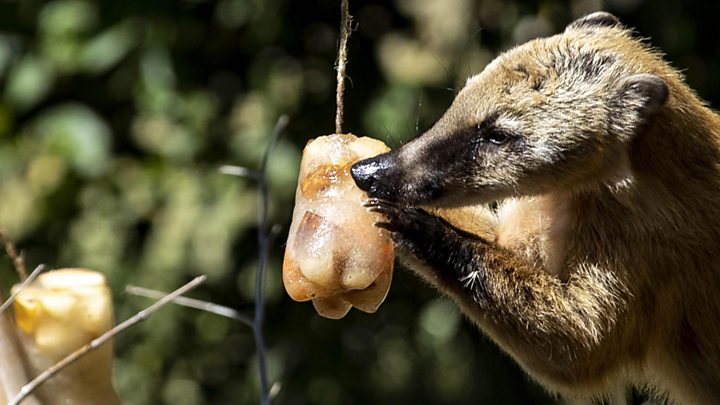
A coati eating iced fruit in a Rome zoo
 

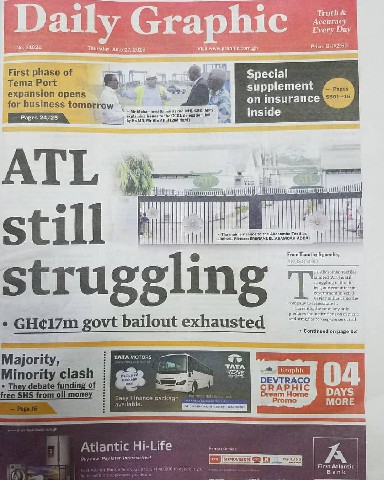
Newspaper Headlines Thursday 27th June 2019

0

[ngg src=”galleries” ids=”77″ display=”basic_thumbnail”]

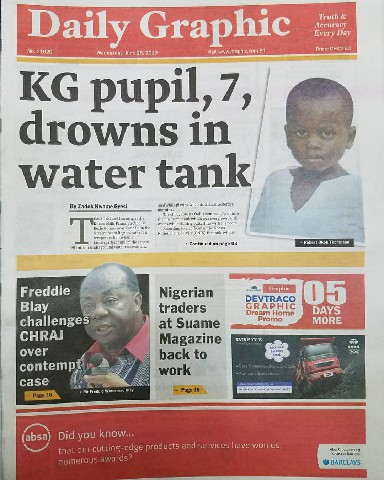
Newspaper Headlines Wednesday 26th June 2019

0

[ngg src=”galleries” ids=”76″ display=”basic_thumbnail”]

Construction of Military Hospital at Afari on course

0

The construction of the Military Hospital at Afari in the Atwima Nwabiagya Municipality in the Ashanti Region, which started in 2008, but was stalled for a number of issues, is expected to be completed by the end of the year.

Defence Minister Dominic Nitiwul, who gave the assurance in Parliament in Accra on Tuesday, however, said the extension of electricity which is estimated to take seven months would delay its handing over until the first half of 2020.    

The Minister, appeared in the House to answer a question from Mr Emmanuel Agyei Anhwere, MP for Atwima Nwabiagya South that was seeking an answer on what had stalled the construction of the Military Hospital.

In a background, the Minister told the House that an agreement was signed between the Government of Ghana and Messrs Euroget Da Invest SA (EDI) on August 20, 2008 for the construction of a 500-Bed Military Hospital with residential staff housing as a turnkey contract to be completed within 42 months of commencement in Sofoline, Kumasi.

It was approved by Parliament on October 29, 2008 with a credit facility acquired on November 20, 2008 for the project. The contract agreement was revised on January 13, 2010 and the project relocated to Tamale.

The project was further relocated from Tamale to Accra at 37 Military Hospital and finally moved to Afari, Nkawie in the Atwima Nwabiagya Municipality.

“These site challenges and documentation requirements delayed the project until commencement of construction in 2014,” the Minister said, adding that “though the contract was signed in 2008, actual construction started in 2014 with Messrs M Barbisoti and Sons (MBS) as sub-contractors and Messrs EDI as main contractors.

Mr Nitiwul said per the contract signed the project was to be completed in a period of 42 months, in July 2016, but issues of tax exemption approval prevented the Contractor EDI from procuring materials and equipment in large quantities to accelerate the project.
This slowed the work and delayed the project, he said.

The Minister informed the House that the Contractor EDI was finally granted tax exemption in 2017, after being on site for almost three years, and as a result a new completion date was proposed for 2018.

In April 2018, the project suffered contractual disputes between the main contractor, Messrs EDI and the sub-contractors Messrs MBS and Messrs HANISA which lasted for eight months leading to the determination of the sub-contracts.

“The case is currently in court,” the Minister said, and added that the Ministry then had to re-award the sub-contracts to new sub-contractors, Messrs African Building Partners (ABP) and Messrs Core Construction, but that took a while due to background checks that were required and completion of all necessary documentation.

The new sub-contractors, Messrs ABP and Core Construction, moved to site finally in November 2018 to commence work, which has steadily progressed to date without break.

Mr Nitiwul said, currently, civil works at the hospital site is about 90 per cent complete whilst that of housing is about 50 per cent complete. Overall civil work is about 70 per cent complete.

By Benjamin Mensah, GNA

2019 Africa Cup of Nations: Ghana held by Benin after John Boye sees red

0

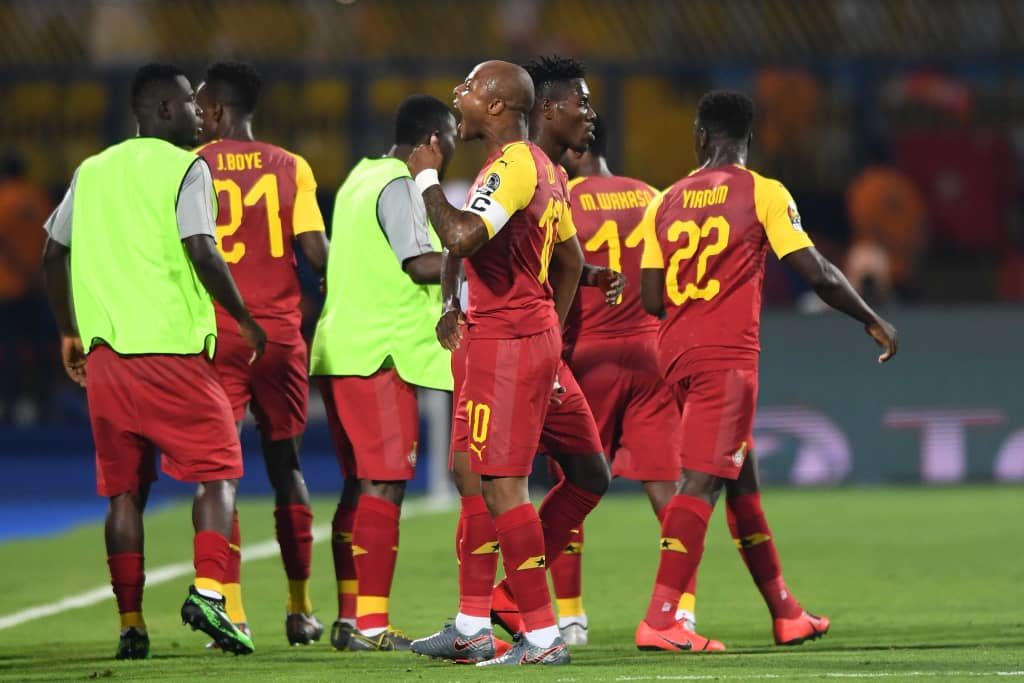
Ten-man Ghana were held to a 2-2 draw by Benin in their opening game of the 2019 Africa Cup of Nations in Ismailia on Tuesday. 

Black Stars recovered from an early setback to lead 2-1 before Benin equalised after John Boye was sent off.

Kwesi Appiah’s side were stunned in the opening minute as Cebio Soukou found Mickaël Poté who ran clear to slip a low finish beyond Richard Ofori.

But Andre Ayew levelled only minutes later and then, his younger brother Jordan Ayew found the second goal before halftime.

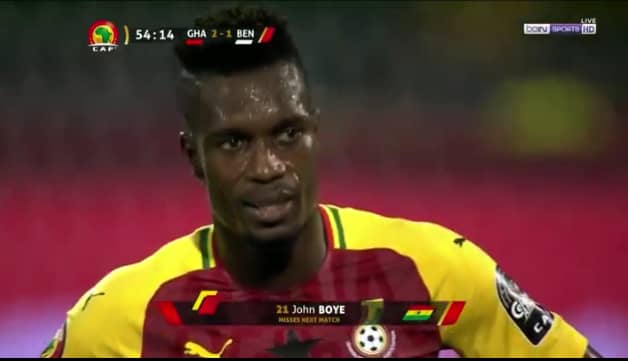
Nine minutes into the second half, John Boye was given his marching orders after picking a second yellow card for time wasting.

Eight minutes later, Poté netted his second of the game to make it 2 all for Benin.

Thomas Partey came close to scoring the winner for Ghana but his ferocious shot from a freekick drew a stunning save from Benin goalkeeper.

Ghana’s next game is against Cameroon on Saturday.


Source : Ghana Soccernet

2019 Africa Cup of Nations: John Boye red card, misses Ghana’s next game

0

Ghana defender John Boye will miss the Black Stars next game against Cameroon after picking red card in their 2-2 draw with Benin in the opening game of Group F at the ongoing Africa Cup of Nations.

The Squirrels, who went into the game as underdogs shocked their West Africa counterparts in the 2nd minute when Mickael Pote put them ahead with a fine finish.

But Ghana quickly drew level through captain Andre Ayew whose low drive beat goalkeeper Fabian Farnolle at his near post.

The Black Stars took the lead for the first in the game on the 42nd minute courtesy Jordan Ayew.

The Swansea forward collected a pass from Kasim Nuhu on the edge of the area before unleashing a powerful shot into the roof of the net.

Benin were handed a life in the second stanza after John Boye was sent off for two bookable offenses.

The Squirrels came in strongly after having the numerical advantage and pulled level through Pote in the 65th minute.

Despite playing most of the second half with ten men, the Black Stars held on to draw the match.

Boye will miss the team’s second game against Cameroon which is scheduled to come of on June 29.

The FC Metz defender will however return for the final of the group against Guinea-Bissau.


Source: Ghana Soccernet