Mr. Osei Kyei-Mensah-Bonsu, the Majority Leader and Minister of Parliamentary Affairs, has given a positive outlook about the socio-economic performance of the nation under the Nana Akufo-Addo-led Administration, saying, the government is on course to deliver on its promises.
The economy, he noted, had been projected by economists and financial experts to grow by 7.3 per cent in 2019, adding that after two years of sluggish growth from 2014-2016, real Gross Domestic Product (GDP) growth also reached 6.7 per cent in the first quarter of this year.
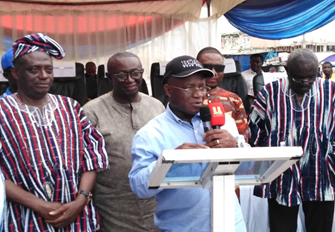
Mr. Kyei-Mensah-Bonsu, who was launching a ‘Welfare Fund’ at Suame in the Ashanti Region, a programme initiated by the Suame Constituency of the NPP for the growth of the party, said by dint of hard work, the country’s inflation rate had been reduced to about nine (9) per cent.
The fiscal account deficit, he noted, improved marginally from 5.9 per cent in 2017 to an estimated 5.7 per cent in 2018, while the average lending interest rates also declined by 4.71 percentage points to 16.23 per cent in September 2018.
The Parliamentary Affairs Minister, who is also the Member of Parliament for Suame, said the NPP Administration believed in promoting pro-poor socio-economic policies in order to better the lives of the ordinary Ghanaian.
For that reason, it behooved on the rank and file of the party to rally behind the government for the successful implementation of on-going development programmes tailored to bring comfort to the people.
They should explain to the masses the policies of the government to help keep the citizenry informed of the direction being towed by the nation.
Dr. John Osei Bobie-Boahin, the Suame Municipal Chief Executive (MCE), said the Municipal Assembly over the last two years had been investing in the economic growth of the area.
He cited agricultural, industrial and business development for the benefit of the people, saying high on its agenda was to promote good governance at the grassroots.
He entreated the NPP members to stay united and avoid acts that had the tendency to draw the party back on its development track.
Mr. Bright Osei Agyemang, the Suame Constituency NPP Chairman, advised the people to contribute meaningfully towards the Fund to help the party build a strong financial base.
Abusuapanyin Kweku Okanta, an elder of the Swedru traditional authority, has cut the sod for the construction of a GHc800,000 ultra-modern Information Communication and Technology (ICT) Centre and a library complex for Agona Swedru to facilitate the studying of ICT.
The project, initiated by the Swedruman Council, would be financed through fund-raising during the Akwambo festival, contributions from individuals, corporate bodies and support by the residents.
Abusuapanyin Okanta said the project was dear to the heart of Swedruman and that the chiefs were determined to ensure that the pupils and students in the area become computer literate.
He said this year’s Akwabo festival, which comes off on August 10 to 19 would be used to raise funds to support the project, while appealing to citizens of the area, individuals and corporate bodies to contribute their quota.
Mr Samuel Kingsley Eduful, the Akwambo Planning Committee Secretary said the provision of the ICT centre and the library complex would be one of the solutions to the challenges facing pupils and students and would create an opportunity for them to improve their academic performance.
He said the Agona West Assembly and the Akwambo Committee have teamed up to bring the project to fruition so that it becomes a model in the Central Region and entreated the residents of Agona Swedru to honour their Akwambo levies.
Nana Kweku Esieni, the Nifahene of Agona Swedru and Chairman of the Swedruman Educational Committee, said the project would bring a lasting solution to computer studies by the pupils and students in the area.
He expressed the hope that after the completion of the projects the JHS candidates would not struggle to pass ICT examinations.
Nana Esieni urged the Akwambo Planning Committee to work hard to ensure the success of the festival, and that, the Swedruman Council of Chiefs would back it to implement all policies and programmes.
Mrs Justina Marigold Assan, Agona West Municipal Chief Executive, in speech read on her behalf by Mr Maxwell Botsie, Water and Sanitation Engineer of Agona West Assembly, praised the chiefs for their initiative to construct the ICT centre and library complex.
She assured of the Assembly’s support for the project to enhance teaching and learning of ICT in the area.
Cocoa farmers in the country have been urged to use only approved methods and procedures to ferment and dry harvested cocoa beans, as this would ensure its standard quality on the local and international markets.
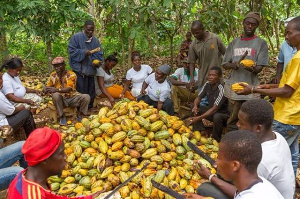
Mr Michael Kwabena Osei, the Obuasi District Officer of Quality Control Company (QCC) Division of the Ghana Cocoa Board (COCOBOD), who gave the advice at a farmers’ rally, said it is imperative for all cocoa farmers during the entire fermentation period to cover the beans with natural materials devoid of artificial chemicals.
He said the recommended organic materials are plantain and banana leaves, local baskets woven from canes and raffia, among others.
Mr Osei addressing the rally held at Mile 9, a farming community in the Amansie Central District of Ashanti, advised against the use of materials such as polythene bags, mosquito nets and others as covering when fermenting the beans.
“The practice was likely to introduce and leave traces of toxic chemical residues to contaminate the cocoa beans and it must be avoided at all cost”, he said.
Highlighting on the importance of good drying procedures, he called on the farmers to ensure that they exposed every cocoa bean to sunlight to ensure that all the beans were completely dry and crisp, as poor drying could lead to the formation of molds on the beans.
‘‘Cocoa beans not well dried contain moisture and when bagged, it could easily develop internal and external molds due to the heat in the bags”, Mr Osei explained.
Nana Emmanuel Ankapong, the Amansie Central District Chief Farmer, commended CHED for the forum and urged the farmers to put into practice good agronomic practices introduced to them by CHED in order to boost production, yield and returns.
He also called on CHED to provide farmers attending rallies with gifts such as cutlasses, wellington boots among other farm inputs in order to enhance the participation of farmers in the various fora and relevant stakeholder engagements.
The rally which was organized by the Obuasi District Office of the Cocoa Health and Extension Division (CHED) of the Ghana Cocoa Board (COCOBOD), brought together about 120 cocoa farmers in the COCOBOD administrative districts.
They are Amansie Central, Obuasi East, Obuasi Municipal, Adansi North and South districts.
The goal was to facilitate CHED’s farmers’ education on good agronomic practices such as pruning, fertilizer application, weeding and pollination, to ensure optimum yield and returns.
President Nana Addo Dankwa Akufo-Addo has launched the Rearing for Food and Jobs, (RFJ) programme at Wa in the Upper West Region to boost the production of livestock in the country.
The RFJ which would first be piloted in five districts in the Upper West Region, is expected to meet the high demand for meat amongst citizens, increase domestic production, and reduce importation of meat whilst providing jobs for the people.
The five-year programme which would run from 2019 to 2023 was on the theme “Self-sufficiency in meat production – a must.”
Launching the programme here yesterday, President Akufo-Addo said it would develop a competitive and more efficient livestock economy to contribute to the creation and improvement of the livelihood of livestock value chain operators.
“Over two decades, livestock farming has seemingly declined in the country due to high cost of production, and competition from cheap imported livestock and its products. This situation has forced most livestock producers to stop producing meat and to concentrate solely on crop production,” the President stated.
He said a credible data from the Ghana Statistical Service revealed that Ghana spent more than US$ 400 million on the importation of about 300,000 metric tonnes of cheap meat annually to augment the inadequate supply of meat domestically.
This he said was an indictment on the nation, but had been made possible by the several challenges bedeviling the livestock farmer and the sector, which included inadequate agricultural extension services, inadequate processing services, importation of meat at cheaper prices, inadequate livestock housing structures, inadequate and underutilisation of improved breeds, and inadequate and underutilisation of feed and water resources
“The objectives of the RFJ cannot be achieved if these challenges are not fully addressed within the five-year period, consequently a conscious, committed and more focused effort will be made to address the challenges identified.
“Indeed RFJ has a number of components to address the challenges; these include development of infrastructure, housing, feeding and marketing facilities, feed production and the control of fodder, animal housing and disease control, development of communal grazing lands, commercialisation of livestock production and application of e-agriculture, e-livestock production.
“This will cover cattle, goat, sheep, pigs and guinea fowls,” President Akufo-Addo explained.
He indicated that the government would procure and supply at subsidised prices, breeding livestock as projected under the five-year programme that 40,500 small ruminants, 38,000 pigs, 250,000 cockerels and more than 660,000 Guinea fowls would be procured and distributed to farmers, and 3,000 cattle herders would benefit from a programme on free insemination to increase meat production.
President Akufo-Addo said the RFJ was one of his flagship programmes highlighted in the 2016 campaign and was expected to bring in adequate returns as was the case under the Planting for Food and Jobs programme.
The President charged the Ministry of Food and Agriculture to devise strategic ways by which information would be disseminated to potential beneficiaries on time so that they would patronise the programme to ensure its success.
For his part, the Minister of Food and Agriculture, Dr Owusu Afriyie Akoto said the government was determined to increase the gains of agriculture and improve on the performance of the livestock industry to enhance productivity.
He commended stakeholders for their contributions towards the success of the programme.
He said the ministry would use electronic gadgets and applications to be able to manage the data base of the sector efficiently.
The National Vice President and Ashanti Regional Chief of the Fulani Community in Ghana, Mr Osman Bin Ahmed, lauded the RFJ programme, touting it as a timely intervention to addressing the conflicts between herdsmen and indigenes in the country.
He said there were some miscreants who were normally travelling nomads and requested the immigration services to weed out such people and prevent others from entering the country.
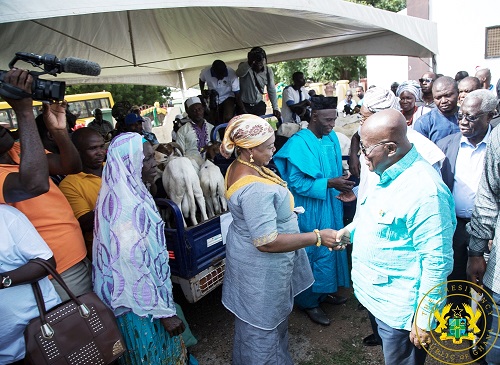
The President inspected and handed over samples of livestock to kick-start the programme.
The Public Utilities Regulatory Commission (PURC) has permitted an 8.01 per cent upward adjustment in water tariff, starting from next Monday, July 1, 2019.
The depreciation of the Cedi against the US dollar is one of the factors that accounted for the increase, according to the Executive Secretary of the Commission, Mami Dufie Ofori.
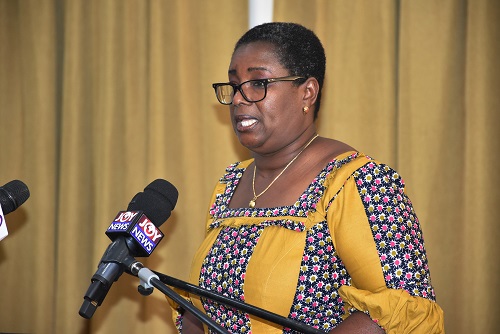
She told journalists at a media conference in Accra, yesterday that other factors that gave rise to the hike, were the projected inflation rate and growing demand for electricity and water by the citizenry.
Cost of electricity and chemicals for water treatment were also mentioned as other factors that led to the rise that comes barely three days after electricity tariff was increased by 11.17 on Friday.
“The key objective of the tariff review was to sustain the financial viability of the utility service providers as well as ensuring the delivery of quality service to consumers,” she said.
According to Mrs Ofori, the decision was arrived at after extensive technical and financial analysis of proposals from utility companies including Volta River Authority (VRA) and the Ghana Grid Company Limited (GRIDCo).
Others were the Electricity Company of Ghana (ECG), Power Distribution Services (PDS) Ghana Limited, the Northern Distribution Company (NEDCo) and Enclave Power Company Limited (EPC).
Meanwhile, the Ghana Water Company Limited is dissatisfied with the increase as it was expecting more, according to Stanley Martey, Communications Director of the company.
Despite the disappointment and the impact the recent increase in electricity would have on the company’s operations, it would cope with what the regulator had given them, he told Joy News, yesterday.
The last major tariff review in water tariff in the country was in September 2018 when the PURC ordered a 10.08 per cent tariff reduction for all GWCL customers.
This was as a result of the company’s refusal to allow the Teshie desalination plant to operate contrary to the PURC’s tariff decision, according to a statement issued by Mrs Ofori, PURC Executive Secretary.
The desalination plant had been shut down to allow for the renegotiation of the contract which was said to be costing the government GH₵6 million monthly.
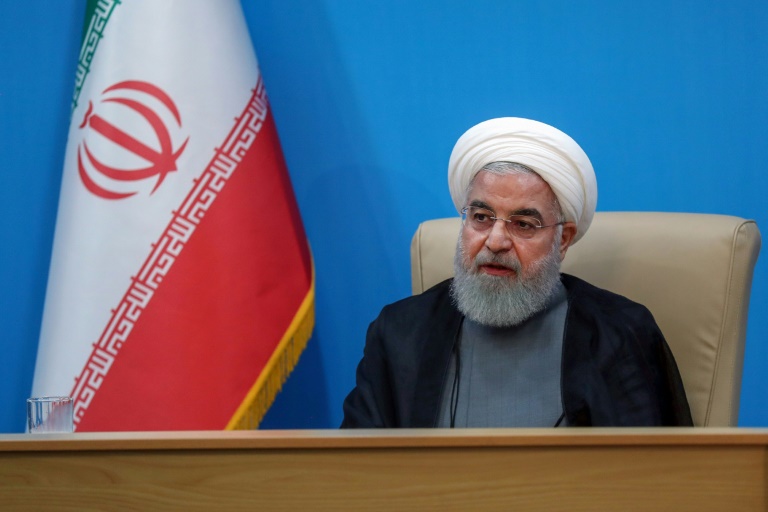
Iran’s president has responded with defiance to the latest sanctions imposed by the US, saying they show it is lying about wanting dialogue.
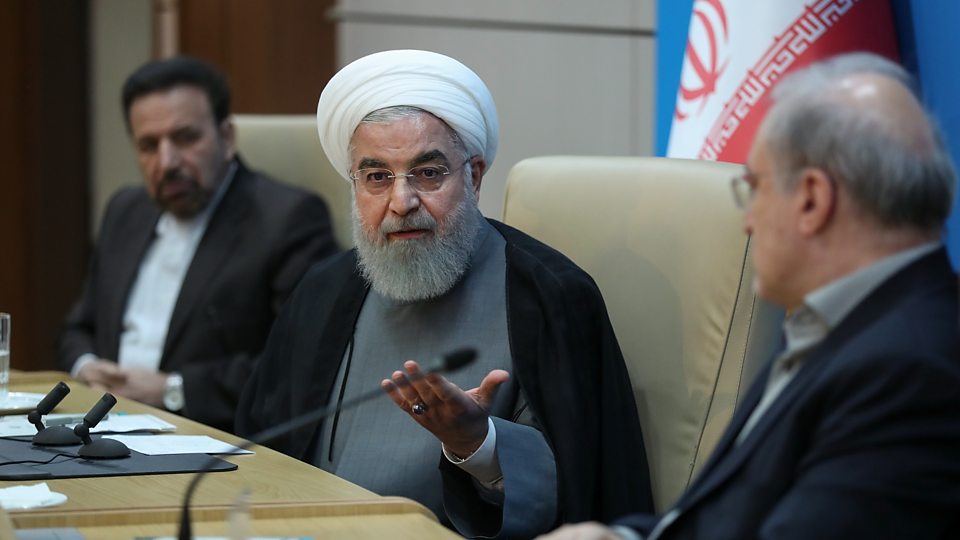
Hassan Rouhani said the measures against Iran’s supreme leader unveiled by President Donald Trump on Monday would be “useless” and denounced US plans to target his foreign minister.
The moves showed the White House was “mentally retarded”, Mr Rouhani added.
Mr Trump said he was responding to recent “aggressive behaviour” by Iran.
Last week, Iranian forces shot down a US surveillance drone that they said had violated Iranian airspace over the Strait of Hormuz. The US insisted the drone was flying over international waters.
Tensions between the two countries have escalated steadily since May 2018, when Mr Trump abandoned the landmark 2015 nuclear deal between Iran and six world powers, and began reinstating sanctions to force Iran to renegotiate the accord.
Last month, Iran scaled back some its commitments under the deal, including on the amount of low enriched uranium it is allowed to stockpile, after Mr Trump ended exemptions from US secondary sanctions for countries still buying Iranian oil.
Who do the new sanctions target?
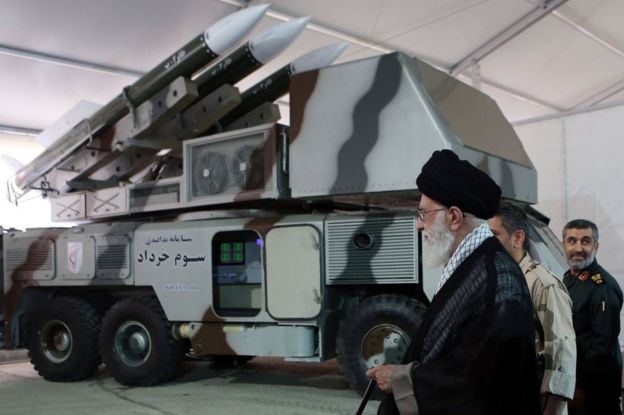
Mr Trump said the measures would deny Iran’s Supreme Leader, Ayatollah Ali Khamenei, his office, and those closely affiliated with him, access to key financial resources and support.
President Trump: “The assets of Ayatollah Khamenei and his office will not be spared”
“The supreme leader of Iran is one who ultimately is responsible for the hostile conduct of the regime. He’s respected within his country. His office oversees the regime’s most brutal instruments, including the Islamic Revolution Guards Corps,” he told reporters in the Oval Office.
Some analysts said the sanctions were largely symbolic, although the US treasury department said the measures would lock up billions of dollars in assets.
Iranian Foreign Minister Mohammad Javad Zarif – who was the country’s top negotiator on the nuclear deal – would be targeted later this week, it added.
Mr Trump said Ayatollah Ali Khamenei was “ultimately responsible for the hostile conduct” of Iran
Despite the current tensions, Mr Trump insisted he was willing to start negotiations on a new nuclear accord that would also see Iran agree to curb its ballistic missile programme and end what he calls its “malign” activities in the Middle East.
“If they don’t want to, that’s fine too. But we would love to be able to. And, frankly, they might as well do it soon,” he said.
In a televised address to a meeting of healthcare professionals on Tuesday, President Rouhani said the sanctions targeting Ayatollah Khamenei were “outrageous and idiotic”.
Iran’s economy has slumped since the US reinstated sanctions targeting its oil industry
“They said they want to confiscate the leader’s property. The leader owns a Hoseyniyyeh [prayer venue] and a simple house. Our leaders are not like the leaders of other countries who have billions of money on foreign accounts that you could appropriate.”
Mr Rouhani added that the decision to target his foreign minister proved Mr Trump did not want to talk.
“You immediately proved you were lying. You are not sincere; you are not looking to negotiate. You could have waited for a little while so that the world could believe that you were sincere.”
Iranian foreign ministry spokesman Abbas Mousavi warned that the sanctions against Mr Zarif would signal the “permanent closure of the path of diplomacy”.
A UN expert has warned of a possible “climate apartheid”, where the rich pay to escape from hunger, “while the rest of the world is left to suffer”.
Even if current targets are met, “millions will be impoverished”, said Philip Alston, the UN’s special rapporteur on extreme poverty.
He also criticised steps taken by UN bodies as “patently inadequate”.
“Ticking boxes will not save humanity or the planet from impending disaster,” Mr Alston warned.
The Australian native is part of the UN’s panel of independent experts, and submitted his report – which is based on existing research – to the UN Human Rights Council on Monday.
‘Climate apartheid’
A key warning was that the world’s poor are likely to be hardest hit by rising temperatures – and the potential food shortages and conflict that could accompany such a change.
Developing nations are expected to suffer at least 75% of the costs of climate change – despite the fact that the poorer half of the world’s population generate just 10% of emissions
How young people feel about effects of pollution and climate change
Those “who have contributed the least to emissions… will be the most harmed,” he said, warning that the effects could undo 50 years of progress on poverty reduction.
On the other hand, Mr Alston cites examples of how the wealthy in Western nations already cope with extreme weather events.
When Hurricane Sandy hit New York in 2012, most citizens were left without power, yet “the Goldman Sachs headquarters was protected by tens of thousands of its own sandbags and power from its generator.” Similarly, “private white-glove firefighters have been dispatched to save the mansions” of the wealthy.
This “over-reliance” on the private sector would likely lead to what he termed “climate apartheid” – where the rich “escape overheating, hunger, and conflict”.
Mr Alston’s report heavily criticises the lack of action, despite such warnings, over the past several decades.
‘Failure to act’
“Sombre speeches by government officials at regular conferences are not leading to meaningful action,” Mr Alston wrote in a scathing put-down of current policy. “Thirty years of conventions appear to have done very little.”
Why are governments taking so long to take action on climate change?
Among those coming in for criticism are Brazil’s President Jair Bolsonaro, for opening up the rainforest to mining, and “weakening” environmental protections.
US President Donald Trump also comes under fire – for placing “former lobbyists in oversight roles”, “actively silencing and obfuscating climate science”, and also rolling back environmental protections.
Yet Mr Alston’s scorn is not only for politicians, but also for the UN Human Rights Council to which he submitted the report.
“The Human Rights Council can no longer afford to rely only on the time-honoured techniques of organizing expert panels, calling for reports that lead nowhere, urging others to do more but doing little itself, and adopting wide-ranging but inconclusive and highly aspirational resolutions,” he wrote.
Instead, it must commission an urgent expert study on the possible options available to avert disaster, and “propose and monitor specific actions”, Mr Alston said.
Threats to democracy
There may also be wider societal implications.
The International Organisation for Migration warned in a 2014 report that estimates for migration as a result of climate change vary wildly – from about 25 million to one billion people by 2050.
Mr Alston’s report contains one estimate of 140 million displaced people in Sub-Saharan Africa, South Asia, and Latin America alone.
The women too scared to have children due to climate change
Democracy, he warned, could also be at risk as governments struggle to make major changes to cope.
“The human rights community, with a few notable exceptions, has been every bit as complacent as most governments in the face of the ultimate challenge to mankind represented by climate change,” the report said.
He said that the entire human rights community had failed “to face up to the fact that human rights might not survive the coming upheaval”.
American astronaut Anne McClain, Canadian David Saint-Jacques and Russian Oleg Kononenko returned to Earth on Tuesday after a six-month mission aboard the International Space Station (ISS).
Anne McClain, Oleg Kononenko and David Saint-Jacques – who broke the record for time spent in space by a Canadian – landed in the Kazakhstan steppe at 2:47 GMT.
Their departure for the orbital station on 3 December had been a matter of concern as he was following the misadventure that occurred in mid-October to the Russian Alexey Ovchinin and the American Nick Hague: about two minutes after their take-off, their Soyuz spacecraft had exploded and they had been forced to an emergency landing.
The two men had survived unscathed, but the incident, the first of this magnitude in the history of post-Soviet Russia, was another blow to the country’s space industry.
astronaut Anne McClain, November 2019 at the Cosmonaut Training Center near Moscow
Before their departure for space, Anne McClain, Oleg Kononenko and David Saint-Jacques were optimistic and the tone did not change during their stay aboard the Orbital Station, one of the last examples of cooperation active between Moscow and Western countries.
“A beautiful night over Africa for my last night on the ISS”, noted on Twitter Anne McClain, 40, who made two space trips during this first mission.
The ISS circling the Earth in about 90 minutes, his colleague David Saint-Jacques, 49, was able to marvel one last time of the vision of Canada before returning home. “British Columbia and Nunavik … I will miss the sight of these great Canadian landscapes!”, Tweeted the astronaut from the Canadian Space Agency (CSA).
David Saint-Jacques, who was also on his first trip, pushed back the record time spent in space by a Canadian: 204 days, against 187 for his compatriot Robert Thirsk.
– Records in series –
Russian cosmonaut Oleg Kononenko tries his suit at the Baikonur Cosmodrome before his departure for the ISS, December 3, 2018
The trio was joined in March by Alexey Ovchinin and Americans Nick Hague and Christina Koch. The latter is expected to spend nearly eleven months on the station, breaking the record for the longest space stay made by a woman, NASA said in April.
The current record is held by another US astronaut, Peggy Whitson, who spent 288 days on the ISS between 2016 and 2017.
Russians dominate the accumulation of days spent in weightlessness. On his return to Earth on Tuesday, Oleg Kononenko reached 737 days in orbit at the end of his fourth mission. At 55, he is on a mission to break the absolute record of his compatriot Gennady Padalka (879 days).
Since 2011, Russia is the only country able to send crews to the ISS. But the failure of last October, the corruption scandals in the Roskosmos space agency and the competition of the company SpaceX Elon Musk jeopardize the future of this exclusivity.
In early June, NASA indicated that it will be organizing for the first time on-board ISS tourist trips operated by Boeing and SpaceX. Estimated price for a 30-day stay: $ 58 million per passenger.
Russia has already sent seven tourists to the station and plans, according to the agency Roskosmos, resume these shipments from 2021. An agreement to this effect was signed at the beginning of the year between Roskosmos and the American company Space Adventures.
The next launch to the ISS is scheduled for July 20: it will carry an American, a Russian and an Italian.
Iran on Tuesday accused the United States of having cut “permanently” the path of diplomacy and lying about its intention to negotiate, the day after the announcement of new US sanctions this time of senior Iranian leaders whose supreme guide.
While reinforcing the pressure in an already ultra-sophisticated context after attacks of unknown origin against oil tankers and the destruction of an American drone by Iran in the Gulf strategic region, US President Donald Trump has also increased calls for direct dialogue with Tehran.
On Monday, he announced mainly symbolic sanctions aimed at the Iranian number one Ali Khamenei but also the head of diplomacy Mohammad Javad Zarif, face of the Iranian policy of relaxation with the West, considered a moderate and abhorred ultraconservatives Iran.
“At the same time that you are calling for negotiations, you are seeking to sanction the Foreign Minister! It is obvious that you are lying,” responded Iranian President Hassan Rohani.
Iranian Supreme Leader Ali Khamenei’s office showing him in a speech to commemorate the 30th anniversary of the death of Ayatollah Ruhollah Khomeini on June 4, 2019 in Tehran
Foreign Ministry spokesman Abbas Mousavi said that “imposing sterile sanctions on Iran’s supreme leader and the head of diplomacy” amounted to “permanently closing the path of diplomacy”.
Trump signed a decree preventing “the Supreme Leader, his team and others who are closely linked to him from having access to essential financial resources”. Treasury Secretary Steven Mnuchin said the sanctions would freeze “billions of dollars in assets” and that Zarif should be placed on the sanctions list “this week”.
– Moscow supports Tehran on the drone –
“Sanctions for what?” Rohani said. “To freeze the assets of the Guide? But our leaders are not like those of other countries that have billions on foreign accounts for you to punish, seize or block.” “This White House is suffering from mental disorders, it does not know what to do” !.
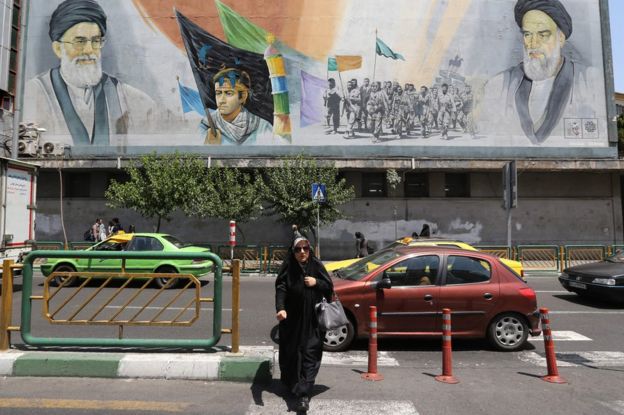
Iranian passes by mural painting of Ayatollah Khomeini (D), founder of the Islamic Republic of Iran, and his successor, Supreme Leader Ali Khamenei in Tehran, June 25, 2019
Iran and the United States broke off diplomatic relations in 1980 after the Islamic Revolution and the taking of hostages at the US embassy. An opening was made possible under the American administration of Barack Obama with the conclusion in 2015 of an international agreement on Iran’s nuclear power.
Through this pact, Tehran pledged to never seek to acquire atomic weapons and drastically limit its nuclear program in exchange for the partial lifting of international sanctions that stifled its economy.
But since coming to power, Mr. Trump has adopted a fiercely hostile attitude to Iran accusing him of seeking the atomic weapon and “sponsoring terrorism.” In 2018 he withdrew his country from the nuclear agreement and reinstated economic sanctions.
Tehran, for its part, has always denied wanting to acquire the atomic weapon.
In recent months, the standoff has escalated with exchanges of invectives, US military reinforcements in the region and especially with the destruction on June 20 of an American drone by an Iranian missile -in space Iranian air force according to Tehran, in Washington’s international airspace.
Tuesday, Russia, Iran’s ally, adopted the Iranian version, the Secretary of its Security Council, Nikolai Patrushev, saying “have information from the Russian Ministry of Defense” that the drone was well “in Iranian airspace “.
– New frictions –
Donald Trump signs the decree imposing new sanctions on Iran on June 24, 2019 at the White House
Faced with fears of a fire, Paris, Berlin, London and Beijing, stakeholders in the nuclear agreement they still defend, called for de-escalation.
In the aftermath of the drone’s destruction, Trump said he had canceled strikes against Iranian targets in extremis. According to US media, however, he has secretly authorized cyberattacks against Iran’s missile launch systems and spying network. Tehran assured that it did not suffer any damage.
On the day of the announcement of the new US sanctions, US Secretary of State Mike Pompeo made visits to Saudi Arabia and the United Arab Emirates, two oil allied states of Washington and major regional rivals of Tehran.
The attacks on oil tankers in May and June – attributed by Washington to Iran who denied – and the destruction of the drone near the Strait of Hormuz, a key crossing point for the world oil trade, pushed up oil prices. black gold and caused fears for the transport of crude via this seaway.
Map showing recent attacks in the Gulf
On Wednesday, the Security Council holds a meeting on the implementation of the Iran nuclear deal, while new friction is expected with the announcement by Iran that its enriched uranium reserves will exceed Thursday the limit provided by this pact.
Until then, the International Atomic Energy Agency (IAEA) has always certified that Iran is honoring its commitments under the nuclear deal.
Mercury continues to climb Tuesday in most of France, with more than half of the country on orange alert at two days of the expected peak of this unprecedented heat wave for a month of June.
If the weather will be still unstable in the north-west, the weather will be dry and very hot elsewhere, warns Meteo France which placed in vigilance orange 53 departments, including those of the Ile-de-France, Grand-Est, Bourgogne-Franche regions -Comté, Center-Val-de-Loire and part of the southwest.
Temperatures are still up one notch Tuesday: 34 ° C expected in Paris and Reims, 36 ° C in Nancy, Metz, Strasbourg, 37 ° C in Lyon, 39 ° C in Grenoble. The 40 ° C bar could be reached between the lower Rhone valley and alpine valleys. Wednesday, we should have 40 ° C in Besançon, Nevers, and 41 ° C in Clermont-Ferrand or Lyon.
Nights will also be hot, with temperatures not falling below 19 ° C to 23 °, even 25 in large cities. In Paris it was 22.6 ° C Tuesday at 05h.
The end of the episode, whose peak is expected Thursday and Friday, is envisaged Sunday by the northwest, a more temperate air gradually gaining the country.
Meanwhile, this heat pushes the inhabitants to look for the dark corners. Television and radio broadcast messages of caution, relayed in transport and on billboards.
– Give up the tie –
While some members of the opposition accuse the government of “doing too much”, the Minister of Health Agnès Buzyn has assumed this mobilization.
“For all those who know, obviously we do too much, but if I can avoid unnecessary deaths, I continue to communicate on prevention,” she said on LCI.
The minister explained that she would “advise” her male colleagues in the government to temporarily give up the tie.
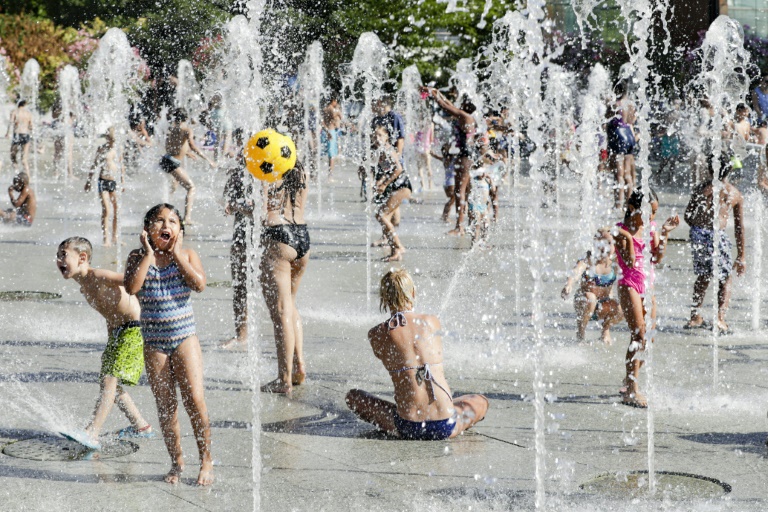
People cool off in a pool at Trocadero in Paris on June 24, 2019
“The air conditioning protects you but it participates in global warming, it uses electricity and so we have better not be too air-conditioned and change our dress code,” she argued.
According to an international study published on Monday, global warming will generate increased energy needs, especially for air conditioners, from +25 to + 60% by the middle of the century.
While the peaks of ozone pollution are favored by the heat, the Minister of Ecological Transition François de Rugy announced a reform of the triggering of alternating traffic in Ile-de-France, “automated” in case of exceeding the limit thresholds for air pollutants.
The device will be stricter, since, in addition to the vehicles Crit’Air 5 and 4, those with a vignette Crit’Air 3 (gasoline cars registered before the end of 2005 and diesel registered before the end of 2010) will not be able to circulate these days.
This new device could be tested very quickly, since the mayor of Paris Anne Hidalgo asked the prefect of police this differentiated circulation for Wednesday, which according to Airparif should see the “threshold of information of the public” reached for pollution with ozone .
On Monday, the government announced the postponement of a few days of college patent tests that were to take place on Thursday and Friday, to “ensure the safety of students.”
This heat wave from the Sahara brings back the memory of the August 2003 episode, which had generated an excess mortality of 15,000 people over more than 15 days (more than 70,000 in Europe).
This is an episode unprecedented in its intensity and precocity since 1947 and the establishment of detailed records, says Météo-France.
– Peaks everywhere –
From the middle of the week, records will be established for a month of June or “locally all months”. The hottest day will be Thursday or Friday.
The heat wave, which involves at least three days and three nights beyond a certain temperature threshold (different depending on the region), should extend beyond the weekend at least over a large half of the south-east , according to Météo-France. No region should be spared, including the northwest at the end of the week.
“Heat islands”, cities suffer particularly, because of concrete floors, the lack of trees and the intensity of human activities.
The authorities remind people of the need to drink water regularly, to wet the body and to protect the skin. The information platform “Canicule info service” is available on 0800 06 66 66 (toll free number).
Everywhere we organize. Farmers must be particularly vigilant for the health of their animals. Others fear that drought will affect fodder.
In transport, such as SNCF or RATP, this heat involves very closely monitoring equipment and infrastructure, including power cables, catenaries and tracks.
In the building industry representatives announced the shift in the hours of workers.
Cafetiers, on the other hand, smile, with a foreseeable increase in turnover of at least 30%.
Consumption of electricity will be “important”, has already warned the manager of the high-voltage network RTE, which expects a “potential peak of summer consumption Thursday at 13h”, without fear, however, a supply disruption.
With global warming, scientists anticipate heat waves two to three times more numerous by mid-century.