If you ask most experts in the cancer community, creating a wide-ranging vaccine that prevents tumors like we prevent infectious diseases is damn near impossible.
The idea may be tantalizing, but study after study over the last several decades has taught doctors that cancer is personal. Everyone’s looks different on a molecular level. And each tumor is an agile, devious adversary that mutates as it grows to outwit the human immune system.
“They may be right,” Stephen Johnston says, but “if the chance is 10% that it might work, I can’t see any reason why we shouldn’t take that chance.”
Johnston isn’t an oncologist. He’s a scientist, inventor and director of Arizona State University’s Center for Innovations in Medicine. He recently launched a clinical trial to test a cancer vaccine in hundreds of dogs across the country.
The trial will examine whether the vaccine delays or prevents a variety of cancers in healthy, older dogs. If it’s successful, Johnston says, it could lay the groundwork for developing a similar vaccine for humans.
Why dogs?
Johnston initially wanted to test the vaccine in humans, but the cost and approval process were proving to be major roadblocks. Then Johnston met veterinarian Doug Thamm. Thamm is a cancer survivor and director of clinical research at Colorado State University’s Flint Animal Cancer Center.
“Cancer is actually the leading cause of death in adult dogs,” Thamm says. “They develop these tumors spontaneously as a result of old age in a way that’s very, very similar to the way humans do.”
Staff at Colorado State University’s Flint Animal Cancer Center prepare a cancer patient named Gordon to receive chemotherapy.
Many canine cancers are also similar to human cancers on a molecular level. This has a lot to do with our shared environments, Thamm explains — we breathe the same air, drink the same water, run on lawns sprayed with the same chemicals. Thamm told Johnston dogs are also ideal for a study like this because they don’t live as long as humans, so researchers will be able to see if the vaccine works in three to five years instead of 10 to 30.
So Thamm and Johnston decided to undertake what they say is the largest interventional clinical trial ever in canines. It’s called the Vaccination Against Canine Cancer Study.
As part of the trial, veterinarians screen the volunteer participants for any health problems. Half of the dogs will receive the vaccine and the other half will receive a placebo.
Neither the owners nor the vets know which dogs are getting the vaccine, so they can’t impact the study results. The dogs will receive four doses initially, and then yearly boosters for five years as long as the study continues.
It’s a clinical trial model that’s worked before, says Dr. J. Leonard Lichtenfeld, the interim chief medical officer at the American Cancer Society. The cancer drug Imbruvica, for example, was first tested in dogs before being developed for humans.
There are two possible outcomes, says Thamm. “One is there is less cancer in the dogs that get the vaccine. That would be a huge victory.”
“A second outcome that could be, I would argue, almost as valuable, is if we delay the onset of cancer. If we have a 9-year-old dog who would normally get cancer at 10 and instead that dog doesn’t get cancer until 12, that’s two more years of healthy life that we can potentially provide.”
Of course, there’s a third possibility: that the vaccine doesn’t work at all.
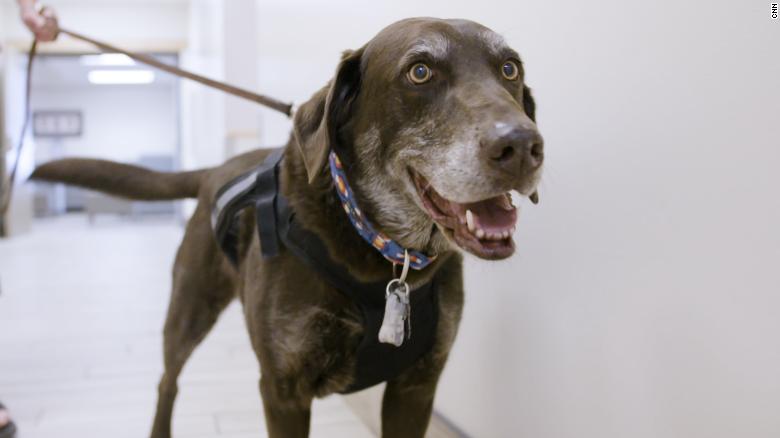
Fraser, a healthy chocolate lab, is a participant in the Vaccination Against Canine Cancer Study.
Thamm emphasizes that they are not inducing cancer in the dogs participating in the trial; the dogs will be given the vaccine and then followed in their normal environments for the next several years.
“Owners have really been overwhelmingly positive about the idea behind this trial. They, of course, loved the idea that they have the potential to participate in research that might help other dogs, and even people in the future.”
CNN reached out to PETA, People for the Ethical Treatment of Animals, which said the study appears to be similar to human clinical trials where the subjects are volunteers and allowed to continue to live in their own homes. PETA opposes experiments where animals are held in artificial conditions and then killed.
How it works
Vaccines teach the immune system to recognize dangerous invaders quickly and fight back. The same way an athlete develops muscle memory during training, vaccines help your immune system develop memory cells so antibodies can respond better and faster to antigens (any foreign cell or substance that triggers an immune response).
In other words, vaccines prepare your body so that in the case of war — your body vs. xyz infection — your body wins.
The problem with developing a cancer vaccine is that cancer cells are pretty complicated, Lichtenfeld says. They don’t look nearly as foreign to the immune system as viruses like the flu or measles do. They have multiple proteins, so it’s difficult to target specific antigens that exist across several types of cancer. And there’s obviously a big risk in giving altered cancer cells to humans.
The concept of cancer vaccines has been around for decades, he says. But they’re primarily therapeutic vaccines, given to treat patients who have been diagnosed with cancer. Therapeutic vaccines are often personalized using cancer cells from the patient to boost their immune response, so they can be expensive — often costing patients more than $100,000 for a year of treatment.
Two vaccines have also shown themselves to be effective in preventing cancer: the human papillomavirus (or HPV) vaccine, which can prevent cervical cancer, and the Hepatitis B vaccine, which can help prevent liver cancer. But those vaccines work by fighting against the viruses that cause cancer, not cancer itself.
Stephen Johnston says he hopes his cancer vaccine could cost as little as $100 per dose.
Johnston says his vaccine, if it works, would prevent a broad range of cancers from ever developing by having the immune system attack cancerous cells early. And he wants it to cost between $100 and $500, about the same as most infectious disease vaccines.
To create the vaccine, Johnston and his team screened 800 dogs who had at least one of the eight cancers most often found in canines. They identified a few hundred neoepitopes that the tumors from all eight cancers had in common and used 31 to develop the vaccine. Neoepitopes are the parts of a cancer cell that the immune system can target.
“We anticipate if we vaccinate with these 31 components ahead of time, just like an infectious disease vaccine, the dog’s immune system will be prepared — pre-prepared to see a tumor and kill it,” Johnston says.
A vial of the vaccine that the inventor says could prevent or delay many types of cancer in dogs, and perhaps eventually, in humans.
To work, the vaccine will have to train the immune system to recognize cancer cells very early.
“(Tumors) have stealthy devices; they have ways of suppressing the immune system. At an early stage, a tumor hasn’t evolved all those capabilities, so we think we have an inherent advantage by attacking very early,” Johnston says.
Even if the vaccine works in dogs, the team has a long road ahead to get approval for a human clinical trial. Animal testing is often unpredictable, and the vast majority of drugs tested in animals are never approved by the FDA for use in humans because they are deemed unsafe or ineffective.

Taking low-dose aspirin to prevent heart disease and stroke is associated with an increased risk of bleeding in the skull in people without a history of those conditions, according to a new report.
Researchers analyzed data from 13 previous studiesin which over 130,000 people ages 42 to 74, who didn’t have a history of heart disease or stroke, were given either low-dose aspirin or a placebo for the prevention of these conditions.
An aspirin is typically defined as low-dose if it is between 75 and 100 milligrams, but most over-the-counter pills are around 81 milligrams.
People who took the placebo had a 0.46% risk of having a head bleed during the combined trial periods. For those who took low-doseaspirin, the risk was 0.63%, the equivalent of an additional 2 out of every 1,000 people developing a bleed, according to the study, published Monday in the journal JAMA Neurology.
People from Asian backgrounds and those with a body mass index under 25 had the highest risk.
Taking a low-dose aspirin every day had formerly been recommended for older adults because of aspirin’s known ability to prevent platelets from forming a clot.
In people who have fatty deposits in their arteries, known as artherosclerotic plaques, the plaques can break off and trigger clotting, obstructing blood flow to the heart or brain.
Although aspirin would in theory stop this process, previous studies had offered conflicting evidence on whether prescribing it increases the risk of bleeding in the skull, the authors of the new research explained.
Three recent large studies concluded that taking a daily low-dose aspirin is, at best, a waste of money for healthy older adults. At worst, it may raise their risk of internal bleeding and early death.
In light of this evidence, aspirin is no longer recommended as a preventive measure for older adults who don’t have a high risk of or existing heart disease, according to guidelinesannounced in March by the American College of Cardiology and the American Heart Association.
“Clinicians should be very selective in prescribing aspirin for people without known cardiovascular disease,” Johns Hopkins cardiologist Dr. Roger Blumenthal, who co-chaired the March guidelines, said in a statement. “It’s much more important to optimize lifestyle habits and control blood pressure and cholesterol as opposed to recommending aspirin.
“Aspirin should be limited to people at the highest risk of cardiovascular disease and a very low risk of bleeding,” he said.
Patients should work closely with their doctors to establish their risk for bleeding, Blumenthal said. That risk rises as one ages or develops kidney disease, heart disease, diabetes and high blood pressure.
A history of ulcers or bleeding, especially in the gastrointestinal tract, or anemia are also risk factors. Certain medications, such as nonsteroidal anti-inflammatory drugs, steroids, direct oral anticoagulants and the blood thinner warfarin, can also increase the chance of bleeding.
Low-dose aspirin is still recommended for and may be lifesaving for people who have had a stroke or heart attack, according to the American Heart Association.
Because head bleeds are often catastrophic and the benefits of low-dose aspirin are not well-established, doctors should use caution when prescribing this medication to people without symptomatic cardiovascular disease, the study’s authors said.
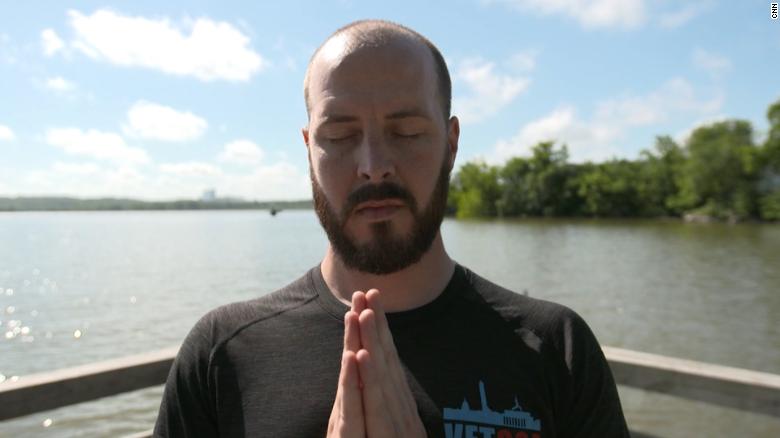
Marine Justin Blazejewski rolls out his yoga mat over a dock floating along the banks of the Potomac River. It’s a sunny weekday morning inside the DC beltway, where he lives and works as a military contractor.
“I stumbled upon yoga to save my life, basically, and I knew that I found something special,” he said. “And it’s taking me on a totally different path than I originally planned.”
After a quick warmup, Blazejewski folds over himself, the top of his head resting on the creaky boards beneath him. The soles of his feet rise into a bright blue, cloudless sky.
He lifts both arms, vertical against his torso, until he’s in a full unsupported headstand or niralamba sirsasana, as the pose is called in yoga-speak.
Justin Blazejewski in an unsupported headstand or niralamba sirsasana.
Around him, birds chirp, water laps against the rocky shore, and a raft of wild ducks floats past him. It’s a scene far removed from the brutal landscape of war that led him to this moment.
“I served in the Marine Corps for five years and worked on the president’s helicopters,” he says. “After 9/11, I joined as a contractor with a lot of different government agencies. I was traveling extensively to Iraq, Afghanistan and some other countries.”
Justin Blazejewski working as a US military contractor in the Middle East.
In order to stay alive, Blazejewski says, he internalized a “hyperarousal, hyper fight-or-flight mode” — one that constantly made him feel on high alert.
“When you’re in the middle of nowhere in Afghanistan, it’s the middle of the night, and mortars start coming in and exploding through the roof,” he recalled. “People are shooting at you, attacking you, you can’t see who’s the good guy and who’s the bad guy. You are trained to keep running into danger when the bullets are flying at you.”
For four years, he says, the stress kept piling up. He would return home to DC after months in war-torn countries, unable to switch off his fight-or-flight response.
To cope, Blazejewski turned to his passion for long-distance running and marathons.
Justin Blazejewski running a marathon before an ankle injury left him unable to run long distances.
“I’d do that alone,” he said, wanting to spare his family and friends from the dark thoughts circling his mind. “My anger issues and my reactivity and the stress from war … it was happening more and more.”
No more running
“A mortar came through the roof,” Blazejewski recalled of the night he was forced to stop running. He was in Afghanistan, working as a satellite engineer.
“We came out, and I tripped and hurt my ankle,” he said. “The next day, we had another explosion. It knocked me unconscious. I woke up and had several injuries and pieces of shrapnel in my ankle. That’s when, as a runner, it stopped for me.”
When Blazejewski returned home, a new battle awaited. The enemy: the turmoil in his own mind.
“When I couldn’t run and couldn’t deal with my stress, it was taking me to a dark place, and suicidal thoughts were creeping in, and I knew that wasn’t OK,” he said.
Justin Blazejewski as a young Marine in early 2000.
A Marine turns to yoga
Isolated from his military community and struggling with deep bouts of depression, Blazejewski contemplated suicide.
“It was a really dark time for me,” he said. “I just wanted to stay home.”
His roommate offered to take him to a yoga class, but yoga was not something Marines did.
“We consider it something only girls did and definitely made fun of it,” he recalled. “My roommate pretty much dragged me to a yoga class. I went kicking and screaming.”
In 2008, a two-hour Friday night yoga class changed his life.
“I got my butt kicked, and I was sitting in a puddle of sweat,” he said, smiling at the memory.
But it was during shavasana — a rest pose usually done at the end of practice — when Blazejewski understood what yoga could do for him.
“I felt just relaxation for the first time in over a decade,” he said. “It really was the point in my life where everything started to change and I knew there was hope out there for me.”
Blazejewski dived into his new practice with the spirit of a Marine. He went to yoga every day for six months and then enrolled in a 200-hour teacher training program in upstate New York.
“My teacher said the best thing you can do is to share the practice that you’re learning, especially in war zones,” he said. “So that’s exactly what I started doing.”
Justin Blazejewski sets his rifle and body armor next to his shrine as a way to embrace his past.
VEToga = Veterans + yoga
Blazejewski returned to his contracting work, living most of the year in forward operating bases.
“If we had firefights or anything went on that was a high-stress day, I was teaching yoga,” he says. “We were in the dirt just doing the practice, and the students were coming. Even these big Special Forces dudes were coming and like, ‘Hey, what are you doing over there?’ ‘I’m doing yoga and meditation.’ “
Blazejewski realized he had become a gateway for his military colleagues to discover the healing effects of yoga.
“I wanted to prevent suicide, and I know yoga is one of the coping mechanisms that I can teach,” he said.
So in 2015, Blazejewski created VEToga, a nonprofit that works to bring yoga, meditation and healing arts to military veterans and their families.
VEToga is a yoga program designed to build a military community around a shared yoga practice.
A yoga program for veterans
At the core of VEToga is its grueling 200-hour teacher training program designed for the military community.
For two weeks, students from all over the country converge in the DC area for 15-hour days jam-packed with lectures and workshops.
During the training, they learn how to teach to a population suffering from trauma, depression and post-traumatic stress. They also examine how to adapt poses for students with physical disabilities, injuries or prosthetics and how to integrate emotional support dogs into the practice.
“The students themselves, they don’t feel judged for having a prosthetic. They don’t feel judged for not being able to put their foot on their head. They’re just there with others like them, and they just let go, and they learn and that’s where the real yoga starts,” Blazejewski said.
“Yoga Joes” displayed on a shelf inside Justin Blazejewski’s apartment.
A military community
Navy veteran Bernadette Kilcer has been practicing yoga since 2000 and now attends one of Blazejewski’s classes.
Her yoga practice, she says, has helped her deal with trauma and resulting weight gain. But when she found VEToga, it became about being part of a community.
“It doesn’t matter if you got off of active duty yesterday or 30 years ago,” Kilcer said. “You meet a fellow veteran, and you have this instantaneous connection, and that’s what this makes this program so special.”
Blazejewski’s new mission is to have VEToga programs in all 50 states within the next five years.
Justin Blazejewski had been practicing yoga for seven years when he founded VEToga in 2015.
“My life has changed for the better, and the more people I help, the better I feel about myself,” he said. “Seeing these people, hearing their stories of how yoga saved their life over and over again, it keeps my flame lit, and it keeps me doing what I’m doing.”
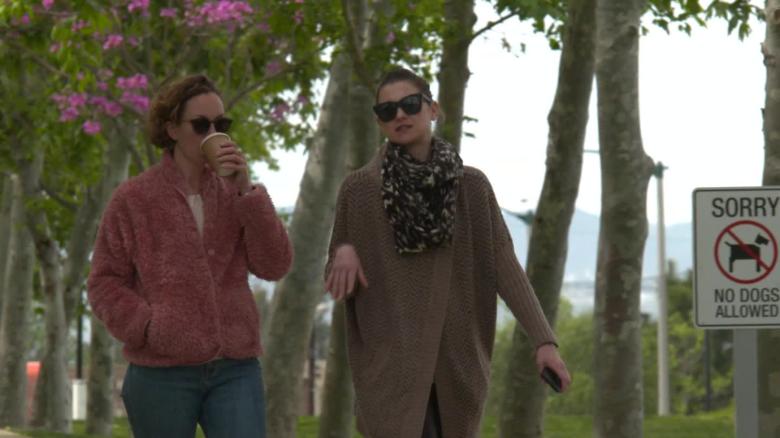
Go outside and get some fresh air! It’s something our parents told us to do as kids, and it could be just what the doctor ordered for a workforce that spends most of the day sitting and staring at screens.
One way to do it: Get out of that stuffy fluorescent-lit conference room, get on your feet, and take that work meeting into the great outdoors.
Walking meetings provide a chance to add bonus exercise (and steps, to those of you who are counting!) to your work day. And if you can do them outside, even better. Exposure to nature is a great way to get a head-clearing, stress-busting mental boost, as well.
“A lot of folks often say they don’t have time after work to go to the gym or exercise,” said Dr. Alberto Caban-Martinez, who helped conduct a walking meeting pilot study for the University of Miami’s Miller School of Medicine.
“One of the things our pilot study showed is that converting some of the time you’re at work into a walking meeting is really beneficial to cardiovascular health and, potentially, even to productivity.”
In many industries, productivity depends on creativity and walking meetings might help. Matt Jarvis, CEO of the advertising/creative agency 72andSunny, finds they make a big difference:
“Creativity and innovation really benefit from surprising leaps or lateral thoughts. One of the things that happens when you go outside and walk around, you start to collide with your environment a little bit, and it’s a great source of inspiration. I think you’re much more creative and expansive out and about than you are staring at a screen.”
It’s a thought echoed by Richard Louv, naturalist and author of “The Nature Principle.” “A little bit of nature goes further than we think it does. There are studies that show that just 10 or 15 minutes outdoors, walking through a park, there is a measurable improvement in mental attitude and psychological health.
We need nature; we need contact with the natural world, even if it’s trees around an office park.”
A walk in the park has benefits for those no longer working, as well. Another University of Miami studyfound that seniors living in the greenest parts of Miami had lower rates of chronic diseases.
“We discovered in our research that the presence of green space — trees, other forms of vegetation — were associated with lower rates of four different forms of heart disease,” says the study’s lead author, Scott Brown. “When our parents said ‘go outside,’ they might have been on to something.”
The NHS is to open its first gambling clinic for children and young people.
The National Problem Gambling Clinic will aim to offer support to addicts aged 13 to 25.
It is part of an expansion of support for those with an addiction announced in an NHS long-term plan which will see 14 clinics open around England.
The Gambling Commission, which regulates the industry, said it was essential people had easy access to support and treatment.
The parents of one young man who took his own life after battling with a gambling addiction also welcomed the announcement.
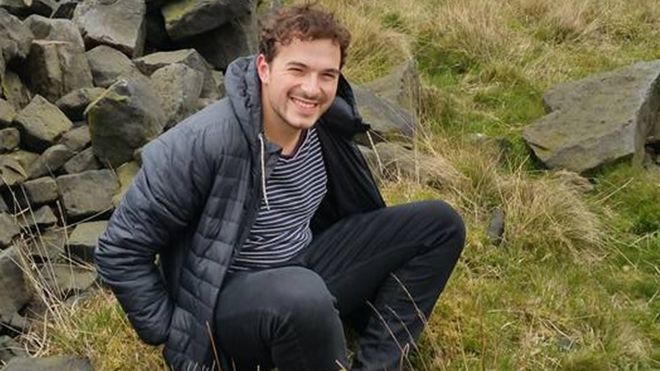
Jack Ritchie started gambling with his dinner money at the local bookies when he was 17. Seven years later, he took his own life.
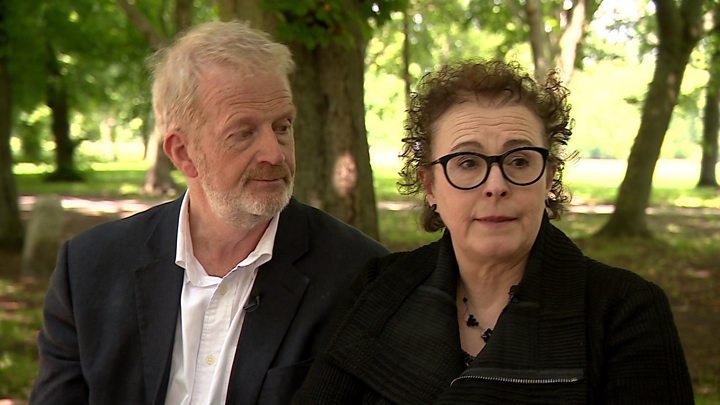
His parents Liz and Charlie, who founded the charity Gambling with Lives, say the seriousness of Jack’s situation was not recognised.
They said their son saw his gambling habit as “a bit of fun” at the beginning. But it soon got out of control.
“But in the end he thought it controlled him.”
Gambling ‘doesn’t discriminate’
Liz and Charlie Richie’s son took his own life after becoming addicted to gambling
Liz Ritchie welcomed the news of the clinic for young people. “Of course it’s wonderful. And if Jack had had a referral there, then it probably would have saved him.
“But the links to primary care are vital. Jack referred himself to his GP, but he didn’t know to refer him. So we need proper training for all our GPs.”
Henrietta Bowden-Jones, founder and director of the National Problem Gambling Clinic, said: “Gambling disorder is a destructive condition which doesn’t discriminate. It wrecks lives, pulls families into debt and can leave people feeling suicidal.”
The new clinic for young people will open this year in London as part of an expansion of NHS services across England.
Fourteen other clinics for adult gambling addicts are set to open – the first in Leeds this summer, followed by others in Manchester and Sunderland.
Until now, specialist face-to-face help has only been available in London at a clinic focused on addicts aged 16 and over.
‘Lives blighted’
Health Secretary Matt Hancock said: “I have seen first-hand the devastating impact gambling addiction can have on people’s lives and I am determined to do everything I can to help anyone affected get the help and support they need.
“We know that too many young people face their lives being blighted by problem gambling – so these new clinics will also look at what more can be done to help them.”
Mike Kenwood, director of development at GamCare – a charity providing support and advice to people affected by problem gambling, told BBC Radio 5 Live more education on the issue “is badly needed” in schools.
“In school you would have been more likely to receive education and awareness sessions around things like drugs and alcohol, safe sex, healthy eating in PSHE [Personal, Social, Health and Economic education] lessons,” he said.
“There is a broader agenda which address all those things, but gambling is missing from it.”
The teeth of people living in care homes in England are being left to rot, dentists say.
The warning comes after the Care Quality Commission found that residents did not always have access to dentists and were not getting the support they needed to look after their teeth.
Its inspectors visited 100 homes caring for elderly and disabled people.
It comes as the British Dental Association highlighted a number of distressing cases of decay and neglect.
How the vulnerable are being failed
These included a blind, 93-year-old woman with advanced dementia whose dentures had become stuck in her mouth because they had been left in for weeks and her gums had grown around them.
She was taken to A&E and the dentures had to be surgically removed.
Another case involved a woman with learning disabilities who was found to have huge amounts of decay and gum disease, including one tooth that had virtually rotted away.
It was only spotted because she had stopped eating.
Charlotte Waite, from the British Dental Association (BDA), said it was distressing that some of the most vulnerable people in society were being failed in this way.
“The teeth of many care home residents are being left to rot thanks to a system that fails to view their oral health as a priority.
“We require nothing short of a revolution in the approach to dentistry in residential homes.”
What is the problem?
The CQC report – based on visits to 100 care homes – highlighted both a lack of access to dentists and insufficient support provided by care home staff.
Around half did not provide training to their staff on oral health care, while nearly-three quarters of individual care plans did not cover oral health sufficiently.
One in six care homes also said they did not assess residents’ oral health on admission.
One in three said they could not always access dental care.
This was mainly related to the lack of specialist dental services that visit people in the community rather than expecting them to attend clinics.
Research by the BDA has found the NHS is only paying for a fraction of the services it needs.
Around eight per cent of the general population is classed as “severely limited”. Not all of these will need a specialist dental service, but many will.
However, figures obtained by the BDA under the Freedom of Information Act have suggested only one to two per cent of this population are given access to such services.
Kate Terroni, from the CQC, said the NHS, care sector and dentists needed to work together to address the problems.
She said oral health could not be treated as an “afterthought” as problems with teeth could leave people in pain, unable to eat and lacking confidence.
Google says its now accepting application submissions from news organisations in the region, the Middle East and Turkey a few months after expanding Google News Initiative (GNI) Innovation Challenge to Africa.
The GNI Innovation Challenge is inviting proposals for projects from news organisations of every size to address increasing engagement with readers and/or exploring new business models in any form such as subscriptions or membership programmes.
Traditional publishers, news startups and associations that aim to build innovative digital media projects are all eligible to apply. A panel will evaluate the submissions and fund selected projects up to $150,000 with funding for up to 70 percent of the total project cost.
Applicants can make project submissions from now until 02 September.
Namibian Itamunua Keimuine headed an 89th-minute Hakim Ziyech free-kick into his own net to gift Morocco a 1-0 victory Sunday in the opening Africa Cup of Nations Group D match.
It was cruel blow for the minnows from southern Africa, who lived up to their Brave Warriors nickname by taming the much-vaunted Atlas Lions.
Relief was etched on the face of Morocco coach Herve Renard as the final whistle blew after an unconvincing start by one of the competition favourites.
Renard is the only coach to win the Cup of Nations with two countries, guiding outsiders Zambia and previous underachievers the Ivory Coast to success between 2012 and 2015.
“We battled because of the good organisation of Namibia, the heat, and the fact that we were playing our first match,” said Frenchman Renard.
“The most important thing was to take three points and I hope Namibia will pose problems for the Ivory Coast and South Africa.”
Namibia coach Ricardo Mannetti said: “I had to comfort my players, especially the player who scored the own goal.
“I am so proud of my boys for the way they executed our tactics. Sometimes the game plan may not be nice to watch, but I was up against very experienced coach, a very experienced team.”
As the match kicked off in 36 degree celsius (97 fahrenheit) heat at the Al Salam Stadium, the bookmakers, the FIFA rankings and Cup of Nations history favoured Morocco.
Morocco are 10/1 joint fifth favourites with bookmakers to win the title, 43 years after the only time they lifted a trophy that symbolises African national team supremacy.
The Atlas Lions lie 66 places above the Brave Warriors in the FIFA world rankings and they triumphed 5-1 on the previous occasion they met, 11 years ago.
Keimuine receives a hug from Namibia coach Fillemon Kanalelo following his own goal
However, while Morocco enjoyed 60 percent possession during the opening 45 minutes in the sweltering Egyptian capital, they rarely troubled Namibia goalkeeper Lloyd Kazapua.
It was a defender, right-back Nabil Dirar, who came closest to ending the stalemate with a fiercely struck 11th-minute shot from long range that flew just over the crossbar.
This was one of six goal attempts by the north Africans during the first half, but only two were on target.
Mannetti had warned his Group D opponents before the tournament that “even small dogs bite” and his side were a calm, well-organised outfit in the first half.
The second half was a replica of the first with Morocco pressing continuously and Namibia defending with discipline and intelligence.
Renard introduced Sofiane Boufal, who played for Celta Vigo in La Liga last season on loan from Southampton, and Karim el Ahmadi in an effort to break the deadlock.
The French coach played his final card on 78 minutes, introducing Khalid Boutaib, a familiar figure to Egyptians as he plays for famed Cairo club Zamalek.
Then, with the first goalless draw of the 2019 tournament looming, Keimuine watched in horror as his attempted clearance flew into the net.
Ivory Coast face South Africa Monday at the same stadium in a Group D showdown of former Cup of Nations winners.
Africa Cup of Nations hopefuls Senegal kicked off their quest for an elusive maiden title on Sunday with a dominant 2-0 win over a Tanzania side making a first appearance at the tournament since 1980.
Senegal are tipped as leading trophy contenders alongside hosts Egypt, and the Teranga Lions proved far too strong for their opening Group C opponents despite the absence of suspended star forward Sadio Mane.
Keita Balde fired Senegal ahead on 28 minutes in front of a sparse 30 June Stadium crowd on a pleasantly breezy evening in Cairo and Krepin Diatta added a magnificent second just past the hour to seal a comfortable opening victory for the 2002 runners-up.
“I’m happy with the result. We were able to get off to a good start and begin the competition very well. The first game is always important, everyone in the tournament is up for it,” said Senegal coach Aliou Cisse, whose team face Algeria next before rounding out the group against Kenya on July 1.
“I have to congratulate the boys, they stuck to the gameplan and philosophy. It’s good for the morale and for what comes next.”
Boasting a squad comprised solely of European-based players, Cisse’s side made the gulf in class against a team featuring seven starters from the Tanzanian league markedly clear with an early flourish that saw Mbaye Niang draw a sharp stop from Aishi Manula and then flash another chance narrowly wide.
Tanzania forward Mbwana Samatta, whose 23 goals helped fire Genk to the Belgian championship this year, was left hopelessly isolated against a robust defence including Napoli standout Kalidou Koulibaly, with Cheikhou Kouyate slotting in alongside him following an injury to Salif Sane midway through the half.
Senegal soon grabbed the lead as Idrissa Gueye slid the ball across to Balde after a surge forward, the Inter Milan winger lashing home low inside the near post with Manula beaten by the pace.
– ‘Naive’ Tanzania –
Ismaila Sarr presented a constant threat down the right for Senegal and the Rennes trickster laid off for Kouyate moments later only for the substitute to scoop comfortably over.
Senegal appeared to have a second goal on 34 minutes when Sarr poked home after a fumble by Manula but the referee ruled the effort out for a supposed handball.
With Senegal ranked 22 in the world and Tanzania 131, this was on paper the biggest mismatch of the 36 first-round matches in Egypt, and only a matter of wasteful finishing spared Tanzania a heavier defeat.
Niang twice fluffed clear-cut openings to add to the advantage, failing to make any telling contact when Sarr squared to leave the forward with a relative tap-in.
It required a flash of brilliance from Club Brugge midfielder Diatta to finally give Senegal a bit of breathing space, as he connected sweetly on the half-volley to power in a second from 20 yards after a corner was only partially cleared.
Coach and former captain Cisse was told to win the competition or face the consequences when his contract got renewed, and while this was a promising start for Senegal there will be far tougher obstacles to overcome than the second-lowest ranked side in the event.
“We are not in the position to compete against Senegal based on the experience and the quality of this team,” admitted Tanzania boss Emmanuel Amunike, part of the Nigeria team that won the 1994 final.
“We made a lot of mistakes especially in the first half and we were naive.”