Home Blog Page 1343

EC to begin limited voter registration exercise June 7 to 27, 2019

0

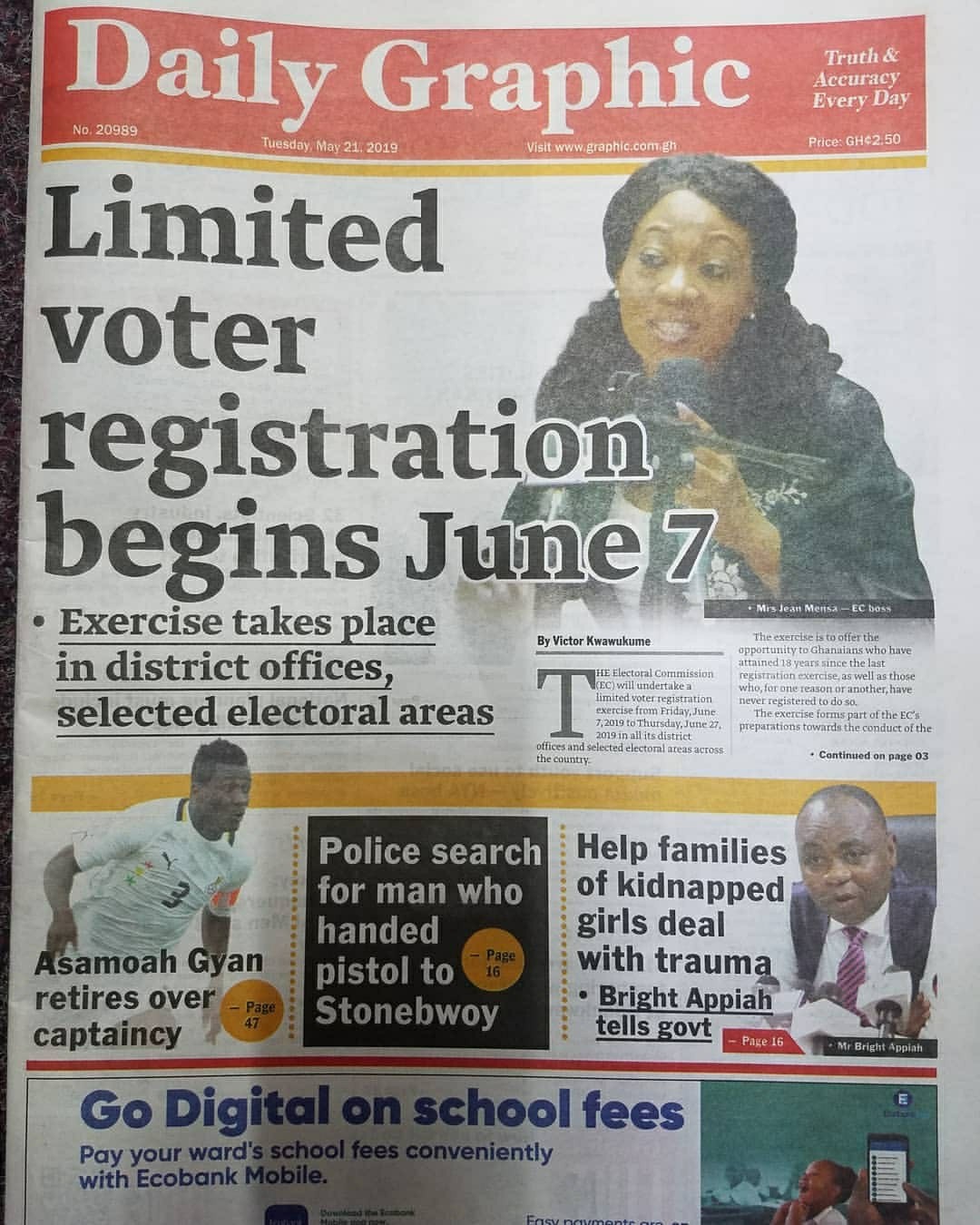
The limited voter’s registration exercise ahead of the December 2019 District Level Elections and the referendum on the election of Metropolitan, Municipal and District Chief Executives will commence on Friday, June 7 through to June 27, 2019, the Electoral Commission (EC) has announced.

The exercise, according to the election management body, will offer Ghanaians, who turned 18 since the last registration exercise as well as those who for one reason or the other have never registered, the opportunity to be registered as voters.

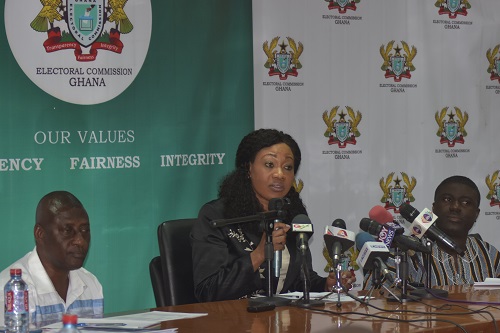
At a press conference in Accra yesterday, the Chairperson of the Commission, Mrs Jean Mensa, said: “the exercise will take place in all the district offices of the Commission using the Commission’s VMS (Voter Management System) which have been installed in the district offices of the Commission.”

Apart from the district offices of the Commission, Madam Jean Mensa said hard to reach areas would be mapped out for the exercise.

“The reason for conducting registration in the (yet-to-be) selected electoral areas is to ensure that qualified applicants located in riverine, distant and difficult to access areas who cannot take advantage of the registration at the district offices are not disenfranchised but are afforded the opportunity to register,” Mrs Mensa explained.

This approach, she said, was one of the many measures the Commission was adopting to mitigate some of the challenges associated with the exercise at the district offices.

Documents required for an applicant to make it onto the register include a Ghanaian passport, a drivers’ licence, a national identification card,  non-biometric voter’s card and a voter registration identification guarantee form that has been completed and signed by two registered voters.

Following the review of the recent limited voter’s registration exercise at the offices of the Commission ahead of the December 2018 referendum, Mrs Mensa said measures have been put in place to contain the likely challenges that may be encountered.

The measures include the provision of standby generators to power the system in case of power outages, extension of registration time beyond 6pm in the event of long queues, and a possible extension of the duration “if there is evidence that a number of Ghanaians were unable to do so for valid reasons.”

To address the challenge of insufficient VMS kits, Mrs Mensa said the number of kits expected to have high turnout have been increased from between two to eight, adding that “priority will be given to applicants who travel long distances to the district offices.”

Disclosing that the Commission had put in place a comprehensive publicity campaign to inform and educate citizens and to ensure that the exercise was successful, the EC Chair said “registration materials needed for the exercise have been procured and are ready for distribution to the regions and the districts.”

The decision by the Commission to undertake the exercise at the district level instead of electoral areas basis as the case has been in the past was met with resistance by the political parties who argued that qualified voters, especially those in rural areas, would be disenfranchised.

But Mrs Mensa said the fears of the political parties were unfounded because the Commission used the same process in the limited registration exercise ahead of the referendum that led to the creation of the six new regions but had received no complaints.

BY JULIUS YAO PETETSI                                                
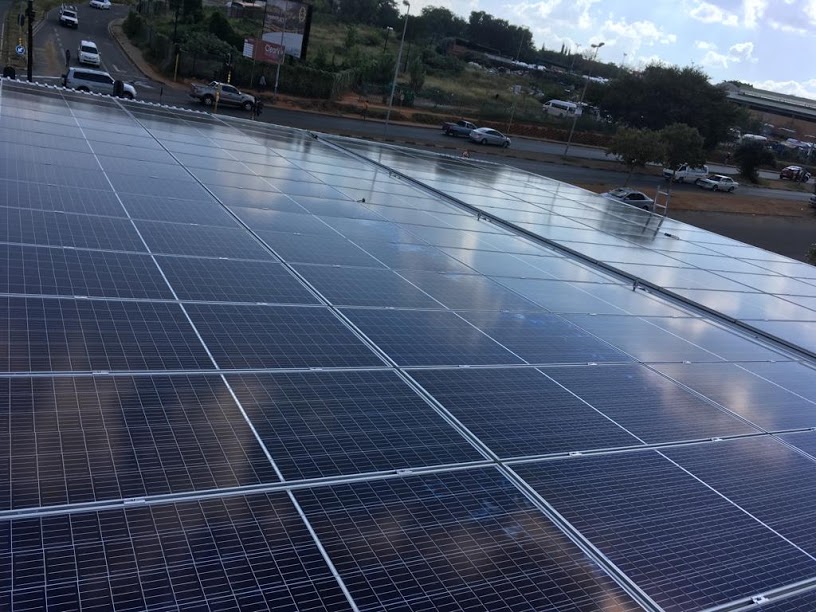
Vodacom goes solar in Randburg

0

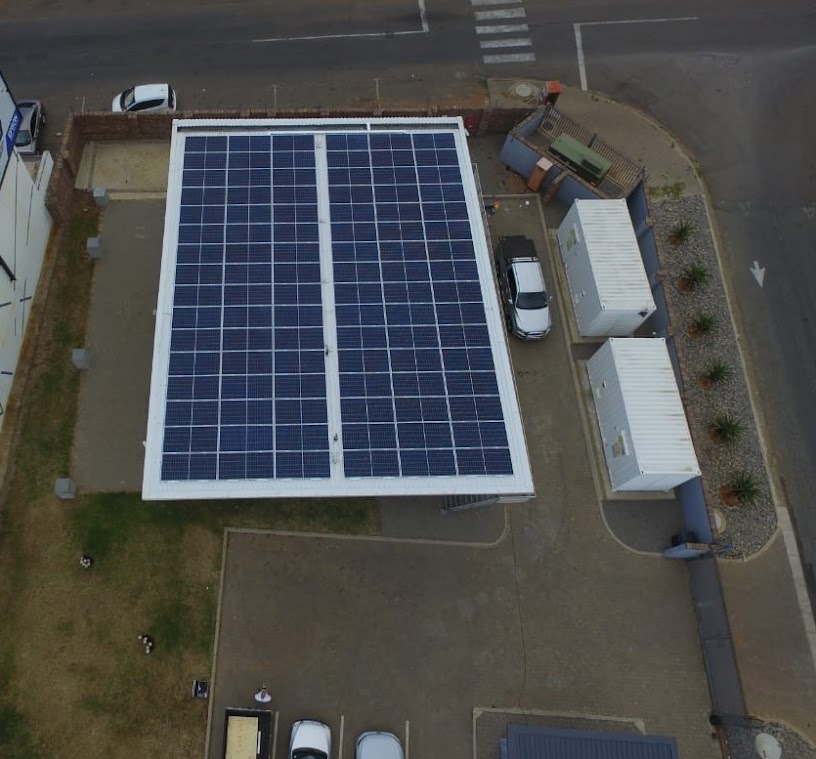
Vodacom has installed solar panels capable of generating up to 34kW of power, which will supplement the energy supply of its Randburg base station controller in Gauteng.

Vodacom says the new solar panels will help generate more than 50 000kWh of energy on an annual basis to power the Randburg base station controller. This will help reduce the telco’s carbon footprint, lower its electricity usage and reduce the base station controller’s reliance on batteries, in the event of load-shedding.

“The continuation of our investment in cleaner sources of energy shows Vodacom’s commitment to the sustainable growth of our operation and sustainability strategy where the protection of our planet remains key. In the past, we’ve installed solar panels at Vodacom offices as well as in our  infrastructure, however using solar energy to power our base station controllers is an area of opportunity for us,” says Takalani Netshitenzhe, chief officer for corporate affairs at Vodacom.

The JSE-listed operator adds that South Africa has in recent times been impacted by inconsistent supply of electricity, with capacity constraints resulting in load-shedding, which has an impact on network reliability and operational costs. It believes the most notable feature of the solar panels is its ability to reduce the load on the station controller’s batteries.

“As Vodacom continues to expand  and close the digital divide, the company’s demand for electricity will continue to rise. Therefore, it is critical that Vodacom extends connectivity and close the digital divide in a manner that is sustainable with minimal environmental impact,” the group says in a statement.

Netshitenzhe adds that Vodacom plans to rollout similar energy-saving solar power installations to base station controllers across the country, in the near future. All of which forms part of the mobile network operator’s sustainability drive to minimise its environmental impact and contribute towards the network’s goal of reducing its carbon footprint.

Vodacom currently has over 950 solar base station sites across its operations in Africa. The telco also installed the largest single rooftop solar installation at its Century City offices in Cape Town back in 2012 and Vodacom Lesotho’s head office has been powered by solar energy since last year.

The view of the Randburg solar project from above.

The view of the Randburg solar project from above.
 
 
Source : ITWeb

Govt sets up SDGs Delivery Fund

0

The government is to establish Sustainable Development Goals (SDGs) Delivery Fund (SDGDF) to raise financial resources to implement the SDGs.

Monies raised from the SDGDF will be used to finance the construction of boreholes, reading centres, technology innovation centres and other programmes to achieve the targets of the SDGs.

 The Vice President, Dr Mahamudu Bawumia who announced this at the fourth Ghana Chief Executive Officers (CEO) Summit in Accra yesterday, did not elaborate, but said; the fund would be a game-changer to meeting SDGs.

The SDGs are a global set of 17 goals which are meant to tackle poverty, hunger, promote education, gender equality by the year 2030.

Ghana adopted the SDGs in 2015 and the President, Nana Addo Dankwa Akufo-Addo has been appointed the Co-Chair of the UN Secretary-General Eminent Group of Advocates of SDGs.

The two-day programme which is being organised by the Ghana CEO Summit is on the theme “The Futuristic Economy:  Technology-Driven Future of Business and Governance for Economic Transformation.”

As part of the programme, there was the Ghana CEO Excellence Award where CEOs who have excelled in their fields of endeavour were awarded.

Dr Bawumia who delivered the keynote address said, to demonstrate the government’s commitment to implement the SDGs, the President had constituted a group of CEOs to assist to develop programmes and strategies to raise resources to finance the SDGs.

The Vice President implored the CEOs at the programme to assist the government agenda to implement the SDGs, and said he was elated some of the CEOs had incorporated the SDGs in their business development models.

Turning his focus on the programme, Dr Bawumia said it had come at an opportune time considering the events which had happened for the past 15 months and said the government was committed to driving technology and digitisation to accelerate the growth of the business as well as the development of the country.

Dr Bawumia opined that technology and digitisation were drivers of business growth and businesses needed to leverage technology and digitisation to be able to compete with their international peers.

He called for attitudinal change among the citizenry towards the deployment of technology, saying that some people resist to the deployment of new technologies.

For instance, the Vice President said when the government introduced the paperless port, it received resistance from sections of the players in the port industry who wanted the new reforms to fail.

Dr Bawumia said the government would not relent in its quest to deploy new technologies to promote the country’s economic transformation.

The Governor of the Bank of Ghana, Dr Ernest Addison who took the Outstanding Public Sector Leader Award, in his remarks lauded the organisation for the theme chosen for the programme, saying, technology remained a key driver of financial development in Africa.

He said Bank of Ghana would continue to remain vigilant to all forms of risks and vulnerabilities to the economy and will take appropriate actions to mitigate them to ensure the continued macroeconomic financial stability of the country.

The Chief Executive of the Ghana CEO Summit, Ernest De-Graft Egyir in his remarks said the programme was meant to deliberate on lingering issues affecting the development of the private sector and proffer solutions to them.

He said the programme was also to share experience and learn from the CEOs and Captains of Industries who attended the programme also to honour CEOs who were doing well in their field of endeavour.

Mr Egyir said the two-day programme would discuss technological and digital innovations and economic issues to promote the growth of the private sector and called for more incentives to drive the growth of the private sector in Ghana.

Among those honoured were, the CEO of Margins Group, Moses Baiden Jnr, who won the Life Time Business-Achiever award for technology, CEO of Interplast, Hayssam Fakhry won the CEO of the year, Manufacturing of Rubber Plastics.

The others are CEO of Reroy Cables, Kate Quartey-Papafio, CEO of the Year Electrical and Electronics,  Kwesi Agyeman Busia, CEO of DVLA, CEO of the Year Public Sector, Frank Adu Jnr, CEO of Cal Bank took the CEO of the Year, Banking Sector and Dr Daniel McKorley, Executive Chairman of McDan Group won the CEO of the Year, Shipping.

By Kingsley Asare

British Steel on verge of administration

0

British Steel is on the verge of administration as it continues to lobby for government backing, sources say.

The UK’s second-biggest steel maker had been trying to secure £75m in financial support to help it to address “Brexit-related issues”.

If the firm does not get the cash it would put 5,000 jobs at risk and endanger 20,000 in the supply chain.

Company sources said that the direction of talks with the government would become clearer in the coming hours.

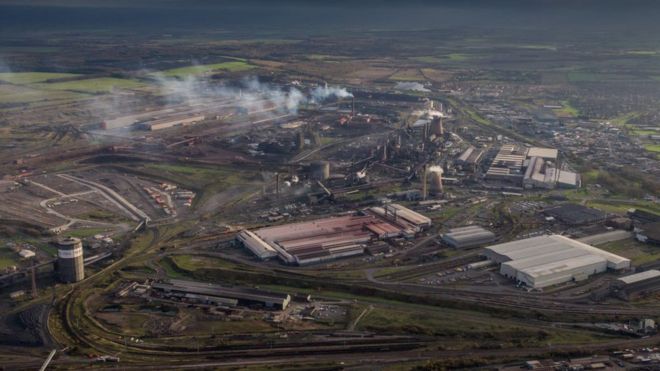
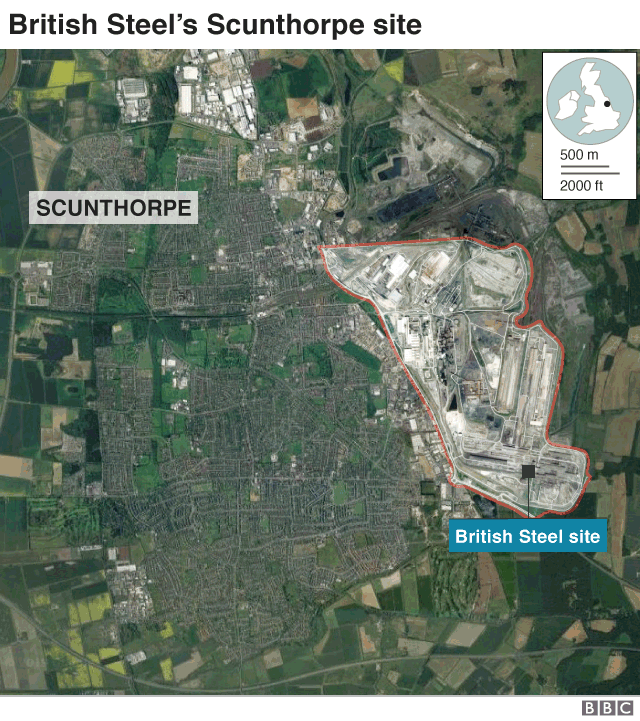
British Steel’s main plant is at Scunthorpe, but it also has a site in Teesside.

Map of Scunthorpe steel works
Presentational white space

The request for emergency financial support from the government is understood to have been reduced from £75m to about £30m.

The report said British Steel shareholder Greybull Capital and lenders had agreed to pump new money into the firm.

Unless a deal is reached by Tuesday afternoon, the firm could go into administration within 48 hours. EY would be expected to be appointed as administrators on Wednesday.

If a company goes into administration, then the insolvency practitioners appointed to run the business will try to rescue it by selling it, or parts of it, as a going concern.


But if that is not possible it will be liquidated, meaning that it will be closed down and its saleable assets will be sold.

In a statement, the Department for Business, Energy and Industrial Strategy (BEIS) said: “As the business department, we are in regular conversation with a wide range of companies.”

In April, British Steel borrowed £100m from the government to enable it to pay an EU carbon bill, so it could avoid a steep fine.

Tough decision for the government

Sources close to Greybull Capital say its lenders have told them that unless they can secure a £30m lifeline they will pull the plug on British Steel tomorrow.

The timing of this could hardly be worse for the government coming as it does right before the European elections.

Cynics might suggest that Greybull is not unhappy with the timescale of the plea.

Business Secretary Greg Clark has a very tough decision, as I’ve already written.

The question may be whether the government can put this down to Brexit mitigation and tap the same source of contingency funds Chris Grayling disastrously used to procure emergency ferry capacity.

At least there would be an immediate dividend – to stave off the collapse of a firm that employs 4,500 people directly and has 20,000 more at risk in the supply chain.

However, having already lent £100m to cover a genuinely Brexit-related carbon emissions bill – further assistance to a private company struggling in a deeply challenged industry may be a precedent they would rather not set.

Slump in orders

Last Thursday, British Steel said it had the backing of shareholders and lenders and that operations continued as usual while it sought a “permanent solution” from the government to its financial troubles.

It is understood that along with administration, nationalisation or a management buyout are being discussed as fall-back options for the company.

British Steel’s troubles have been linked to a slump in orders from European customers ‎due to uncertainty over the Brexit process.

The firm has also been struggling with the weakness of the pound since the EU referendum in June 2016 and the escalating trade US-China trade war.

One of its biggest customers is Network Rail, 95% of whose rails are supplied by British Steel’s Scunthorpe plant.

The recent history of the UK steel market goes back to 2007 when India’s Tata conglomerate entered the market after acquiring the Anglo Dutch group, Corus. In 2010 it was renamed Tata Steel Europe.

After a difficult few years and restructuring attempts, Tata pulled out of the UK steel market, selling the Scunthorpe long products division to private equity firm Greybull Capital for a nominal £1.

Greybull’s rescue came during the depths of the steel crisis in 2016 and saved more than 4,000 jobs.

It then rebranded the company as British Steel and recently returned it to profit.

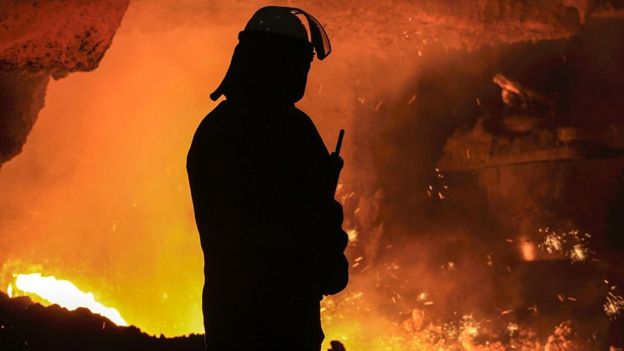
Steel production at British Steel's Scunthorpe plant

On Monday, the government, trade unions and employers signed a UK Steel Charter in Parliament. The charter calls on the government and large companies to buy British to boost UK industry.

The GMB union said it had written to British Steel on Tuesday demanding that the firm works with the government to save the Scunthorpe steelworks.

GMB national officer Ross Murdoch said: “Given this latest speculation, these are understandably extremely difficult times for our members.”

“Yesterday the government, alongside trade unions and employers, signed a UK Steel Charter at Westminster. They must now put their money where their mouth is.

“GMB calls on the government and Greybull to redouble efforts to save this proud steelworks and the highly skilled jobs.”

The shadow minister for steel, Gill Furniss, called on the government to intervene, saying the UK steel industry was critical to the UK’s manufacturing base and strategically important to UK industry.

“Administration would be devastating for the thousands of workers and their families who rely on this key industry in a part of the country which has not had enough support and investment from government over decades,” she said.

BBC

Huawei founder says US underestimates company

0

Huawei founder Ren Zhengfei on Tuesday shrugged off US attempts to block his company’s global ambitions, saying the United States underestimates the telecom giant’s strength.

Ren spoke to Chinese media days after President Donald Trump issued orders aimed at thwarting Huawei’s business in the United States, the latest salvo in a months-long effort to stop the company’s charge to the top of the leaderboard in next-generation 5G technology.

“The current practice of US politicians underestimates our strength,” Ren said, according to transcripts from state-run media.

“Huawei’s 5G will absolutely not be affected. In terms of 5G technologies, others won’t be able to catch up with Huawei in two or three years,” he said.

Last week, Trump declared a “national emergency” empowering him to blacklist companies seen as “an unacceptable risk to the national security of the United States” — a move analysts said was clearly aimed at Huawei.

At the same time, the US Commerce Department announced an effective ban on American companies selling or transferring US technology to Huawei.

– ‘Can’t be isolated’ –

US internet giant Google, whose Android mobile operating system powers most of the world’s smartphones, said this week it was beginning to cut ties with Huawei in light of the ban.

The move could have dramatic implications for Huawei smartphone users, as the telecoms giant will no longer have access to Google’s proprietary services — which include the Gmail and Google Maps apps — a source close to the matter told AFP.

Huawei under pressure


But the Commerce Department on Monday issued a 90-day reprieve on the ban on the transfer of technology by allowing temporary licences.

“The US 90-day temporary licence does not have much impact on us, we are ready,” Ren said.

Huawei has sought to ease customers’ concerns over the Google announcement.

Ren said Huawei and Google are discussing how to respond to the ban, calling the US firm a “highly responsible company”.

A company spokesman in Australia said the US actions “will not impact consumers” with a Huawei tablet or smartphone in the country, or those planning to buy a device in the future.

As for Huawei’s access to key components, Ren said half of chips used in the company’s equipment come from the United States and the other half it makes itself.

“We cannot be isolated from the world,” Ren said.

“We can also make the same chips as the US chips, but it doesn’t mean we won’t buy them,” he said.

He denied reports that German chipmaker Infineon has halted shipments to Huawei.

But analysts say the ban threatens the company’s very survival as it heavily relies on US components.

“If the ban continues, Huawei will be damaged for sure, particularly in smartphones but also in the datacenter and networking markets,” said Patrick Moorhead of Moor Insights & Strategy.

– Ask Trump, not me –

The Huawei confrontation has been building for years, as the company has raced to a huge advantage over rivals in next-generation 5G mobile technology.

US intelligence believes Huawei is backed by the Chinese military and that its equipment could provide Beijing’s intelligence services with a backdoor into the communications networks of rival countries.

For that reason, Washington has pushed its closest allies to reject Huawei technology, a significant challenge given the few alternatives for 5G.

While Australia has also banned Huawei from its 5G plans, the US has struggled to sway some countries, with Britain having reportedly approved a limited role for the Chinese company to help build a 5G network in the country.

Canada has been dragged into the battle. Its arrest of Ren’s daughter, Huawei chief financial officer Meng Wanzhou, in December on a US extradition bid linked to Iran sanctions violations was followed by the arrest in China of two Canadians, including a former diplomat.

“We sacrificed ourselves and families because we have a goal. In order to stand on the world’s summit, for this goal, there will be conflicts with the US sooner or later,” Ren said.

The battle over Huawei has added to tensions in a trade war that has escalated between the world’s top two economies, with both sides exchanging steep increases in tariffs as negotiations have faltered.

China’s envoy to the European Union, Zhang Ming, called the move against Huawei “wrong behaviour”, adding “there will be a necessary response”.

Asked how long Huawei may face difficult times, Ren said: “You may need to ask Trump about this question, not me.”

AFP

Samsung shares rise as Huawei struggles

0

Shares in Samsung Electronics climbed nearly three percent Tuesday on the back of its chief rival Huawei’s mounting problems, including a decision by Google to sever ties with the Chinese mobile phone maker.

It is the latest in the months-long saga between Huawei and the United States analysts warn could see Chinese semiconductor demand fall, threatening a nascent Asian recovery in the industry.

US internet giant Google, whose Android mobile operating system powers most of the world’s smartphones, said this week it is cutting ties with Huawei to comply with an executive order issued by President Donald Trump.

The move could have dramatic implications for Huawei smartphone users, as the firm will no longer have access to Google’s proprietary services — which include the Gmail and Google Maps apps.

Investors bet Huawei’s loss could benefit Samsung, the world’s biggest smartphone maker which has been facing increasing competition from its Chinese rival, sending its shares up 2.7 percent at closing on Tuesday.

Analysts say the US ban will damage Huawei’s ability to sell phones outside China, offering Samsung a chance to consolidate its position at the top of the global market.

“If you are in Europe or China and couldn’t use Google map or any Android services with a Huawei smartphone, would you buy one?” MS Hwang, an analyst at Samsung Securities, told Bloomberg News, adding: “Wouldn’t you buy a Samsung smartphone instead?”

Samsung accounted for 23.1 percent of global smartphone sales in the first quarter of this year, according to industry tracker International Data Corporation, while Huawei had 19.0 percent.

But Huawei’s troubles may be a double-edged sword for Samsung — also the world’s biggest chipmaker — if it leads to a plunge in demand for semiconductors.

China dominates purchases from Asian chip makers and bought 51 percent of their shipments in 2017, Bloomberg reported citing a Citigroup analysis. Including Hong Kong, it accounted for 69 percent of South Korea’s chip production.

“In our view, China’s restocking efforts for electronic goods will likely weaken and be delayed if the tensions and the ban stay longer, which likely will hurt overall demand,” the report said.

Last week, Trump declared a “national emergency” empowering him to blacklist companies seen as “an unacceptable risk to the national security of the United States” — a move analysts said was clearly aimed at Huawei.

The US Commerce Department announced a ban on American companies selling or transferring US technology to Huawei, with a 90-day reprieve by allowing temporary licences.


AFP

OECD cuts global growth forecast as US-China tensions rise

0

The OECD on Tuesday cut its forecast for the world economy, urging governments to resolve their trade disputes as the latest flare-up in the US-China trade war threatens to crimp global growth.

“Governments must act urgently to reinvigorate growth that benefits all,” the Organisation for Economic Co-operation and Development said as it pared back its forecast for global growth to 3.2 percent this year from 3.3 percent earlier.

“Resolve trade disputes through increased international cooperation while fixing the international rules-based system,” said the OECD, a Paris-based forum that advises the world’s advanced economy.

“Invest in infrastructure, digital transformation and skills to meet tomorrow’s challenges. In the euro area, combine structural with fiscal policies to stimulate activity.”

The OECD’s updated forecasts did not take directly into account the latest flare-up in the long-running trade war between Washington and Beijing, “insofar that there is still a great deal of uncertainty about the length of time (tariffs) will remain in place and the future evolution of the trade relationship between the two countries,” an OECD source told AFP.

Nevertheless, the projections did “incorporate” the increased uncertainty generated by the trade tensions, the source said.

As both Washington and Beijing slap trade tariffs on more and more of each other’s goods, President Donald Trump has barred US companies from engaging in telecommunications trade with foreign companies said to threaten American national security.

US internet giant Google, whose Android mobile operating system powers most of the world’s smartphones, then announced that it was beginning to cut ties with China’s Huawei, which Washington considers a national security threat.

OECD secretary general Angel Gurria told a news conference it was imperative that Washington and Beijing bury their differences.

“There is an urgent need that we sit around a multilateral table and that we create the conditions that will allow trade to continue to underpin global growth and global well-being,” he said.

“We have a lot of work to do, but if we do it together we will have a much better chance to succeed.”

The organisation’s chief economist Laurence Boone said the “worst scenario possible” was that trade tensions would continue and snowball.

“A climate of uncertainty (was) detrimental to investment and for confidence” and could erode purchasing power, she argued.

While the OECD pared back its global growth forecast for the current year, it predicted a pick-up in activity to 3.4 percent in 2020.

It notched up its forecast for US growth this year by 0.2 percentage point to 2.8 percent, but predicted a slowdown to 2.3 percent next year.

Chinese growth was projected to slow to 6.2 percent this year and 6.0 percent next year.

The outlook for euro area growth was unchanged at 1.2 percent this year.

AFP

Newspaper Headlines Tuesday 21st May 2019

0

[ngg src=”galleries” ids=”56″ display=”basic_thumbnail”]

Carmaker Ford announces 7,000 job cuts

0

US car giant Ford has announced it will cut 7,000 jobs globally by the end of August in an effort to save costs.

The plan will reduce Ford’s salaried workforce by 10% and will be made through both voluntary and forced redundancies, according to the firm.

Ford said the plan, which includes 2,300 cuts in the US, will save the company $600m (£471m) a year.

It is the second major US carmaker to announce redundancies, following GM which is shedding 14,000 posts.

Ford is already making cuts in Europe as part of a shake-up first revealed at the beginning of the year.

In March, Ford said it would axe 5,000 jobs in Germany, including hourly, salaried and temporary staff.

But it is not yet clear if and how the plans will affect workers in the UK, where Ford employs about 12,000 people.

Ford’s chief executive Jim Hackett said: “The total number of positions impacted in the UK is still to be determined.”

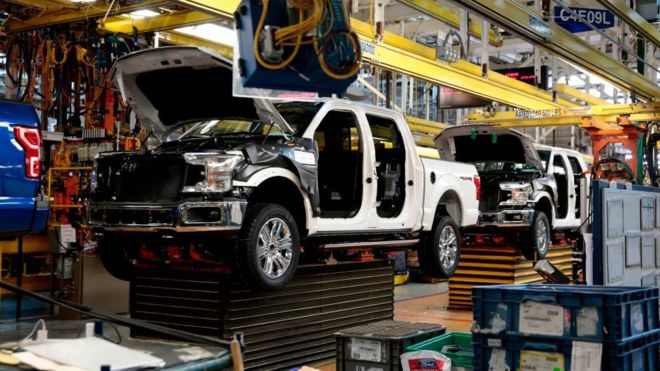
Ford production line

In a letter to workers Mr Hackett said that as part of the new wave of cuts, management positions would be targeted.

“To succeed in our competitive industry, and position Ford to win in a fast-changing future, we must reduce bureaucracy, empower managers, speed decision making, focus on the most valuable work and cut costs,” he said.

He added that the reorganization was designed to help the company create “a more dynamic, agile and empowered workforce, while becoming more fit as a business”.

When GM announced its own job cut plans in November last year, the company’s chief executive, Mary Barra, said the cuts were about making the car manufacturer “highly agile, resilient and profitable”.

Of the total 14,000 redundancies at GM, some 4,000 jobs have been lost in the US.

‘Difficult and emotional’

Mr Hackett said that due to a change in company practice, workers losing their jobs would now be allowed to stay on for a few days and bid their co-workers farewell instead of having to leave Ford straight away.

“Ford is a family company and saying goodbye to colleagues is difficult and emotional,” he said.

“We have moved away from past practices in some regions where team members who were separated had to leave immediately with their belongings, instead giving people the choice to stay for a few says to wrap up and say goodbye.”

BBC


Upset as Alonso fails to qualify for Indy 500

0

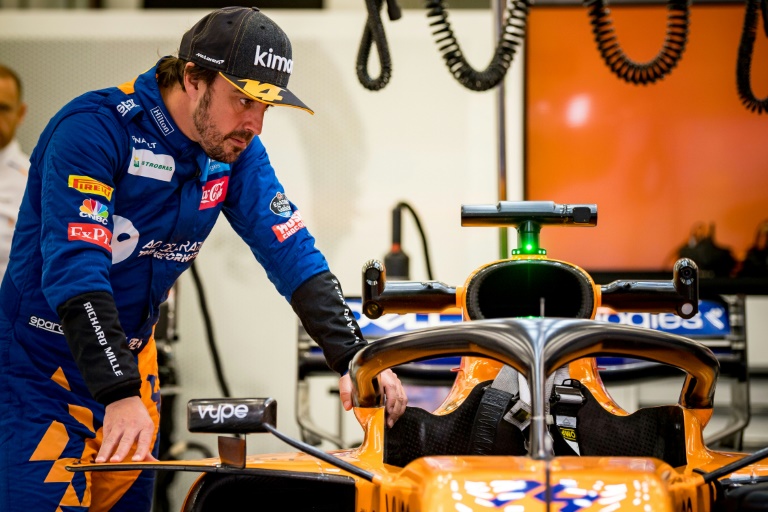
Fernando Alonso’s latest bid for Indianapolis 500 glory ended in failure on Sunday after the two-time Formula One world champion failed to qualify for the US motorsport showpiece.

The 37-year-old Spaniard was eliminated by young US driver Kyle Kaiser on the final run of the rain-delayed “Last Row Shootout” qualifying session at Indianapolis Motor Speedway.

McLaren driver Alonso had been chasing a victory at the Brickyard in a bid to become only the second driver after Britain’s Graham Hill to claim the Triple Crown of motorsport, with wins in the Monaco F1 Grand Prix, 24 Hours of Le Mans endurance and Indy 500.

But Alonso’s attempt to add the last remaining piece of the treble to his trophy cabinet was snuffed out in a dramatic qualifying session.

“This type of challenge, they can bring you a lot of success and you can be part of the history of the sport or you can be really disappointed,” he said. “Today is one of those, but I prefer to be here than to be like millions and millions of other people, at home watching TV.

“I prefer to try,” he said.

McLaren engineers had worked feverishly on the Spaniard’s car in an effort to give him a fighting chance of qualifying for next week’s race, overhauling the setup after a troubled week in Indianapolis.

The tweaks looked to have given Alonso a shot as he took to the track and posted an average time of 227.353mph for his four laps, putting him second behind Canada’s James Hinchcliffe.

However Alonso was left sweating after Sage Karam came out next and roared to the top of the six-driver session with an average speed of 227.740mph.

Karam’s time dropped Alonso down to third fastest, and with only the top three making the cut to complete the 33-car field, the Spanish star was left with a nervous wait to see if either of the two remaining drivers could better his time.

– Emotional 48 hours –

Alonso watched anxiously on a television monitor in the pits as Mexico’s Carlin driver Patricio O’Ward failed to pip him, clocking an average speed of 227.092mph.

That left Kaiser with the chance to claim a famous scalp on the final run.

The 23-year-old Juncos Racing driver from California didn’t disappoint, sweeping around with an average speed of 227.372 to edge out Alonso by the tightest of margins.

“I don’t think I can wrap my mind around what we just did,” Kaiser said afterwards.

“All the credit to the team. They’ve been working non-stop to get this car ready. I’m so proud of them, so proud of everybody that helped make this happen.”

Kaiser’s qualification had looked in doubt earlier this week, when he crashed heavily in Friday’s practice.

However he insisted he had never lost hope of being able to qualify.

“I did imagine it and I’m so happy it came to fruition,” he said. “But I knew it was going to be a lot of work and the team put in the work. It’s been the most emotional 48 hours of my life.”

In qualifying to determine the order of the first three rows on the grid, France’s Simon Pagenaud swept to pole position in the “Fast Nine” session.

Pagenaud, the 2016 IndyCar champion, gave Penske its first Indy 500 pole in seven years after he roared around with an average speed of 229.992mph.

Pagenaud claimed pole ahead of three Ed Carpenter Racing drivers, with Ed Carpenter second quickest and Spencer Pigot third fastest. Ed Jones was fourth fastest.


Source : AFP