Home Blog Page 1347

Newspaper Headlines Friday 10th May 2019

0

[ngg src=”galleries” ids=”48″ display=”basic_thumbnail”]
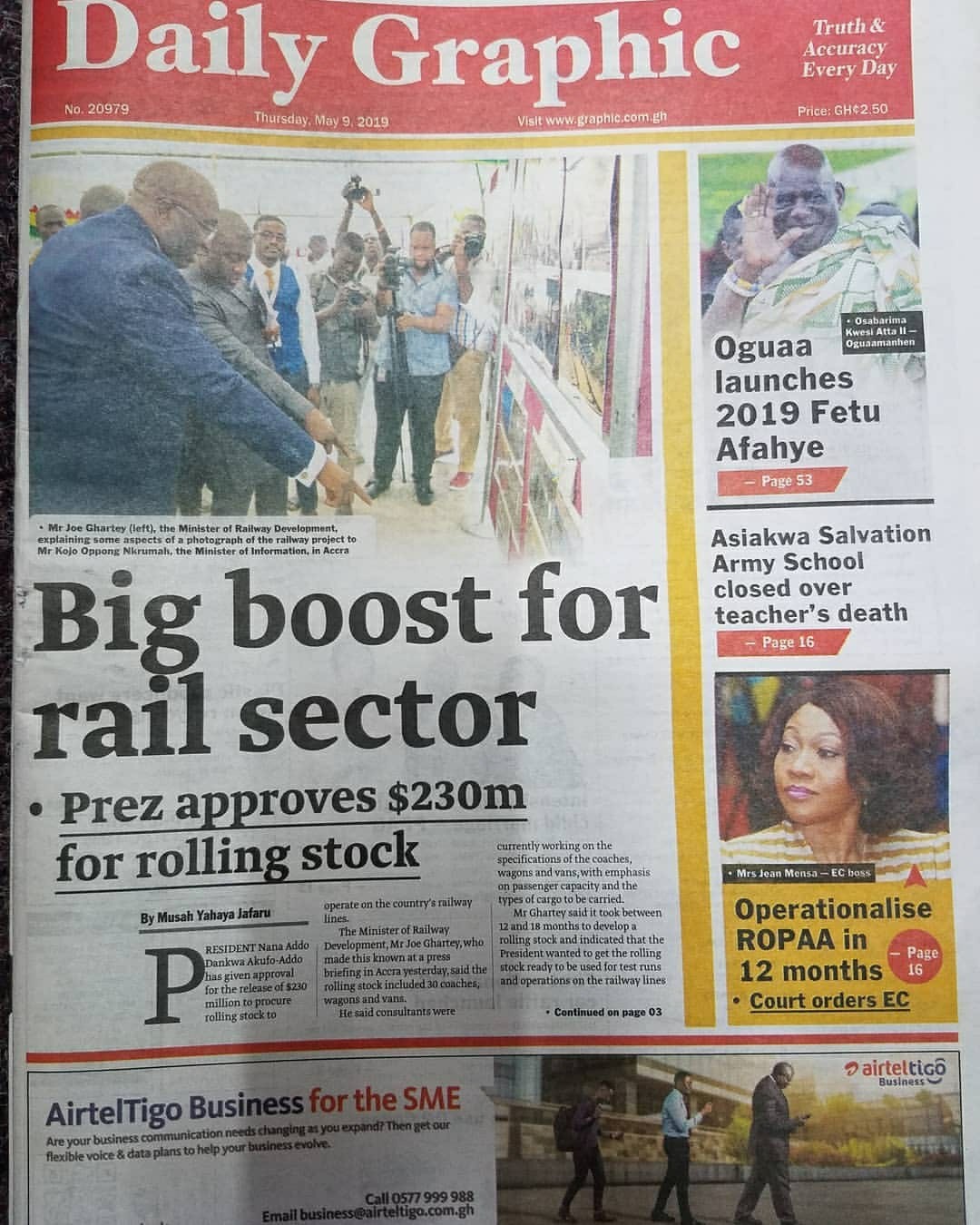
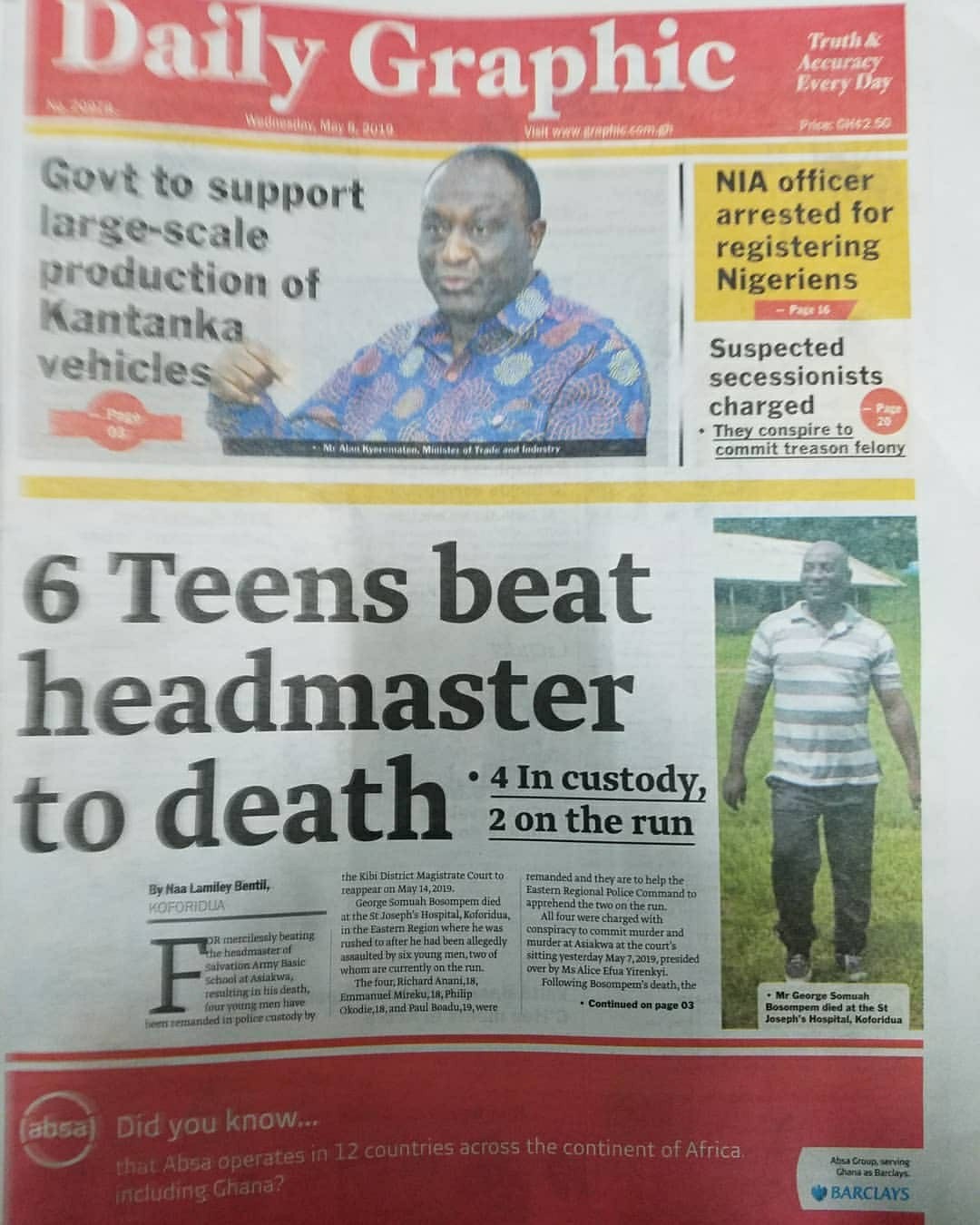
Newspaper Headlines Thursday 9th May 2019

0

[ngg src=”galleries” ids=”47″ display=”basic_thumbnail”]

Newspaper Headlines Wednesday 8th May 2019

0

[ngg src=”galleries” ids=”41″ display=”basic_thumbnail”]

Porsche fined 535 mn euros over diesel cheating

0

German sports car maker and Volkswagen subsidiary Porsche will pay a 535-million-euro ($598 million) fine over diesel vehicles that emitted more harmful pollutants than allowed, Stuttgart prosecutors said Tuesday.

“The Stuttgart prosecutor’s office has levied a 535-million-euro fine against Porsche AG for negligence in quality control,” the investigators said.

Porsche “abstained from a legal challenge” against the decision, the prosecutors office added.

Tuesday’s levy against Porsche is the latest in a string of fines against VW over its years-long “dieselgate” scandal.

The auto behemoth admitted in 2015 to manipulating 11 million vehicles worldwide to appear less polluting in laboratory tests than they were in real driving conditions.

Following fines against VW, high-end subsidiary Audi and now Porsche, no further investigations over “administrative offences” remain open against the group, a spokesman told AFP.

But legal proceedings against individuals, including former chief executive Martin Winterkorn, remain open.

Meanwhile, thousands of investors are suing the company for the losses they suffered on its shares when news of the scandal broke, while hundreds of thousands of drivers are also demanding compensation.

In its own statement, Porsche said the negligence punished by prosecutors was identified “several levels below the board”.

The firm also said that the cost of the fine was included in a provision of around one billion euros booked by the VW group in the first quarter.

So far the total costs of “dieselgate” for the Wolfsburg-based behemoth have mounted to 30 billion euros.

Shares in VW were down 2.2 percent around 2:00 pm in Frankfurt (1200 GMT) at 154.10 euros, against a DAX index of blue-chip shares down 0.7 percent.

AFP


Ethiopia clothes-factory workers ‘worst-paid in world’

0

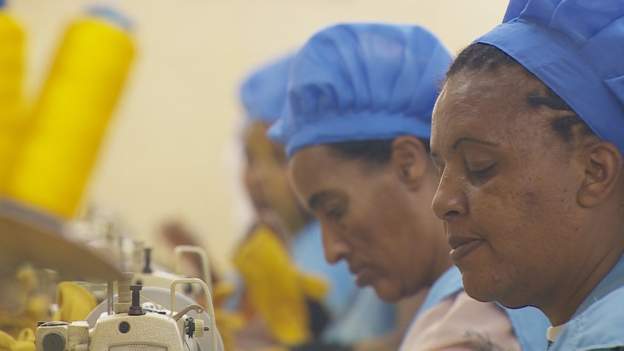
Ethiopian factory workers who make clothes are on average the industry’s worst-paid in the world, according to a new report.

“The government’s eagerness to attract foreign investment led it to promote the lowest base wage in any garment-producing country – now set at the equivalent of $26 (£20) a month,” researchers for the New York University Stern Center for Business and Human Rights found.

“On that amount… workers cannot afford decent housing, food or transportation.”

Meanwhile Chinese garment workers earn $340 a month, according to AP news agency, and those in Kenya earn monthly pay of $207.

Research focused on the Hawassa Industrial Park which employs 25,000 workers.

H&M, Gap, Calvin Klein and Tommy Hilfiger are among the brands whose items are produced there.

The report authors recommend the introduction of a minimum wage and diversifying into higher-value clothing and other manufactured goods.

BBC


Aeroflot plane crash: Pilot error theory probed

0

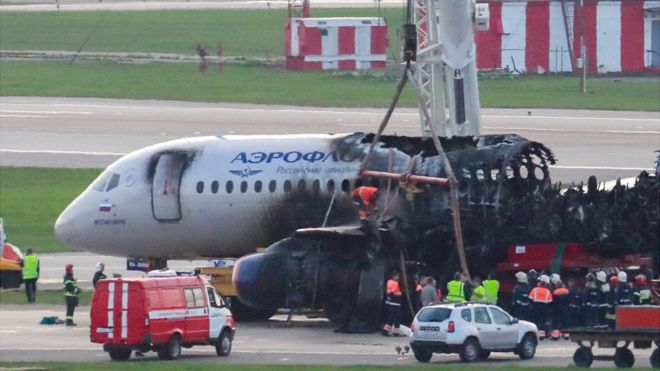
Russian investigators are considering pilot error as a possible cause of the crash which killed 41 people on board an Aeroflot airliner at Moscow’s Sheremetyevo airport.

Crew members and passengers say the Sukhoi Superjet-100 was struck by lightning in the air, which knocked out communications with ground control.

But the high-speed landing of a fuel-laden jet was not normal practice.

Meanwhile a video reveals officials joking while watching the burning jet.

It is not clear who the unidentified Russian officials are, in the clip broadcast on Twitter.

A statement from the Sheremetyevo airport management said the officials belonged neither to the airport company – called AO MASH – nor to Aeroflot.

The statement demands punishment for the officials in the clip, accusing them of breaching professional ethics.

Amid laughter one of them is heard saying “it landed all right, with a little flame” while the TV monitor shows the jet engulfed in an inferno.

The airliner made a hard landing 30 minutes after take-off on Sunday and burst into flames. It had taken off normally, bound for Murmansk in the far north.

Video showed a ball of flame engulfing the rear of the plane, but 37 people, including four crew members, managed to flee via escape chutes in the front section.
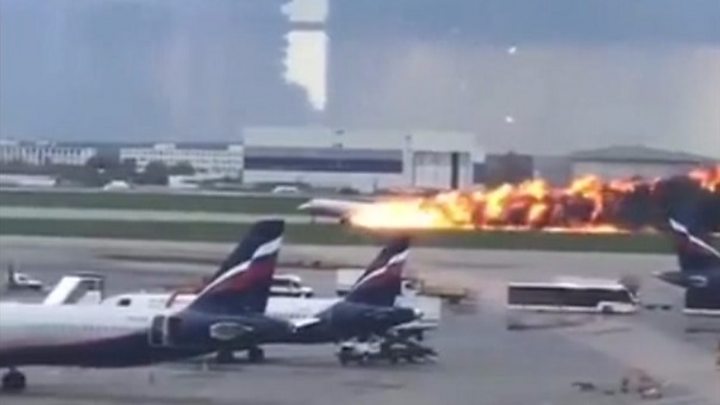
Passengers used emergency exit slides to escape and run away

Two black box flight recorders were recovered in reasonable condition, and are being examined. But the results will not be known for a few weeks.

Russia’s transport ministry has decided against grounding Superjet-100s, saying there is no obvious sign of a design fault.

But some aviation experts are asking why a lightning strike knocked out the plane’s communications – something that should not normally happen, as modern jets are designed to withstand storms.

The crash jet was relatively new, it had not had a heavy flight schedule and had undergone a routine service in April.

Kommersant daily, quoting unnamed sources close to the investigation, says pilot error is seen as a strong possibility in the crash. Several factors are under scrutiny:

  • The pilots decided to fly into a storm front, which raised the level of risk
  • They were in a hurry to land, though normal procedure is to circle over the airport first, to burn up fuel
  • They were landing on emergency control mode – requiring more skill – as automatic systems had failed
  • They appear to have exceeded the normal landing speed which, along with heavy fuel tanks, made the plane bounce off the tarmac
  • The landing impact appears to have damaged the undercarriage, sending debris flying into one or more engines, causing the deadly blaze.

Pilot Denis Yevdokimov, quoted on the Russian Telegram channel Baza, said “the fire (came) after landing, I understand… because of the landing; that was probably the reason”, and he noted that its fuel tanks were full.

Aeroflot owns at least 50 Superjets and has ordered 100 more. The planes first entered service in 2011.

There have been sporadic concerns over the reliability of Superjets. An Aeroflot internal document from February 2018 classed the type’s safety level as “average”, whereas all the airline’s Airbus and Boeing jets had a “high” safety level.

Sunday’s disaster was the first crash of a Superjet on a commercial flight. But in 2012 a Superjet on a demonstration flight slammed into a volcano in Indonesia, killing all 45 people on board. The crash was blamed on human error.
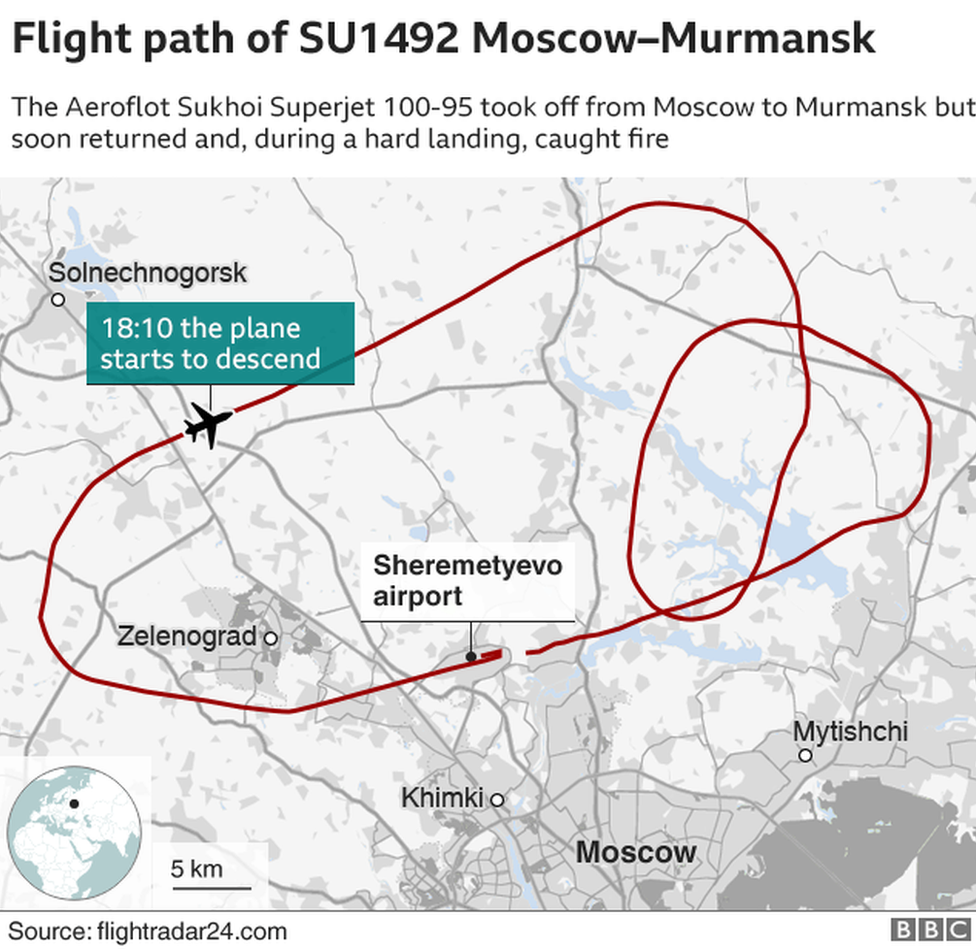

Russian plane flight map
The jet returned to the airport within 30 minutes of departing
BBC
 

Social media effect ‘tiny’ in teenagers, large study finds

0

The effects of social media use on teenage life satisfaction are limited and probably “tiny”, a study of 12,000 UK adolescents suggests.

Family, friends and school life all had a greater impact on well-being, says the University of Oxford research team.

It claims its study is more in-depth and robust than previous ones.

And it urged companies to release data on how people use social media in order to understand more about the impact of technology on young people’s lives.

The study, published in the journal PNAS, attempts to answer the question of whether teenagers who use social media more than average have lower life satisfaction, or whether adolescents with lower life satisfaction use more social media.

Past research on the relationship between screens, technology and children’s mental health has often been contradictory.

Trivial effect

Prof Andrew Przybylski and Amy Orben, from the Oxford Internet Institute at the University of Oxford, say it is often based on limited evidence which does not give the full picture.

Their study concluded that most links between life satisfaction and social media use were “trivial”, accounting for less than 1% of a teenager’s well-being – and that the effect of social media was “not a one-way street”.

Prof Przybylski, director of research at the institute, said: “99.75% of a person’s life satisfaction has nothing to do with their use of social media.”

The study, which took place between 2009 and 2017, asked thousands of 10 to 15-year-olds to say how long they spent using social media on a normal school day and also rate how satisfied they were with different aspects of life.

They found more effects of time spent on social media in girls, but they were tiny and no larger than effects found in boys.

Less than half of these effects were statistically significant, they said.

Young people laughing sitting on a bed

“Parents shouldn’t worry about time on social media – thinking about it that way is wrong,” Prof Przybylski said.

“We are fixated on time – but we need to retire this notion of screen time.

“The results are not showing evidence for great concern.”

The researchers said it was now important to identify young people at greater risk from certain effects of social media, and find out other factors that were having an impact on their well-being.

They plan to meet social media companies soon to discuss how they can work together to learn more about how people use apps – not just the time spent on them.

‘First small step’

Ms Orben, co-study author and psychology lecturer at University of Oxford, said the industry must release their usage data and support independent research.

“Access is key to understanding the many roles that social media plays in the lives of young people” she said.

Dr Max Davie, officer for health improvement at the Royal College of Paediatrics and Child Health, backed the call for companies to collaborate with scientists and called the study “the first small step”.

However, he said there were other issues to explore, such as screen time’s interference with other important activities like sleep, exercise and time with family or friends.

“We recommend that families follow our guidance published earlier this year and continue to avoid screen use for one hour before bed, since there are other reasons beside mental health for children to need a good night’s sleep.”


BBC

Newspaper Headlines Tuesday 7th May 2019

0

[ngg src=”galleries” ids=”40″ display=”basic_thumbnail”]

How Benin’s democratic crown has slipped

0

The small West African country of Benin was in the vanguard of a new wave of multiparty democracy which spread across the continent since 1991 but its most recent elections have tarnished its image, analysts say, after the opposition were barred, and the military opened fire against protesters.

What happened?

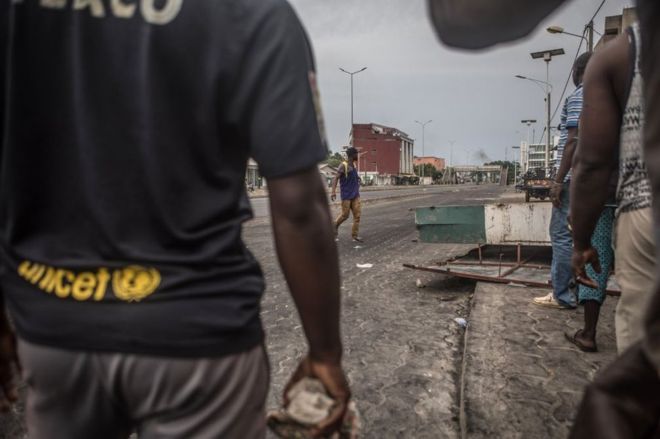
The army is still patrolling the streets of Benin’s main city, Cotonou, days after deadly force was used against protesters who had gathered close to the home of opposition leader and former President Thomas Boni Yayi.

No official death toll has been given but the opposition says seven civilians were killed.

Their anger was sparked by the exclusion of all opposition parties from parliamentary elections on 28 April. Turnout was at a record low, at only 27%.

Internet access was restricted on the day of the polls, a move that rights groups and civil society organisations roundly condemned.

“A blunt violation of freedom of expression,” is what Amnesty International called it, adding it showed an “alarming level of repression”.

“This situation did not start with the elections,” Adeline Van Houtte of the Economist Intelligence Unit told the BBC. “Over past year we have seen the constraining of civil liberties and crackdowns on protests.”

“Democracy has been planted in minds of citizens and has been for a long time, so this was a final blow. It has ruined Benin’s image at the national and international level.”

What does it mean for democracy in Benin?

After a Marxist-Leninist regime and a series of coups d’etat, Benin along with Zambia became one of the first African countries to introduce multiparty elections in 1991.

Those polls saw Benin’s former President Mathieu Kerekou become the first West African leader to admit defeat in an election.

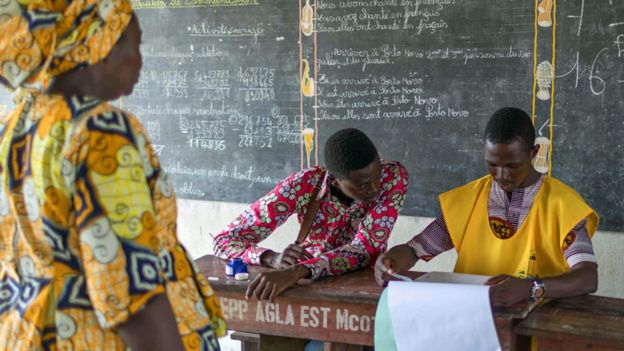
A woman arrives to vote at the Agla East State primary school in Cotonou on 28 April 2019 - Bein
Voters were given ballots which featured no opposition parties

Since then Benin has been regarded as a democratic model, said the BBC’s Rachida Yénoukunmè Houssou in Cotonou, with several African nations replicating its reconciliation body, the National Conference of Active Forces of the Nation.

But new electoral laws introduced this year mean that a political party had to pay about $424,000 (£328,000) to field a list for the 83-seat parliament.

“What’s happening doesn’t honour the democratic image of Benin,” the president, Patrice Talon, admitted on state TV in April.

“This situation brings discredit on our democracy and on me.”

Yet the presidency last week dismissed calls from the opposition to invalidate the results and start again – calls which they repeated at the weekend.

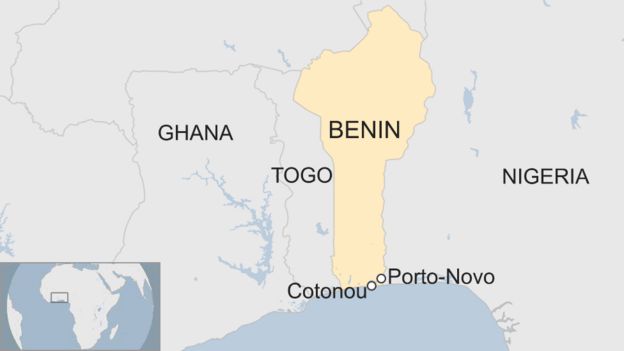
A map showing the locations of Cotonou and Porto-Novo in Benin.


Presidential spokesman Wilfried Léandre Houngbedji had labelled their actions “fear-mongering” and said the polls were conducted in line with the law, RFI reports.

Analysts say this is a turning point for Benin.

Gilles Yabi of Dakar-based think-tank Wathi, said Benin was in a “deadlock” that was tarnishing its image.

“We’re tipping over into violence,” the Beninese analyst said. “It damages the image of the country, where political dialogue meant violence was avoided in the past.

“With high numbers of people not turning out to vote, the National Assembly will lack legitimacy.”

It is also likely to see the government “ruling without checks and balances,” Ms Van Houtte of the Economist Intelligence Unit said, “opening the way for further weakening of Benin’s democratic credentials”.

“President Talon will have a free a hand now to pass through the constitutional changes that he has wanted to make over the past two years. Policy-making will be faster but on the other hand his cherished image of a modern president will be damaged.”

Why has it come to this?

Five years ago voters in Benin could chose from 20 parties for the 83 seats in parliament, AFP news agency reports.

The number of political parties has since risen to more than 200, which President Patrice Talon has sought to reduce ostensibly as part of a reformist agenda.

MPs loyal to the president initiated two laws to this end – a new electoral code and a new charter for political parties.

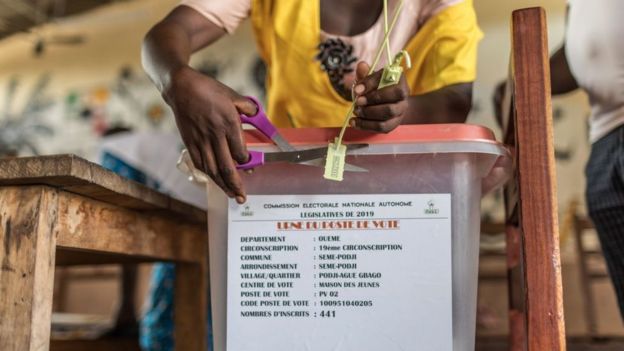
A polling official cuts the seal of a ballot box at a polling station during the elections for a new parliament in Cotonou on 28 April 2019.
The AU says the opposition ban is to blame for low voter turnout

Under these new terms, all political parties have had to file administrative documents in order to be approved by the Interior Ministry.

Only two parties met the criteria – Republican Bloc and the Progressive Union – both of which are loyal to the president.

All the others were deemed inadmissible and so excluded from the legislative elections.

Opposition figures said it showed that President Talon simply wanted control over parties and institutions.

The African Union observer mission concluded that the “apathy of the Beninese people” was a result of the opposition ban.

US Ambassador Patricia Mahoney said the polls were “neither fully competitive nor inclusive and do not reflect the Benin that we know”.

Who are the political rivals?

Former President Thomas Boni Yayi and President Patrice Talon are old friends, said the BBC’s reporter in Benin.

Nicknamed the “king of cotton” thanks to the wealth he amassed in that sector, former businessman Mr Talon financed Mr Boni Yayi’s successful 2006 and 2011 presidential campaigns.

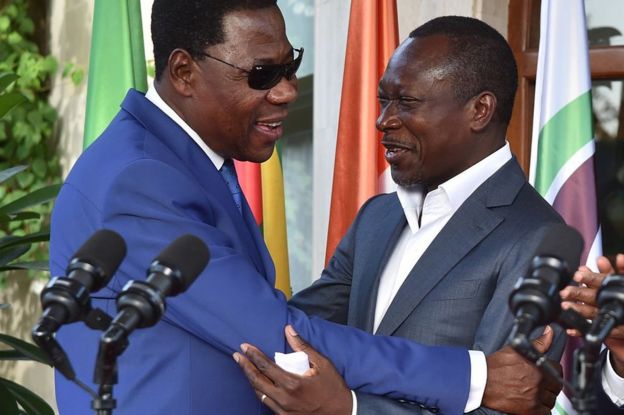
Former Beninese president Thomas Yayi Boni (L) embraces Benin's newly elected President Patrice Talon following a reconciliation meeting hosted by the Ivory Coast at the presidential residence in Abidjan, on 18 April 2016.
President Talon (right) and former President Yayi Boni have had a roller-coaster relationship

But relations between the two men had soured by the time of President Yayi’s second term in office.

First, a corruption scandal saw Mr Talon accused of misappropriating more than 18.2m euros ($20.4m; £15.5m) in 2011, then a year later, the businessman fled to France and was linked to a plot to poison President Yayi.

France resisted an extradition order. But Mr Talon was later pardoned by the president in 2014, paving the way for his return to Benin.

However, Mr Talon harboured political ambitions and their apparent reconciliation didn’t last long.

There were fears that Mr Yayi would defy constitutional term limits and stand for a third term in office.

But in the end he didn’t, and the 2016 presidential election saw Mr Talon defeat Mr Yayi’s preferred candidate Lionel Zinsou.

Now in opposition, Mr Yayi has been at the forefront of the demands to re-run the latest parliamentary elections, along with another former President, Nicéphore Soglo.

What does the future hold?

With the election results validated by the constitutional court, MPs are to be formally sworn in on 15 May.

The opposition maintains that the results should be annulled and the elections re-organised. But so far their calls have been ignored by Mr Talon’s government.

“According to the courts in Benin they [the polls] were in conformity with electoral law,” said Ms Van Houtte of the the Economist Intelligence Unit.

“That’s not something anyone outside the country can do anything about – other than condemn the use of force against protesters and the internet shutdown.

“Anything else would be seen as interference.”

Nestlé Nigeria shows 5.2% growth Q1 2019

0

Nestlé Nigeria has announced its financial results for the first quarter of 2019, posting revenue of N71.0 billion, recording growth of 5.2% over the previous year.

Gross profit for the period stood at N 31.5 billion, compared to N 25.8 billion during the previous year. The company posted a net profit of N 12.8 billion as compared to N 8.6 billion during the same period of the previous year.

In the first quarter of 2019, Nestlé Nigeria continued its emphasis on creating demand as well as strengthening brand loyalty programs to increase market penetration. The company also continued to focus on Creating Shared Value for society and its shareholders by delivering high-quality nutritious products to consumers and contributing to the growth of the local economy through local sourcing and increasing access to clean drinking water in the communities where it operates.

www.nestle-cwa.com