Home Blog Page 1348

Here we go again: Earth’s major ‘mass extinctions’

0

Whether humanity has pushed the planet into a “mass extinction” event may be a matter of definition, but by any measure the rate at which life-forms are disappearing is deeply alarming, scientists say.

“In each of the five previous mass extinctions, we lost about 75 percent of species,” said Robert Watson, head of the UN science panel on biodiversity, which unveiled a grim assessment of the state of Nature on Monday.

Over the last several centuries Earth has lost about two percent, and so — by that criterion — remains far below the threshold, he told AFP.

But if one looks instead at the rate at which species are dying off, the picture becomes bleaker.

Currently the pace of extinctions is up to several hundred times greater than the average over the last ten million years, the new report concluded. At that rate, we could hit the 75 percent mark within a couple of hundred years.

Here are Earth’s biggest die-offs over the last half-billion years, each showing up in the fossil record at the boundary between geological periods.

– Ordovician extinction –

When: about 445 million years ago

Species lost: 60-70 percent

Likely cause: Short but intense ice age

Most life at this time was in the oceans. It is thought that the rapid, planet-wide formation of glaciers froze much of the world’s water, causing sea levels to fall sharply. Marine organisms such as sponges and algae, along with primitive snails, clams, cephalopods and jawless fish called ostracoderms, all suffered as a consequence.

– Devonian extinction –

When: about 375-360 million years ago

Species lost: up to 75 percent

Likely cause: oxygen depletion in the ocean

Again, ocean organisms were hardest hit. Fluctuations in sea level, climate change, and asteroid strikes are all suspects. One theory holds that the massive expansion of plant life on land released compounds that caused oxygen depletion in shallow waters. Armoured, bottom-dwelling marine creatures called trilobites were among the many victims, though some species survived.

– Permian extinction –

When: about 252 million years ago

Species lost: 95 percent

Possible causes: asteroid impact, volcanic activity

There have been five mass extinction events on Earth over the last half-billion years. We could be entering the 6th, scientists say

The mother of all extinctions, the “Great Dying” devastated ocean and land life alike, and is the only event to have nearly wiped out insects as well. Some scientists say the die-off occurred over millions of years, while others argue it was highly concentrated in a 200,000-year period.

In the sea, trilobites that had survived the last two wipeouts finally succumbed, along with some sharks and bony fishes. On land, massive reptiles known as moschops met their demise. Asteroid impacts, methane release and sea level fluctuations have all been blamed.

– Triassic extinction –

When: about 200 million years ago

Species lost: 70-80 percent

Likely causes: multiple, still debated

The mysterious Triassic die-out eliminated a vast menagerie of large land animals, including most archosaurs, a diverse group that gave rise to dinosaurs, and whose living relatives today are birds and crocodiles. Most big amphibians were also eliminated.

One theory points to massive lava eruptions during the breakup of the super-continent Pangea, which might have released huge amounts of carbon dioxide, causing runaway global warming. Other scientists suspect asteroid strikes are to blame, but matching craters have yet to be found.

– Cretaceous extinction –

When: about 66 million years ago

Species lost: 75 percent

Likely cause: asteroid strike

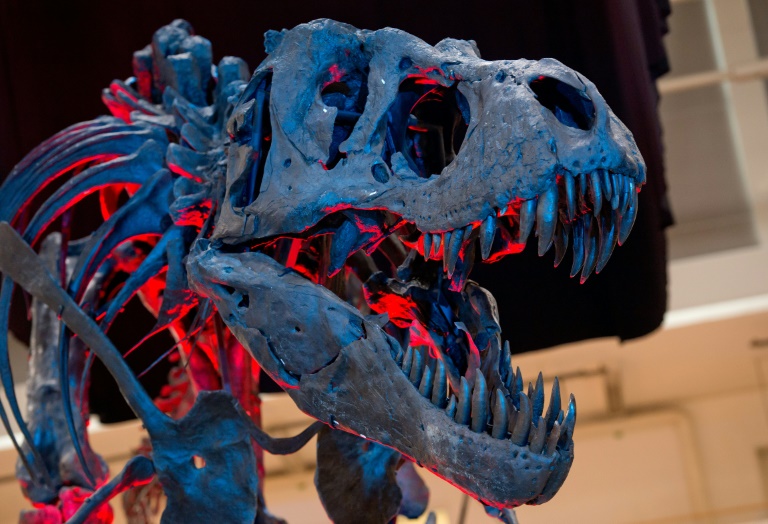
A space rock impact is suspect No. 1 for the extinction event that wiped out the world’s non-avian dinosaurs, from T-Rex to the three-horned Triceratops. A huge crater off Mexico’s Yucatan Peninsula supports the asteroid hypothesis.

But most mammals, turtles, crocodiles and frogs survived, along with birds as well as most sea life, including sharks, starfish and sea urchins. With dinosaurs out of the way, mammals flourished, eventually giving rise to the species — Homo sapiens — that has sparked fear of the sixth mass extinction.

SOURCES: Peer-reviewed studies, National Geographic, Encyclopaedia Britannica, AFP

GRIDCo assures public of power supply

0

The Ghana Grid Company Limited (GRIDCo) says it is in discussions with all stakeholders to address all existing challenges confronting the country’s energy sector.

This was contained in a statement signed and issued by Helena Asante, Head of Public Relations, GRIDCo, in Accra on May 3.

The statement was on the back of comments by President of the Senior Staff Association (SSA) of GRIDCO,  Raphael Kornor,  during the May Day celebration on Wednesday, that if the government fails to heed to a two-week ultimatum to settle the outstanding arrears, the country was likely to experience power outages.

“The monies that are owed GRIDCo up to 2017 fall under Energy Sector Levy Act (ESLA), Electricity Company of Ghana (ECG) and VALCO take a majority of our power, and the government promised to pay these debts under the legacy debts so these things are having a serious effect on our operations.

By May 15, we are expecting to hear something or else we have other options on the table and we will make sure that the government listens to us,” he said in an interview on Joy FM in Accra.

 “All that we are saying is that government give us our money. We are viable and we need our monies to facilitate our operations. We are doing ad hoc maintenance instead of routine and it all borders on cash flow. We have about fourteen thousand (14,000) transmission towers, over 200 high capacity transformers which need to be maintained at periodic intervals and for us if these things are not done, it has a ripple effect on the delivery of our services,” he continued.

However, the statement from the management of GRIDCo allayed fears of regular power outages stating that “there is no cause for anxiety since the reliability of electricity supply is delinked from the sentiments expressed by the SSA.

It assured all stakeholders and the public that “we will continue to discharge our mandate to manage the National Interconnected Transmission System (NITS) to ensure reliable electricity supply.


BY TIMES REPORTER

Edwin Blankson inducted as Chief Fire Officer

0

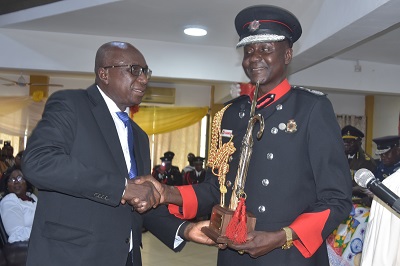
The Ghana National Fire Service new Chief Fire Officer (GNFS), Edwin Ekow Blankson, was on Friday inducted into office at a ceremony in Accra, where he pledged to exert all effort in his service to the country.

He said he would bring his 30-year experience in the GNFS aboard to transform the service into a world class, one that is capable of providing efficient emergency response and fire protection services.

CFO Blankson, the 13th CFO of the GNFS, was appointed by President Nana Akufo-Addo on September 7, 2017 after his predecessor, CFO Dr Albert Brown Gaisie retired. He was confirmed in January this year.

Prior to this appointment, the 57- year- old, was the Director of Operations of the service after servicing in various offices, both regional and national, since he was enlisted on December 1, 1989.

At the ceremony, the CFO swore the vows of service administered by the GNFS chaplain, Rev DOIII Erzoah Amihere and received symbols of office including a ring, Bible and an axe, which symbolised loyalty, wisdom and strength.

The Minister of the Interior, Mr Ambrose Dery, who presented the CFO to the chaplain for the vows of office, also presented him a ceiling hook, another symbol of office.

Delivering an address, CFO Blankson categorised his vision into five; human resource capacity building, acquisition of modern equipment, personnel welfare, professionalism and occupational health and safety.

On capacity building, he said the service had already signed memoranda of understanding (MoU) with the Forensic Science Department of the University of Cape Coast, University of Energy and Natural Resources to upgrade skills of personnel in fire investigation and disaster management.

He said the GNFS was seeking private partnership to assist the service to build a modern Fire Service college to serve Ghana and the sub region as well as upgrade facilities at the service’s academy.

CFO Blankson announced efforts to procure two hydraulic platforms and protective clothing to boost safe firefighting, establish fire stations and clinics in each region, as well as launch its five-year strategic plan.

Promising not to disappoint President Akufo-Addo for the appointment, he called for support from personnel of the service and his associates outside the service to enable him to succeed.

Delivering the sermon titled ‘Called to serve’, Rev DOIII Amihere asked Mr Blankson to be guided by his Christian principles and be selfless in service. He advised GNFS personnel to eschew sycophancy and support their CFO.

CFO Blankson, who hails from Cape Coast in the Central Region, is an alumnus of the University of Cape Coast, where he graduated with a Bachelor of Arts Degree and Diploma in Education.

Aside several professional qualifications, he holds a graduate certificate and Diploma in Management from the Australian Institute of Business and an MBA from the same institution.

Among dignitaries who graced the occasion were Central Regional Minister, Kwamina Duncan, Osabarima Kwesi Atta II, and Paramount Chief of Oguaa traditional area and representatives of sister security agencies.

BY JONATHAN DONKOR

Sukhoi Superjet 100: chequered past of Russian aviation hope

0

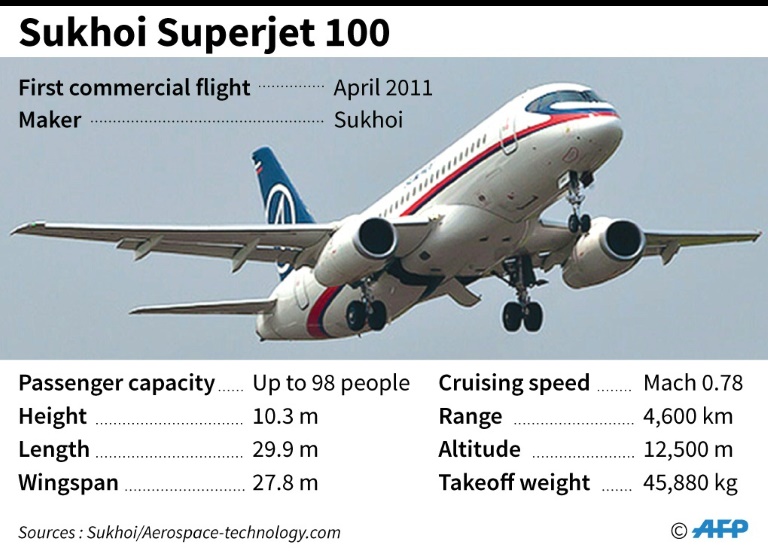
Russia’s Sukhoi Superjet 100 was the country’s first post-Soviet passenger plane and intended to revive the civil aviation industry but it was dogged with problems from the start.

Here is an overview of the jet involved in a runway blaze in Moscow on Sunday in which 41 people died:

– Great expectations –

The mid-range airliner made its first commercial flight in 2011. Ahead of its launch, Sukhoi said it was aiming for 20 percent of the global market in regional passenger planes.

Sukhoi, part of state corporation Russian Technologies, is renowned for military planes.

The giant holding traces its history back to the 1930s in the Soviet Union and is based in the remote far eastern city of Komsomolsk-on-Amur.

The Superjet is produced in partnership with Italy’s Alenia Aermacchi, which is part of the aerospace and defence giant Finmeccanica.

Carrying up to 98 passengers for distances of up to 4,600 kilometres (1,800 miles), it was designed to compete with similar aircraft produced by Brazil’s Embraer and Canada’s Bombardier.

– Setbacks –

Soon after its launch, a Superjet performing at an Indonesian air show in 2012 slammed into a volcano, killing all 45 on board, in a crash Indonesia blamed on pilot error.

The planes have also experienced technical mishaps from the start including problems with landing gear and Russia’s aviation agency has periodically grounded them.

The few international airlines that ordered the plane have complained of problems with getting spare parts in time and the plane has come to be seen as unreliable.

The planes are still flown by Mexico’s low-cost Interjet but have been dropped by Ireland’s CityJet, which also leased planes to Brussels Airlines.

– Aeroflot connection –

National carrier Aeroflot came under heavy pressure from the government to add more Russian planes to its fleet and the plane is also used by several regional Russian airlines.

“Billions of dollars have been invested in this project and continue to be invested,” said aviation expert Boris Rybak of Infomost Consulting airline consultancy.

“The vast majority of these planes are in service in Russia… Aeroflot now has 50 Superjet-100s and it has signed a contract for 35 more.”

The fleet also includes Airbus and Boeings and Russia’s flagship airline has had an excellent safety record for the last two decades.


Source : AFP

YIEDIE beneficiaries call for project extension

0

Beneficiaries of the Youth Inclusive Entrepreneurial Development Initiative for Employment (YIEDIE) project have called for the extension of the 2020 deadline for the project to enable others to benefit from it.

They described the project as a very important intervention in helping the youth to achieve their dreams and also contribute towards socio-economic development.

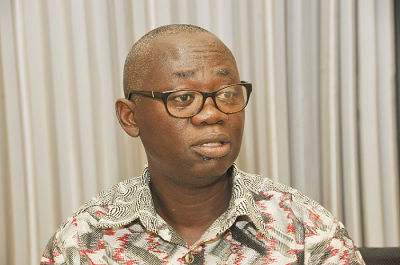
“The programme has been very helpful to the youth. I never thought of owning my own company but with the help of the YIEDIE, I now have my own business,” Muratu Mohammed, a beneficiary said.

Speaking at an awareness creation fair held by YIEDIE at Kumasi she said she had established her own tiling business and engaged about four people.

She encouraged the youth not to sit idle but join the YIEDIE programme to build their skills and play an active role in Ghana’s construction sector.

YIEDIE is a five-year project designed to improve the capacity of the youth and service providers across the construction value chain through an integrated youth-led market systems model to create economic opportunities for youth and women in the construction industry.

YIEDIE hopes to directly reach 23,700 youth aged between 17-24 years who have dropped out of school living on less than $2 a day in Accra, Kumasi, Sekondi-Takoradi, Tema and Ashiaman with training in technical, life and entrepreneurship skills leading to employment.

Sponsored by Mastercard Foundation, the YIEDIE Project which ends in 2020 is being implemented by Global Communities, an international non-profit organization, with other partners as Opportunities Industrialisation Centre (OIC) Ghana, African Aurora Business Network LLC, Republic Boafo Limited and Artisans Association of Ghana.

Robert Kyei Bafour, another beneficiary based in Kumasi was full of praise for the project saying it had transformed his life.

“I’m appealing to the managers of this project to extend the date for the end of the project because there are a lot of my colleagues who will be interested in benefiting from the project,” he said.

Addressing the scores of youth who attended the fair Mr Paul Twene, Capacity Building and Training Specialist, Global Communities said the rationale behind the fair was to create an opportunity for the youth to interact with successful businessmen and women within the construction sector with similar backgrounds and past graduates of the project to boost their interest in the sector.

The fair also sought to provide the platform for interested youth to be enrolled on the project and for the project to showcase its achievements over the past years to the public.

He encouraged the youth to take advantage of the numerous job opportunities in the construction section to build their skills and create their own businesses to address the growing unemployment situation in the country.

He said the construction sector was booming in the country and there were a lot of job openings in the sector, which the youth could take advantage of to improve their lives.

Dr. Emmanuel Ampoma Afum, lecturer, Electrical Engineering, KNUST urged the youth to take advantage of the project to build their capacity in the construction sector.

By Kingsley Asare

GES clarifies tax deduction on academic intervention fund

0

The Director General of the Ghana Education Service (GES), Professor Kwasi Opoku-Amankwa, has clarified that all payments in relation to the academic intervention (Extra Classes) released by the government are to attract tax deduction of 10 percent.

According to him, the monies were to be deducted by the paying officers at the individual schools and remitted to the Ghana Revenue Authority at the end of all payments.

The government has released GH¢56million to cater for the cost of the academic intervention (extra classes) organized for students in public Senior High Schools (SHS) in the country.

The amount was for the first semester of the 2018/2019 academic year and also covered the cost of the special intervention made for final year students whose date of reopening was brought forward to January 5 from 25 to enable them to prepare adequately for their final examination.

However, the disbursement of the monies to individual beneficiaries had generated some level of the furor, following some 10 percent deduction by some bursars at some of the schools as withholding tax.

Speaking to the Ghanaian Times in Accra on a revised disbursement plan, Prof. Opoku-Amankwa said the new plan had become necessary to bring clarity on how the funds were to be disbursed and also address some of the nagging issues that had emerged following the release of the money by the government.

He said the formula for disbursement still remained 80 percent for teaching staff while the remaining 20 percent was for non-teaching staff.

In addition, he explained that 60 percent of the amount for the teaching staff was to be shared equally among all teachers, after which 20 percent of the amount would be disbursed, based on the number of contact hours spent by a teacher with the students.

“The remaining 20 percent of that of the teaching staff is reserved for the heads of the various schools and it must be disbursed in a hierarchical order to cover the head teacher, assistant head teachers, senior housemasters, and mistresses in that order,” he added.

For non-teaching staff, he said 50 percent of the 20 percent allocated to them was to serve as the base rate for all beneficiaries with priority given to the kitchen staff

Prof. Opoku-Amankwa said the GES had so far disbursed GH¢52.6million to the schools which had submitted all the necessary documentation for payment out of the GH¢56million, stressing that “Some of the schools have not submitted the necessary documentation but their monies would be released to them immediately they satisfy the necessary preconditions.”

Last year, the government announced an academic intervention grant of GH¢50 per student as part of measures to replace fees for extra classes and other learning initiatives required to be paid by parents.

The intervention was to ensure that no student was denied access and also serve as an incentive for the teachers in the improvement and access to quality and equitable education for all.

Furthermore, the government had also cleared the capitation grant and Senior High Schools (SHS) Technical Vocational Educational Training (TVET) subsidy of GH¢8.6million and GH¢28 million which had been outstanding since 2016 respectively.

BY CLIFF EKUFUL

VEEP CUTS SOD FOR CONSTRUCTION OF ULTRAMODERN TAMALE MILITARY SPORTS COMPLEX

0

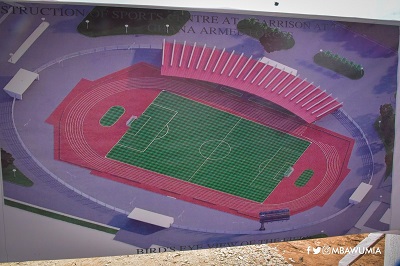
Vice President Dr Mahamudu Bawumia at the weekend broke grounds for the commencement of the construction of an ultramodern military sports complex for the Sixth Garrison Battalion in Tamale in the Northern Region.

Vice President Dr Bawumia (second from right) being briefed on the project

The project, which is expected to be completed in 13 months is to cost about GH¢15 million.

Speaking at the sod cutting ceremony here in Tamale, the Vice President indicated that similar sports complexes would be constructed in all garrisons across the country.

He explained that the provision of such facilities at garrisons across the country was in line with the government’s policy to transform the security services into world-class security institutions.

Dr. Bawumia added that it was the government’s intention to provide the various security agencies with modern tools and infrastructure to enable them to be on top of their duties at all times.

He explained that the government`s quest to pursue this policy direction has already executed a number of projects such as the Barracks Regeneration Project, Phase One, which he said was about 90 percent complete.

The Minister of Defence, Dominic Nitiwul, stated the government’s commitment to improving the welfare of the military personnel in the country.

He said the construction of sports complexes across the garrisons was the beginning of many more facilities to be provided for the personnel.

Mr. Nitiwul entreated the consultant to ensure that the contractor provided quality of work and complete it on schedule.

Mr. Salifu Saeed, Northern Regional Minister on his part, pledged that his outfit was ready to supervise the project to ensure the quality of work.

He advised the contractor to follow strictly to specifications of the project.

The project consists of four main sections namely; the stadium, gymnasium, the outdoor courts and the external facilities including gardens.

It is expected to have a total capacity of 5,000 people.

FROM YAKUBU ABDUL-MAJEED, TAMALE

Upgraded Ghana Cedi notes out today

0

The newly upgraded Ghana Cedi will be put into circulation for business across the country today.

Embedded with new security features, the new banknotes, according to the Bank of Ghana (BoG) were meant to curtail counterfeiting and also introduce modern features in the currency.

The banknotes which have seen an upgrade are the One, Five, Ten, Two and Fifty Cedis notes.

Among the visible security features on the new currencies are a watermark, which has the image of Tetteh Quarshie with a cocoa pod in the plain start area of the banknote, security threat – which is a shiny broken line that runs through the banknote from top to bottom, colour changing spark live – which can be seen as a cowrie shell on the GHȻ10, a start on the GHȻ20 and a cocoa pod on the GHȻ50.

There is also  “a see-through feature which is the denomination value partially seen on both sides of the banknote in a white circle in the plain start area and a gold stripe, which is a golden stripe with gold bars at the bank of the banknote that runs from top to bottom”.

Information provided by the Currency Department of the BoG said the banknotes were being upgraded to incorporate modern and improved features to make them more secure and durable as well as improve machine readability of the currency.

The department said the existing notes would remain a legal tender and shall be accepted for all business transactions even when the enhanced banknotes were put in circulation.

It said the upgraded notes would be of the same sizes and colors as the corresponding denominations of the existing ones.

When the Ghanaian Times asked whether the existing notes should be exchanged for the upgraded banknotes, the department responded in the negative, saying, “There will be no need for exchange.”

The department explained that the commemorative banknotes – GHȻ2 and GHȻ5 with the portrait of Dr Kwegyir Aggrey were not part of the upgrade.

A shoe seller at the Kwame Nkrumah Circle, Yaw Asamoah when asked for his view on the decision of the BoG to upgrade the Cedi, said he was not aware the BoG was upgrading the Cedi notes.

 “My concern is about the measures government and BoG will put in place to ensure the stability of the Cedi so that prices will be able and people can buy to make my business thrive,” he said.

A food vendor at Gakorpe, Ms. Mercy Mawunyo for her part said she had heard the upgraded currency would come into circulation today and was eager and yearning to see the security enhance currency.

She said the new notes would address the current problem facing food vendors when customers purchased food with torn and tattered money.

By Kingsley Asare 

Source: Ghanaian Times

Asantehene rallies international support for ‘Ghana Beyond Aid’

0

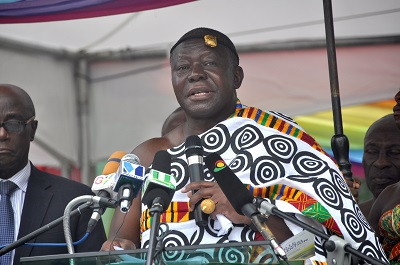
The Asantehene, Otumfuo Osei Tutu II, has called on the international community to support the government’s efforts to ensure ‘Ghana Beyond Aid’ becomes a success.

He said ‘Ghana Beyond Aid’ was not for the faint-hearted, but “it is bold, brave, a vision that deserves support, not only from Ghanaians but from all her friends across the world.”

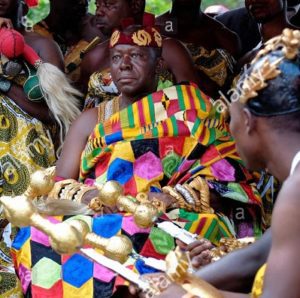
Otumfuo Osei Tutu ll Asantehene

He assured the international business and investment community that ‘Ghana Beyond Aid’ is a policy beyond political conflict and the world can buy into it without fear of uncertain political risks.”

In what appears to woo the international community, the Asantehene said “I will remind you that Ghana is one African country so richly endowed that it once bore the name Gold Coast.”

“And even after centuries of exploitation, the mineral wealth of this country is incalculable and still crying out for development.”

Otumfuo Osei Tutu was addressing a forum dubbed, “World-meets-in-Ghana investors and executive dinner ball”, on Friday, at the Manhyia Palace.

About 31 embassies and high commissioners in Ghana, coupled with several high profile government officials, top business entities both local and foreign, were present.

It was organised by E on 3 Group, a Ghanaian business solution provision company, as part of activities marking the 20th anniversary of the enstoolment of the Asantehene.

Among the embassies and high commissioners, were Angola, Burkina Faso, Brazil, Canada, China, Cuba, Colombia, Czech Republic, France, Germany, Latvia, Norway, Netherlands, United Kingdom and South Africa.

According to Otumfuo, any part of Ghana has vast opportunities for lucrative investment and wealth creation, and stressed: “our emergence as an oil producing nation has added strength to our economy without taking our attention away from other sectors of the economy.”

He, further, mentioned the vast bauxite resources at Nyinahin that are due for exploration soon with the huge potential for related industries, with agriculture also presenting incalculable possibilities.

The Asantehene noted that Ghana’s economy might not have performed to the optimum of expectations with all the shifts and turns on the political landscape, yet “it has remained relatively resilient.”

“Our 60-year history as an independent sovereign nation is plastered with painful scars of the consequences of our failure to manage our resources with prudence and integrity”

“But, practically every region of Ghana, from the Savanna in the North to the fertile forests in Ashanti, and the rest of the southern regions, we have all the possibilities for creating the granary of the sub-region, to feed ourselves, our industries and to increase our export earnings,” he underlined.

The Asantehene explained that for Ghana to move from Highly Indebted Poor Country (HIPC) to the status of a middle-income country in less than a decade” tells you that we have what it takes to break the mold of dependency and achieve the goal our leaders have set for us”.

Though he realized there had been an explosion of high-level investment in modern shopping malls, expansion and modernization of traditional markets, the Asantehene noted such had been filled almost entirely with imported goods which had been the underlying cause of the constant pressure on the value of the cedi, as more and more shop owners sought foreign exchange to import goods for their shops.

And, wished it should be more appropriate to find ways of injecting more resources to stimulate industrial and agricultural production in the country.

FROM KINGSLEY E.HOPE, KUMASI

Newspaper Headlines Monday 6th May 2019

0

[ngg src=”galleries” ids=”39″ display=”basic_thumbnail”]