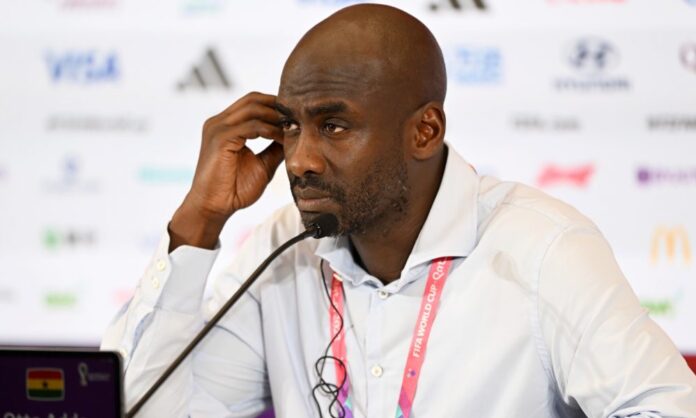
The Ghana Football Association (GFA) is set to decide the fate of head coach Otto Addo following Ghana’s shambolic performance in the 2025 AFCON qualifiers.
Ghana endured a winless campaign, finishing bottom of Group F with just three points from six games. A narrow 1-0 loss to Angola, a 1-1 draw with Niger, and back-to-back struggles against Sudan highlighted a grim qualifying journey. Angola topped the group with 14 points, while Sudan and Niger secured second and third spots with eight and seven points, respectively.
After a crushing 2-1 defeat to Niger at the Accra Sports Stadium, Ghanaians demanded Addo’s resignation. However, the embattled coach dismissed the public outcry.
“I’m not the person who can resign. If I had done this, I’d never have become a player or even a coach,” he said.
“If you know where I have come from as a person to arrive at this job you won’t even ask about resignation.
“People shouting and telling me to resign can’t affect me.”
The GFA’s crucial meeting on Wednesday will determine whether Otto Addo remains at the helm or makes way for new leadership. Ghanaians and pundits await the decision that could reshape the nation’s football future.
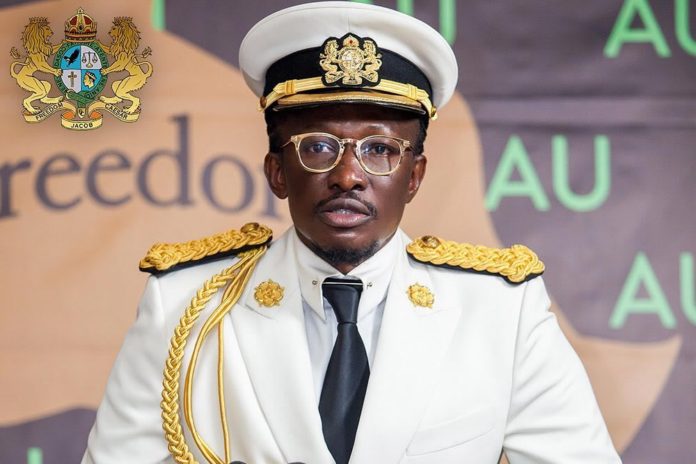
The Founder and Leader of the New Force Movement, Nana Kwame Bediako, says his organisation is not a political party, but a movement he established to change the fortunes of Ghana.
The presidential candidate has recently intensified his campaign, touring every region to share his vision for the country’s future.
During his “276 Tour” of the Central Region over the weekend, Mr Bediako, popularly known as Cheddar, visited Swedru, where he told his supporters, “I do not represent any political party; neither is New Force a political party. It is a powerful movement aimed at dismantling the political system that has caused hardship, economic decline, and sleepless nights for Ghanaians.”
According to him, he wants Ghanaians to remember him not for his “T-shirts, but for his messages,” encouraging them to vote for him in the upcoming December elections.
Mr Bediako claimed that, for decades, Ghana has lacked the necessary development under successive governments, with the exception of Dr Kwame Nkrumah.
He warned that failure to make informed choices in December would result in continued suffering for Ghanaians, with no escape for the younger generation.
Nana Kwame Bediako also criticised the current leadership for dishonesty, highlighting that Ghana’s resources, such as gold and cocoa, are often given to foreigners before Ghanaians can benefit.
He also toured Winneba, where he met with youth groups. He spoke about his industrialisation ambitions for Ghana and his plans for job creation.
He questioned the future of young people after completing their education and urged the public to rise for a “new Ghana, a new revolution, and a new independence.”
He further urged Ghanaians, especially the youth, not to be deceived by the current leadership, “who have failed the people, leaving them with no jobs, no future, and no hope despite years spent in institutions and organisations,” he said.
Mr Bediako emphasised, “If we don’t do something, something will do something to us,” urging Ghanaians to gather courage and reject empty promises from political parties.
He has pledged to industrialise Ghana when given the opportunity to become the next president.
His focus is on creating jobs for the unemployed and improving the living conditions of the Ghanaian populace.
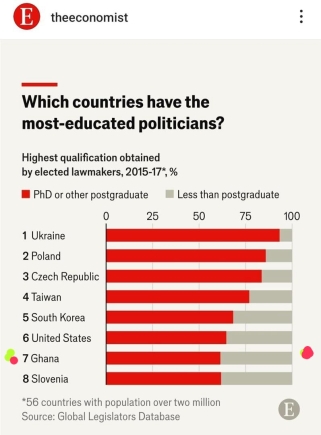
Ghana ranks seventh in a list of countries with most-educated politicians. An article that explores which countries have the most educated politicians has indicated. The article is based on two studies conducted by researchers from global universities using data from 2015, 2017, and 2023.
This is a from a Global Legislators Database that looked at 56 countries with population over two million.
It shows the highest qualification obtained by elected law makers from 2015 to 2017 in percentage terms from PhD or other postgraduate degrees to less than postgraduate.
On top of the list is Ukraine followed by Poland in second position and Czech Republic in third position.
Taiwan follows in fourth position followed by South Korea in fifth position.
The United States is in sixth position followed by Ghana at seventh position and then Slovenia in eighth position.
For years, political scientists have been comparing the types of people elected to national parliaments.
They find it relatively easy to track the average age of elected representatives (currently 51 globally) and the proportion of women (still only 27%).
They have had more difficulty examining how other characteristics differ among politicians in various countries.
However, two datasets published in October and November help address this.
These datasets enable scientists to compare the education levels of elected politicians.
The first study, compiled by researchers from six universities, gathered biographical data on nearly 20.000 parliamentarians from 97 countries between 2015 and 2017.
It is the most comprehensive study to date. Since the path to politics changes little even when governments do, the data likely reflects the current reality.
The study found that, on average, 78% of parliamentarians held at least a bachelor’s degree and 40% had postgraduate degrees.
These figures are far above the global average education level among the general population (currently 35% in wealthy countries and 15% in poorer ones). The ranking below includes 56 countries with populations over two million and data covering at least 90% of legislators.
Ukraine had the highest proportion of legislators with postgraduate degrees; nearly a quarter held a doctorate when the data was collected.
Academic titles have long been beneficial in Ukrainian politics: all its presidents since independence in 1991, except for Volodymyr Zelenskyy, claimed to hold doctoral degrees.
Even the younger, more diverse parliament elected in 2019 included a similar share of representatives with doctorates.
Other countries with highly credentialed legislators include South Korea, where nearly a third hold doctorates, and the United States (U.S.), where more than two-thirds have postgraduate degrees.
By contrast, countries like Italy, Norway, and the United Kingdom (UK) have a high proportion of parliamentarians with only secondary education.
For example, Sir Lindsay Hoyle became Speaker of the UK House of Commons without attending university.
Luigi Di Maio and Matteo Salvini, anti-establishment politicians in Italy, also dropped out of university.
Second study
The second study, conducted by researchers in Chile, examined a sample of 6.000 legislators from nearly 30 countries in 2023.
It found that in North and Latin America, law graduates tend to form the largest blocs in national legislatures.
Meanwhile, Nordic countries lean towards politicians with backgrounds in social sciences, such as economics.
The UK stands out for electing an unusually high number of legislators whose highest degrees are in arts and humanities, such as history or classics.
Can voters in countries where politicians have numerous academic credentials expect their leaders to perform better than average? There is little empirical evidence to support this.
A 2015 study examined the performance of U.S. Congress members over the 20th century and found that those with college degrees did not serve longer, pass more legislation, or win reelection more often than those without degrees.
A more recent study in Spain revealed that mayors with degrees were no better than others at reducing unemployment, balancing budgets, or attracting new residents to their cities.
Countries that fill their parliaments with lawyers do not necessarily enjoy significantly stronger rule of law, according to the research.
Moreover, globally, the most educated politicians lose elections at about the same rate as candidates with less formal education.
Nonetheless, it is becoming increasingly difficult for individuals without degrees to get their names on the ballot.
National legislatures, at least in terms of education, have become less reflective of the populations they are supposed to represent. This trend could have unfortunate consequences.
Those who attain unusually expensive educations often have different priorities from the “average” person.
Citizens are less likely to vote if they do not see people like themselves on the ballot. While parliaments worldwide are gradually becoming younger and slightly more gender-balanced, they are also becoming more elite.
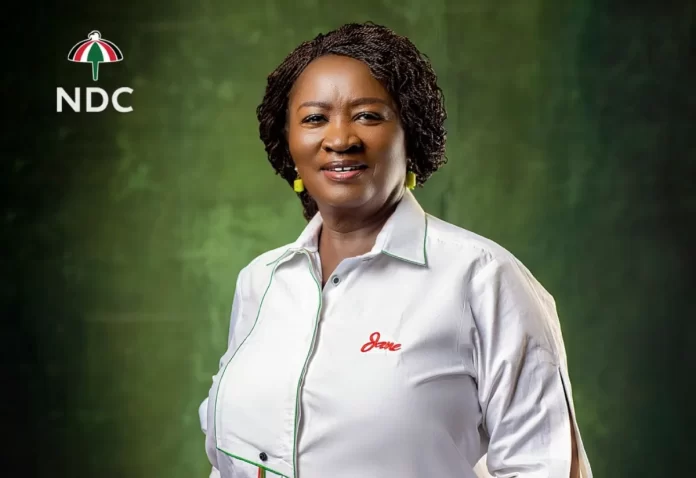
The running mate of the National Democratic Congress (NDC), Professor Naana Jane Opoku-Agyemang, has raised concerns over the lack of consultation in the construction of astroturfs across Ghana.
Speaking at a gender empowerment series at Labadi Beach Hotel on Monday, November 18, she stressed the importance of inclusive decision-making processes that consider the diverse needs of the population.
During her address on “Advancing Gender Equality: A National Dialogue on Current Policies and Innovative Measures for Local and National Impact,” Prof. Opoku-Agyemang highlighted how public infrastructure projects, such as sports facilities, can either promote or hinder gender equality.
The former Education Minister pointed out that the absence of women and girls in the planning of these sports facilities reflects deeper systemic inequalities. She questioned whether their needs, interests, and schedules had been considered during the planning stages.
She concluded by emphasising that infrastructure development should prioritize inclusivity, ensuring that all segments of society, particularly women, benefit equally.
“I see beautiful AstroTurfs dotted all over our country, and I don’t have issues against that, but I ask myself, is gender sensitivity a consideration? I have not seen a single girl on any of those AstroTurfs and I ask why that is the case.
“So even in sports, we are pushing down gender inequality. Were women part of the discussion before they [the AstroTurfs] were built to know what games women would want to play and what time women had for play? As we look into the future, I urge all of us to reflect on the spaces that we create to foster equal opportunities for both genders.”
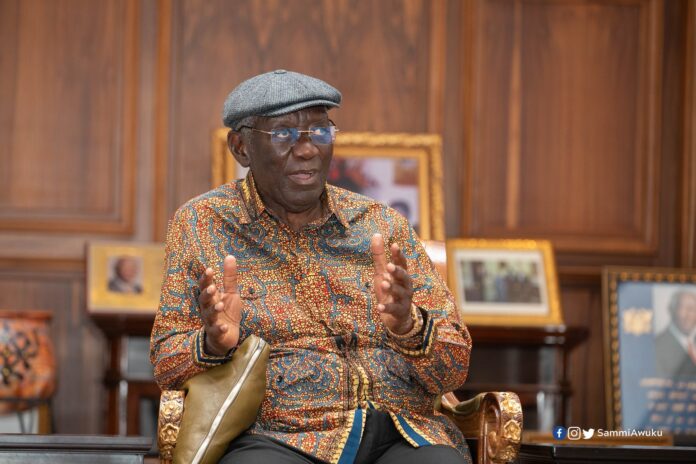
Former President John Agyekum Kufuor has called on Ghanaians to respect the decisions of the Supreme Court, emphasizing the importance of its interpretative powers as enshrined in the Constitution.
Speaking to some journalists on Sunday November 17, John Kufuor cautioned against reckless criticism, instead advocating for constructive discourse to strengthen democracy. Mr Kufuor’s comments come on the heels of the Supreme Court’s ruling that annulled the Speaker’s declaration of four parliamentary seats as vacant.
This decision sparked intense debate, with many questioning the Court’s authority.
The Significance of the Supreme Court’s Interpretative Powers
According to the former president, the Constitution empowers the Supreme Court to interpret the law, making its decisions binding.
He emphasized that the Court does not seek cases, but rather, individuals bring matters before it.
Checks and Balances in Ghana’s Democracy
John Agyekum Kufuor, a strong advocate for checks and balances, noted that different institutions should work together to prevent excesses.
He encouraged thoughtful criticism, promoting a culture of respect for the rule of law.
Background on Ghana’s Constitutional Framework
Ghana’s Fourth Republic, established in 1993, enshrines the principles of separation of powers and checks and balances.
The Supreme Court plays a critical role in ensuring that these principles are upheld.
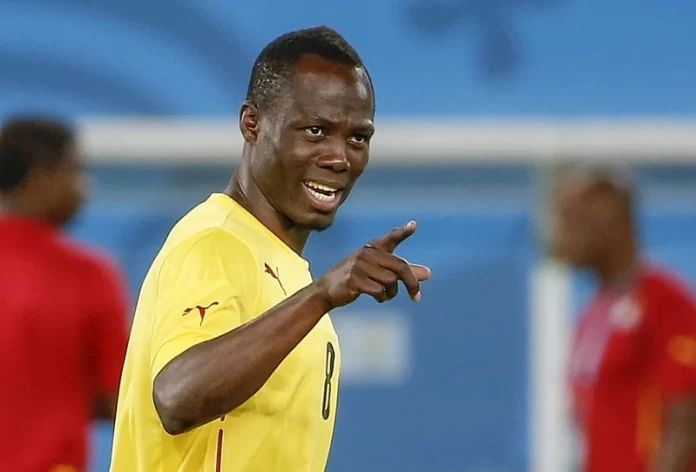
Former Ghana midfielder Emmanuel Agyemang-Badu believes the Black Stars did not deserve to qualify for the 2025 Africa Cup of Nations (AFCON) tournament.
Ghana’s hopes of playing at the tournament in Morocco were dashed after it drew 1-1 with Angola on Friday in Luanda at the Estádio 11 de Novembro.
The Black Stars needed a win after Niger defeated Sudan 4-0 but Zini’s second-half header cancelled Jordan Ayew’s wonderful freekick in the first half to crash their chances of qualification.
After the team failed to qualify for the tournament, Agyemang-Badu beleives the team lacked quality and did not deserve to compete at the AFCON.
“Our team lacked the quality to qualify for the AFCON,” he told Akoma FM.
“Our problem started long ago, and the funny aspect is that we celebrate mediocrity and deceive ourselves into thinking that the team is okay after winning a game. I nearly cried yesterday,” he added.
Ghana are with three points after five games and will wrap up their qualifiers with a home game against Niger on Monday at the Accra Sports Stadium.
Mr Simon Mawuko, the North Dayi District Director of the National Commission for Civic Education (NCCE), has appealed to first-time registered voters to turn out in their numbers and cast their ballot during the December 7 polls.
He said it was a fundamental act of civic participation and a powerful way to make their voices heard.
The District Director said by voting, they would be contributing towards effective democracy and could impact issues that affected them.
Mr Mawuko said this at a meeting to address students of the Vakpo Senior High Technical School at Vakpo in the North Dayi District of the Volta Region.
He asked them to leave the polling station after voting and desist from engaging in violent acts before, during and after the polls.
Madam Victoria Achoribo, the Headmistress of the School, commended the NCCE for the engagement and advised the students not to allow themselves to be used by politicians to ferment trouble before, during and after the elections.
She said Ghana needed peace to progress and that the peace starts with them.
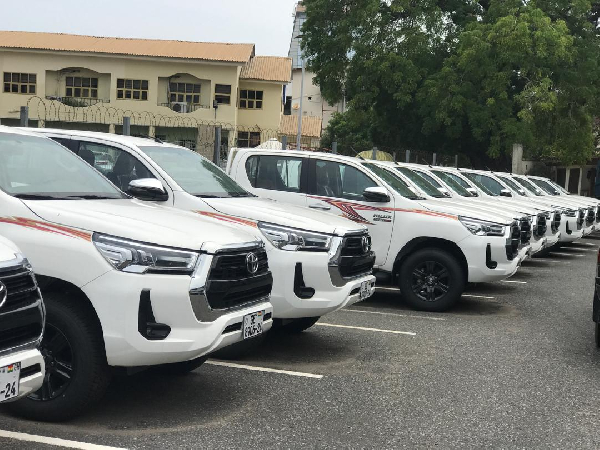
The Government through the Ministry of Employment, Labour Relations and Pensions, has provided each of the 16 newly inaugurated Public Employment Centres (PEC) in the country with a Toyota Hilux pickup vehicle.
In addition, the Government has provided the Ministry with a 32-seater Toyota coaster minibus to facilitate staff movement during durbars, workshops and conferences.
The PECs, which are in all the 16 regions, form part of the Ghana Jobs and Skills Project to boost job opportunities and improve skills training across the nation.
The Centres host the Ghana Labour Market Information System (GLMIS), which will contribute to developing critical skills for national economic transformation, minimising skill mismatches and reducing unemployment.
Mr Ignatius Bafour Awuah, the Minister of Employment, Labour Relations and Pensions, presented 12 of the 16 pickup vehicles to Mr Dawuda Ibrahim Braimah, the Chief Labour Officer of the Department of Labour for distribution to the PECs.
While Mr Kizito Ballans, the Chief Director of the Ministry, on behalf of the staff received from the Minister the key to the 32-seater Toyota coaster minibus.
Four of the PECs, namely Atebubu in the Bono East Region, Odumase in the Bono Region, Twifo Hemang Lower Denkyira in the Central Region and Konongo in the Ashanti Region have already received their pick-up vehicles.
While the second batch of 12 pick-up vehicles are for distribution to 12 PECs; namely Hohoe in the Volta Region, Dambai in the Oti Region, Yendi in the Northern Region, Walewale in the North East Region, Bolgatanga in the Upper East Region and Wa in the Upper West Region.
The rest are Damongo in the Savannah Region, Kenyase in the Ahafo Region, Tarkwa in Western, Bibiani in the Western North Region, Akim Oda in the Eastern Region and Amasaman in the Greater Accra Region.
Mr Bafour Awuah said the pick-up vehicles would facilitate the movement of their staff in their respect regions, as part of efforts to reach out to communities.
He noted that the 32-seater Toyota coaster minibus was provided by the Government for the Ministry following a request from the staff, to facilitate their movement during the Ministry’s durbars.
He reiterated that the pickup vehicles were supposed to support the work of the various PECs. He said PECs were Centres, where people who were looking for jobs would go and provide their information to the attendants there.
In the same way, people who were employers and were looking for people to work with, could go and log on the information on people that they want to recruit. “So, it’s like a marketplace, where both employers will be employers and who are employees, will meet and then exchange ideas. And we expect that a lot of engagements will be done at that level for people to be engaged, to get work to do,” the Minister stated.
“Fortunately for us, it is not everybody that can walk into these 16 centers that we have established. So, because of that, we have also established a web-based portal named www.glmis.gov.ghwhere people can access the same service that when they walk into a public employment center can do.”
Adding that the Government wants employment services to be easy for persons who were looking for jobs to access.
He said they wanted persons who were also regulating their world of work, especially inspectors at the various district levels, to also have an easy way of reaching their clients; saying “that is why today we are providing to the Labour Office these vehicles”.
Mr Baffour Awuah said this was not the only intervention the Government had made to the Labour Department; stating that about a year ago, the Government also made available some 86 motorbikes to the Labor Department to be distributed to their offices around the country, to facilitate their movement.
This, he said shows the Government’s commitment to improving the work of the Labor Department. Mr Kizito Ballans, the Chief Director of the Ministry of Employment, Labour Relations and Pensions, on behalf of the staff expressed gratitude to the Minister and the Government for the kind gesture.
Mr Dawuda Ibrahim Braimah, the Chief Labour Officer of the Department of Labour, assured the Minister that the vehicles would be put to good use. The event was attended by Dr Festus Awuah Kwofie, the Deputy Minister for Employment, Labour Relations and Pensions.
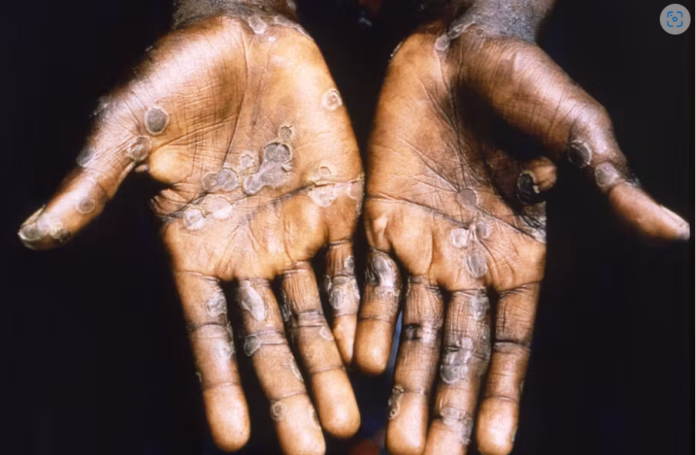
One more case of mpox has been confirmed in the Greater Accra Region, bringing the total number of cases in the country to three.
The first case was reported in the Western North Region on September 25, involving a 15-year-old boy. His mother was later confirmed as the second case.
Health officials are urging the public to stay vigilant, follow hygiene protocols, and report any suspected symptoms to healthcare providers as soon as possible.
The Ghana Health Service has also stepped-up public awareness campaigns and is working closely with local health facilities to ensure they are prepared to handle potential cases.
Dr. Dennis Laryea, Deputy Director of Public Health at the Ghana Health Service in an interview with Citi News noted that all identified contacts are being closely monitored.
“We had the outbreak in Western North, but I think it has been contained. There was one case confirmed in the Greater Accra Region, the region has done their investigations, and so far, we haven’t confirmed any case even among the contacts. But we’re still following them up to determine if anybody develops symptoms. The case was confirmed last week, the person is quite very well. That has been handled.
“But sometimes when you get these cases, you want to be double sure that there are others out there that we haven’t picked. And so, the region is working with the district to make sure that they have been able to follow all the contacts,” he said.
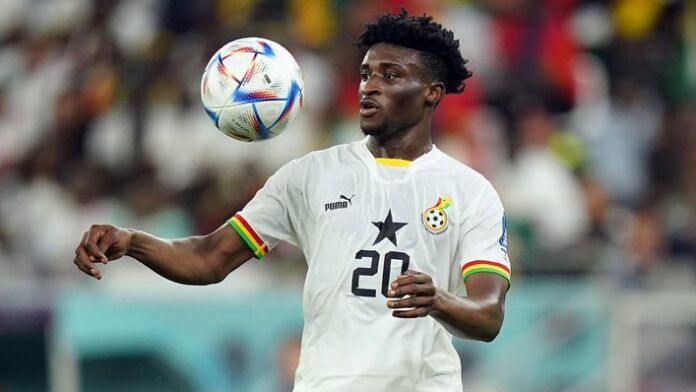
West Ham United striker Michail Antonio believes his teammate Mohammed Kudus has the potential to win the prestigious African Footballer of the Year award in the future.
Kudus, 24, has been a standout performer since making his debut for Ghana’s Black Stars in November 2019, scoring in his first appearance against South Africa.
To date, he has earned 38 caps, netting eight goals, including two each in the FIFA World Cup in Qatar and the Africa Cup of Nations in Côte d’Ivoire.
The Ghana international had an impressive first season in the Premier League, making 41 appearances for West Ham United and scoring 10 goals.
Antonio is confident in Kudus’ abilities and spoke highly of his potential.
“With Mo’s [Mohammed Kudus] talent, there’s a 100% chance that he can win [African Footballer of the Year],” Antonio said in an interview with Joy Sports.
Although Kudus did not make this year’s CAF shortlist for the award, Antonio acknowledged the stiff competition from established stars like Pierre-Emerick Aubameyang, Mohamed Salah, and Sadio Mané.
“Obviously, there are some great potentials there. There’s [Pierre] Aubameyang, there’s Mo Salah, there’s [Sadio] Mane, and there’s definitely Kudus, but I believe he has the talent to do it.”
However, Antonio pointed out that individual success often hinges on team performance.
He noted that while Ghana has a rich footballing history, the current team needs to raise its level to help players like Kudus shine on the international stage.
“It’s just that he needs the surroundings of his team to help him to do it, and right now, Ghana isn’t at that quality,” he noted.
“Ghana has a quality past and quality history, but right now, they’re not doing as well as they feel like they should be doing.”
For Kudus to secure Africa’s top individual accolade, Antonio believes both the player and the national team must strive for greater achievements.
“For him [Kudus] to achieve that [win the African Player of the Year], I feel he and Ghana, as a team, have to do more for that to happen,” he added.