Home Blog Page 143

T-Bill rates hit 8-month high — 91-day bill reaches 26.56%

0

Interest rates on government’s short-term securities (treasury bills) have surged to their highest level in eight months, as the 91-day bill yield climbed to 26.56% in November’s latest auction, signalling renewed pressure on the country’s short-term borrowing costs.

The current rate is the highest since March 18 when the yield on the 91-day bill stood at 26.49%. The yields for the 182-day and 364-day bills also currently stands at 27.58% and 29.03% respectively.

Ghana’s treasury bill rates have experienced significant volatility over the past decade, reflecting the country’s economic challenges and policy responses. In 2022, the rates saw a dramatic surge, reaching unprecedented levels above 35% as the country grappled with a severe economic crisis marked by currency depreciation and soaring inflation. 

This crisis ultimately led to Ghana defaulting on most of its external debt obligations and seeking IMF assistance.

Pre-2020, rates were relatively stable, averaging around 14-16% but between 2020 to 2022, COVID-19 impact pushed rates higher as government borrowing increased.

The rates started moderating in 2023 following the IMF programme announcement, dropping to 19%. It, however, started to pick up again, increasing to 29% at the end of 2023. 

The start of 2024 saw the rates moderating again, dropping to around 24% in July before beginning to tick up again.

The spike in T-bill rates comes as Ghana continues to navigate through its economic recovery programme, following the $3 billion International Monetary Fund (IMF) bailout secured earlier this year. 

Implications 

A Market analyst told the Graphic Business that the rising yields suggest growing investor caution and could indicate persistent inflationary pressures in the economy, despite recent stability measures.

For the government, the higher rates mean increased domestic borrowing costs at a time when the country is working to restructure its debt and restore fiscal sustainability. 

This development could potentially impact the government’s debt servicing obligations and its broader economic reform agenda.

The analyst said the elevated rates, while concerning for public finances, also presented an attractive investment opportunity for domestic investors seeking high-yielding, government-backed securities. 

He said this could, however, lead to a crowding-out effect, potentially reducing available credit for private-sector borrowing and investment.

“The upward trend in T-bill rates might influence other benchmark interest rates in the economy, potentially affecting commercial lending rates and the cost of credit for businesses and individuals.” 

“This could have broader implications for economic growth and private sector development in Ghana,” he stated.

Reliance on T-bill market 

With the international capital market still closed to the country and the local bond market also still dormant post DDEP, the T-bill market is now the only source for the government to raise money.

The analyst pointed out that the government’s reliance on the T bill market posed some risks to the country’s debt restructuring efforts.

He said the continuous reliance on the treasury bill market to raise short-term money to finance government operations could defeat the purpose of the debt restructuring programme, which is aimed at extending the country’s yield and reducing interest rates.

“This could impede the government’s agenda to prolong the yield curve and bring down borrowing costs,” he noted.

IMF concerns 

The IMF has however indicated that it did not have a problem with the cost at which the government was financing itself on the T bill market.

At a press briefing in Accra in August 2023 when the interest on the 91-day bill was 26%, the IMF Mission Chief to Ghana, Stephane Roudet, said the rates were consistent with its expectations in achieving debt sustainability over the medium term.

He said the cost at which the government was financing itself was of no concern to the IMF, adding that the fund was not surprised as the current treasury bill rates were anticipated under the programme.

Under the IMF programme, debt-to-GDP ratio is expected to reduce to 55 per cent of GDP over the next three years.

Debt restructuring 

As part of the country’s three-year programme with the IMF, the government has embarked on an exercise to restructure both the country’s domestic and external debts.

The first round of the DDEP saw the government swap a total of GH¢82 billion of old bonds for 12 new ones at a reduced coupon rate and longer tenors. The second round saw the government restructure cocoa bills of about GH¢7.93 billion and local dollar-denominated bonds of US$809 million.

The government has also formalised its agreement with the official bilateral creditor committee to restructure bilateral debts of $5.1 billion.

Quite recently, the government’s exchange offer to restructure Eurobonds worth $13.1 billion received an overwhelming 98% participation from investors in a deal that will see them take a 37% haircut in their investments.

The government is also currently engaging with external private banks and contractors whom it owes about $2.8 billion for a possible restructuring.


IEA criticises Bank of Ghana’s Gold Coin initiative.

0

The Institute of Economic Affairs (IEA) has voiced concerns over the Bank of Ghana’s recently launched Ghana Gold Coin (GGC) initiative, questioning its effectiveness in addressing Ghana’s deeper economic issues.

The central bank announced the GGC on September 27 as part of its domestic gold programme, asserting that the gold coin would encourage savings, improve liquidity, and strengthen the cedi against foreign currencies, particularly the US dollar.

In its latest bi-monthly report, however, the IEA argued that the GGC does not address the root causes of Ghana’s demand for foreign currency, suggesting that the gold coin initiative serves more as a temporary measure rather than a lasting solution. “Offering the GGC as an alternative asset to the dollar seems to be an admission of failure to deal with the real problems facing the economy, which drives Ghanaians to hold dollars instead of cedis,” the IEA remarked, adding that the underlying economic challenges lead Ghanaians to prefer foreign currencies over the cedi.

The IEA further criticised the Bank of Ghana’s claim that the GGC initiative would help manage liquidity. It explained that the central bank buys gold from miners with cedis, mints the gold into GGCs, and then sells these coins back to the public in exchange for cedis. This, the IEA argues, results in no net liquidity withdrawal from the economy. “The GCCs sale eventually results in zero liquidity withdrawal from the economy on a net basis, contrary to the claim by BoG that it amounts to liquidity management,” the report states.

The think tank urged the central bank to shift its focus to the structural reforms needed to address the cedi’s depreciation and the growing demand for the dollar. It suggested that addressing these fundamentals, rather than introducing alternative assets, would offer a more sustainable solution to the economic instability driving Ghana’s reliance on foreign currency.

“The required measures should include the maintenance of fiscal and monetary discipline to reduce pressures on the cedi, reduction of inflation to close the gap with trading partners, and addressing the persistent FX demand-supply gap through appropriate structural reforms,” the IEA recommended.

The IEA’s assessment casts doubt on the long-term viability of the GGC in resolving the dollar dependency issue, raising questions about whether the Bank of Ghana’s current strategy can effectively curb the country’s foreign currency reliance.

Bitcoin price reaches record high amid early US election results.

0

The price of Bitcoin surged to an all-time high of $75,255 Tuesday night as early results from the US presidential election began to roll in, with former President Donald Trump taking an initial lead in the Electoral College.

The Associated Press reported a 7.7% increase in Bitcoin’s value, while share prices and bond yields also saw significant gains in anticipation of potential market changes tied to the election outcome.

Trump is perceived as more supportive of the financial markets, having taken a largely hands-off regulatory approach during his previous term. 

Despite previously criticising cryptocurrencies, Trump has since repositioned himself as a pro-crypto advocate, even launching his own crypto business, World Liberty Financial.

Vice President Kamala Harris, however, has yet to take a formal stance on cryptocurrency. The Biden administration has been viewed by many in the crypto industry as restrictive, according to a recent report by consumer financial services company Bankrate. 

Some investors believe that if Harris were to win, it might introduce a more cautious regulatory stance on cryptocurrencies, potentially leading to a decrease in Bitcoin’s value.

The impact of the election has not been limited to Bitcoin alone. Ether, the native cryptocurrency of the Ethereum blockchain, also rose by 7.2 percent, reaching $2,576. Market analysts expect cryptocurrency trading to remain volatile until the election result is confirmed.

Crypto enthusiasts and traders worldwide are watching closely, with many speculating that another Trump term could pave the way for relaxed regulatory oversight in the industry. 

For now, the market is in a state of flux, with Bitcoin trading expected to fluctuate as investors await the final election outcome.

Give head teachers powers to improve education quality — Prof. Adei

0

The poor quality of education in public basic schools has been attributed to overcentralizing of school management at the national level.

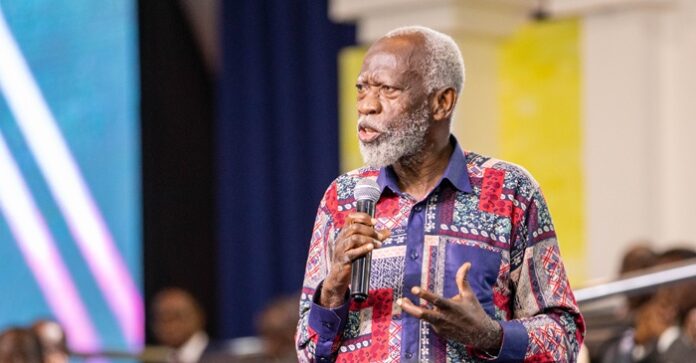
Renowned educationist, Emeritus Prof. Stephen Adei, who made the observation, said the concentration of management power at the Ghana Education Service (GES) headquarters to the disempowerment of head teachers at the school level had led to a breakdown of values and enforcement regimes.

Give head teachers the right to recruit teachers because if head teachers are empowered to hire and fire, teachers will sit up and do the right things to improve on quality education,” he pointed out during a panel discussion at the Graphic National Development Series (GNDS) held at the University of Professional Studies, Accra (UPSA) auditorium yesterday.

Platform

The GNDS is a platform meant to address key national development issues and build consensus on strategic policies. Yesterday’s event, which was focused on education, was on the theme: “A critical look at education and culture in Ghana to chart a course of national development, peace and our prosperity.”

Key issues that emerged were the falling standards of education in public schools, moral decadence in public schools, quality of teachers, and the relevance of the current education system.

Touching on the falling quality of education in public basic schools, Emeritus Prof.Adei said until the issue of leadership in public basic schools was addressed and head teachers given the powers to enforce discipline without fear or favour, the standards would continue to fall.

“Teachers in most of the private basic schools are not trained as compared with those in public schools, yet they deliver better results; and this is because of the leadership problem in public basic schools,” he stressed. Again, he said, the training regime for teachers in the colleges of education was not up to standard so graduates from those schools were unable to deliver on the job.

He said apart from knowledge deficiency, the teachers also lacked moral values that would be instilled in students.

My private school recruited three teachers who had diploma certificates from renowned public universities, but we sacked them within one week because of low quality of their service,” he said.

The renowned educationist said education without values was dangerous for national development as it created a leeway for corruption and other social ills to thrive.

We are at the point where pupils pay money to be given support during their Basic Education Certificate Examination (BECE), and that is why we see corruption everywhere in our national life. Unless we deal with the root causes of this situation, we are going nowhere,” he said.

Prof.Adei stressed the need for an education system that engendered change of mindset if the country had to develop.

TVET

Sharing his thoughts on technical and vocational education and training (TVET), Prof.Adei said the country would have to put its money where its mouth was by investing more in TVET.

In the view of the renowned educationist, the country had reached the point where TVET needed to be prioritised to provide the human resource needed for sustainable development.

He emphasised that the time had come for the government to roll out a special scholarship scheme for TVET across all sectors of education.

Prof.Adei underscored the need to establish and equip resource centres for TVET to thrive.

If we want to make TVET first, our salary structure should also prioritise it above other disciplines,” he added.

Responding to a question regarding the use of artificial intelligence (AI) by young people, he said it was important for the national development plan to put TVET at the core of the transformation agenda going forward. 

Arsenal’s Martin Ødegaard returns to full training after ankle injury.

0

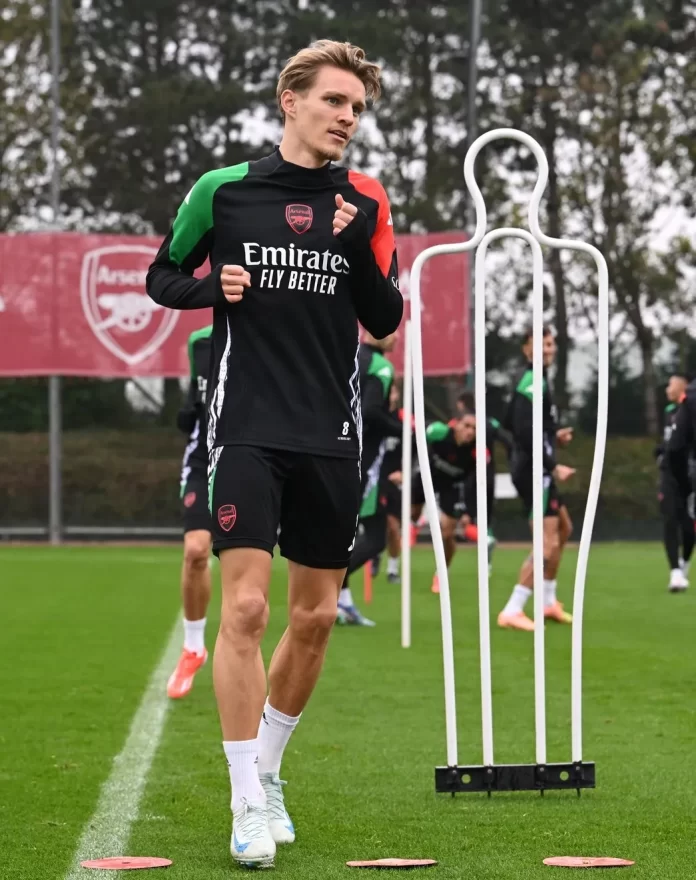
Arsenal captain Martin Ødegaard has returned to full training following an ankle problem. The Norwegian midfielder has not featured for the Gunners since damaging ligaments at the start of September during Norway’s Nations League win against Austria.

Arsenal boss Mikel Arteta had been hopeful of the 25-year-old’s return ahead of the next international break, but Ødegaard is not expected to be rushed back into action.

The Gunners posted pictures of Ødegaard joining in with the rest of the squad ahead of the Champions League trip to Inter Milan, but it remains to be seen whether he will be part of the squad which travels to Italy.

An Arsenal statement said: “Our skipper has been out of action for two months after picking up an ankle injury on international duty for Norway in September and missed our subsequent 12 matches, but he joined in with the rest of our squad ahead of our Champions League trip to Inter Milan”.

Election 2024: ‘Exercise your right to vote for change – Asiedu Nketiah.

0

The National Chairman of the National Democratic Congress (NDC), Johnson Asiedu Nketiah, has urged Ghanaians to actively participate in the upcoming elections, dismissing the notion of abstaining due to unfulfilled promises by past leaders, particularly from the New Patriotic Party (NPP).

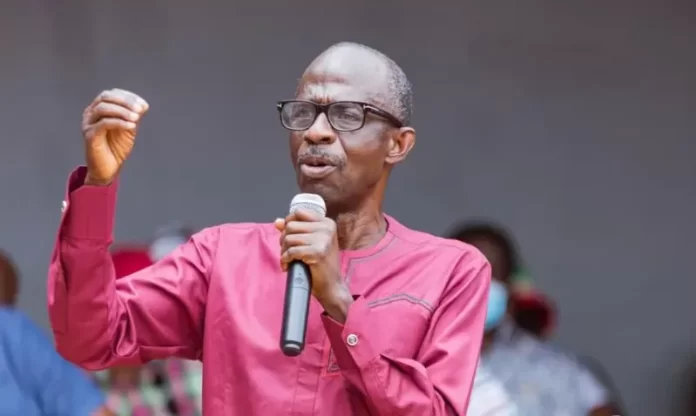
Speaking to residents of Akwasease in the Ahafo Ano North Constituency in the Ashanti Region on Tuesday, November 5, Asiedu Nketiah emphasised that abstaining from voting undermines democracy and diminishes the chance for meaningful change.

He encouraged the community to remain hopeful, stressing the importance of holding leaders accountable through their participation in the December elections.

“It beats my understanding when I hear people say, they won’t vote just because a government did not fulfil its promises. It may be true that they couldn’t fulfill their promises but that should not limit you from voting.

“If you want to hold them accountable, not voting isn’t the answer. They know you helped put them in power, so they understand that you could vote against them next time. But if you choose not to vote, it gives them an advantage.

“It is the time for us to unite as one people and vote them out. They have been bad at governance,” he stated.

Friday Is Not Holiday- Interior Ministry Clarifies.

0

In a surprise announcement, the Ministry of the Interior has declared that Friday, November 8, 2024, will not be a public holiday, despite marking the 2024 National Farmers’ Day.

This clarification comes amid potential confusion surrounding the holiday schedule.

The National Farmers’ Day is typically celebrated on the first Friday of December every year.

However, this year’s early celebration on November 8 has led to uncertainty about its status as a public holiday.

Minister for the Interior Henry Quarty signed a statement reassuring the public that Friday, December 6, 2024, remains the statutory public holiday for Farmers’ Day and will be observed nationwide as such.

Gerald Asamoah flies over 40 heart specialists to perform surgeries for kids in Ghana.

0

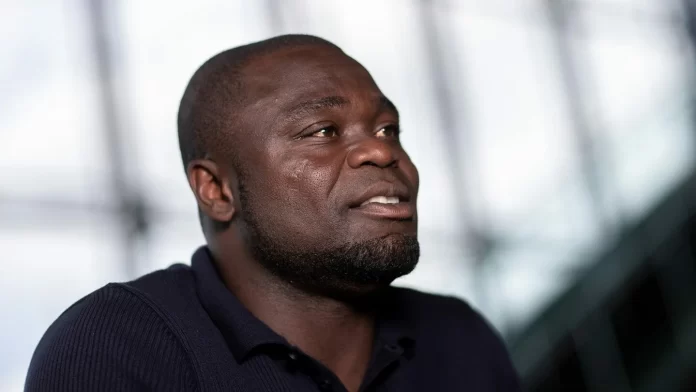
Former German footballer of Ghanaian descent, Gerald Asamoah, has brought a team of heart specialists and nurses to Ghana to provide life-saving heart surgeries for children in need.

Through his organization, the Gerald Asamoah Heart Foundation, he coordinated the arrival of 40 medical professionals for the 2024 edition of his annual pediatric heart surgery initiative

This marks the second year of the foundation’s program, following the inaugural event in November 2023, where Asamoah sponsored surgeries for twenty children.

The upcoming surgeries are scheduled to take place at the University of Ghana Medical Center (UGMC), in collaboration with its Cardiothoracic Department.

The Gerald Asamoah Heart Foundation is dedicated to supporting Ghanaian children diagnosed with heart conditions, providing them with essential treatment and care.

The beneficiaries for this year’s program have already been chosen.

East Legon crash: Police pursue TikTokers for ‘false claims’ about Salifu Amoako’s son’s location.

0

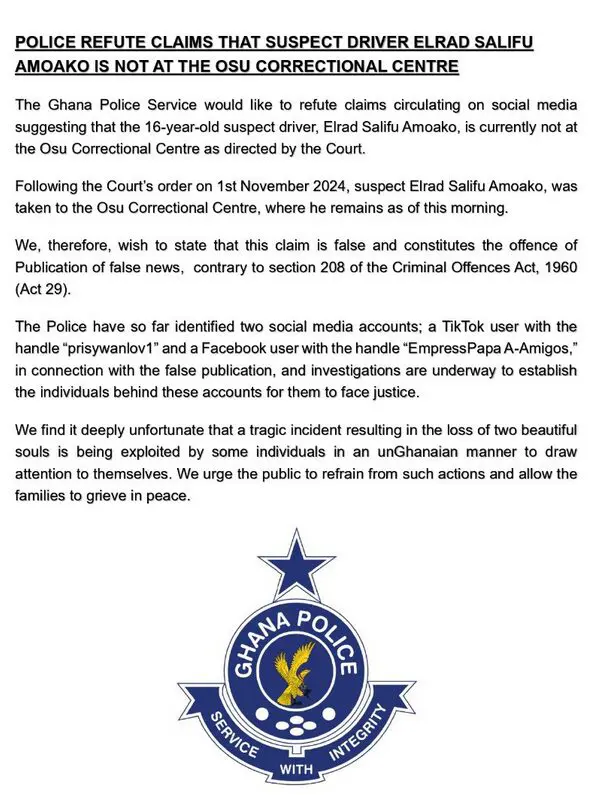
The Ghana Police Service has refuted viral social media claims suggesting that Elrad Salifu Amoako, the 16-year-old suspect driver involved in a fatal accident, is not in custody at the Osu Correctional Centre.

In a press statement released on Tuesday, November 5, 2024, the police clarified that Amoako, who was ordered by the court to be detained at the Osu facility on November 1, is still held there as of this morning.

The police labeled these claims as false and warned that publishing such misinformation violates the law under section 208 of the Criminal Offences Act, 1960 (Act 29).

In response to the claims, investigators have identified two social media accounts associated with the circulation of these rumors: a TikTok account with the handle “prisywanlov1” and a Facebook account “EmpressPapa A-Amigos.”

The police are actively pursuing those behind these accounts to bring them to justice.

“We find it deeply unfortunate that a tragic incident resulting in the loss of two beautiful souls is being exploited in an unGhanaian manner to draw attention to oneself,” the police noted.

Christian attorney warns ‘tearing down’ religious freedom in US is ‘spirit of the age’.

0

An attorney dedicated to upholding religious freedom said he’s “greatly disturbed” by the “growing hostility” toward the exercise of religion in the public square, particularly in Michigan. 

An attorney dedicated to upholding religious freedom stated that he is “greatly disturbed” to see what Michigan has become, warning of a “growing hostility” in the state toward the exercise of religion in the public square. 

Louis Brown, a lawyer and the executive director of the Catholic healthcare nonprofit Christ Medicus Foundation, spoke during an Oct. 25 webinar discussing the Napa Legal Institute’s release of its 2024 Faith and Freedom Index.

According to the index, Michigan, Washington, Massachusetts and West Virginia are some of the worst states for religious freedom. Michigan received a religious freedom score of 22% and a regulatory freedom score of 49%, earning an overall score of 32%.

Washington state earned a combined score of 35%, while Massachusetts and West Virginia each had an overall score of 38%. 

States that received the highest overall rankings for protecting religious freedom and creating an environment for faith-based nonprofits to thrive included Alabama (72%), Indiana (68%), Texas (64%) and Kansas (64%). 

“The Faith and Freedom Index is a natural and important extension of Napa Legal’s work,” Napa Legal Counsel Frank DeVito, who also spoke during the webinar, said in a statement provided to The Christian Post. 

“By analyzing the laws that affect faith-based nonprofits and publishing the results, Napa Legal can better educate nonprofits, lawyers and state policymakers on the state laws that affect religious organizations,” he added. “This education leads to better awareness and compliance for faith-based nonprofits, better legal training for the lawyers who serve those organizations and the possibility of state lawmakers passing better laws to help faith-based nonprofits thrive.”

For Brown, Michigan’s ranking was not surprising, but he still expressed dismay over what his former home state had become. The lawyer remembered with fondness the Michigan he grew up in during the ’80s and ’90s, noting that the protection of religious exercise at the time “advanced [his] growth and development as a child.” 

Brown’s mother taught at a Catholic high school that served students from a variety of racial and ethnic backgrounds. The attorney also attended Catholic schools throughout his childhood, and the neighborhood where he lived was also home to what he described as a “vibrant” Orthodox Jewish community. According to Brown, two of his Orthodox neighbors became his “surrogate grandparents.”

“At the time in Metro Detroit, you had a backbone of that larger community that was significantly made up of a beautiful tapestry of Catholic, Protestant and Jewish communities,” he said. “African Americans, Hispanics and European Americans who shared a common belief in God-given human dignity and the beauty of religious faith.

“Unfortunately, however, over the last several years, I have been greatly disturbed by the local and state policies that have been passed by state legislatures, and in some cases, local elected leaders at the municipal level in Michigan that have failed to respect and protect religious freedom, the sanctity of life and human dignity.”

“There seems to be generally a growing hostility in Michigan towards the exercise of religion in the public square,” Brown stated. “A discouragement not only in rhetoric but also in law and policy, of Michiganders exercising their religious faith to love and care for God’s people in the public square.” 

Highlighting the index, Brown urged spiritual leaders, elected officials, university presidents and attorneys general to study the report and understand their state’s ranking. 

Brown also advised churches and faith-based nonprofits to structure themselves “in a manner that provides maximum protections for their religious mission under state and federal law.” Lastly, he urged community leaders and state policymakers to support changes to state law that more “robustly” protect the exercise of religion. 

“Religious freedom is vital to human dignity, to all other civil rights in America and to a healthy civil society,” Brown said. “What we’re seeing, and particularly in the states that rank towards the bottom of this index, is a spirit of the age in our country that is tearing down the very foundations of the human freedoms that we enjoy.”

“The challenge we have today is to defend our human dignity and our human freedom, not just as a tribal community, we’re not here as a tribe but we’re here as people of faith to love, care, serve and uplift God’s people so that they can thrive, live life fully alive and fully enjoy the freedom that God intended for His people,” Brown stated.