Home Blog Page 145

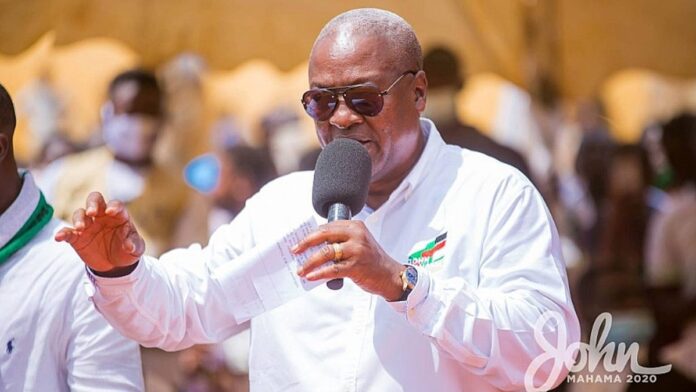
2024 GENERAL ELECTIONS: John Mahama promises stadia in all 16 regions.

0

Flagbearer of the National Democratic Congress John Dramani Mahama has announced that the next National Democratic Congress administration will prioritize the development of sports infrastructure by establishing sports stadia in all sixteen regions of Ghana.

Speaking on the campaign trail in the Oti Region, John Mahama elaborated that this initiative is aimed at nurturing talent and promoting youth development

He promised the people of Oti a share of the stadium which will not only enhance sports infrastructure but also create job opportunities.

“One of the policies of the NDC is to build stadiums in every region.

So in Oti Region, we will build one for you.

Every region will also have a regional police station and so we will also build one for here for you.

The NDC is the only party that will bring development in this region, so that it will be noticed as the best region in the country.”

Barbados welcomes 155 more nurses from Ghana to bolster healthcare workforce.

0

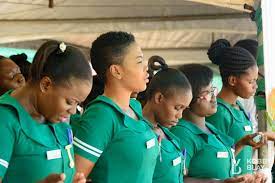
Barbados has once again strengthened its healthcare workforce with the arrival of 155 nurses from Ghana, landing at the Grantley Adams International Airport on November 3, 2024.

The group, accompanied by Ghana’s Deputy Minister of Health, Adelaide Ntim, was welcomed by Barbados’ Minister of Health and Wellness, Senator Dr. The Most Honourable Jerome Walcott, alongside other officials.

This marks the third cohort of Ghanaian nurses to arrive in Barbados since the start of a unique healthcare partnership in 2020, designed to address the ongoing nursing shortage in the country. 

The first cohort of 95 nurses arrived at the height of the COVID-19 pandemic, followed by 120 more in 2022. Many of those nurses remain in Barbados, some having made it their permanent home.

Minister Walcott shared that the new nurses would be assigned to various specialist departments at the Queen Elizabeth Hospital and across the Ministry of Health and Wellness’ primary care facilities. 

These areas include cardiology, accident and emergency theatre, midwifery, psychiatric medicine, and geriatrics. “So, we’re looking for these nurses to help improve the overall delivery of our healthcare,” he stated, underscoring the anticipated impact of their expertise.

Ghana’s Deputy Health Minister, Adelaide Ntim, welcomed the ongoing collaboration with Barbados, highlighting Ghana’s surplus of nurses, many of whom remain unemployed in the country. 

She noted that nurses from the previous cohorts had already demonstrated their capability and dedication in Barbados’ healthcare system. Ms. Ntim expressed confidence in the new arrivals, stating that they, too, would “deliver” quality service.

2025 AFCON Qualifiers: Group F standings ahead of Ghana’s final two games.

0

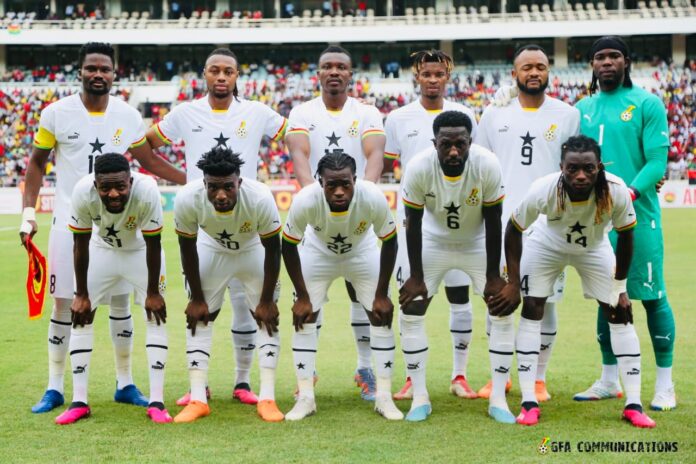
Ghana’s hopes of advancing in Group F qualification hang by a thread following a challenging double-header against Sudan.

In their first leg, Ghana’s encounter with Kwesi Appiah led Sudan ended in a goalless draw at the Accra Sports Stadium. The second leg saw Sudan clinch a 2-0 victory in Benghazi, Libya, as Ahmed Hamed Mahmoud and Mohammed Abdelrahman scored back-to-back goals, exploiting Ghana’s defensive lapses.

Ghana’s qualifying journey has been rocky. Starting with a narrow 1-0 loss to Angola, Ghana managed a 1-1 draw with Niger before struggling in both matches against Sudan. With no wins in four games, Ghana sits third in Group F with just two points. Angola tops the table with a perfect 12 points, followed by Sudan with seven, while Niger lingers with one after four games.

As Ghana prepares to face Angola on November 11 and Niger on November 15 in Accra, these games are pivotal to rekindling any remaining hope for advancement.

Below is the table: 

Same Adabraka jewelry shop robbed twice this year – Residents.

0

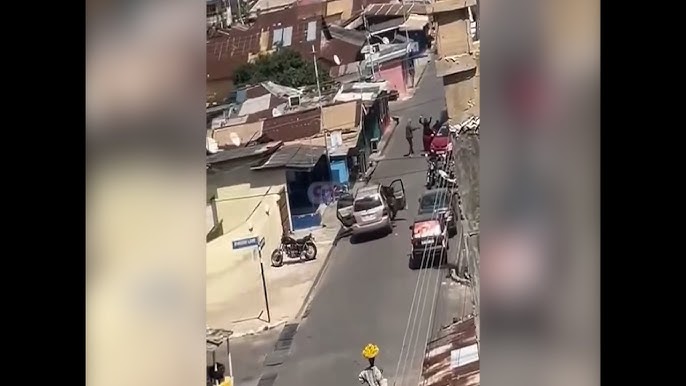
It is the second time the same jewelry shop is experiencing an armed robbery attack this year, some residents have told Graphic Online.

The vehicle involved in the Saturday’s Adabraka robbery incident has been identified and tracked to Ashaiman in Greater Accra.

Images of the Toyota Highlander, with registration number GN 7357-19, leaving the crime scene at Adabraka in Accra and tracked to Ashaiman have been released unto social media by the security agencies.

The vehicle’s route reportedly included stops at the Sunny FM Roundabout, Shiashie, Accra Mall, and Accra Mall Roundabout, before heading through Ashaiman Zenu.

On Saturday, the police announced that they are intensifying efforts to locate the armed gang responsible for the robbery at jewelry shop at Adabraka on Saturday (Nov 2), which left one person injured.

In a statement, the police said they were on a manhunt for the gang.”

“We would like to assure the public that we will surely get them and bring them to face justice,” it added. 

The robbery incident involved four armed and masked men who targeted a man in a red Toyota Corolla, parked near the bustling Adabraka market.

Eyewitnesses reported that the robbers approached the vehicle with their guns drawn, immediately firing multiple shots into the air to scatter the crowd.

Shoppers and vendors rushed for cover, ducking behind shops and seeking safety as the gunfire rang out across the market.

The robbers quickly forced their way into the Toyota, seizing large sacks of cash which had just been packed in the boot.

Millions head to polls for US election.

0


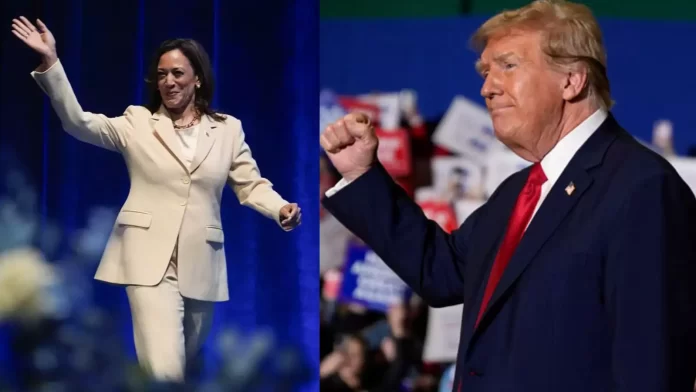
America is choosing its path forward, and the stakes could not be higher.

Both candidates have presented stark visions for the future if they lose this election. Donald Trump says the country will “go to hell” and become “communist immediately” if he loses, while Kamala Harris describes her opponent as a “fascist” who wants “unchecked power”.

Voters in the key battleground states have been bombarded by campaign ads, much of it designed to induce fear. Given this climate, it is no wonder surveyed Americans are reporting high levels of anxiety.

“I do believe they’re making us live in fear just to get our vote,” Heather Soucek told me in Wisconsin as election day loomed. She lives in a swing county in a swing state, and plans to back Trump because, in her words, Harris’s economic plans are “scary”.

But just along the street, I also met Tracy Andropolis, a registered independent who said she would vote for Harris. “It’s one of the most important elections in my lifetime. There’s a lot on the line,” she said, adding that she was concerned Trump would refuse to give up power if he won.

Both expressed genuine fears for the future if their candidate lost, reflecting the existential mood of many voters on the eve of the election.

Ms Andropolis also told me she did not believe the neck-and-neck polls. Not because she has any real evidence, but because she cannot envisage millions of people planning to vote for Trump. And she is by no means alone in her struggles to accept the closeness of this race.

One of the things I’ve learned travelling around this country and talking to voters is that America doesn’t just seem remarkably divided, it feels as though two separate nations are awkwardly cohabiting on the same land mass.

Democrats mainly live in the cities and suburbs, with Republicans mostly living in rural areas. Americans are increasingly moving to places where their neighbours share their political outlook. And it’s not hard to identify these areas at the moment, given the yard signs and placards that so often mark out Trump and Harris territory.

But it is not possible to live in these separate political worlds forever. These two sides are about to collide with the harsh reality of an election.

However disputed, however contested, there has to be a winner.

And when some here learn the eventual result and realise that tens of millions of their fellow Americans feel very differently to them, it will be a shock.

Both Trump and Harris have charted their own historic and tumultuous paths to polling day.

I was among the press pack gathered outside a Manhattan court to witness Trump’s arraignment in his criminal hush-money trial in April. He was found guilty weeks later, becoming the first former or sitting president to be convicted of a crime. Many asked at the time: could a convicted felon really reclaim the White House?

But his legal troubles and his claim that he was being deliberately targeted by the Biden administration only fuelled his campaign and fired up his supporters. “They’re not after me, they’re after you,” he would so often say.

“They’re weaponising the criminal justice system against their political enemies, and it’s not right,” one of his supporters told me outside the courthouse. “I will fight for this man until the day I die,” another said.

A familiar pattern emerged: with each indictment, his poll ratings climbed and financial donations poured in.

Just think back to the moment last year when his mugshot was taken as part of the election interference case in Georgia. It quickly became an iconic image that now adorns many of the T-shirts I see at Trump rallies.

And it is impossible to recount the former president’s wild ride to polling day without the moment that produced another iconic image and almost ended the contest altogether.

When Trump was shot by a would-be assassin in Butler, Pennsylvania, in July, it shook this race and this nation profoundly. As he was helped to his feet by Secret Service agents, blood pouring from his ear, he raised his fist in the air and urged his supporters to fight.

When he appeared just 48 hours later at his party’s convention in Milwaukee with gauze over his ear, some in the crowd were weeping. I could see tears rolling down the face of one delegate standing near to me. It was Tina Ioane, who’d travelled from American Samoa.

“He is the anointed,” she told me. “He was called to lead our nation.”

At that stage in the summer, electorally, Trump looked unassailable.

On the other side, Democrats were becoming increasingly depressed about their own prospects. Deeply anxious that their candidate, Joe Biden, was too old to win re-election.

I was in the press room watching his shambolic debate against Trump in late June. There was stunned silence as we watched Biden’s 50-year career in politics essentially come to an end in front of our eyes.

But even then, many who publicly suggested he should step aside were dismissed. The Biden campaign even hit out at the “bedwetting brigade” who were calling for him to go.

It would, of course, be a matter of time.

Just days after that jubilant Republican convention in July, when Trump looked like he could not lose, Biden announced he was giving up his re-election bid. The mood among Democratic supporters soon swung from anxious pessimism to excited anticipation.

Any reservations they had about whether Kamala Harris was their best candidate were erased at a joyful convention in Chicago a few weeks later. People who had been resigned to defeat were now swept away on a tide of enthusiasm.

This election represented a chance to “move past the bitterness, cynicism and divisive battles of the past”, she said to loud cheers.

But this burst of excitement did not last. After an initial bump in the polls, Harris struggled to maintain the momentum. It appears she quickly won back traditional Democrats who were not backing Biden but found it harder to win over crucial undecided voters.

Harris, however, has repeatedly pushed that more optimistic message. She has also made reproductive rights a cornerstone of her campaign, and is hoping the issue will motivate women to turn out in high numbers.

But the challenge, as in all presidential elections, is to convince the undecided.

I met Zoie Cheneau at a hair salon she owns in Atlanta, Georgia, less than two weeks out from the election. She said she had never been so unmotivated to vote.

“It’s the lesser of two evils for me right now,” she said, explaining that she would ultimately cast her ballot for Harris but felt Trump may prove better for small businesses.

“I will be excited that a black woman would be the president of the United States,” she said. “And she will win, I know she will win.”

Two tribes face crunch moment

While some voters are anxious and believe this race to be close, Ms Cheneau’s certainty about the eventual result is something supporters on both sides repeatedly express.

Many Harris supporters simply cannot understand why she is not further ahead of a convicted criminal who has been publicly attacked and derided by those who served in his last administration.

Trump supporters are equally aghast that anyone could vote for a candidate who has flip-flopped on policy and has been in the White House at a time when illegal border crossings reached record levels.

These two tribes exist in what appear to be parallel political ecosystems, across a deep partisan divide where opposing views are dismissed and the candidates inspire a devoted loyalty that goes beyond normal party affiliation.

Voters have been given apocalpyptic warnings about what might happen if the other side wins. They’ve been told this election is about far more than who sits in the Oval Office for the next four years. Many believe it is an existential event that could have disastrous consequences.

There is no doubt the tone of this campaign has raised the stakes, ratcheting up anxiety and tension, meaning the aftermath of this election could be explosive. We are expecting legal challenges and street protests would be a surprise to no one.

This is a nation split between opposing visions of what’s at stake. But it is in the polling stations that Red and Blue America will meet and be counted.

Whatever the result, roughly one half of the country is about to discover that the other half has a completely different sense of what America requires.

For the losers, this will be a stinging realisation.

Free SHS: Double track is research-driven and result-oriented – Adutwum.

0

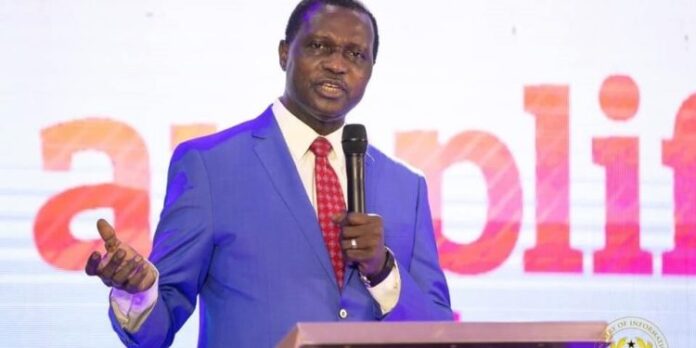
Minister of Education, Dr. Yaw Osei Adutwum, has once again cautioned against calls to eliminate the double-track system in secondary education, warning that its removal could restrict access to free senior high school education for countless Ghanaian students.

His remarks come amid growing calls from some stakeholders who argue that the double-track system is problematic and should be abolished.

However, Dr Adutwum contends that the system is crucial in expanding educational opportunities and ensuring more students benefit from the government’s Free Senior High School policy.

During an unannounced visit to the Presbyterian Boys’ Secondary School (PRESEC), Dr. Adutwum spoke with Citi News, where he elaborated on the rationale behind the double-track system.

He underscored that the double-track system was designed with a commitment to increase access to secondary education across Ghana, particularly in high-demand schools where facility limitations have historically restricted enrollment.

Dr. Adutwum noted that as certain schools expand their facilities, some have started to move away from the double-track system.

Nevertheless, he emphasised that until more institutions have the resources to accommodate larger numbers, the double-track system remains essential.

“This year, a number of schools are moving away from Double Track because they have enough facilities. So the whole premise is this, every young man growing up in Ghana wants to come to PRESEC. What does that mean for us as a nation? We need to provide more facilities so that PRESEC can educate more students for us.

“But until we get those facilities, it makes sense to divide the PRESEC population into three, keep one at home while two of them are here until such a time that you can put up more buildings and all of them will come at the same time. So it’s well thought through.

“This system has been used in a number of countries around the world, including the United States of America. So what we are introducing here is research-driven. If the double track is such a bad thing, Why is it that PRESEC has implemented it and they have gotten better outcomes than when there was no double track?”

Bawumia Urges Youth To Vote For Leader Who Serves, Not Insults.

0

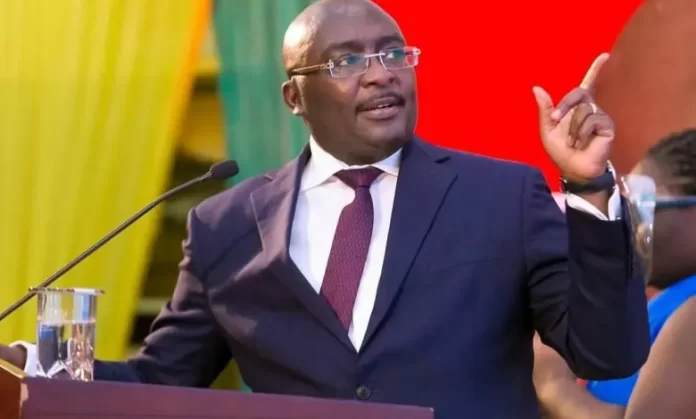
Dr. Mahamudu Bawumia, the 2024 New Patriotic Party (NPP) Presidential Candidate, has made an impassioned plea to Ghana’s youth to participate actively in the upcoming elections.

Speaking at the youth Connect event, Dr Bawumia emphasized that every vote counts and young people should not feel disenfranchised or disconnected from the electoral process.

Speaking with passion and conviction, Dr. Bawumia emphasized that the upcoming December elections are not just about politics, but about the future of the young people.

As a seasoned Economist and former central banker, Dr. Bawumia has a deep understanding of Ghana’s economic challenges and opportunities.

His impressive track record includes serving as Deputy Governor of the Bank of Ghana, where he played a key role in designing and implementing policies that stabilized the economy and promoted growth.

Throughout his career, Dr. Bawumia has demonstrated a commitment to inclusive development and good governance.

As Vice President, he championed initiatives that leveraged technology to transform the delivery of public services and drive economic growth.

Now, as the NPP’s presidential candidate, Dr. Bawumia is mobilizing Ghana’s youth to take ownership of their future.

He stresses that every vote counts and that the December elections present a critical opportunity for young people to shape the country’s trajectory.

A Vision for Ghana’s Future

Dr. Bawumia’s campaign is built around the theme of “Bold Solutions for Our Future.”

He promises to create jobs, promote economic growth, and ensure that Ghana’s leaders serve the people, not themselves.

Otto Addo can make a real difference if supported – Agyemang-Badu.

0

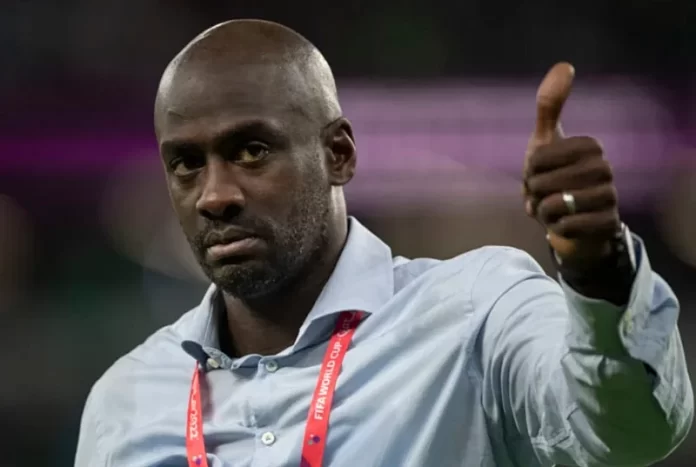
FIFA U-20 World Cup winner, Emmanuel Agyemang-Badu says Otto Addo will need support to make a real difference as Black Stars coach.

Addo, who had a successful first spell by qualifying for the country to the 2022 World Cup in Qatar has come under massive pressure following the team’s uninspiring performance in the 2025 Africa Cup of Nations (AFCON) qualifiers.

Ghana’s recent 2-0 defeat to Sudan extended their winless streak to four, putting them on the brink of missing the AFCON tournament for the first time in 20 years.

Despite the criticisms and the calls for his dismissal, Agyemang-Badu, speaking in an interview with Flashscore.com continues to place his faith in the former international, confident he will soon turn things around with the right support.

“Our players perform exceptionally well with their clubs, but when they come here, things become difficult,” the former Asante Kotoko and Hellas Verone midfielder said.

“Building a national team is different from building a club team. From time to time, he [Otto Addo] will need our support because we’re all in this together. We can’t expect the technical crew to handle everything on their own.

“If we give him more time to settle in and understand the environment fully, I believe he can make a real difference for us. He’s admitted it hasn’t been easy, and the challenges have been significant.

“When you’ve changed five coaches in six years, it’s unlikely that coaching is the only issue. We need to uncover the root cause of what’s going wrong and understand why things aren’t working as expected.

“If you sack him and bring in another coach, and after two or three games things aren’t going well, what will we do – sack him again? Ghanaians need to stand behind him; we need to support the Black Stars and the GFA.

“He still has my full support, and we need to give him a chance to show what he can do for us,” he added.

Ghana will return to international football in November, aiming to qualify for the 2025 tournament in Morocco against all odds.

They will travel to Luanda to face Angola on November 15, followed by a home match against Niger Republic three days later.

The Black Stars currently sit in third place in Group F, with only two points from their four matches, trailing both Palancas Negras and Sudan.

I’ll bring exchange rate below 5 cedis when elected – Alan assures Ghanaians

0

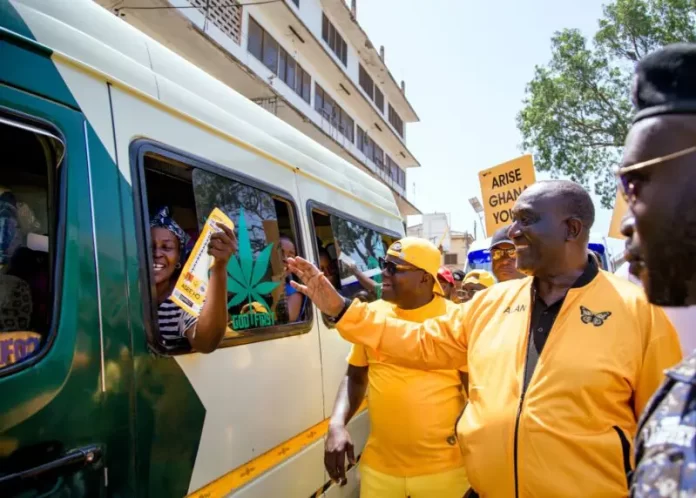
In a bold assurance to Ghanaians, Alan Kyerematen has pledged to stabilise the economy and reduce the exchange rate to below 5 cedis if elected as President.

During his historic Mega Victory Walk in the Greater Accra Region, on 2nd November 2024, Mr. Kyerematen voiced his dismay over the current economic challenges, emphasising his commitment to an economic transformation that would address the country’s inflation and exchange rate struggles.

“The exchange rate is currently almost 1=17 cedis, and that is unacceptable,” he stated, pledging to overhaul the economy and bring the rate to a level that would restore confidence and purchasing power for Ghanaians.

In his speech after the Walk, Alan identified four major problems facing the nation – unemployment, corruption, galamsey, and the ailing economy.

He assured the crowd that comprehensive solutions to these issues are embedded in his Great Transformational Plan (GTP), positioning it as the only detailed, pragmatic blueprint aimed at tackling the root causes of these challenges.

Alan noted that he stands apart as the sole politician who has boldly presented practical solutions to Ghana’s most pressing issues, further building confidence among supporters.

Alan highlighted that his approach would centre on an agricultural revolution, industrial transformation, and tourism promotion, which he believes are essential to job creation and economic stability. “Through a robust investment in agriculture and local industries, we will create sustainable employment opportunities, particularly for the youth,” he explained. His plan also emphasises that boosting domestic production and reducing reliance on imports will help ease the pressure on the cedi.

Touching on his plans to empower the youth, Alan expressed concern over the high youth unemployment rate, which has forced many into illegal mining, commonly known as Galamsey. He promised to create pathways for young Ghanaians to enter responsible small-scale mining through legal channels.

“I will cease the licenses of those politicians who have been using the youth and give them to the youth to establish small-scale mining companies that they will own,” he assured. He added that the government would provide mining equipment and machines on a work-and-pay basis, allowing young entrepreneurs to establish themselves in the sector.

he former Trade and Industry Minister outlined policies aimed at enabling young people to establish their own businesses. Alan assured the public that his government would support young entrepreneurs with funding, business development training, and access to markets to grow their enterprises.

“Due to the various youth empowerment policies, it will be difficult for the youth to complete school without securing jobs or self-employment opportunities,” he added.

Mr. Kyerematen also made clear his position on political inclusivity, announcing that his government would prioritize a national unity approach by appointing the most qualified individuals across political lines to key positions.

“In my government, if you are NDC, NPP, or someone who doesn’t do politics but can do the job, I will appoint you to be part of it,” he declared, emphasizing that competency would be the primary consideration.

A key promise in his speech was that job opportunities would be accessible to all, without political affiliations. “In my government, you don’t need a political party card before you get a job to do. All you need is the Ghana Card,” he assured the youth, committing to remove barriers that limit access to employment based on party loyalty.

Alan’s proposed policies, including youth empowerment, an emphasis on agriculture and industry, and support for responsible small-scale mining, align with his GTP. By addressing the root causes of economic instability, Mr. Kyerematen believes his administration can set the nation on a sustainable path to prosperity.

With a clear objective to address the current exchange rate and inflation crisis, Alan’s vision reverberates with a nation yearning for economic relief and sustainable development.

We’ve chosen Akua Donkor’s replacement – Ghana Freedom Party.

0

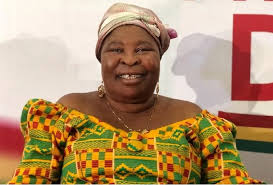
The Ghana Freedom Party (GFP) has announced that it has selected a new presidential candidate for the upcoming December 7 elections, following the recent passing of their founder and former candidate, Akua Donkor, on October 29.

Party officials stated that the new candidate will be introduced to the public in the coming days, emphasizing GFP’s commitment to the election and its vision for Ghana despite the loss of their founding leader.

At a news conference in the Ashanti Region on Friday, November 1, GFP leaders spoke to members and supporters, expressing unity and determination to uphold Akua Donkor’s legacy.

Nsawam-Adoagyiri parliamentary candidate Patrick Tetteh confirmed that the party’s executive council has reached a consensus on both the presidential candidate and a running mate, chosen to uphold GFP’s values and dedication to the Ghanaian people.

Tetteh highlighted the significance of this decision, emphasizing that it represents the leadership’s collective commitment to honor Akua Donkor’s contributions and continue the party’s mission in her memory.

“The executives and leadership of the Ghana Freedom Party have decided and agreed on the next presidential candidate and running mate which will be announced and presented to the EC and the general public within the given period of the Electoral Commission to enable the Commission to proceed with its legal mandate and the democratic process of our country.”