
Home Blog Page 146

Pathway to Ghana’s Oil Sector Growth, a feature by Obrempong Kwaku Duah.

0

When industry players in Ghana’s energy sector recently gathered under the guidance of the Public Interest and Accountability Committee (PIAC), the stunted nature of the country’s oil production dominated the conversation.

The nation’s crude oil output has been steadily falling since its peak in 2019 when production hit 71.4 million barrels. Fast forward to 2023, and that number dropped to 48.25 million barrels—an annual average decline of close to 10%.


This decline, while troubling, is not entirely unexpected. With no new fields coming on-stream since this peak, output from the sector has been challenged. The Jubilee field, Ghana’s first major offshore oil discovery, is in the 14th year of its expected 25-year production cycle and is now approaching its natural decline.

Similarly, the TEN (Tweneboa, Enyenra, Ntomme) field, which once promised to deliver 80,000 barrels per day (bpd), has been producing far below expectations at only 20,000 barrels per day (bpd) due to complexities within the field’s reservoirs.

However, there’s a silver lining: the TEN field is rich in gas, with only about 7% of its gas resources tapped so far. This untapped potential offers hope for future gains if strategic actions are taken.


There is also the Sankofa Gye Nyame field (OCTP) which currently produces close to 25,000 bpd and vast amounts of gas for domestic use. The fourth field yet to come on stream is the Deepwater Tano Cape Three Points (DWT/CTP) block operated by Pecan Energies (formerly Aker Energy). The company is currently engaging a wide range of stakeholders towards the delivery of a final investment decision ahead of full-scale operations.

The State of Ghana’s Oil Sector
Despite Jubilee, TEN and Sankofa, contributing 100% of Ghana’s current total oil production, the outlook for the sector must concern every well-meaning Ghanaian. If action isn’t taken soon, the country’s once-burgeoning oil industry will be short-lived. It’s a situation that calls for immediate intervention by all sector players, led by government, and strong leadership to reverse the trend.


Ghana’s oil sector is at a crossroads. The global energy transition, which promotes renewable energy over fossil fuels, poses a significant challenge to countries that rely on oil for revenues. For Ghana, this, along with other perceived risks, has resulted in a decrease in international investment interest.

In recent years, negotiations with major oil companies have fallen through due to disagreements over contract terms and an uncertain regulatory environment.
One of the biggest concerns for potential investors in Ghana is the lack of regulatory predictability. International Oil Companies (IOCs) have voiced frustration over issues like contract sanctity and fiscal instability, both of which make it difficult to commit to capital-intensive, long-term projects.

Ghana’s last oil block licensing round was in 2018, and since then, negotiations for all awarded blocks have stalled. Meanwhile, countries like Ivory Coast, Mozambique and Guyana are quickly becoming more attractive options for oil investments. At a recent local content conference organised by the Petroleum Commission in Takoradi, a panel discussion on the state of the sector revealed useful gems. Players expressed cautious optimism about the sector, decrying the slow nature of decision-making.

Attracting Investors
Once hailed as an attractive and friendly destination for investors, it seems this perception is fast flying out of the window. Take ExxonMobil’s entry into Ghana’s oil sector in 2018 , for example. This was a game-changer as the oil giant had indicated that it will invest US$5 billion into the sector.

Then just a year later, Exxon announced it was exiting the country. Why did Exxon make this decision? Was it frustration in doing business in Ghana? Were the block sizes awarded in the licensing round of 2018 too small? Did it have to do with the low quality of data provided?


There are other issues that continue to make Ghana unattractive: the long-drawn-out arbitration case involving ENI, Springfield and the government did a lot to create discomfort amongst foreign investors. Hess Corporation, Anadarko and Aker all exited in similar fashion.


There is also still the ongoing international arbitration case at the courts in London, following a tax dispute between Tullow and the Ghana Revenue Authority (GRA).
Any investor will tell you that the optics do not look good nor promising. The perception must change, it should not just be rhetoric, but a concerted effort and action must be clearly visible.

As a Senior Executive of Tullow recently commented at a forum, investment decisions on project opportunities, are subjected to a thorough competitive review process, amidst other competing options within a portfolio, its bankability, efficiency and delivery timelines.


When a decision is finally taken, according to this Senior Executive, it behooves government to keep its end of the bargain, guaranteeing that the agreements stand the test of time.
The simple fact remains: the quickest way to enhance the growth of Ghana’s oil and gas industry is through renewed investments. With the right incentives and a stable regulatory environment, there’s no doubt that Ghana can regain its position as a key player in sub-Saharan Africa. After all, as it is oft said, “money goes where it is welcome.”

Stemming the decline
One practical solution to revitalize Ghana’s oil output is enabling and prioritising Infrastructure-Led Exploration (ILX) in Ghana’s oil basins.

This approach involves using existing oil and gas infrastructure to support recovery of untapped pockets of oil in nearby marginal fields. The technique has proven effective in other oil-producing countries, and operators in Ghana are keen to implement it.

However, it requires swift governmental approval and support to move forward. ILX continues to be touted as the future of the industry, a more novel form of exploration that makes sense, because it enables rapid development of discoveries, promotes efficient use of infrastructure and is a cost effective and sure way to reignite existing fields.

What the partners require immediately would be access rights to carry out such activities. It is understood that negotiations have been initiated but fast-tracking decisions around it, is crucial.

Another critical issue that demands attention is the TEN Enhancement Plan of Development (TAPOD). This plan aims to reverse the decline at the TEN field, boost oil recovery, and make better use of domestic gas resources. The Petroleum Commission, at the recent PIAC workshop, assured stakeholders that the operator of the field and the commission have undertaken reviews of the TAPOD to facilitate the amendment of the existing POD for the TEN field.

To avoid further field decline, urgent action is required to complete the reviews and approve the amended plan of development. Every day of delay exacerbates the field’s decline and deters potential investors.

There is also a pressing action that needs to be taken to address the deficit in midstream gas infrastructure to support exports from producing fields and feed the domestic market in a sustainable way.

The development of well-established gas infrastructure will fast-track Ghana’s energy security by taking advantage of the vast amount of gas within the nation’s basins and make gas a transition fuel to boost the economy.

It is time for government to review its current Gas Master plan to ensure that it is fit for purpose within the context of the growth aspirations for the industry and take opportunities to expedite current Gas Sales agreement negotiations.

To unlock significant investment for gas production, government must be ready to provide the payment security and guarantees required to support the development of the country’s abundant gas resources.

Government, your Move
Ghana’s oil and gas sector is brimming with potential, but it is teetering on the edge. The government’s next steps are crucial to improve the country’s attractiveness. Approving necessary agreements, such as the gas sales contract and the TAPOD, is paramount.

Expanding ILX operations could breathe new life into declining fields. Additional measures to transform the sector, must include better fiscal terms, right oil and gas infrastructure, regulatory clarity, foreign investments boost and industry-academia collaboration.

The path forward is clear without doubt: fast, decisive action by the government to create an investment-friendly environment that also honours existing agreements. This will stabilize production and position Ghana as a major oil and gas hub in Africa for years to come.


In this moment, the clock is ticking. It’s time for the government to act—before the industry collapses. Ghana’s energy future depends on it.
Election must not divide us, Gov’t will protect each citizen – Akufo Addo.

0

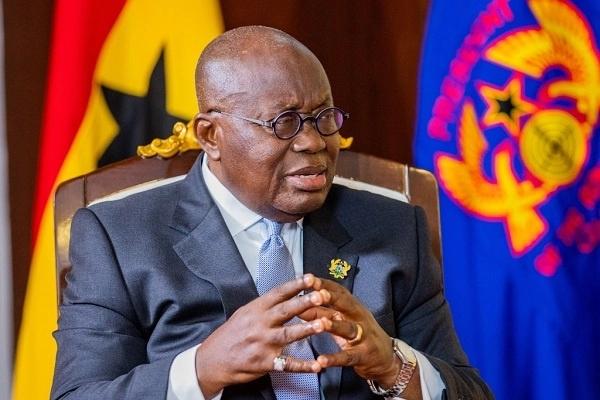
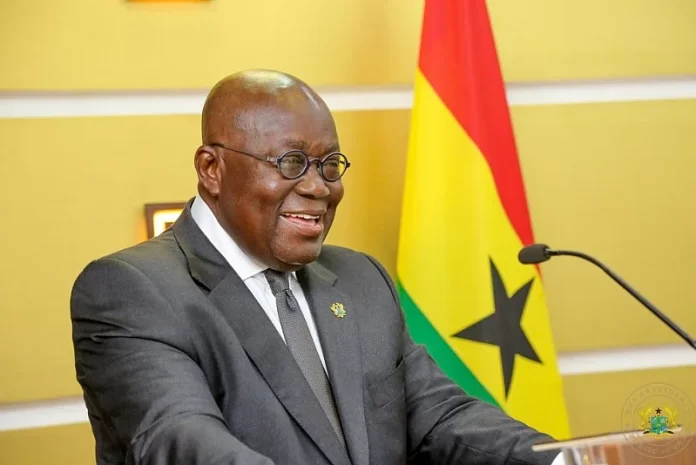
President, Nana Addo Dankwa Akufo-Addo has urged Ghanaians not to allow the December 7 polls divide the country but build and strengthen the country’s democracy. 

He said elections were the civic responsibilities of citizens, however, in exercising their franchise and stating their different opinions on who to vote and not vote for, it should not result in war and violence.

Mr Stephen Asamoah Boateng, Minister for Chieftaincy and Religious Affairs, said this on behalf of the President at the 2024 Peace Campaign organized by associations of faith based organisations on the theme: “Let Peace Prevail (Mathew 5:9).” 

The event which took place at the Forecourt of the State House was under the auspices of the Ghana Pentecostal and Charismatic Council (GPCC), Christian Council of Ghana (CCG), National Association of Charismatic Christian Churches (NACCC), Ghana Catholic Bishops’ Conference and Office of the National Chief Imam. 

It brought together some political party leaders, including former President John Dramani Mahama, Flagbearer of the NDC; Mr Hassan Ayariga, Presidential Candidate of All People’s Congress (APC); Dr Mathew Opoku Prempeh, Vice Presidential Candidate of the NPP and Nana Ohene Ntow, Senior Advisor to Mr Alan Kyerematen, Presidential Candidate for Movement for Change. 

Mr Asamoah Boateng said Ghana’s interest was supreme over political parties, adding that the country had rich tapestry of culture, traditions and beliefs that uphold unity and it was important the citizens embraced each other as brothers and sisters. 

“We have polarised and politicised a lot of things we do in this country, creating enmity among us. Our politics should be devoid of insults and hate speech. It should be a solemn expression of hope and what one can seek to bring on board the development agenda,” the Minister said. 

He said the government had a responsibility to protect each citizen and maintain law and order before, during and after the December polls.

Dr Mathew Opoku Prempeh, Vice Presidential Candidate, New Patriotic Party (NPP), said members of the NPP had been resolute in their conviction that the peace of Ghana was more important than any interest.

He said an election campaign was just a contest of ideas in quest of getting the people’s mandate to form a government and lead the country. 

“Our Flagbearer, Dr Mahamadu Bawumia has always embodied this principle of peace. We’ve said a lot and this is the time to put words into action. Let’s sign the peace accord to demonstrate that we mean what we say,” Dr Opoku Prempeh said. 

He urged the leaderships of the clergy to guard their members against making disparaging comments that inflated religious intolerance since the country had been challenged by political intolerance. 

Sheikh Arameyaw Shiabu, Spokesperson for the National Chief Imam, said peace was an all time need of humans, adding that Cardinal Appiah Turkson once said: “It is the action of the human beings that incarnate violence.”

He said everyone needed to control their hearts and minds and in speaking to one another across the political divide, they should do so with Love. 

“From the Chief Imam, we want all persons to put their interests aside for that of Ghana. We plead that out political actors be careful not to make inflammatory comments. For the young people, be careful how you can be deployed or used as tools to perpetrate violence,” the Spokesperson said. 

President Akufo-Addo, Communications Minister honoured for Ghana’s cybersecurity advancement.

0

President Nana Addo Dankwa Akufo-Addo has been awarded for his commitment to improving cybersecurity for the safety of Ghana’s digital environment.


“Under his leadership, Ghana has made substantial progress in establishing frameworks and initiatives aimed at strengthening cybersecurity measures,” a citation presented to the President at the 2024 Cybersecurity Awards, on Friday night, in Accra, read.


The country’s cybersecurity journey has evolved tremendously since 2017.
It has improved its rating from 36.2 per cent that year to a current 99.27 per cent on the International Telecommunications Union (ITU) Global Cybersecurity Index (GCI).


This makes Ghana the second-highest ranked nation in Africa, and one out of five countries to achieve Tier One status, a development that puts the country in the role model rank, and is among 46 countries worldwide in this category.


In 2020, the country ranked 43rd globally and third in the African Region on the ITUʼs GCI, with a score of 86.69 per cent.
The Cyber Security Authority, organisers of the awards’ ceremony, acknowledged the President for his commitment, stating that this had been vital for national development and protecting citizens from cyber threats.


This year’s event also honoured Mrs Ursula Owusu-Ekuful, Minister of Communications and Digitalisation, for her significant role in this feat and Ghana’s digital transformation.


She received the Exemplary Leader Award, having successfully operationalised the government’s infrastructural programme for the ICT sector, promoting digitalisation and e-government services.


“Under her leadership, Ghana has been ranked Tier One in the latest ITU Global Cybersecurity Index (GCI), demonstrating her commitment to cybersecurity,” a citation presented to the Minister noted.


The Director General of the Cyber Security Authority, Governing Board Members, the Cyber Security Service Committee, some staff and key international and local stakeholders, among others, were also celebrated at the event.


The media organisations honoured at the event were the Ghana News Agency (GNA), Ghana Broadcasting Corporation (GBC), Graphic Communications Group, Despite Media Group, GhanaWeb, Asaase Broadcasting Company, and Business and Financial Times.


The awardees received plaques, certificates, and medals for their varied roles in promoting a safer online environment, providing digital leadership in cybersecurity development, and contributing to Ghana’s success in emerging among the list of Tier One countries in the 2024 ITU Global Cybersecurity Index.


Since the establishment of the Cyber Security Authority, under Section Two of the Act in October 2021, several regulatory activities have been initiated.


These include the protection of Critical Information Infrastructure as outlined in Sections 35 to 40 of Act 1038, licensing of Cybersecurity Service Providers per Sections 49 to 56, and regulations on Cybersecurity Incident Reporting and Sectoral Computer Emergency Response as per Sections 41 to 48 of the Cybersecurity Act, 2020.


The Authority is mandated to safeguard children online as prescribed by the Cybersecurity Act 2020, and has also revised the Child Online Protection Framework to guide all stakeholders in ensuring the safety of children on the internet.


A key milestone in the country’s cybersecurity strides has been the National Cyber Security Awareness Programme, which launched comprehensive capacity-building and awareness initiatives across four focal areas: Children, the Public, Businesses, and Government, with the National Cyber Security Awareness Month (NCSAM) as its flagship initiative.


President Nana Akufo-Addo, in an address, said cybersecurity was critical to achieving a safe digital landscape, as well as national development goals.


“With initiatives such as the Cyber Security Authority and the National Computer Emergency Response Team, we are positioned to respond to cyber threats swiftly.


“These institutions are crucial for securing critical sectors such as banking, energy, and health, contributing to the realisation of Sustainable Development Goals Eight, Nine, and 11, by safeguarding our infrastructure, promoting innovation, and fostering safe, inclusive, and resilient communities.


“Thanks to invaluable partnerships with international organisations such as the Council of Europe, the African Union (AU), UNICEF, and the World Bank, Ghana has fortified her cybercrime and data protection laws,” the President stated.


Mrs Ursula Owusu-Ekuful expressed gratitude to the stakeholders for their invaluable support towards the growth of the organisation.


She said Ghana and Singapore were the only countries that were licensing cybersecurity professionals and giving accreditation to service providers to ensure best practice and sanitise the professional ecosystem.


Dr Albert Antwi-Boasiako, Director-General of the Cyber Security Authority, attributed the success of the Authority in securing Ghana’s Cyber security space to the bi-partisan support it had enjoyed from stakeholders, especially in the seventh and eight Parliament of the Fourth Republic.


“This collective commitment is what underpins Ghana’s cybersecurity achievements, and we should work to sustain this.”


The night also saw the launch of a book chronicling Ghana’s journey thus far in cybersecurity development and accomplishments.


Dr Antwi-Boasiako authored the book to serve as model to other countries and to provide best practice to guide professionals.


The ceremony was to recognise key individuals and institutions that had played significant roles in laying the foundational framework for cybersecurity development in Ghana. It was also to highlight the contributions of partners who had collaborated with the CSA to advance its mission, through public-private partnerships, academic collaborations, and other forms of strategic alliances that had been instrumental in its growth.

PwC Ghana forum calls for urgent investment in cyber security strategies.

0

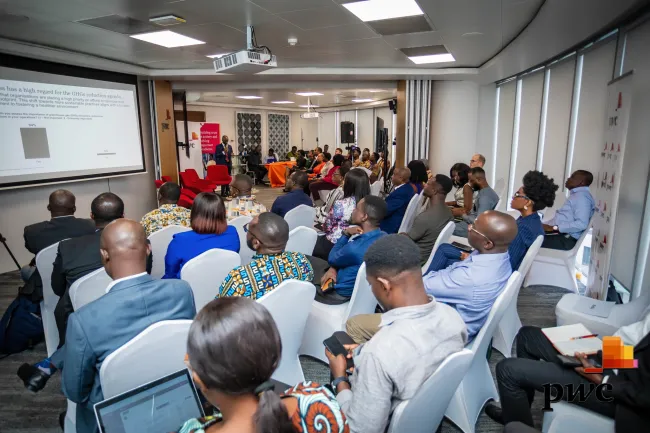
Panellists at a PwC Ghana cyber forum have called for urgent investment in cyber security strategies to help address vulnerabilities.

PwC’s  Ghana 2025 Global Digital Trust Insights Survey showed that only 2% of organizations worldwide have implemented cyber resilience measures across all key areas, underscoring an urgent need for improvement. 

The survey, involving over 4,000 business and technology leaders from 77 countries, showed significant resilience gaps that businesses must close to be safe from complex cyber threats.

The report highlightied immediate action areas for organizations striving to achieve cyber resilience, enhance risk management, and improve leadership

alignment.

Clement Yayra Tettey, Senior Manager Consulting and Risk Services PwCGhana, in a keynote address, emphasized the need to integrate cyber resilience into business strategies. 

He charged business leaders to include technology and cyber leaders in their organisations in strategic decisions, to help anticipate problems posed by cyber criminals and properly bolster the cyber resilience.

He further encouraged business and cyber leaders to collaborate and position cybersecurity as a competitive edge.

He mentioned that the findings of the 2025 Global Trust Digital Insight report from PwC put customer trust, brand integrity and loyalty, business growth and opportunities, staying ahead of business disruption, leadership in the market, and public relations at the heart of cybersecurity and trust.  

He noted that fewer than half of Chief Information Security Officers (CISOs) were significantly involved in strategic decision-making, despite the rapid expansion of cyber threats driven by advances in AI, cloud technology, and the proliferation of connected devices.

Mr. Tettey remarked, “Many organizations lag in cybersecurity, and bridging the gap between business and technical leaders is essential.”

He advised companies to increase security awareness training, establish baseline security protocols, and, particularly for financial institutions, comply with regulatory standards like those set by the Bank of Ghana.

The disconnect highlights an urgent need for stronger investments in cybersecurity infrastructure and response capabilities to address these vulnerabilities.

Stephen Cudjoe-Seshie, Cyber Security Authority

Lead at National CERT-GH, highlighted the pressing cyber challenges facing Ghana, including online fraud, job scams, and cyberbullying.

At an enterprise level, he noted the threats of malware, ransomware, and unauthorized access to executive profiles. Cudjoe-Seshie urged companies to be vigilant in data management and recommended antivirus software and cautious online behavior.

Marco Loots, Director of Cybersecurity at PwC South Africa, stated that cybersecurity must be prioritized alongside operational metrics and Return on Investment.

He emphasized the importance of staying updated on cybersecurity trends, understanding competitors’ actions, and investing in the right talent, technology, and tools.

Loots warned about the dual risks of ransomware and hack-and-leak attacks, where attackers compromise information and demand payment both

to decrypt and remove sensitive data from the internet. The cost of breaches can reach up to $500,000.

Abel Lomotey Daitey, Chief Information Officer at GCB Bank PLC, noted that financial institutions had made progress in cyber resilience but emphasized the need for CISOs to effectively advocate for cybersecurity investments to remain relevant.

Jacqueline Hanson-Kotei, Head of Security for MTN Ghana, stressed that cybersecurity should be ingrained in an organization’s culture.

“Everyone should understand and ‘own’ cybersecurity,” she said, adding that leadership must support this foundation.”

The survey reveals that organizations are least prepared to address their most concerning threats: cloud-related risks, hack-and-leak operations, third-party breaches, and attacks on connected devices.

This disconnect highlights an urgent need for

stronger investments in cybersecurity infrastructure and response capabilities to address these vulnerabilities.

PwC Cyber Forum discussed leading topics, including cybersecurity as a business priority, leadership driving cybersecurity, organisational preparedness for cyber incidents, investing in technology and people, and measuring and continuous improvement within cyberspace.

Key stakeholders and industry experts in attendance were Chief Technology Officers, Chief Information Security Officers, Chief Risk Officers, Chief Finance Officers, other top executives responsible for cybersecurity strategy and governance, within the financial services, telecommunications, and energy industries, as well as government agencies in Ghana. 

The forum wrapped up with calls to action to all stakeholders to collaborate cohesively to align business and cyber priorities, empower CISOs to be involved in strategic planning of cybersecurity measures, and invest in resilience by taking a

holistic approach to integrate people, processes, and technology. 

It also urged business leaders at c-suite and board levels should make a deliberate effort to work with their cyber leaders to utilise cybersecurity as a competitive advantage to foster customer trust within the industries they operate in.

Election must not divide us, Gov’t will protect each citizen – Akufo Addo.

0

President, Nana Addo Dankwa Akufo-Addo has urged Ghanaians not to allow the December 7 polls divide the country but build and strengthen the country’s democracy. 

He said elections were the civic responsibilities of citizens, however, in exercising their franchise and stating their different opinions on who to vote and not vote for, it should not result in war and violence.

Mr Stephen Asamoah Boateng, Minister for Chieftaincy and Religious Affairs, said this on behalf of the President at the 2024 Peace Campaign organized by associations of faith based organisations on the theme: “Let Peace Prevail (Mathew 5:9).” 

The event which took place at the Forecourt of the State House was under the auspices of the Ghana Pentecostal and Charismatic Council (GPCC), Christian Council of Ghana (CCG), National Association of Charismatic Christian Churches (NACCC), Ghana Catholic Bishops’ Conference and Office of the National Chief Imam. 

It brought together some political party leaders, including former President John Dramani Mahama, Flagbearer of the NDC; Mr Hassan Ayariga, Presidential Candidate of All People’s Congress (APC); Dr Mathew Opoku Prempeh, Vice Presidential Candidate of the NPP and Nana Ohene Ntow, Senior Advisor to Mr Alan Kyerematen, Presidential Candidate for Movement for Change. 

Mr Asamoah Boateng said Ghana’s interest was supreme over political parties, adding that the country had rich tapestry of culture, traditions and beliefs that uphold unity and it was important the citizens embraced each other as brothers and sisters. 

“We have polarised and politicised a lot of things we do in this country, creating enmity among us. Our politics should be devoid of insults and hate speech. It should be a solemn expression of hope and what one can seek to bring on board the development agenda,” the Minister said. 

He said the government had a responsibility to protect each citizen and maintain law and order before, during and after the December polls.

Dr Mathew Opoku Prempeh, Vice Presidential Candidate, New Patriotic Party (NPP), said members of the NPP had been resolute in their conviction that the peace of Ghana was more important than any interest.

He said an election campaign was just a contest of ideas in quest of getting the people’s mandate to form a government and lead the country. 

“Our Flagbearer, Dr Mahamadu Bawumia has always embodied this principle of peace. We’ve said a lot and this is the time to put words into action. Let’s sign the peace accord to demonstrate that we mean what we say,” Dr Opoku Prempeh said. 

He urged the leaderships of the clergy to guard their members against making disparaging comments that inflated religious intolerance since the country had been challenged by political intolerance. 

Sheikh Arameyaw Shiabu, Spokesperson for the National Chief Imam, said peace was an all time need of humans, adding that Cardinal Appiah Turkson once said: “It is the action of the human beings that incarnate violence.”

He said everyone needed to control their hearts and minds and in speaking to one another across the political divide, they should do so with Love. 

“From the Chief Imam, we want all persons to put their interests aside for that of Ghana. We plead that out political actors be careful not to make inflammatory comments. For the young people, be careful how you can be deployed or used as tools to perpetrate violence,” the Spokesperson said. 

UNFPA engages National House of Chiefs on ending child marriage.

0
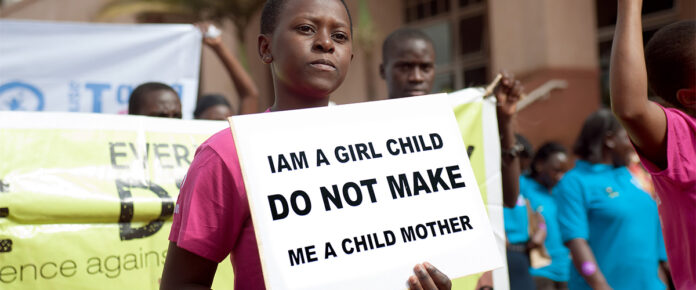
On 11 October 2012, Plan Uganda's Because I am a Girl campaign was launched on the first International Day of the Girl. Hundreds of rights activists, both boys and girls, attended the launch at the Imperial Royale hotel in Kampala. The celebrations began with children marching from the Ministry of Gender to the Imperial Royale Hotel led by a brass band. The children delivered a memorandum containing their concerns to the Speaker of Parliament. The Speaker of Parliament Rt. Hon. Rebecca Kadaga officiated at the launch, which was also attended by the State Minister for Youth and Children’s Affairs, Hon. Ronald Kibuule, the State minister for Gender and Cultural affairs, Hon. Lukia Nakadama, commissioners from over five line ministries and Members of Parliament. Over 50 NGOS both local and international joined Plan in commemorating the International Day of the Girl as well as the launch of the BIAAG campaign. The function was punctuated by colourful music performances from artists known for advocating child rights.

About two in every 10 children between the ages of 10 and 19 are in cohabitation or marriage, with the national prevalence rate of child marriage currently standing at 19 per cent.

The harmful practice is robbing many girls of their education, health and future – a situation that requires the collective efforts of key stakeholders to nip in the bud.

It is against this background that the Ghana Office of the United Nations Population Fund (UNFPA) is seeking the support of the National House of Chiefs in ending child marriage across the country as custodians of cultural heritage.

It wants the House to consider declaring abandonment of child marriage from the national to the community level to allow young girls to reach their potential.

Dr. Wilfred Ochan, Country Representative for UNFPA in Ghana, who made the call, said society looked up to chiefs as traditional leaders on matters of culture, hence their roles in ending child marriage was critical.

“You have the most elaborate structure from the National House of Chiefs to that village and household level that can be used for mobilising the population for social transformation and economic development,” he told the House, when he led a team of officials from his office to call on the House in Kumasi.

The visit was to implore the House to play leading role in the declaration of abandonment of child marriage in Ghana to support global efforts geared towards ending child marriage.

Dr. Ochan said cultural and traditional institutions are not merely a relic of the past but a dynamic force for development, continually evolving to preserve the people while documenting the rich history and traditions of each of the cultures.

The UNFPA Country Representative said child marriage could only hold back the development and progress of society, saying that, supporting girls to go to school would ensure more empowered young people who could contribute to social and economic development.

“When we come together to declare abandonment of child marriage and also come up with mechanisms to enforce this, then we will be supporting the development of these young girls and our communities,” he noted.

He encouraged the National House of Chiefs to take that critical decision to empower the girl child and also give her a chance in life which could lead to development in their traditional areas.

Ogyeahoho Yaw Gyebi, President of the National House of Chiefs, applauded the UNFPA and its partners for their efforts to end child marriage and pledged the commitment of the House to the fight against the menace.

He, however, expressed doubt over the prevalence rate of child marriage in Ghana, and urged the UNFPA team to further interrogate the figures, which he said, could be misleading.

Abdul Fatawu Issahaku ruled out of Leicester City’s trip to Ipswich Town due to groin issue.

0

Leicester City manager Steve Cooper has confirmed that winger Abdul Fatawu Issahaku is dealing with a groin injury.

Issahaku was not included in the squad for the Foxes’ recent Carabao Cup Fourth Round match against Manchester United, which ended in a disappointing 5-2 defeat.

Speaking to the press on Thursday, Cooper addressed Issahaku’s situation.

“We’ve had a really good morning’s work,” he said. “Through the frustration and annoyance of how the game went, it’s been turned into a positive motivation for the next game and that’s where we’re at.

He emphasized the importance of selecting the right team to implement their game plan.

“You pick a team that you think is the best fit to deliver a plan to win a game. That doesn’t necessarily mean the players who played last night won’t play again at the weekend or vice versa. We’ve picked up a couple of knocks in the week.”

Regarding Issahaku’s absence, Cooper stated, “Abdul was not available for the game last night through a groin [issue]. We had a few enforced changes last night but just because we went one way last night, it doesn’t mean we won’t go a certain way at the weekend,” he added.

So far this season, Abdul Fatawu Issahaku has made nine appearances in the Premier League, contributing two assists. Leicester City currently sits in 15th place in the league table, with nine points from nine matches, as they aim to climb back up and establish themselves in the top flight.

Kenya’s new deputy president sworn in as his predecessor challenges his impeachment in court.

0

Kenya’s new deputy president has been sworn into office, two weeks after his predecessor was overwhelmingly voted out in an impeachment motion in parliament over allegations of corruption and inciting ethnic division.

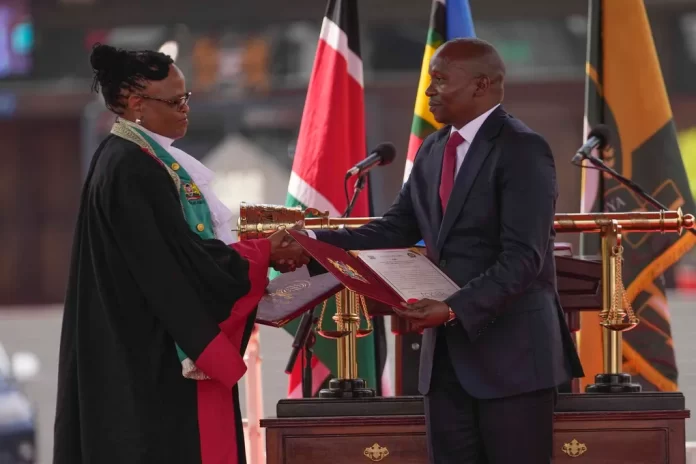
Kindiki Kithure took office on Friday after a colourful event in the capital, Nairobi, attended by government officials and Western envoys among other guests.

The court cleared his swearing-in on Thursday after orders suspending it were lifted, despite a continuing court case challenging the impeachment of the previous deputy president, Rigathi Gachagua.

Gachagua is challenging the impeachment before the High Court in Nairobi, arguing that the charges are unsubstantiated and that the hearings were unfair.

The former deputy president was impeached and removed from office by a vote of more than two-thirds of legislators on Oct. 17 on charges of corruption, inciting ethnic divisions and support for anti-government protests. President William Ruto nominated Kindiki for the deputy role the next day.

Gachagua’s impeachment had highlighted divisions within the ruling United Democratic Alliance, or UDA, and friction between Ruto and Gachagua, both UDA members. Gachagua had been accused of insubordination when he opposed the government’s policy of forced evictions during heavy rains that caused flooding and deaths.

The new deputy president Kindiki called Friday’s event a celebration of the “constitution and our democracy” and committed to be loyal and faithful to the president.

President Ruto urged him to “please serve the people of Kenya” adding that like all public servants, they are not in office for personal interests and that all leaders serve at the pleasure of the people of Kenya and must uphold the constitution and the rule of law.

Kindiki — the former interior minister — takes the deputy president’s office at a time when arbitrary arrests and enforced disappearances in Kenya have raised concerns among western envoys and human rights groups. The country is also going through economic hardships with a rising cost of living and newly increased taxes.

In June, the country witnessed a series of nationwide anti-government protests over a finance bill that proposed to increase taxes, culminating in the storming and burning of parliament on June 25, when several protesters were shot dead outside parliament gates.

Ruto, who came to office claiming to represent Kenya’s poorest citizens, has faced widespread criticism over his efforts to raise taxes to pay off foreign creditors. The public opposition led him to shake up his Cabinet and back off from certain proposals.

It takes time to fix problems of Ghana football – Kurt Okraku.

0

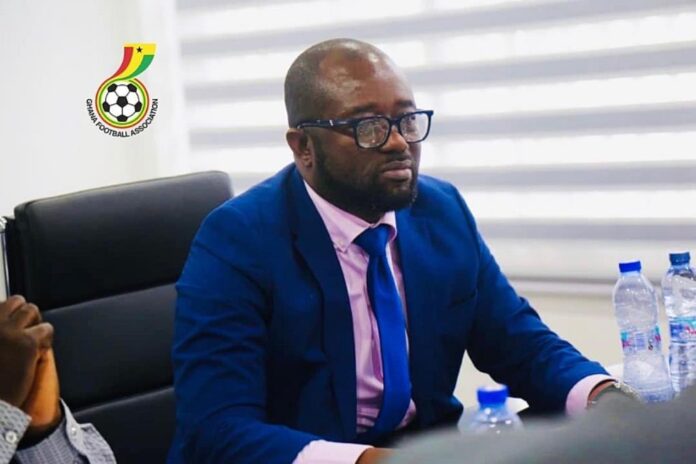
President of the Ghana Football Association, Kurt Okraku, has urged Ghanaians to be patient with his administration as they seek to address the problems facing the nation’s football.

Okraku stated that it takes time and investment to restore Ghanaian football to the level it was at over a decade ago.

He cited disruptions caused by the Number 12 documentary as a key reason why Ghanaian football is struggling to meet its previous standards.

Speaking to the press during the U15 Colts Championship recently held in Prampram, Okraku said, “I would always want to remind all of us where we have come from. Sometimes we do forget about our yesterday.

“We came from a point where the game had been stopped in our country. We came from a period where colts football was dead in our country.

“We came from a period where we were inconsistent in running of our domestic leagues. We came from a period where our national teams were not performing.

“To fix this, it takes time, it takes patience, it takes the right people, and it takes a lot of investments.”

Following the release of the Number 12 exposé, the government dissolved the Ghana Football Association (GFA) in 2018 in an effort to restore integrity.

The fallout also affected the performance of the national team, the Black Stars, contributing to their failure to qualify for the 2018 FIFA World Cup.

The expose had broader implications beyond Ghana, as the Confederation of African Football (CAF) suspended several referees implicated in corrupt activities.

Bagbin summons Parliament to reconvene November 7.

0

The Speaker of Parliament, Alban Bagbin, has summoned the House to reconvene on Thursday, November 7, 2024, at 10:00 AM.

The session will take place at the Grand Arena of the Accra International Conference Centre, where lawmakers will return to critical discussions that have been stalled for several weeks.

The decision to reconvene follows a protracted impasse triggered by a ruling from the Speaker regarding vacant seats in Parliament. Speaker Bagbin had declared the seats for Fomena, Amenfi Central, Suhum, and Agona West vacant, igniting fierce backlash from the Majority caucus, which argued that the Speaker’s actions undermined their representation.

In a significant development, the Supreme Court intervened, issuing a stay on the Speaker’s declaration after Majority Leader Alexander Afenyo-Markin filed a writ ahead of the Speaker’s decision.

This ruling effectively reinstated the contested seats temporarily and highlighted the ongoing tensions between the Majority and Minority factions in Parliament.

The situation escalated further when the Speaker adjourned sitting after the Minority caucus took control of the Majority side of the House, capitalizing on their numerical advantage due to the Speaker’s ruling.

This unprecedented move raised concerns about the operational integrity of Parliament and the need for a swift resolution to restore order.

In response to the continuing stalemate, the Majority triggered a recall of Parliament. Their insistence on reconvening was prompted by urgent legislative matters requiring immediate attention.

The Majority emphasized the need to resume legislative business to ensure that critical policies and programs are not stalled.