Home Blog Page 151

We will break the corruption – Prof Opoku-Agyemang

0

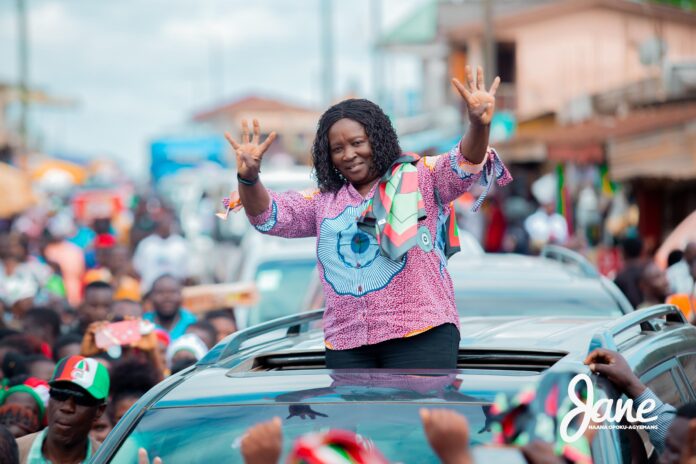
Professor Jane Naana Opoku-Agyemang, the Running Mate of the National Democratic Congress (NDC), says the Party will use its eighth position on the ballot paper to break the corruption that has engulfed the country under the New Patriotic Party (NPP) Government.

A statement issued by Mr James Agyenim-Boateng, Spokesman of the NDC Running Mate, copied to the Ghana News Agency said Prof Opoku-Agyemang made the revelation in her address to NDC supporters at Ayinase in the Ellembelle Constituency, as part of the second phase of her three-day campaign tour of the Western Region.

She urged the people to seize the opportunity on Election Day to break the hunger, suffering, poverty, and the high unemployment in the country.

“The Women’s Development Bank is coming, the National Apprenticeship Programme is coming, and the NDC is also bringing you the Big Push to create jobs”, she said.

Prof Opoku-Agyemang recalled that when the NDC was in government, the quality of

education was high and all secondary school students were in school at the same time; adding that there was also certainty about the academic calendar

She observed that in spite of the government’s rhetoric, secondary education has become costly as parents and guardians now pay more for the upkeep and academic needs of their children in school.

Prof. Opoku-Agyemang said Ghana needs a reset and urged electorates to vote for the NDC’s John Dramani Mahama in the Presidential Election on December 7, 2024, to enable him to fix the mess created by the government.

She said the country had been run aground by the NPP government, defaulted on its loan repayments and it would take the experience and hard work of Mr Mahama to navigate Ghana out of the mess created by the NPP Government

“Mr Mahama is a hardworking and trusted leader with a solid record of achievements. He built schools, markets, hospitals, roads, and many other infrastructure projects across the country when he led the country and he will do it again when elected,” Prof Opoku-Agyemang said.

EC, political parties commit to address challenges with voters’ register

0

The Electoral Commission (EC) and various political parties have agreed to work together to address the challenges related to the Provisional Voters’ Register ahead of the 2024 General Election.

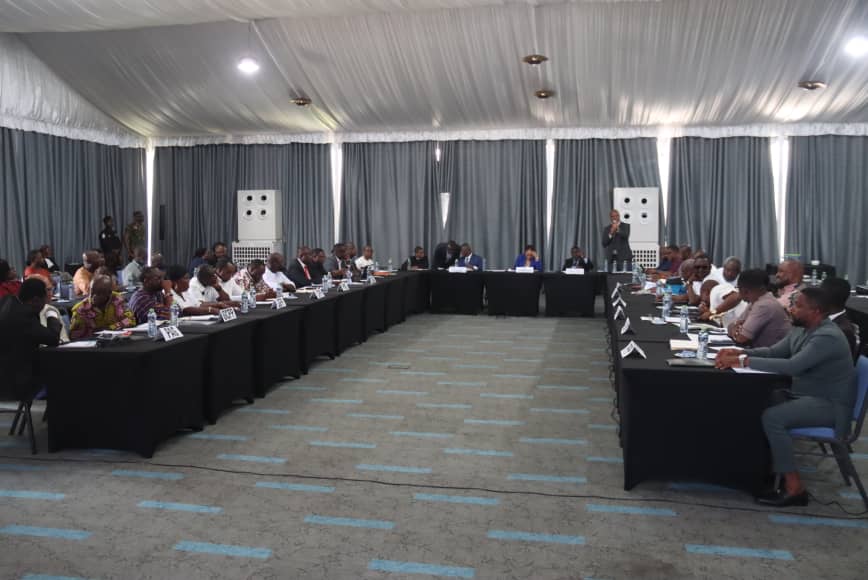
 During an Inter-Party Advisory Committee (IPAC) meeting convened by the EC in Accra on Tuesday, both the Commission and the political parties acknowledged that ensuring a clean voters’ register was a collective responsibility, and thus, all stakeholders must contribute to make the register more robust.

For the first time in IPAC’s history, the media, civil society organizations (CSOs), and the diplomatic community were permitted to participate as observers in the meeting, which was also broadcast live to the public.

The EC said the development, which would be repeated at all subsequent IPAC meetings, formed part of measures to deepen transparency and build trust ahead of the December 7 polls.

The meeting extensively addressed the challenges associated with the Provisional Voters’ Register and the measures the Commission was implementing to strengthen its integrity.

Prior to the meeting, the National Democratic Congress (NDC) raised concerns about the register’s credibility and called for an independent forensic audit to ensure its integrity.

At the begging of the meeting, the EC made an extensive presentation on the measures it had taken to address all identifiable discrepancies in the voters’ register.

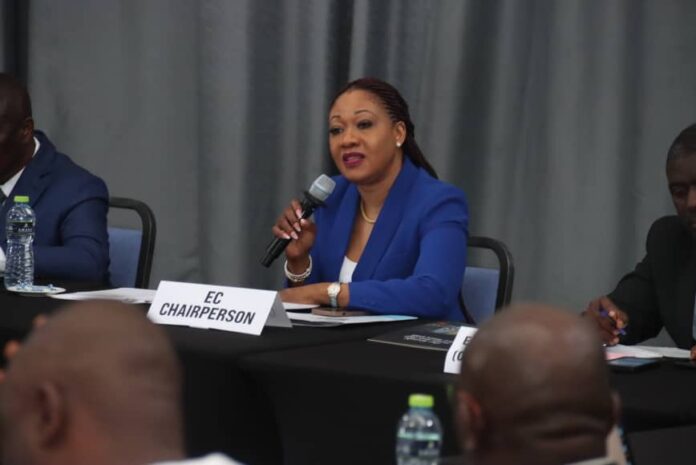
Mrs Jean Mensa, Chairperson, EC, said the exhibition exercise conducted by the Commission provided an opportunity for all stakeholders to flag errors in the register, among other legal remedies provided in the electoral law to address discrepancies in the draft register.

She said the Commission had resolved the discrepancies that were identified in the register during the exhibition exercise.

Mrs. Mensa said that calls for a forensic audit of the voters’ register were premature, emphasising that the Commission had not yet exhausted all available processes to clean and rectify the register.

“The voters’ register is a draft not the final register. It is not perfect and not final,” she said, adding that “the register today is more accurate than what was exhibited and presented to the political parties in August this year.”

Mrs. Mensa announced that the Commission would soon make the provisional voters’ register available online to enable registered voters to verify their details at no cost.

She also assured the political parties that the Commission would furnish them with an updated Provisional Voters’ Register in the “next week or two” for further review before the certification of the register.

Dr. Edward Omane Boamah, Director of Elections for the NDC, reaffirmed the party’s demand for a forensic audit of the EC’s Information Technology systems to enhance confidence in the voters’ register.

“It would only take forensic audit of the I.T. systems of the EC to establish the footprints of exactly where the illegal voter transfers took place,” he said.

Mr Boamah said it was “not strategic” for the NDC to provide the EC with the full data backing its claims, adding that the party would meet to decide on the next line of action after the meeting.

Mr. Peter Mac Manu, Director of Elections for the New Patriotic Party (NPP) Campaign Team, expressed the party’s strong belief in the Electoral Commission’s methods, describing them as the “best” legally prescribed approach to address discrepancies in the voters’ register.

Mr. Justin Kodua Frimpong, NPP General Secretary, labelled the calls for a forensic audit as “needless” and challenged the NDC to provide comprehensive data supporting their claims for review.

While supporting calls for collective input to clean the register, some of the political parties appealed to the EC to plan for voters in underserved communities who may not be able to participate in the online voters’ exhibition exercise.

Data provided by the EC indicated that as of Monday, September 30, 2024, the total number of registered voters stood at 18, 772,795, comprising 9,690,173 males, and 9,082,622 females.

The total number of first-time voters stood at 708, 282.

NDC government will commit to sustainable small-scale mining – Kofi Buah

0

Mr Emmanuel Armah-Kofi Buah, the Member of Parliament for Ellembelle, says a future National Democratic Congress (NDC) government will ensure that small scale mining is done in a sustainable manner to the benefit of communities.

Mr Buah, also the Deputy Minority Leader in Parliament, was addressing thousands of NDC faithful in the Esiama Zone after a campaign float from Kamgbunli to Esiama in the Ellembelle District of Western Region.

The enthusiastic supporters were clad in party T-shirts with some inscriptions such as “Building the Ghana We Want”, “24- Hour Economy”, “Obia Be Didi”, “We Love Our Kwame Nkrumah”, “John Mahama 2024″, and “Vote No. 8 on the ballot” among others.

He said the NDC government would license the local people to undertake community mining and employ more people within their catchment areas.

The MP said: “The NDC is not against the Community Mining Scheme but, we will ensure judicious use of the land without degradation and preserve water bodies from pollution.”

Mr Buah noted that while small-scale mining was a panacea to the unemployment situation, irresponsible and indiscriminate mining was a destruction to the land, water bodies and eco-systems and the environment. The NDC Parliamentary Candidate said an NDC government would also ensure that lan

Fairtrade Africa, Kosmos Innovation Centre launch project to boost shea value chain

0

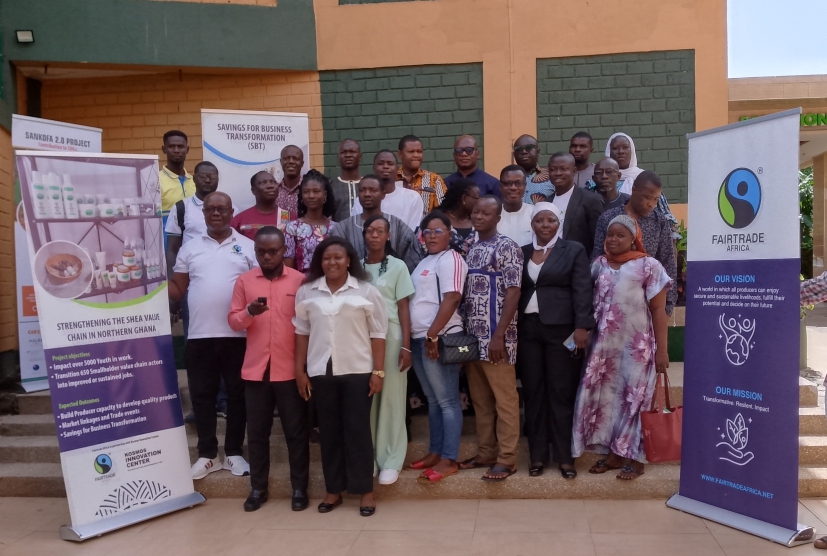
Fairtrade Africa in collaboration with Kosmos Innovation Centre has launched Strengthening the Shea Value Chain in Northern Ghana project.

The year-long project (August 2024 to July 2025) seeks to enhance the shea value chain in the northern parts of the country, focusing on job sustainability, improvement, and creation and targeting over 20,000 individuals.

It is also to develop at least 5,000 youth in work and sustain 680 smallholder farmers enabling agricultural cooperatives and youth in their catchment areas to be empowered to contribute to value creation in the shea value chain.

Mr Nicholas Ofori, Senior Project Officer – Portfolio Products – Fairtrade Africa, speaking during the launch of the project in Tamale, said it was to support actors in the shea value chain in the northern sector to have good livelihoods where they could support themselves and families.

Mr Joel Odeh, Product Development Lead – Fairtrade Africa – West Africa Network, said empowering the youth was crucial and required sustaining existing jobs and creating new ones, adding improving existing jobs and skills-sets is as equally important as creating outright new jobs.”

He noted that the youth often migrated from rural areas to urban centres in search of employment, which posed its own challenges and said the project would empower beneficiaries to create jobs and to give sustainable options to the youth.

Mr Titus Michael Beyuoh, Business Development Manager at Kosmos Innovation Centre outlined the journey of Kosmos Innovation Centre and emphasised the project’s focus on job creation.

He reiterated that “Entrepreneurs should focus on sustaining, scaling up, improving, and building capacity to create more value and jobs in line with Kosmos Innovation Centre’s job creation drive.”

Fisherfolks to have solar powered outboard motors-Bawumia  

0

The Vice President, Dr Mahamudu Bawumia plans to introduce solar-powered outboard motors to fishers to halt the premix brouhaha.  

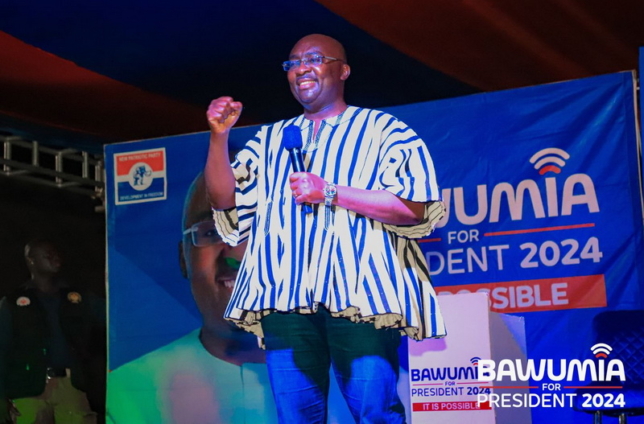
The Vice President and Flagbearer of the New Patriotic Party (NPP) announced this at Abuesi , a fishing community in the Shama constituency of the Western Region as part of his four days campaign tour of the Region. 

He said “When you look at the premix problems, we have not addressed all of them. So, I have been thinking a lot and discussing how we are going to solve the problem permanently.” 

“We will make these outboard motors available to the fishers and so they would not need to buy premix anymore. Once the sun is shining, their outboard motors would be powered, and they can go fishing.” 

“Next month, we will start a whole new regime for fisherfolks because there is too much ‘kululu’ (fraud) in the premix matter,” he said. 

Dr Bawumia has mentioned that his government would rely on solar generation of power to bring down the cost of electricity when given the nod as President. 

Interacting with residents of Manso and Mpohor in the Western Region, Dr. Bawumia lamented the high cost of electricity for businesses and households. 

He said “Government will prioritise solar energy, by generating about 2000 megawatts of it, which will significantly reduce the cost of electricity. 

“I want Ghana to take the bold decision, which I am going to take by the Grace of God next year, to move Ghana away from a dependency on oil and gas for electricity to solar power, the sun, which God has given to us for free.” 

Dr. Bawumia noted that his government would also prioritise the introduction of technology into agriculture, to help significantly improve upon farming. 

Tricycle riders and market women join forces to combat violent Extremism at Paga.

0

The tricycle riders and market women in the Paga community of the Kassena Nankana West District of the Upper East Region, have formulated plans to spearhead campaigns focused on Preventing Violent Extremism (PVE). 


Their action plan aims to sensitise fellow cross-border traders to the risks of radicalisation and the significant impact that violent extremist activities could have on their economic activities. 


The move followed a two-day capacity-building workshop organised by the Upper East Regional Peace Council for a selected group of the beneficiaries, as part of the Atlantic Corridor Project, aimed at empowering cross-border traders in preventing and responding to early warning signs of violent extremism. 


The project, funded by the governments of Denmark, Norway, Germany, and Australia through the United Nations Development Programme (UNDP), targets 240 cross-border traders, 60 in each of the Paga, Navrongo, Fumbisi, and Zebilla communities. 


Madam Florence Agomba, a leader of market women in second-hand clothing at the Paga border, emphasised the pressing need for the campaign and shared her firsthand experience with a suspicious character in the market. 


“There was this gentleman who was in the market posing as a shoeshine, but his behaviour over the days became suspicious, so, we reported him to the security services. When he was arrested, he was found to be armed, and so this sensitisation has become necessary for us all to be alert,” she said.


Mr Vitus Asezim, the Secretary of the Tricycle Riders Association, reiterated that sensitising their fellow traders about the activities of violent extremists was crucial to resisting radicalisation and economic offers by violent extremists and affirmed his group’s commitment to promoting the prevention of violent extremism. 


Mr David Angaamba, the Principal Programme Manager, Peace Council, underscored the invaluable nature of peace and the collective responsibility of stakeholders in preserving it for sustainable development. 


He noted that an estimated 200 Ghanaians who were said to have joined violent extremist organisations as of 2022 were exploited because of poverty and other economic difficulties and urged the traders to be guarded. 


Mr Angaamba reiterated that Ghana’s proximity to areas of jihadists operations made it a fallback territory because violent extremists could exploit security weakness and called on the stakeholders to build resilience by being vigilant and spearheading the sensitisation among their members. 


Mr Victor Abo-Ame Akanbonga, the Upper East Regional Programmes Officer for the National Commission on Small Arms, and Light Weapons, advised the tricycle riders to remain vigilant regarding passengers’ luggage, as they could unknowingly facilitate the illegal flow of firearms into the country. 


The Head of Operations and Intelligence at the Paga sector Command of the Ghana Immigration Service, Deputy Superintendent of Immigration Robert Ubindam, called for enhanced collaboration between security services and cross-border traders to combat crime effectively.  

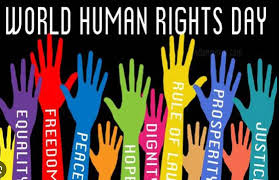
Journalists urged to educate marginalised groups on human rights.

0

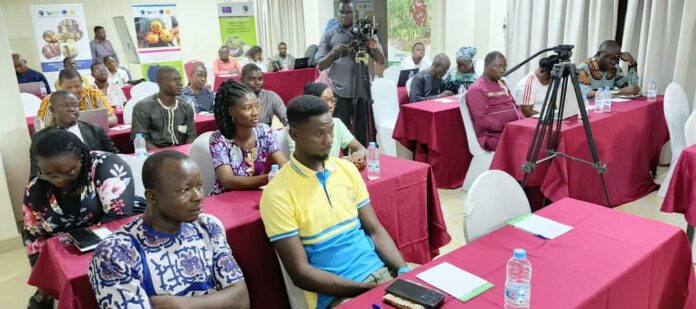
Madam Gloria Emeka, Vice Secretary of Amnesty International, has charged Journalists to engage and educate marginalised communities, especially women and children, about human rights to empower them. 


She made the call during a three-day training for journalists and Civil Society Organizations (CSOs) designed to improve their capacity to educate and protect specific groups in Ghana regarding human rights.  


The training was jointly organised by the Centre for Journalism Innovation and Development (CJID), a non-governmental organisation, and the Institute of War and Peace Reporting (IWPR). 


Madam Emeka noted that human rights issues primarily impact marginalised communities, women, children, and the youth, underscoring the importance of raising awareness among those groups. 

 
She said that every individual was entitled to the rights outlined in the constitution, and it was the responsibility of the media, as the fourth estate, to educate those in minority groups who are often overlooked. 


Madam Emeka stressed the importance of understanding civil, political, and social rights to prevent violations. 


“People, by virtue of being humans, are entitled to live lives of dignity, respect, equal rights irrespective of their class and gender and should be given fair trial,” she said. 


Madam Emeka encouraged journalists and activists to be knowledgeable about human rights articles to advocate effectively.  


She urged them to rely on the Universal Declaration of Human Rights, also known as the “International Bill of Human Rights,” to protect and empower human rights while also protecting themselves. 


The training covered topics such as investigative reporting on human rights, Ghanaian laws and human rights, journalism ethics, and the importance of human rights reporting to enhance and inspire journalists and CSOs to protect and empower victims of human rights abuses. 


Mr. Mutakari Mensah Tanko, a legal practitioner, urged journalists to recognise the Judiciary’s role in safeguarding human rights. 

 
He emphasised that by following up on stories, journalists could help seek justice for victims of human rights abuses, and foster change in Ghana. 


Nana Kwesi Gyan-Appenteng, Board Chair of the Ghana News Agency, reminded journalists to uphold truth, integrity, and a commitment to justice to protect citizens’ rights. 


Madam Mina Mensah, Head of the Africa Office at the Commonwealth Human Rights Initiative (CHRI), said that journalists had a responsibility to amplify the voices of minorities and marginalized groups. 


She stressed the importance of holding institutions and governments accountable, promoting justice, and safeguarding the identities of survivors of human rights abuses.  
Participants in the training were selected through a competitive process. 

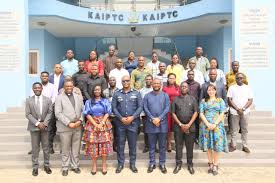
National Action Plan on Youth, Peace, and Security to reflect aspirations of Ghanaian youth – KAIPTC.

0

Air Commodore David Akrong, Deputy Commandant, Kofi Annan International Peacekeeping Training Centre (KAIPTC), has reaffirmed the Centre’s commitment to ensuring that the National Action Plan (NAP) on Youth, Peace, and Security (YPS) reflects the aspirations of Ghanaian youth.  

 
Speaking at a stakeholders consultative workshop on the roadmap for the NAP, currently being developed, Air Cdre Akrong emphasised the need for broader youth participation in the peace and security agenda, recognising their role as agents of change and innovation.   


He said the Youth, Peace and Security agenda was central not only to the stability and development of Ghana but also to the broader peace and security dynamics across Africa.    


The Deputy Commandant said young people were not merely beneficiaries of peace; “they are agents of change, drivers of innovation, and active participants in peace-building processes.”  

 
The development of the NAP, he said, was crucial for creating a framework that empowered youth, promoted inclusivity, and ensured their involvement in decision-making at every level.   


The framework is designed to align with national priorities while incorporating the unique challenges faced by youth in Ghana.  

 
In its initiation and planning stage, expected to be launched and fully disseminated in 2025, the NAP will play a critical role in promoting peace and security both within the country and across the African continent.   


The stakeholder consultative workshop brought together various stakeholders, including representatives from government, youth groups, and international development partners, such as the United Nations Population Fund (UNFPA) and the German Development Cooperation (GIZ).

 
They deliberated on developing a comprehensive and actionable NAP that reflects the needs and contributions of Ghanaian youth.   


Air Cdr Akrong praised the diverse participation and acknowledged the efforts of the Technical Working Group, adding that “this multi-stakeholder engagement is vital because the development of the NAP will require concerted efforts from all sectors of society.”  


The Deputy Commandant called on all stakeholders to continue their collaboration in shaping the final NAP, and that “the NAP is a roadmap for action, a blueprint for sustainable peace, and a testament to our collective responsibility to support and empower the youth of the nation.   


Ms Teresa Kraft, Head of Component for GIZ’s ECOWAS Peace and Security Architecture and Operations (EPSAO) project, acknowledged the German government’s long-standing support for Ghana’s efforts to integrate youth in peace and security frameworks.    


GIZ, in collaboration with the European Union, is prepared to continue its support and better amplify efforts to mainstream youth engagement in peace initiatives, she said.    


Ms Kraft observed that the ambitious nature of the YPS agenda required a shift in mindset and organizational practices.   


She said, “Empowering youth to take responsibility in promoting peace and security means reviewing the way we shape our respective societies, how we run our organisations, and even challenging our mindsets.”  
Ms. Adjoa Nyanteng Yenyi, Country Representative for UNFPA, commended Ghana’s leadership in prioritizing youth within the peace-building process, and that the roadmap was only the first step in developing a comprehensive National Action Plan.    


“This roadmap is not the final product but rather the foundation of an inclusive process that will bring us closer to a comprehensive National Action Plan,” she explained.     


Ms Yenyi said the participatory nature of the roadmap was aimed engage all youth in urban centres or rural areas, and from diverse social and economic backgrounds.   

 
She referenced the United Nations Security Council Resolution 2250, which recognised the importance of youth in peacebuilding and conflict prevention, saying that Ghana’s NAP must align with global frameworks.    


Mr Daniel Bonsu, Deputy Director, National Counter Terrorism Fusion Centre, Ministry of National Security, said the pressing security challenges facing the West African sub-region called for immediate, youth-led action.   


“In the sub-region, and specifically West Africa, the wind that is blowing calls for specific actions within the various countries,” he stated.  


The Deputy Director said, “Within our own country, we have seen a growing demand for accountability, transparency, and active youth participation.”  


He, therefore, said the youth must not only be part of the conversation on peace-building but take leading roles in shaping security responses.   

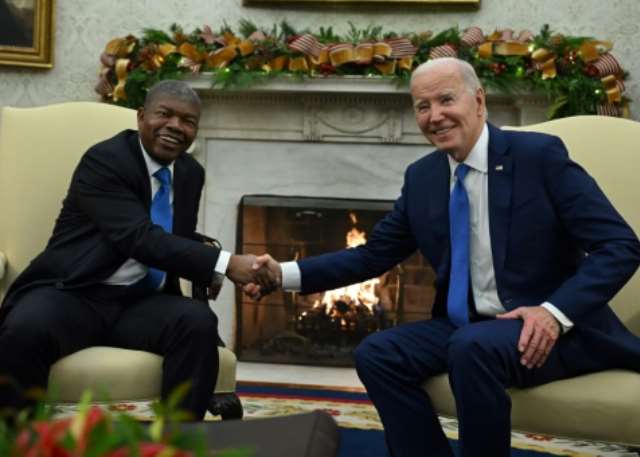
Biden will visit to Angola next month, marking his first journey to Africa as U.S. president.

0

U.S. President Joe Biden will visit Africa next month, the White House announced Tuesday (Sep. 24), marking his first trip to the continent while in office.

He will initially go to Berlin. According to the White House, he will strengthen ties and express thanks to Germany for backing Ukraine’s defence against Russia, among other things, while in Berlin.

He will then fly to Angola from October 13 to 15, where he will discuss strengthening economic connections and increasing security, among other concerns, with President Joao Lourenco. Biden will also describe his proposal for a train project that would begin in Angola and connect the Atlantic and Indian seas.

In a statement, White House press secretary Karine Jean-Pierre said, ‘The President’s visit to Luanda celebrates the evolution of the U.S.-Angola relationship, underscores the United States’ continued commitment to African partners, and demonstrates how collaborating to solve shared challenges delivers for the people of the United States and across the African continent.’

Biden had set his sights on visiting the country last year, but his plans were put on hold after the Israel-Hamas conflict erupted in October. He has vowed closer U.S. ties with democracies on the African continent, as China increases its influence in the region.

Biden had promised during a summit of African leaders he hosted in Washington in late 2022 to visit Africa the following year. His visit was to be the capstone of an administration effort to shore up ties with the continent, partly to counter growing influence there from China, which the US perceives as a rival.

However, 2023 passed without a visit from Biden.

Several top US officials including Vice President Kamala Harris visited African nations, though, on behalf of the now outgoing president.

Earlier Tuesday, the president declared that the U.S. is giving at least $500 million, along with 1 million mpox vaccines, to help African countries as they seek to quell the mpox outbreak.

Tuesday also saw Biden make his final address to the UN General Assembly as president.

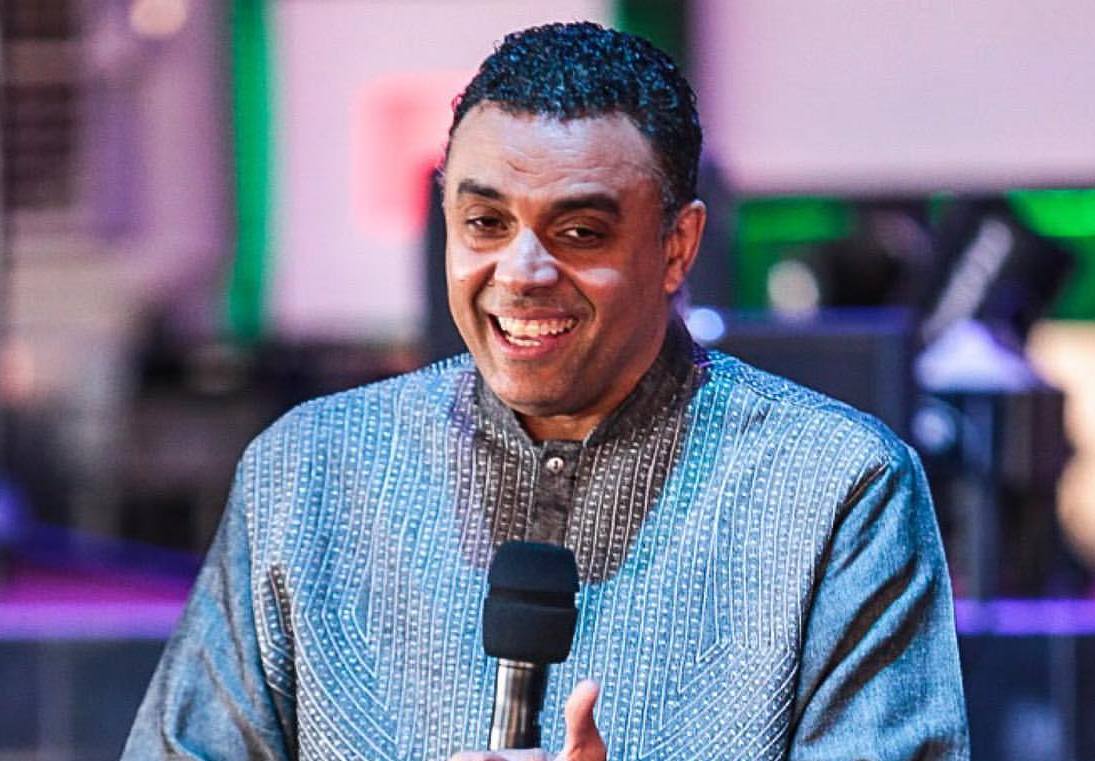
The Art of Leadership: Seeing Ahead for a Better Ghana

0

Proverbs 22:3 – “A prudent man foreseeth the evil, and hideth himself: but the simple pass on, and are punished.”

As Ghana approaches another election season, the importance of visionary leadership cannot be overstated. In these critical moments, we need leaders who can see ahead and prepare for the future, rather than reacting to problems as they arise. It is this foresight that separates good leaders from great ones.

True leadership is about anticipating challenges, recognizing opportunities, and creating pathways for a better tomorrow. In these uncertain times, marked by political tension, economic challenges, and societal shifts, Ghana needs leaders who can navigate the nation through both good times and bad.

1. A Leader Must See the Threats and Evils Ahead

As the elections draw near, it is crucial for leaders to foresee potential threats to the peace and stability of the country. Political unrest, confusion over voter identification, and post-election tensions are real possibilities. The Bible reminds us of the inevitability of trials:

“Woe unto the world because of offences! For it must needs be that offences come; but woe to that man by whom the offence cometh!” – Matthew 18:7

Election-related conflicts have the potential to escalate if not properly managed. A wise leader will take measures to prevent electoral violence by ensuring that systems are in place, such as well-organized voting processes, voter education, and transparency in results. The failure to see these dangers ahead can result in chaos and unrest, potentially destabilizing the nation.

As Ghanaians, we must demand leadership that can foresee such dangers and prepare effectively. Leaders must prioritize peace and stability, ensuring that citizens feel safe and confident in the electoral process.

2. A Leader Must See the Growth Ahead

Ghana, like many African nations, is experiencing rapid population growth, economic shifts, and urbanization. A visionary leader will not only focus on current issues but also anticipate future needs. As Isaiah 9:7 says, “Of the increase of his government and peace there shall be no end.”

The increasing number of people, vehicles, and businesses means the country will need more infrastructure, better education systems, and expanded healthcare facilities. Leaders must be forward-thinking, ensuring that plans for the nation’s development reflect future growth.

For example, the increase in youth unemployment is not just a current challenge but one that will only worsen without proactive solutions. A good leader will foresee this and create policies that promote education, entrepreneurship, and job creation, thereby equipping the next generation with the skills and opportunities they need.

A leader who sees ahead, like Dr. Kwame Nkrumah did when he built the Akosombo Dam, understands that growth requires preparation. We need leaders today who can anticipate future challenges and make investments that will secure a better tomorrow for all Ghanaians.

3. A Leader Must See the Changes Ahead

Change is inevitable. In a rapidly evolving world, leaders must be adaptable and prepared for both social and technological shifts. Ecclesiastes 12:1 encourages us to remember our Creator before difficult days come, highlighting the reality that things will not always remain the same.

As Ghana grows and urbanizes, the dynamics of the country will change. The way we do business, how we educate our youth, and even how we worship will evolve. Wise leaders recognize these changes and plan accordingly.

Years ago, when I observed the expansion of cities, I realized that some members of our churches would find it increasingly difficult to travel long distances to attend services. In response, we established Metropolitan Churches in various locations, ensuring that people could still access worship despite the city’s growth. It was a strategic decision based on seeing the changes ahead.

In the same way, Ghana’s leaders must anticipate changes in industries, technologies, and social structures. Policies must be put in place to ensure that the nation can transition smoothly into these new realities, maintaining relevance and competitiveness in the global market.

Conclusion

Ghana stands at a crossroads as we head toward the next election. The need for leaders who can see ahead and prepare for the future is greater than ever. We need leadership that can predict the evils that may arise, harness the opportunities that growth presents, and adapt to the inevitable changes that come with time.

It is not enough to lead in the present; true leadership requires foresight, wisdom, and a vision for the future. As we head to the polls, let us demand leaders who embody these qualities. Only then will Ghana rise to the heights we all know it can reach.

Good leadership sees ahead and builds a better future for all!