Home Blog Page 152

NDC Okere constituency candidate announces microfinance scheme

0

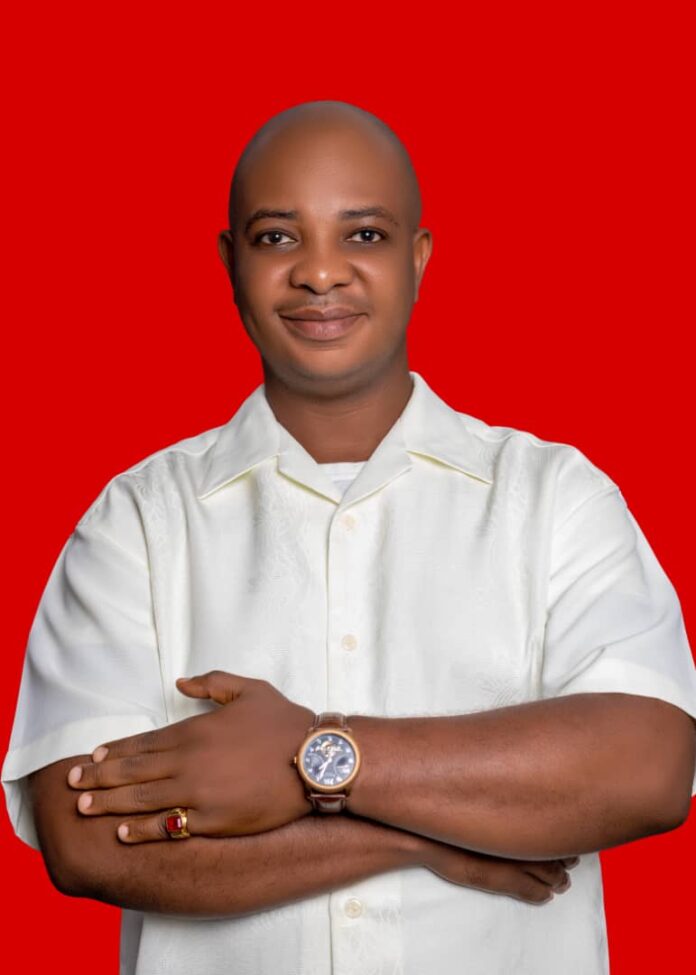
Mr Prince Henry Anim-Owiredu, the National Democratic Congress (NDC) parliamentary candidate for Okere Constituency, has announced plans to launch a microfinance scheme at the Asenema Market Centre, targeting key agricultural sectors.

The move aims at boosting the local economy and generating employment for the teeming young men and women in the Okere District, as well as providing financial assistance to small and medium-sized enterprises in the district.

Gari producers, cassava dough makers, and local farmers are the focus of this new financial plan, which aims to support these key agricultural sectors.

Mr Anim-Owiredu who gave the promise during a visit to Nana Edward Nyarko, the Odikro (Chief) of Nyensi Camp and community elders, said that the microfinance project would significantly help traders grow their businesses and create employment opportunities for young people in the farming area.

He also emphasised the NDC’s commitment to creating jobs for young people when elected to power in December.

Mr Anim-Owiredu highlighted that the largest opposition party’s robust plans to develop the Okere District, including continuing the construction of E-block facilities and building a new Senior High School in lower Okere.

It would also establish a district hospital and a nursing training college in Okrakwadwo, and create a polling station at Nyensi Camp to cater for the growing population.

Mr Anim-Owiredu said the next NDC government would provide more electricity poles to alleviate congestion and ensure a stable power supply, in addition to implementing a youth apprenticeship programme and agro-processing initiatives to create job opportunities for young people.

He urged the people of Ghana to vote for the NDC in both the presidential and parliamentary elections to rescue the country from economic hardship and corruption.

The Okere Constituency has been a hotly contested political battleground between the National Democratic Congress and the New Patriotic Party since the return of multi-party democracy in 1992.

The NDC has won the seat twice – in 1992 and 1996, with Fuzzy Dapaah Torbay as the parliament member; however, the NPP has held the parliamentary seat since 2000 with Mr Daniel Botwe representing the constituency.

The constituency’s status as a swing seat suggests that factors such as local development, candidate popularity, and economic conditions can significantly influence electoral outcomes in the upcoming December 7 elections.

GIZ Calls for collaborations in digital innovation ecosystem

0

Mr Emmanuel Mumuni, the Programme Component Manager at the German Development Cooperation (GIZ), has urged digital innovation ecosystem actors to intensify discussions and collaborations, to develop new applications for existing digital technologies and create innovative technologies.

He described digital innovation as not a mere process but a transformation power that reshaped the fabric of how businesses operate, enhance value creation and interact with the world.

Mr Mumuni was speaking at the Ghana Digital and Innovation Week celebration in the eastern regional capital, Koforidua, on the theme: “Innovate together: Collaborating for digital transformation and impact”.

He said GIZ was relentless to supporting job creation growth in Ghana through digitalisation to enhance employment prospect.

It aims to support technology start-ups and disadvantaged individuals with advisory services, financial instruments, short term and long-term training.

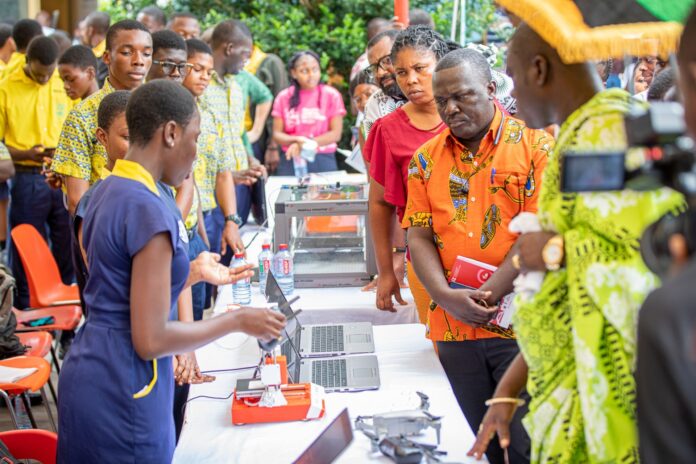
The Ghana Digital and Innovation Week celebration brought together representatives of the Ghana Hubs Network, students from the Pope John Senior High school, Methodist Girls’ Senior High school-Mamfe, and Koforidua Senior High Technical School.

Other participants included the Ghana Export Promotion Authority (GEPA), traders and the various associations.

Mr Seth Kwame Acheampong, the Eastern Regional Minister, explained that the Ghana Digital and Innovation Week was an initiative launched in 2021 by the Vice President, Dr. Mahamudu Bawumia.

The project was born out of a collaborative effort between the government, private sector, academia, development partners, and civil society organizations, with GIZ serving as the implementing partner.

The yearly event aimed not only to raise awareness about the importance of digitalisation, but also to equip organisations and businesses with the knowledge and tools to successfully adopt digital transformation as a new paradigm for development.

“Today, we can boast of Ghana.Gov that manages transactions on behalf of all Ministries, Departments, and Agencies including the Ghana Revenue Authority, Social Security and National Insurance Trust (SSNIT), and Passport office,” he said.

The Ghana Digital and Innovation Week aimed to empower Micro, Small, and Medium Enterprises by sharing knowledge, building capacity, forming partnerships, and discussing policies.

To support this goal and boost private enterprises, the government started setting up Science, Technology, Engineering, and Mathematics schools, which help students develop their skills by using innovation and digitalisation.

During the event, an exhibition showcased students’ projects, including an Electro-Hydro-Dynamic System (a smart crop drying system), a humanoid robot, a Lego robot, a Mars Rover, and a 3D printer.

Designers and fashion exhibitors displayed African wear for men and women, as well as beaded accessories like bangles, bracelets, and bags.

Next NDC government will prioritize the development of vocational trades

0

The next NDC government will prioritize the growth and development of vocational trades to help create job opportunities for the youth.

Mr Peter Abaje, Asante-Akim North constituency Chairperson of the NDC, who stated this, said vocational trades such as tailoring, dressmaking, barbering, hairdressing, and others, played critical roles in job creation and there was the need for their support.

He was speaking at a meeting with various trade groups and associations at Agogo, as part of the door-to-door campaign strategy, aimed at

reaching out to the grassroots for their support in the December general elections.

It was also aimed at interacting with them to identify some of the challenges facing them and see how the party could help address them when voted into power.

Mr Abaje said the next NDC government would offer financial support to small, micro, and medium scale enterprises to enable them stay in business, grow and expand to help create employment for the people.

He said the NDC government’s 24-hour economic policy would offer incentives and make artisans and people in vocational trades stay in business and grow.

Mr George Kwakye, Chair of the Municipal Tailors and Dressmakers Association expressed the readiness of members to repay any form of financial support extended to them by government or financial institutions to expand their businesses.

Fish farmers urged to use professionals in aquaculture to draw biosecurity plans

0

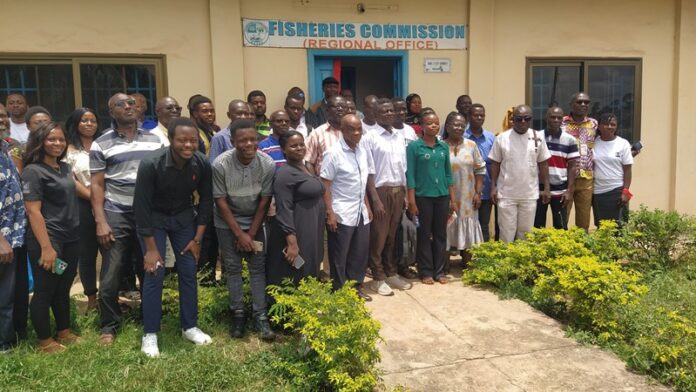
Fish farmers have been urged to always contact professionals in aquaculture to draw suitable biosecurity plans for them to implement in their farms.

This would not only help them manage fish mortality and secure their investments but would also contribute to protecting human life since healthy fish would be produced and supplied to the market for consumption.

Mr Theodore K. Owuani, the Ashanti Regional Laboratory Manager of the Fisheries Commission, who made the call, said it was important for people interested in fish farming to have biosecurity in mind, to ensure that they did not record unexpected losses to discourage them.

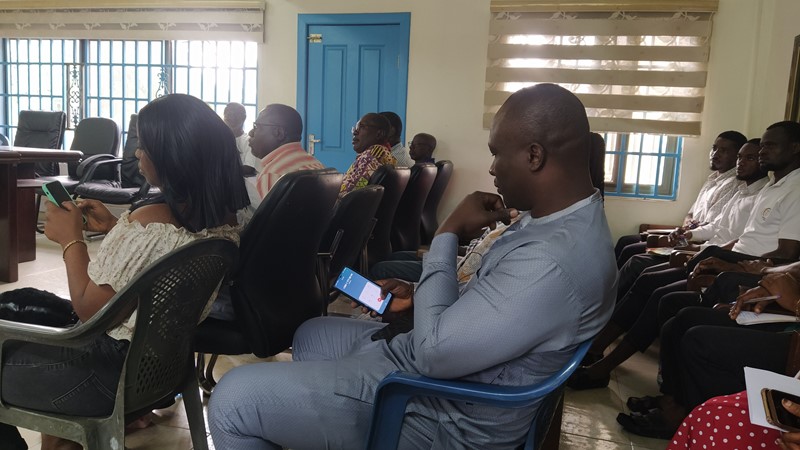
He was speaking at a biosecurity training workshop for about 58 fish farmers in the Ashanti region.

The training was to help the farmers acquire the requisite skills and knowledge in biosecurity, to help secure their investment by preventing unnecessary fish mortality through the introduction and spread of infections and diseases.

Biosecurity involves management plans and measures put in place to prevent the introduction and spread of infections and diseases among organisms.

Mr Owuani pointed out that though fish mortality should be expected it should not be above 15 per cent of stocked fish, and asked farmers to always contact their zonal officers to introduce them to good hatchery to purchase their brood stock.

This is because, some hatcheries were abusing the use of antibiotics in their farms, and this could cause problems for them, he said.

He indicated that, disease and infection outbreaks depended on three factors which included pathogens, which already existed in the water (environment), the environment and the host (fish).

Mr Owuani, the disease or pathogens in the water manifested when the fish was stressed through overstocking in ponds leading to fish competing for oxygen, poor handling and water parameters.

“When the fishes are stressed, their immune systems break down making them vulnerable to infections and diseases,” he stated.

He named other factors that contributed to infections and disease spread on and between farms as not quarantining new brood stock, poor feed storage, contaminated water and equipment, vectors and others.

Mr Owuani said biosecurity plans were specific to every farm because they had different challenges which needed varied solutions.

He mentioned some biosecurity plans and measures as covering ponds with nets, using clean pathogen-free water sources, sourcing fingerlings from certified hatcheries, and making a pest management programme.

Biden believes the US must not retreat from the globe as the Middle East approaches all-out conflict.

0

President Joe Biden vowed that the United States must not retreat from the world in his farewell address to the United Nations General Assembly on Tuesday, as Israel and Hezbollah terrorists in Lebanon pushed closer to conflict and Israel’s brutal campaign against Hamas in Gaza approached its one-year milestone.

The Pentagon said Monday that it will send a limited number of extra US troops to the Middle East to bolster the approximately 40,000 already present.

The White House maintains that Israel and Hezbollah still have time to de-escalate.

“Full-scale war is not in anyone’s interest,” Biden said, adding that despite the rising bloodshed, a diplomatic approach is the only way to achieve peace.

Biden had a hopeful outlook for the Middle East when he addressed the U.N. just a year ago. In that speech, Biden spoke of a “sustainable, integrated Middle East” coming into view.

At the time, economic relations between Israel and some of its Arab neighbors were improving with implementation of the Abraham Accords that Israel signed with Bahrain, Morocco and the United Arab Emirates during the Trump administration.

Biden’s team helped resolve a long-running Israel-Lebanon maritime dispute that had held back gas exploration in the region. And Israel-Saudi normalization talks were progressing, a game-changing alignment for the region if a deal could be landed.

Eighteen days later, Biden’s Middle East hopes came crashing down. Hamas militants stormed into Israel killing 1,200, taking some 250 hostage, and spurring a bloody war that has killed more than 41,000 Palestinians in Gaza and led the region into a complicated downward spiral.

Now, the conflict is threatening to metastasize into a multi-front war and leave a lasting scar on Biden’s presidential legacy.

Israel and Hezbollah traded strikes again Tuesday as the death toll from a massive Israeli bombardment climbed to nearly 560 people and thousands fled from southern Lebanon. It’s the deadliest barrage since the 2006 Israel-Hezbollah war.

Israel has urged residents of southern Lebanon to evacuate from homes and other buildings where it claimed Hezbollah has stored weapons, saying the military would conduct “extensive strikes” against the militant group.

Hezbollah, meanwhile, has launched dozens of rockets, missiles and drones into northern Israel in retaliation for strikes last week that killed a top commander and dozens of fighters. Dozens were also killed last week and hundreds more wounded after hundreds of pagers and walkie-talkies used by Hezbollah militants exploded, a sophisticated attack that was widely believed to have been carried out by Israel.

Israel’s leadership launched its counterattacks at a time of growing impatience with the Iranian-backed Hezbollah’s persistent launching of missiles and drones across the Israel-Lebanon border after Hamas started the war with its brazen attack on Oct. 7.

Biden also talked about Artificial Intelligence and the need for the world to act now in putting up guard rails to protect citizens of the world from any dangers it may pose

And the need “to uphold our principles as we seek to responsibly manage the competition with China so it does not veer into conflict.”

Ramaphosa urges the world’s leaders to take bold action to stop Palestinian suffering.

0

South Africa has advocated a calm settlement to the ongoing Gaza hostilities.

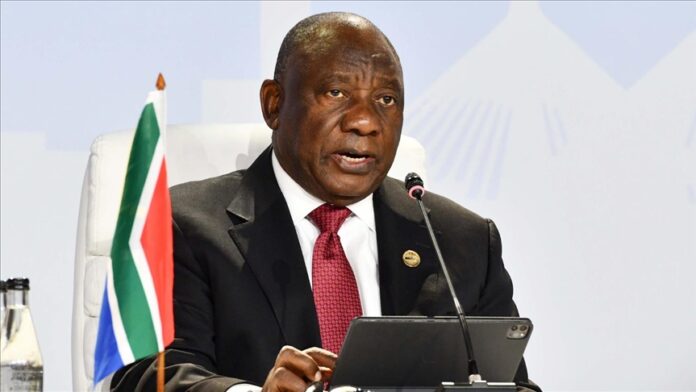
Ramaphosa addressed the United Nations General Assembly on Tuesday, urging international leaders to take bold action to stop Palestinian suffering.

“The violence against Palestinians is a tragic continuation of Israel’s apartheid policy of more than half a century. Apartheid is something that South Africans are familiar with. We lived through apartheid. Apartheid caused us great suffering and death. “We will not remain silent and watch as apartheid is perpetrated against others,” President Cyril Ramaphosa declared.

Israel has continued its incursion in the Palestinian territory since October last year killing at least 41,000 people including women and children according to the Palestinian authorities.

Some natiuons like Turkey have called upon the Un to place sanctions on Israel.

Meanwhile, Lebanese health authorities on Tuesday raised the death toll from two days of Israeli airstrikes targeting Hezbollah militants to 564. Palestinian officials in Gaza, meanwhile, said new Israeli strikes killed at least two dozen people.

Israel’s military says it will do “whatever is necessary” to push Hezbollah away from Lebanon’s border with Israel. Israel and Hezbollah have been trading fire since the Israel-Hamas war began. On Monday, Israel launched hundreds of airstrikes in southern and eastern Lebanon, killing nearly 500 people and wounding more than 1,600 others.

Thousands of people fled southern Lebanon, jamming the main highway to Beirut in the biggest exodus since the 2006 Israel-Hezbollah war.

It’s a staggering toll for a country still reeling from a deadly attack on communication devices the week before. Lebanon blamed the attacks on Israel, but Israel did not confirm or deny its responsibility.

Hezbollah again launched some 100 projectiles toward Israel on Tuesday, the Israeli military said.

Government to introduce climate levy – NELEF 2024

0

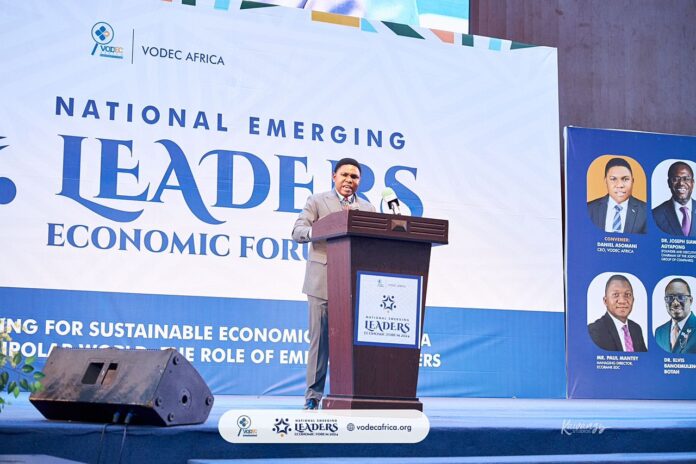
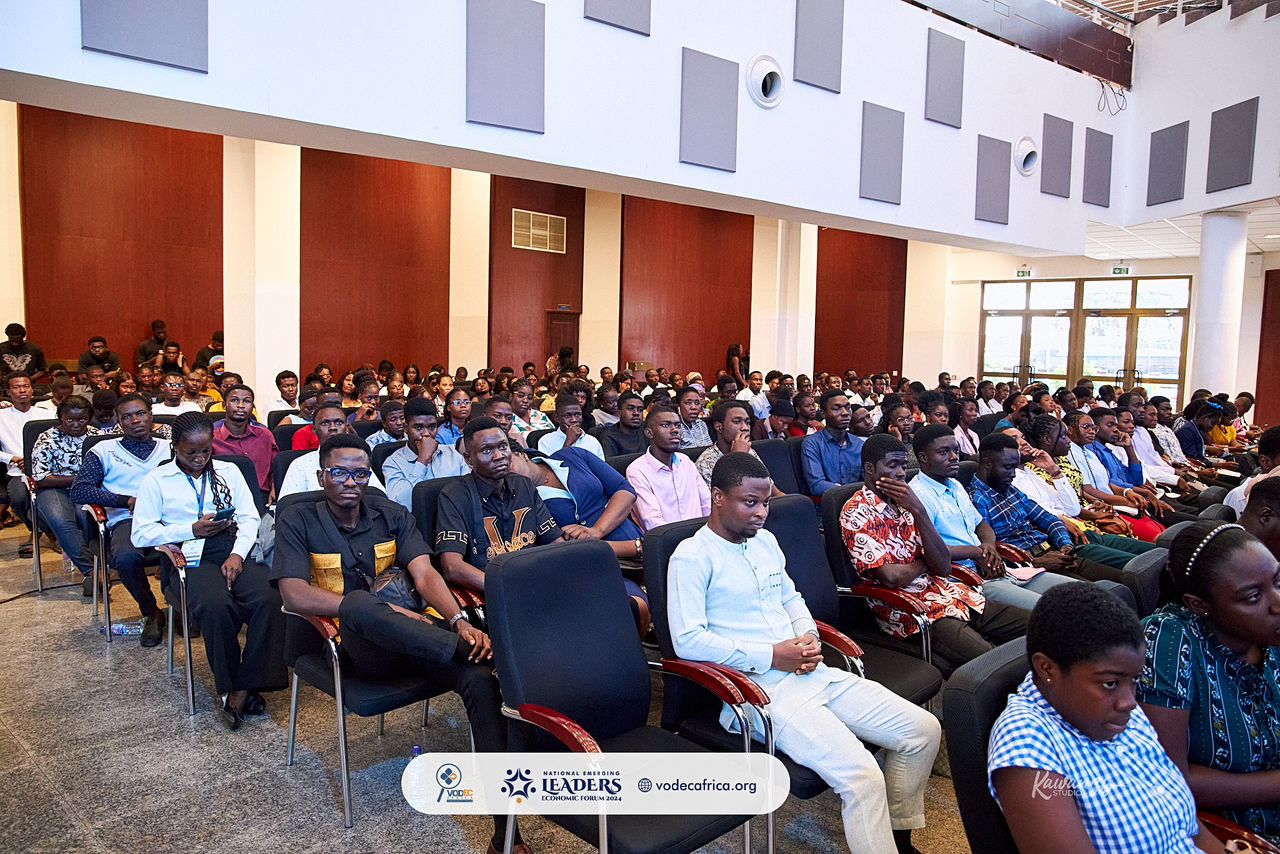
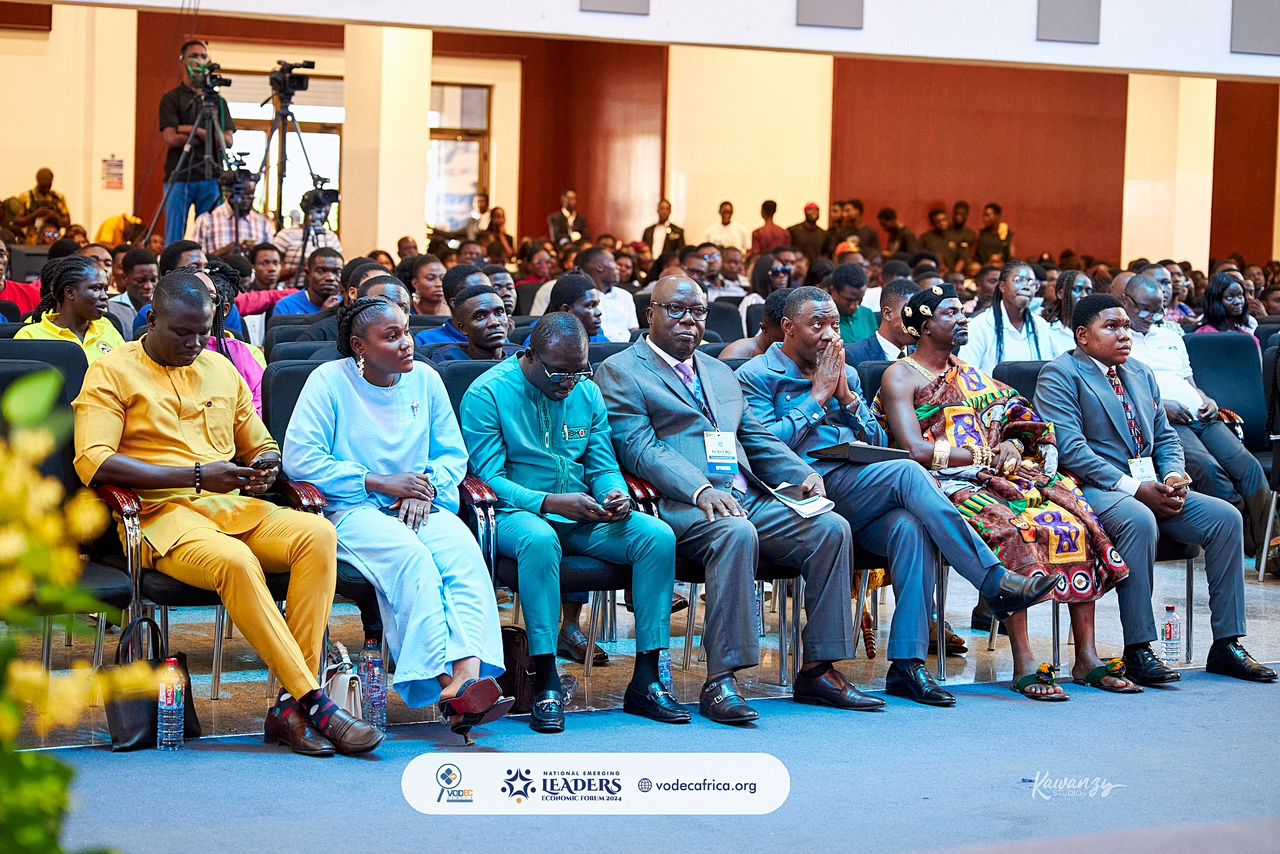
The National Emerging Leaders Economic Forum (NELEF) 2024 has ended with a call for tax reforms with the introduction of a climate levy to support existing taxes to stimulate sustainable economic growth.

Mr Daniel Asomani, the Chief Executive Officer of VODEC Africa, organisers of the NELEF 2024, made the call in an address at the forum attended by young leaders, policy analysts, students, and industry stakeholders.

It focused on equipping emerging leaders with the requisite knowledge for them to contribute to reshaping Ghana’s economic future through innovation, sustainability, and youth empowerment.

Mr Asomani said the climate levy would not only help to tackle environmental issues but also create sustainable job opportunities for the nation’s your, ensuring a more equitable economic landscape.

He urged the government to reconsider the removal of taxes that had outlived their relevance, including the COVID-19 levy and emission taxes, which he said, were placing unnecessary burden on the country’s economy.

He called on the emerging leaders to embrace innovation and charged them to contribute more in the decision-making process to safeguard the future of the country.

Mr Asomani entreated the aspiring presidential and parliamentary candidates in the upcoming political elections to adopt a transparent, accountable, and good governance in the next government administration.

Rev. Dr Lawrence Tetteh, an Evangelist and Economist blamed the current struggles and economic challenges facing Ghanaians to inadequate visionary leaders and asked for teamwork to alleviate the crisis.

He criticised the youth for not being patriotic enough to turn the tables around and transform the country into the world leader.

“Good leadership, good governance that prioritize long term goals instead of short-term goals can change the trajectory of an entire nation. We must wake up from sleep,” he said.

He urged the emerging leaders to vote on values and not for monetary gains in the December 7 elections while admonishing leaders to foster an Inclusive governance and eschew acts of favouritism and nepotism while in office.

Mr Isaac Boamah, a business and policy analyst from the United States, advocated for more policy reforms to provide more employment opportunities especially for the youth.

He stressed the importance of youth participation in national policy discussions and urged young Ghanaians to actively engage in the political process to shape a future that reflects their aspirations.

Nana Barima Acheampong Sarpong, the Chief of Asaman in the Ashanti Region called on the youth to challenge the status quo and work towards a governance system that serves the people by upholding justice, equality, and the rule of law.

He urged them to rise above apathy and complacency, embracing a responsible attitude to making a mark in society.

Present at the event were Mrs Esi Mmirba Wilson, the Director, People and Transformation – Consolidated Bank Ghana, Mr Felix Astrim, the Chief Executive Officer of Fedems Limited, Prof. Felix Nikoi Hammond, Broadcast Journalist from Multimedia Group, and representatives from the various political parties, among others.

Save Ghana Football conveners meet Parliamentary Select Committee on Youth and Sports 

0

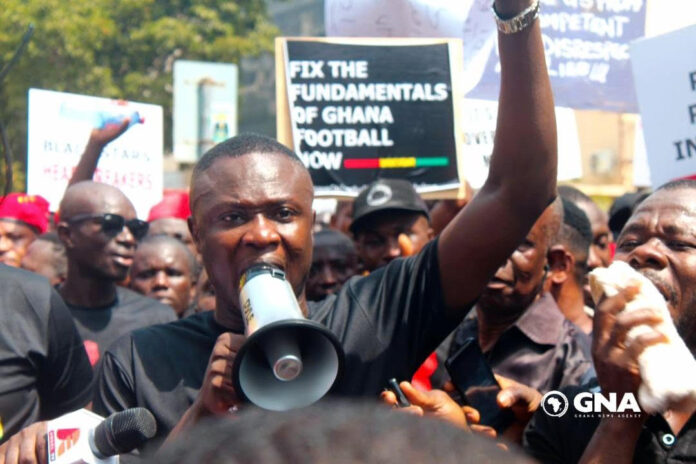
Lead conveners of the ‘Save Ghana Football’ demonstration met with the Parliamentary Select Committee on Youth and Sports to discuss strategies to develop football. 
 
It would be recalled that in February 2024, thousands of demonstrators vented their frustration over Ghana’s decline as a football powerhouse following its group stages exit at the 2023 Africa Cup of Nations. 
 
They presented a petition to Parliament, demanding it to look into issues pertaining to accountability, transparency, and the administration of football in the country. 
 
The lead conveners on Tuesday, September 24, 2024, met with the Parliamentary Select Committee on Youth and Sports to further deliberate on issues raised in the petition. 

During the discussion, the Convenors reminded the Select Committee of its critical responsibility in rescuing the nation’s football by exercising its authority to effect change. 
 
The group also urged the Select Committee not to let Ghana Football down, as was the case during the Normalisation phase, expressing their trust in the Parliamentary body. 
 
Mr. Wisdom Kwabena Woyome, Chairman of the Parliamentary Select Committee on Youth and Sports, stated that Parliament had assigned the committee to study and report on the petition requests.   

He assured the conveners that they would do the right things to ensure that the petition was addressed in a bid to turn the fortunes of the game around in the country. 

Politicians creating parallel civil service – Prof. Gyampo  

0

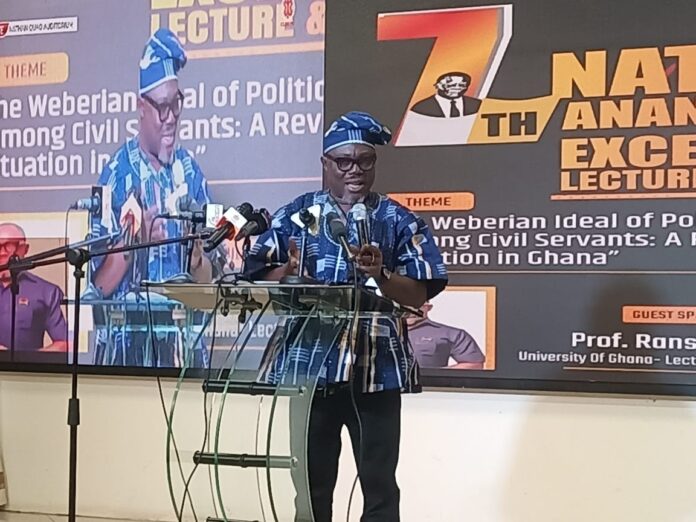
Professor Ransford Gyampo, an Associate Professor of Political Science, University of Ghana, has expressed concern that the growing trend of Ministers hiring personal advisors and consultants was creating a “parallel” civil service. 

Delivering the 7th Nathan Annang Quao Excellence Lecture in Accra on Tuesday, he said the development undermined the integrity and effectiveness of the established civil service, leading to issues with accountability and transparency. 

The lecture, on the theme: “The Weberian ideal of political neutrality among civil servants: a review of the situation in Ghana,” was in honour of Nathan Annang Quao, a celebrated Civil Servant who worked under five successive governments.  

Prof. Gyampo observed that Ministers hired advisers and consultants at higher wages than civil servants, leading to demotivation and inefficiency among public employees. 

“It is knowledge of how partisan our civil bureaucracy has become that has led to disingenuous attempts by some politicians to strive to create a parallel civil service of their own to rival the existing civil service. 

“They do this by recruiting consultants and advisors who are heavily paid to do the work expected to be done by the civil service. So, people would continue to loiter around at the workplace without doing much,” he said. 

Prof. Gyampo called for sustained education and sensitisation on the significance of political neutrality among civil servants, adding that public employees who indulged in partisan politics should face punitive consequences. 

He said the politicisation of the Civil Service was eroding confidence in the service and rallied the service to question the appointment and recruitment of civil servants purely on partisan grounds. 

“Let us push for Chief Directors to be made to rise through the ranks to attain such positions without political hands playing any role,” Prof. Gyampo said. 

Mr Isaac Bampoe-Addo, Executive Secretary, Civil and Local Government Staff Association, Ghana (CLOGSAG), said state institutions, administered though decentralised local governance structure, should regulate mining activities to curtail illegalities in the sector. 

“It is time for us to evaluate the democracy that has characterised governance under the Fourth Republic to ascertain whether this type of governance is helping us to develop,” he said. 

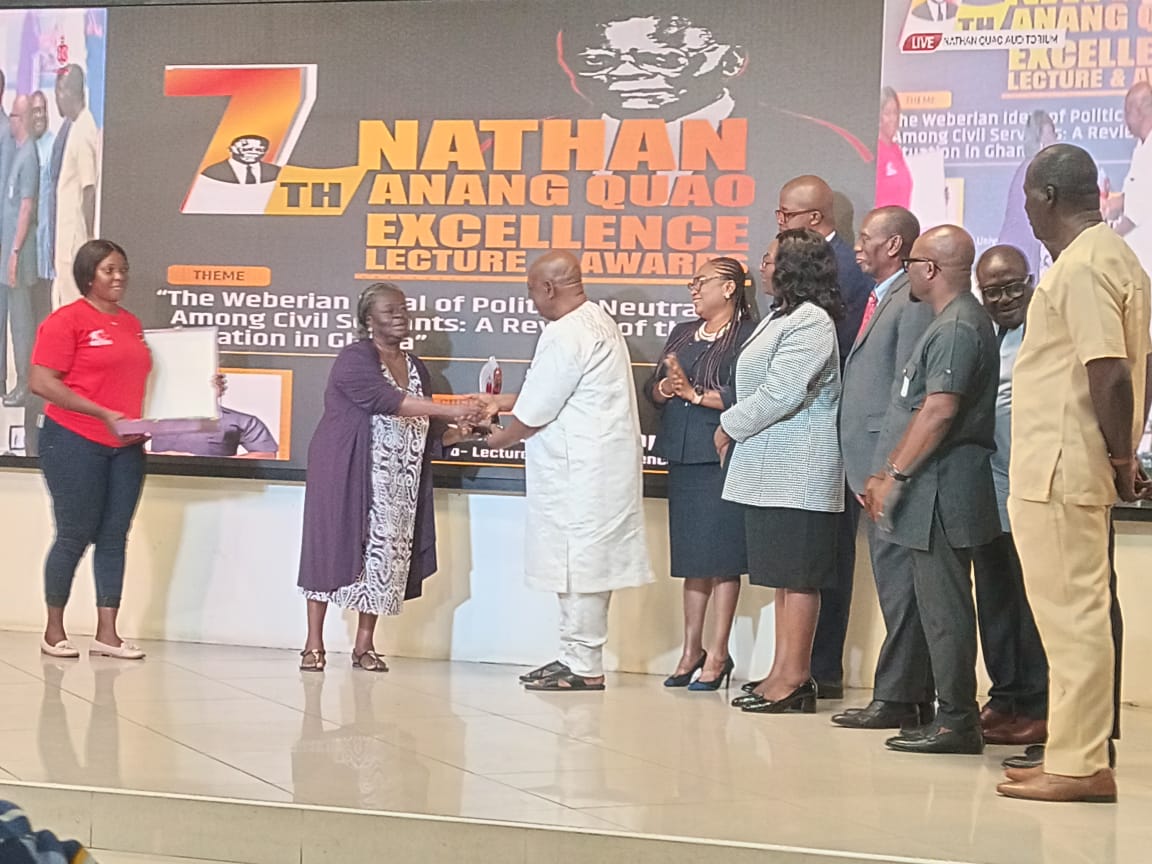
The CLOGSAG awarded some public servants who had distinguished themselves in the discharge of their duties and contributed to building professional service. 

Mr Ralphael K. Tuffuor, a former Controller and Accountant General, clinched the ultimate award. 

Other awardees were Mr Jones Agyeman, Development Planning Officer, Obuasi East – Tutuka); Mr Ernest Deladem Kwakuyi, Director, Ministry of Energy; Madam Ruby Yaa Korantiwaa Akae, Staff, Civil Service Council, and Madam Caroline Ansoah Kuuzegh, Planning Officer, Ministry of Employment and Labour Relations. 

Ghana Enterprises Agency empower indigenous entrepreneurs in Akuapem North

0

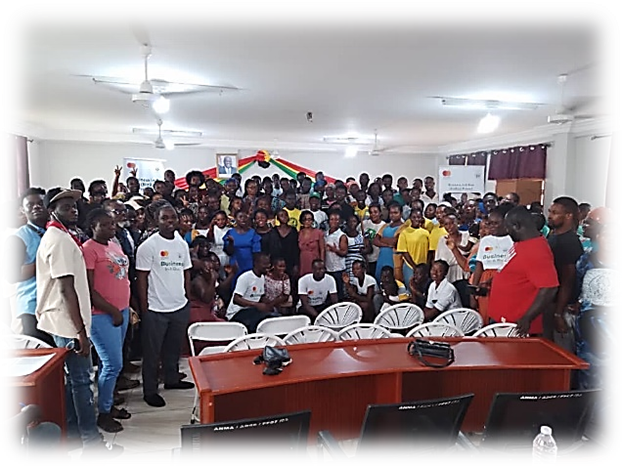
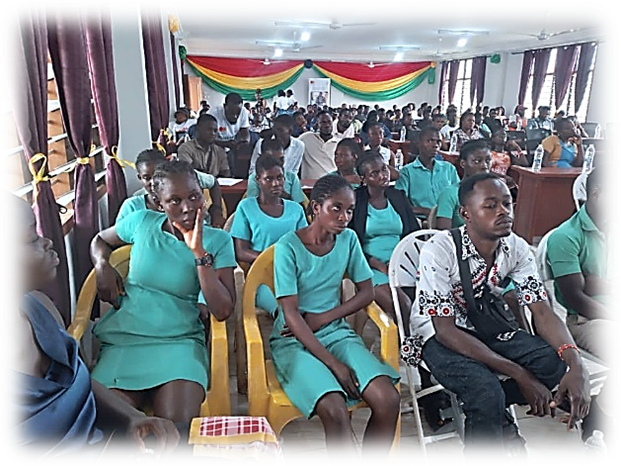
The Ghana Enterprise Agency (GEA) has enrolled local entrepreneurs from all the 32 electoral areas in the Akuapem North Municipal Assembly in an entrepreneurship training programme, under the Ministry of Trade and Industry.

The programme, themed “Mindset Shift,” targeted managers and apprentices with the aim of shifting their mindset and encouraging them to set up private and individual businesses, as well as prepare them for sustainable business entrepreneurship.

Specifically, it sought to help aspiring entrepreneurs break free from the myths surrounding certain careers and empowering them to take the leap.

During the training, Madam Mariam Kyere, the Head of GEA in the Akuapem North District, emphasised the importance of the initiative, explaining it aligned with government’s agenda on the creation of job opportunities for the teeming youth.

She said that the Mindset Ship programme covered three distinct categories namely Agric and Agric Business to Entrepreneurs (AA2E), Apprentice to Entrepreneurs (A2E), and Women and women Related Businesses (NBA).

She pointed out that the programme was the first of its kind to have been outlined by the Ministry of Trade and Industry and that the exercise targeted about 5,000 young people from every nuke and cranny of the entire municipality.

She also emphasised that the youth were too excited and anxious as they visited the Business Resource Centre daily for enquiries.

She asked overzealous youth to exercise a bit of restraint because the training programme was spread over four years and the first badge targeted about 285 entrepreneurs.

However, during the training, some 250 participants made up of both masters and apprentices were put into various groups, gained skills through thorough training, and eventually got employment.

After the training, participants were supervised to sign contracts and were given working tools to establish their various businesses.

Madam Kyere informed the public to be on the lookout for the next cohort, which would commence in July and conclude in October or November 2024.

In an interview with the Ghana News Agency on the sideline of the event, some participants expressed their enthusiasm about the programme, saying it would undoubtedly help reduce the unemployment rate significantly in society.