
Home Blog Page 187

Decline in fish stock has socio-economic implications – Dr Kassah

0

Dr Jemimah Etornam Kassah, a fisheries scientist, says unsustainable fishing practices and their resultant decline in the country’s fish stock have dire socio-economic implications for the Ghanaian society.

She said the fisheries sector of Ghana provided both direct and indirect employment to about 10 per cent of the country’s population, therefore, anything that affected the sector would have a rippling effect on the socio-economic lives of people in the value chain.

“If we have a collapse of the fisheries sector, the people going to be affected are not just the fishermen, but every other player or actor along the value chain, from mechanics to outboard motor repairers to gear developers and boat builders.”

“All these people are having their livelihoods threatened,” she said during a Ghana Ports and Harbours Authority (GPHA) media forum on sustainable fishing practices.

Dr Kassah, a Lecturer at the Department of Biology Education, University of Education, Winneba, observed that due to low catches currently, families dependent on the fisheries sector were facing a lot of pressure, with some experiencing low-income levels while some women did not get fish to smoke.

“What happens then in the coastal communities is that there are high levels of depression and people are hypertensive, in addition to other health issues due to increased stress,” she said.

“Even though a lot is being done to reduce the rate of child trafficking in Ghana, because of low catches, there have been reports of families in coastal communities having to make their children to serve as domestic servants with other families, which is truncating their schooling, among other things.”

The fisheries scientist said fish had become expensive and if medical officers were advising parents to, for example, add powdered sardinella to the diet of toddlers while the price of herrings had gone up, it would be difficult for low-income mothers to ensure their children got the adequate protein needs.

She added that the situation did not only affect the fishing communities but also every actor in the value chain, hence the need for the nation to work towards preventing the depletion of the fish stock.
Mastercard Foundation, IDH Programme transform SMEs into competitive businesses

0

Local Small and Medium Enterprises have been transformed into competitive businesses and farmers lives improved with the implementation of the “Grains for Growth ” Programme. 

The Programme, an innovative partnership between the Mastercard Foundation and IDH, aims to transform Ghana’s Grains market.

It aims to develop inclusive, and economically viable grain supply chains that will offer employment and entrepreneurship opportunities, contribute to better incomes, and improve the livelihoods of farmers, especially women and youth.

Grain production in Northern Ghana is largely characterized by informal supply chains, where actors have limited access to affordable financing solutions, mechanized farming, and quality agro-inputs.

These constraints negatively impact the quality and volumes of grain production, and the ability of SMEs to attract and maintain premium-paying buyers, resulting in limited commercial investments.

Through a market-led approach, the programme will contribute to the development of the grains sector – maize, rice, millet, fonio, and sorghum supply chains, support the inclusion of Smallholder Farmers (SHF), and create jobs, with a central focus on women and youth empowerment.

Overall, the programme has made some commendable strides, notwithstanding the global economic recession, and sociocultural challenges impacting the sector businesses, and made some significant contributions to the grains sector and the lives of smallholder farmers in northern Ghana.

The programme’s components and anticipated results include Diagnostic and Service Delivery Model (SDM) analyses, SME technical, operational, and managerial support, improved production and mechanization, digitalization for SHF engagement, business development, and access to affordable financing.

Mr Robert Asugure, the Country Director for IDH, said they believed that there was a congruent interest to create more impact on a scale and that was why they partnered with the Mastercard Foundation to develop the Programme.

He said they were able to reach out to so many farmers and off-takers and the brands to be able to do this Programme and support industrial processing and food security. 

Mr Razak Bongo, a beneficiary, said life was difficult for him before IDH came in to support because when he was unable to get money to buy farm inputs to apply to his farm to get more output

Mr Alhassan Nuhu, a Project Coordinator for DEGAS, said as an Agritech Company, they supported farmers with farm inputs.

He said IDH happened to be a partner of DEGAS through the Mastercard Foundation so through that DESAG was able to mobilize some support for its farmers and some training packages to improve upon the activity they were carrying on in their communities. 

Mr Hikimatu Kadiri, the CEO of AgroMart Limited said after Senior High School, he developed an interest in farming and then he sought out land and fortunately, he was offered five acres of land.

He said it was almost at the end of the season that he had a tractor to plough his land and due to that it affected his yields.

He said he benefitted from the Mastercard Foundation Programme and was awarded a contract to supply 200 bags of NPK and then 200 bags of millet seeds which was a total of 23,000 dollars.

He said in the 2022/2023 crop season, he was again awarded a contract to provide mechanization service and supply inputs with a total amount of 47,000 dollars. 

In the first year of the programme, 20,924 smallholder farmers from seven SMEs in the maize, rice, millet, and fonio commodity chains in Northern Ghana were supported by the Programme to cultivate grains on a combined total of 19,124 acres of farmland.

The programme’s contributions are critical support mechanisms given the current landscape where there’s a drastic increase in the cost of production due to high inflation, high cost of seeds and fertilizers, limited mechanization services, weather uncertainties from climate change, and depreciation of the local currency that deterred many farmers from producing grains in 2022.

Beyond the talks: 3iAfrica summit participants call for actionable initiatives

0

The 3iAfrica summit has ended with a call for stronger partnerships between governments, the private sector, and other stakeholders to turn ideas into actionable plans for Africa’s sustainable development.

Many of the participants who spoke with the Ghana News Agency described the summit as a laudable step in drawing African experiences and transforming them into policies and programmes for the continent’s growth.

They called for an all-encompassing approach to generate catalytic domestic capital among banks and investors into impactful innovations of Africans, including infrastructure development.

They also urged governments across the continent to create an enabling regulatory framework to enable Small and Medium-sized Enterprises (SMEs) who provide financial and digital technology services to thrive.

That, they said, would help in quickening intra-continental trade, and increase cross-border payments to strengthen local currencies, engender financial inclusion, and generate employment for the continent’s youthful population.

“This summit has created synergies; at the vendors’ booth, there have been a lot of investor conversations, connections between policymakers and customers, which is a good start,” Ms Awurabena Agyeman, Co-Founder, Wear Ghana said.

The young entrepreneur added that, “this is very positive, but it should not end here. Let’s now act build spaces for businesses, and it’s time to do it ourselves as a continent.”

Speaking exclusively with GNA, Mr Kwamina Duker, the Chief Executive Officer (CEO) of Development Bank Ghana (DBG), said the summit had demonstrated that the continent has people who can transform it.

“The main thing is the collaboration that we’ve seen over the last three-days; we have everything here to make it happen. We have the businessmen, policymakers, banks, so let’s make it work,” he said.

Mr Kwame Oppong, Director, fintech and Innovation, BoG, who presented the key outcomes at the end of the summit, also echoed the call for all stakeholders to act upon the decisions that had come out of the conference.

“Let us harness the boundless potential unveiled here, translate inspiration into action and ensure that the spirit of collaboration and innovation that defined this summit becomes a permanent fixture in Africa’s digital narrative,” he said.

The 3i Africa Summit is an initiative jointly developed by the Bank of Ghana, the Development Bank Ghana, and the Monetary Authority of Singapore, supported by Elevandi.

The summit spearheaded discussions on addressing key growth and investment opportunities, and explored how market players in the financial ecosystem are leapfrogging in digital transformation with a call for action.

During the summit, Ghana signed a US$100 million deal between DBG and Proxtera – a Singaporean fintech company, to make loans easily accessible to Ghanaian SMEs through a digital platform.

There was also a partnership agreement between Fidelity Bank and Proxtera, to provide a comprehensive digital solution, including finance and business skills to SMEs through the Ghana Integrated Financial Ecosystem (GIFE) platform.

Akrofuom District Assembly provides furniture to schools

0

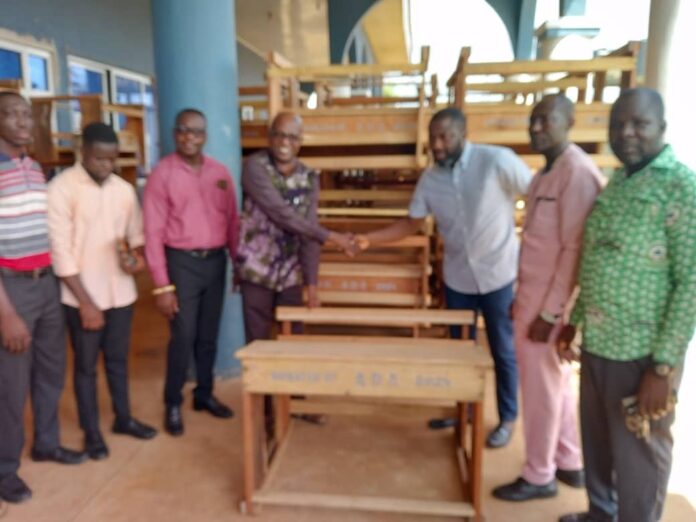
The Akrofuom District Assembly in partnership with the Member of Parliament for the area, Mr Alex Blankson, has donated 400 dual desks to the district education directorate.

The gesture was part of efforts by the assembly and the MP to help bridge the furniture gap in schools and reduce the inadequate desks which was affecting school attendance in the district.

The lack of adequate furniture for basic schools in the district had been a major challenge to education authorities in the area.

Dr Maurice Woode, the District Chief Executive, speaking at the ceremony, said the Assembly was very much aware of the challenges that the directorate was facing, and all efforts were being made to address them.

Some of the challenges were accommodation, logistics, education materials, teaching and learning aids, infrastructure, motivation and others.

He said plans were advanced to cut the sod for the construction of a new classroom block at Nyamebekyere in the Sikaman electoral area of the district.

This would add up to 16 the total number of schools that had been built from the scratch by the Assembly since it was created six years ago.

Mr Blankson, the MP on his part, called for proper maintenance culture on the part of teachers and pupils who would be beneficiaries of the desks.

He said proper maintenance would enable the authorities to channel resources to other needs of the directorate.

He appealed to parents to prioritise the education of their children by providing their basic needs.

The MP said he would work to ensure that all children of school going age got smooth transition from Junior High School to the Senior Secondary schools.

Mr Jacob Anakpo, District Director of Education, who received the items thanked the assembly for the support and said the desks would be sent to schools that needed urgent attention in terms of furniture.

UK’s post-Brexit border arrangements will cost $6 billion.

0

The British government expects to spend at least 4.7 billion pounds ($6 billion) on implementing post-Brexit border arrangements, following repeated delays in establishing new laws, parliament’s spending watchdog said on Monday.

Britain decided to leave the European Union in 2016, but the process of untangling supply chains and erecting customs barriers was so large that new regulations were not defined until this year.

The first phase of Britain’s so-called new Border Target Operating Model, which requires additional certification, went into effect on January 31.

The second phase began on April 30, with physical checks at ports. A third step, including safety and security statements, is scheduled for October 31.

The National Audit Office (NAO) said the 4.7 billion pounds figure is the amount the government forecasts it will spend on the 13 most significant programmes to manage the passage of goods across the border post Brexit and improve performance over the lifetime of the programmes.

The government delayed the implementation of full controls five times since the end of the EU exit transition period on Dec. 31 2020.

This caused uncertainty for businesses, extra costs for government and ports and increased the biosecurity risk to the UK, the NAO said.

“The repeated delays in introducing import controls, and difficulties forecasting requirements, have resulted in government expenditure on infrastructure and staff that were ultimately not needed,” it said.

“Late announcements about policy and uncertainty about the implementation of controls have also reduced the ability of businesses and ports to prepare for changes.”

The NAO noted that while post EU exit border processes have operated “relatively smoothly”, businesses trading goods between the UK and the EU have faced additional costs and administrative burdens.

The watchdog was also critical of the government’s 2025 UK Border Strategy, which was published in 2020, saying it “lacks a clear timetable and an integrated cross-government delivery plan, with individual departments leading different aspects of implementation.”

The government also needed “a more realistic approach” to digital transformation, the NAO said.

The UK regulator threatens to penalise GB News for violating impartiality standards.

0

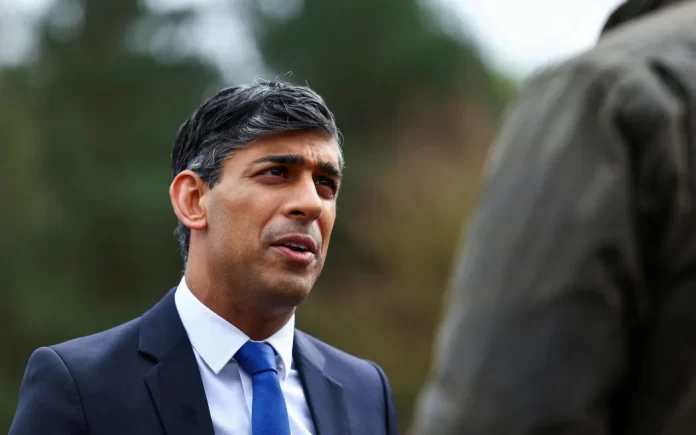
Ofcom, Britain’s media regulator, warned television channel GB News that it might face punishment after a show featuring Prime Minister Rishi Sunak in February violated impartiality standards.

Founded in 2021, the right-leaning TV station has positioned itself as a disruptor. It employs several Conservative MPs and is financially supported by hedge fund millionaire Paul Marshall.

Over 500 individuals complained about an hour-long live Q&A session with Sunak that aired on February 12.

Ofcom stated on Monday that the broadcast violated impartiality guidelines by failing to offer a diverse variety of perspectives.

The regulator said it considered the rule break to be “serious” and noted GB News had already breached rules twice.

It will now consider a statutory sanction against GB News and make a decision on what action to take within 60 working days. Punishments could include a fine, making GB News broadcast a correction or even suspending or revoking its licence.

GB News said Ofcom’s decision was “an alarming development” aimed at stopping the public questioning politicians directly.

“The regulator’s threat to punish a news organisation with sanctions for enabling people to challenge their own prime minister strikes at the heart of democracy,” GB News said in a statement published on its website.

My campaign will centre on ideas, not insults. – Bawumia

0

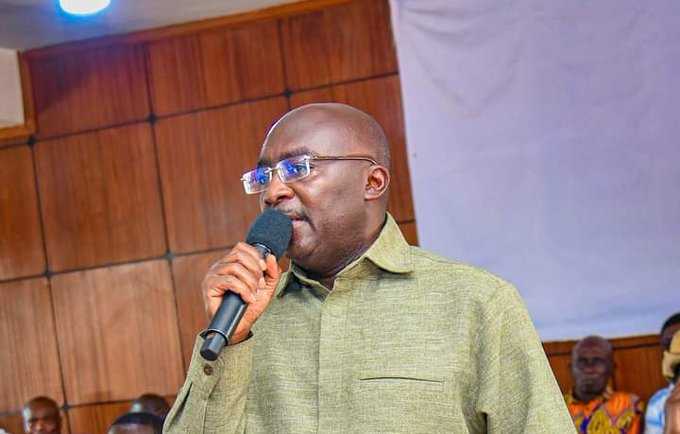
Dr. Mahamudu Bawumia, the flagbearer of the New Patriotic Party (NPP), has pledged to focus his campaign on fixing Ghanaians’ social and economic concerns rather than insulting them.

Dr. Bawumia stated in a meeting with Wa Naa Fuseini Seidu Pelpuo IV at his Palace in Wa on Sunday [May 19] that he would follow the chief’s advice to conduct a good and appropriate campaign free of insults throughout his campaign.

“I am very much guided by your advice and that advice is one that I have been implementing and sharing my ideas with the people of Ghana with no insult to anybody. Just my ideas and this is how I have been campaigning throughout. So that is the message we will be going around with. To tell Ghanaians what I am going to do as president and what we have done as a government to ask for the people’s support to go to the next level.”

Dr. Bawumia also appealed to Wa Naa and his people to vote for him as president in the upcoming December 7 general elections ahead of his main competitor, John Dramani Mahama.

“Myself and my main opponent [John Dramani Mahama] are all your children. We are both from the North and he has been president before but I haven’t been president before, so I have told him [John Dramani Mahama] that he is my senior brother, and he should have patience for me so I can also become president of this country.

“I will be able to be president for eight years, and he can only be president for four years, so if the presidency is coming home, then we should have it for eight years rather than four years.”

Wahab misses WBC Silver title after round one knockout

0

Accra-based Nigerian lightweight sensation Joshua Oluwaseun Wahab also known as “The Wealth Machine” lost the chance to win the WBC Silver lightweight title to undefeated British opponent Mark ‘The Thunder” Chamberlain on Saturday May 17, in Riyadh, Saudi Arabia.

Wahab was knocked out in the opening round in an undercard of the much anticipated and historic undisputed unifying heavyweight championship bout between Tyson Fury and Usyk Oleksandr dubbed Ring Fire.

Joshua Oluwaseun Wahab now has a fight record of 25-2-0-16 kos, while Mark Chamberlain improves to 16-0-0-12 kos.

Assistant trainer Ernest Ofori said he was disappointed but proud Ghana and Nigeria made a representation on the biggest stage in boxing.

Wahab, on the other hand said, “Alihamduliah, to all my lovely Africa brothers and sisters, who supported me throughout this fight, I say sorry for not being able to make you proud like I had wanted.

“I got caught up with a clean shot which I didn’t really recover from before the final knockdown but I’m fighter with a lion heart and I know with your continuous support I would bounce back stronger, and to my opponent Mark Chamberlain, thank you for this opportunity i am forever grateful, may God bless us all”.

Ghana beats Gambia 4-0 in Amputee AFCON

0

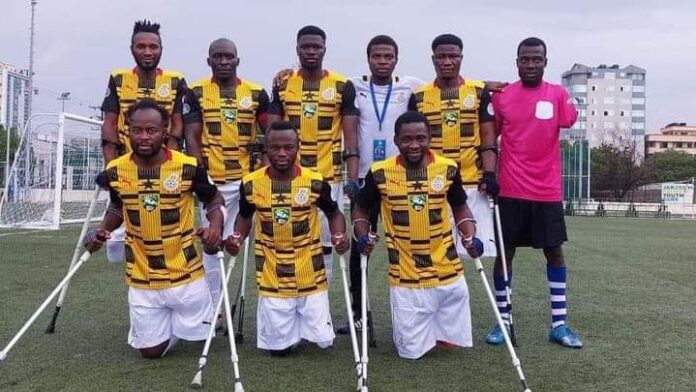
The Ghana National Amputee Football team, the Black Challenge defeated their Gambians opponents 4-0 in the on-going of the 2024 Africa Amputee Cup of Nations at Cairo, Egypt.

Ghana’s goals came from Hamza Mohammed, Yussif Yahaya, and Mubarak Mohammed who banged two great goals to overpower their Gambians counterparts.

Liberia also defeated Uganda 2-0, Algeria 1-0 against Kenya and Angola also winning 4:0 against Sierra Leone in their opening matches.

Ghana’s Mubarak Mohammed was awarded the Man of the Match as well as the star player.

Ghana would face Algeria on Monday evening.

ECOWAS Court President: Attempt to introduce rule on exhaustion of domestic remedies disheartening

0

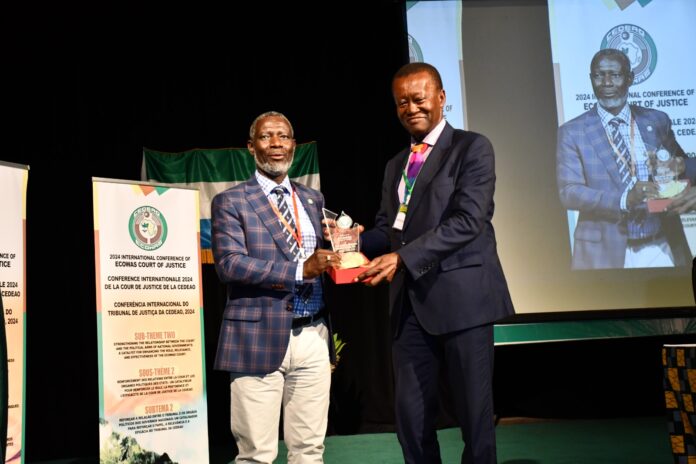
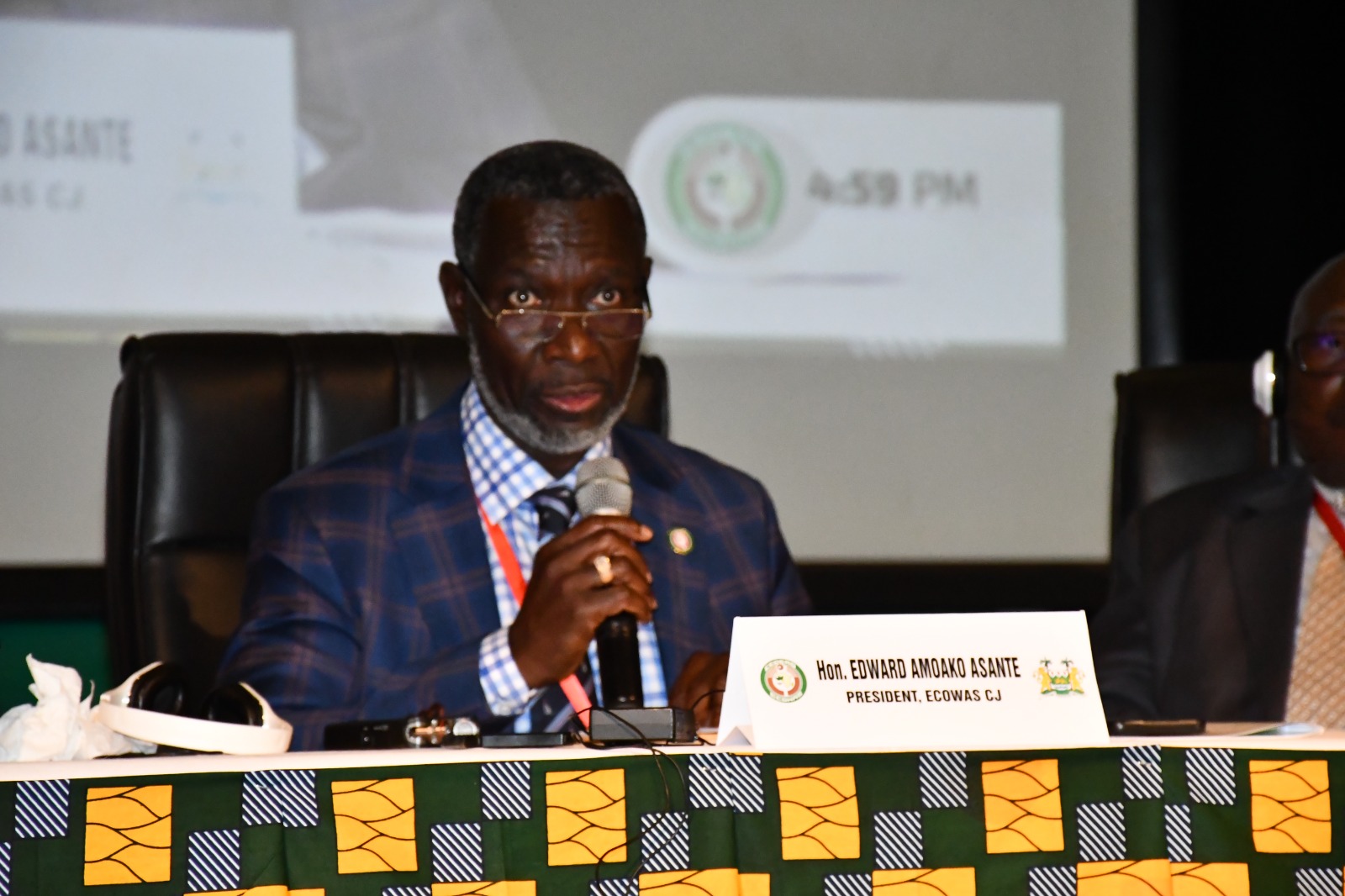
President of the ECOWAS Community Court of Justice, Edward Amoako Asante, has expressed concern about efforts being made to amend the Protocol on the Court to introduce the rule on exhaustion of domestic remedies.

He said the attempt to re-negotiate the mandate of the Court was disheartening and posing the greatest existential threat to the Court.

“It is also a grave access to justice issue. If this succeeds, it will drastically reduce access to the ECOWAS Court of Justice by Community Citizens, and other persons living in the territories of Member States who may be victims of human rights violations,” Justice Asante said at the closing session of the ECOWAS Court International Conference in Freetown, Sierra Leone.

“This will weaken the Court, and it is definitely not in the best interest of the Court or the Community Citizens and should therefore be resisted,” he added.

Held on the theme: “Enhancing the Role, Relevance and Effectiveness of the ECOWAS Court of Justice through the Strengthening of Synergies between the Court and National

Stakeholders’’, the conference focused attention on the role and relevance of the ECOWAS Court of Justice in the ECOWAS integration legal landscape and the need to build synergies with national stakeholders, particularly the national courts of Member States.  

Justice Asante said the Court was glad the Conference rejected the attempt to introduce the rule into the normative framework of the Court in its recommendations.  

He appealed to all participants, and the Civil Society in all Member States to take necessary steps through advocacy with relevant stakeholders in their home countries, to ensure that the proposed amendment, which is very imminent, did not pass. 

Justice Asante also urged the Member States to take necessary steps to domesticate the ECOWAS Revised Treaty and the ECOWAS Protocols and  to enact enabling laws  that  will enable national courts to play a more effective role in the integration process.

“The time has also come for the relevant stakeholders to take steps to harmonize the legal and judicial systems of the Community,” he said.

Justice Asante stressed the urgent need for collaboration between the ECOWAS Court of Justice and national courts and for judicial dialogue between the two court systems, adding the ECOWAS Court of Justice is not in competition with the national courts of Member States.

“We are a Court established by Treaty and our mandate is clearly prescribed by the Protocol on the Court. We are not an appellate Court over national courts, and we don’t have the power to review in abstracto, the laws of Member States,” he said.

“As an institution of ECOWAS, we have a duty to maintain good synergies between the Court and national stakeholders of Member States for the benefit of the Court and ECOWAS Community citizens,” he added.

He said the ECOWAS Court would continue to seek a cordial and harmonious relationship with the national courts and explore other avenues, including judicial dialogue, to deepen the fraternal relations between the Court and the national courts. 

Justice Asante appealed to the Authority of Heads of State and Government of ECOWAS to restore the Membership of the Court to seven independent judges and to restore the tenure of the judges of the Court to five years renewable for another term of five years as was prescribed in the initial Protocol on the Court.

“There is also the need for Member States to comply with the judgments of the Court in good faith.  We are also urging the three Member States that are yet to appoint their competent national authorities to do so without further delay,” he added.

Vice President of the ECOWAS Court of Justice, Justice Gbéri-Bè Ouattara, in expressing gratitude to the Sierra Leone’s government, participants and speakers said the conference provided an excellent opportunity for a give-and-take, in terms of sharing knowledge and knowhow.

He said the various contributions made by the presenters to the discussions enabled the participants to share different forms of experience from different angles, which shed great light on several issue, at the end of the day, from the diversity of views expressed.

“This method of positive intellectual confrontation is hereby recognised as having added great value to the conference deliberations, because of the clarity it brought to legal scholarship, from the contributions made in that wise. We are grateful, in that sense, for the originality of thought brought to bear from the texts submitted and discussed,” Justice Gbéri-Bè Ouattara said.

Meanwhile, the ECOWAS Court has presented its Law Reports to various Sierra Leone’s institutions.