
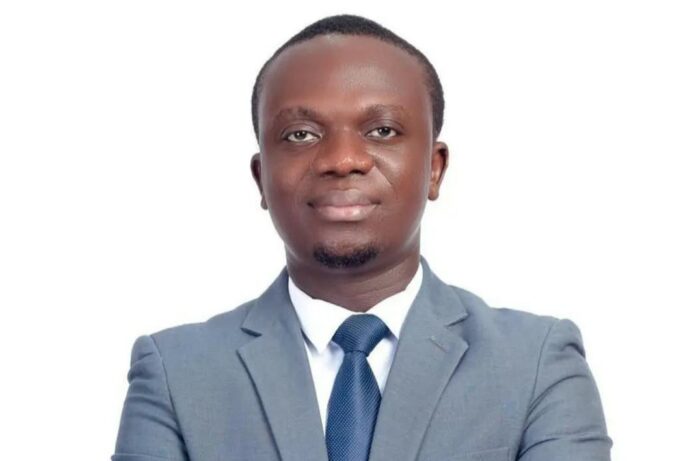
Dr Kwasi Nyame Baafi, an economist has expressed the fear that some economic policies of the government could undermine the growth of the local poultry industry.
He lauded the implementation of the government ‘Nkoko Nketenkete’ initiative, explaining that the programme would expand the local poultry sector for Ghanaians to consume local poultry products.
President John Dramani Mahama unveiled the government’s flagship poultry revitalisation programme, the ‘Nkoko Nketenkete” initiative in 2025.
The programme, which is not just a job-creation intervention but a deliberate policy to curb the heavy importation of frozen chicken, will involve distributing three million poultry birds.
Dr Baafi, also the Deputy Director of Research of the New Patriotic Party (NPP) noted that some policy choices taken by the government remained unfriendly and could potentially undermine the implementation of the ‘Nkoko Nketenkete’ programme.
In an interview with the Ghana News Agency (GNA), Dr Baafi cited that: “The price of imported frozen chicken is now much cheaper because of the over-artificial appreciation of the Ghana cedi,”
“My brother, if the Ministry of Finance and the Bank of Ghana are pursuing an exchange rate policy that will make imported chicken much cheaper, then why do the government say that they are trying to boost local production of poultry,” he questioned.
Dr Baafi said by the action of the government trying to create an over-appreciation of the local currency, they were not boosting the local production of poultry, but rather trying to collapse the industry.
Nkoko Nketenkete: Economist questions gov’t economic policies
IEAG welcomes government ban on land transit of selected goods
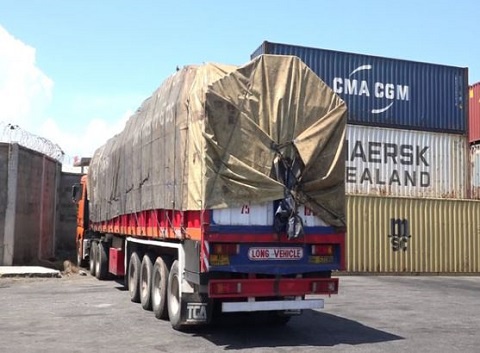
The Importers and Exporters Association of Ghana (IEAG) has welcomed the government’s directive banning the land transit of selected goods through Ghana’s borders and requiring that such commodities be routed through the country’s seaports.
The directive, issued by the Minister for Finance, Dr Cassiel Ato Forson, to the Customs Division of the Ghana Revenue Authority (GRA), affects goods such as cooking oil, rice, sugar, frozen products, textiles, flour, canned tomatoes, pasta or spaghetti, and pharmaceutical products.
In a press statement signed by Samson Asaki Awingobit, the Executive Secretary, and copied to the Ghana News Agency (GNA), the association described the directive as a step in the right direction and one that had long been advocated by stakeholders in the trading community.
He said the association, for several years, legitimate importers and exporters had raised concerns about the widespread abuse of the land transit regime by some individuals and organised networks.
The statement explained that some operators had been exploiting the transit system as a cover to evade payment of appropriate import duties by declaring goods as transit cargo destined for neighbouring countries but diverting them into the Ghanaian market.
It noted that such practices deprived the state of significant revenue and created unfair competition for businesses that complied with the legitimate importation process through the seaports.
The association further indicated that the abuse of the transit regime had also been linked to the systematic undervaluation of goods entering the country through land borders.
It explained that by misdeclaring the value, quantity or classification of goods, some operators drastically reduced their tax obligations, thereby distorting market prices and undermining the integrity of Ghana’s customs valuation system.
The IEAG stated that routing the affected commodities through Ghana’s seaports would enhance transparency and accountability in the customs clearance process.
It noted that the ports were equipped with stronger verification systems, including cargo scanning technologies, standardised valuation mechanisms and improved inter-agency supervision to ensure accurate cargo declarations and full payment of statutory duties.
It also welcomed the directive to recentralise the Customs Technical Services Bureau (CTSB), explaining that a centralised one-stop valuation and intelligence hub would improve coordination and strengthen the detection of irregularities in trade documentation.
The IEAG emphasised that the sustainability of the policy would depend largely on consistent enforcement, observing that previous regulatory measures had sometimes failed due to weak enforcement and systemic lapses at the country’s borders.
The association called on the government to complement the directive with stronger border monitoring mechanisms, to prevent the smuggling of the affected goods through unapproved routes.
It further recommended the deployment of military personnel, to support border enforcement operations as a deterrent to organised smuggling networks.
The IEAG reiterated its commitment to supporting government initiatives aimed at strengthening trade governance, protecting national revenue, and promoting a fair and transparent trading environment.
The statement expressed optimism that effective implementation of the directive would reduce revenue leakages, restore integrity to the importation process and create a level playing field for legitimate businesses operating in Ghana.
NPP Minority calls gov’t to implement fiscal regime to cushion mining firms
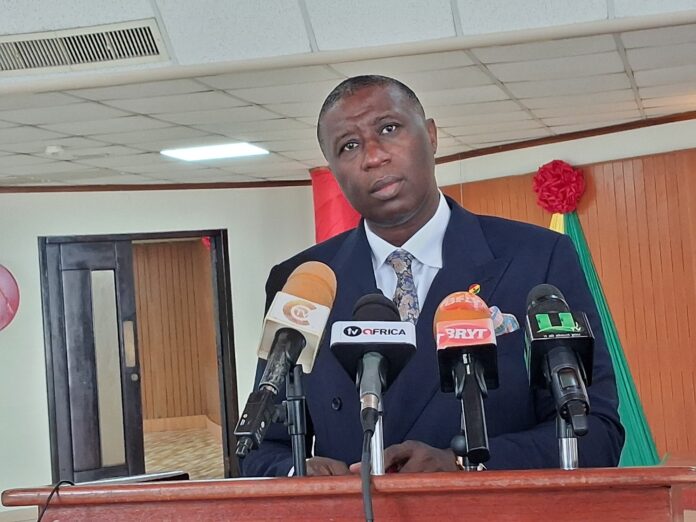
The New Patriotic Party (NPP) Minority in Parliament, has calld the government to urgently roll out a fiscal regime to cushion local mining companies following the maturity of the Minerals and Mining Royalties Legislation.
Mr Patrick Yaw Boamah, NPP Member of Parliament for Okaikwei Central and Chairman of the Subsidiary Legislation Committee, made the call, on behalf of the Caucus, during a news conference at Parliament House on Tuesday.
The Okaikwei Central legislator said the Minerals and Mining Royalties legislation, which was laid before Parliament on December 19, 2025, constitutionally took effect today (March 10,2026) after 21 sitting days.
Mr Boamah noted that despite this timeline, the government has failed to implement promised policies, including the reduction of the Growth and Stability Levy from three to one per cent.
He warned that the new royalties’ regime could negatively impact the finances and investments of mining firms, potentially leading to job losses of about one million.
He cautioned that multinational companies may relocate to neighbouring countries with more attractive extractive legislation, which would further weaken Ghana’s position in the global mining perception and investments index rankings.
“Ghana is already declining in terms of global mining perception, with investments being diverted to Colombia, Peru, South Africa, and Côte d’Ivoire. We must be strategic in attracting mining investments,” Mr Boamah stressed.
He added that Ghana was projected to receive about seven billion dollars in mining investment inflows by the end of 2028, but the new royalties legislation could hamper this target.
The sliding scale royalties regime in Ghana’s mining sector ties royalty payments to prevailing commodity prices.
Under this system, mining companies pay higher royalties when gold prices rise and lower rates when prices fall.
While intended to stabilise government revenue, critics argue that it increases operational costs for mining firms during periods of high global prices, thus discouraging investment and threatening job security.
Man Utd and Arsenal transfer target Khvicha Kvaratskhelia exposes her actual emotions on life at PSG.

Khvicha Kvaratskhelia has spoken out amid rising speculation over a move to the Premier League. Despite rumored interest from Manchester United and Arsenal, the Georgia international has reiterated his allegiance to Paris Saint-Germain, citing his fondness for the French capital.
The 25-year-old winger has reportedly become a primary target for Man Utd and Arsenal as they look to inject world-class creativity into their respective flanks. Since his high-profile move from Napoli in early 2025, Kvaratskhelia has evolved into a cornerstone of Luis Enrique’s tactical setup at PSG, filling the void left by the club’s previous era of superstars.
Despite the allure of the English top flight, the man nicknamed ‘Kvaradona’ seemingly has no intention of cutting his Parisian adventure short. Speaking ahead of a crucial Champions League knockout tie against Chelsea, the attacker insisted that he and his family have found their ideal home.

Discussing his love for the city of Paris in an interview with Le Parisien, Kvaratskhelia said: “For me, Paris is truly extraordinary. You have everything here, and above all, this is the city of love. When PSG contacted me, I thought my wife was the happiest person in the world.” The winger revealed that a move to the French giants was a long-cherished family dream, although it initially seemed out of reach.
He added: “Before PSG contacted me, she always said, ‘Imagine if one day we play for PSG, it would be amazing to stay there.’ In my mind, I think it’s very difficult to go there when there are great players like [Lionel] Messi, Neymar and [Kylian] Mbappe. I love everything about Paris. The more I think about it, the more I appreciate how respectful the people are there.”
The Georgian’s comments underline a shift in culture at PSG. Under Luis Enrique, the club has moved away from the “Galactico” model to build a cohesive, hungry squad. Kvaratskhelia’s partnership with Bradley Barcola has been particularly lethal, with the duo providing a combined 19 goals this season to keep the club dominant domestically.
While Arsenal remain eager to find high-level competition for Gabriel Martinelli, and United seek a transformative spark for their frontline, the £59 million man appears untouchable. PSG are focused on the long-term project, and Kvaratskhelia is fully invested in delivering more glory to the French capital.
Borussia Dortmund is ‘discussing’ bringing Jadon Sancho back for third spell as a potential alternative for Arsenal-linked star.
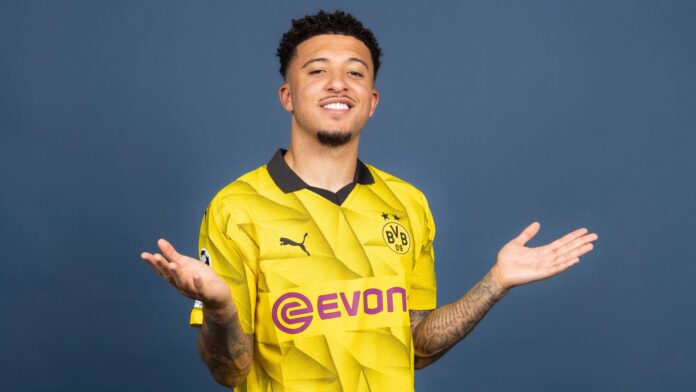
Borussia Dortmund is apparently “discussing” a spectacular third move for Jadon Sancho as they prepare to go without Julian Brandt. The England star could return to Signal Iduna Park on a free transfer when his contract with Manchester United expires this summer.
The Brandt era at Dortmund is officially coming to an end. After seven years of creative service in North Rhine-Westphalia, the 29-year-old has decided to seek a new challenge abroad rather than renew his expiring contract. The German international has been learning Spanish, fuelling rumors of a move to Barcelona, while Arsenal also remain long-term admirers, per Sky Germany.
Dortmund’s hierarchy is now tasked with filling the massive void left by their talisman. While Brandt’s consistency was occasionally debated, his technical output is undeniable. To mitigate the loss, the club is prioritizing a versatile offensive player capable of operating centrally or on the flanks and who can provide leadership while the club’s teenage prospects continue their development.

The news of Brandt’s departure was made public following Dortmund’s recent 2-1 victory over Koln. Speaking directly to the media, BVB Sporting CEO Lars Ricken provided an honest assessment of the contract situation to end any lingering speculation.
“There were open discussions and we agreed that his expiring contract would not be renewed. He played a few hundred games for Borussia Dortmund. We can only be grateful to him. He played for us for seven years. He will turn 30 in a few weeks. We will reorient ourselves. This can also be an opportunity for both sides. We part ways with a great deal of appreciation,” Ricken said.
With Brandt’s departure on a free transfer, Sancho has emerged as a prime candidate for a return to Dortmund. Currently on loan at Aston Villa, the 25-year-old is not expected to be offered a new contract at Man Utd, so he will become a free agent this summer. His availability on a free, coupled with his willingness to accept a pay cut, makes him a financially attractive option for BVB management, according to Sky Sports. However, the same report also mentions that there are still doubts within the backroom team, given head coach Niko Kovac’s emphasis on defensive discipline and hard work.
Mahama arrives in South Korea for a five-day working visit
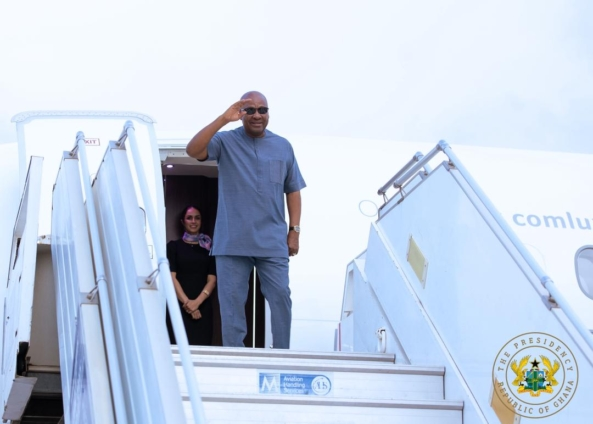
President John Dramani Mahama has arrived in Seoul, South Korea, for a five-day working visit.
The visit is aimed at deepening the long-standing bilateral relations between Ghana and South Korea.
It is also aimed at exploring new opportunities for trade, investment, and technological cooperation.
President Mahama was received by Mr Park Kyongsig, Korean Ambassador to Ghana; Mr Chung Kwangyong, Director General, Africa and Middle East Division, Ministry of Foreign Affairs of Korea; and Mr Kojo Choi, Ghana’s Ambassador to South Korea, together with other officials from the Ghana Embassy in Seoul.
Ghana and South Korea have enjoyed decades of cordial diplomatic relations built on cooperation in trade, education, technology, infrastructure development, and cultural exchange.
The visit is expected to also strengthen these ties and expand partnerships in key sectors including industry, shipping, innovation, and human capital development.
During the visit, President Mahama would hold a bilateral meeting with the President of the Republic of Korea, Mr Lee Jae-Myung.
He would also meet with Mr Woo Won-shik, the Speaker of the Korean National Assembly.
As part of his engagements, President Mahama would participate in a ship-naming ceremony at the Hyundai Heavy Industries shipyard in Ulsan and deliver a speech at a conferment ceremony at Yonsei University. He would also grant an interview to Yonhap News Agency.
Other activities on the President’s schedule include an evening meeting with Ghanaians studying and working in South Korea, as well as dinner meetings with chief executives and business leaders to discuss investment opportunities in Ghana.
Members of the President’s Delegation including Dr Callistus Mahama, the Executive Secretary to the President; Mrs Joyce Bawah Mogtari, Advisor and Special Aide to the President; Mr Samuel Okudzeto Ablakwa, Minister of Foreign Affairs, and Mr Stan Xoese Dogbe, Deputy Chief of Staff at the Presidency in-charge of Operations.
NPP registration: Elders in Tarkwa Nsuaem constituency call on leadership to intervene

The New Patriotic Party (NPP) elders in the Tarkwa Nsuaem constituency, have called on the regional and national leadership of the party to ensure that guidelines governing the ongoing registration exercise and subsequent internal elections were strictly followed.
They said no individual, regardless of past position or influence, had the authority to unilaterally impose procedures that contradicted the official guidelines of the party.
In a press conference at Tarkwa, where the elders were clad in red and black attire with some wearing red arm bands, Mr Kofi Asaah Narkaah, a former constituency secretary for Tarkwa Nsuaem, spoke on behalf of the group.
He expressed their concerns in relation to the ongoing membership registration exercise and preparations towards the election of polling station executives.
He indicated that as elders of this great party, many of them had dedicated decades of sacrifice, commitment, and personal resources to building and sustaining the NPP in the Tarkwa Nsuaem constituency.
Mr Narkaah said through difficult times and moments of great triumph, they had stood firmly with the party, working to expand its support base and strengthen its structures.
It was, therefore, deeply painful for them to observe the steady decline of the party in a constituency that once served as one of the strongholds of the NPP in the Tarkwa Nsuaem constituency, he said.
The former consistency secretary said for many years, the NPP had enjoyed overwhelming support in Tarkwa-Nsuaem but recent electoral outcomes had clearly reflected a worrying downward trend.
“The party nearly lost the parliamentary seat in 2020 and, for the first time in the history of the Fourth Republic, lost both the presidential and parliamentary elections in the constituency in 2024. This decline did not occur in isolation,” he mentioned
It reflected a gradual departure from the principles that had always defined the NPP’s internal democracy, fairness, unity, and respect for the grassroots.
Mr Narkaah said “The side-lining of loyal party members, the erosion of inclusive decision-making and the weakening of the party’s grassroots structures has over time created frustration and disillusionment among many committed members.”
“It was against this background and out of a sense of responsibility to the sacrifices we have all made over the years that we, as elders of the party, find it necessary to speak out at this critical moment,” he said.
He recalled that following the party’s electoral defeat, the National Executive Committee and the National Council of the party issued clear guidelines to govern the registration of party members and the conduct of internal elections, beginning from the polling station level.
These guidelines, Mr Narkaah explained, were designed to restore credibility, transparency, and grassroots participation within the party, unfortunately, some developments in the Tarkwa-Nsuaem constituency were raising serious concerns.
He said in several electoral areas within the constituency, dates, venues, and times for polling station meetings had not been properly announced, contrary to the requirements of the guidelines issued by the party.
Mr Narkaah added that, there were disturbing reports that official membership registers had not been handed over to the rightful electoral area coordinators and polling station chairmen because they were perceived not to align with certain individuals within the party.
He said equally worrying were reports that some of the registers had been distributed from private residences rather than through the recognised party structures, while in some instances coordinators had allegedly refused to release the registers for the registration of party members.
Most troubling were comments attributed to Mr George Mireku Duker, the former Member of Parliament (MP) for the constituency, which appeared to contradict the official guidelines issued by the national party, he stressed.
He emphasised that as elders of the party who had invested years of hard work and sacrifice into building the NPP in the constituency, they could not stand by unconcerned while actions that contributed to the weakening of the party were repeated.
Mr Narkaah indicated they would not allow the former MP and his aligned executive to handpick their preferred person as executives of the party.
He, however, urged the Constituency Executive Committee to assert its authority and leadership in managing the affairs of the party within the constituency, adding, the conduct of party organisational processes, had to remain within the authority of the constitutionally mandated party structures.
He appealed to all members of the NPP in Tarkwa Nsuaem including those who might have become discouraged in recent times to fully participate in the ongoing membership registration and organisational processes.
“Staying away would only deepen the challenges confronting the party, but the decisions taken now will determine whether the party rebuilds a strong, united, and democratic structure or deepens division and decline, Mr Narkaah said.
He reiterated that as elders who had stayed with the party for many years, they remained committed to protecting the principles, unity, and future of the NPP in Tarkwa Nsuaem constituency.
Costly Politicking in Ghana: Can CDD bill reform political financing?
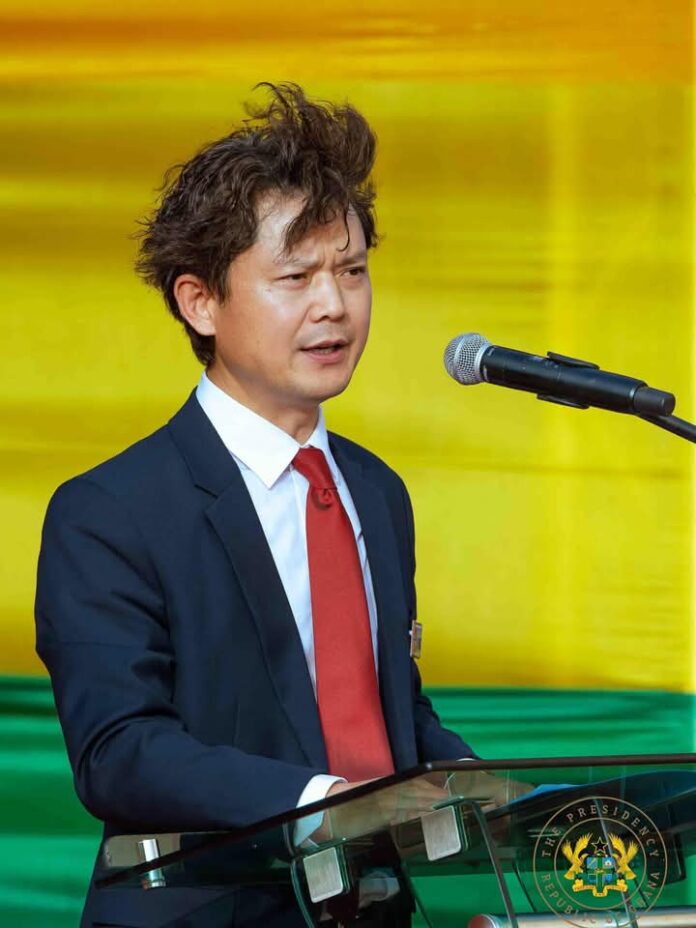
Mr Kwadwo Mensah, a 54-year-old businessman in Sunyani, says he has witnessed the sharing of money and gifts during elections countless times.
“Politicians visit local communities to share gifts, cash and make juicy promises. However, when elections are over those relationships often end,” he stated.
Mr Mensah’s frustration reflects a growing public concern about the increasing influence of vote-buying and the monetisation of politics in Ghana.
Many citizens believe the rising trend threatens fairness in the electoral process and weakens democratic accountability.
Push for Political Finance Reform
The Centre for Democratic Development (CDD-Ghana) is advocating reforms in political financing through a proposed legislation.
Dubbed by by the Draft Model Political Financing Bill, the proposal seeks to address gaps in the current regulatory framework and introduce stronger oversight mechanisms.
Mr Frederick Adu-Gyamfi, the Director of Programmes and Operations at CDD-Ghana, said the bill aims to regulate how political parties mobilise and spend funds while improving transparency in campaign financing.
Key Provisions of the Bill
Speaking at a recent stakeholder workshop in Sunyani, Mr Adu-Gyamfi explained that one of the key proposals was the establishment of an independent regulatory body dedicated to overseeing political financing in the country.
The bill also proposes clearly defined campaign periods to reduce prolonged and costly electioneering activities.
Additionally, it recommends spending ceilings for political campaigns, mandatory disclosure of funding sources and periodic financial reporting by political parties and candidates
According to Mr Adu-Gyamfi, political finance reform remains critical to strengthening Ghana’s democracy.
He said effective implementation of the bill could significantly improve public confidence in the electoral process.
Impact on Political Participation
Mr Adu-Gyamfi observed that excessive campaign spending and vote-buying often exclude women, young people and persons with disabilities from political participation.
“When financial power becomes the main determinant of electoral success, public office risks going to the highest bidder rather than the most qualified candidate,” he noted.
He warned that politicians might inflate public contracts to repay campaign financiers, a practice that could lead to wasteful spending and abandoned development projects.
Rising Cost of Elections
Since the adoption of the Fourth Republican Constitution in 1992, Ghana has gained recognition as one of Africa’s most stable democracies, with regular elections and peaceful transition of power.
However, political actors say regulation of political financing has not kept pace with the country’s democratic progress.
Ms Cynthia Anima Boadu, the Bono Regional Director of the National Commission for Civic Education (NCCE), said political campaigns in Ghana had become increasingly expensive and opaque.
“The rising cost of political campaigns has created an uneven playing field that favours candidates with access to significant financial resources,” she stated.
She explained that from billboards and rallies to media advertisements and campaign logistics, candidates now spend heavily to remain competitive.
Evidence from Studies
Ms Boadu cited a 2018 study by the Westminster Foundation for Democracy (WFD) and CDD-Ghana, which found that the cost of contesting parliamentary elections increased by 59 percent between 2012 and 2016.
According to the study, candidates spent an average of GHS 389,803 (about US$85,000) during that period.
A follow-up study conducted by CDD-Ghana in 2020, with support from Adam Smith International, indicated that the average cost had surged to approximately GHS 4 million, including expenses incurred to “nurture the constituency.”
The report also revealed that a significant portion of campaign funding came from opaque or undisclosed sources, some of which were linked to illicit networks.
Governance experts warn that such trends threaten democratic accountability.
Existing Legal Framework
Although the 1992 Constitution provides guidelines for regulating political financing, experts believe the framework remains inadequate.
Mr Adu-Gyamfi noted that Chapter Seven, Article 55 (14–25) of the Constitution and the Political Parties Act, 2000 (Act 574) provides the legal basis for regulating political party financing.
However, he explained that Act 574 mainly regulates political parties rather than individual candidates, creating gaps in oversight.
Under the current regulations, political parties are required to:
Submit annual audited accounts, fille statements of assets and liabilities 21 days before general elections and submit campaign expenditure reports within six months after elections
The law also restricts funding sources, allowing only Ghanaian citizens and corporate bodies with at least 75 percent Ghanaian ownership to finance political parties.
Foreign nationals are prohibited from funding political parties.
Weak Enforcement Concerns
Miss Boadu said weak enforcement of existing regulations had allowed excessive spending and hidden funding sources to flourish during elections.
She noted that the absence of clear spending limits and strict disclosure requirements created opportunities for illicit and unreported funds to finance campaigns.
“These gaps undermine electoral integrity and increase the risk of corruption in governance,” she said.
Public Skepticism
Despite growing calls for reform, some citizens remain skeptical about whether the new laws will be effectively enforced.
Mr Raphael Cubbage, an Assembly Member, said Ghana already had several well-written laws but struggled with enforcement.
He cautioned that without strong enforcement mechanisms, reforms risk becoming “another example of well-intentioned legislation that fails to produce real change.”
Mrs Evelyn Opoku Tawiah, a banker, also called for intensified public awareness.
She urged the NCCE to expand civic education programmes to help citizens understand the long-term consequences of vote-buying and excessive campaign spending.
“Resources used to influence voters can instead be invested in projects that benefit communities and promote national development,” she said.
Ghana at a Crossroads
Experts believe that with strict enforcement, a stronger regulatory framework could reduce elite control over political parties, encourage broader political participation, and strengthen public trust in democratic institutions.
However, the proposed reforms may face resistance from political actors who benefit from the current system.
Establishing an independent and adequately resourced regulatory body, as proposed in the bill, would require significant funding, institutional safeguards and bipartisan support.
The Way Forward
The CDD-Ghana Draft Model Political Financing Bill offers a pathway to reducing the corrosive influence of money in Ghana’s politics.
However, its success will ultimately depend on the political will of lawmakers, as well as the vigilance of civil society organisations and active citizen engagement.
For voters like Mr Mensah, the future of Ghana’s elections should be driven by ideas, integrity and leadership, rather than financial power.
‘Deadly Obsession’ expands premiere tour with stops in France and Norway

The international premiere tour of the Ghanaian blockbuster film “Deadly Obsession” is set to continue across Europe, with confirmed screenings in France and Norway.
The film would make a stop in Paris on April 4, 2026, with a premiere scheduled at Rue Faustin Helie. The tour would then continue to Norway, where the movie will be screened on April 5, 2026, at Sommerveita.
“Deadly Obsession,” written and produced by Nakies Films, stars Ghanaian actors Aaron Adatsi and Nana Adjoa Lovia, who led the cast in a gripping story centred on love, betrayal, and suspense.
The film has continued to attract buzz on social media, with trailers drawing strong attention from fans of Ghanaian cinema.
Producers say the chemistry between Aaron Adatsi and Nana Ajoa Lovia delivers a powerful narrative experience crafted to captivate European audiences. The ongoing Europe tour aims to expand the film’s visibility and introduce Ghanaian storytelling to new markets.
As excitement builds ahead of the France and Norway premieres, “Deadly Obsession” continues to position itself as one of Ghana’s biggest movies in recent times.
Nkoko Nkenkete initiative: Obuasi East MCE pays working visits to beneficiaries
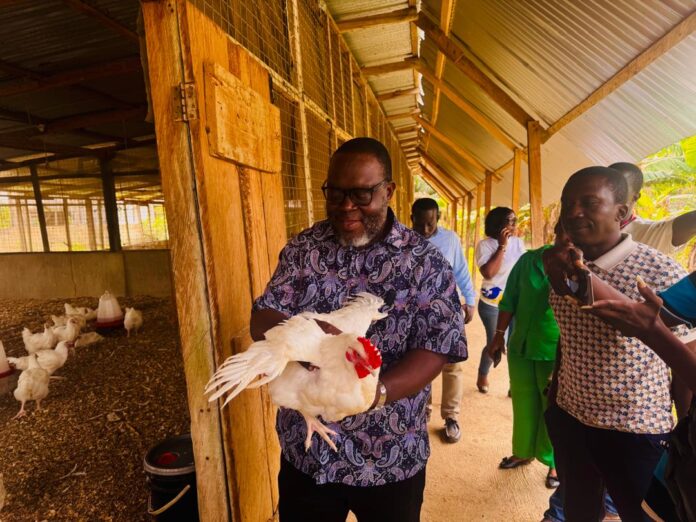
Mr. William Kofi Adzowu, the Municipal Chief Executive for Obuasi East, has embarked on a working visit to beneficiaries of ‘Nkoko Nketenkete’ initiative to witness at first hand, the impact and the success of the programme.
The ‘Nkoko Nketenkete’ programme is designed to boost local poultry production and provide sustainable livelihoods.
After a thorough inspection of the various farm sites, Mr. Adzowu expressed his deep satisfaction with the progress.
He noted that the beneficiaries had not just maintained the birds but applied best practices to ensure high survival rates.
While the current results are impressive, the Municipal Chief Executive is already looking toward the next phase of growth.
He pledged to engage the Minister for Food and Agriculture to increase the current allocation of 10,000 birds for the Municipality, citing the massive surge of interest from residents.
The MCE also promised to push for government-subsidised feed to lower production costs and increase profit margins for the small-scale farmers.
Madam Akosua Pokuaa of Jimiso, one of the beneficiaries, said the programme had been a life-changer.
A traditional crop farmer, Madam Pokuaa integrated the poultry project into her existing farm, and the results have been transformative.
” It has added a new stream of income for my family. I want to tell every woman in Obuasi to get involved,” she said.
She made a passionate plea to the government for consistent and affordable feed, noting that, while the birds were healthy, the cost of nutrition remained their biggest hurdle.