
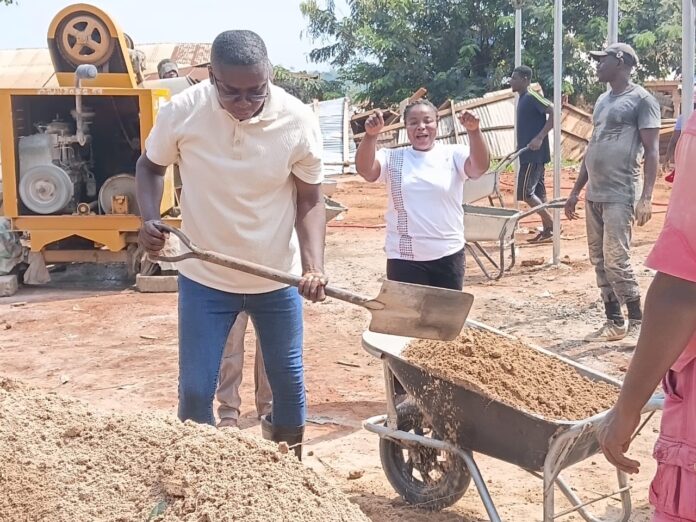
Dr Gideon Boako, the Member of Parliament (MP) for Tano North Constituency in the Ahafo Region is paving the Bomaa Market, to improve the condition at the market to facilitate buying and selling.
The MP also donated quantities of roofing sheets and some materials for the construction of some sheds for the market women.
Dr Boako told the media at Bomaa in the Tano North Municipality that the pavement followed several complaints made by the market women and traders, regarding the dusty and muddy conditions at the market during the dry and wet seasons.
He noted that the contribution of the traders remained unparalleled towards local economic growth and development, hence the need to create a more conducive environment for them.
Dr Boako said he was hopeful that with the pavement and construction of the sheds economic activities in the area would thrive, thereby improving the socio-economic livelihoods of the traders.
Some of the market women who spoke to the Ghana News Agency (GNA) expressed their heartfelt appreciation to the MP and urged the community members to patronage the market.
Tano North MP paves Bomaa market, constructs sheds for market women
Develop policies that create favourable conditions for women-led MSMEs to thrive
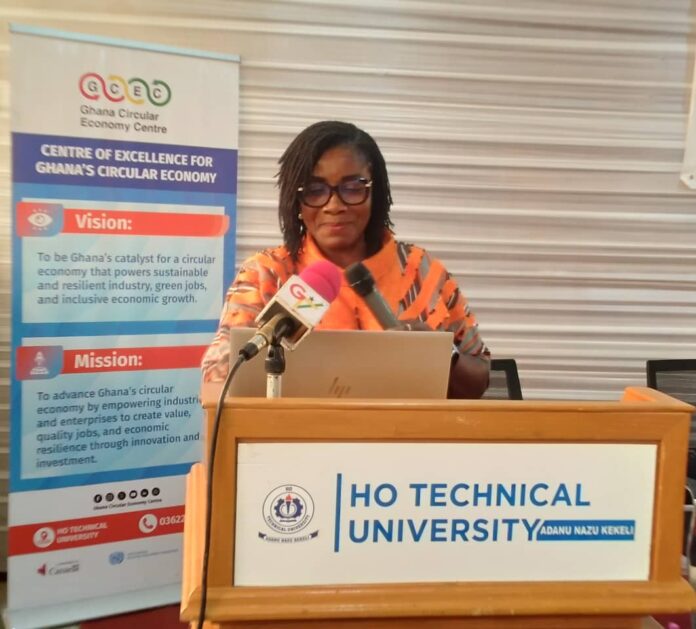
Professor Elizabeth Obinnim at the Fashion Designs and Textiles Department of the Ho Technical University has called on policymakers to develop policies that foster the growth of women-led Micro, Small, and Medium Enterprises (MSMEs).
She also urged financial institutions to increase support for women-led business to promote economic growth, as these businesses served as catalysts for innovative solutions in a variety of industries, including agro-processing, agriculture, and textiles.
Prof. Obinnim made the call during a programme organised by the Ghana Circular Economy Centre at the Ho Technical University in the Volta Region to celebrate this year’s International Women’s Day.
She said women-led MSMEs played key role in promoting the socio-economic development of the country, and they were increasing becoming important hubs for creativity and community resilience.
The Professor also asked the government to expedite the creation of the Women’s Development Bank to facilitate women’s access to capital for starting and growing enterprises.
She urged women to form cooperatives to have easy access to capital to support their businesses, citing finance as a major obstacle to the growth of women-led enterprises.
Dr Marindame Kombate, Executive Director of the Ghana Circular Economy Centre (GCEC), said no significant transformation could take place without women’s full and active engagement.
He highlighted the importance of designing fair, productive, and sustainable mechanisms to enable women enterprises to flourish to drive inclusive economic growth
Dr Kombate said the circular economy was often described in technical terms such as resource efficiency, waste reduction, and value retention, but at its core, it was about people and inclusion.
He said the Center has provided foundational secular economy training for some women to help them transform their perspective on the secular economy and increase their potential across the value chains.
Mr Kombate said the GCEC was established to support innovation, enterprise development, and capacity building across key value chains including plastics, agriculture, agro processing and textile.
It was funded by Global Affairs Canada and implemented by United Nations Industrial Development Organisation in collaboration with the Ministry of Environment, Science and Technology.
Ho Technical University is the headquarters of the Centre with satellite campuses in some leading institutions including Kwame Nkrumah University of Science and Technology and University of Cape Coast.
Ablakwa calls for coordinated regional action to address Sahel security threats
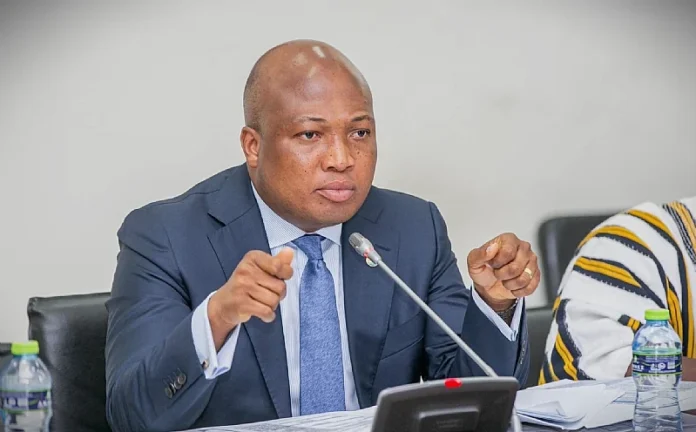
Mr Samuel Okudzeto Ablakwa, the Minister of Foreign Affairs, has called for stronger regional cooperation and coordinated responses to address the growing threat of violent extremism and insecurity in the Sahel.
He said the worsening security situation in the region posed serious implications for stability across West Africa, which required sustained collaboration among countries in the sub-region to address.
Mr Ablakwa made the call when he participated in a high-level policy discussion at Chatham House in London on strategies for rebuilding regional order and strengthening security in the Sahel.
The discussion formed part of broader international efforts to examine practical solutions to the security crisis in the Sahel and identify pathways for rebuilding regional stability through stronger cooperation between African states and global partners.
The discussion examined the rising threat of violent extremism in the Sahel and explored ways to strengthen cooperation among countries in the region to confront the security challenges.
The Minister, at the beginning of the discussion, paid tribute to eight Ghanaians who lost their lives in a terrorist attack in Titao, Burkina Faso, describing the incident as a painful reminder of the growing reach of extremist violence in the Sahel.
He noted that the evolving threat of terrorism required well-coordinated regional responses, stronger governance systems and closer collaboration among governments in the region.
While military and security interventions remained important, addressing the underlying drivers of violent extremism was equally critical to achieving lasting peace, he noted.
Mr Ablakwa explained that weak governance structures, ungoverned spaces and socio-economic vulnerabilities continued to create fertile conditions for extremist groups to operate.
“These underlying challenges must be addressed through stronger institutions, improved governance and expanded economic opportunities for vulnerable communities,” he said.
The Minister emphasised the need for a comprehensive and multi-layered approach in tackling insecurity in the Sahel, including strengthened intelligence cooperation, improved surveillance capabilities and enhanced regional security frameworks.
He highlighted Ghana’s commitment to promoting dialogue and cooperation among West African countries to collectively address the security threats confronting the region.
The Minister noted that Ghana continued to engage regional and international partners in strengthening mechanisms aimed at responding effectively to the evolving security challenges.
He reaffirmed the country’s commitment to strengthening its national security architecture to safeguard its territorial integrity.
Mr Ablakwa said the Government had put in place measures to enhance intelligence, surveillance and reconnaissance capabilities as part of broader efforts to protect Ghana from emerging threats linked to instability in the Sahel.
He further reiterated Ghana’s longstanding position that security cooperation with international partners must always be guided by respect for national sovereignty and aligned with the strategic interests of the country.
Partnerships with global actors remained important in strengthening national and regional security capacities, he said, but stressed that such collaborations must support African-led solutions to Africa’s security challenges.
Also participating in the session was Nigeria’s Minister of Foreign Affairs, Ambassador Yusuf Maitama Tuggar, who shared perspectives on regional security cooperation and efforts to combat violent extremism across West Africa.
He emphasised the importance of stronger collaboration among West African countries, noting that collective diplomatic engagement, intelligence sharing and coordinated security responses remained essential in confronting the growing threats posed by extremist groups operating across the Sahel and the wider sub-region.
The policy discussion was chaired by Ms Martine Dennis, Founder and Host of Africa Here and Now, and brought together policy experts and diplomats to deliberate on strategies for addressing the growing security threats in the Sahel and strengthening regional order.
Government bans land transit of selected goods
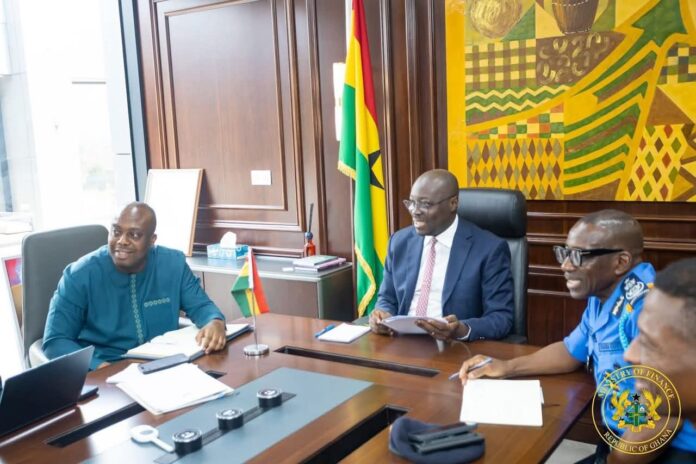
Dr Cassiel Ato Forson, Minister of Finance, has directed an immediate ban on the land transit of selected products through Ghana’s borders.
The affected items include cooking oil, rice, sugar, frozen products, textiles, flour, canned tomatoes, pasta or spaghetti and pharmaceutical products.
The directive followed a meeting between Dr Forson, Mr Aaron Akanor, Acting Commissioner of Customs, and the Management of the Customs Division of the Ghana Revenue Authority (GRA) to review developments at Ghana’s borders.
The Minister directed that the affected products be routed exclusively through Ghana’s seaports and would no longer be permitted to enter or transit through the country via land borders.
He also instructed the GRA to implement measures aimed at strengthening border controls and protecting government revenue.
Dr Forson said the decision formed part of efforts to tighten border controls and address recurring revenue leakages associated with the transit of such goods through land borders.
He also directed the recentralisation of the Customs Technical Services Bureau (CTSB) to establish a one-stop shop for valuation and improve intelligence sharing within the Customs Division.
The move would enhance the use of data and insights generated through the Publican AI system to strengthen Customs’ ability to detect irregularities and improve compliance.
Dr Forson emphasised that the measures were intended to strengthen enforcement at Ghana’s borders, close revenue leakages and safeguard government revenue.
He therefore instructed all relevant departments and units within the Customs Division of the GRA to ensure strict compliance with the directives with immediate effect.
Mr Akanor pledged the support of the Customs Division to ensure the successful implementation of the directive.
Parin FC held at home by Nima Kings

Nima Kings held Parin FC to a two-all draw game in the second round of Zone Two of the Accra North District Football Association (ANDFA) Division Three league played at the Alajo Astro Turf.
Having lost the first-round game to Parin FC in a dramatic fashion, Nima Kings were determined to make amends this time and managed to take a 2-0 lead early in the first half.
But Parin FC, who are leading the table with four points, ensured they levelled up before the close of the half.
Striker Abdul Shakur Kishk pulled one back for Parin FC before Raphael Tetteh levelled up before the close of the half.
The match featured end-to-end action as both teams fought for victory, but it ultimately ended in a 2-2 draw.
Nima Kings could have taken the lead but had their penalty saved by goalkeeper Kennedy Koranteng.
Parin FC will continue their campaign with an away game against Achimota Olympiakos at the Achimota College Park.
Financing Movement: Why fixing urban transport is a business, banking, and investment imperative

Complex national challenges are rarely solved because of a lack of solutions – they persist because they are poorly framed. The quality of the solution is determined by the quality of the problem definition.
When we examine urban transport in Ghana, we often rush to solutions before properly diagnosing the issue. Urban transport in Ghana is often treated as a logistics issue. The debate tends to revolve around more roads, additional buses, better traffic enforcement, or flyovers at major intersections. These measures may ease pressure temporarily, but they do not resolve the structural constraint.
What then, is the underlying problem? Is it rapid urbanisation? Weak town and city planning frameworks? Poor infrastructure design for current population density? Fragmented regulation? Or is it the interaction of all these forces over decades?
The fundamental question is this: Is urban mobility a transport problem or is it an economic systems problem? If the issue is framed narrowly as congestion, the solution becomes infrastructure expansion. If it is framed correctly as economic friction, the solution becomes productivity enhancement. The distinction matters. One approach adds assets. The other redesigns incentives, capital allocation, governance, and data systems.
Urban mobility is economic infrastructure. If people cannot move efficiently, labour cannot deploy efficiently. If labour cannot deploy efficiently, goods do not flow properly. If goods do not flow, finance slows.
The World Bank estimates that congestion costs major cities between two per cent and five per cent of Gross Domestic Product (GDP) each year in lost productivity.
In Ghana where Greater Accra accounts for a substantial share of economic output, even the lower end of that range represents billions in foregone activity. The issue is not traffic inconvenience; it is suppressed national output.
Beyond macroeconomic drag lies a human cost. Many urban workers spend several hours daily commuting. Health risks increase due to stress and air pollution, and productivity erosion accumulates quietly but materially over decades.
For banks, these dynamics translate directly into risk. SMEs operate on thin margins and tight working capital cycles. When logistics are unreliable, inventory turnover slows and receivables stretch. When fuel costs rise due to idling in traffic, margins compress. What begins as congestion becomes elevated credit risk embedded across loan portfolios.
Trade finance also depends on velocity. If goods move slowly from port to warehouse to market, capital turns more slowly. In Kenya, for example, freight rail investments reduced transit times and strengthened manufacturing corridors, deepening financial activity. In South Africa, the Gautrain corridor catalysed commercial development and rising property values along connected nodes.
Urban Transport Reform
Urban transport reform is, therefore, not merely about reducing risk, it represents one of the most compelling investment frontiers in Ghana’s transformation. Across Africa, mobility has evolved into a layered opportunity spanning infrastructure, technology, and services.
In Abidjan, for instance, structured concessions demonstrate that private capital will participate when governance is credible and contractual frameworks are enforceable. Technology further enhances bankability. In Nigeria, digital ticketing and verified ridership data have enabled financing models anchored on predictable revenue streams rather than traditional collateral.
Urban transport projects are capital intensive and often face early demand uncertainty. Blended finance mechanisms such as first loss guarantees, viability gap funding, and development finance participation are essential.
Credible Urban Mobility Strategy
A credible urban mobility strategy rests on four pillars.
First, governance clarity. Fare structures, concession agreements, and regulatory mandates must be transparent and enforceable. Without institutional credibility, capital prices are in excessive risk.
Second, revenue visibility. Digitised ticketing and fleet management systems convert fragmented cash collections into auditable, predictable revenue streams. Predictability lowers risk premiums and attracts long duration capital.
Third, disciplined risk allocation. Demand, currency, regulatory, and operational risks must sit with parties best equipped to manage them. Poor risk distribution undermines bankability.
Fourth, ecosystem coordination. Regions and municipalities, regulators, operators, pension funds, banks, and development finance institutions must operate within an aligned framework. Fragmentation produces stalled projects. Coordination produces investable platforms.
The need for productivity enhancing infrastructure is urgent for Ghana. Transport reform sits precisely at the intersection of these realities. Financing movement is not optional for banks. It is foundational.
Institutions that recognise mobility as financial infrastructure will not only improve cities but will shape the trajectory of national development and reinforce their relevance in the economy of the future.
(Isaac Simpson is the Head of Financial Advisory & Equity Capital Market {Corporate & Investment Banking}, Stanbic Bank Ghana).
Western Region NRSA intensifies campaign on road safety
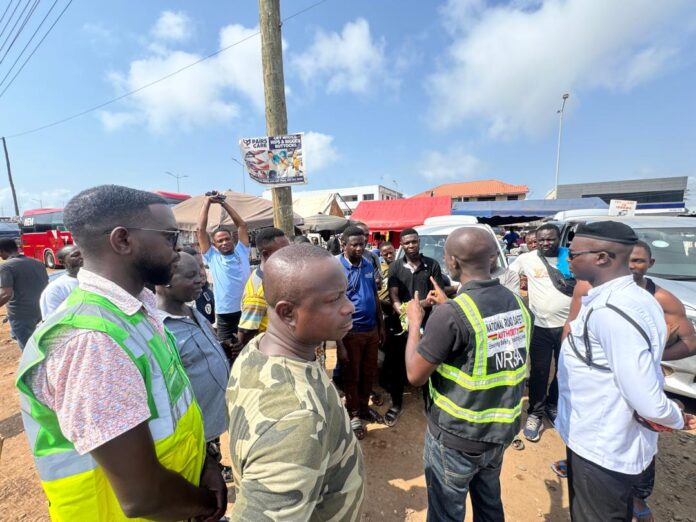
The Western Regional Office of the National Road Safety Authority (NRSA) has intensified its sensitisation campaign to educate road users on the need to observe safety rules and regulations on the roads.
The campaign, held in collaboration with the Western Regional Motor Transport and Traffic Department (MTTD) of the Ghana Police Service, targeted drivers, passengers, pedestrians, and other road users as part of efforts to enhance behavioural change to help ensure safety and reduce road traffic crashes in the region.
Some of the activities carried out were pre-departure checks, highway pedestrian footbridge usage enforcement, and clamp down on wrongful parking along the roads among others.
Mr Victor Kojo Bilson, the Western Regional Head of the NRSA, told the Ghana News Agency (GNA) during the exercise, that, the campaign was part of planned activities being undertaken by the Authority to promote good road practices among users.
He said the Authority was focused on reminding drivers to speed within the acceptable limits, while educating passengers to also ensure that drivers observed these safety rules to reduce crashes.
He said: “Currently, the region sits fifth in terms of crashes, injuries, and deaths on our roads, and that is something we are seeking to reduce, so we are engaging them to let them understand their roles as road users to achieve that.”
Mr Bilson advised drivers to avoid over-speeding, overloading, irresponsible overtaking, and driving tired, while ensuring regular maintenance of their vehicles to help guarantee safety on the roads for all.
Touching on the issue of jaywalking on the roads, he implored pedestrians to use footbridges and cross highways from designated sections of the roads to reduce knockdowns.
“The footbridges have been built not for fun, but to help pedestrians to cross from one end of the road to the other safely, so we are asking them to use this facility to help us all avoid being knocked down by speeding vehicles,” Mr Bilson added.
He gave the assurance that the Authority would continue to sustain the education and enforcement campaign to help achieve the desired results.
Mr Patrick Somiah, Secretary, Takoradi-Accra Station Branch of the Ghana Private Road Transport Union (GPRTU), commended the NRSA for embarking on the campaign, and said it was a step in the right direction.
He noted that ensuring safety on the roads was a shared responsibility, and that as drivers, they would play their role to ensure every road user stayed alive.
He also asked the NRSA and the Police MTTD to strictly enforce road safety laws to help curb irresponsible behaviours on the roads.
Three factions in Nkwanta South hold peace dialogue
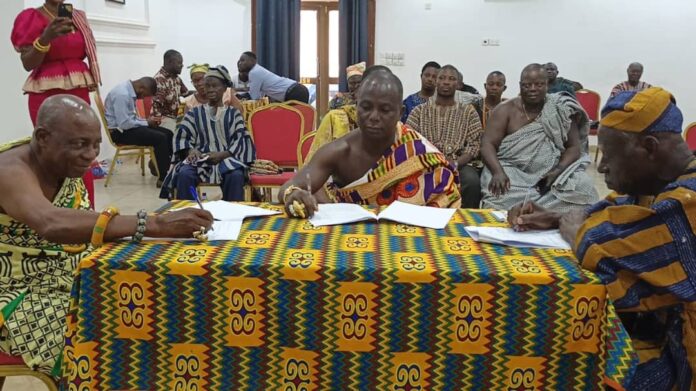
The National Peace Council has organised a dialogue meeting with the traditional leaders and community representatives from Adele, Akyode, and Challa, a significant step towards lasting peace in the Nkwanta South Municipality of the Oti Region.
The engagement brought together chiefs, queenmothers, elders, and the youth in an inclusive forum to achieve sustainable peace and rebuild trust among communities affected by years of tension.
The dialogue acknowledged the pain, misery, insecurity, and disruption caused by the protracted conflict, which has largely stemmed from disputes over land and chieftaincy.
Participants also reflected on the escalation of hostilities that re-emerged in November 2021 and the severe toll the situation had taken on lives, property, livelihoods, and social cohesion.
The traditional leaders from the three groups expressed deep concern about rumours, mistrust, and fear that had strained relationships, weakened community bonds, and increased the economic and social costs of the conflict.
Most Reverend Emmanuel Kofi Fianu, the Chairman of the National Peace Council, addressing the gathering, commended the traditional authorities for reaching a point of dialogue and commitment.
He noted that their willingness to sign a peace pact demonstrated readiness to allow peace to prevail and urged them to sustain, nurture, and develop the commitments made.
Rev. Fianu emphasised that peace and development could only be realised and maintained in an environment built on trust, forgiveness, fairness, tolerance, moderation, compromise, cooperation, and the non-violent resolution of differences.
He however, appealed to the media to be circumspect and to help sustain and amplify the agreement rather than inflame tensions.
Representatives of the traditional councils, including Nana Amoah Boafo for the Adele Traditional Council, Nana Obombo Lipuwura Serwura (Paramount Chief and President of the Akyode Traditional Council), and Nana Addo Chederi Kanewu of Challa, reaffirmed their respect for the rights and dignity of all individuals and communities in the municipality.
They pledged to collaborate to address outstanding issues through an inclusive approach, in line with the rule of law, and to begin a renewed peacebuilding process anchored in the historic dialogue and future initiatives.
Key agreements and objectives reached at the dialogue include the following; that the peaceful coexistence of the three ethnic groups is paramount.
Secondly, the parties will employ non-violent means to resolve inter-communal disputes, strengthen relationships, enhance trust and mutual respect, and work collectively to minimise mistrust and promote lasting peace.
Also, pending court processes and final conclusions, all parties are to remain within their land boundaries in the Nkwanta Municipality, and this must be respected by all sides.
Furthermore, all ethnic groups are to confine festivals and related celebrations within their traditional land boundaries and not in the Nkwanta township until the matter is duly determined by the appropriate authorities.
All parties are to respect the ban on festivals in Nkwanta, imposed since November 25, 2023, by the Oti Regional Security Council and the Nkwanta Municipal Security Council, aimed at preventing further violence.
The illegal importation of firearms into the Nkwanta Municipality must cease immediately.
There must be a cessation of all armed violence by the three main feuding parties, Adele, Akyode, and Challa, and allied groups, with a commitment to non-violent methods of conflict resolution.
All ethnic groups within the municipality must accord security agencies’ respect and avoid interfering in the discharge of their lawful duties.
Security agencies must conduct their duties professionally and without fear or favour.
Security agencies must investigate and bring to a conclusion all reported cases of violence involving all parties, including Adele, Akyode, Challa, and any other residents within the municipality.
All citizens of Nkwanta are to cease sharing rumours and misinformation through social media and all other channels that undermine peace.
The leadership of Adele, Akyode, and Challa, and allied groups, must immediately call on their people particularly the youth to cease violent and armed attacks regardless of provocation and to engage with the joint implementation and monitoring committee to be established.
All parties must show utmost respect for each other’s rights and dignity while continuing engagements to resolve the dispute.
A joint implementation and monitoring committee will be established to ensure the realization of the commitments outlined in the outcome document.
Get involved in local governance to improve development and accountability – Mr Awal
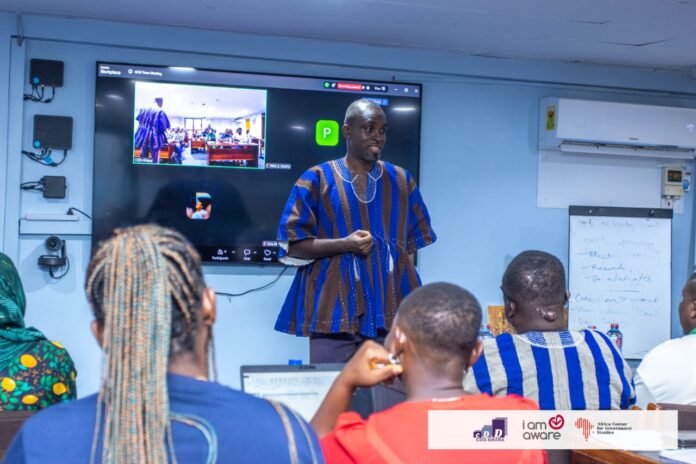
Mr Mohammed Awal, the Project Lead of Ghana Centre for Democratic Development (CDD-Ghana), Wednesday called on civil society organisations to get involved in local governance to help improve development and accountability.
He also urged them to ensure that there was equitable and inclusive development.
Mr Awal made the call when he opened a two-day capacity building workshop for their “I Am Aware” southern partners, a non-partisan citizens empowerment campaign led by CDD-Ghana in Accra.
The 45 participants were drawn from La Nkwantanang Madina, Kweabebirem, Ekumfi, Gomoa West, Kadjebi, Adaklu and Shamaa districts.
The two-day workshop is to build the capacity of participants to get more involved in the District Assembly concept and share information with the citizenry.
“Citizens will only be active if they are well informed, and ensure that there is equitable and inclusive development,” Mr Awal advised.
He urged the Metropolitan, Municipal, and District Assemblies to regularly update citizens on areas in which the Assemblies Common Funds were being invested.
The Project Lead advised them to ensure that their budgets and developments were pro-poor.
He stated that citizens should be made aware of what was being done at the local level to improve their educational, health, water, sanitation, roads, security, and agricultural needs.
Mr Awal urged all to lend their support to help strengthen democratic principles starting from the communities.
He appealed to the media to sensitise the citizenry on their roles and responsibilities and create a platform for them to discuss their developmental needs.
The Project Lead told the participants that they were being equipped to be agents of change in local governance participation, implementation and accountability adding “don’t go and bury what you are being taught in the ground.”
Topics to be treated at the workshop included: how local governance works and where citizens influence, accessing and interpreting government data, introduction to pro-poor, gender and disability response policy analysis and examining social accountability and ethical data collection and evidence.
The others are working with media for social change, coalition building and movement strengthening and crafting compelling advocacy stories using simplified technical data and AI tools for public consumption.
Ketu South: NDC Youth organiser to contest constituency chairmanship position
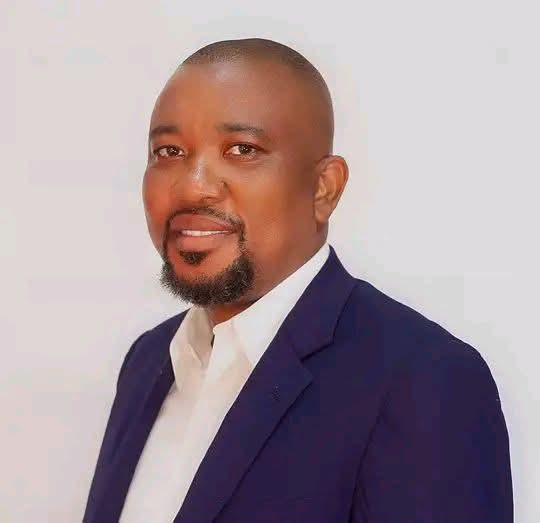
Mr Elolo White Kelie, the former youth Organiser of the National Democratic Congress (NDC) in the Ketu South Constituency of the Volta Region, has formally announced his bid for the party’s chairmanship position in the area.
Mr Kelie, who has been involved in active politics for the past 26 years, believed he has the experience and vision to lead the party to greater heights.
In an interview with the Ghana News Agency, he expressed confidence in his capability to win the position and cited his strong relationship with party members across the constituency as well as the grassroots.
“I am fully prepared to contest when the polls open, it has been my dream for the past few years to hold the position of the chairmanship position to mobilise the public to rally behind our beloved NDC for more successes,” he said.
Mr Kelie, who is currently the chairman of the party’s youth working committee in the Ketu South, insisted that he was the perfect candidate to lead the NDC in the area, to drive and champion youth development and projects.
He said his vision for the party included strengthening the grassroots base, mobilise support, and positioning the NDC in the area for future electoral successes and emphasised the need for experienced, firm, and visionary leadership to achieve these goals.
“I have what it takes to lead the NDC’s ‘World Bank’ which is the Ketu South, we all know that our constituency is one of the strongholds of the ruling NDC and we need prominent and strong people to hold vital position to keep the party firm for development,” he said.
Mr Kelie said his leadership style would prioritises unity among party structures and promised that he would ensure togetherness and collaboration, among all party structures, including constituency executives, branch leaders, and stakeholders.
He said the NDC in Ketu South was considered a crucial constituency for the party, and the chairmanship election was expected to be hotly contested, therefore his announcement had sparked interest among party members, who were looking for a strong leader to guide them.
He urged party members to remain focused, united, and dedicated to building a stronger and more competitive party in Ketu South and rally support for him based on his determination, experience, hard works and perseverance to maintain the progress and stability of the constituency party structure.
Mr Kalie said that the election would be seen as a crucial step towards rebuilding and repositioning the NDC in Ketu South for future electoral success and hoped that his experience and vision would benefit the party when given the nod.
He said the constituency had been a stronghold for the NDC, and the party was keen on maintaining its dominance while his bid was a strong declaration with the outcome of the election expected to change the fortune of the area. Meanwhile, the internal elections of the NDC are expected to be keenly competitive, with several aspirants vying for top positions with much experience and track record to make a strong candidate for the positions.