Petty traders and business owners in the South Tongu District of the Volta Region are voicing their concerns about the detrimental impact of ongoing power outages on their livelihoods.
According to reports from residents shared with the Ghana News Agency (GNA), many have suffered significant losses in their businesses due to frequent power disruptions in the area.
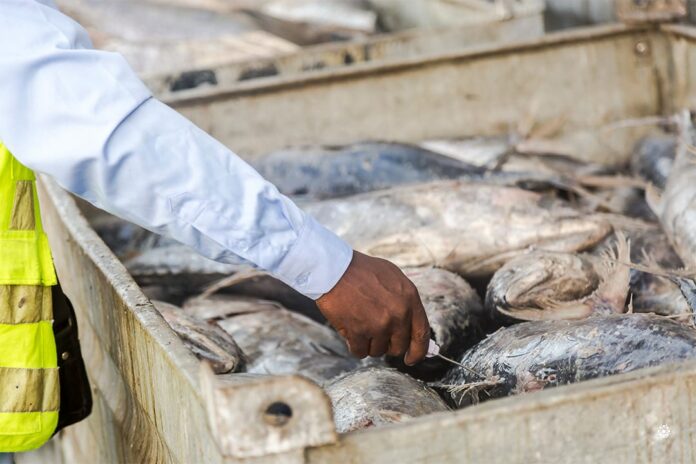
Mabel Nyekor, who operates a cold store, revealed to GNA that she incurred losses of GH¢3,600 in perishable goods due to extended periods of power outage within a week. She lamented the additional challenge posed by these outages on already-struggling businesses.
Similarly, hairdresser Tandzi Grace echoed these sentiments, highlighting the challenges of serving clients effectively amidst power cuts.
The issue extends beyond the South Tongu District, affecting neighboring areas like Central and North Tongu. Wisdom Nyamordey, a bar operator in North Tongu, shared that dwindling patronage is a direct result of the power cut crisis.
Residents are appealing to the government to address the underlying causes of these outages and implement sustainable solutions to mitigate their impact on businesses.
Further investigation by GNA revealed that some local entrepreneurs are demonstrating resilience by investing in backup power sources, with around thirty percent in the three Tongu districts taking proactive measures to minimize losses until a resolution is reached as they await swift intervention from the government.
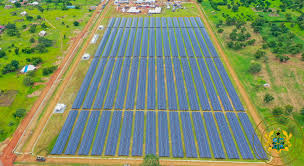
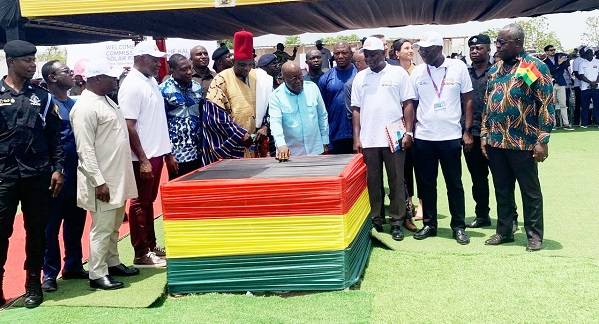
President Nana Addo Dankwa Akufo-Addo inaugurated the second phase of the 15-megawatt Kaleo Solar Power Plant in the Nadowli-Kaleo district of the Upper West region. Owned and developed by the Volta River Authority (VRA), this solar facility will contribute renewable electricity to the national grid, enhancing power supply reliability in the Upper West Region.
Expected to reduce national carbon emissions by nearly 8,917 tons, the plant aligns with Ghana’s efforts to combat climate change and fulfill international commitments. It will also serve as a practical platform for technical universities in northern regions to conduct studies on solar energy.
Addressing dignitaries, chiefs, and community members, President Akufo-Addo affirmed Ghana’s dedication to clean energy development, highlighting its pivotal role in fostering sustainable growth for future generations. He underscored the economic benefits, environmental impact, and energy security advantages of renewable energy.
Emphasizing Kaleo’s strategic importance as a renewable energy hub, the President commended the collaborative efforts of stakeholders, including local chiefs, the German Government, VRA, and project contractors. He stressed the need for green investments, energy efficiency, and the prioritization of renewable energy projects to strengthen Ghana’s energy sector.
President Akufo-Addo reiterated the government’s commitment to expanding the electricity transmission network to accommodate more renewable energy, aiming for universal electricity access by the end of the year. He emphasized the potential for corporate social responsibility initiatives to enhance community welfare and environmental sustainability in Kaleo.
Expressing optimism about Ghana’s energy future, the President called for collective action and efficient maintenance practices to ensure the longevity and effectiveness of renewable energy infrastructure. He envisioned Ghana as a leader in eco-friendly practices, inspiring neighboring countries to embrace greener, technology-driven energy solutions.
Mr. Stephen Asamoah Boateng, Minister for Chieftaincy and Religious Affairs, has revealed that the government is in the process of establishing the Chieftaincy Development Fund. This initiative aims to provide sustainable financing for chiefs and traditional rulers, empowering them to fulfill their leadership roles within their communities. The Fund will enable traditional leaders to initiate development projects independently, fostering capacity building and training programs for chiefs and queen mothers.
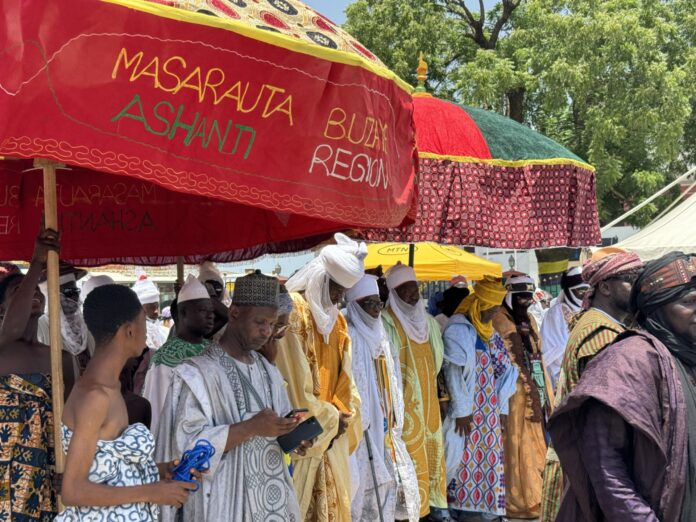
Speaking at the ‘Ahohoo Durbar’ at the Manhyia Palace in Kumasi, Mr. Asamoah Boateng emphasized the importance of strengthening the chieftaincy institution as a cornerstone of local development. The durbar, held as part of the activities marking the 25th anniversary of Otumfuo Osei Tutu II’s reign, brought together chiefs from various tribes in the Ashanti region to pay homage to the king.
Representatives from diverse tribes, including Ewes, Fantis, Gas, Moshies, Gonjas, Walas, Nzemas, Dagombas, Frafras, and Kusases, attended the gathering. Additionally, tribal leaders and their subjects from neighboring countries such as the Igbos, Yorubas, and the Songhais were present.
Mr. Asamoah Boateng also mentioned that the Ministry is reviewing the Chieftaincy Act, 2008 (Act 759) and Legislative Instruments 798 to update them according to current circumstances and restore some authority to traditional leaders.
Commending the Asantehene, Otumfuo Osei Tutu II, for his contributions to education, healthcare, and poverty alleviation through the Otumfuo Charity Foundation, Mr. Asamoah Boateng highlighted the positive impact of visionary traditional leaders on national development.
Ogyeahohoo Yaw Gyebi, President of the National House of Chiefs, praised the Asantehene’s socio-economic and political contributions, particularly his efforts in the “Heal KATH Project” aimed at improving healthcare provision. He urged Ghanaians to maintain unity and peace during the upcoming general elections and called on traditional and community leaders to educate the youth to resist exploitation by political groups and uphold the integrity of elections.
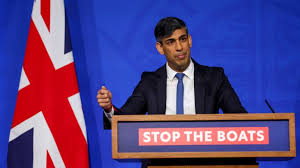
The UK parliament has ultimately approved a contentious bill enabling the government to transfer asylum seekers to Rwanda for their cases to be reviewed by the East African nation.
Prime Minister Rishi Sunak faced obstacles from both parliamentary opposition and legal challenges as lawmakers and activists contested the legislation on human rights grounds.
Sunak hailed the bill’s passing, emphasizing its role in deterring vulnerable migrants from risky crossings and dismantling criminal exploitation. He stressed that illegal entry would not guarantee a right to stay.
Nevertheless, the bill’s approval drew criticism from activists and the United Nations, with UN High Commissioner for Refugees Filippo Grandi cautioning against shifting refugee protection responsibilities and setting concerning precedents.
Amnesty International UK condemned the legislation as tarnishing the nation’s moral standing and undermining international legal safeguards for vulnerable populations.
Sunak’s failure to implement the policy has led to significant embarrassment, especially considering the substantial funding allocated to Rwanda, yet yielding no tangible outcomes.
The measure aims to deter irregular migration into the UK, particularly by those traveling on perilous small boats from France, often orchestrated by criminal networks.
The UK encountered a stark reminder of its challenges when news broke on Tuesday morning of five fatalities during an attempted crossing from France to England. A small boat, carrying over 110 passengers, became overcrowded off the coast of Wimereux, northern France, leading to several casualties. According to French officials, the victims included three men, one woman, and one child.
Under the legislation, some individuals arriving in the UK may be redirected to Rwanda for the assessment of their asylum claims. However, flights to Rwanda are not scheduled to depart until mid-July. If their claims are approved, they will remain in Rwanda. Should their claims be rejected, the bill stipulates that Rwanda cannot deport them anywhere other than the UK, though the outcome of such scenarios remains uncertain.
The absence of any deportations thus far, two years after the scheme’s inception, is deemed a significant setback for Sunak, who has prioritized curbing small boat arrivals.
Last year, the UK Supreme Court deemed the policy unlawful, citing substantial concerns regarding the risk of ill-treatment upon removal to Rwanda. The court highlighted the practice of refoulement, where asylum seekers are forcibly returned to a place where they face persecution or danger, contravening international human rights principles. Additionally, the court pointed to Rwanda’s flawed asylum system, poor human rights record, and past failures to comply with non-refoulement agreements, casting doubt on the safety and fairness of asylum claim assessments.
In 2021, the UK government criticized Rwanda for instances of extrajudicial killings, deaths in custody, enforced disappearances, and torture. In response, the government introduced the Safety of Rwanda (Asylum and Immigration) Bill in January of this year, effectively designating Rwanda as a safe country under UK law, despite objections from judges.
Home Secretary James Cleverly announced the bill’s passage in Parliament, emphasizing its aim to prevent abuse of human rights claims to block removals and asserting parliamentary sovereignty over European court measures.
Despite its approval, the bill may face legal challenges in the European Court of Human Rights, which has previously halted attempts to send asylum seekers to Rwanda. The legislative process has been drawn out, with the bill subject to amendments and debates between the House of Commons and the House of Lords.
Although touted as a solution to curb small boat crossings, the policy’s impact on overall migration figures remains minimal. With the looming general election, Sunak’s Conservative Party faces pressure from right-wing factions, including Reform UK, led by Nigel Farage, who highlight the issue of illegal migration.
Debates over the UK’s potential departure from the European Convention on Human Rights (ECHR) could further complicate matters if deportations are blocked by the European court post-bill passage, exposing divisions within the Conservative Party.
The Rwanda policy has already incurred significant costs for the British government, with estimates reaching £220 million ($274m), potentially rising to £600 million after the initial transfer of 300 individuals to East Africa. This expenditure invites criticism from both left and right-wing factions, questioning the policy’s legality, cost-effectiveness, and efficacy.
The opposition Labour Party, anticipated to win the next general election, has pledged to revoke the policy if it assumes power.
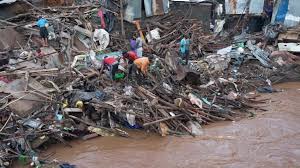
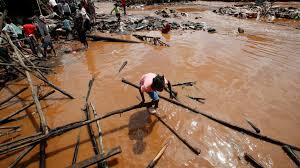
At least 32 people have been killed and two are missing after flash floods swept through almost half of Kenya.
Some 103,500 people in all have been affected.
Kenya has registered heavy rain since mid-March but downpours have intensified over the past week, leading to mass flooding. The Kenyan Red Cross says it has carried out over 188 rescues since the onset in March.
Some roads in the Kenyan capital of Nairobi were closed Wednesday and several neighborhoods remained submerged after another day of heavy rainfall.
“The situation in Nairobi has escalated to extreme levels. The county government for all its efforts is clearly overwhelmed,” wrote city Senator Edwin Sifuna on his X account.
“We need all national emergency services mobilized to save lives.”
He shared a video of residents trapped on the roofs of their houses in an informal settlement in Nairobi.
The Kenya Red Cross Society said it had rescued 18 people in the Mathare 4A neighborhood who had become “stranded due to floodwaters caused by heavy rains last night in Nairobi.”
It added that it was carrying out other “life-saving” operations in other parts of the country.
Two major highways out of Nairobi saw heavy traffic on Wednesday after floodwaters submerged parts of them. The Kenya Urban Roads Authority partially closed four roads that were heavily affected and warned of flooding on two others.
“The traffic police and our technical team are on the ground to direct traffic and enhance the safety of motorists,” it said in a statement.
Kenya Railways suspended commuter train services nationwide.
“We are compelled to take these precautionary measures because the safety of our customers is always of paramount importance to us,” the operator said in a statement.
The Kenya Meteorological Department warned of “heavy to very heavy” rainfall in parts of the country in an update on Wednesday.
“Continued rainfall is anticipated across various parts of the country as indicated in the Wednesday and Thursday rainfall forecast maps,” it said in a statement.
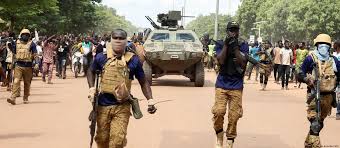
The events unfolded on February 25th, with the village of Soro bearing witness to the loss of 179 lives, while 44 others perished in the neighbouring village of Nondin. Human Rights Watch has labelled these mass killings as some of the most egregious abuses by the army in nearly ten years.
While the report has shed light on these horrific acts, Burkina Faso authorities have remained silent on the matter. However, public prosecutor Aly Benjamin Coulibaly has made a public appeal for witnesses to come forward and assist in identifying those responsible for the massacre, initially estimating the death toll at 170.
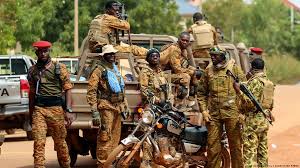
Eyewitness testimonies provided a chilling account of the military’s assault. Survivors recounted how a convoy of over 100 soldiers descended upon Nondin village shortly after Islamist fighters had passed through the area. The soldiers systematically forced villagers from their homes, gathered them in groups, and mercilessly opened fire, leaving no one spared, even those attempting to seek refuge.
The brutality extended to Soro village, located just 5 kilometers away, where the military repeated their deadly actions, shooting indiscriminately at villagers and those attempting to flee.
The military has justified these heinous acts as retaliation against villagers accused of aiding Islamist fighters, following an attack on a nearby military camp by insurgent forces in the northern Yatenga province.
Tirana Hassan, the executive director of Human Rights Watch, condemned the massacres, citing them as the latest in a series of civilian atrocities committed by the Burkina Faso military in their counterinsurgency efforts.
Burkina Faso, governed by a military junta since a coup in 2022, had promised to quell the insurgency. However, the violence has persisted, with jihadist groups now controlling over a third of the country.
International entities, including the European Union and the United Nations, have accused Burkina Faso of grave human rights violations in its fight against insurgency, citing indiscriminate killings and forced disappearances of civilians as among the atrocities committed.
Nigerian chess champion Tunde Onakoya returned home to Lagos on Wednesday to a hero’s welcome.
Onayoka, who set a world record for the longest chess marathon last week in New York City, arrived in Murtala Muhammed airport in Lagos on Wednesday.
The 29-year-old raised $150,000 for children’s education across Africa through the record attempt.
“I feel really proud of this moment, because I get to share it with so many people,” he said.
He had set out to play the royal game for 58 hours but continued until he reached 60 hours at about 12:40 a.m. Saturday, surpassing the current chess marathon record of 56 hours, 9 minutes and 37 seconds, achieved in 2018 by Norwegians Hallvard Haug Flatebø and Sjur Ferkingstad.
The Guinness World Records has yet to confirm the record, which can sometimes take weeks.
Onakoya played against Shawn Martinez, an American chess champion, in line with Guinness World Record guidelines that any attempt to break the record must be made by two players who would play continuously for the entire duration.
The Nigerian champion’s parents and several of his supporters greeted him enthusiastically at the airport, where he was escorted by armed guards.
One of Onakoya’s protégés was there to greet him, too.
Ayomide Ojo Emmanuel said he was homeless before Onakoya met him.
“He found me under the bridge in Osodi, where I was homeless,” the 20-year-old said. “I didn’t have anything, I didn’t have a life, I wasn’t ambitious. So, he gave me life.”
Onakoya founded his charity Chess in Slums Africa in 2018, aiming to help educate 1 million children in slum communities across the continent.
He said his main goal in breaking the record was to raise awareness for the organization’s mission.
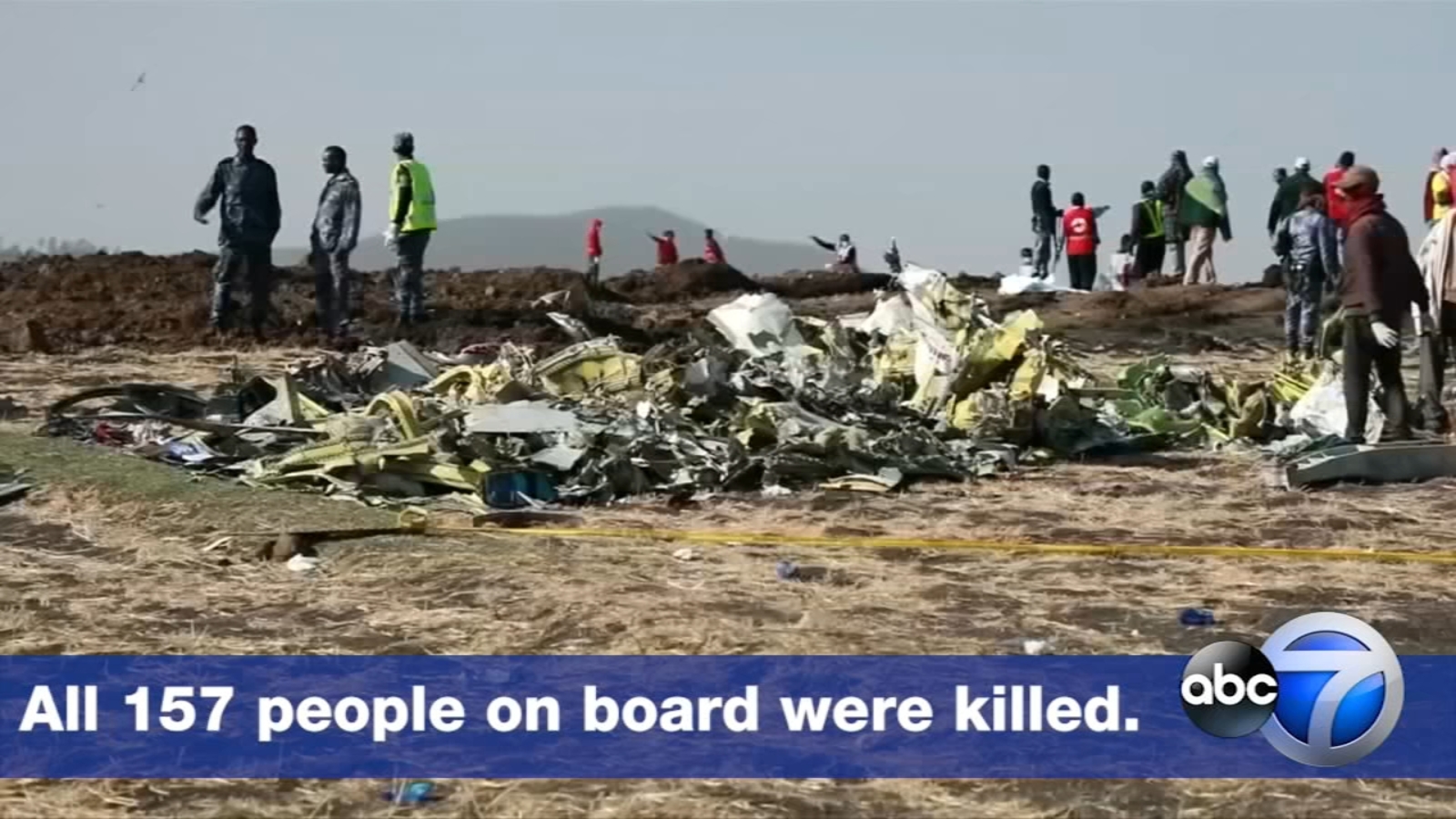
Government officials in Washington met with about a dozen family members of people killed when a Boeing 737 Max crashed in Ethiopia in 2019.
The families want the Justice Department to revive a criminal charge against the company.
Boeing reached a settlement in 2021 that let it avoid prosecution on a charge of defrauding regulators who approved the Max.
Boeing has been reaching confidential settlements with the families of passengers who died, but the relatives of those killed in the Ethiopia crash are continuing to press the Justice Department to prosecute the company in federal district court in Texas, where the settlement was filed.
On Wednesday, US department officials told relatives that the agency is still considering the matter.
After the meeting, family members held a press conference where they voiced their disappointment with the Department of Justice.
“Today’s meeting with the DOJ, has left me quite disheartened,” said Zipporah Kuria, who lost her father Joseph Kuria in the crash. “It’s not about justice anymore, It’s not about the miscarriage of justice for us anymore. It’s about the public safety.”
Paul Cassell, a lawyer for the families, vowed to “keep fighting” if the Justice Department moves to dismiss the charges against Boeing this summer.
“It appears to us that the Justice Department is continuing to give a wealthy, powerful, well connected corporation benefits than any other defendant in the criminal justice system would never get. If the Justice Department moves to dismiss the charges against Boeing this summer, we will fight them at every opportunity.” said Cassell.
It was an emotional meeting, according to Nadia Milleron, whose daughter Samya Stumo died in the 2019 crash.
“People are angry. People are shouting. People are starting to talk over other people,” said Milleron, who watched online from her home in Massachusetts while her husband attended in person. Relatives believe the Justice Department is “overlooking a mountain of evidence against Boeing. It’s mystifying,” she said.
According to Milleron, the head of the fraud section of the Justice Department’s criminal division, Glenn Leon, said his agency could extend its review beyond this summer, seek a trial against Boeing on the charge of defrauding regulators who approved the Max, or ask a judge to dismiss the charge. She said Leon made no commitments.
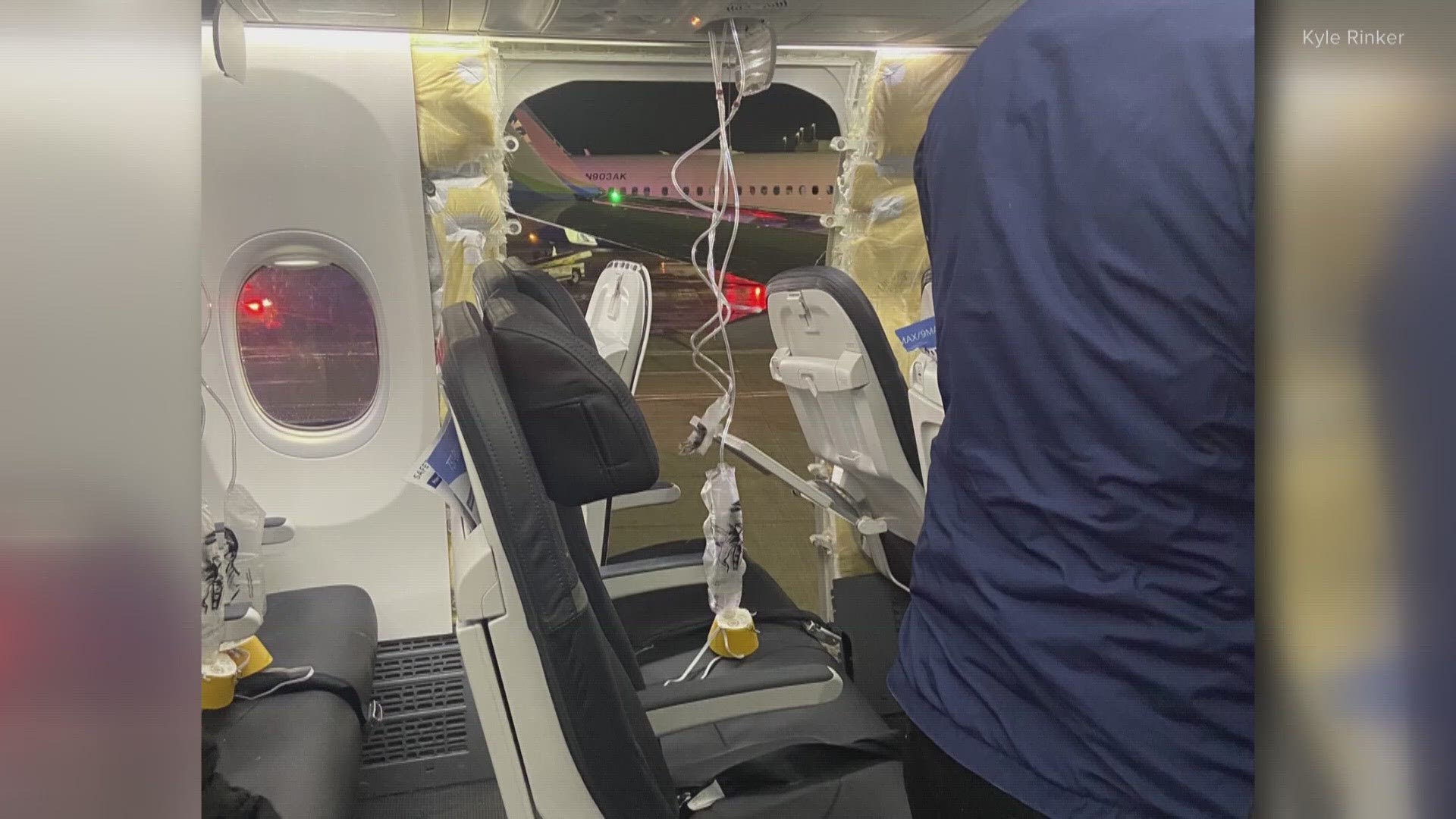
For Boeing, company executives have been forced to talk more about safety and less about finances since a door plug blew out of a Boeing 737 Max during an Alaska Airlines flight in January, leaving a gaping hole in the plane.
The accident halted the progress that Boeing seemed to be making while recovering from the two deadly crashes of Max jets in 2018 and 2019.
Those crashes in Indonesia and Ethiopia killed 346 people.
The Asante-Akim Central branch of the National Democratic Congress (NDC), has questioned the inclusion of certain projects in the government’s performance tracker launched on April 10, this year.
According to the party, some of the projects purported to have been executed in the constituency were non-existent with others being inherited projects from the NDC.
Addressing a press conference at Konongo, Mr. Kofi Seidu, the Constituency Communication Officer, described the inclusion of some of the projects as deceptive and barefaced lies intended to hoodwink Ghanaians.
“They claim that they have built cassava processing factory at Ahyiaem and there is no factory located at Ahyiaem.
He said the party was shocked to see on the tracker that they started the 60-bed Konongo Government Hospital in 2017 and completed same in 2022 when it was public knowledge that the said project was almost completed before NDC left office in 2017.
Mr. Seidu said the inclusion of a Central Government on its performance tracker that it had provided streetlights to communities was not the case.
“A Central government is telling you and the people of Asante-Akim Central that they have given us streetlights, a project that can be done by a unit committee chairman,” he stated.
The Communication Officer also denied claims on the tracker that the NPP government had done a water expansion project at Konongo, saying that the tracker failed to indicate where exactly the project was done.
He said it was a palpable falsehood perpetrated by the government to woo votes in the upcoming general election in December.
Mr. Seidu clarified that the water expansion project was done by the administration of former President John Dramani Mahama at Agyareago and that the current government had no business claiming it as part of its achievements.
He also challenged the inclusion of an iron rod factory at Odumase which is 100 per cent owned by an Indian on the tracker.
“It is instructive to note that some of these so-called achievements as captured by the tracker are non-existent with most of them being projects undertaken by former President Mahama,” the Communication Officer noted.
He further stated that, “Is it not absurd that a government that has borrowed and had more money than any other government in the history of the Fourth Republic will be struggling to account to the good people of Asante-Akim Central which is their stronghold?
He said it was high time for the media as partners in development to hold the feet of the government to the fire of accountability because taxes and resources of Ghanaians had been entrusted to them.
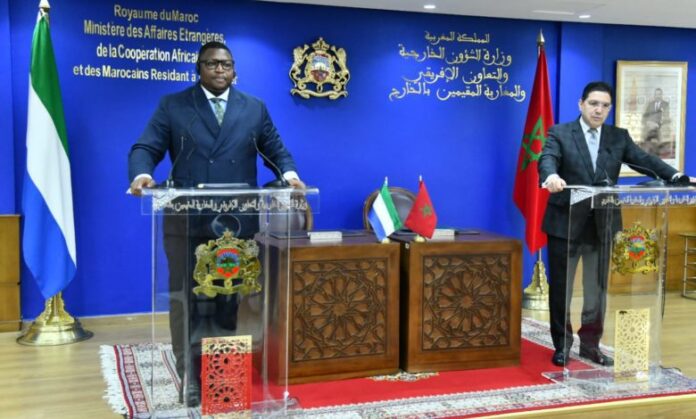
The Republic of Sierra Leone expressed, on Tuesday in Rabat, its full support for the Kingdom’s territorial integrity, while considering the Moroccan Autonomy Initiative as the only “credible, serious and realistic” solution to the dispute over the Moroccan Sahara.
This stance was expressed in a joint communiqué issued following talks between Minister of Foreign Affairs, African Cooperation and Moroccan Expatriates, Nasser Bourita, and Sierra Leone’s Minister of Foreign Affairs and International Cooperation, Timothy Musa Kabba.
In the joint communiqué, Sierra Leone’s Foreign Minister reiterated his country’s firm support to the Kingdom’s territorial integrity, which was reinforced by the opening, in August 2021, of a Sierra Leonean
Consulate General in Dakhla and its participation, on January 15, 2021, in the Ministerial Conference in support of the autonomy initiative under Moroccan sovereignty, at the invitation of the Kingdom and the United States of America.
In this regard, he expressed his full support for the UN-led process to reach a realistic, practical and lasting solution to the Moroccan Sahara issue.