Home Blog Page 206

DVLA Management, Board embark on familiarisation tour of Volta, Oti 

0

The Board and Management of the Driver and Vehicle Licensing Authority (DVLA) have embarked on an official tour across the Volta and Oti regions to familiarise themselves with the operation of all DVLA offices across the country. 

Mr Francis Asamoah, Head of Corporate Affairs, DVLA, disclosed this to the Ghana News Agency (GNA) at Akatsi on Monday, when the team made their first stop at the Akatsi office in the Volta Region. 

He said the trip would help the Board to appreciate their work and address the challenges that would emerge. 

“We also appreciate the work of the media and the possible collaboration,” he said. 

Mr Francis Agbozo, a Board member, appealed to drivers and driving unions within the respective areas to embrace the services of the Authority. 

He urged the media to create the needed awareness about the services of DVLA within the Akatsi South Municipality. 

Mr Hayford Acheampong, the Akatsi Office Manager, in an engagement with the Ghana News Agency, said his office would continue to offer the best services to the public. 

He said he remained optimistic that the new office would excel in achieving its yearly targets. 

From Akatsi, the entourage would move to Denu, Ho, Hohoe and to Dambai to inspect a parcel of land for the construction of a DVLA office. 

Earlier, the tour began from Winneba, Cape Coast, Takoradi, Axim, Tarkwa. 

The team would later depart from Oti to Koforidua, Nkawkaw, Akim Oda, and other parts of the country. 

Youth Association impresses sports administrator to contest Sunyani East Parliament seat   

0

The Sunyani Youth Development Association (SYDA) has lauded the contributions of Mr Ransford Antwi, a popular football administrator towards the development of the Sunyani East constituency. 
 
Describing his passion for development as exceptional, the association, a development-oriented and advocacy organisation, called on Mr Antwi to contest the constituency parliament seat as an independent candidate in the Election 2024. 
 
With his lobbying skills, good human relations, charisma and a native of Sunyani, the association said they believed Mr Antwi could win the seat and that would position him well to lobby for more projects and bring the development of the constituency to the next level. 
 
Addressing a news conference in Sunyani, Mr Atta Akoto, the President of the SYDA, said “our call on Mr Antwi to contest in the parliamentary race of the constituency is centred purely on the social-cultural and economic development of the people of the constituency and beyond”. 
 
“Our call has been necessitated by the incessant call of the people of the constituency on him to come out to contest for the seat,” he explained, saying Mr Antwi had proven beyond all reasonable doubt that “he is a true agent of development”. 
 
“He has a high taste for quality and does not settle for mediocrity except the best. He steps in when there seems to be no hope and immediately restores hope,” Mr Akoto stated. 
 
He said the Association over the past six months undertook an initiative to sample 2,100 electorate across various electoral areas in the constituency, saying the findings showed that 1,692 representing 80.5 percent of the views sampled were in favour of Mr Antwi contesting the parliamentary seat. 
 
Highlighting some of Mr Antwi’s achievements in the constituency, Mr Akoto said funded the building of a tunnel at the Sunyani Coronation Park and played an instrumental role towards the construction of a standard dressing room and installed CCTV cameras at the park. 
 
On his 50th birthday, he sponsored free eye surgeries for more than 50 patients in the constituency and beyond as well as partnered with the Breast Unit of the Komfo Anokye Teaching Hospital (KATH) to conduct free breast screening for hundreds of women. 
 
Mr Antwi also funded the rehabilitation and painting of the Barhamiya Islamic Basic School at Sunyani Penkwase and through his instrumentality, the Australian High Commission in Accra funded the SYDA to expand the association’s youth skills training to benefit more youth in the constituency. 
 
He said the SYDA was of the conviction that if given the opportunity as the Member of Parliament, Mr Antwi would “have stronger muscles and access to do much more to serve the interest of the people of Sunyani East”. 
 
“We strongly believe that if he is the MP for the constituency, he can easily generate the required support to impact and transform the socio-economic livelihoods of the constituents too,” Mr Akoto added. 
 
When contacted, Mr Antwi, also the Chief Executive Officer of the Sunyani-based Suncity Radio confirmed to the GNA he had received the call from the SYDA, but added he was still thinking about it and would therefore speak to the media later. 

GRA opens special window for taxpayers to update records

0

The Ghana Revenue Authority (GRA) says it has opened a special window for taxpayers to rectify their records and report undisclosed incomes.

This according to the GRA was to facilitate easier declaration and payment of taxes for resident individuals.

“All eligible individuals are strongly encouraged to utilise this opportunity to regularise their tax affairs,” GRA said in a press statement.

The revenue mobilisation authority said it has noted some concerns raised by citizens on the tax status of individuals who earn incomes abroad and whether they are deemed by the tax laws as “resident individuals” for tax purposes.

It indicated that the legal definition of a resident individual for tax purposes is grounded in the Income Tax Act 2015 (Act 896), Sections 3 (2) (a), 103, and 111.

GRA explained that based on the law, individuals considered resident for tax purposes include citizens with a permanent home in Ghana residing in the country throughout the year as well as those present in Ghana for at least 183 days in any 12-month period that begins or ends within the year.

It also said that it included resident individuals include government employees or officials posted abroad and citizens temporarily absent from Ghana for not more than 365 continuous days who maintain a permanent home in Ghana, the statement clarified.

JISOP visits social protection institutions  

0

A delegation of Journalists in Social Protection (JISOP) has called on key institutions to focus on issues of social protection. 

     The courtesy calls were to formally introduce JISOP to the institutions and establish a working relation towards a direct line of communication on social protection. 

     JISOP, within five days, called on the Ministry of Gender, Children and Social Protection (MoGCSP), Deutsche Welle (DW), Livelihood Empowerment Against Poverty (LEAP) Programmes Secretariat and the Ghana School Feeding Programme Secretariat.  

 It also called on United Nations (UN) institutions such as the United Nations Population Fund (UNFPA), World Bank, World Health Organisation (WHO), United Nations Development Programme (UNDP), World Food Programme (WFP) as well as the International Labour Organistion (ILO). 

 There were dialogues among the representatives of the institutions and the journalists to solicit collaborations, which underscored the essence of the meetings. 

  Madam Emma Anaman, Head of Social Protection at WFP, during the engagement, said the gesture was commendable given the influence of news reports on social protection issues. 

 She reiterated the importance of JISOP as a team that delved into the issues of social protection, adding it was a step to give the subject the needed attention.  

     Mr Achaligabe Colson Akanbasiam, Head of Communication, LEAP Secretariat, expressed the Secretariat’s readiness to work with JISOP towards an enhanced social protection conversation in the interest of the public. 

  He noted that there was misinformation about the LEAP programme contrary to its activities, adding that liaising with JISOP would facilitate effective communication between the programme and members of the public. 

 JISOP, launched last year, is an independent network of journalists from various media houses trained to report on social protection. 

     It is a stakeholder in the Right Based Approach (RBA) to the social protection agenda of Ghana under the UNICEF’s social protection strategy and coordinated by the Justice Baidoo Consulting Limited (JBCL). 

The members were drawn across all regions in the country and grouped into the Northern, Middle, and Southern zones. 

One hundred days of reading policy yields positive results in Obuasi East District  

0

A reading policy introduced by the Obuasi East District Assembly in basic schools is yielding significant results, Madam Faustina Amissah, the District Chief Executive, has announced.  
     The DCE, who was speaking at a meeting of the Assembly, said the policy dubbed, “100 Days of Reading”, had bridged the non-reading and reading gap by 65 per cent.  
      As part of the District Education Directorate’s vision to ensure that every child at the lower primary and the kindergarten reads, the District Education Oversight Committee (DEOC) approved the reading policy in 2022.  
      The improvement in reading habits of pupils in the district, according to the DCE, was due to the deliberate policy by the Assembly to invest in education.  
      She said since the establishment of the Assembly in 2018, it had taken upon itself to develop the education sector of the district by allocating more than 60 per cent of its infrastructure budget to education.  
     Madam Amissah reaffirmed the Assembly’s commitment to continue to invest in education by organising workshop for teachers, building more infrastructure and providing reading and learning materials for schools in the district. 
     On a need to improve sanitation in the district, the DCE said the Assembly had introduced an initiative called “operation clean your frontage’, adding that, a taskforce which would be mandated to arrest people throwing rubbish was in the offing. 
      “We are doing this to ensure that every resident observes and understands the need to clean their immediate environment. 

      We are counting on residents to support us to make it work,” she added. 

Black Bombers to participate in international boxing tournament in New Zealand  

0

The national amateur boxing team, the Black Bombers will be in New Zealand in June this year to participant in the International Professional and Amateur Boxing tournament in Auckland with their New Zealand counterparts. 

According to Vice President of the Ghana Boxing Federation (GBF) Mr. Dauda Fuseni, the programme was to enable boxers of the two countries to test and sharpen their skills ahead of major international boxing events. 

He said while the main team would be in Thailand to participate in the second World Boxing Qualifier for Paris 2024, the reserve side comprising other top young budding pugilists like Mohammed Aryeetey and Abu Kamoko would get the opportunity to travel to New Zealand for the project which is a bilateral relationship agreed by the Amateur Federations of the two countries. 

Mr. Fuseni said the Black Bombers remarkable performance at the 13th African Games where they bagged four gold, one silver and two bronze medals had been noticed and Ghana was still seen as a great boxing nation. 

“We need the exposure, our boys are good, but they lack international exposure and experience, they must go out to fight or we must invite other nationals here and it is not easy, so when such opportunities come we should not let it slip” he said in a media interview. 

Mr. Fuseni said the Black Bombers must be in Paris at all cost adding “We should be at the 2024 Olympic Games, we have made the history and we should maintain it”. 

Asogli State protests renaming of Ho Technical University 

0

The Asogli State Council has registered strong disapproval of a planned renaming of the Ho Technical University (HTU). 

President Nana Addo Dankwa Akufo-Addo, at the 50th Anniversary Celebration of the Technical University in 2018, endorsed a proposal by the Governing Council to rename the Institution after historic Ghanaian cultural icon, Dr Ephraim Amu, an indigene of the Volta Region. 

Chiefs of the traditional State of the Volta regional capital vehemently rejected the proposal at a press conference on Monday, six years after the President made public the planned move. 

Togbe Adzie Lakle Howusu XII, the Warlord of the State, said the University remained a revered establishment of the Asogli State, and recounted how the community bore manual labour to support its construction by the Dutch Government in 1968 as a technical school. 

He therefore said the proposed name change would challenge efforts to preserve the history and relevance of the Institution, adding that Dr Amu, a Composer, musicologist, and teacher, the individual to receive the honour and fame, shared little with the disposition as a technical University. 

Togbe Howusu decried the lack of consultation with traditional authorities over the new name, and alleged some possible political undertones in the renaming, which he claimed was being planned for execution sooner. 

“The attention of the Asogli State Council has once again been drawn to the attempts by the authorities of the Ho Technical University and the Government to rename the institute to Dr Ephraim Amu Technical University. 

“The Asogli State Council wishes to reaffirm our strong opposition to the government’s decision to rename the University without any consultation with the Chiefs and people of Ho who played a crucial role in the establishment of this Institute,” he said. 

He said the Ho Technical University, an esteemed institution in the public domain, held a special place in the Volta Region, particularly for the people of Asogli State on whose land the University was situated.  

“We have a strong attachment to the University’s brand, which is steadily gaining recognition both nationally and Internationally,” he stated. 

Togbe Howusu said it was imperative that this progress and reputation remained undisturbed as frequent changes in the University’s name could lead to confusion among stakeholders, including students, alumni and the public regarding its identity and mission. 

“Our concern is heightened by the fact that the proposed name does not align with the University in any way. Names carry significant meanings and can impact institutions positively or negatively. The name of a university is closely tied to its history, identity, values, or mission. 

He said as much as the Chiefs and people of Asogli State recognise the achievements of Dr Ephraim Amu and his contributions to the development of the country, these achievements, and contributions, though laudable, had limited relevance to the academic programmes and mission of the Ho Technical University. 

Togbe Howusu said the Asogli State Council wished to remind the authorities of the Ho Technical University that major decisions affecting the University should be made in consultation with the relevant stakeholders, to avoid conflict and unnecessary confrontation.  

“We do not understand the motive behind the rush to rename the Ho Technical University and cannot see any serious justification for such a move other than for political expediency,” re-echoed their total objection to the attempt to rename the University. 

“Our position is that the name of the Institute should remain ‘Ho Technical University,’ this is our position, and we firmly stand by it.” 

Present at the press conference were chiefs and queens of the Asogli State, all who together processed to present copies of the petition to the Regional Minister, Dr Archibald Letsa, the Municipal Chief Executive for Ho, Mr Divine Bosson and the Management of the Ho Technical University. 

“What will happen if this name change goes ahead will not be pleasant,” Togbe Howusu would say, while giving out the petition.” 

Dr Christopher Amehoe, the Registrar of the University, told the traditional council that presently there were no plans to rename the Institution, saying that the initial idea had been put on hold since 2018. 

He gave the assurance that the petition would reach the appropriate quarters. 

Affirmative Action: a women’s rights advocate calls for involvement of the voting public 

0

Madam Gloria Ofori-Boadu, a women and children’s rights advocate has called for the mass involvement of the voting public in the demand for an affirmative action to increase women’s participation and representation in governance. 

“There is the need for a massive public education so that the masses would understand what the affirmative action means and its benefits to our national development and social cohesion so that together they will lead the campaign”. 

She said giving the fact that issues with gender and women empowerment did not look too good in our part of the world due to stereotypes and some cultural underpinnings, any move such as an affirmative action must not be championed by few groups in the society. 

Speaking in an interview with the GNA Gender desk on how to increase women’s participation in governance and representation, Madam Ofori-Boadu also a managing legal person observed that backing of the populace was critical in ensuring the bill was passed. 

Citing the Domestic Violence Act for instance, she noted that it had massive involvement and support of the public, where there was a prominent level of public awareness. 

“We must adopt the same approach used for the Domestic Violence Act to ensure that such an important tool like the affirmative action becomes a reality” she added. 

She said unfortunately, there were no efforts to bring the people along and get involved to understand its impact on national development. 

According to her the fact that the Affirmative Action bill had traversed about eight Ministers of Gender, Children and Social Protection over a period of about nine-years supported the call for a massive education and involvement of the public. 

Affirmative Action is an active remedial mechanism or policy aimed at removing discrimination, improve rights and socio-political progress of non-dominant groups in this case women who are historically disadvantaged. 

It can also be described as a deliberate temporary act to facilitate equality in representation for national cohesion and development. 

Ghana has made attempts since 1998 starting with affirmative action policy guidelines to promulgate an Affirmative Action Law without concrete results. 

Women groups and Civil Society Organisations (CSOs) through coalition building, collective and solidarity actions have pushed for the adoption of affirmative action mechanisms and placed the prime issue of parity in women’s participation as a core demand in the last nine years.  

FAAPA begins training of African news agency journalists in countering fake news

0

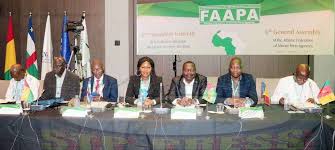
Some 25 African news agency journalists are undergoing a five-day training seminar to enhance their skills in combating the spread of misinformation and countering fake news.

The training seminar, organised by the Atlantic Federation of African Press Agencies (FAAPA) at the African Centre for Training of Journalists (CAFJ) in Rabat, Morocco, is on the theme: “Fact-Checking: Detection of fake news in media content”.

In an era of digital information, the need for fact-checking has become more crucial than ever as journalists play vital roles in maintaining public trust by ensuring credibility, accuracy, and reliability in their reporting.

The training seminar is, therefore, a step towards equipping journalists with the necessary tools to identify and counter fake news and ultimately safeguarding democracy across the continent.

In partnership with the Bank of Africa and Royal Air Moroc, the seminar will strengthen the capacities of journalists in fact-checking by acquiring theoretical knowledge and practical skills necessary to master the techniques for verifying the reliability of the information to counter fake news and mis/disinformation.

The seminar will result in the creation of a framework for journalists, allowing them to set up a platform specialised in verifying information and multimedia content as well as the development of a guide on fact-checking with a view to putting it into practice.

Mr Fouad ARIF, the President of FAAPA, in his welcoming address, emphasised the relevance of the seminar theme as it reflected the importance FAAPA on strengthening skills and exchanging experiences between journalists from African news agencies on fake news.

He said the training seminar had become necessary to combact misinformation, disinformation, and fake news by strengthening journalists’ resilience in nipping the phenomenon in the bud.

Pofessional journalists and expert trainers, he noted, were expected to supervise various workshops by providing participants with advice in their fact-checking efforts.

Mr Arif, also the Director General of Moroccan News Agency (MAP), said at a time characterised by the impact of social networks and the proliferation of fake news, African press agencies were expected, as part of a new dynamic, to recommend innovative approaches in order to support the frantic evolution of information systems and adapt to the profound changes taking place in the world of media.

In that context, he urged participants of the training to attach importance to the exchange of experiences and the sharing of knowledge while cultivating credible sources of information to deal with fake news.

Mr Arif said the phenomenon of fakenews was “a real scourge for the media sector…which was taking on increasingly worrying dimensions”, adding that journalists from African news agencies must be vigilant in the process of collecting, processing, and disseminating information through the application of effective fact-checking techniques.

The President of FAAPA expressed optimism that the seminar will “result in the creation of a network of Fact-Checkers with the aim of promoting the intensification of exchanges of information and experience in this area and strengthen coordination to combat fake news and demystify disinformation.”

Mr Jean Bedel Ndandula, a facilitator from the Congolese Press Agency, said information and data were key in news reporting and that journalists must at all times verify such information.

He said verifying information from the original source was essential as a first step in fact-checking

World Bank commends Ghana for mainstreaming environmental risk management in projects  

0

Charles Teye Amoatey, Director, Ghana Institute of Management and Public Administration (GIMPA) Training and Consulting, says the World Bank has commended Ghana for mainstreaming environmental risk management in World Bank-funded projects.  

He said the World Bank had made positive remarks about Ghana’s advancements in environmental and social risk management.  

Prof Amoatey said the World Bank had allowed Ghana to use its own system to manage environmental and social risks on World Bank-funded projects.  

That, he stressed, showed the level of maturity Ghana had achieved as a result of the impact of the environmental and social risk programme. 

Prof Amoatey said this at the opening of the fourth session of a six-day training programme on the Essentials of Environmental and Social Risk Management (ESRM) in Accra.  

The programme is organised by GIMPA in collaboration with the Regional Transport Research and Education Centre of Kwame Nkrumah University of Science and Technology (KNUST) funded by the World Bank Group. 

The training programme brought together 35 participants from the Ministries, Departments, and Agencies, as well as local government and public service from the African continent, including Ghana, Nigeria, Liberia, Sierra Leone, and Uganda.  

The aim of the programme is to train participants to manage ESRM associated with projects being implemented on the continent for sustainable development. 

Studies conducted on improving results in sub-Saharan Africa showed that financial institutions in the region did not achieve satisfactory environmental, social, health, and safety ratings. 

Also, there is a lack of capacity among these institutions as well as member states to implement environmental and social risk management. 

He urged African governments to prioritise  environmental and social risk management in every project at the inception stage to ensure that all environmental risk issues were properly managed.  

The Professor said the World Bank had decided not to approve a project if there was no environmental and social risk management report that came along with the feasibility studies.  

He called for government support to actualize these initiatives, devoid of political interference in project implementation.  

“For example, if a project is coming up and we feel that due to the potential environmental impact, the project should not be approved, I think that the politicians should heed our advice and allow the technocrats to do their professional jobs,” he said.  

Professor Helen Essandoh, Director, Regional Transport Research and Education Centre, KNUST, said the course was launched in November 2022, to increase the capacity of environmental experts to manage development projects. 

She said the participants would be taken through topics like regulations on the environment, land issues, gender issues, and labour issues, among others.  

Sustainable development, she stressed, was hinged on the pillars of economic, social, and environmental sustainability.  

Mr Jonathan Zinzi Aryitey, Representative of the World Bank, said the programme was instituted due to gaps in human resources in the management of environmental and social risk.  

All development projects, he stated, had humans at the core of their centres to ensure efficient and effective implementation, leading to positive outcomes.  

“For a project to have a true impact, then environmental and social risk management should be at the forefront to eradicate poverty and ensure the better living conditions of the citizens,” he said.