Home Blog Page 207

Four more grabbed and remanded over train accident

0

Four more persons have been picked up by the police for their alleged roles in last week’s train accident at Abortia in the Volta Region.

They are Kokou Koudjo, a 34-year-old gas welder, Patrick Kwaku Sosu, a 52-year-old labourer, Alaza Prosper, a 28-year-old labourer and Fiadugbe Emmnauel, a 31-year-old labourer.

The four accused persons have been charged with “abetment of unlawful damage”.

They are alleged to have aided Abel Adzidotor, the driver of the truck, which caused unlawful damage to a Diesel Multiple Unit train.

The High Court presided over by Justice Mrs Lydia Osei-Marfo did not take their pleas and remanded them into police custody pending further investigations into the matter.

The prosecution, led by Christabel Selma Anafure, Assistant State Attorney, prayed the court not to take the pleas of the accused persons as investigations were underway.

ASA Anafure asked the court to remand them into police custody and grant them a short adjournment.

The court obliged the prosecution’s prayer and asked the accused persons to secure lawyers of their choice by the next adjourned date.

The facts as read out in court are that the complainant is Dr Divine Olutey, an Engineer of the Ghana Railway Corporation.

The prosecution said on April 18, 2024, between 0900 hours and 1300 hours, the accused persons were on board a Hyundai Gold Truck with registration number GS 9018-20, driven by Dzidotor Abel (now a convict).

The prosecution said preliminary investigations revealed that Koujo, the first accused person, bought some blocks from a block factory at Juapong and conveyed same to Abortia using the underpass of the railway lines.

The court heard that the convict was in the car with the four accused persons.

After discharging the blocks at Kouko’s site, the prosecution said they decided to avoid the under bridge and cross the railway lines with the vehicle.

According to the prosecution, the four accused persons, being fully aware that the railway lines were inaccessible to motor vehicles, still decided to use the railway lines as a “shortcut” to get to Juapong.

The prosecution said when they arrived at the railway lines, they realised that it was impossible to cross over the railway tracks, hence they decided to place stones on the railway lines to serve as a path for the truck to cross over.

However, the prosecution said the truck still got stuck on the railway line.

The accused persons tilted the head of the truck and left the scene without providing any warning for trains playing the tracks.

The prosecution said investigations disclosed that there was no access route across the railway tracks connecting the Juapong road and that even if the truck had successfully crossed the railway, a big gutter on the westside of the railway lines would have prevented the accused persons from connecting the Akuse-Juapong road.

The court was told that on the same day, the management of the Ghana Railway Corporation led by the complainant and other 28 engineers from Ghana and Poland embarked on a test run of the new Diesel Multiple Unit (DMU) Train from Tema to Mpakadan.

“This test run had been announced ahead of time. When the train got to the Abortia area, it rammed into the Hyundai Gold Truck, which was stuck across the railway lines.

“Both the train and truck got damaged. The train was sent to Tema for examination while the scrap of the vehicle, which was damaged beyond repairs was taken to the Juapong Police Station for further action,” the prosecution said.

Court remands a house agent into custody for fraud

0

The Ashaiman District Court has remanded Romeo Atsu, a self-acclaimed house agent and broker, into Police custody for defrauding an unsuspecting man of the sum of Gh₵ 9,000.00. 

The court remanded him to reappear on April 29, 2024, after pleading not guilty to the charge of defrauding by false pretense. 

Inspector Henry Tetteh Nartey, the prosecutor for the case, told the court, presided over by Mr Derick Pardden Eshun, that the complainant in the case was Mr. Clinton Peter, a 24-year-old Nigerian, while Atsu is a 30-year-old and claims to be a broker who undertakes his business online and resides at Soldier Line-Gbetsile. 

The Prosecutor added that on March 5, 2024, the complainant, who needed a room to rent, managed to get in contact with Atsu and place a call to him, who claimed he was a house agent and had two and four-bedroom apartments for rent at Pawpaw house at Gbetsile in the Kpone-Katamanso Municipality. 

He said the accused person asked one Eric Adzorgenu, a witness in the case, to send the complainant to the location of the house. 

The complainant, the court heard, showed interest in the four-bed apartment, which was going for Gh₵ 1,500.00 per month rental, and paid Gh₵ 9,000.00 covering six months into an MTN mobile number bearing the name Bismark Ankoh as provided by the accused person as the landlord’s number. 

The prosecutor added that the complainant and the witness were in the said house when the caretaker confronted them and questioned them on their mission there, to which the complainant replied that he had rented the house and even paid Gh₵9,000.00 to the landlord. 

This, the court heard, prompted the caretaker to call the landlord to verify, and it turned out that he had not rented it to the complainant nor received any money to that effect. 

The accused person’s phone was called several times by the complainant but was switched off. 

The prosecution said that on March 17, 2024, Gbetsile Police had information that Atsu had been arrested by Diaso Police in the Western Region. 

He was therefore re-arrested and brought to Gbetsile Police Station to assist in the investigation, and he was subsequently charged with the offence. 

Expand tourism beyond attractions and promote culture and customs- Yejimanhene  

0

Pimampin Yaw Kagbrese V, the Omanhene of Yeji Traditional Area has emphasised the importance of expanding the scope of tourism to showcase the rich customs, culture, and traditions of the country.  

He stated that customs, culture, and traditions, such as cuisine, attire, languages, and relationship with nature, were essential components of tourism that showcased the identity of the people.  

Pimampin Kagbrese V, also President of the Bono East Regional House of Chiefs was speaking at the launch of the third edition of the ‘Meko Bono’ festival in Techiman, organised by Bonofie, a Ghanaian event organisation dedicated to promoting the socio-cultural and economic development of the Bono and Bono East Regions through tourism and culture.  

This year’s festival, the first to be held in the Bono East Region after two successful editions in Sunyani, was scheduled to take place from Saturday, August 24th to Sunday, September 1st, 2024, in Techiman.  

Pimampin Kagbrese V said the tourism sector was contributing significantly to the tourism sector of the economies of various countries around the world, saying as a result, nations were investing substantial amounts of money in developing their tourism potential.  

He said in Ghana, the tourism sector was considered the cornerstone of the economy, with the government allocating vast resources to its development, citing the refurbishment of the Kwame Nkrumah Mausoleum, which had been attracting thousands of tourists.  

He said the Bono Region possessed many tourist attractions that could easily rival those found in other countries; however, the region lacked sufficient publicity to effectively showcase its tourism potential.  

Pimampin Kagbrese therefore implored the citizens of the Bono region to take pride in the rich heritage handed over to them by their ancestors, while emphasising the importance of preserving and promoting the culture to benefit both current and the future generations.  

Mr. Joseph Appiagyei, the Bono East Regional Director of the Ghana Tourism Authority, highlighted the significant impact of the ‘Meko Bono’ festival on the regio’s tourism sector, saying the festival had not only expanded the tourism base but had also introduced diversity into the region’s tourism contributions.  

He emphasised the importance of collaboration between stakeholders and government in developing tourist attraction sites to promote domestic tourism, which was crucial for all parties involved to work together towards enhancement of the tourism experience in the region to attract more visitors.  

Mr Appiagyei provided statistics for the first quarter of 2024 patronage at the Kintampo Waterfalls, reporting that a total of 8,268 visitors were recorded between January and March, resulting in gross revenue of Ghc 110,755.  

He said out of the visitors, 1,619 were children representing 20 per cent, 4,742 were students, 57 per cent, 1,502 adults representing 18 per cent and 405 were foreigners representing five per cent.  

Mr Appiagyei noted that the data presented underlined the minimal impact of foreign visitors, highlighting the significance of investing in domestic tourism to drive revenue to promote the growth of the tourism industry in the Region. 

Pimampin Yaw Kagbrese V, the Omanhene of Yeji Traditional Area has emphasised the importance of expanding the scope of tourism to showcase the rich customs, culture, and traditions of the country.  

He stated that customs, culture, and traditions, such as cuisine, attire, languages, and relationship with nature, were essential components of tourism that showcased the identity of the people.  

Pimampin Kagbrese V, also President of the Bono East Regional House of Chiefs was speaking at the launch of the third edition of the ‘Meko Bono’ festival in Techiman, organised by Bonofie, a Ghanaian event organisation dedicated to promoting the socio-cultural and economic development of the Bono and Bono East Regions through tourism and culture.  

This year’s festival, the first to be held in the Bono East Region after two successful editions in Sunyani, was scheduled to take place from Saturday, August 24th to Sunday, September 1st, 2024, in Techiman.  

Pimampin Kagbrese V said the tourism sector was contributing significantly to the tourism sector of the economies of various countries around the world, saying as a result, nations were investing substantial amounts of money in developing their tourism potential.  

He said in Ghana, the tourism sector was considered the cornerstone of the economy, with the government allocating vast resources to its development, citing the refurbishment of the Kwame Nkrumah Mausoleum, which had been attracting thousands of tourists.  

He said the Bono Region possessed many tourist attractions that could easily rival those found in other countries; however, the region lacked sufficient publicity to effectively showcase its tourism potential.  

Pimampin Kagbrese therefore implored the citizens of the Bono region to take pride in the rich heritage handed over to them by their ancestors, while emphasising the importance of preserving and promoting the culture to benefit both current and the future generations.  

Mr. Joseph Appiagyei, the Bono East Regional Director of the Ghana Tourism Authority, highlighted the significant impact of the ‘Meko Bono’ festival on the regio’s tourism sector, saying the festival had not only expanded the tourism base but had also introduced diversity into the region’s tourism contributions.  

He emphasised the importance of collaboration between stakeholders and government in developing tourist attraction sites to promote domestic tourism, which was crucial for all parties involved to work together towards enhancement of the tourism experience in the region to attract more visitors.  

Mr Appiagyei provided statistics for the first quarter of 2024 patronage at the Kintampo Waterfalls, reporting that a total of 8,268 visitors were recorded between January and March, resulting in gross revenue of Ghc 110,755.  

He said out of the visitors, 1,619 were children representing 20 per cent, 4,742 were students, 57 per cent, 1,502 adults representing 18 per cent and 405 were foreigners representing five per cent.  

Mr Appiagyei noted that the data presented underlined the minimal impact of foreign visitors, highlighting the significance of investing in domestic tourism to drive revenue to promote the growth of the tourism industry in the Region. 

Asogli State protests renaming of Ho Technical University  

0

The Asogli State Council has registered strong disapproval of a planned renaming of the Ho Technical University (HTU). 

President Nana Addo Dankwa Akufo-Addo, at the 50th Anniversary Celebration of the Technical University in 2018, endorsed a proposal by the Governing Council to rename the Institution after historic Ghanaian cultural icon, Dr Ephraim Amu, an indigene of the Volta Region. 

Chiefs of the traditional State of the Volta regional capital vehemently rejected the proposal at a press conference on Monday, six years after the President made public the planned move. 

Togbe Adzie Lakle Howusu XII, the Warlord of the State, said the University remained a revered establishment of the Asogli State, and recounted how the community bore manual labour to support its construction by the Dutch Government in 1968 as a technical school. 

He therefore said the proposed name change would challenge efforts to preserve the history and relevance of the Institution, adding that Dr Amu, a Composer, musicologist, and teacher, the individual to receive the honour and fame, shared little with the disposition as a technical University. 

Togbe Howusu decried the lack of consultation with traditional authorities over the new name, and alleged some possible political undertones in the renaming, which he claimed was being planned for execution sooner. 

“The attention of the Asogli State Council has once again been drawn to the attempts by the authorities of the Ho Technical University and the Government to rename the institute to Dr Ephraim Amu Technical University. 

“The Asogli State Council wishes to reaffirm our strong opposition to the government’s decision to rename the University without any consultation with the Chiefs and people of Ho who played a crucial role in the establishment of this Institute,” he said. 

He said the Ho Technical University, an esteemed institution in the public domain, held a special place in the Volta Region, particularly for the people of Asogli State on whose land the University was situated.  

“We have a strong attachment to the University’s brand, which is steadily gaining recognition both nationally and Internationally,” he stated. 

Togbe Howusu said it was imperative that this progress and reputation remained undisturbed as frequent changes in the University’s name could lead to confusion among stakeholders, including students, alumni and the public regarding its identity and mission. 

“Our concern is heightened by the fact that the proposed name does not align with the University in any way. Names carry significant meanings and can impact institutions positively or negatively. The name of a university is closely tied to its history, identity, values, or mission. 

He said as much as the Chiefs and people of Asogli State recognise the achievements of Dr Ephraim Amu and his contributions to the development of the country, these achievements, and contributions, though laudable, had limited relevance to the academic programmes and mission of the Ho Technical University. 

Togbe Howusu said the Asogli State Council wished to remind the authorities of the Ho Technical University that major decisions affecting the University should be made in consultation with the relevant stakeholders, to avoid conflict and unnecessary confrontation.  

“We do not understand the motive behind the rush to rename the Ho Technical University and cannot see any serious justification for such a move other than for political expediency,” re-echoed their total objection to the attempt to rename the University. 

“Our position is that the name of the Institute should remain ‘Ho Technical University,’ this is our position, and we firmly stand by it.” 

Present at the press conference were chiefs and queens of the Asogli State, all who together processed to present copies of the petition to the Regional Minister, Dr Archibald Letsa, the Municipal Chief Executive for Ho, Mr Divine Bosson and the Management of the Ho Technical University. 

“What will happen if this name change goes ahead will not be pleasant,” Togbe Howusu would say, while giving out the petition.” 

Dr Christopher Amehoe, the Registrar of the University, told the traditional council that presently there were no plans to rename the Institution, saying that the initial idea had been put on hold since 2018. 

He gave the assurance that the petition would reach the appropriate quarters. 

Let’s invest in photography to promote tourism  

0

Mr Thomas Fynn, a photographer and Executive Director, FYNNexhibits, has asked Government, Ministries, Departments, Agencies, organisations and individuals to invest in photography to boost Ghana’s tourism industry.  

He said through photography, the country could project its rich culture and heritage and make it more visible to the rest of the world.  

“You can’t market your country without photography,” Mr Fynn said, adding that, “Photography speaks louder than thousand words”. 

He said this during the opening of a five-day photographic exhibition dubbed: “Spirit Possession” being held on the theme: “Celebration of Ghanaian faces, African Culture and Heritage”. 

The exhibition features themes from ancient historic monuments through ecotourism to ethno-cultural presentations.  

They include rites of passage in Ghana, chieftaincy and traditional cultural festivals, traditional music and dance, cuisine, pristine beaches and landscapes, unique symbolism of political stability and unity, and socio-political history of Ghana. 

The event is being organised by Mr Thomas Fynn in collaboration with Tom Lamb, a photographer based in the United States, and the Civil and Local Government Staff Association, Ghana (CLOGSAG).  

The exhibition is taking place at the forecourt of CLOGSAG National Secretariat, Ministries, Accra, from Monday April 22 to Friday April 26. 

Mr Fynn said most Ghanaians lacked understanding and appreciation of the value of photography, making it difficult for people to invest in it, especially regarding sponsorship of photographic exhibitions.  

He encouraged young people to take up photography as a profession and to persist and persevere in the face of challenges so that they could excel in it.  

He advised photographers to leverage digital technology to improve the quality and efficiency of their work and to use the backup mechanisms of digital technology to protect their works.  

Ms Judith Kelly, Senior Corporate Affairs Officer, Ghana Tourism Authority, noted that photography served as a medium for Ghanaians to tell their story by transcending language barriers, raising curiosity and captivating the imagination of viewers. 

“This exhibition should not be seen as merely a display of artistic ingenuity, but as a powerful tool for promoting Ghana as a preferred destination. It is a way to tell the world how special our culture is and invite tourists to explore our shores and experience our hospitality,” she said.  

She said photographic exhibitions helped in promoting dialogue, exchange, and collaboration, leading to partnerships to further strengthen the nation’s tourist industry. 

“Let us continue supporting and encouraging initiatives like this exhibition, ensuring Ghana remains a beacon of cultural wealth and natural splendor for generations to come,” she said.  

Mr William Kojo Krakani, Deputy Executive Secretary, CLOGSAG, stressed that the home formed the basis of every culture and that to promote tourism, the nation’s culture should be promoted at the home level.  

He said parents, especially should teach their children the local languages, foods, and other elements of the indigenous culture to prevent them from becoming extinct.  

By preserving the local culture, Ghanaians would have a lot to offer the world through tourism, he noted.  

Nii Ayikwei Kakalor I, Kokomlemle Mantse, delivering a message on behalf of Dr Nii Ayi Bonte II,  Gbese Mantse, expressed hope that the exhibition would project the rich culture of Ghana to the larger international community.  

Empowering women is an economic, social imperative – Rebecca Akufo-Addo

0

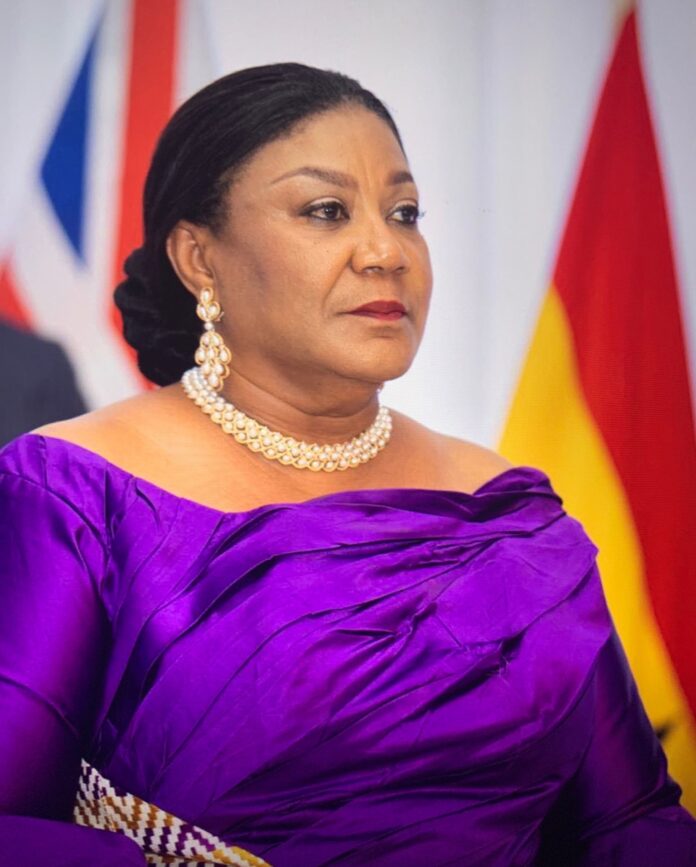
The First Lady Mrs Rebecca Akufo-Addo says empowering women is not just a moral obligation, but an economic and social imperative.

She said when women were empowered, economies thrived, communities prospered, and societies flourished.

“It’s not about giving women a seat at the table; it’s about recognising that they’ve been architects of change all along,” the First Lady said at the 4th Edition of Choc Des Lègendes – a Gand Festival of Eloquence, Arts & Culture, held in Accra.

The event, which took the form of a mock trial with jurors, was aimed at celebrating women leadership, commitment, and legacy to humanity, and dubbed the “Praise of Women”.

Started some seven years ago with previous editions held in Europe, the event recognised and celebrated the contributions of women in different spheres of society.

The First Lady Mrs Rebecca Akufo-Addo, who was the Chair of the Great Jury, said empowerment started with education.

She noted that every girl deserved access to quality education, regardless of her background or circumstances.

“Education is not just a tool for personal growth; it’s a catalyst for societal transformation,” she said.

Empowerment, the First Lady said, meant economic independence, and that “we must break down the barriers that hinder women from accessing economic opportunities.”

“Empowerment also demands representation,” she added, saying women’s voices must be heard and valued in decision-making processes at all levels, from boardrooms to parliamentary chambers.

Mrs Akufo-Addo said “…empowerment is more than policies and programmes; it’s a mind-set shift. It’s about challenging outdated stereotypes, dismantling patriarchal structures, and fostering a culture of respect and equality.”

Women, she reiterated, had for centuries defied expectations, shattered glass ceilings, and rewritten the narrative of what it meant to be powerful.

“Their brilliance, resilience, courage, grace, and strength have shaped our world for the better. Simply put, women are architects of change, often the silent heroes nurturing humanity,” she said.

Exercising her power as lead juror for the mock trial, the First Lady ruled in favour of women deserving praise, with a rather poignant remark, saying “We cannot all succeed when half of us are held back. Together, let’s create a future where every woman can unleash her full potential and soar to new heights.”

Madam Anna Bossman, a legal practitioner and Ghana’s Ambassador to France, Portugal, Monaco and UNESCO, played the role as an accuser of women whilst Ace Ankomah, a legal practitioner, also acted as a defendant. 

They advanced arguments for and against women deserving praise for their contributions to society and humanity.  

They were backed by witnesses who included Ms. Yvonne Bettkober, the Executive President in Charge of Transformation, Volkswagen Group and Dr. Evangelos Kyriakidis, an Archeologist and Founding Director of Heritage Management Organisation. 

Madam Bossman emphasised that women needed to support each other even more, and said though men continued to be blamed for the many ills against women, they (women) had to take part of the responsibility as well.

“There are situations where if women got themselves together, they could actually stop certain things,” she stated in an interview with the Ghana News Agency.

Pascal Gally, Founder of Choc Des Lègendes, giving a chronology of how the women in his life – his mother especially – played significant roles in his career progression and growth, said women were the backbone of society.

Huawei’s Pura 70 Ultra Beats iPhone With Pioneering New Feature

0

Huawei just announced its latest phones, the Pura 70 range. There are plenty of updates and improvements, including a retractable zoom lens, but the company also introduced a key communications feature: Satellite+ will allow images to be sent by satellite when there’s no cellular connectivity.

This is a first for a regular phone, and follows on from last fall’s announcement of the Huawei Mate 60 Pro which was also a world first, in that case the first to enable satellite phone calls. That capability is also on the new Huawei Pura 70 Ultra.

Abuse of emergency contraceptive pills: Power to Choose project leads advocacy in Sagnarigu

0

Abdul-Salam Salamatu (not her real name) is a 16-year-old adolescent girl at Garizegu Roman Catholic Junior High School in the Sagnarigu Municipality of the Northern Region.

At the age of 13 when she first experienced her monthly flow, she was told any form of unprotected sex could result in an unintended pregnancy or sexually transmitted infections, which could hinder her dream of becoming the first female neurosurgeon in her community.

Even though, there was no available sensitisation platforms to educate her on how to protect herself against such occurrence, her curiosity and resolve to finding a remedy for her fears and worries, got a better side of her when she was introduced to a project in her school, which sought to empower Adolescent Girls and Young Women (AGYW) on their Sexual and Reproductive Health and Rights (SRHR).

In 2022, she expressed interest in the project, which ushered her into a limitless world of exposure and knowledge acquisition on the various misconceptions of SRHR and the need to speak up on her rights as an adolescent girl.

She told the Ghana News Agency in Tamale that what immediately caught her attention during her engagements in the project was the advocacy on the abuse of emergency contraceptive pills adding it was a common phenomenon among some of her peers in the neighborhood.

As part of the empowerment processes under the project, she was equipped with the needed information on SRHR, and began sharing her newly found knowledge, first with her two kid sisters at home including some of her peers, who were hitherto involved in the abuse of the pills.

She said in mid 2023, she volunteered to educate some of her community friends, who were not beneficiaries of the project on family issues to enhance their knowledge on SRHR.

She said even though she was initially tagged as a ‘naughty girl’, it had been impactful, triggering other young girls in the vicinity to ask probing questions on SRHR.

     Another adolescent girl, Alhassan Pumaya (not also her real name), a 20-year-old student at the Tamale Technical Institute (TTI) also recounted how she was lured into abusing family planning methods including the emergency contraceptive pills until it began affecting her health and academic performance in school.

She said at one point she began experiencing irregular and painful flow of her menses because of the regular use of the pills.

Prior to the introduction of the project in her school, Pumaya narrated that she could not have mustered the courage to go to a health facility to seek SRHR information for fear of intimidation.

     “But now, I can confidently say that I have been equipped with the necessary information to seek answers on SRHR without being timid”, she noted.

The project’s advocacy, awareness creation on SRHR, especially on the abuse of the emergency contraceptive pills is not only limited to the above scenarios but a total of 1,026 other AGYW in three communities and six schools in the Municipality are also receiving various forms of  empowerment to be confident and vocal in defending themselves and others against any form of Sexual and Gender-Based Violence (SGBV).

The Power to Choose (P2C) Project

In the Sagnarigu Municipality, there have been widespread cases of SRHR with deep seated traditional and social norms in the use of contraceptive pills, child marriages, teenage pregnancies among others.

Statistics from the Ghana Demographic Health Survey Report in 2022 showed that family planning among sexually active unmarried women stood at 63 per cent with 46% using modern methods and 17% using traditional methods.

Those, who use emergency contraceptive pills, stood at 12%, implants stood at 10% and injectables 10% were the most used modern family planning methods among sexually active unmarried women in the country.

The report suggested that many adolescent girls and young women were involved in the use of various family planning methods to protect themselves against teenage and unplanned pregnancies, sexually transmitted infections, among others.

It is in this light that it becomes imperative for all stakeholders to demonstrate enough interest in SRHR issues to help minimise its abuse and offer AGYW the voice to express themselves on SRHR issues.

Why the P2C Project?

It is against this backdrop that the P2C Project, which began in 2021 and will end in 2028, is being implemented by Norsaac, a local implementing partner of the Oxfam in Ghana’s project on SRHR. It is a seven-year Global Affairs Canada funded project being implemented in seven countries across Africa, Latin America, and the Middle East. In Ghana, the project is being implemented in seven Metropolitan, Municipal and District Assemblies (MMDAs) and in five administrative regions. In the Northern Region, for instance, Savelugu and Sagnarigu Municipalities are the beneficiaries of the project.

The project’s overall objective is to increase access to reproductive health information and services for AGYW between 10-24 years by 2028.

The P2C Project so far in Sagnarigu Municipality

So far, the project has benefited some 1,026 AGYW through capacity building and mentorship to enhance their advocacy skills to demand the necessary interventions that best guaranteed their SRHR. Some of the beneficiary communities and schools in the Sagnarigu Municipality include Sanga, Garizegu, Shigu, Northern Business Senior High School, Tamale Senior High School, Tamale Technical Institute, Garizegu Junior High School, Kasalgu Junior High School, and Nangbagu Yapala Junior High School.

The project has also trained some 24 mentors and 22 patrons in the Sagnarigu and Savelugu Municipalities to ensure that AGYW in the communities and schools are properly guided to achieve the intended purpose of the project.

Testimonies from patrons and mentors

Patrons and mentors at a recent training workshop to enhance their engagement skills with the beneficiary schools and communities, shared their observations and expectations for the project going forward.

The workshop brought together patrons, mentors, and School Health Education Coordinators from the Sagnarigu and Savelugu Municipalities.

Madam Ruka Alhassan, School Health Education Coordinator (SHEP) for the Sagnarigu Municipality said the rate at which AGYW were exhibiting courage and confidence in finding answers to some of the most critical issues on SRHR was impressive and mind-blowing.

     She said all efforts must be put in place by all stakeholders to ensure that the project was maintained.

     Mr Stephen Ayabaa, School Patron for Garizegu Junior High School, said the project was unveiling some of the myths and misconceptions on SRHR whilst at the same time giving them the opportunity to know the consequences of their decisions regarding their growth and development.

     Mrs Benedicta Aovare, Savelugu Municipal SHEP Coordinator, also lauded the significance of the project saying it should be linked with other ongoing AGYW projects in the region to help build constructive collaboration and enhance sustainability.

Challenges facing the project/ beneficiaries

For every good intervention, there is bound to be a challenge and the P2C project is not an exception. Most of the AGYW are still being influenced by some deep-seated social norms and orientations. The project needs to strategise and widen its scope of operations to help address the challenges confronting AGYW in the Municipality.

The current Domestic Violence Act 2007(Act 732) does not fully serve its intended purpose and must be reviewed to capture the very needs of AGYW.

Conflicting policies and programmes on SRHR continue to weaken the efforts of NGOs and other organisations’ commitments to advocate for the rights of AGYW, hence the need to address such infringements to promote inclusivity.

Recommendations

Government must demonstrate enough willingness towards the realisation of the Family Planning 2030 Commitments, which aim at ensuring equitable and timely access to quality family planning information, commodities, and services to all persons of reproductive age in Ghana by the end of 2030.

Government must also intensify the implementation of its policies to ensure it meets goal three and five of the United Nations Sustainable Development Goals, which aim at ensuring healthy lives and promoting well-being for all at all ages and achieve gender equality and empower all women and girls by 2030.

Traditional and religious authorities must ensure they comply with the laws of the country, especially those on SRHR to guarantee the safety of AGYW in the country.


Climate change mitigation action: Asesewa Charcoal Producers show the way 

0

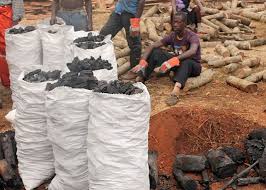
Indigenous charcoal production is an alternative source of livelihoods for most indigenous men and women in Asesewa in the Manya Krobo District of the Eastern Region. 

The people engaged in commercial charcoal production rely on the charcoal business to fend for themselves and their families.

They are traders, and farmers with plantations of Acacia, alongside food stuffs of cassava, plantain, and maize farms.

The charcoal producers in the area have formed an association to tackle bottlenecks confronting their operations and sustain them in business, amid climate change impact.

Initiative

The group, Charcoal Producers Association, has initiated a project aimed at restoring the forest cover and depleted woodlands in the district.

Dubbed “fell-one, replace 10 trees” the association believes environmental sustainability remains the surest way to sustain their socio-economic livelihood of the charcoal business.

They are currently undertaking an afforestation programme and planting more acacia trees to restore the vegetative cover and depleted forest resources in the area, as a measure to mitigate climate change impact.

Mr Joseph Narh, the Chairman of the Bisa branch of the Association told the Ghana News Agency (GNA) the charcoal producers were encouraged and supported to cultivate the acacia tree, which matured in six years.

Describing the charcoal business as lucrative, he said the initiative brings new hope to the producers, saying they had all embraced the initiative and undertaken the tree planting project.

He said there are about close to one million men and women engaged in the charcoal business spread across Asesewa, Adife, Kabo, Adife-Sokwenya, Bisa, Dawa, Djakane-Dawa, Kono-Dawa and Ogome-Dawa communities.

Climate adaptation and mitigation actions

Woodlands and rich forest resources are central and play an integral role towards mitigation of climate change impact in the country.

In fact, the country is experiencing the impact of climate change, including extreme heat, drying up of water bodies, unpredictable weather patterns, erratic rainfall, among others.

Thanks to President Nana Addo Dankwa Akufo Addo for his commitment to the implementation of the International Climate Action Agenda which birthed the Green Ghana Initiative.

The President launched the initiative three years ago and declared June every year as a mass tree planting exercise that inspires corporate and religious bodies, institutions and every Ghanaian to plant, nurture and own a tree.

Checks reveal over 42 million trees had so far been planted to restore the vegetative covers and the nation depleted forest resources since the initiative was launched in 2021.

Further checks confirmed that though many of the trees were doing well, many others could not do well in the dry seasons.

Commenting on the potential of Green Ghana, Mr Narh said the Charcoal Producers Association picked inspiration from the government Initiative and had since cultivated and nurtured more acacia trees not only to enhance their charcoal business, but also contribute their quota to mitigating climate change in the country.

“As an association we are also committed to ensuring that the President’s vision for the nation on climate change succeeds”, he stated.

Credit Union

Most of the charcoal producers have joined the “Onyemi Kormor, Okormor” Cooperative Credit Union, which means “your neighbour’s problem is your problem” which had been in operation for decades in the area.

It is a self-help initiative to provide financial assistance to farmers, traders, and charcoal producers to expand their economic activities.

Mr. Narh, an executive member of the Co-operative Credit Union, said the union was also supporting the charcoal producers to engage in the re-afforestation programme.

Testimony

Addey, one of the charcoal producers, testified to the GNA that after felling a tree “we all ensure that we plant and nurture 10 trees which mature six years for harvesting”.

“In fact, the initiative has been great for us in business. We are all on the lookout in ensuring that anybody who fell an acacia tree for charcoal burning replace 10 additional trees” he stated.

Another charcoal producer, Gifty Doe Tetteh said “we are all checking against wanton destruction of the forest cover,” saying since the charcoal business was their source of economic livelihood, they were ready to plant more trees.

Employment Opportunities

Figures estimate the charcoal business fetched direct and indirect jobs for more than 100,000 people in the Eastern part of the country.

Tetteh said she had been in the charcoal business since childhood saying as a single mother it was the only source of livelihood for her family.

John Tetteh, a charcoal retailer at the Nkurakan market, also highlighted the need for all the charcoal producers to contribute to the tree planting exercise, saying that was the only way they could be sustained in business.

Moroccan King Mohammed VI congratulates National Futsal Team on AFCON Win

0

The Moroccan national team won the Futsal African Cup of Nations (AFCON 2024), for the third time in a row, after beating Angola 5-1 in the final played Sunday at the Prince Moulay Abdellah Hall in Rabat.

In this occasion, HM King Mohammed VI sent a message of congratulations to the members of the national futsal team.

In this message, HM the King expresses to the members of the national futsal team His warm congratulations for winning the 7th Futsal Africa Cup of Nations, hosted by the capital of the Kingdom, with hospitality and unparalleled organization.

The Sovereign also expressed His great pride in the firm determination shown by the members of the national team to win, for the third time in a row, this continental title, driven by exemplary patriotism and serious commitment to promote Moroccan football and sport.

Reiterating His congratulations to the members of the national team and all technical and administrative executives of the Royal Moroccan Football Federation, His Majesty the King prays the Almighty to grant them greater success and awards during the 2024 World Cup in Uzbekistan, and in their sustained efforts to climb the highest steps of the podiums on continental and international levels.

Earlier in the day, Libya beat Egypt 3-1 on penalties (regular time: 2-2) to secure the third spot.

The top three teams in this African contest book their tickets at the Futsal World Cup, which will be held in Uzbekistan from September 14 to October 6.