Home Blog Page 210

Ghana leads Consultative International Cashew Council 

0

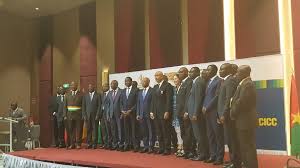
Ghana has assumed the presidency of the Consultative International Cashew Council (CICC).

The country takes over the reign of CICC, an international organisation with legal capacity and financial autonomy responsible for promoting the sustainable development of cashew in the world, from Côte D’Ivoire at the end of April 2024.

The CICC seeks to provide a framework for consultation and to promote the development of the cashew sector in Member States through the coordination of policies and cooperation between States.

Mr Yaw Frimpong Addo, a Deputy Minister for Food and Agriculture in charge of Crops told the Ghana News Agency (GNA) that Ghana’s mandate commenced from April 2024 to April 2025.

He expressed joy, noting that the country had been preparing for the position over the years by putting in place regulations and structures.  

Mr Addo said leading the 11-member Organisation would be an opportunity to leverage and learn from other countries’ best practices in production, processing and accessing funding opportunities.

“Some of the countries like Cote D’Ivoir are advancing from production to marketing so, we will leverage that to build ours,” he said.

Mr William Agyapong Quaittoo, the Chief Executive Officer of the Tree Development Authority, told the GNA that leading the CICC would offer Ghana many opportunities, including foreign investment to conduct research and upscale sustainable initiatives.

“Any institution that wants to do any business or study on cashew will first have to start from Ghana even though the Secretariat of CICC is in Cote D’ Ivoire. Through this, the sector will build its capacity and harness the potential to benefit actors, especially farmers,” he said.

Cocoa, he said, had been one of Ghana’s foreign exchange earners for over 50 years, however, climate change and other challenges were declining its production hence the need to develop the cashew sector to take over.

Mr Quaittoo stated that the production of cashew had increased in the last three years from 100, 000 metric tonnes to over 250,000 metric tonnes.

He said it was the aim of the country to produce and process about 50 per cent of cashews instead of the current situation where 90 per cent was exported as tax free. 

The CICC members are; Benin, Burkina Faso, Cameroon, Côte d’Ivoire, Ghana, Guinea, Guinea-Bissau, Mali, Nigeria, Senegal, and Togo.

Established on the 18th of November 2016 in Abidjan, Côte D’Ivoire, the CICC aims to create a consultation framework and synergies between member states for a sustainable cashew sector.

Africa’s cashew industry has come up strongly in recent years as one with enormous potential and one that can significantly contribute to the economic growth of the continent. 

About 60 per cent of the world’s global raw cashew nuts are produced in Africa, with Cote D’Ivoire being the world’s leading producer, producing 1 million tons in 2021. 
Debt Restructuring: Government to reach agreement with IPPs in May

0

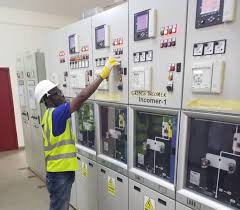
The government has given an indication about reaching an agreement with Independent Power Producers (IPPs) on debt restructuring as part of measures to reduce deficit in the energy sector.

That, Dr Mohammed Amin Adam, Finance Minister, said would be essential in solving the country’s energy sector financial challenges, which has been largely attributed to recent power outages across the country.

The Minister was speaking at a press briefing to wrap up Ghana’s activities at the just ended International Monetary Fund (IMF)/World Bank Group (WBG) Spring Meetings in Washington, US, monitored by the Ghana News Agency.

He noted that though the country did not have excess capacity, it had to pay for the debt accumulated in addition to the payment of legacy debt in the energy sector.

“As a result of these”, we have renegotiated with the IPPs to restructure the debt and once we complete the negotiations, the debt overhung, shortfall will reduce. I can tell you that in the next one month, we should be signing off with the IPPs on the restructuring of our debt,” he said.

Dr Amin Adam added that, “once the shortfalls are reduced, we should be working towards bringing the sector into financial sustainability in line with the Energy Sector Recovery Programme.”

Currently, Ghana has some US$1.9 billion energy sector financing gap to tackle, which the Minister during an earlier engagement at the spring meetings said had made the government take the “bullet” to solve.

“We assure investors that while there are challenges, we’re bold as a government to take the necessary bullet for us to put the sector in a more sustainable manner so as to address the challenges that investors are usually worried about,” he said.

The reforms include the implementation of the Energy Sector Recovery Programme, which started in 2019, and renegotiation of Independent Power Producers (IPPs) agreements to reduce the cost of generation.

There is also the implementation of a quarterly tariff adjustment review, which accounts for inflation, exchange rate depreciation, and changes in the generation mix, as well as a cash waterfall mechanism.

He disclosed the government’s plan to procure some one million revenue efficient meters through a partnership with the World Bank under a Programme-for-Result scheme to shore up revenue and support value chain operational effectiveness.

Meanwhile, the Institute for Energy Security (IES), has called on the Energy and Finance Ministries, to team up and urgently provide the money required to solve the current energy sector challenges to make Ghanaians enjoy reliable and affordable electricity.

The Institute also highlighted the importance of the government to resource the Electricity Company of Ghana (ECG) to bring down its technical and commercial losses.

Such support, Nana Amoasi VII, Executive Director, IES, recommended should go into the deployment of more smart meters, capable of detecting theft, in addition to having a more efficient distribution system to increase revenue.

Speaking to GNA last Tuesday, Nana Amoasi VII, noted that doing so would help in fulfilling ECG’s mission of providing quality, reliable and safe electricity services to support the economic growth and development.

15 volunteers to champion air quality in Tema Newtown

0

Some fifteen youth leaders have volunteered to champion issues of air quality in Tema Newtown, a suburb of the Tema Metropolis.

They will be equipped with knowledge and skills on air quality to enable them to undertake education and sensitisation in the area.

They are Matthew Awumie, Christian Soss, Gabriel Sedenonu, Prosper Anitsi, Okai Richard, Mary Sowah, and David Nii Ayiku.

The rest are Seth Mensah Larbi, Samuel Nyamedor, Elias Kwashie, Theresa Tetteh, Joshua Agudah, Joyce Eshun, Jerry Tornyeviadzi and Else Escoba.

Mr Hamza Bawah Mahama, Project Coordinator of People’s Dialogue on Human Settlement (PD), introduced them to the Tema Metropolitan Assemble at a brief event in Tema New Town, Accra.

One of the key mandates of the group, he said, was to contribute to the sustenance of the advocacy of a new initiative titled “Exposure of Urban Poor to Air Pollution in Ghana.”

With support from the Clean Air Fund, PD’s project sought to address the impact of air pollution on underprivileged urban communities.

Mr Mahama explained that the champions would be included in some of the project implementation activities such as the use of wearable sensors to gather air quality information and dissemination.

He said the groups would serve as the interface between the local Assembly and their communities.

Aside from the Tema New Town, two more informal settlements, Old Fadama in Accra, and Sokoban in Kumasi, Ashanti Region, would have similar groups formed to undertake related activities.

Mr Mahama said Tema Newtown had become slummy due to the nature of the settlement coupled with increasing population, which had outstripped basic services and infrastructure in the area.

 Ms Mawunyo Amenyawu, the Sub-Metro Director of Tema East Assembly, said championing clean air in Ghana represented a crucial step forward in the district’s effort to combat harmful effects on public health and the ecosystem.

 In 1959, all the first settlers in this community were forced to move from the present Tema Port Land to their present location.

The decision was to pave the way for the Tema Harbour construction.

Initially, the people refused to move to the new settlement, but the government, through Parliament passed legislation to evict the community and the compulsory acquisition of Tema for the construction of the Harbour.

 After relocating the community, its original name changed from Tema to Manhean (or Newtown in English).

There are about 1,078 structures in which 914 are housing structures, mostly made of wood. The rest are made of concrete or aluminum.

 Tema Newtown has 24 shared water taps, of which 22 are functioning and two are broken.

Only ten households have access to private water taps, with 40 to 50 per cent households located more than 100 metres from a shared water point.

 The area has two shared public toilets, which are functional, and two households with access to private toilet facilities.

The community has no disposal points, internal roads, educational facilities, clinics, or hospitals.

In terms of working population, 40 percent are employed in the formal sector while the rest are engaged as fishers, fish mongers, and farmers. There are also herders, petty traders, commercial traders, food vendors, barbers, hairdressers, and tailors.

Cashew processing gets major boost from CSIR

0

The Centre for Scientific and Industrial Research (CSIR) has boosted the processing of cashew fruits with an initiative dubbed the Maximizing Gains from Cashew Production for Youth Development Project (MA-Cash).

The aim of the M-Cash project is to promote research into efficient methods of processing the by-product of cashew and its consumer acceptability.

The 18-month project will be carried out in two regions, notably the Bono and Bono East regions of Ghana.

The CSIR will engage relevant stakeholders and partners to implement the project.

The relevant stakeholders and partners include six farmer groups,  the Institute of Industrial Research and Opportunity International Savings and Loans Limited.

The MA-Cash project was launched at the Inception Workshop organized by the CSIR at their head office in Accra. 

A report from the Bono Regional Ministry indicates that 900,000 metric tons of cashew fruits go to waste annually.

According to the regional ministry, the cashew fruits go to waste due to the absence of processing materials, a disjointed value chain, price fluctuations, and a poor farm management culture.

Professor Charls Tortoe, Director of CSIR, said the project, when implemented, would scale up cashew processing in Ghana.

He said the MA-Cash project would address the post-harvest losses of the cashew fruits and improve the processing of the fruits into other products, including juices, concentrates, and drinks.

“It may interest you to know that CSIR and the Food Research Institute’s (FRI) efforts to apply research findings to problems pertaining to cashew fruit waste, poverty alleviation, and youth-led sustainable economic growth have led to the development of the MA-Cash project.

We expect the project to reduce waste, enhance the quality of processed cashew fruits and by-products, and improve cashew yields through agrobiodiversity. We expect the project to increase income for youth groups who are successfully running their cashew businesses,” he said.

Dr. Emmanuel Kyereh, a food scientist at the Food Research Institute (FRI), said the MA-Cash project went beyond the processing of cashew fruits since it included other aspects, particularly youth support programs.

He said the project would play a major role in improving the economic prospects of the cashew fruits since the economic benefits of the nuts had been fully utilized and realized.

Mr. Francis Owusu Ansah, Chief Business Officer for Opportunity International Savings  and Loans, said financial institutions have a major role to play in the implementation of the project.

He said the financial institution’s role was to address the financial aspect of the project by providing the required support to businesses within the cashew fruit value chain. 

Customer confidence boosts Zenith Bank’s 2023 performance as assets hit GH¢13bn, profit pasts GH¢ 1bn

0

Zenith Bank Ghana capped off a stellar year in 2023, with total assets surging by nearly 44 per cent to reach GH¢13.86 billion as profit before tax moved to GHc1.02 billion. 

This represented a 284.35 per cent reversal from the GH¢554.6 million loss recorded in 2022 as a result of the Domestic Debt Exchange Programme (DDEP). 

A driving force behind the performance was high customer confidence in the Bank as deposits grew

by GH¢3.32 billion, to reach GHc11.7 billion for the period.

Similarly, the Bank expanded its loan book to GH¢2.25 billion, GH¢390.7 million higher than in the previous year. 

Mr Henry C. Onwuzurigbo, Managing Director/Chief Executive Officer of Zenith Bank Ghana, said, “We are glad to see the trust our customers have placed in the bank’s stability and financial strength. This deposit mobilisation strengthened our liquidity position, allowing us to continue providing essential financial services to our clientele.” 

“Again, the upswing in lending activity is a positive indicator for Ghana’s economy. It indicates growing confidence in businesses and a potential increase in economic productivity,” he added. 

Consequently, interest income – a vital indicator of

a bank’s lending and investment activities – surged by GH¢317 million to GH¢1.38 billion, highlighting the success of its strategies in loan origination and managing investment portfolios. 

 Additionally, fee and commission income grew by GH¢49 million. 

But the real highlight of the year was the exceptional performance in trading. Net trading income more than doubled from GH¢156.7 million to GH¢332.6 million, potentially fueled by favourable market conditions or strategic trading decisions by the Bank. 

The Bank had to steer through some challenges which impacted its net profit in 2023 such as the GH¢109 million impairment loss on financial assets, which impacted the bottom line.

 This, however, was a tenth of the GH¢1.19 billion

recognised in 2022. 

Operating income appreciated by GH¢546 million to GH¢1.6 billion, highlighting the underlying strength of the bank’s core business activities in generating healthy and consistent revenue. 

The bank’s shareholders’ funds also improved significantly by 68 per cent  from GH¢982million post-DDEP to GH¢1.66 billion due to its exceptional performance in 2023.

Market watchers believe that by tackling the impairment losses and implementing cost optimisation strategies, growing its risk assets as well as investment portfolio, Zenith Bank Ghana is well-positioned to translate its impressive revenue growth into long-term financial success, especially as the bank’s focus on customer satisfaction and strategic revenue generation sets a strong foundation for a prosperous future.

The Bank’s 2023 performance positions it for continued success in the years to come. 

Ghana expects debt agreement with bilateral creditors in May – Finance Minister

0

Dr Mohammed Amin Adam, Finance Minister, says Ghana will in May 2024 sign a Memorandum of Understanding (MoU) with its official bilateral creditors as a draft of the agreement is soon to be shared with the country.

This MoU is in relation to the restructuring of some US$13 billion external debt to meet IMF’s debt sustainability parameters, with the country reaching an agreement in principle with official creditors in January 2024.

“Essentially, we’ve agreed to all that we need to do for the [second review programme] to go to the Board, with the only outstanding issue being the draft of the MoU from official creditors, expected in May 2024,” Dr Amin Adam said.

“If we have that [the draft MoU], there won’t be any lengthy negotiation because we’ve already agreed to the offer they gave to us in principle since January. So, we don’t expect any hurdles to cross as far as that’s concerned,” he added.

This is expected to further boost the country’s chance to access a third tranche of US$360 million when the IMF Executive Board meets in June this year over Ghana’s second review programme.

The Minister said this at a press briefing to wrap up Ghana’s activities for the 2024 International Monetary Fund (IMF)/World Bank Group (WBG) Spring Meetings in Washington, US.

The briefing, held on Sunday, April 21, was monitored by the Ghana News Agency.

When it reached a staff-level agreement with Ghana last week, the IMF staff mission team stated that the next step was for the country to have an MoU with the official bilateral creditors.

However, at the just ended Spring Meetings, Mr Abebe Aemro Selassie, Director, African Department, IMF, clarified that the signing of the MoU would not be a prerequisite for the disbursement of funds to Ghana.

On this development, Dr Amin Adam noted that the Official Creditors Committee had shared a draft of the MoU with their members regarding the country’s external debt restructuring.

The Minister added that, “… they’re about sharing it [the draft MoU] with us. As soon as we get the draft and we’re fine with it, that we will mean that we have an agreement on the MoU.”

He expressed confidence about Ghana securing the third tranche of US$360 million in June.

“We do not have any reason to suggest that the Board well miss this because essentially, we’ve agreed to all that we need to do… so, I can tell you, we’re very optimistic.”

Ghana is implementing a three-year Extended Credit Facility (ECF) programme with the IMF, supported by a homegrown Post-COVID-19 Programme for Economic Growth (PC-PEG).

This programme is aimed at restoring macroeconomic stability and debt sustainability, build resilience, and lay the foundation for stronger and more inclusive growth.

The spring meetings, served as a platform for the government to engage with creditors, and other development partners in respect to the country’s economic stability and resilience endeavour.

One of the major developments during Ghana’s participation of the 2024 spring meetings was the announcement of the procurement of some one million modern meters into the country.

The meters would be procured through the World Bank’s Programme-for-Results initiative to help improve revenue collection amidst current power outages in the country, largely attributed to liquidity challenges in the energy sector.

KODA’s Life In A Minute Read: Celebrating the Legacy of a Gospel Icon

0

In the realms of Ghanaian gospel music, the name Kofi Owusu Dua Anto, affectionately known as KODA, resonates deeply as a beacon of talent, passion, and spiritual inspiration. Born on December 15, 1978, in Takoradi, KODA’s journey in music began at a tender age, where his love for musical instruments ignited a flame that would illuminate countless lives across the nation.

Early Beginnings and Musical Mastery

At the age of 10, KODA’s musical journey took flight when his mother enrolled him in a music class, laying the foundation for his future as a multi-talented musician. His time at the Kwame Nkrumah University of Science and Technology (KNUST) further honed his skills, where he served as the mass choir director and contributed his musical prowess to various gospel groups, including the renowned “Da Project.”

Rise to Prominence

After completing his tertiary education, KODA’s talent blossomed further as he co-wrote, mixed, mastered, and produced the acclaimed album, ‘Awurade Ei,’ which garnered widespread recognition across Ghana. His collaborations with gospel artists such as Nii Okai propelled him to greater heights, solidifying his reputation as a producer of exceptional talent and vision.

A Musical Maestro’s Legacy

Throughout his illustrious career, KODA’s musical journey was marked by collaboration and innovation. He worked with a myriad of gospel artists, both in Ghana and beyond, leaving an indelible mark on the industry with his soul-stirring compositions and masterful productions. As the founder of the Anointed music group, KODA’s influence extended far beyond the realm of music, touching the lives of countless individuals and ministries.

A Timeless Discography

With four vocal and two gospel jazz albums to his credit, KODA’s discography stands as a testament to his musical genius and spiritual depth. From the poignant melodies of “Nyame Beye” to the bold declarations of “OXYGEN,” his music continues to resonate with audiences, inspiring faith and worship with every note.

A Lasting Legacy

As a music tutor and performer, KODA’s impact extended beyond the recording studio, as he imparted his knowledge and passion to aspiring musicians through instructional DVDs and electrifying live performances. His marriage to the anointed singer, Ewurama Dua Anto, and their beautiful family further exemplified his commitment to faith, family, and music.

A Farewell to a Gospel Giant

On Sunday, April 21, 2024, the music world mourned the loss of KODA, who passed away after a brief illness. As tributes pour in from across the globe, his legacy lives on in the hearts of all who were touched by his music, ministry, and unwavering faith.

Rest in Peace, Augustine Kofi Dua Anto. Your music will continue to echo in eternity, inspiring generations to come.

Shopkeeper jailed five years for stealing

0

An Accra Circuit Court has sentenced a shopkeeper to five years imprisonment for stealing GH₵330,135.00 belonging to a trader.

Mr Samuel Gyasi Annan used the said amount to buy a parcel of land in his hometown, renovate his family house and purchase sofa chairs in addition, according to prosecutors.

Charged with stealing, Gyasi pleaded guilty.

Mr Gyasi was convicted on his plea and was sentenced accordingly.

Prosecution led by Police Chief Inspector Jonas Lawer prayed the Court that the convict should be given a longer sentence to deter others.

In sentencing, the Court presided over by Mr Isaac Addo was mindful of the fact that the convict was a first-time offender as well as a family man.

The convict was therefore sentenced to five years imprisonment in hard labour.

Meanwhile, Madam Naomi Nyarko and Mr William Yaw Annan, a trader and mason respectively, and parents of the convict, are jointly held for abetment of crime to wit; stealing.

They pleaded not guilty to the charge levelled against them.

The couple have been admitted to GH₵60,000.00 bail each with two sureties each.

The matter has been adjourned to May 20, 2024.

The facts as narrated by the prosecution are that the complainant, Madam Felicia Ofori, who resides at Teshie Gonno Cluster of the School area, is a trader while the convict who was a storekeeper and a sales boy to the complainant, resides at Mannet Court, Okpoi Gonno.

It said Madam Nyarko and Mr Annan were residents of Assin Dompim in the Central Region.

The prosecution said the complainant detected that the convict had been stealing from her shop.

It said based on that, on October 10, 2024, the complainant caused her auditors to audit the convict.

The prosecution said after the auditing, it was detected that he had stolen GH₵330,135.00 from the complainant’s shop.

It said when the convict was asked to account for the missing money, he could not.

The prosecution said the complainant complained to Teshie Police station and the convict was arrested.

It said during the investigation, the convict admitted the offence and stated that he used part of the stolen money to buy a parcel of land in at Assin Dompim, his hometown.

The prosecution said, “he also used part of the said money to put up two single storeys for his parents.”

“He has renovated his family house, bought sofa chairs and also gave an amount of GH₵51,400.00 to his mother (Madam Nyarko) for safe keeping,” the prosecution added.

It said an investigation was extended to Assin Dompim where an amount of GH₵51,400.00 was retrieved from his mother.

The prosecution said when his mother was questioned, she stated that it was part of the money that her son (the convict) gave to her for safekeeping.

It said his father (Mr Annan) could not also account for the items in his room that his son bought.

Court remands mason over theft of 222 bags of cement

0

A 32-year-old mason has been remanded by the Pakyi District Court over an alleged theft of 222 bags of cement valued GHC17,516.00, belonging to his employer.

Emmanuel Sebeh has denied the offence, and he will be brought back to the Court on May 2, 2024.

Police Chief Inspector Christian Amartey told the Court presided over by Madam Dora Nsiah Jackson that Madam Gifty Afriyie, the complainant, was a trader whilst Sebeh, the accused person, was a resident of Paa near Trede.

He said Complainant owned a cement shop where the accused lived and in December 2023, he contacted and pleaded with complainant to employ him at her cement shop as a sales boy.

Chief Inspector Amartey said the complainant obliged and handed over 300 bags of cement to him to sell each at GHC78.00 and paid him monthly.

Prosecution said on March 8, 2024, complainant went to the shop to take stock only for her to detect that there was no single bag of cement at the shop.

The Court heard that when Sebeh was asked of the whereabouts of the bags of cement, he said some workers had come for them on credit and he could not account for 222 bags of them.

Police Chief Inspector Amartey said when his employer asked for the names of his creditors, he could not give out the names and where they could be located.

The complainant reported the matter to the Trede Police, Prosecution told the Court.

Sebeh, in his investigation cautioned statement, admitted the offence and after investigation, he was charged with the offence to appear before court.

Bono Youth Employment Agency (YEA) to cultivate 3000 acres of maize farm under phase II of Planting for Food and Jobs (PFJ)

0

The Bono Regional office of the Youth Employment Agency (YEA) has targeted to cultivate 3000 acres of maize farm as part of the phase II of the Planting for Food and Jobs (PFJ) initiative.

In an interview with the Ghana News Agency (GNA) in Sunyani, Mr. Shadrach Abrefa Mensa, the Bono Regional Director of YEA, said his office would play a key role in the phase II of the PFJ programme with support from the Ministry of Agriculture.

He mentioned that approximately 600 young people would be recruited under the Youth in Agriculture module to assist with farming activities throughout the region.

Mr. Abrefa Mensa explained that from July 2019 to January 2020, the YEA carried out a pilot project on a 250-acre maize farm at Branam in the Wenchi Municipality.

He highlighted the success of the initiative in training 100 young farmers through various phases of the project, including land preparation, beneficiary recruitment, farmer business school, planting, post-planting, harvesting, and storage.

Mr. Abrefa Mensa emphasized that under the pilot programme, the youth gained valuable skills in agronomic practices and farm management through the Farmer Business School.

Additionally, the beneficiaries received hands on training in the management of maize farms which helped to increase income generation and employment opportunities for the community and surrounding areas.

Mr. Abrefa Mensa stated that the project’s produce was supplied to the Buffer Stock Company which contributed to the reduction of food insecurity in the country.