Home Blog Page 216

Unregulated illegal mining puts Ghana’s cocoa farms under threat

0

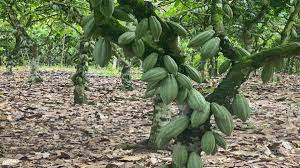
Illegal mining continues to pose a serious risk to Ghana’s cocoa farms as unregulated activities continue to impact negatively on the sustainability and productivity of the country’s vital agricultural sector.


Concerns are also growing over the adverse effects of climate change on cocoa production, and the threat posed by illegal mining “galamsey” adds another layer of complexity to the challenges faced by the industry and the nation’s economy.


These challenges were raised at the Cocoa Research Institute Workers Union of the Trades Union Congress (CRIWU-TUC) second delegates’ conference, held in New Tafo in the Eastern Region.


The conference was on the theme, “The Impact of Climate Change on the Cocoa Sector: Adaptation and Mitigation Measures, the Role of the Worker.”


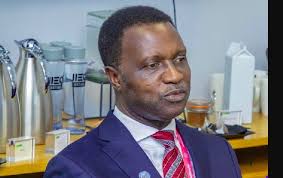
Addressing the participants, Mr. Joseph Boahen Aidoo, the Cocoa Board (Cocobod) Chief Executive Officer, indicated that the cocoa industry was currently grappling with the adverse effects of climate change variability and the detrimental impacts of galamsey activities.


He highlighted the consequences of deforestation and its link to climate change variability compounded by unregulated illegal mining, which has further polluted a substantial portion of water bodies.


He explained that the removal of trees, forests, and grasses had reduced the soil’s ability to convert carbon into oxygen, leading to an increase in carbon dioxide emissions and associated risks.


While acknowledging that cocoa trees absorb carbon, Aidoo clarified that cocoa was not responsible for deforestation.


Instead, he cited other human activities, such as cultivating crops like maize and cassava, which do not allow for vegetation regrowth, as the primary cause.


The CEO stressed the importance of preventing the destruction of cocoa trees and promoting the use of regenerative farming methods.


He also said irrigation should be the best solution for addressing reduced cocoa yields but pointed out that illegal mining activities had caused the loss of substantial water resources, which is affecting irrigation practices.


Daasebre Adusei Peasah IV, the Chief of Akyem Tafo in the Abuakwa North Municipality of the Eastern Region, also addressed the conference and echoed the importance of cocoa as the mainstay of Ghana’s economic development over the years.


He commended the event organisers for coming up with the theme aimed at tackling climate change issues affecting the cocoa sector, saying, “Cocoa is Ghana, and Ghana is cocoa.”


He expressed concerns over the threat posed by galamsey activities to cocoa farms, stating that if climate change were to be effectively addressed, these illicit mining operations must cease in cocoa-growing regions.


He explained that the challenges faced by Ghana’s cocoa sector due to climate change and galamsey activities have significant implications for the industry’s growth and the livelihoods of those dependent on it.


He urged urgent actions to implement effective adaptation and mitigation measures to ensure the sustainability and resilience of the cocoa sector in Ghana’s economy.


Dr. Anthony Yaw Baah, TUC Secretary-General, shared a personal anecdote about the positive impact of cocoa scholarships on the children of cocoa farmers.


As a direct beneficiary of the scholarship, he highlighted how it enabled him to access higher education, thanks to his mother’s status as a cocoa farmer.


He noted that the initiative played a crucial role in uplifting the socio-economic conditions of cocoa farming communities.


Ghana’s cocoa production has recently experienced shortfalls, primarily due to weather patterns leading to inadequate rainfall, and other factors such as smuggling, damage from unregulated gold mining activities, and the devastating effects of swollen shoot disease.


As a result, the nation’s cocoa output was only around 500,000 tonnes, below the targeted figure of 820,000 for the 2023/2024 season.


Unfortunately, experts say addressing these issues and achieving the desired production levels may not be immediately feasible through human intervention alone.


President of the Apesokubi Traditional Council woos investors

0

Nana Okogyeaman Kwasi Asiedu Koram II, the President of the Apesokubi Traditional Council in the Biakoye District of the Oti Region, has stated that the area is ready to collaborate with investors, whose area of activity would impact positively on his people.

He said communities under Apesokubi were endowed with large tracts of fertile lands to support agriculture, agro-processing and animal husbandry, which could be developed to turn the local economy around for prosperity and development.

Nana Koram made the call during the inauguration of a 17-member Apesokubi Traditional Council at Apesokubi in the Biakoye District.

Nana Koram said his traditional area was a major food basket in both the district and beyond, where cassava, yam, maize, rice, vegetables, cereals and fruits could be cultivated, and value added to feed society.

Nana Mprah Besemuna III, Krachi-Wura, congratulated the new President of Apesokubi Traditional Council and urged him to collaborate with his elders for development.

He explained that the quest for development can only be achieved when people work together with a common goal.

Nana Besemuna stated that development initiatives could only flourish when there was a peaceful environment and called for unity among chiefs in the Oti Region to improve development.

Ghana Revenue Authority begins sensitisation on annual income tax returns

0

The Ghana Revenue Authority has begun a series of sensitisation programmes of individuals and institutions on the need for them to file their annual income tax returns not later than the end of April.

The Ghana Revenue Authority sets aside April every year as Tax and Good Governance Month to sensitize and encourage taxpayers as well as educate them on how to file their income tax returns and also pay the applicable taxes.

During the month, the GRA organises seminars, workshops and tax clinics to make sure that we get to the taxpayers and then tell them what their responsibilities are and what benefits they are in when they file their returns.

Speaking at a programme for public sector workers, Dr Martin Kolbil Yamborigya, Assistant Commissioner and Head of Audit for the Large Taxpayer Office, said aside from the objective of creating awareness, the sensitisation was also to remind taxpayers of their obligation in filing their tax returns.

“We also educate them to understand that filing their tax return is not just for you to pay tax, but it also affords you or gives you the opportunity to claim certain benefits,” he said.

He said some of the reliefs taxpayers could enjoy, include child education relief, marital relief, and mortgage relief.

“When you file your returns, you have access to that When you file your returns, you also have the opportunity to even claim an overpayment, assuming that as a result of this relief that you are enjoying, the taxes that you paid during the year is more than what you should have paid,” Dr Yamborigya said.

“You will be in an overpayment position and then the law requires that when you have overpaid your tax, then the Commissioner General is supposed to refund that to you within 60 days after the overpayment has been established.”

He said filing of returns was an obligation and sanctions such as monetary penalties and terms of imprisonment were applied to taxpayers who fail to comply with the law.

However, to encourage people to voluntarily comply, section 74 of the Revenue Administration Act was amended to allow taxpayers on their own volition disclose accurate information to the Commissioner- General to have their penalties, either monetary or imprisonment, waived.

“So we want to encourage people and this is something that is not just like a one-off amnesty. It is something that was incorporated into the law that at any time a taxpayer can always take advantage of that,” he said.

Dr Martin also urged people who earn income from outside the country to voluntarily disclose it and pay

the appropriate taxes in Ghana to have whatever penalties that would have been imposed waived.
Meanwhile, Dominic Adamnor Nortey, Chief Revenue Officer, said the tax on resident Ghanaians who earned income outside the country was not a new one.

He explained that the law had been in place since 2016 and required anyone who is in Ghana but earns income outside the country to consolidate all incomes, whether earned in Ghana or outside and then subject that to tax. 

He said the law is now been implemented because the GRA now had enough information to kickstart implementation.

“We don’t start anything when you don’t have the basis of getting information on people’s income outside. So, now that we have signed an agreement with about 170 countries where we exchange information, now we have information enough to believe that we can drive that aspect of the law and implement it successfully,” Mr Nartey said.

“The Act is clear that anyone who earns income, whether small, big or whatever it is, you  have to pay tax on it,” he said, adding that he had nothing to do with VAT at all.


Illegal mining continues to pose a serious risk to Ghana’s cocoa farms as unregulated activities continue to impact negatively on the sustainability and productivity of the country’s vital agricultural sector.


Concerns are also growing over the adverse effects of climate change on cocoa production, and the threat posed by illegal mining “galamsey” adds another layer of complexity to the challenges faced by the industry and the nation’s economy.


These challenges were raised at the Cocoa Research Institute Workers Union of the Trades Union Congress (CRIWU-TUC) second delegates’ conference, held in New Tafo in the Eastern Region.


The conference was on the theme, “The Impact of Climate Change on the Cocoa Sector: Adaptation and Mitigation Measures, the Role of the Worker.”


Addressing the participants, Mr. Joseph Boahen Aidoo, the Cocoa Board (Cocobod) Chief Executive Officer, indicated that the cocoa industry was currently grappling with the adverse effects of climate change variability and the detrimental impacts of galamsey activities.


He highlighted the consequences of deforestation and its link to climate change variability compounded by unregulated illegal mining, which has further polluted a substantial portion of water bodies.


He explained that the removal of trees, forests, and grasses had reduced the soil’s ability to convert carbon into oxygen, leading to an increase in carbon dioxide emissions and associated risks.


While acknowledging that cocoa trees absorb carbon, Aidoo clarified that cocoa was not responsible for deforestation.


Instead, he cited other human activities, such as cultivating crops like maize and cassava, which do not allow for vegetation regrowth, as the primary cause.


The CEO stressed the importance of preventing the destruction of cocoa trees and promoting the use of regenerative farming methods.


He also said irrigation should be the best solution for addressing reduced cocoa yields but pointed out that illegal mining activities had caused the loss of substantial water resources, which is affecting irrigation practices.


Daasebre Adusei Peasah IV, the Chief of Akyem Tafo in the Abuakwa North Municipality of the Eastern Region, also addressed the conference and echoed the importance of cocoa as the mainstay of Ghana’s economic development over the years.


He commended the event organisers for coming up with the theme aimed at tackling climate change issues affecting the cocoa sector, saying, “Cocoa is Ghana, and Ghana is cocoa.”


He expressed concerns over the threat posed by galamsey activities to cocoa farms, stating that if climate change were to be effectively addressed, these illicit mining operations must cease in cocoa-growing regions.


He explained that the challenges faced by Ghana’s cocoa sector due to climate change and galamsey activities have significant implications for the industry’s growth and the livelihoods of those dependent on it.


He urged urgent actions to implement effective adaptation and mitigation measures to ensure the sustainability and resilience of the cocoa sector in Ghana’s economy.


Dr. Anthony Yaw Baah, TUC Secretary-General, shared a personal anecdote about the positive impact of cocoa scholarships on the children of cocoa farmers.


As a direct beneficiary of the scholarship, he highlighted how it enabled him to access higher education, thanks to his mother’s status as a cocoa farmer.


He noted that the initiative played a crucial role in uplifting the socio-economic conditions of cocoa farming communities.


Ghana’s cocoa production has recently experienced shortfalls, primarily due to weather patterns leading to inadequate rainfall, and other factors such as smuggling, damage from unregulated gold mining activities, and the devastating effects of swollen shoot disease.


As a result, the nation’s cocoa output was only around 500,000 tonnes, below the targeted figure of 820,000 for the 2023/2024 season.


Unfortunately, experts say addressing these issues and achieving the desired production levels may not be immediately feasible through human intervention alone.
GTEC applauds rise in Ghana’s gross tertiary enrollment ratio

0

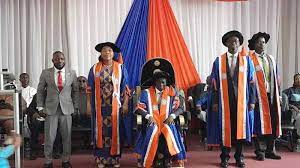
Professor Yayra Dzakadzie, the Deputy Director-General of the Ghana Tertiary Education Commission (GTEC), said the 22 per cent upgrade in the country’s Gross Tertiary Enrollment Ratio (GTER) from 20 per cent last year, is commendable.

 
He said the progress aligned with the nation’s target of achieving a GTER of 40 per cent by 2030, a crucial milestone for Ghana’s development trajectory.

 
Professor Dzakadzie was speaking at the investiture of Professor John Owusu, the Vice-Chancellor of the Koforidua Technical University.

 
He said tertiary education played a vital role in the development of any nation and studies had shown that workers with some form of tertiary education contributed to about 60 per cent of the Gross Domestic Product (GDP) in developed countries.

 
“This is why countries with GTER above 40 per cent tend to develop at a faster pace,” he said.

 
Having a higher GTER would not only improve the country’s economy but also provide students with the opportunity to acquire the skills and knowledge necessary to meet the demands of the 21st-century workforce, he noted.

 
“The focus on Science, Technology, Engineering, and Mathematics (STEM) education is paramount, preparing students for the fourth industrial revolution.” 


Prof Dzakadzie applauded the Commission’s achievement of the Science to Humanity ratio of 43:57 as a testament to new strategies and programmes adopted to meet current industry trends and demands.

 
The Commission stood firm in ensuring that Ghanaians had access to quality tertiary education, he said, and called on all stakeholders to join hands in turning that commitment into reality. 


As per the World Bank’s reports, gross enrollment ratio for tertiary school was determined by dividing the number of students enrolled in tertiary education by the population of the corresponding age group, and then multiplying by 100. 

Ghana, Vietnam commit to promoting bilateral relations

0

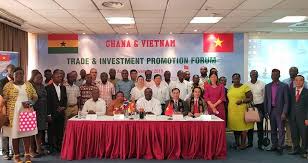
Mr Kwaku Ampratum-Sarpong, a Deputy Minister of Foreign Affairs and Regional Integration, and Madam Nguyen Minh Hang, the Vietnamese Deputy Minister of Foreign Affairs, Tuesday held discussions in Accra to promote bilateral cooperations between Ghana and Vietnam.

 
Mr Ampratum-Sarpong said the two countries shared rich historical bonds of long-lasting friendship based on mutual respect and shared aspirations dating back to the 1960s.

  
Ghana established diplomatic relations with Vietnam on 28th March 1965, becoming the 10th African country and the 26th in the world to do so.

  
As a result, Vietnam opened its Embassy in Accra on 5th November 1965, and closed it in June 1966, after the coup d’état, which ousted President Kwame Nkrumah from power, he said.

  
“For many Ghanaians of the older generations, Vietnam invokes memories of President Kwame Nkrumah’s unsuccessful attempts to meditate in the Vietnam civil war,” Mr Ampratwum-Sarpong said, and that President Nkrumah was unfortunately overthrown before he could reach Hanoi.

 
Although Ghana and Vietnam had no resident Missions in each other’s country, relations between the two countries over the years had been cordial and fruitful.

 
He reiterated that Madam Hang’s visit to the country, therefore, symbolised the beginning of a new chapter in the bilateral cooperation and a testament to their collective commitment towards strengthening their ties and exploring new avenues for mutual benefits.

 
‘This collaboration, which is built on a solid foundation of understanding, respect and share growth is destined to reach new heights, setting an exemplary standard for partnership and diplomacy,” he stated.

 
Mr Ampratwum-Sarpong expressed the hope and expectations that together they could rekindle the bonds of friendship and cooperation for mutual benefits.

 
The Accra meeting not only reaffirmed their mutual interests but also strengthened the bonds of friendship and cooperation, he said, and that the discussions had been productive, offering invaluable insights and numerous opportunities for collaboration.

 
“We are encouraged by our shared commitment to enhancing our partnership in the areas we discussed earlier: trade, technical cooperation, agriculture, energy and technology, which are vital for the prosperity and well-being of our peoples.”

 
Madam Hang, on her part, congratulated Ghana on her socio-economic development achievements, saying Vietnam did appreciate the tireless efforts Ghana had made in its course of national development.

 
She said she strongly believed that Ghana would achieve major targets envisioned in the National Medium Term Development Policy Framework 2022 to 2025.

 
Madam Hang touched on the importance to bring the bilateral relations to a new height to meet current demands and lauded Ghana for successfully completing her role as a non-permanent member of the United Nations (UN) Security Council for 2022-2023. 
 

Green Ghana Day scheduled for June 7

0

This year’s Green Ghana Day is to be observed on June 7 where 10 million tree seedlings of various species are expected to be planted across the country.

  
Out of the number, six million are expected to be planted in degraded forest reserves, whilst four million will be planted in and around farms.

 
This was disclosed during the launch of the Government’s Green Ghana Day initiative in Tamale on Tuesday.

  
Ya-Na Abukari (II), the Overlord of Dagbon, whose speech was read on his behalf during the launch, called on the citizenry to actively participate in the tree planting exercises to sustain the environment and the ecosystem. 


He said the project was very important, especially in the Savannah Ecological Zone, as it remained the only panacea to protecting the environment, increase food production and mitigate climate change impact in the country.

 
He urged the citizens to comply with the country’s environmental sustainability regulations to ensure the purpose of the initiative was achieved and sustained. 


Mr Samuel Abu Jinapor, the Minister of Lands and Natural Resources, said a detailed schedule of seedlings distribution and pick up points nationwide would soon be announced to ensure easy access to seedlings for planting.

  
The Government, since 2017, had been committed to an aggressive afforestation and re-afforestation programmes including the Ghana Forest Plantation Strategy, which had succeeded in the cultivation of an estimated 721,000 hectares of forests between 2017 to 2023.

 
He appealed to chiefs and opinion leaders in the northern parts of the country, who could not achieve their targets in the previous years, to mobilise their people to ensure that they exceeded this year’s target.

 
Mr John Allotey, the Chief Executive Officer, Forestry Commission, whose speech was read on his behalf, said the 2023 edition of the Green Ghana Day targeted 10 million seedlings where 11.5 million seedlings were distributed, with 10,704,897 verified as planted.

 
Alhaji Shani Alhassan Saibu, the Northern Regional Minister, said the launch of the 2024 edition of the Green Ghana Day was a continuation of government’s ongoing efforts to restore the country’s forests. 


 “Each of the trees that will be planted and efforts to preserve our natural resources are steps towards a healthier and vibrant earth,” he said. 
 

Arsenal to capitalise on star’s desire to quit by securing major upgrade from Aston Villa

0
Source: Goal.com

Arsenal reportedly remain interested in moving for Aston Villa star Douglas Luiz this summer, and the almost certain departure of Mohamed Elneny will open up a midfield space.

After having already been on the Gunners’ radar previously, with the north Londoners bidding for him more than once, Luiz ensured he’d remain firmly on it this season. He has shown himself to be one of the very best talents in a thriving Aston Villa side.

The Villans are fourth in the Premier League and a goal up in the Europa Conference League quarter-finals.

Luiz, after seven goals and six assists in all competitions last season, has nine Premier League goals and five assists, along with four assists in Europe this term, including two in the 4-0 demolition of European powerhouses Ajax in the last round.

Manchester City interest emerged early on in the season.

But it’s the Gunners who seem most interested in the Brazilian, with Football Insider now reporting their interest ‘hasn’t gone away.’

That’s ahead of a summer window that could potentially see major change at the Emirates.

Three midfielders with uncertain futures are mentioned in the report.

Arteta will need midfield reinforcements

The first of whom is Elneny, who is ‘expected to depart’ Arsenal this summer. His contract is up at the end of the season, and even if the club wanted him to stay, it’s believed he does not want that.

That will leave room for another midfielder, and there is a suggestion that Thomas Partey and Jorginho could follow him out of the door.

As such, more than one midfield reinforcement might be needed, but the marquee one will seemingly be Luiz if Arsenal are able to get him.

It’s thought they ‘could now act’ on their desire to get the midfielder, who’s previously been rated at £100million.

Arsenal face tough battle to snare Luiz

However, much they want him, though, actually signing him will be very tough.

Villa are absolutely flying, and getting anybody to leave the club when they are contributing to such an exciting project will be very difficult.

That Luiz recently stated “everyone” is pleased with how things are going, “especially me,” no club will find it easy to lure him away.

Villa could genuinely become title contenders over the next couple of seasons, and the Brazilian will be key to that, alongside the likes of Ollie Watkins, Emi Martinez, and many other star names.

Source: TeamTalk

Need for stakeholder collaboration to promote quality education- Dr Adinkra-Darko

0

Dr Edmund Adinkra-Darko, Research Officer, Public Utilities Workers’ Union of TUC-Ghana, has called for active collaboration in the educational sector to promote equitable access to quality education in the country.

He expressed concerns about challenges including poor and inadequate infrastructure, a shortage of qualified teachers, and inadequate textbooks, among others, which hindered the nation’s progress and development.

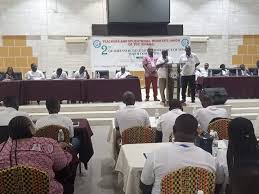
Dr Adinkra-Darko made the call at the 2nd quadrennial National Delegates Conference of TEWU Youth in Kasoa.

The conference is on the theme: “Fostering Partnership for Equitable Education Delivery in Ghana: The Role of TEWU Youth.”

The youth, he said, had the energy, passion, knowledge, and power to achieve the desired changes in the education sector when these attributes were properly harnessed.

That, he stressed, was imperative because the youth remained an indispensable group to partner with for equitable education delivery in the county.

He called for a conscious effort to build the capacity of TEWU youth to be effective agents of change in the education sector.

“Training programmes, workshops, conferences, and mentorship opportunities are key to equipping TEWU youth with the requisite skills, knowledge, and capabilities to seek the desired change in the education sector,” he said.

He urged them to identify all potential entities for partnerships to improve education delivery in the country.

Dr Adinkra-Darko advised the youth to ensure fairness in all their dealings with their members and other stakeholders and also foster unity to propel them for success.

Mr Mark Dankyira Korankye, the General Secretary of TEWU-TUC Ghana, said when the youth were involved in all activities, it ended with success.

“I have much hope for the future of the Union because of their exuberance. There are many potentials among them, and I am happy for the future of the Union,” he said.

He called on authorities to ensure equal access to quality education and address gender barriers that affected girl child education.

He advised the youth to embrace technology and leverage its gains to advance knowledge for sustainable development.

Mr Ambrose Yao Kwadzodza, National Chairman, TEWU-TUC Ghana, assured the youth of the leadership support to develop their potential to take up the future mantle.

He urged them to work hard, interconnect with each other, and share ideas for best practices to improve the Union.

Mr Isaac H.B. Armah Jnr., Chairman of the TEWU Youth Committee of TUC-Ghana, said the theme demonstrated that the youth were poised and positioned to contribute their quota to the education delivery in the country.

He, among others, enumerated the achievements of the Union like the development of a constitution, the successful organisation of the first-ever or maiden Regional Youth Conferences and youth representation in the TUC Youth Council.

Government releases GHS 26 million to pay SHS institutional suppliers

0

The Ministry of Education has released GHS 26 million to pay accrued debts owed the National Association of Institutional of Suppliers responsible for the supply of school uniforms, P.E Kits, stationery, among others, under the Free Senior High School programme.

This is contained in a press release from the Ministry signed by Mr Kwasi Kwarteng, Spokesperson of the Ministry, and copied to the Ghana News Agency.

According to the statement, the amount released underscored the Government’s commitment to ensuring quality education and the smooth running of educational institutions.

“The Ministry affirms its commitment to ensuring smooth, timely, and efficient
distribution of resources as we continue our efforts to improve and sustain quality
education in Ghana,” the statement said.

The Suppliers earlier demanded that the Government settled outstanding debts of over GH¢100 million owed members.

They expressed disappointment over the Government’s failure to pay for the essentials supplied to various Senior High Schools (SHS) over two academic years.

13 persons in court over possession of narcotic drugs

0

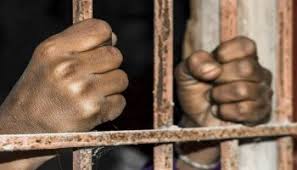
An Accra Circuit Court has admitted 13 persons to a GH₵50,000.00 bail each with one surety each for allegedly possessing a plant substance suspected to be narcotic drugs without lawful authority.


All the accused persons pleaded not guilty to the charges.


They are Ethel Anaab, a 28-year-old trader, Daniel Tetteh Botchway, a 52-year-old farmer, Kofi Nti, a 29-year-old driver, and Benette Adjei, a 28-year-old Chef.


Others are Owuraku Agyemang, a 23-year-old unemployed, Joshua Odamtten, a 23-year-old unemployed, Isaac Boateng, a 23-year-old trader, Kofi Stephen Appiani, a 20-year-old unemployed, and Roger Abeku Danso Mensah, a 30-year-old clearing agent.


The rest are Dennis Laryea, a 23-year-old unemployed, Ernest Ekuban, a 23-year-old trader, and Melvin Nortey, a 40-year-old physiotherapist.


All the accused persons are jointly held for unlawful possession of narcotic plants.


Anaab is said to have possessed 118 wraps of plants suspected to be narcotic drugs for trafficking.


The court presided over by Mr Samuel Bright Acquah adjourned the case to May 8, 2024.


The prosecution, led by Deputy Superintendent of Police (DSP) Maxwell Oppong, said that the complainants and witnesses in the case were personnel of the Ghana Military Police stationed at Burma Camp, Accra.


It said the accused persons resided at La Palm-Wine junction, a suburb of Accra.


The prosecution said, “there is a spot near La Villas at Burma Camp, where people in La township often gather and peddle in narcotic substances.”


It said the Ghana Military Police observed that the said spot had gained notoriety in narcotic peddling.


The court heard that on March 22, 2024, at about 1400 hours, the complainant and the witnesses picked up intelligence that the accused persons had gathered at the said spot peddling and using narcotic substances.


The prosecution said the team organised a swoop at the said location, which resulted in the arrest of the accused persons, adding that Anaab was found with 118 wraps of plants substances suspected to be narcotic plants and the rest of the accused persons were each found with smoking quantity of substances suspected to be narcotic plants gathered at the said spot.


It said during the operation, a quantity of similar plant substances was found in a black polythene bag yet to be connected to any of the accused persons.


The prosecution said the complainant and the witnesses arrested the accused persons together with the plant substances and handed them over to the La Police for action.


It said efforts were being made to get the plant substance suspected to be narcotic plants tested while the case was still under investigation.