Home Blog Page 219

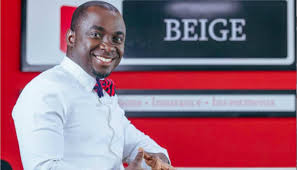
Beige-bank trial: Beige Bank disobeyed Bank of Ghana – Prosecution

0

Mrs Evelyn Keelson, Chief State Attorney (CSA), the prosecution in the ongoing trial of the former Chief Executive Officer (CEO) of the defunct Beige-Bank, has challenged Mr Hafisdeen M. Dawda, former Chief Financial Officer of the Bank’s defense witness that the Beige Bank disobeyed the Bank of Ghana (BoG).


The CSA in cross-examination, said Beige Bank was afraid that writing off its investments would expose the true state of the Bank due to the depletion of investments.


“As of July 2018, the BoG directed you to write off the investment. You knew you had lost the value of those investments, yet you sought to deceive BoG by giving a false picture of the Bank in your witness statement,” the prosecution put it to the defense witness.


The defense witness denied it and said it was not meant to deceive the BoG because when it came for examination, the issue was laid bare to the receiver hence the recommendation that it should be written off.


Mrs Keelson, the CSA said ” from exhibit AB, GHC66m was transferred on approval of the accused person – Nyinaku, to Beige Group from Essien Swiss, Express Savings and Loans, Royal Bank New Life, Stanbic Bank, Unibank, among others”.


The witness debunked it and said it did not mean more money to the Beige Group.


She said the transfer of its investments to some financial institutions led to the total loss of investments, but the witness disagreed.


The prosecution said there were conflicting reports presented to BoG and the Attorney General, adding that BoG’s reviewed report in July 2018 all showed that the Bank was insolvent and had reached a stage where it could not honour depositors’ withdrawals.


The Chief State Attorney explained that it got to a stage that the Bank had no assets of liabilities and could not honour depositors’ withdrawals, however, the former Chief Financial Officer disagreed and said the Bank had a lot of assets and liabilities, stressing that BoG’s report indicated that liabilities had exceeded the assets and that it had a negative net asset.


He insisted that BoG’s report was its observation after it had conducted examination and from 2012 to 2016, reiterating that BoG did not give Beige Bank the opportunity to respond and the report rendered it insolvent before it responded.


Mrs Keelson said before the Bank’s revocation on July 30, 2018, it had made an emergency call on BoG to rescue it from the situation.


Responding to that, Mr Dawda said the clearing support given by BoG was not insolvency by liquidity, noting that the banking laws allowed banks in situations they had liquidity challenges to fall on the BoG for support and that was different from being considered as insolvent because insolvency went to the long term survival of the business and may mean that the institution had persistently recorded negative net worth.


Nyinaku has been charged with theft and money laundering, but he has denied.


The High Court presided over by Justice Mrs Afia Serwaa Asare-Botwe, a Court of Appeal Judge with additional responsibility at the High Court, granted him bail.

Shrinking Penis Allegations: Victim referred to trauma hospital

0

Seven persons, who allegedly assaulted a man accused of using spiritual means to cause a another’s manhood to shrink, have been remanded by a District court at Awutu Breku in the Central Region.

Ike Faith, the victim, was sent to the Senya Polyclinic, but due to the severity of the beatings, he was referred to the Trauma and Specialist hospital at Winneba for further treatment.

Appearing before the court, the seven persons’ pleas were not taken.

The accused persons are Prosper Bonney, a 22-year-old Pragia Rider, Blessings Bonney, Emmanuel Baffoe, Kwame  Arhinsan, Richard Quanssah,  Gideon Amissah and Emmanuel Otoo.

Prosper Bonney has been charged with publication of false news and deceiving public officer, 

Additionally, Prosper and the six other accomplices are being on the charges of causing unlawful harm, assault and conspiracy to commit crime to wit causing harm.

The prosecution, led by Assistant Superintendent of Police (ASP) Thomas Sarfo and Chief Inspector Bernice Wie Kpuusuu, opposed the grant of bail as the case was still under investigations.

Mr Victor Yankson, who represented Prosper and Blessing, prayed for bail.

The court, presided over by Mrs Naomi A. A. Kuntuor, adjourned the matter to April 26 for the accused persons’ pleas to be taken.

The case of the prosecution is that the complainant is a National Service Personnel serving with Senya Beraku “C’ Basic School as a teacher.

Apart from Richard Quansah, who is a mason, the rest of the ers.

The prosecution said on April 9, 2024, at about 10:00pm, the complainant reported a case of accused persons are Tricycle (Pragia) Rid causing unlawful harm on behalf of her boyfriend, who had visited her at Senya Beraku on April 8, 2024.
indicated that on April 9, 2024, at about 9:00pm, they were in the room when they heard a knock on their door and after opening the door, they saw angry youth numbering about 20.

The prosecution said the youth started beating the victim, Ike Faith, alleging that he (the victim) had used “spiritual means” to cause Prosper Bonny, the first accused person’s penis to shrink.

According to the prosecutor, earlier the same day, at about 8:00pm, the victim Ike Faith boarded a Pragia from town to the house and they both had conversation over Pragia business and after the conversation, the victim gave his complim
The prosecutor told the court that the complainant entary card to Prosper Bonney to contact him later for them to do business.

The prosecution said 40 minutes later, on the same day, Prosper Bonney alleged that his penis started shrinking after dropping off the victim in his house.

The prosecutor said Prosper Bonney alleged that he quickly approached Blessing Bonney to intervene with prayers.

The prosecution said Blessing Bonney alleged that he used anointing oil to pray for Prosper before his penis “reappeared”.

The Prosecutor said Ike Faith was rushed to Senya Polyclinic and later, he was transferred to the Trauma and Specialists Hospital, Winneba for further treatment. 

The prosecution said through police investigations, the rest of the accused persons were arrested.

Ghana, Germany strengthen economic ties with focus on automotive sector, 1D1F

0

Ghana and Germany have given a boost to their bilateral relations for increased mutual economic benefits, this time, focusing more on the automotive sector

.
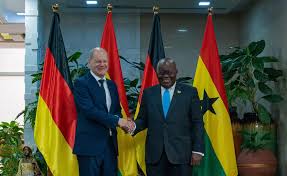
The two countries on Monday, April 15, held their second meeting since the establishment of the Ghana-Germany Business Council in 2019 – to provide accelerated solutions to business and trade bottlenecks in both countries.


The meeting also explored trade regulations and industrialisation, with Ghana wooing German businesses to invest and partner with Ghanaian counterparts under the government’s flagship One District-One Factory (1D1F) initiative.


Delegates from the Association of Automobile Assemblers Association of Ghana, Association of Ghana Industries (AGI), and the Ghana National Chamber of Commerce and Industry (GNCCI), as well as envoys from the German business community attended the meeting.


According to the Ghana Investment Promotion Centre (GIPC), Germany is Ghana’s eighth largest European export market, and among the top 10 sources of investments, with a €2.13 billion contribution to the country’s development.


Providing some details to the media after the meeting, Nana Ama Dokua Asiamah-Adjei, Deputy Minister of Trade and Industry, noted that the focus was on expanding the automotive industry, and value addition.


That, she said, was to ensure the completion of any outstanding agreement and scaleup component manufacturing to help “prevent the excessive importation of all the parts that are needed to be able to manufacture here [in Ghana].”


“We’re going to ensure that they get all the policy incentives that attracted them to get in here, and then, we’re able to expand, and do business as we envisage,” the Deputy Trade and Industry Minister said.


Indicating that Ghana’s doors were opened to the private sector, she encouraged German companies and investors to consider the country as a major destination to do business, capitalising on opportunities for industrialisation.


She stated that the world had reached a point that everyone was looking for other opportunities from other parts of the world, including Ghana, which had positioned itself as an industrial hub for all countries.


Nana Asiamah-Adjei said the partnership would incorporate the empowerment of the private sector and attract more investments for value addition under the 1D1F initiative to create more sustainable jobs for Ghanaians.


“We would want them to partner us with the 1D1F and strategic anchor industries to see how we can increase our industrial setup and value addition, and to also take advantage of the various preferential trade agreements,” she said.


Mr Udo Jürgen Philipp, the State Secretary for the German Federal Ministry for Economic Affairs and Climate Action, noted that Ghana was the only country in Sub-Saharan Africa with a joint business council with Germany.


He said that was so because “Ghana is a very good partner for our German businesses, and we’re coming here as German government to enhance this relationship to help our companies to do business in Ghana.”


He said the meeting had afforded both parties, the opportunity to address a few issues in the automotive sector, local content rules, and the African Continental Free Trade Area (AfCFTA) initiative.


Mr Udo Philipp said the hosting of the AfCFTA Secretariat had made Ghana “a very attractive business hub”, and stated Germany’s readiness to deepen economic relations with the country and ensure that challenges were addressed for mutual benefit.

NDC opts out of Ejisu Constituency by-election

0

The National Democratic Congress (NDC) says it will not participate in the upcoming Ejisu Constituency by-election scheduled for April 30, 2024.


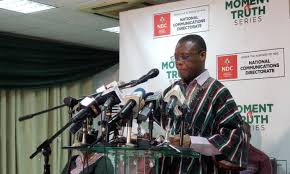
According to Mr Fifi Fiavi Kwetey, the Party’s General Secretary, the decision was to enable it to channel all its resources towards winning the seat in the national election in December 2024.


Mr Kwetey made the disclosure in an interview with the media, on the sidelines of a news conference, in Accra, on Monday.


The Ejisu Constituency seat became vacant following the demise of the Member of Parliament for the area, Dr John Kumah, on March 7, 2024.


Subsequently, the Electoral Commission set April 30, 2024, for a by-election to find a replacement for the former Deputy Finance Minister.


The New Patriotic Party, on Saturday, April 13, 2024, elected Mr Kwabena Boateng as its candidate for the by-election.


Speaking to the media, on Monday, Mr Kwetey said the Party would not compete in the by-election, explaining that it would focus on winning the seat in the general election in December.


“NDC will officially not be taking part in the Ejisu by-election,” he indicated.


“We have already set into motion processes leading to December 7, it’s just a few months away. We want to continue those processes and ensure that come December 7, we are prepared to combat in all the constituencies and Ejisu will be one of them.


“So, for this by-election, NDC will not be part of it. We are very confident about the processes we have in place. We just want to make sure we have the time to implement them fully.

And between now and December 7, we will be in the position to make sure we are deploying everything that we have done, so that will be the way we want to go,” the General Secretary stressed.


Election 2024: Mute voices of politicians with ‘sharp tongue’ — Media told

0

Mr Richard Kumadoe, a Security Consultant, has asked media houses to mute the voices of politicians whose utterances can disturb the December polls.


He observed that some politicians tended to “act irresponsibly” in the run-up to elections; therefore, media practitioners must identify characters with “sharp tongue” and not allow their platforms to be used to peddle “falsehood”.


Speaking to the Ghana News Agency (GNA) on the sidelines of the 2024 “Africa’s Peace, Investment and Tourism Summit”, in Accra, he noted that the cost of insecurity was “huge”, therefore, efforts must be made to maintain peace ahead and after the General Election.


“Elections should not divide us…We know some politicians are crazy when they sit behind the microphones…the media must do well to balance the panel sometimes and mute their voices whether they are on stage or when they come to the studio.


“We, [media practitioners] must make a decision on what qualifies someone to be on a show…find out what has been their track record…and that is the only way we can minimise the threat that comes with public speaking [by politicians],” he stated.

Mr Kumadoe, also the Managing Consultant, RichQuest Consult, was part of panel discussions at the Summit.


He urged all stakeholders to “protect the electoral process” and ensure that electoral outcomes were acceptable to all.


Mr Kumadoe noted that elections had become “a security threat” in Africa; therefore, all hands must be on deck to ensure electoral processes were “well-managed” in Ghana and other parts of the continent.


“Outcome of elections is very crucial…and we have to put in the resources to ensure that the threats that come with election outcomes are minimised,” he added.


The Summit, organised by the David Douglas Leadership Forum, brought together business executives, traditional leaders, students, traders, political party representatives and groups from different African countries and the Diaspora.


It, among other things, sought to unite stakeholders to foster peace and explore investment and tourism opportunities on the continent.


Discussions focused on peace and security, investment, funding opportunities and foreign direct investment in Africa, public-private partnership, youth and social enterprise, among others.

Convert National Cathedral site to tourist centre — Ekow Spio-Garbrah

0

Garbrah, a former Minister of Trade and Industry under the John Dramani Mahama administration, has proposed the conversion of the stalled National Cathedral project into a tourist centre.


He said the project, from all indications, would not be completed this year by the government hence in the interim, the site could be made attractive to tourists to rake in some revenue.


According to Mr Spio-Garbrah, redesigning the uncompleted site for tourists would serve the same purpose the government intended to achieve with the final edifice.


Speaking at the 2024 “Africa’s Peace, Investment and Tourism Summit”, held in Accra on Monday, Mr Spio-Garbrah said the government would not be able to complete the project anytime soon as country was “bankrupt”, saying it needed to ‘think outside the box’ to ‘salvage’ the project.


Confident of the National Democratic Congress’s (NDC) return to power after the December polls, he said the next NDC government “would have to reflect on what to do” with the uncompleted project, which some members of the NDC describe as the “world’s most expensive hole”.


“…If any country was faced with this tragedy, they will convert it into an advantage…My thinking as an individual is that, in the meantime, why don’t we make it a tourist centre so that people [from all parts of the country and the world] can visit at a fee.


“…There are a lot of artefacts and decorations along the perimeter of the big hole…so those graphics and poster designs can be reconfigured…and then create an entrance to the facility with a history of it…it would be historical,” he told GNA on the sidelines of the Summit.


Mr Spio-Garbrah urged the Minister of Tourism to present a paper to the Cabinet on the subject for implementation.


The Summit, organised by the David Douglas Leadership Forum, brought together business executives, traditional leaders, students, traders, political party representatives and groups from different African countries.


It, among other things, sought to unite stakeholders to foster peace and explore investment and tourism opportunities on the continent.


Mr Spio-Garbrah, touching on other subjects, hailed the ‘24-hour Economy’ policy being championed by NDC Flagbearer Mr John Dramani Mahama, which he said would help boost the economic fortunes of the country.

Feature Genome Editing

0

The Ghana Statistical Service (GSS) says Ghana spent GH¢11.3 billion to import food products to feed her citizens as against GH¢20.9 billion in the export of food products within the first half of 2023.

   
More than 50 per cent of the food imports fall into five distinct categories: cereals and grains, 22.8 per cent; animal or vegetable fats and oils, 12.7 per cent; meat, 9.5 per cent; and sugar products, 8.6 per cent; while over half of all food exports are cocoa products, representing 64.9 per cent.

   
The import and export trade dynamics of Ghana might not be different from those of other African countries that are also import-dependent.

   
The food products trade dynamics of Ghana pose food and nutrition security threats to the country, and for that matter, some African countries that also depend on food products import.

   
The Food and Agricultural Organisation (FAO) has estimated a 60 per cent need increase in agricultural output driven by population growth in the Lower- and Middle-Income Countries (LMICs).

   
This calls for more efforts by African countries, particularly Ghana, to increase their food production to become food secure and boost the nutritional situation of the country, saving pregnant women and children from malnutrition.


The United Nations (UN) 17 Sustainable Development Goals (SDGs), among other things, enjoin signatory countries to “end poverty in all its forms everywhere” and “achieve zero hunger” for their citizens by 2030.    
Target 1.1 of the SDGs seeks to “By 2030, eradicate extreme poverty for all people everywhere, currently measured as people living on less than $1.25 a day.”

   
Also, target 2.4 of the Agenda 2030 seeks to “By 2030, ensure sustainable food production systems and implement resilient agricultural practices that increase productivity and production. It also seeks to maintain ecosystems, which strengthen capacity for adaptation to climate change, extreme weather, drought, flooding, and other disasters and progressively improve land and soil quality.

   
It, therefore, behooves the leaders of the member states to formulate and implement policies to boost agriculture for sustainable food production and enhanced nutrition situations.

   
Promoting sustainable agricultural production through improved technology would not only lead to food security but also poverty reduction through sale or export of the surplus food produce 
Increasing climate change and its attendant unfavourable variability in recent times have posed a serious threat to sustainable agricultural production.

   
Farmers do not only grapple with erratic rainfall patterns and pests’ infestation but also have to deal with increasing depletion of soil nutrients suitable for crop production, owing partly to excessive fertilizer and agrochemical use.

   
These impediments result in escalating cost of production, which force the farmer to reduce the farm size for easy management, taking into consideration fertilizer and agrochemical usage to control disease and pests infestation.

   
This, in practical terms, can affect the realisation of the SDG targets on achieving food and nutrition security and poverty reduction, and by extension hamper the achievement of other targets due to the interconnectivity of the Goals.

   
For instance, increased agricultural production would mean increased income for farmers who form about 70 per cent of Ghana’s population, and increase the nutritional status of the population, especially women and children.

   
Increased income for farmers would also translate into reducing gender inequalities since many vulnerable groups, such as women, are active players in the agricultural value chain from the rural levels to the urban centres.

   
Also, increasing the income of actors in the agricultural value chain would enable them to cater for their children’s education and training, which would also contribute to bridging the gender inequality gap.

     
Science and technology have a direct correlation with improvement in every aspect of human life.

   
Similarly, science and technology have a direct impact on improving agricultural production of both animals and crops.

   
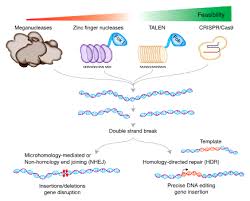
One such technology is Genome Editing (GEd), which is the ability to make specific genetic changes within a genome for a specific benefit.

   
Scientists say GEd has numerous benefits for the farmer, consumers and the nation as a whole.

   
The technology could lead to increased crop yield, disease resistance, drought resistance and general crop maturity time among others, which had the potential to increase the farmers’ income status.

   
Also, GEd could produce crop varieties that are suitable for increased industrial production such as increasing or reducing the starch and sugar content of the crop to achieve a specific industrial processing trait as well as increase or reduce the biomass of the crop to achieve a particular purpose.

   
To the consumers, GEd could help reduce the toxin content of the crop, increase its nutritional value, and reduce allergens, which are necessary for healthy growth.

   
Farmers’ adoption of improved crop varieties birthed from GEd would lead to sustainable nutrient-efficient food production, resulting in food security in Ghana.

   
It is, therefore, imperative for the Government to provide adequate funding to researchers to produce Genetically Engineered (GE) food crops to increase production and reduce the importation of food products.

   
The Government could also leverage GEd to increase its exportation of food products.

   
Dr Francis Djankpa, a Senior Lecturer, Molecular and Cellular Specialist, University of Cape Coast (UCC), believes that the GEd technology is potent enough to enable Africa to leapfrog in agricultural production to achieve food security and safety for her citizens.

   
Adopting and adequately funding the GEd technology, he said, could help reduce Africa’s imports of basic food products since the technology produced crop varieties for farmers to increase yield with less effort.

   
The technology enables scientists to edit the gene in the crop to enhance its traits including its pests’ resistance, adverse environmental conditions such as drought and pest infestation, Dr. Djankpa explained during a recent GEd training workshop for Science Communicators held in Accra.

   
The Council for Scientific and Industrial Research (CSIR) organised the workshop in partnership with the AUDA-NEPAD to, among other things, train science communicators to champion the science of GEd.

   
Dr Djankpa said GEd could help solve some of the major challenges that farmers faced, including low crop yield and cost of excessive use of pesticides and fertilizers, as the technology could be applied to major staple food crops such as maize, rice and yam.

      
It is worth noting that GEd is not the same as Genetically Modified Organisms (GMO).

   
While GEd involves the modification of the molecular formula of a living organism such as crops through natural or artificial mutation, GMO involves the transfer of foreign genes into a living organism to achieve a particular outcome.

   
For instance, the modification of a white maize variety, which has low protein content to achieve a yellow maize variety with high protein content is GEd while the transfer of trait from an insect into a crop for the crop to resist the attack of that insect is termed as GMO.

   
An example of GMO crop is the Bt cowpea.

   
Though GMO and GEd are both regulated by the Ghana National Biosafety Authority (NBA) under the Biosafety Act, 2011 (Act 831), the GMO technology and its products are strictly regulated.

   
However, the GEd technology and GEd products are regulated on a case-by-case basis.

   
Mr Eric Amaning Okoree, the Chief Executive Officer of the NBA, said: “Ghana recognises the immense potential that Genome Editing holds and the opportunities for agricultural innovation and medical advancements.”

   
“However, embracing this technology requires a balanced approach that prioritises safety, equity and ethical considerations.”

   
The African Union Development Agency-NEPAD (AUDA-NEPAD)   
This is an agency of the African Union mandated to coordinate and execute priority regional and continental projects to promote regional integration towards the accelerated realisation of Agenda 2063.

 
It has, as part of its responsibility, to incubate innovative programmes in various fields, including technology, research and development, knowledge management, and data analytics and assist Member States to strengthen capacity in key areas such as food and nutrition, energy and water among others.

 
Goal five of the “Africa We Want” by 2063 (Africa Agenda 2063) seeks to promote Modern Agriculture for increased productivity and production.

   
The AUDA-NEPAD is, therefore, providing technical backstopping to the GEd project, an initiative that is aimed to enhance agricultural productivity in Africa as part of efforts towards realising the Agenda 2063.

 
Mrs Florence Nazare, the Acting Director of Knowledge Management and Programme Evaluation at the AUDA-NEPAD, said Africa’s ability to embrace the GEd technology would facilitate rapid development of the continent.

 
The GE, she said, could help reduce the cost of agricultural production, support food systems, enhance the agricultural value chain, improve the livelihood of the people and propel Africa’s development agenda.

 
Recommendation    
It is worth noting that genetic improvement has resulted in faster, cheaper, healthier, and more efficient animal and crop production, with reduced impact on the environment.

   
Further, one did not need rocket science to know that GEd has the potential to transform the fortune of farmers with even a greater impact on the lives and livelihoods of peasant farmers and a generally secured food system for the country.

   
Unfortunately, however, this striking improvement is used only in developed countries.

   
It is, thus, extremely prudent for Ghana and the African continent in general to adopt the GEd technology and invest in it to improve yields.

   
Dr. Seth Manteaw, the Director of the Institute of Science, Technology, and Information, Council for Scientific and Industrial Research (CSIR), in an interview, emphasized the importance for the Government to increase its investment in the technology to enable the country to reap the benefits therein.

   
The country had the capacity, in terms of human resources and facilities, to promote the technology but needed more funding to do so, he noted.

 
Dr Samuel Mahama, a Senior Research Scientist at the CSIR, noted that the adoption of GEd would help Ghana to become food-sufficient, particularly with its major staple food crops such as maize and rice.

   
The GEd crop varieties would help to protect the environment as well as save farmers from the challenge of spending more money to control pests and diseases as they would not have to apply many chemicals to achieve that goal.  

Forestry Commission marks International Day of Forests with quiz, debate

0

The Forestry Commission has commemorated this year’s International Day of Forests with a quiz competition and a debate for students in the Northern Region.

 
     It was to increase awareness on the importance of forests and to encourage students to play active roles in preserving the environment.

 
     Competing schools for the quiz were Tamale International School, Sakasaka Basic School, Savanna International School and Lamashegu Block ‘A’ Primary School.

 
     They were examined on general knowledge on land and natural resources.

 
     Tamale Senior High School, and Ghana Senior High School took part in the debate, which had the motion: “Wood is the best green resource, we should use more of it”.

 
     At the end of the quiz competition, Tamale International School was crowned the overall winners, and they received a cash prize of GHc5,000.00, a desktop computer, a wooden plaque, a pack of the International Day of Forests branded T-shirts, exercise books and pens.

 
     Savanna International School came second and received GHc3,000.00 cash prize, a desktop computer, a plaque, branded T-shirts of the event, exercise books and pens.

 
     Sakasaka Basic School came third and received GHc2,500.00 cash prize, a desktop computer, a plaque, branded T-shirts, exercise books and pens.

 
     Lamanshegu Block “A” Primary School was the fourth and took home GHc2,000.00 cash prize, a desktop computer, a plaque, branded T-shirts, exercise books and pens.

 
      In the debate competition, Ghana SHS, spoke in favour of the motion while Tamale SHS spoke against the motion.

 
     Tamale SHS was crowned winners of the debate and went home with GHc5,000.00 cash prize, a wooden plaque, branded T-shirts and a desktop computer while Ghana SHS received GHc3,000.00 cash prize, a desktop computer, a plaque, and branded T-shirts. 


     Mr Kwasi Frimpong, Northern Regional Manager, Forestry Service Division, Forestry Commission, speaking during the event in Tamale, said it was also part of engagements to launch the 2024 edition of the Green Ghana Day initiative, which target is to plant 10 million tree seedlings across the country.

 
     He said, “The Commission decided to engage the students because of our commitment of leaving future generations and their communities with richer, better, more valuable forestry and wildlife endowment than we inherited.” 


     He urged students to be ambassadors of the Green Ghana Day initiative by planting more trees in their schools and communities to complement government’s efforts to preserve the environment.

 
     Mr Yakubu Mohammed Ahmed, Sagnarigu Municipal Chief Executive, said climate change was adversely affecting communities and posing serious threat to food production and food security in the country.

 
     He urged communities to support the Green Ghana Day initiative by ensuring that trees planted were protected and nurtured to address the impact of climate change. 

 
     Mr Sule Salifu, Tamale Metropolitan Chief Executive, who was represented at the event, commended the Forestry Commission for organising the event, saying it was the best approach to get young people interested in issues of land and natural resources.

 
     He said, “The impact of this exercise will be everlasting in the minds of the students.”

 
     The International Day of Forests is marked on March 21 every year to celebrate and raise awareness on the importance of all types of forests and need to protect them. 

Kofi Quakyi presents vehicles to NDC Parliamentary Candidates in Western Region

0

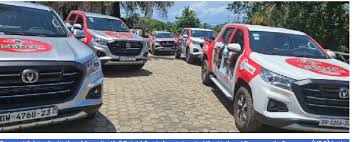
Mr Kofi Totobi Quakyi, a stalwart of the National Democratic Congress (NDC), has presented five vehicles to the party’s Parliamentary Candidates in five constituencies in the Western Region.

 
The constituencies are Mpohor, Ahanta West, Amenfi East, Shama and Kwesimintsim.

 
The vehicles were meant to aid the Parliamentary Candidates to undertake their campaign activities to help the NDC win the December 7 general elections.

 
Speaking at a brief presentation ceremony,  Mr Quakyi  said the vehicles were to facilitate the campaign activities of the respective Candidates working within the confines of the party’s campaign guidelines.

  
He gave the assurance that he would continue with efforts to extend similar support to other constituencies.

 
According to him, during the 2020 election, he provided eight vehicles to various constituencies in the region during the 2020 elections, and expressed the hope that the new batch would be maintained properly.

  
Mr  Quakyi called on them to conduct an unrelenting 24-hour door-to-door campaign to usher in the 24-hour economy under Former President John Dramani Mahama.

  
He told the gathering that 2024 presented a greater opportunity for the NDC to win power and called for unity among the rank and file of the party to achieve that purpose.  

KATH diagnoses more patients with hemophilia – Dr Mensah

0

The Komfo Anokye Teaching Hospital (KATH) has diagnosed more than 500 patients with Hemophilia, Dr Yaa Gyamfua Oppong Mensah, Specialist Pediatrician, Department of Child Health, KATH has said. 
 
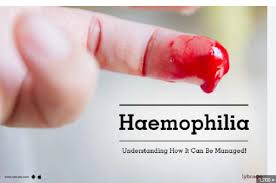
Hemophilia is a bleeding disorder where an individual’s blood does not clot properly due to lack of sufficient blood-clotting proteins (clotting factor) which help to stop bleeding. 
 
However, Dr Mensah said from the estimated prevalence based on the nation’s population, there could be more than 3000 people living with hemophilia in the country, an indication that “we are yet to identify over 2000 potential patients to be diagnosed and offered comprehensive care.”. 
 
In an interview with the Ghana News Agency (GNA), as Ghana joins the rest of the globe to mark the World Hemophilia Day (WHD), Dr Oppong said about 400,000 people were living with the disease, saying disease occurred one in every 10,000 births. 
 
The WHD is an international observance day held annually on April 17 by the World Federation of Hemophilia (WFH) and its affiliate National Member Organizations (NMOs). 
 
This year’s theme: “Equitable access for all”, calls to help increase awareness of the inherited bleeding disorders including hemophilia and to make adequate care accessible to every patient who needs it in the various communities. 
 
With WFH shouldering a bigger portion of the responsibility involved in management of hemophilia, Dr Mensah called on the government to also consider adding hemophilia to the diseases under NHIS to not only lighten the burden of affected families but also to help close the gap in the care of these patients. 
 
According to her, patients commonly present with bleeds in joints and muscle, causing swellings, pain and tightness. 
 
They have easy bruising, nose bleeds, gum bleeds and are difficult to control after losing a tooth, they may even present with blood in their stools and urine, post vaccination bleeds as well as life threatening bleeding in the head, chest or abdomen. 
 
Dr Mensah said the earliest symptom that could point to diagnosis could be cord bleed, scalp bleeds and most importantly post circumcision bleed. 
 
Post circumcision bleed has been the bane of most marriages as couples lose their sons from excessive bleeding after the procedure, she added. 
 
Dr Mensah said gene therapy, which was supposed to be the panacea to the treatment of the disorder, had reached advanced stages and yet to be rolled out worldwide, indicating that the best way to treat hemophilia was to replace the missing clotting factor so that the blood could clot properly.

 
Currently in Ghana, she said two comprehensive Hemophilia treatment centers had been established in KATH and the Korle-Bu Teaching Hospital where patients were offered comprehensive care to improve their overall quality of life. 
 
These centers were established with the support of the Ghana Hemophilia Society (GHS), a non-profit organization founded by a parent, Mr. Martin Boakye in 2009. 
 
The GHS educates, trains health workers and advocates for people living with hemophilia and the society and this had gained recognition and membership from the WFH, Canada, Dr Mensah stated. 


She said through the support of the WFH, the GHS also benefited from the humanitarian aid programme where the society received expensive clotting factors for Ghanaian patients. 
 
 “So, living with hemophilia is at no cost to the patients. On the average, over US$3 million dollars of donations are received every year from the world body to the society on behalf of the patients” she stated.

 
 Majority of the patients, however, cannot afford the laboratory investigations required in the diagnosis and management of this disease, she said. 
 
Like most chronic diseases, mothers of children with hemophilia are left to shoulder the burden of all the required laboratory investigations by themselves and the peculiarities in the mode of inheritance even worsens this situation as fathers blame the mothers for the condition with some shirking their responsibilities towards their affected children. 
 
She said the society had stepped up efforts to get the government to give the patients of hemophilia equal attention in medical care and expressed satisfaction that the advocacy had reached an advanced stage to get the hemophilia care into the National health insurance scheme. 
 
When it is done these patients will benefit from laboratory diagnosis: screening and coagulation (assays) analysis and the procurement of essential drugs to augment the existing inflow of donations.

 
These, Dr Mensah added remained the bane of many potential patients who, for lack of funds, refused even to get screened and therefore, did not get factor treatment.