Home Blog Page 220

Agenda 111 District Hospital: Odomase Number Two chiefs appeal to government to release funds timely

0


Odomase Number One, (B/A), April 16, GNA – The Odomase Number One Traditional Council in the Sunyani West Municipality has appealed to the government to release funds timely for the completion of the Agenda 111 District Hospital being put up in the area for use.


That, notwithstanding, the council said the chiefs and people of the area would forever be grateful to President Nana Addo Dankwa’s government for the construction of the hospital, describing the project as timely due to rapid population growth in the municipality.


Osabarima Kwabena Yeboah, the Krontihene (Deputy Chief) and the Acting President of the Odomase Number Two Traditional Area made the appeal in an interview with the Ghana News Agency (GNA) after some members of the council inspected progress of work on the construction of the hospital in the town.


Accompanied by Nana Yaa Poduo II, the Paramount Queen mother of the Area and some sub-chiefs and queens, they held a meeting with contractors executing the project.


Osabarima Yeboah also commended the contractors for the quality of work, and urged them to speed up so that the project would be completed for use before the Election 2024, saying “we are aware of delays in the release of funds from the government, but that should not also slow the progress of work.”


He also called on the government to do more and reshape, particularly, the road to the hospital site, and other access roads in the Odomase Number One and Odomase Number Two townships.


Earlier, Nana Poduo II stressed the need for the chiefs to strengthen relationships with the contractors, come together and identify and tackle emerging challenges confronting the execution of the project.


She said the people owned the project, and assured that the chiefs and queens would render the required assistance to facilitate its completion to bring quality health care to the door-step of the masses.


Nana Poduo II advised the contractor employees and casual workers to endeavour to pass through the laid down procedures in addressing their grievances, and avoid tendencies that could slow down the execution of the project.


The Queen mother said she was still not satisfied with the progress of work, and entreated the contractors to speed up.


Mr Joseph Amissah, Head of the Project, Consar Construction Company, the main contractors, said actual construction work commenced in April 2021, saying the project was about 40 percent complete.


He gave the assurance that it would be completed by the end of the year, and entreated the council to visit the site regularly not only to inspire the workers, but also listen to and help tackle emerging challenges.


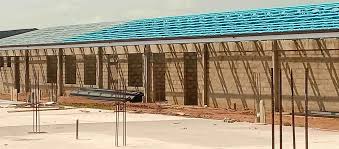
Mr Amissah said work on the 100-bed capacity ward, security and commerce, waiting pavilion “A” and “B”, and the main administration block had reached roofing levels while that of the pharmacy and the washrooms had also reached lentel level.


Construction of the Out-Patient Department, reception and laboratory and diagnostic had also reached roofing levels, while that of the Accident and Emergency was at the lentel, with the Pediatrics “A” and “B” still at the floor level.


The Physiotherapy and Public Health had reached roofing while work on the female surgical ward at the lentel, the maternity, still block laying and the male surgical ward at the foundation level, with the housing department reaching roofing.


In all, Mr Amisah said the project had 28 buildings, adding work on the mortuary and generated yard all at the floor levels.


The council later presented 20 packs of bottled water to the contractors.
Sam Jonah to launch GJA 75th Anniversary

0

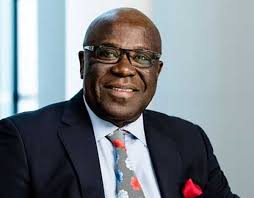
Sir Sam Jonah KBE, OSG will launch the 75th Anniversary of the Ghana Journalists Association (GJA) on Wednesday, April 17, 2024, at the Labadi Beach Hotel in Accra, at 1300hours.


The ceremony would be chaired by Nana Kwasi Gyan-Apenteng, a former Chairman of the National Media Commission (NMC), with Kojo Oppong Nkrumah, the Minister of Works and Housing, who is also the Caretaker, Information Minister, as a Special Guest of Honour.


It will be attended by media practitioners, partners, heads of media institutions, heads, and students of journalism and communication training institutions.


In a statement issued and copied to the Ghana News Agency, Sir Jonah will deliver the Keynote Address to set the tone for the 75th Anniversary celebration, which is on the theme: “75 years of Excellence in Journalism: Past, Present and the Future”.


It said Sir Jonah would also unveil the 75th Anniversary Logo at the ceremony.


The GJA President, Albert Kwabena Dwumfour, according to the statement, would speak on the theme for the anniversary to rally members around the flag of the Association.


The Chairman of the 75th Anniversary Planning Committee, Godwin Avenorgbo, will give an outline of activities planned for the anniversary, which will be climaxed at the 28th GJA Media Awards in September 2024.


Activities for the anniversary celebration will be undertaken in the regions to give it a national character.
“The National Executive of the GJA invites all members of the Association and well-wishers to come and join in the celebration of 75 years of excellence in journalism, “the statement said.

World Vision Ghana praised for advancing development in Agortime-Ziope District

0

Dr Archibald Yao Letsa, Volta Regional Minister, has commended World Vision Ghana for its numerous interventions in improving the quality of life of the people in Agortime-Ziope District of the Volta Region.

He stated that World Vision had proven over the years that it was a worthy development partner in promoting socio-economic development by its dedication to enhancing human life and dignity via a variety of initiatives.

Dr Letsa gave the commendation when he joined Madam Laura Del Valle, Country Director of World Vision Ghana, to commission water, sanitation, and hygiene, as well as educational facilities built by the organisation in certain communities in the Agotime-Zoipe District.

He said the Volta Regional Coordinating Council (VRCC) was honoured to be affiliated with World Vision Ghana’s worthwhile course as its policies and programmes had produced remarkable outcomes, promoting people’s quality of life.

Dr Letsa emphasised that as development partners, the VRCC was interested in the organisation’s efforts because its cooperation with various assemblies would hasten the needed development.

The Minister pleaded with everyone to refrain from open defecation in the communities, citing the numerous health risks associated with it and the maxim that “the sooner we put a stop to it, the better it is.”

He urged the beneficiary communities, institutions and schools of the WASH facilities to ensure adequate maintenance of them to increase their life span and also to ensure optimum utilisation and subsequent benefit from them for purposes of improving the lives of the people.

The facilities included eight solar-powered water systems, equipped with numerous standpipes and taps in eight communities serving five schools and five health facilities, and nine institutional toilets including six water closets for health facilities and three KVIPs for schools.

The rest are, five multi-purpose information poles to enhance communication in five communities, and pavilions as child and youth resource centres in four communities to offer a safe and secure environment for children to learn.

The beneficiary communities included Segbale, Asafokope, Agorhokpo, Sarakope, Sileandre, Keyime, Dohia, Yevi, Kpetoe, Akpokope, Afegame and Wedzedeke.

Madam Laura Del Valle, Country Director of World Vision Ghana said they were pleased with the progress they had made as a team in empowering communities and attaining sustainable development for all.

She expressed excitement about carrying on their cooperation with the different authorities in order to guarantee a better future for the children of Agortime-Ziope District.

The country director tasked the communities to oversee the facilities and make sure they were kept up so they could continue to benefit them and the children for a long time.

Togbe Nene Nuer Keteku IV, the Paramount Chief of the Agortime Traditional Area, also praised World Vision Ghana for its intervention initiatives that had advanced the community’s development.

Madam Emilia Adzimah, District Chief Executive for Agortime-Ziope, said the assembly and the communities within the area had benefited from the organisation’s initiatives.

She said the perennial water challenges were unbearable as the situation affected socio-economic well-being of the people and that it was therefore, heartwarming World Vision had come to provide service to the people in those areas.

The DCE said the assembly was open to more collaboration to accelerate the development of the district and persuaded development partners to give the area serious consideration for business.

Religious Tolerance: Peace Council holds validation workshop on MoU to guide Mission Schools

0

The National Peace Council (NPC) has organized a validation workshop on the Memorandum of Understanding (MoU) to guide Mission Schools on religious tolerance.


The MoU aims to provide guidelines for Government Assisted Mission Schools/Private Schools to enable a safe learning environment, promotion of national peace and preventing discrimination on religious grounds to enhance greater social cohesion.


Participants at the workshop included representatives of the Conference of Managers of Education Units (COMEU), the Trustees of the Conference of Managers of Mission Education Units, the Ghana Education Service (GES), Directors of Mission Education Units, Heads of Schools and the Commission on Human Rights and Administrative Justice (CHRAJ).


Mrs Joana Adzoa Opare, Member, NPC Governing Board and Chairperson of Complaints and Conflict Committee, in a statement read on her behalf by Mrs Magdalene Kannae, a member of the Governing Board of the NPC, said one thing that the Council had taken from the long period of engagement with stakeholders on religious tolerance in schools was that, no pupil or student should be hindered by religion in their quest for academic laurels.


This, Mrs Opare said had been the primary principle upon which the process had thrived.
“Collectively, we shall be making history and bring finality to a document that we have diligently put together, which will serve as a guide for your various Education Units and Schools and support management of students from diverse backgrounds to achieve their desires in the field of Education,” she said.


She reiterated that the timing in any project or policy was critical to the means and the end.
“This validation coming just few days after the Ramadan and Easter and few days to the traditional ban on drumming in Accra should give us a sense of diversity that rather unite us than divides us,” she said.
“Let us collectively uphold the principle and practice of togetherness, responsiveness to each other’s views, respect for the rights of others, and toleration and tolerance of religious diversity in all institutions of learning.”


She said the Council had the conviction that the MoU would serve Ghanaians positively and bring sanity to every education Institutions that the document was developed for.


“May we all be doers and not just listeners in the face of religious tolerance in our schools.”


Constitutionally, Ghana is a circular state, and all citizens have the freedom to practice and profess any religion of their choices, with their religious liberty protected.


Article 25 of the 1992 Constitution of Ghana indicates that, all persons had the right to equal educational opportunities and facilities and with the view to achieving full realisation of that right.


According to the draft MoU the Mission Schools must emphasize a culture of tolerance, inclusivity and cooperation while maintaining the missions and visions of their parent religious bodies.


Regarding fasting in schools, it indicated that students should be allowed to fast; however, parents/guardians from school authorities must seek permission and requisite counseling given to students before fasting begins.


Speaking to the Ghana News Agency at the end of the validation workshop, Mrs Opare said following reports of a Muslim student at the Wesley Girls’ High School, Cape Coast, who was allegedly prevented from fasting during Ramadan in 2021, which was being observed by Muslims, the Peace Council in an efforts to help address the issue met with all the stakeholders involved to see what actually happened and how they could intervene to ensure that there was peace in the country’s educational institutions.
She said the Council met with all the stakeholders involved, which included the Ministry of Education, the Muslims Caucus in Parliament, the Wesley Girls Management, the Christian Council of Ghana, Methodist Church, Ghana, the girls, and parents to ascertain what happened.


“In the process, we find out that there has been a drafted MoU that has never been assented to, when it comes to the legal issues. So, we revisited this, and we called the stakeholders around the table and agreed that we needed to finalize this.”


Mrs Opare noted that the MoU would serve as a document that people could speak to when it comes to the issue of religious tolerance in the nation’s schools.

2024 Elections: Let’s guard against violence, hate speech — Peace Council

0

Sheik Armiyawo Shaibu, a member of the National Peace Council, has urged stakeholders to preach against all forms of violence and hate speech ahead of the December elections.

 
He said misinformation and hate speech could influence public opinion and election outcomes, therefore, key actors in the electoral process should guard against the phenomenon.

  
He made the call at the 2024 Africa’s Peace, Investment and Tourism Summit in Accra on Monday. 
The conference, organised by the David Douglas Leadership Forum, brought together business executives, traditional leaders, students, traders, political party representatives and groups from different African countries and the diaspora.

 
It, among other things, sought to unite stakeholders to foster peace and explore investment and tourism opportunities on the continent.

 
Sheik Shaibu, also the spokesperson of the National Chief Imam, stressed the importance of tolerating divergent views and maintaining social cohesion in the election period and beyond.

  
Referring to aspects of the Sustainable Development Goals, (SDGs), he urged various agencies to work “professionally and efficiently to ensure credible electoral outcomes to deepen the country’s democratic gains’’. 


He, like other speakers at the Summit, agreed that a peaceful atmosphere was required for Ghana and the African continent to attract the ‘’right investments’’ and boost existing economic fortunes.

 
‘’…We have a responsibility to create opportunities for people of diverse backgrounds to peacefully coexist. Diversity is a valuable virtue which we all need to thrive,’’ Sheik Shaibu stated. 


In his address, Mr David Douglas Tengey, Convener of the Summit, said it was time to find lasting solutions to conflicts and a myriad of challenges affecting the development of the African continent.

 
He said the Summit was to inspire participants to be ‘’agents of positive change’’ across sectors and their communities as peace and development were ‘’interconnected’’.

 
‘’The Summit is to place the spotlight on the pivotal roles of the creative arts in bridging cultural difference and promoting social cohesion…it seeks to strengthen regional unity, collaboration, and knowledge transfer,’’ Mr Tengey noted.

 
Ms Selma Ashipala-Musavyi, High Commissioner of Namibia to Ghana, said the world had become ‘’immune to human suffering’’ however, efforts must be intensified to maintain lasting peace.

 
She highlighted measures her country was taking to promote tourism and stressed the need to promote intra-Africa tourism. 


Discussions at the Summit focused on peace and security, investment, funding opportunities and foreign direct investment in Africa, public-private partnership, youth and social enterprise, among others.

 
Panellists, taking turns on the various subjects, encouraged citizens to play active roles in maintaining peace and promote national unity. 

United Nations, partners to roll out “I Pledge for Peace Campaign” ahead of elections

0

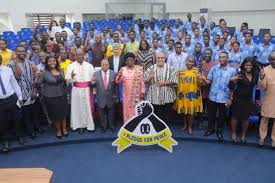
The United Nations office in Ghana in collaboration with the National Peace Council is to roll out the “I Pledge for Peace Campaign” in April ahead of the polls in December. 


 This is contained in a press release signed by Faith Junko Edison, the Head of Public Relations, National Peace Council, and Cynthia Prah, the National Information Officer for the United Nations Information Centre (UNIC).

 
The campaign, according to Mr. Charles Abani, the UN Resident Coordinator in Ghana, would actively engage a diverse range of stakeholders, including individuals, communities, civil society organizations, government entities, religious leaders, and youth groups.

  
Its primary goal is to foster a culture of peace, advocate peaceful elections, and promote tolerance and peaceful co-existence before, during, and after the electoral process.

 
“… Elections are not a period of combat and the unhealthy exchange of views or for divisive language. We want to use this campaign to urge stakeholders to publicly commit to peace, and by extension, a peaceful election. We believe that the positive actions of stakeholders, through social media and other channels, will encourage tolerance and discourage misinformation”, he noted.

 
The campaign, he explained, would encourage individuals and organisations to make public pledges for peace, amplifying the message via communication channels, including social media with the aim to create a collective commitment to a peaceful election.

  
Rev. Dr. Ernest Adu-Gyamfi, Chairman of the National Peace Council, also underscored the importance of individual contributions to peace through the spread of messages that encouraged such. 


“Until every life is respected, and properties protected, achieving peaceful co-existence remains a distant goal… the National Peace Council will do everything in its power to support this campaign and ensure a peaceful election come December 2024,” he said.

 
Ghana’s democracy though has deficits, remains a beacon of hope for Africa.

  
The UN said it would continue to support the country to foster its development agenda in a peaceful atmosphere and uphold its reputation as a regional pacesetter for democratic governance.

 
The “I Pledge for Peace Campaign” thus reflects this collaborative effort between the UN, the National Peace Council and other various stakeholders to create a peaceful and inclusive electoral process in Ghana. 
 

Politics Chief Ministry

0

Nana Kofi Akantoa, the   Amankorahene of Chiraa in the Sunyani West Municipality, has lauded the idea of Former President John Dramani Mahama, the Flagbearer of the National Democratic Congress (NDC), to split the Youth and Sports Ministry when re-elected.  
 
He asked leaders to strategically redefine the Ministries, Departments, and Agencies to achieve targeted objectives that could energise the country’s socio-economic development. 
 
 Mr Mahama, at an inaugural ceremony of a Youth Wing of the NDC, announced his intention to divide the Ministry of Youth and Sports in his next administration. 
 
In an interview with the Ghana News Agency (GNA) in Sunyani, Nana Akantoa said the proposal should not be a mere talk and asked the party’s leadership to be eager to put it in their manifesto to help address those challenges. 
 
The coupling of youth and sports had undoubtedly created a significant disconnect from the multiplicity of issues affecting young people, which were often viewed through a narrow lens, primarily focusing on sports, he said. 
 
Both the Youth Employment Agency and the Ministry of Employment had failed in tackling youth unemployment since a report by the Ghana Statistical Service on February 25, 2024, stated that the rate of youth unemployment had risen to 14.7 percent, a significant increase from 5.11 percent reported in 2016, the Chief said. 
  
One of the obstacles in addressing youth concerns was the lack of systematic efforts to focus on their issues through deliberate policy interventions by establishing a specific Ministry dedicated to youth concerns. 
 
Nana Akantoa said the 2021 Ghana Population and Housing Census indicated that the youth population in the country was approximately 40 percent, which was growing at an alarming rate. 
 
He said political parties took advantage of those numbers to attract votes, mostly making promises that often amounted to mere propaganda. 
 
The chief, therefore, urged the younger generation to embrace Mr Mahama’s intervention to effectively tackle their challenges. 

Social President Scheme

0

President Nana Addo Dankwa Akufo-Addo has welcomed the innovative measures being implemented under the National Service Scheme (NSS) to shape the future of the Ghanaian youth for the better.

 
Referring to the new policy guidelines by the Scheme, he said it was an exercise worth supporting, particularly the aspects that dealt with the training, mentoring and coaching of personnel.

 
President Nana Akufo-Addo, launching the policy document in Accra, assured that the Government would provide the requisite logistical assistance and enabling environment to realise the desired objectives.

  
The policy, spanning 2024 to 2034, aims to reposition the NSS as one of the best in sub-Saharan Africa in terms of mobilisation, deployment and employment.

  
It was developed with the active participation of a cross-section of experts, including the business community and employers, academia, technocrats, as well as the Ministries, Departments and Agencies (MMDAs).

 
The National Service programme is a compulsory one-year service required of all citizens of Ghana who are 18 years and above, at the time of deployment.

 
It seeks to encourage the spirit of national service among all segments of the Ghanaian society in the effort of nation-building through active participation.

  
The Scheme, among others, focuses on undertaking projects designed to combat hunger, illiteracy, disease and unemployment in Ghana.

 
President Nana Akufo-Addo said the policy guidelines which aligned with the national development agenda, were critical in harnessing the job prospects of the service personnel.

  
Having operated for more than five decades, it was important that the mission and vision of the Scheme were updated to bring them to an appreciable standard for sustainable growth, he stressed.

  
He lauded the Board and Management of the NSS for instituting those innovative measures in view of the crucial role the youth played in Ghana’s development.

  
Issues concerning youth empowerment, he said, remained one of the core projects of the Government, therefore, it would continue to build the professional competency of the service personnel for the job market.

  
The President cited the Youth-in-Agriculture programme and other policies introduced by his Administration to develop skilled manpower through practical training, as well as the implementation of the Free Senior High School, and vocational and technical programmes as some measures focusing on building a vibrant human resource base.

  
“The policy being launched today will enhance capacities, reinforce structures and enable the NSS to mobilise effectively and deploy the increasing number of graduates to areas of national priority,” he stated.

  
Dr Yaw Osei Adutwum, Minister of Education, explained that the policy document had been developed to address the challenges that inhibited the effective operation of the Scheme.

  
“This is a new NSS,” he asserted, noting that the significant educational feats chalked under the Nana Akufo-Addo-led Administration had helped to keep the Sustainable Development Goals in that sector on course.

  
Mr Osei Assibey-Antwi, the NSS Executive-Director, appealed to the Government to facilitate the processes of upgrading the Scheme into the status of an Authority to enhance its operations.  

Religious Tolerance: Peace Council holds validation workshop on MoU to guide Mission Schools.

0

The National Peace Council (NPC) has organized a validation workshop on the Memorandum of Understanding (MoU) to guide Mission Schools on religious tolerance.
The MoU aims to provide guidelines for Government Assisted Mission Schools/Private Schools to enable a safe learning environment, promotion of national peace and preventing discrimination on religious grounds to enhance greater social cohesion.
Participants at the workshop included representatives of the Conference of Managers of Education Units (COMEU), the Trustees of the Conference of Managers of Mission Education Units, the Ghana Education Service (GES), Directors of Mission Education Units, Heads of Schools and the Commission on Human Rights and Administrative Justice (CHRAJ).
Mrs Joana Adzoa Opare, Member, NPC Governing Board and Chairperson of Complaints and Conflict Committee, in a statement read on her behalf by Mrs Magdalene Kannae, a member of the Governing Board of the NPC, said one thing that the Council had taken from the long period of engagement with stakeholders on religious tolerance in schools was that, no pupil or student should be hindered by religion in their quest for academic laurels.
This, Mrs Opare said had been the primary principle upon which the process had thrived.
“Collectively, we shall be making history and bring finality to a document that we have diligently put together, which will serve as a guide for your various Education Units and Schools and support management of students from diverse backgrounds to achieve their desires in the field of Education,” she said.
She reiterated that the timing in any project or policy was critical to the means and the end.
“This validation coming just few days after the Ramadan and Easter and few days to the traditional ban on drumming in Accra should give us a sense of diversity that rather unite us than divides us,” she said.
“Let us collectively uphold the principle and practice of togetherness, responsiveness to each other’s views, respect for the rights of others, and toleration and tolerance of religious diversity in all institutions of learning.”
She said the Council had the conviction that the MoU would serve Ghanaians positively and bring sanity to every education Institutions that the document was developed for.
“May we all be doers and not just listeners in the face of religious tolerance in our schools.”
Constitutionally, Ghana is a circular state, and all citizens have the freedom to practice and profess any religion of their choices, with their religious liberty protected.
Article 25 of the 1992 Constitution of Ghana indicates that, all persons had the right to equal educational opportunities and facilities and with the view to achieving full realisation of that right.
According to the draft MoU the Mission Schools must emphasize a culture of tolerance, inclusivity and cooperation while maintaining the missions and visions of their parent religious bodies.
Regarding fasting in schools, it indicated that students should be allowed to fast; however, parents/guardians from school authorities must seek permission and requisite counseling given to students before fasting begins.
Speaking to the Ghana News Agency at the end of the validation workshop, Mrs Opare said following reports of a Muslim student at the Wesley Girls’ High School, Cape Coast, who was allegedly prevented from fasting during Ramadan in 2021, which was being observed by Muslims, the Peace Council in an efforts to help address the issue met with all the stakeholders involved to see what actually happened and how they could intervene to ensure that there was peace in the country’s educational institutions.
She said the Council met with all the stakeholders involved, which included the Ministry of Education, the Muslims Caucus in Parliament, the Wesley Girls Management, the Christian Council of Ghana, Methodist Church, Ghana, the girls, and parents to ascertain what happened.
“In the process, we find out that there has been a drafted MoU that has never been assented to, when it comes to the legal issues. So, we revisited this, and we called the stakeholders around the table and agreed that we needed to finalize this.”
Mrs Opare noted that the MoU would serve as a document that people could speak to when it comes to the issue of religious tolerance in the nation’s schools.

Sunyani Adolescent Parliament advocates access to contraceptives to promote safe sex

0

The Sunyani Municipal Adolescent Parliament has called on the Ghana AIDS Commission (GAC) and the Ghana Health Service (GHS) to support young people to easily access condoms and contraceptives to promote safe sex. 
 
They also called for intensified sex education, proper use of contraceptives, and access to family planning services. 
 
That would greatly control the rising cases of teenage pregnancies, sexually transmitted infections and unsafe abortion in the Municipality. 
 
The Adolescent Parliament is one of the critical components of a three-year Resilient City for Adolescents Project, (RC4A) being implemented by Global Media Foundation (GLoMeF), in partnership with Indigenous Women Empowerment Network and Citizens Watch Ghana, both NGOs. 
 
It is a platform for the adolescents in the Sunyani Municipality of the Bono Region to influence governance and demand accountability as part of the implementation of the 300,000-pounds sterling project, being funded by the Swiss Bortnar Foundation, which seeks to improve adolescent lives. 
 
Members of the ‘Parliament’ have been carefully selected from various communities in and around Sunyani to meet occasionally to deliberate on issues and embark on advocacy to influence decision-making in the area. 
 
Daniel Sarkodie Frimpong, the ‘Speaker’ of the 23-member Parliament, which covers 19 constituencies, made the call in an interview with the Ghana News Agency (GNA) on the sidelines of sporting activities organised for the members. 
 
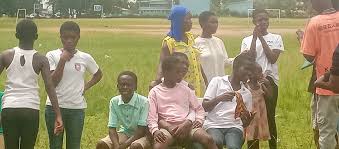
GLoMeF and the project implementing partners organised the games to promote and deepen friendship, unearth and nurture the sporting talents of the young people. 
Speaker Frimpong indicated that though Parliament was strongly against pre-marital sexual practices, many of the young people in the municipality were engaged in active sex, hence the need to supply them with contraceptives. 
 
That would enable those who could not control their sexual desires to protect themselves, and thereby control teenage pregnancies, contributing to high school-dropout rate and impeding girl-child education in the municipality, he said. 
 
Speaker Frimpong said with safe sex girls would also be able to further their education and grow into responsible adulthoods and become societal assets, and not liability, regretting that early “breaking’ of girl’s virginity was becoming a burden in the society. 
 
He observed that parental neglect was fueling alcoholism, sexual perversions, drug abuse, internet scam, sports betting among the youth. 
 
“I think some parents have failed in the proper upbringing and development of their children. Instead of drawing their children closer and listening to them, they have chosen to pursue their life careers to the detriment of their children’s wellbeing.” 
 
Master Frimpong, a-15-year-old student of the Abesim St. James Seminary and Senior High School, reminded parents that those who neglected their children brought burden to themselves, and implored irresponsible parents to change. 
 
Mr Raphael Godlove Ahenu, the Chief Executive Officer, GLoMeF, said the RC4A project sought to identify and tackle emerging challenges confronting adolescence in the municipality. 
 
Prizes ranging from sanitary pads, detergent, toothpaste and brushes, reading and learning materials, trophies to medals were presented to deserving young people who participated in the games: football, sack race and athletics.