Home Blog Page 22

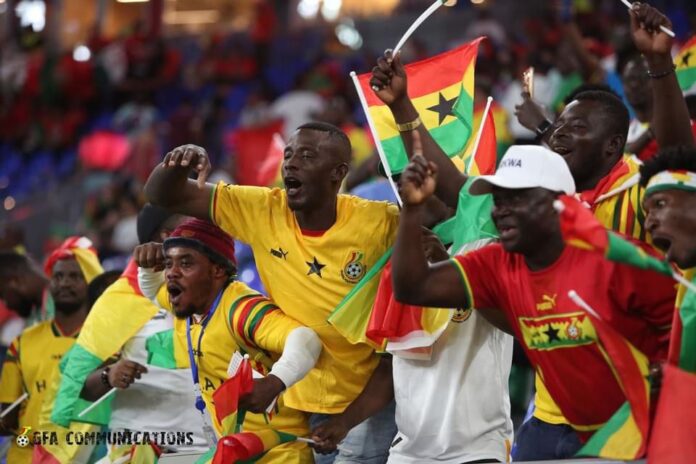
Demand for Black Stars Jerseys rises ahead of 2026 World Cup

0

Excitement is building in Accra as fans gear up for Ghana’s participation in the 2026 FIFA World Cup, driving a surge in sales of Black Stars jerseys.

With less than 100 days till the commencement of the 2026 World Cup, Ghana’s Black Stars would make their fifth participation, having been placed in Group L alongside England, Croatia, and Panama.  

A visit by the GNA Sports team at Osu and Kantamanto Market revealed strong demand for replica kits.

At Osu, jerseys were priced between GH¢170 and GH¢180, while Kantamanto offered options ranging from GH¢80 to GH¢120 depending on quality.

Online platforms listed fan versions at about GH¢240 for home kits and GH¢305 for away kits.

Retailers say interest has grown steadily recently.

“Whenever the national team plays, especially during international tournaments, demand spikes. Supporters want to feel part of the moment,” explained Kwame Offei, a sportswear seller in Accra.

He further explained that original jerseys manufactured by Puma attract higher prices due to quality, branding and import duties.

“Authentic jerseys are different from replicas. The material, finishing and licensing all come at a cost. That is why the original versions are more expensive,” he said.

Daniel Arthur, a football lover in Osu, noted that while passion for the Black Stars is strong, price often dictates choices.

“We all want to support the Black Stars, but when a jersey costs GH¢300 or more, it becomes difficult for the average worker or student. Football is for the people, so the merchandise should also be accessible,” he said.

Hannah Essel, a university student, echoed the sentiment, saying, “National pride is important, but we also have responsibilities. If I must choose between basic needs and buying a jersey, I will prioritise my needs,” she said in an interview.

Despite concerns over affordability, traders insist sales remain strong, underscoring the enduring passion for football. 

Stakeholders back calls for regulation of political party financing, monetisation

0

Stakeholders in Ghana’s governance and political space have backed renewed calls for stricter regulation of political party financing and monetisation of electoral politics.

They warned that the continuous rising cost of elections threatens Ghana’s democratic gains and stressed the urgent need to address the phenomenon.

The endorsement came at a multi-stakeholder forum organised by the Center for Democratic Development Ghana (CDD-Ghana) in collaboration with the National Commission for Civic Education (NCCE), with support from the Foreign, Commonwealth and Development Office (FCDO), to deliberate on a proposed model political finance law.

The proposed model is intended to contribute to efforts aimed at reducing or eliminating the influence of money in Ghana’s political and electoral landscape.

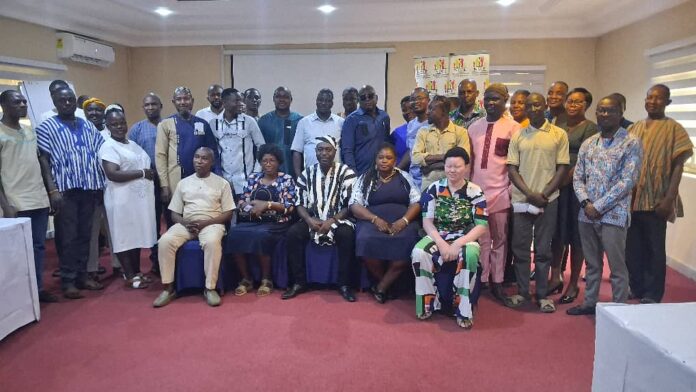
The stakeholders at the forum, held in Bolgatanga, comprised representatives from the Electoral Commission, political parties, civil society organisations, the media, persons with disabilities, women and youth groups, among others.

The participants agreed that the growing influence of money in politics was distorting electoral competition, excluding capable citizens from contesting public office, and creating fertile ground for corruption.

The participants also expressed support for proposals to cap campaign expenditure, define a clear campaign period, and enhance disclosure requirements for both political parties and candidates.

Mr Jacob Tetteh Ahuno, the Assistant Monitoring and Evaluation Specialist at CDD-Ghana, said although Ghana had enjoyed three decades of competitive elections and peaceful transfers of power, monetisation was fast becoming a major threat to democratic governance.

“Our research reveals a staggering trend in the cost of contesting elections. The cost of parliamentary contests has increased significantly over the years, and the cost of running for the presidency is now estimated at about US$100 million,” he said.

He described the trend as a “crisis of democratic capture,” explaining that when public office goes to the highest bidder, women, youth and persons with disabilities are sidelined.

“When campaign costs keep rising, vulnerable groups are eliminated. More dangerously, we see the influence of political financiers whose funding sources are often opaque,” he stated.

Mr Ahuno noted that existing laws, including provisions under Article 55 of the 1992 Constitution and the Political Parties Act, primarily regulate political parties but do not adequately cover individual candidates.

“As it stands, candidates who receive donations are not required to account for them. The law does not clearly define a campaign period or set spending limits. That is a major regulatory gap,” he said.

He explained that CDD-Ghana had developed a model political finance law to guide the drafting of comprehensive legislation aimed at closing these gaps and strengthening transparency and accountability in campaign financing.

Delivering the opening remarks, Mr Augustine Akugri, the Deputy Upper East Regional Director of the NCCE, said the monetisation of politics had become deeply entrenched and posed an existential threat to the country.

“We are witnessing both the supply of money to voters and the demand for money from voters in elections and party primaries. This undermines merit and distorts democracy,” he said.

He cited studies by CDD-Ghana and the Westminster Foundation for Democracy, which showed a sharp rise in the cost of political participation across electoral cycles.

Mr Akugri stressed that excessive financial demands on candidates favoured those with access to wealth and discouraged otherwise qualified citizens from seeking leadership positions.

Mr William Nyarko, the Executive Director of the Africa Center for International Law and Accountability (ACILA), advocated the establishment of an independent body to regulate political parties and campaign financing.

He noted that a significant proportion of campaign contributions was given directly to candidates, yet current laws did not compel them to publicly disclose such funding.

“About 90 per cent of contributions go directly to candidates, but they are not required to report them. That weakens transparency and accountability,” he said.

Mr Nyarko also supported the introduction of spending limits, contribution caps, defined campaign periods, and stricter enforcement mechanisms, including sanctions for non-compliance.

President Mahama calls for cessation of United States/Israel and Iran conflict  

0

President John Dramani Mahama has called for the cessation of the United States and Israel conflict with Iran, urging all sides to return to dialogue. 

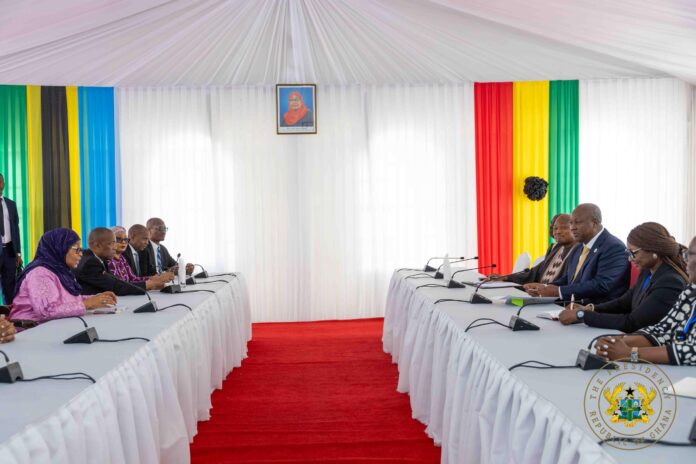
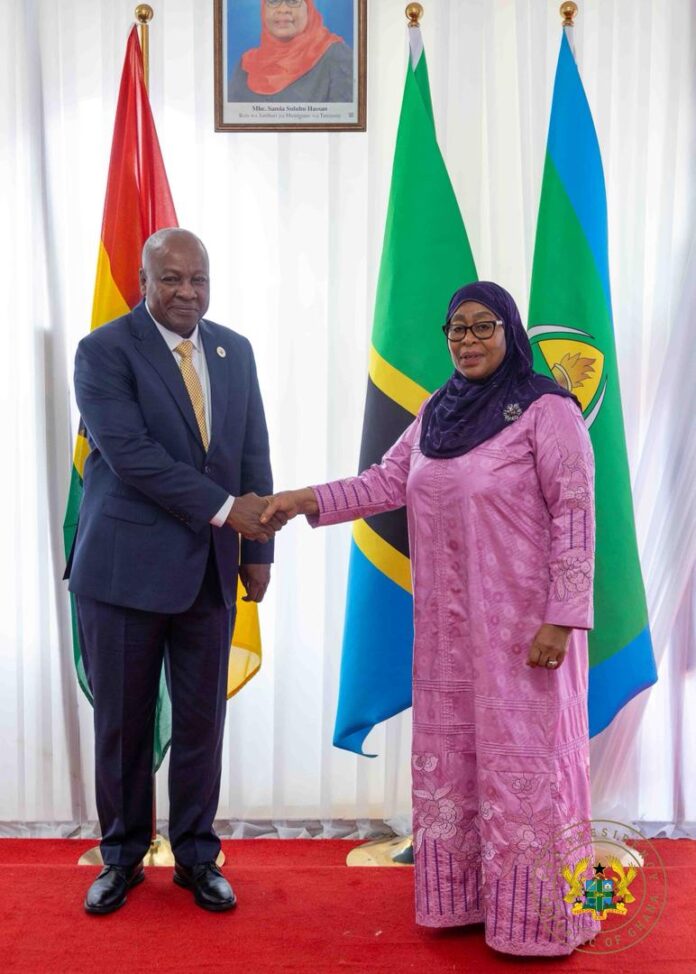
President made the appeal during a bilateral meeting with his Tanzanian counterpart President Samia Suluhu Hassan at the State House in Arusha, Tanzania. 

President Mahama said recent attacks on Iran by United States and Israel, and counter attacks by Iran on the Gulf countries was creating new geopolitical events.  

“We know that these shocks will come.  

But when they come, we must prepare ourselves to make sure that our people are protected. Because as it is, that is the epicenter of global oil supplies,” he stated. 

“And we know when the prices of crude go above a certain amount, it has a negative effect on our countries.  

“And so we call for the cessation of the conflict and the return to dialogue so that we can see peace come back to that region.” 

President Mahama was in Tanzania as the guest of honour at the opening of the 2026 Judicial Year and 20th Anniversary of the African Court on Human and Peoples’ Rights. 

President Mahama holds bilateral meeting with Tanzanian counterpart

0

President John Dramani Mahama has held a bilateral meeting with his Tanzanian counterpart President Samia Suluhu Hassan at the State House in Arusha, Tanzania.

During the bilateral talks, the two leaders acknowledged the historic bond between their Founding Presidents: Osagyefo Dr Kwame Nkrumah of Ghana and Mwalimu Julius Nyerere of Tanzania.

They identified the absence of a Permanent Joint Commission for Cooperation (PJCC) and agreed to fast-track its establishment.

They also discussed possible state visits to formalise several memoranda of understanding (MoUs).

Regarding Economic Transformation and Resource Sovereignty, President Mahama shared Ghana’s success in gold sector reforms: small-scale gold exports rose from 63 tons to 104 tons in nine months, injecting $10 billion into the economy.

He emphasised the need for African nations to exercise sovereignty over natural resources.

President Mahama also announced Ghana’s plan to break from external cocoa financing: from next season, the country will raise local funds to purchase at least 400,000 metric tons of cocoa for domestic processing.

On Tanzania’s Post-Election Situation, President Mahama lauded President Hassan for establishing an independent Commission of Inquiry and planning a Reconciliation Commission.

He said such transparency helped nations to learn lessons and strengthen multiparty democracy.

Concerning Reparations Agenda, President Mahama, as the African Union (AU) Champion on Reparations, confirmed that a resolution recognising the transatlantic slave trade as a crime against humanity will be tabled at the UN General Assembly on March 25.

He acknowledged Tanzania’s firm support for the reparations cause.

President Mahama was in Tanzania as the guest of honour at the opening of the 2026 Judicial Year and 20th Anniversary of the African Court on Human and Peoples’ Rights.

Venture Capital Trust Fund transforms mattress company with Ghc4.5m

0

The Venture Capital Trust Fund (VCTF) has marked a milestone in its mission to strengthen Ghana’s small and medium-sized enterprises (SMEs) by providing GHS4.5 million to transform a local mattress manufacturer from an idea on paper to a full business.

With several failed attempts for foreign funding, the company, ESERB Limited, now operates as a modernised business enterprise with digital tools, streamlined processes, and renewed competitiveness.

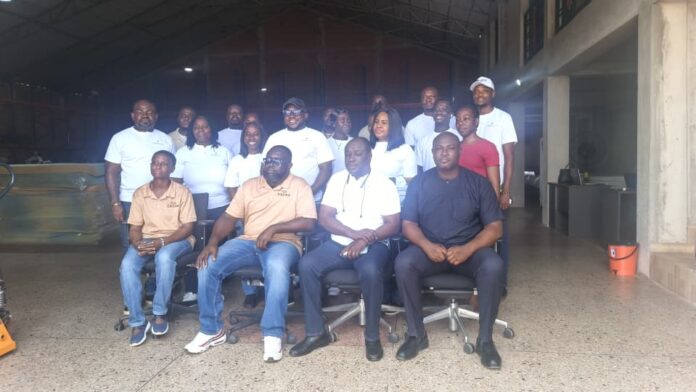
Speaking to the media during a visit by management of VFTC, Mr Emmanuel Ewool, the Chief Executive Officer (CEO), ESERB Limited, said the VCTF investment, through Impact Capital Advisors, turned their paperwork into a fully operational enterprise.

“With financial backing and strategic guidance, the company was able to move beyond conceptual frameworks and begin production, hiring staff, and establishing systems that brought its vision to life from last year,” he said.

He explained that they initially sought investment opportunities abroad, believing that international financiers would be more willing to support their venture, but that never materialised.

“Through the Venture Capital Trust Fund, we were able to access the capital needed to launch our operations. This local financing not only provided the resources to grow but also underscores the importance of Ghanaian institutions in supporting indigenous businesses and fostering economic resilience,” Mr Ewool said.

He emphasised VCTF’s support in addressing gaps in the business plan, including improved financial projections, and alignment with market realities, helping them to secure the financial assistance from Impact Capital Advisors to start the business in 2025.

“This approval was more than a procedural breakthrough. It was a vote of confidence that validated the company’s vision and provided the foundation for its transformation into a thriving enterprise,” the CEO of the indigenous mattress manufacturing company said.

He expressed optimism about future growth, saying they had been positioned to compete at a higher level, with systems in place to meet quality standards, scale production, and attract new partnerships that were previously out of reach.

“As production and sales increase, the company will increase its staff capacity to 50 in the next three years, and run double shifts, with the aim of exporting mattresses and mattresses toppers into West Africa,” Mr Ewool said.

Mr Michael Abbey, CEO of Venture Capital Trust Fund, said the investment by the Government-backed fund demonstrated their broader strategy of empowering Ghanaian SMEs to embrace innovation and the capability of patient capital in creating businesses and decent jobs.

“This business started from scratch – ideation – and this is testament to what VCTF’s long-term capital can do in creating businesses in Ghana, which eventually create jobs and improve livelihoods,” Mr Abbey said.

He said with the company securing its certification from the Ghana Standards Authority, it would enable them to produce more, even for the West African market, adding; “their transformation carries a broader implication for Ghana’s economy.”

“We heard the founder talk about electricity supply and its one major thing we are already discussing with one of our portfolio companies being a solar installation company… so we could see how we integrate these things to help the operations and success of these SMEs we finance in Ghana,” the CEO said.

He noted that the visit reflected the huge role the Fund played in building robust businesses and sustainable SMEs, who remained the backbone of the Ghanaian economy.

CDD-Ghana engages stakeholders on proposed law to curb political monetisation 

0

The Ghana Centre for Democratic Development (CDD-Ghana) has engaged key stakeholders in the Western Region to solicit their inputs on a proposed legislation aimed at curbing monetisation in the country’s political landscape. 

The Draft Model Bill on Political Finance in Ghana is intended to address the growing influence of money in the nation’s electoral and political processes. 

The engagement, which formed part of a series being organised nationwide in collaboration with the National Commission for Civic Education (NCCE), with support from the Foreign, Commonwealth and Development Office (FCDO), sought to promote public understanding of the proposed legislation, highlight its key provisions, and solicit citizens’ feedback to help refine it. 

Held in Takoradi, the programme provided a platform for citizens, political actors, civil society organisations, youth groups and key regulatory institutions, among others, to examine the content, implications and enforcement mechanisms of the proposed legislation. 

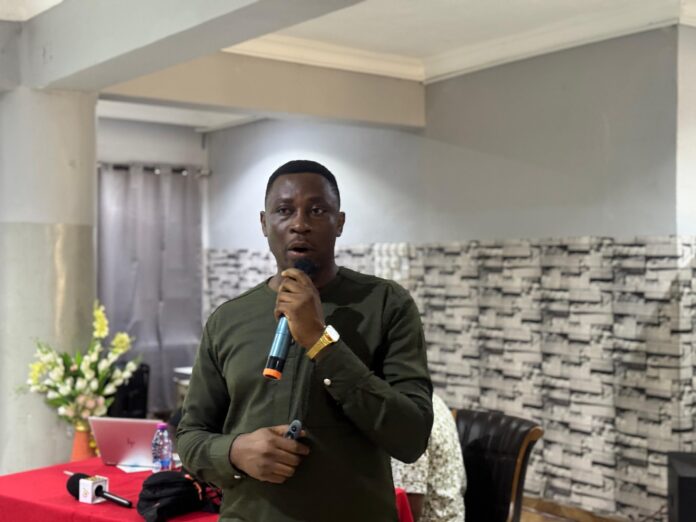
Mr Joseph Oti Frimpong, Programmes Officer at CDD-Ghana, speaking at the event, said Ghana’s democracy was considered one of the best in Africa; however, there were challenges in its practice. 

According to him, one of the major problems was the monetisation of the political landscape and the absence of a comprehensive legal framework to regulate political party financing in Ghana. 

He said to address these issues, CDD-Ghana had developed the Draft Model Bill on Political Finance in Ghana to bridge gaps in existing legal frameworks, such as the lack of spending limits for political parties, absence of contribution limits to parties, and the non-regulation of candidates, among others. 

Mr Frimpong stated that feedback received from the engagement would be compiled, fine-tuned and submitted to the Attorney-General to support the development of a comprehensive political party financing bill for the country, consistent with international best practice. 

Mr Victor Brobbey, Deputy Chairperson in charge of General Services at the NCCE, said vote-buying and the corrupting influence of money had become worrying features of the country’s electoral culture. 

“Silence, indifference and social acceptance have allowed these practices to persist, even when many Ghanaians privately condemn them,” he noted. 

He stated that once politics became transactional, public office risked being treated as an investment that must generate returns, making it harder to sustain a culture of genuine public service and accountability. 

Mr Brobbey said: “The NCCE strongly supports the initiative by CDD-Ghana. Reforms of this magnitude cannot rest on institutions alone; an informed and engaged citizenry is its strongest foundation.” 

He urged citizens and delegates to reject inducements, demand substance over patronage, and hold leaders accountable long after campaigns were over to ensure shared prosperity. 

Participants at the event took turns to share their views and suggestions on the draft bill. 

Ayawaso-East bye-election sees mixed turnout, smooth voting   

0

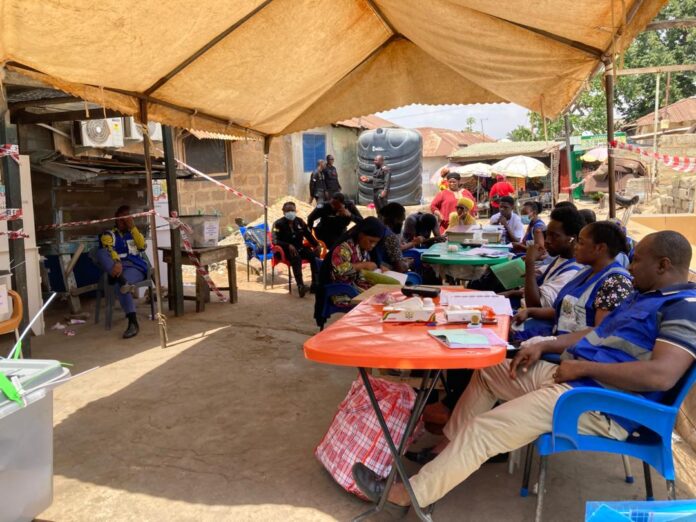
Voting in the ongoing Ayawaso-East by-election is progressing smoothly across the constituency, with early field reports indicating mixed voter turnout at various polling stations. 

A visit to several centres, including Hajia Ladi Mosque, Rashad Islamic School, Kusuntu Line Mosque and the St. Louis Clinic polling station, showed generally peaceful proceedings with a visible security presence by personnel of the Ghana Police Service. 

Electoral officials at the centres described the process as orderly, with no major incidents recorded as of mid-morning. 

At the Hajia Ladi Mosque polling stations, turnout was moderate.  

Polling Station One recorded 95 out of 344 voters, Station Two had 61 out of 244, while Station Three registered 58 out of 248 voters.  

Officials attributed the gradual flow to the tendency of many residents to vote later in the afternoon. 

A similar pattern was observed at Rashad Islamic School, where turnout remained steady.  

Polling Station One had recorded 55 out of 227 voters, Station Two had 49 out of 217, and Station Three registered 55 out of 191 voters.  

At all three stations, queues moved steadily, supported by efficient verification processes. 

At Kusuntu Line Mosque, turnout appeared relatively higher compared to several other centres.  

Polling Station One recorded 104 out of 349 voters, while Station Two registered 94 out of 353.  

Electoral officers expressed satisfaction with the pace, noting that residents in the area typically participated early in the voting process. 

At the St. Louis Clinic polling station, one of the larger centres, had recorded 102 out of 505 voters by mid-morning.  

Despite the high voter population, the station remained calm, with orderly queues and swift processing times. 

These observations contrast with earlier reports from some Kanda-based polling stations within the constituency, where turnout was significantly lower earlier in the day. 

 Fewer than 50 voters had cast their ballots at some stations by 0930 hours, despite a combined voter population exceeding 1,000. Nonetheless, those centres also maintained peaceful and well-managed voting environments. 

Overall, the Ayawaso-East by-election continues in a calm atmosphere, with electoral officials expressing optimism that voter participation will increase as the day progresses. 

Portugal captain Ronaldo sent an ominous seven-word warning by Colombia icon ahead of the 2026 World Cup encounter.

0

Rene Higuita has sparked psychological warfare ahead of the 2026 World Cup by giving a stern warning to Portugal captain Cristiano Ronaldo. The renowned Colombian goalkeeper insists that the Cafeteros are prepared to neutralize the Al Nassr great when the two nations meet in a thrilling Group K match in Florida this June.

Colombian icon Higuita is taking aim at Portugal’s talisman, Ronaldo, ahead of the 2026 World Cup. As the two teams prepare for a mouth-watering Group K game, the man known for the “Scorpion Kick” has made it obvious that Colombia will be hostile to the five-time Ballon d’Or winner.

While appearing at a launch event for a new Colombian national team members’ club, Higuita was asked how Nestor Lorenzo’s side would handle the threat of the all-time leading international goalscorer. Rather than opting for diplomatic platitudes, the former goalkeeper delivered a succinct and pointed message that has quickly gone viral across social media.

“We’re going to take care of him,” Higuita told DSports Noticias.

The fixture, set for June 27 at the Hard Rock Stadium in Miami, serves as a high-stakes reunion for former Real Madrid team-mates: James Rodriguez and Ronaldo. While the duo once combined to devastating effect at the Santiago Bernabeu, they will now stand on opposite sides of the pitch in what is being billed as one of the most anticipated games of the opening round.

The demand for this specific fixture has seen ticket prices skyrocket into the tens of thousands of dollars on resale markets. Fans are desperate to witness what could be the final World Cup chapters for several modern icons, adding a layer of Hollywood-style prestige to a blockbuster match.

Cavan Sullivan is expected to leave Manchester City immediately on a two-year European loan as a former USMNT great urges patience with the MLS wonderkid.

0

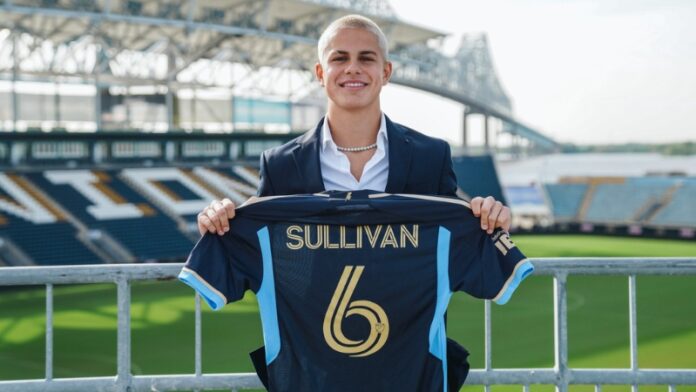
Cavan Sullivan will link up with Manchester City once he turns 18, with the USMNT hopeful being tipped to head out of the Etihad Stadium on a two-year European loan immediately after a move to England is completed. The American wonderkid is just 16 years of age, but Tab Ramos has told GOAL what the long-term future could look like for the hottest of prospects.

Sullivan created history in July 2024, when he made his competitive debut with the Philadelphia Union at the age of 14 years and 293 days. He became the youngest debutant in MLS history, beating Freddy Adu’s record, and has continued to play in senior games thereafter.

It did not take long for prominent European clubs to see his potential, with Premier League giants City moving quickly to ensure that they will benefit from any future progress.

An exciting challenge at the Etihad will not be taken on for another 18 months, with Sullivan celebrating a landmark birthday in September 2027, but there is plenty for him to work on prior to that – both domestically and as an U18 international with the United States.

Quizzed on what the next step looks like for Sullivan, in what is shaping up to be a big year for the youngster, former USMNT star Ramos – speaking in association with bbccharterreview.org.uk – told GOAL: “I think this is another wait and see, where we don’t set the expectations too high. We need to let the player develop. He’s a very smart player. Let’s see if he gets a little bit stronger over the next year-and-a-half. Get a bit stronger and adapt to playing in a league where the game is a lot faster and where people control the ball better. I’d like to see what happens with Cavan Sullivan because I think it’s going to take a little time.”

Leaving his MLS comfort zone and heading to Manchester will be a big jump for Philadelphia native Sullivan. He has, however, cleared every hurdle placed in his path so far and is a confident character that will never be found lacking in self belief.

Pressed on whether the teenager will be ready for City at 18 years of age, Ramos – who has previously coached in the United States’ youth ranks – added: “Do I expect him to be ready for Man City at 18? I think it’s a bit unfair to say that because what player would be ready at 18 to step into Man City? It’s difficult. I’d have to say, we have to wait and see.”

With the expectation being that Sullivan – who has already taken in the odd visit to England – will not be absorbed straight into City’s first-team squad, Ramos said of how the Blues could help a star of the future to settle in European football: “At this point it would be pure speculation because we are looking two years down the road. If I were to look two years down the road and assess what happens with young players and see the level where he is at, the physicality of the game in England, if I had to predict, I’d have to say that he signs for Man City and goes and plays in Holland for a couple of years.”

Trump predicts Iran conflict might take weeks; US citizens in dozens of nations are encouraged to escape.

0

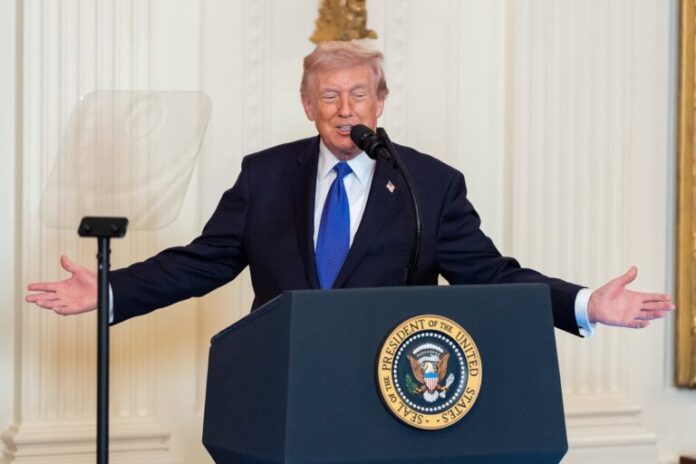
US President Donald Trump has warned that the conflict with Iran may take longer than expected, claiming that Washington has the power to sustain military operations much beyond the four-to-five-week timetable originally indicated.

The crisis, which began Saturday with an attack that killed Iran’s Supreme Leader Ali Khamenei, has quickly spread throughout the region. The US and Israel claim that their goals include destroying Iran’s missile systems, naval forces, and nuclear program, as well as halting its backing for armed organizations. Trump stated that the campaign was “ahead of schedule” but that it would not become an everlasting war.

Iran has retaliated with missile and drone attacks targeting Israel and U.S. allies in the Gulf. Two drones struck the U.S. embassy in Riyadh, causing minor damage, while Saudi Arabia said it intercepted additional drones over its territory. Tehran has also threatened to block the Strait of Hormuz, a vital corridor for global oil shipments.

The violence has spread to Lebanon, where Israeli airstrikes hit Beirut’s southern suburbs following attacks claimed by Hezbollah. Casualty figures continue to climb. Iranian authorities report hundreds killed, while at least 11 people have died in Israel and more than 50 in Lebanon. The U.S. military confirmed six American service members have been killed.

Amid the escalating crisis, Washington has urged U.S. citizens in dozens of countries across the Middle East to leave, as fears grow of a prolonged and widening regional war.