Home Blog Page 235

Religious groups urged to prioritize peace messages on their pulpits 

0

Faith-based organizations and religious groups have been urged to prioritize peace messages in their sermons ahead of the 2024 general elections in the country. 

They should preach peace and encourage their members and followers to adhere to peaceful relationships and harmonious living in their communities to help sustain the country’s peace and unity.

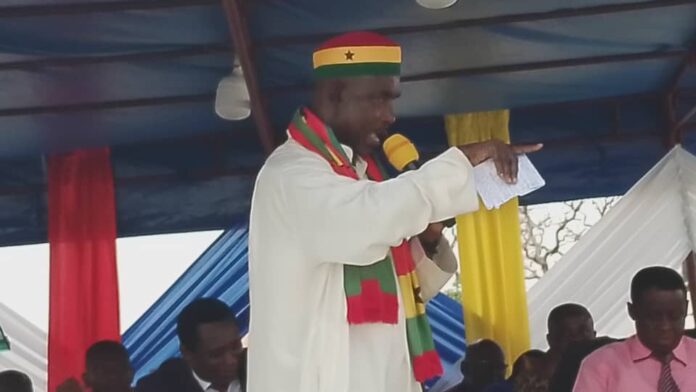
Mr Christopher Owusu Marfo, a Ghanaian peace advocate, who made the call, said every citizen owed it as a duty to preach peace ahead of the December general elections. 

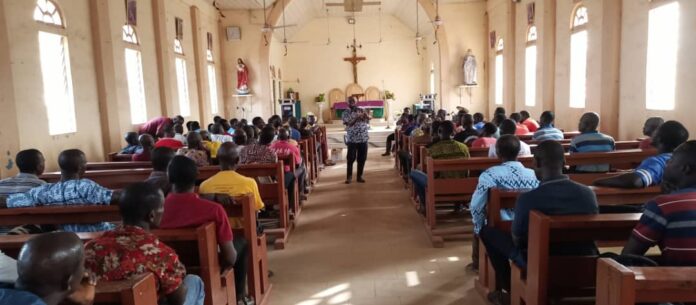
Mr Marfo, who is currently on a peace campaign tour in the Ashanti region, was speaking at a meeting with members of the Bompata Area of the Church of Pentecost in Kumasi. 

He said it was the collective responsibility of Christians and other religious organizations to actively take part in the peace building campaigns to help sustain the peace and stability of the nation. 

Mr Marfo pointed out that Ghana was the only place for Ghanaians and there was the need for every citizen to work to always protect the state. 

There is the need for the citizens to avoid filthy talks, lies, insinuations and verbal attacks that could spark conflict among the people. 

He said it was only an act of vigilance that could help prevent potential triggers of violence in communities. 

Mr Marfo stressed the need for political activists to desist from the use of vulgar and insulting language on their opponents, saying that could create violent situations in the communities.

Apostle Victor Asamoah, Bompata Area Head of the Church of Pentecost, commended the peace advocate for the initiative and prayed for God’s guidance and protection as he continued with his peaceful campaigns across the country. 

Stakeholders urges Government to help address challenges on NHIS to improve coverage

0

Stakeholders urges Government to help address challenges on NHIS to improve coverage  

Stakeholders at a zonal consultation meeting, have called on the government to address challenges facing the National Health Insurance Scheme (NHIS) to help strengthen and improve healthcare delivery. 

They argued that, although the NHIS was a good policy, there were some implementation gaps that needed to be addressed, citing for example that patients on dialysis and diabetic patients, should be considered and allocation made for such ailments. 

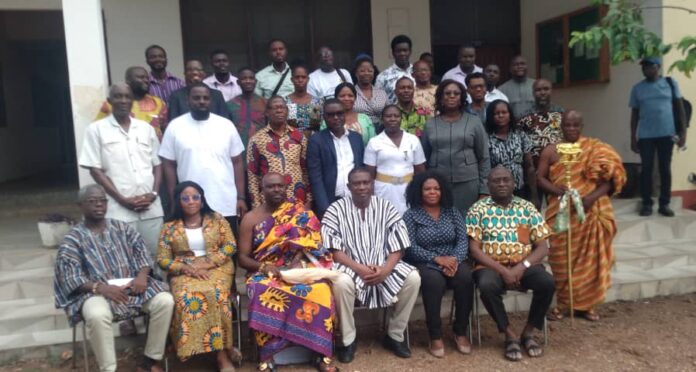
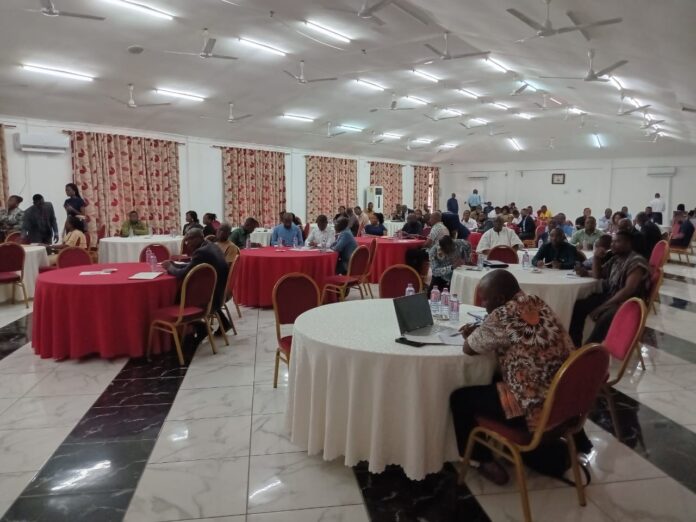
These concerns were raised at a town hall meeting organized by the STAR-Ghana Foundation in Kumasi. 

The meeting formed part of the Manifesto Influencing Initiative by STAR-Ghana for the upcoming 2024 general elections. 

The main objective of the meeting was to provide a platform for diverse stakeholders from the Ashanti, Bono, Bono-East and Ahafo regions, to engage in constructive dialogue on key issues affecting their communities, with the aim of fostering inclusive participation and contribute to the development of comprehensive manifestoes by the various political parties for the 2024 general elections. 

Issues discussed included health, education and social protection. 

The stakeholders also called on the government to offer employable skills to beneficiaries of the Livelihood Empowerment Against Poverty, (LEAP), a social protection policy, instead of allocating meagre stipends which did not guarantee life sustainability. 

This, according to them, would help elevate the lives of these marginalized groups and sustain them for life. 

They also appealed to successive governments to have a permanent programme to leverage on and ameliorate the suffering of the marginalized groups in society. 

Mr. Issac Addae Kusi, a participant from Takyiman, talking about education, said there were a lot of challenges facing the Free SHS implementation. 

He said feeding alone was taking a colossal amount of money from the state. 

It was, therefore, high time the government discussed with stakeholders, including the Parent-Teacher Associations (PTAs), to find ways to assist to help sustain the policy. 

Mr. Prince Debrah, an Assembly member at the Kwadaso Municipal Assembly, also called on the government to insist on the inculcation of disability-friendly facilities at public places. 

He noted that these concerns had been raised by many in society, but there was still a gap in the construction of new public facilities. 

Dr. Ernestina Tetteh, the Project Manager, STAR-Ghana Foundation, said manifestos had become very important because politicians used them to seek audience from electorates. 

She called on parties to ensure their manifestos aligned with development plans for progress. 

More than one million treated bed nets to be distributed in Volta Region 

0

Dr Chrysantus Kubio, Volta Regional Director of Health Services, has announced that more than 1.2 million long-lasting insecticide-treated bed nets would be distributed in the Region as part of this year’s Point Mass Distribution (PMD) campaign. 

The Ghana Health Service and its partners have scheduled the public distribution of long-lasting insecticide nets slated for April 11–15, 2024, following a successful registration of households between February 29 and March 4, 2024,  

Dr Kubio, during a stakeholder engagement and media launch of the campaign in Ho, mentioned that the five-day exercise would cover a total of 466, 857 registered households, with a population of over two million in the region. 

He said the long-lasting insecticide-treated nets distribution campaign, or the PMD campaign was one of the malaria preventive strategies of the national malaria elimination programme. 

The Director said this year’s campaign was in three phases-pre-campaign, campaign, and post-campaign and the universal coverage approach, which stated one net for two persons with focus on households would be used. 

He said the exercise would be carried out in all the 18 administrative districts and municipalities and would serve as a replacement for the bed nets that were distributed between November and December 2021 in the region due to the 3-year effective cycle. 

“As part of this year’s campaign, a new variable “households refused to be registered” has been introduced and a total of 3,563 households have refused to be registered across the region for various reasons.” 

Dr Kubio said the net could be used even after the 3–year chemical life span and 20 washes because the net continued to provide physical protection to users until they acquire a new one. 

The Director said some of the nets to be distributed had dual chemical protection against insecticide resistance in some parts of the country. 

He said the use of insecticide-treated bed nets was a cost-effective approach to reducing new cases and deaths due to malaria and it had been established that about 30 per cent of under-five deaths were prevented using the treated bed nets. 

Togbega Gabusu VII, Paramount Chief of Gbi Traditional Area, who chaired the meeting, said the importance of the fight against malaria could not be overstated. 

He said the Volta Region House of Chiefs recognised the contributions of the distribution campaign in addressing the concerns as malaria remained a major public health concern. 

Togbega Gabusu urged everyone to cooperate to overcome obstacles and guarantee that every home in the Region had access to these life-saving bed nets. 

The Paramount Chief asked all stakeholders to use their networks, resources, and experience to ensure that the bed nets were distributed effectively and fairly to the various communities. 

“Reaching vulnerable groups should be our first concern because they are more at risk of serious malarial consequences, such as expectant mothers and little ones,” he added. 

Mr Roland Glover, the Regional Malaria Focal Person, said the region was performing well in terms of malaria cases, as it was the third lowest with 6.4 cases, after Western Region’s 4.4 and Greater Accra’s 2.0. 

He explained that the PMD was a redesigned campaign by the Ghana Health Service and its partners to employ the universal coverage principles to bring long-lasting insecticide nets into households. 

Mr Glover called for support from all stakeholders, including religious and traditional leaders and the media to secure successful distribution of the nets. 

Invest in African Energy (IAE) 2024: Afentra to Promote Investment in Africa’s Legacy Assets

0

Ian Cloke, COO of Afentra – one of Africa’s leading oil and gas independents – will speak on upstream opportunities within Africa’s growth markets at Invest in African Energy (IAE) 2024 in Paris, as the company seeks to optimize, redevelop and extend the lifespan of mature assets.

In Angola, Afentra is currently expanding its non-operated interests in Blocks 3/05 and 3/05A and recently gained approval for the acquisition of Block 23, focusing on high-quality, long-life shallow water production assets with significant upside. The London-listed company is working to maximize production and reserves, in partnership with operator and national oil company Sonangol, while reducing emissions and fostering synergies across its assets through an innovation-led approach.

IAE 2024   is an exclusive forum designed to facilitate investment between African energy markets and global investors. Taking place May 14-15, 2024 in Paris, the event offers delegates two days of intensive engagement with industry experts, project developers, investors and policymakers.

In Angola and across the continent, shallow water assets represent a strategic point of entry for junior and independent explorers, as IOCs prioritize more capital-intensive developments and divest smaller assets to finance these operations. As a result, Africa’s oil and gas industry has seen a new wave of independents leading exploration in mature markets, including Afentra in Angola, Perenco in the Republic of Congo, BW Energy and VAALCO Energy in Gabon, and Africa Oil Corp. and Panoro Energy in Equatorial Guinea, among others.

“Afentra is leading the redevelopment of legacy assets in Angola, aiming to transition to operatorship and ultimately establish a balanced, pan-African project portfolio. Africa’s mature oil and gas markets present substantial opportunities for investors to optimize production and generate low-risk returns through EOR techniques and innovative technologies,” says Sandra Jeque, Event & Project Director of Energy Capital & Power, forum organizers.

Government injects legislative, policy reforms into internal auditing

0

Dr Eric Oduro Osae, the Director-General of the Internal Audit Agency (IAA), said the Government has initiated major legislative and policy reforms to restructure internal auditing and inject fiscal discipline into the management of public funds. 

The enactment of the IAA Act, 2003 (ACT 658) and a Public Financial Management (PFM) Act 2016 (ACT 921) are to strengthen the position and practice of internal audit in the country. 

Dr Osae made this disclosure in a speech read on his behalf at the opening of a two-day training in Ho on Monday for Public Institutions on the National Adoption of the 2024 Global Internal Audit Standards (GIAS). 

 Also for national adoption are the International Auditing Public Sector Accounting Standards-based Financial Statements and Application of the (PFM) Commitment Control Checklist system.  

He announced that work was progressing steadily to finalise the Internal Audit Restructuring process and the IAA Amendment Bill, 2024, expected to rationalise conditions of service and provide the framework for professional effectiveness. 

The Government had made commitments to implementing some interventions in the 2024 Economic Policy and Budget Statement to improve accountability and transparency in the management of public funds, he said. 

These include verification and validation of arrears identified as of December 2022 before payments are made, undertake expenditure and procurement control measures, enforce sanctions under the PFM ACT and strengthen internal audit functions. 

Others are the use of GIFMIS in all transactions to prevent unbudgeted expenditure, alignment of quarterly budget allotments with cash flow forecast, revision of cash plans for quarterly basis and all ministries, departments and agencies to use GHANEPS for procurement among others. 

He commended Internal Auditors in the public sector for their hard work and professionalism to keep the economy running despite the difficulties.  

Dr Osae said auditors had performed creditably in the first quarter of 2024 compared to same period in 2023, with majority submitting their 2024 Risk-based Internal Audit Work-plans on time.  

A total of 157 work-plans were in default as against over 200 submitted at the close of deadline in the same period of 2023, which captured four Ministries, 59 Departments and Agencies, 32 State Owned Enterprises or SIGA institutions, and 44 GTEC/tertiary institutions and 21 metropolitan, municipal and district assemblies. 

He entreated internal auditors to support external auditors, management of institutions and audit committees to ensure adherence to sound management practices. 

Key of the reforms was the set-up of statutory audit committees for over 99 per cent public sector institutions and review in 2023 of new guidelines for effective functioning of committees. 

Dr Osae said the national adoption of the new International Professional Practices Framework (IPPF) of GIAS issued by the IAA Global and the move from conventional pre-auditing to full scale risk-based audit system was another leg. 

On National Adoption of Global Internal Audit standards in Ghana, Mr Benjamin Adjetey, Director, Training, Research, Monitoring and Evaluation, IAA, said the Global Internal Audit Standards 

 or the new International Professional Practices Framework adopted was to guide public sector internal audit practice was in line with Global standards. 

The module objective was to provide a roadmap for adoption of the Global Internal Audit Standards 

 by IAA for public sector internal audit in accordance with the Internal Audit Agency Act, 2003 (ACT 658) effective January, 2025. 

He urged internal auditors not to compromise ethical professional standards governing their work. 

Participants include heads of public institutions, directors and staff of the various audit units, principal spending officers and account holders as well as audit committee members. 

Israel’s Gaza withdrawal hints at what comes next

0

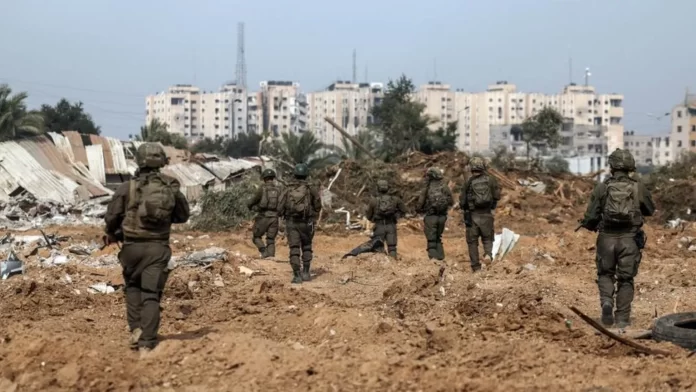
But to a world that has watched the intensity of Israel’s bombardment, the idea that there was now just one brigade left in the entire enclave seemed to signify some major shift in the war.

And then there was the timing of the announcement – on the very day that marked the grim milestone of six months since the Hamas-led assault on Israel ignited this latest and bloodiest phase in the conflict between Israel and the Palestinians.

“Don’t read too much into it,” a spokesperson for the Israeli prime minister’s office told journalists the next day. Avi Hyman stressed how small the distances involved are and that the Israel Defense Forces (IDF) would therefore continue to be able to take whatever action it deemed necessary, with or without troops stationed inside Gaza.

As if to prove the point – just hours later, the Israeli army said it “eliminated” a senior Hamas operative, Hatem al-Ghamri, in an air strike.

Gazans return to scenes of devastation in Khan Younis

The Israeli media has, however, responded very differently.

In the widely read and right-wing Israel Hayom, the paper’s diplomatic correspondent Ariel Kahana tied the troop withdrawal to pressure on the Israeli government to agree a ceasefire deal with Hamas in the latest round of talks.

“The formal reasons offered by Israeli spokespersons for halting the war were operational in nature, but every intelligent person can see that the timing is hardly coincidental. Ahead of critical talks, the Israeli capitulation was designed – without saying so explicitly – to signal to Hamas that Israel was being very forthcoming with it from its perspective.”

Ben Caspit in the more centrist Maariv newspaper was even more forceful in his interpretation of the move.

“If you were to ask Netanyahu (and he was asked), this was done to prepare for the promised operation in Rafah… There is a second explanation, one that has been reported all over the world in every possible language. By that account, the 98th Division’s withdrawal from Khan Yunis is linked to talks for a hostage deal.

“Serious media outlets around the world have reported that the conversation between President Biden and Prime Minister Netanyahu was dramatic. Biden led Netanyahu to understand that he wasn’t a pace away from victory, but a pace away from the final destruction of the alliance between Israel and the United States.”

In public at least, Mr Netanyahu has continued to ratchet up the rhetoric on Rafah, saying that a date has been set for the operation. His defence minister, Yoav Gallant, has been more nuanced, telling army recruits that now is an “opportune” time to do a deal with Hamas.

But he stressed that a ceasefire would not be the end of the war: “There will be difficult decisions and we will be ready to pay the price in order to get the hostages back, and then return to fighting.”

The fighting is likely to continue, as Mr Gallant says, but the form it takes may change substantially. With criticism of the way the war has been conducted growing from Israel’s most powerful ally, the US, the drawing down of forces in Gaza seems likely in part to be aimed at showing the Biden administration that Israel is listening to its concerns over civilian casualties and life-threatening aid shortages.

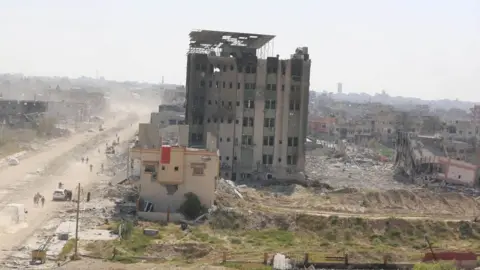
An end to bombardments that have reduced cities to rubble, as has been seen in the latest images from Khan Younis, may go some way to restoring the customary whole-hearted support for Israel from Washington.

But that will undoubtedly be tested again, if the “future operations” that the Israeli army says troops are being given rest and recuperation to prepare for means a full-scale assault on Rafah where Israel believes Hamas’s remaining military forces are now based, among more than a million displaced Palestinians.

Getty Images A ruined building in Khan YunisGetty ImagesMuch of Khan Yunis has been left in ruins after intense fighting

There may be a belief in the Israeli government and military that a significant number of that population, squeezed into barely functioning shelters, may start moving back to their homes now that the bulk of Israeli troops is gone.

But what Palestinians have found on their return to Khan Younis is mass devastation, with many of their homes reduced to rubble.

They have described how Gaza’s second city is now unliveable, not even fit for animals, as some have put it. So a major exodus from Rafah, which would make any Israeli operation against Hamas less likely to cause a new catastrophic toll of civilian casualties, may not be on the cards.

But the “further operations” may also relate to the conflict on Israel’s northern front with Hezbollah in Lebanon. That confrontation has been steadily escalating since 7 October. And there are fears that it could become far more intense, following the suspected Israeli strike in Damascus that killed several senior commanders in Iran’s powerful Revolutionary Guards last week.

Hezbollah is closely allied to Iran and has matched the rhetoric coming from Tehran, vowing revenge. The Israeli army has recently said that it has substantially strengthened its Northern Command. So, this too may have played a part in the troop withdrawal from Gaza.

Whatever the true motives were – and they are likely to have involved a number of interlocking factors – it is unlikely that Israel’s military engagement in Gaza is anywhere close to coming to an end, with Hamas fighters already having shown their capacity to regroup in areas that had been subjected to the heaviest onslaught from the IDF.

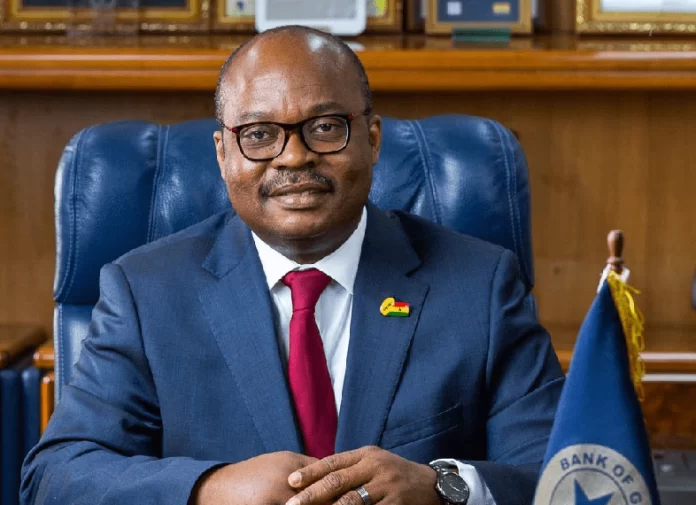
Bank of Ghana Governor denies ever describing NDC Minority as hooligans 

0

Dr Ernest Addison, Governor, Bank of Ghana, has denied an alleged report by an international media that he described the National Democratic Congress (NDC) Parliamentary Minority Caucus as hooligans during their #OccupyBoG protest march. 

The Minority held the #OccupyBoG protest march in Accra on October 5, 2023, to back their demand for the immediate resignation of the Governor and his two deputies for their mismanagement of the Central Bank. 

However, speaking at the Public Accounts Committee (PAC) of Parliament public hearing on Monday, Dr Addison said the use of the word “hooliganism” was an interpretation by the international media house and not an accurate representation of his words. 

“This is what I am coming to say that those who know me and know my character…you have not heard a single word of a recorded message with me describing Parliamentarians in that manner,” he stated. 

“This was a foreign journalist’s description of the conversation we had and I disowned it.” 

Queenmother pledges fight against teenage pregnancy in Tsito Awudome

0

Mamaga Abla Migbloevor II, the newly enstooled Queenmother of Dededo in the Tsito Awudome Traditional Area in the Volta Region, has taken strides to curb the menace of teenage pregnancy in her enclave.


Mamaga Migbloevor II told the Ghana News Agency (GNA) after she ascended the throne as the Queen of the area, after 40 years of the passing of Mamaga Migbloevor I, said the rate at which young girls were dropping out of school in the enclave due to teenage pregnancy was alarming and needed swift intervention of the traditional authorities to curb the situation.


Mamaga Migbloevor II indicated that she would work closely with the eelevant stakeholders to organize sensitisation engagements for the teenagers in the area to enlighten them against the menace and its negative impacts.


She added that her priority was to see young girls in the area become the renowned future leaders of the country.


Mamaga, however, lamented that most of these prospective leaders were now school dropouts because of teenage pregnancy and she would work hard to stop that situation.


She implored parents and guardians in the area to play integral roles in the lives of their wards to stop the teenage pregnancy situation.


Togbe Davor II, the Chief of Dededo, pledged his commitment to support Mamaga Migbloevor’s initiative to curb teenage pregnancy in the area.


He also welcomed Mamaga Migbloevor II and stated that her inclusion in Chieftaincy issues in the Tsito Awudome Traditional Area would help accelerate development.


“We are all happy to have our new Queen Mother after 40 years. We believe she would put in her best for the growth of the Traditional Area. However, my elders and I are solidly behind every good initiative she would bring to the table,” Togbe Davor assured.


Togbe Davor also called on the people of Dededo to give Mamagah Migbloevor the necessary support to foster her initiatives for the growth of the area.

MSGBC Oil, Gas & Power Returns to Dakar in December 2024

0

The MSGBC Oil, Gas & Power 2024 conference and exhibition – a regionally-focused event dedicated to the energy success of Mauritania, Senegal, The Gambia, Guinea-Bissau, and Guinea-Conakry – returns to Dakar for its fourth edition on December 3-4 this year.

In collaboration with the MSGBC member-countries’ respective energy ministries, this year’s edition is held in official partnership Senegalese petroleum company Petrosen; oil and gas strategy committee COS Petrogaz; and energy advocacy group the African Energy Chamber.

With sizeable offshore oil and gas reserves, abundant solar and wind resources and opportunities in agriculture, mining, and infrastructure development, the MSGBC region emerges as an attractive market to invest in. Collaboration has been at the forefront of the region’s energy success, evident through the pipeline of projects expected to come online in 2024. Ongoing developments underscore the potential for million-dollar investments while creating new opportunities for regional and global companies.

“We invite delegates to embark on a transformative journey at the MSGBC Oil, Gas & Power conference and exhibition in 2024, where the spotlight will shine on impressive projects, developments, and investment opportunities within the bloc. Join us to unveil the boundless potential of the basin, which transcends borders to shape the future of energy collaboration,” stated Devi Paulsen-Abbott, CEO of event organizer Energy Capital & Power.

Once operational, Senegal’s inaugural offshore oil project, the Sangomar field development – which anticipates first oil in mid-2024 -, will offer a wealth of prospects for E&P companies, technology and service providers and investors from the African and global landscape. Meanwhile, spanning exploration, production, power generation and refinery development, initial production of the cross-border Grand Tortue Ahmeyim natural gas field is also expected in this year. Opportunities extend to development of the country’s flagship BirAllah offshore gas field, which is expected to start production in 2028.

In addition to oil and gas, the MSGBC region offers a wealth of opportunities in green energy. In Mauritania, renewable energy developer CWP Global is constructing a $40 billion green hydrogen project comprising 18 GW of wind capacity and 12 GW of solar. The Gambia is actively pursuing renewable energy initiatives, aiming to achieve universal access to electricity by 2025. The country is also venturing into green hydrogen production, capitalizing on untapped solar and wind resources while offering commercial prospects for energy exports to international markets.

Prime investment opportunities in Guinea-Bissau’s agricultural and forestry sectors will be made available during this year’s event. Recognized as West Africa’s green lung, the country is well-positioned to tap into the growing carbon credit market. Meanwhile, Guinea-Conakry’s mining sector is a robust industry – the country holds the world’s largest reserves of bauxite at 7.4 billion tons alongside other minerals -, with numerous foreign companies engaged in the development of essential minerals for the global energy transition.

MSGBC Oil, Gas & Power 2024 will also place Morocco’s energy vision center-stage as the country strives to lead the region towards global partnerships and large-scale developments. Driven by a commitment towards renewable energy and sustainable development, Morocco’s green energy space is ripe for investment for public- and private-sector players eager to participate in driving energy security worldwide.

This year’s MSGBC Oil, Gas & Power conference features a comprehensive program covering every segment of the regional value chain, where investors and stakeholders converge to unlock new frontiers in sustainable energy development. As the region advances towards first oil and gas production, MSGBC Oil, Gas & Power 2024 invites movers and shakers from across the West African and global energy industry to foster partnerships, sign deals, and advance project developments.