Home Blog Page 250

‘One District, One Factory’ created 170,000 jobs — Prez Akufo-Addo

0

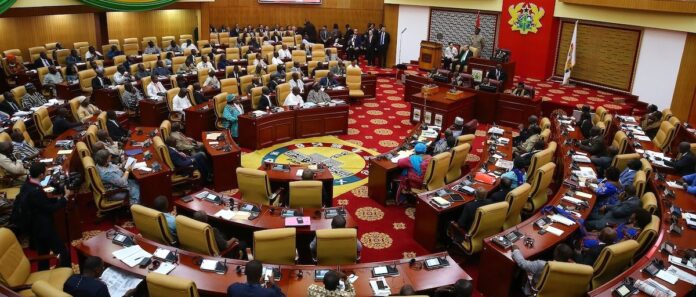
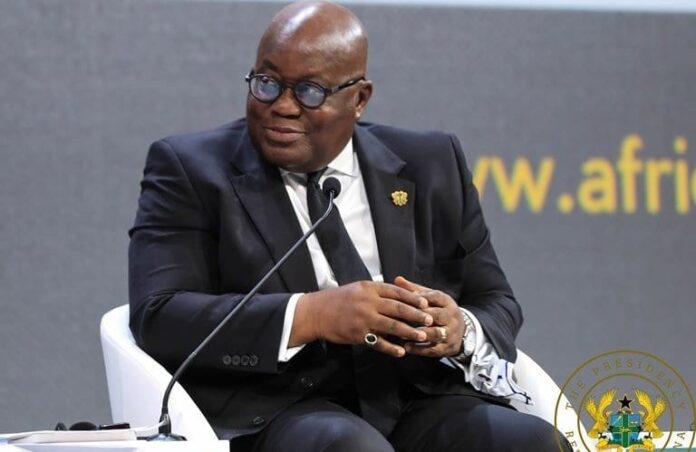
Some 170,000 jobs have been created by companies under the government’s ‘One District, One Factory’ (1D1F) Programme, President Akufo-Addo has said.

Delivering his seventh State of the Nation Address in Accra on Tuesday, he said the policy had led to the development of 321 1D1F projects.  

The number, he said, comprised projects by 211 new medium to large scale factories and support for 110 existing companies to expand production.

He said the government, between 2019 and 2020, had approved a number of incentives and duty exemptions to selected companies to support the implementation of the 1D1F Programme. 

“In 2019 and 2020, thirty-seven (37) 1D1F companies were granted 25 exemptions approval by this August House (Parliament). However, from 2021 to date, no exemptions have been granted.”

The President, therefore, urged Parliament to “consider and approve all outstanding exemption applications as a matter of urgency to send positive signals to the business community.”

He said the 1D1F programme was the “cornerstone” towards the  country’s industrial  transformation and “demonstrates how government  can  stimulate  and  incentivise  the  private  sector  to  expand  and  diversify manufacturing  across  the  country.”

“It is significant to note that, within the relatively short span of six years, Government has directly intervened to stimulate interest in, and support many private sector business promoters to make significant investments in manufacturing under the One-District-One-Factory Programme.

“…These business promoters have so far invested in one hundred and forty-two (142) districts across the country, across all sixteen (16) regions, and achieving 54% district coverage. The aspiration is to bring a 1D1F project to every district,” he stated.

Government to set up US$450m manganese refinery, ban export of raw bauxite

0

The Government is to set up a US$450 million refinery to refine manganese produced in the country.

The country would also ban the export of bauxite in its raw state by passing a new Legislative Instrument (LI).

Again, the government would give priority to Ghanaian investors who would want to acquire Newmont Corporation’s third largest mine in the country – Akyem Mine, in the Eastern Region.

Those efforts, President Nana Addo Dankwa Akufo-Addo said were aimed at ensuring value for money and speeding up the nation’s industrialisation agenda.

The President said this during his delivery of the 2024 message of the State of the Nation in Parliament on Tuesday, February 27.

“We are implementing the Four Project Agenda of the Ghana Integrated Aluminium Development Corporation (GIADEC), with Projects one and two having already taken off and last month, we signed an agreement for the implementation of the Project,” he said.

“We will lay before this august House, at this First Meeting of this Session of Parliament, a Legislative Instrument to prohibit the export of bauxite in its raw state. We are, also, in the concluding phase of discussions for the establishment of a four hundred and fifty million US dollar (US$450 million) refinery to refine the manganese we produce,” he said.

To add value to the volumes of gold produced in the country, the President said a 400 kilogramme capacity gold refinery had been constructed through a public private partnership, and was at the final stages of negotiations for a London Bullion Market Association (LBMA) Certificate.

“For our green minerals, including lithium, we have put in place a policy for their exploitation and management, to ensure beneficiation across the value chain of these critical minerals,” the President said.

On the Akyem Mine, which produced 420,000 ounces of gold in 2022, President Akufo-Addo said: “As part of Government’s policy to indigenise the mining sector, we will engage with Newmont to give priority to Ghanaian investors who will want to acquire this mine to ensure that our mineral resources better benefit the Ghanaian people.”

He said last year, Ghana regained her position as the leading producer of gold in Africa, with four million ounces,  having overtaken South Africa.

“This is as a result of the progressive policies we have been implementing, which have led to the revival of dormant mines like the Obuasi and Bibiani Mines, and the expansion of existing ones,” he said.

“The reduction in withholding tax on unprocessed gold by small scale miners, from three percent (3%) to one and a half percent (1.5%), has resulted in some nine hundred percent (900%) increment in gold export from the small-scale sector, over the last two (2) years,” the President noted.

The President said his government was committed to protecting the nation’s forest and wildlife resources, while reclaiming degraded forests.

In that regard, he said 42 million trees had been planted over the last three years, under the Green Ghana Project, whilst 690,000 hectares of degraded forest had been cultivated between 2017 and 2022, under the Ghana Forest Plantation Strategy.

Ghanaian Universities urged to increase understanding of foreign cultures

0

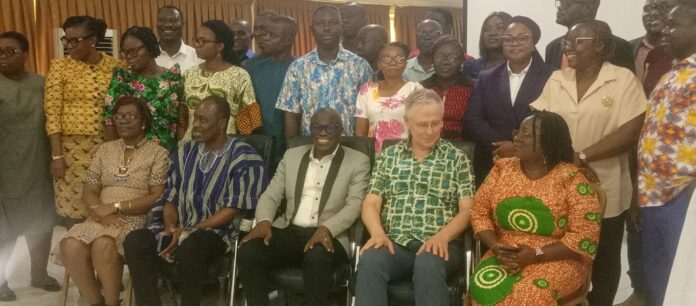
Professor Peter Mayer, an international economics professor at the University of Applied Sciences, Osnabruck, Germany has called on Universities in the country to increase understanding of foreign countries and cultures to improve enrolment of foreign students.

“Since not all students want to or cannot be mobile, the university has to provide opportunities for international and intercultural learning at home”, Prof. Mayer stated when he facilitated the “2023/2024 National Multiplication Training (NMT) Project” for Technical Universities and other higher educational institutions at Fiapre, near Sunyani.

Last year, four Senior Faculty members from four Universities won a grant from the German Academic Exchanges Service (DAAD) to host the 2023/2024 NMT Project in the country.

They are Dr. Mrs. Vida Korang of the Catholic University of Ghana (CUG), Dr  Sewoenam Chachu, of the University of Ghana, Prof. Anthony Amoah of the University of Environment and Sustainable Development (UESD) and Prof. Joseph Adjei of the Ghana Institute of Management and Public Administration (GIMPA).

The NMT under the ‘Dialogue on Innovative Higher Education Strategies” (DIES) of DAAD sought to promote the development of higher education management in developing countries.

As the world becomes a global village, Prof Mayer indicated the need for universities and other higher educational institutions in Ghana to also deepen understanding of foreign countries and culture, saying it was those universities that would be able to meet societal expectations, actively shape the globalisation process and guarantee their own competitiveness.

The theme for the three-day training, which ended on Friday, was “Effective    Internationalization Strategies in Technical Universities” and attended by professors and faculty staff of the various TUs and other higher education institutions in the country.

It exposed the participants to emerging global trends and further provided hands-on training and discussions with peers and experts.

Prof Mayer said universities in the country ought to do more as well to enhance the quality of teaching, learning and research, learn about global academic trends and processes, establish, and expand global networks and enhance their reputation at the global level.

“The majority of our students will not spend a full semester abroad, so finding ways to expose them to global and intercultural issues is extremely important”, he stated, saying, universities could only fulfil their roles if they saw themselves as an integral part of the international world of ideas.

Universities constantly need to reflect on their specific form of international orientation and need to keep this diversity of motives in mind when working with others, trying to get funds and invest in projects.

Dr Mrs. Vida Korang, a Senior Lecturer at the CUG and the Project Team Lead, later told the Ghana News Agency the overall objective of the training was to promote the development of the TUs and other higher education institutions.

Somanya District Hospital faces electricity shutdown over GHC1.4 million debtSomanya District Hospital faces electricity shutdown over GHC1.4 million debt

0

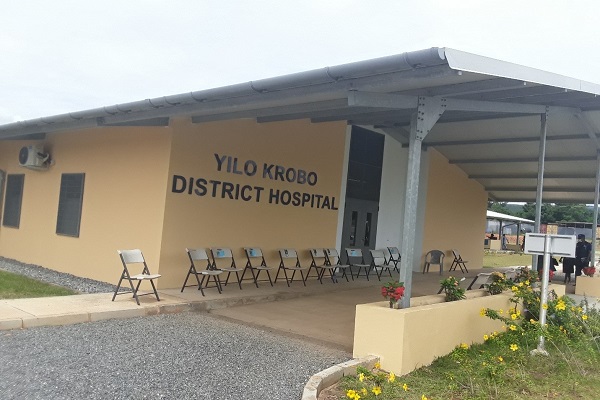
The Somanya District Hospital in the Yilo Krobo Municipality of the Eastern Region is at risk of losing power due to an unpaid debt of about GH₵1.4 million to the Electricity Company of Ghana (ECG).

This financial strain is taking a toll on the hospital’s operations and healthcare services delivery to the people of the area and the nearby communities.

In an interview with the Ghana News Agency, Ms Irina Ofei, Director of the Ghana Health Service, Yilo Krobo Municipality, said urgent action was needed to resolve the issue and secure the facility’s power supply.

She expressed shock at the power distribution company’s decision to disconnect the hospital, which provided essential services, from the national grid.

This comes after the ECG informed the hospital of its intention to disconnect power last week for failing to pay the accumulated bill since May 2022.

She expressed disappointment over the situation and urged the power distribution company to show leniency while the hospital management deals with the matter.

“The hospital will be marking two years in April 2024, and we can’t work without electricity,” she said, adding that; “We are providing essential services to Ghana, so I will urge the management of the ECG to give us some time to pay the debt.”

Me Ofei said the hospital was unable to cover the nearly 1.4 million Ghana cedis debt at the moment, but she guaranteed that the payment would be made.

She called for government’s support in tackling the current issues to prevent interruption in health service delivery.

“I am appealing to the government and higher authorities to help waive this amount because the hospital can’t raise the said amount any moment from now.”

Ms Sekyiwaa Mensah, the Public Relations Officer (PRO), ECG Tema region, informed the Ghana News Agency that the hospital had not made any payments to the company since April 2022.

“It has an outstanding debt of GHC1,398,955.40 to the ECG company,” she said.

The notice of disconnection was served on the facility on Thursday, February 22, 2024, indicating that the hospital had a 14-day ultimatum to pay or have its facility disconnected from the national grid.

The PRO said the notice formed part of ECG’s ongoing nationwide debt recovery exercise.

Navrongo is research friendly – Director

0

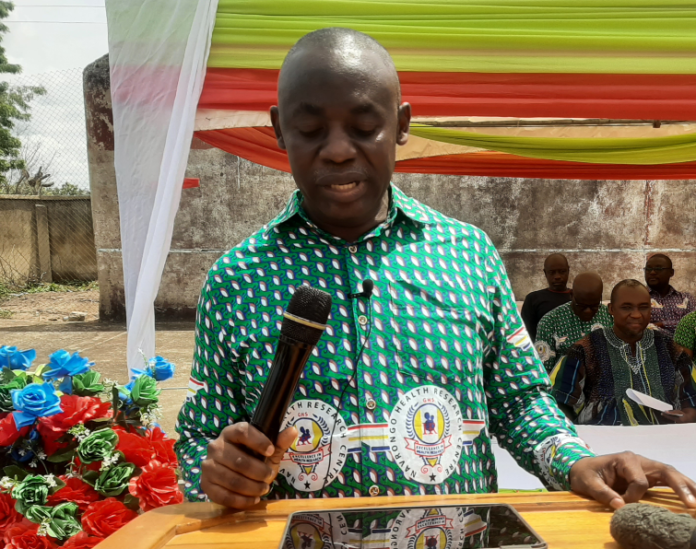
Dr Patrick Odum Ansah, the Director of the Navrongo Health Research Centre (NHRC), says Navrongo, the Kassena-Nankana Municipal capital of the Upper East Region is one of the friendliest towns for research.

He said residents of Navrongo had lived with Researchers from the Centre for decades and were comfortable with the excellent record of accomplishment of the NHRC in research over the years.

“Navrongo is one of the friendliest places for research, because the people have lived with the Researchers, they are sure of what they can do and they know their records,” he told the Ghana News Agency in an interview, after his opening address at a two-day annual scientific review meeting of the Centre.

The meeting was on the theme, “Exploring the synergies between health research and academia for development and excellence in tertiary education.”

He said the NHRC after its successful continuous operation in Navrongo and its environs over the years, extended its services to the Bongo, Builsa North and South Districts, “For now, we have done some studies in Bongo, we have gone to Builsa North, Builsa South and we are working there.”

He said the initiative to extend their services to the three Districts meant that more people would be available for research, and that the more the burden of research was distributed among the entire population, the more useful it was.

Dr Ansah said “You cannot use only a few people to do research. The general principle of ethics is that, as much as possible, all those who are going to use the product should take part in the research. As we expand more, we are bringing this ethical principle to bear.

“That is, everybody will take part in the research, its risks, and the benefits. So Builsa is under our care now, in Bongo, we do some studies there,” he said.

The Director said management would consider expanding its work beyond the Upper East to the North East and Savannah Regions to conduct as many studies as possible, if the Centre got funds, “The benefits of this is that it injects some investment into the health system.

“Healthcare becomes better and general health knowledge among the population increases. The contact with the communities alone improves the health of the people, and so if we can expand beyond our borders, it will bring better benefits to the whole population.” he added.

Speaking on the theme of the meeting, Professor James Akazili, the Keynote Speaker, said in an era marked by unprecedented challenges and opportunities, the role of research centres and academia was more critical than ever.

“It is a call that transcends borders, disciplines, and institutions, echoing the collective need for knowledge, innovation, and collaboration. In our current interconnected world, challenges know no boundaries.

“Thus, whenever we grapple with climate change, global health crises, limited health funding or resource allocation, the search for effective solutions demands collaboration that extends beyond geographical and disciplinary confines,” he said.

Professor Akazili said the call for industry and academia was a call to unite, to pool their collective intellect and resources in pursuit of solutions that could impact the entire globe.

“Over the years, the role of academia has become more crucial than ever; we find ourselves in a world marked by technological revolutions, global knowledge production and complex challenges that demand innovative solutions.

“In this context, the academic community serves as a vanguard, equipping the next generation with the requisite tools, skills, and knowledge to navigate this dynamic terrain,” the Keynote Speaker said.

GACC on outreach to educate against election monetization

0

The Ghana Anti-Corruption Coalition (GACC), in collaboration with the Ghana Integrity Initiative and ACEP, is implementing a project dubbed: “Safeguarding Ghana’s Stability in the Face of Serious and Organized Crime Threats during the 2024 Elections”.

The project is to create awareness about the challenges posed by electoral corruption and serious crimes.

Ms Beauty Emefa Nartey, the Executive Secretary of GACC, who made this known to the Ghana News Agency (GNA) in Takoradi, indicated that vote buying marred the cherished democratic credentials of the state.

 “Notwithstanding the modest progress in electoral politics, issues of abuse of office, misuse of state resources, election related corruption, vote buying… had the propensity to mar the future of not only the development of the human and social-economic capital but the cherished democratic credentials of the state,” Ms Nartey said.

 “Transactional elections – vote buying by political parties is becoming a security issue and a means for economic organized crime to thrive.”

“It is believed that high-profile social influencers invest their ill-earned monies in the process to protect their crimes aside engendering the political space and sustainable development”.

Ms Nartey said the cost of elections in Ghana was becoming very expensive requiring a candidate to invest thousands of cedis even at the primaries levels and thus promoting monetization.

The goal of GACC was to, among other things, create awareness on “Safeguarding Ghana’s Stability in the Face of Serious and Organized Crime Threats during the 2024 elections,” she said.

 The project would educate the public on the need to reject monetization of the electoral processes, which continued to negatively affect the progress of society.

“Voting for the candidate with the highest bid to win, often times deprived the constituents the space for fair competition, competence as against affluence, self-promotion as against patriotism.”

 She said the likelihood of the political class to overspend in the 2024 elections must be a matter of concern to all Ghanaians, adding that it was very important that Ghanaians rose against the practice and support the advocacy to stem it.

“We are the very people who pay in disguise with the lack of proper roads, hospitals, schools and better working conditions in the long round,” the GACC Boss said.

She, therefore, requested that political parties made the public aware of their sources of funding for their political activities to ensure that the modest gains made in the country’s democratic process were safeguarded.

Let’s reflect on Dr Kwame Nkrumah’s achievements for Ghana – Kofi Buah

0

– Mr Emmanuel Armah-Kofi Buah, the Deputy Minority Leader in Parliament, has asked Ghanaians to reflect on the dedication and contributions of Ghana’s first President, Osagyefo Dr Kwame Nkrumah, to the liberation and progress of Ghana and Africa.

A statement signed by Mr Buah and copied to the Ghana News Agency to mark the 58th anniversary of the overthrow of the late President, said: “The ever-regrettable coup that ousted the transformative leader from power and derailed our economic transformation remains a dark chapter in our country’s history”.

The statement said many years after his overthrow and the subsequent death in a foreign land, Dr Nkrumah’s legacy would continue to inspire generations even yet unborn.

He said as the nation honoured Dr Nkrumah and remembered the unfortunate events leading to that dark 24th Day of February 1966, all citizens must remain recommitted to upholding his ideals for a better Ghana and a prosperous Africa.

“Let’s ensure the sacred vision lives on.”

Kyei-Mensah-Bonsu will be warmly missed—Ato Forson

0

Dr. Cassiel Ato Forson, Minority Leader, expressed sadness at Osei Kyei-Mensah-Bonsu’s resignation as Majority Leader.

He underlined the amazement in Parliament at the unexpected manner of the Suame MP’s departure from leadership.

However, Dr. Ato Forson highlighted the necessity of respecting Kyei-Mensah-Bonsu’s choice and refraining from criticism.

In his address to Parliament following the former Majority Leader’s formal resignation announcement, Dr Ato Forson commended Kyei-Mensah-Bonsu’s extensive knowledge and experience in Parliamentary practices and procedures, recognizing that his expertise is unmatched by few.

“Having been Deputy Majority Whip, Majority Chief Whip, Deputy Majority Leader and Minister of State for Parliamentary Affairs, Minority Leader, Majority Leader and Minister for Parliamentary Affairs, he rose full cycle through all the ranks of both Minority and Majority front bench of this august House.”

“Many, including my good self, will attest to his outstanding leadership, brilliance rigour and attention to detail. His uniquely humane and personable nature have always commanded the respect and admiration of his colleagues, he said.

Osei Kyei-Mensah-Bonsu, the Member of Parliament for Suame, formally announced his resignation as Majority Leader on Friday during a session in Parliament.

He clarified that his decision was entirely personal and not influenced by any external pressure, contrary to speculations in some media reports.

Mr Kyei-Mensah-Bonsu urged members of the Majority Caucus to offer their full support to his successor, Alexander Afenyo-Markin, by providing all necessary assistance.

“On Wednesday, February 21, at a meeting with the caucus and the President, I formally announced my decision to resign as the Majority Leader in order to still the storm and facilitate the peace and unity for the party at this time,” he said.

We’ll devise a strategy to keep us together – Osei-Owusu discusses leadership reshuffle

0

The First Deputy Speaker of Parliament and Member of Parliament for Bekwai, Joseph Osei-Owusu, often known as ‘Joewise,’ has emphasised the necessity for the Majority caucus to address possible repercussions after the departure of the outgoing Majority Leader, Osei Kyei-Mensah-Bonsu.

In an interview with media in Parliament on Thursday, February 22, the MP for Bekwai said, “The caucus will regroup and determine where to go. I am certain that the caucus will address all of these repercussions, including the impact of our leader’s resignation.

“We will examine the process of selecting or electing a new leader. And if there are any ramifications or bad repercussions on our caucus, we may determine and prepare a strategy that will keep us together.”

He expressed his wish that the outgoing Majority Leader would have stayed on until the end, describing him as extremely hardworking.

“He can sit from morning till morning if there’s work to be done. I am personally disappointed that Kyei decided to stand down; he has been a fantastic leader, and he is an extremely hardworking person. And I would have wished that he stayed on to the end.”

Kyei-Mensah-Bonsu voluntarily resigned from his role with immediate effect, a decision revealed at a crucial meeting of the majority group on Wednesday, February 21.

The meeting, held at the Jubilee House’s banquet hall in Accra, was heavily guarded and convened by President Nana Akufo-Addo.

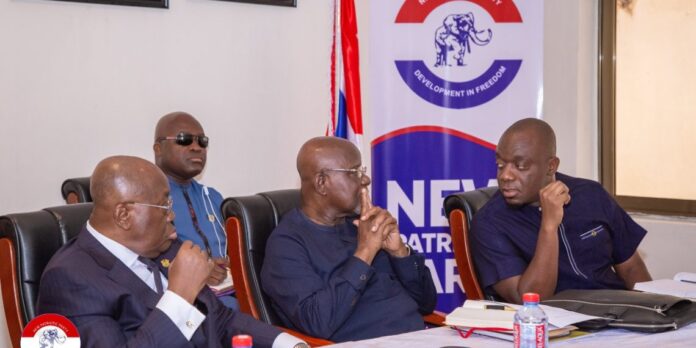
The gathering, attended by the majority of the group’s members, was called amidst escalating tensions within the New Patriotic Party (NPP) parliamentary group.

These tensions arose following reports of plans to replace Kyei Mensah-Bonsu with Alexander Afenyo-Markin, fueling internal discord.

The NPP will have an emergency meeting today due to a shake-up in parliamentary leadership.

0

The governing New Patriotic Party (NPP) will host an emergency National Council meeting today, Friday, February 23, 2024, at the Alisa Hotel, to discuss parliamentary leadership changes.

The party declared this in a statement signed by General Secretary Justin Kodua Frimpong.

“I convey heartfelt wishes from the Party’s National Secretariat. Mr. Stephen Ayesu Ntim, the National Chairman, has directed that an emergency National Council meeting be held on Friday, February 23, 2024.

Please locate the following information for your consideration: The National Council’s (NC) meeting is planned as follows: Date is Friday, February 23, 2024.”

Meanwhile, the meeting, as expected, will focus on the recent reshuffle in the party’s leadership in Parliament and the recent unveiling of the 2024 Bawumia Campaign Team.

It is also expected to centre around the emergency meeting between majority caucus members and President Nana Akufo-Addo, where the Majority Leader Kyei-Mensah-Bonsu stepped down on Wednesday, February 21. His Deputy, Alexander Afenyo-Markin, is set to succeed him.

However, many key players have described the decision as unprecedented, while rumours suggest he was forced to step down.